

Note: This article contains affiliate links. If you click on these links and make a purchase, I may earn a small commission at no extra cost to you. This helps support my research and content. Read my full affiliate disclosure here.
If you own a Hyundai Santa Cruz, controlling crankcase vapors can protect the intake tract and maintain engine efficiency. An oil catch can traps oil and contaminants that would otherwise recirculate through the PCV and intake system, reducing carbon buildup on intake valves and throttle bodies over time. This guide covers the top shortlisted oil catch cans and kits that fit the Santa Cruz, focusing on fitment, oil separation performance, and ease of installation.Below you will find our selected options plus practical guidance on installation, maintenance, and what matters when choosing a catch can for the Santa Cruz. Use the evaluation criteria to match a solution to your driving style and service preferences.
Looking for other parts? See all Hyundai Santa Cruz parts & accessories.
Top Picks at a Glance
| Best Overall The best all-around choice for most situations | EVIL ENERGY 300ml Baffled Aluminum Oil Catch Can with 5ft NBR Hose Kit |  |
| Best Quality Built to a higher standard if you want something more solid | K&N 81-0813 Air Oil Separator (Catch Can) |  |
| Best Value The sweet spot between price and what you get | YEYETUO 300ml Baffled Aluminum Oil Catch Can Kit |  |
| Best Budget The cheapest option that still gets the job done reliably | PQY Universal 2-Port Baffled Aluminum Oil Catch Can |  |
| Highest Rated A top-rated pick with lots of positive feedback | EVIL ENERGY Baffled 300ml Universal Oil Catch Can Kit |  |
| Most Popular A crowd favorite that many people choose with confidence | EVIL ENERGY 300ml Baffled Oil Catch Can with Breather Filter |  |
| Best Seller A high-volume bestseller chosen again and again | EVIL ENERGY 300ml Baffled Oil Catch Can with Breather Filter |  |
1. EVIL ENERGY 300ml Baffled Aluminum Oil Catch Can with 5ft NBR Hose Kit

| Capacity | 300 Milliliters |
|---|---|
| Hose length | 5 ft (1.5 m) |
| Hose ID | 3/8" |
| Thread size | M16×1.5 |
This EVIL ENERGY oil catch can is a compact, baffled separator that catches oil and moisture from the crankcase vent before it reaches the intake. It installs in-line with PCV or breather plumbing and can be used with the included breather filter for non-PCV setups or run sealed between PCV hoses on systems that require it. The removable baffle and provision for stainless steel wool improve oil separation, and the 300 ml capacity keeps the unit small enough to fit tight engine bays. The kit includes a 5 ft heat- and wear-resistant NBR hose with 3/8" ID and M16x1.5 threaded ports for a secure connection. Practical benefits include reduced intake valve and throttle-body gunk and easier monitoring via the supplied dipstick and serviceable internals. Limitations are the modest 300 ml capacity, which may need frequent draining on high-blowby engines, and the vendor note about increased moisture/freezing risk in very cold climates that requires more frequent maintenance or reversion to stock plumbing.
Best for: Hyundai Santa Cruz owners who want a compact, serviceable catch can to reduce intake contamination and maintain drivetrain cleanliness without major modifications.
Less Ideal for: Drivers planning aggressive forced-induction tuning or who prefer a maintenance-free solution should consider larger capacity or vehicle-specific systems instead.
- Baffled internal design plus option to add stainless steel wool for improved oil separation
- Includes 5 ft NBR hose rated for heat and wear with 3/8" ID for versatile routing
- Small 300 ml capacity and compact aluminum body fit tight engine bays
- M16x1.5 threaded inlet/outlet and dipstick make connections secure and servicing straightforward
- 300 ml capacity can require frequent emptying on higher blow-by or boosted setups
- Manufacturer warns of increased moisture and potential freezing in very cold conditions requiring extra maintenance
Verdict: A compact, easy-to-service baffled catch can that fits tight engine bays and helps keep a Hyundai Santa Cruz intake cleaner with straightforward installation and hose routing.
2. K&N 81-0813 Air Oil Separator (Catch Can)

| Brand Name | K&N |
|---|---|
| Model Number | 81-0813 |
| Included Components | Catch Can |
| Automotive Fit Type | Vehicle Specific Fit |
| Manufacturer Warranty Description | 3 Months |
K&N's 81-0813 air oil separator captures oil and blowby vapors before they reach the intake, helping reduce carbon and oil buildup that can rob power or cause detonation. It installs in about 30 minutes using factory-style hose connections and basic tools, and the snap-on fittings make routine draining and reattachment quick and simple. The unit is built with a high-capacity reservoir and machined black finish that mounts neatly in the engine bay. For performance-minded owners, it helps maintain consistent intake conditions and can preserve throttle response and combustion stability on boosted or heavily used engines. Limitations to note are vehicle-specific fitment, which means you must confirm compatibility for the Santa Cruz, and the product description states it is not legal for sale in California on pollution-controlled vehicles, which affects registration in that state.
Best for: Drivers focused on maintaining engine performance and reducing intake oil buildup, especially those who use the Santa Cruz for spirited driving or towing and want a low-effort install.
Less Ideal for: Casual drivers who do minimal towing or performance driving and who prioritize full emissions legality in all states should consider factory-style alternatives.
- Captures oil and blowby to reduce intake contamination and preserve performance
- Quick installation with factory-style hose connections and snap-on fittings
- High-capacity reservoir simplifies maintenance and reduces drain frequency
- Vehicle-specific engineering for a tailored fit and cleaner plumbing
- Not legal for sale or use in California on pollution-controlled vehicles
Verdict: If you want a straightforward, vehicle-specific catch can that helps protect intake health and sustain performance on a Santa Cruz, this K&N unit is an easy, quick-to-install choice.
3. YEYETUO 300ml Baffled Aluminum Oil Catch Can Kit

| Capacity | 300 Milliliters |
|---|---|
| Material Type | Aluminum |
| Fit Type | Universal |
| Fuel Type | Gasoline |
This YEYETUO catch can is a compact, baffled aluminum reservoir intended to trap oil and moisture before they reach the intake system. It installs inline with the PCV/boost hose using the supplied 31.5-inch hose and fittings and is most often mounted in the engine bay where it can be checked and drained. The 300ml tank and built-in dipstick make fluid level checks straightforward for routine maintenance, and the baffled interior helps reduce oil carryover during normal driving. Because it is a universal fit, expect some bracket or hose routing work to adapt it cleanly on a Santa Cruz, but the aluminum construction keeps weight low and resists corrosion. Limitations include the relatively small capacity compared with larger dedicated units and the need to fabricate or use vehicle-specific mounting hardware for a neat installation; this is a performance accessory rather than a direct factory replacement part.
Best for: A practical owner who wants to reduce intake oil and carbon buildup on a Santa Cruz and prefers a simple, serviceable add-on they can install or have fitted by a mechanic.
Less Ideal for: Buyers seeking a plug-and-play factory-style replacement or anyone who wants a large-capacity dedicated catch can without any installation modification.
- Baffled aluminum can reduces oil carryover and resists corrosion.
- 300ml capacity with built-in dipstick simplifies checking and draining.
- Universal hoses and fittings allow use on many engine layouts.
- Lightweight construction minimizes added weight in the engine bay.
- Universal fit requires custom mounting or bracket work for a clean install.
Verdict: A compact, serviceable aluminum catch can that provides straightforward oil separation and easy maintenance for Santa Cruz owners willing to handle a bit of custom mounting.
4. PQY Universal 2-Port Baffled Aluminum Oil Catch Can

| Compatible with Vehicle Type | Car |
|---|---|
| Fuel Type | Diesel, Gasoline |
| Fit Type | Universal |
| Material Type | Aluminum |
| Capacity | 100 Milliliters |
This PQY universal 2-port oil catch can is a compact aluminum reservoir designed to trap oil and moisture from crankcase ventilation before it reaches the intake. It installs inline with PCV or CCV plumbing using the included M16 x 1.5 CNC fittings and sits in tight engine bays thanks to its small footprint and adjustable bracket. Inside is a baffle and a 50 micron bronze-style filter that separates oil particles and lets contaminants settle at the bottom for periodic draining. For routine use you will need to route hoses (not included) and plan for occasional filter cleaning and draining via the bottom bolt or an added drain valve. The kit is straightforward and aimed at basic catch can functionality rather than performance monitoring or large-capacity service intervals. Expect a budget-friendly, space-saving solution that reduces oil contamination of the intake, with the trade-off that hoses and a dedicated drain valve are extra items you may want to add for convenience.
Best for: Hyundai Santa Cruz owners looking for an affordable, space-saving catch can to reduce intake oil contamination without adding complex plumbing or sensors.
Less Ideal for: Buyers who want a factory-style plug-and-play solution with included hoses, fittings sized for specific engines, or a large-capacity service interval should look at more complete kits.
- Compact aluminum body fits into tight engine bays
- Baffled internals plus 50 micron filter help separate oil from crankcase gases
- Includes two CNC-machined M16 x 1.5 inlet/outlet fittings
- Adjustable bracket allows flexible mounting positions
- Hoses and a drain valve are not included so additional parts are needed for a complete install
Verdict: A compact, budget-friendly baffled catch can that gives the Santa Cruz basic oil separation in tight engine bays with simple, DIY-friendly installation.
5. EVIL ENERGY Baffled 300ml Universal Oil Catch Can Kit
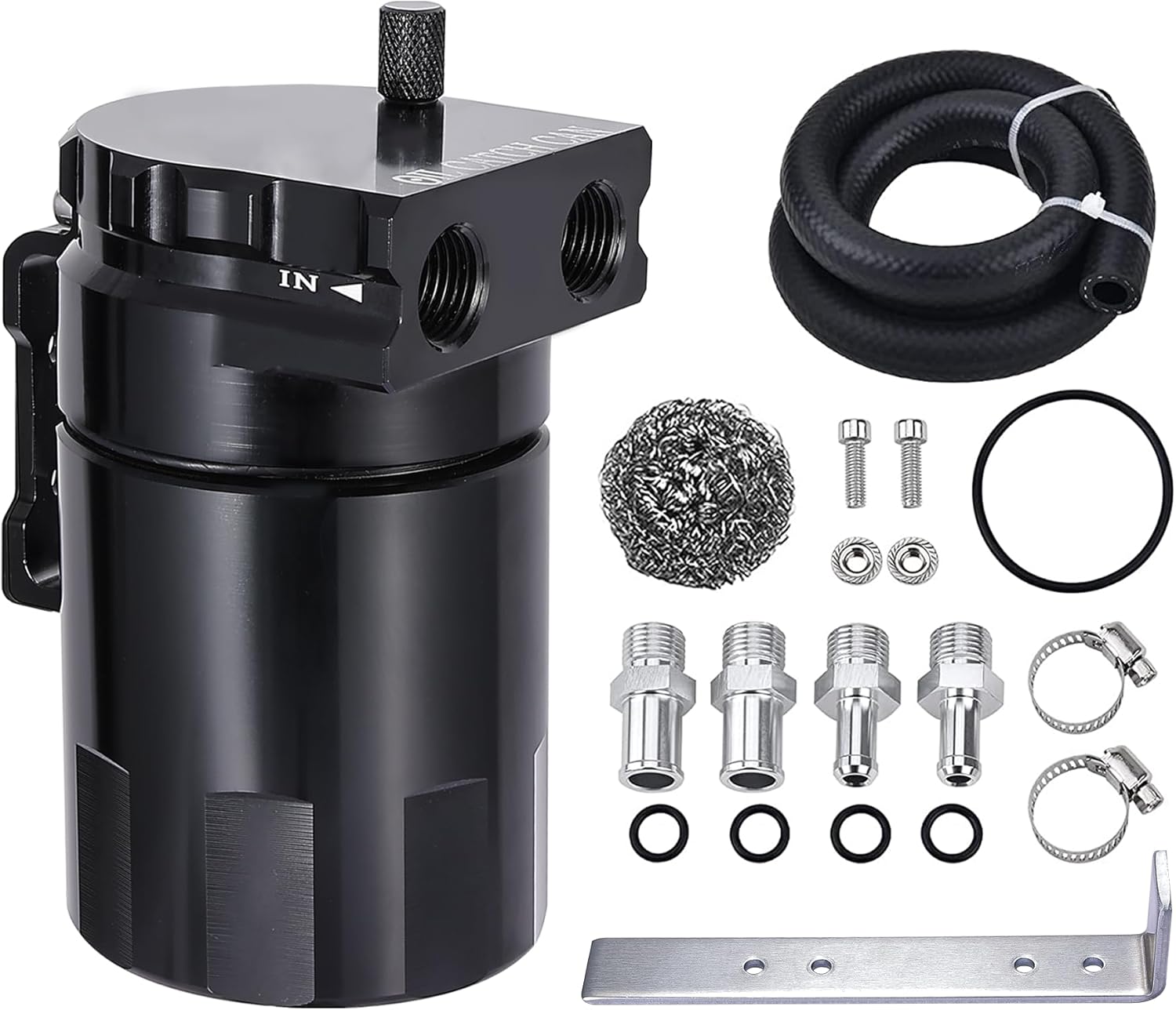
| Capacity | 300 Milliliters |
|---|---|
| Fuel Type | Diesel |
| Fit Type | Universal |
| Hose ID | 3/8 inch |
This EVIL ENERGY catch can is a small, practical add-on that captures oil and moisture from crankcase ventilation before those contaminants reach the intake. It uses a removable baffle plus supplied stainless wool to improve separation, and the 300ml aluminum tank is easy to inspect and empty using the included dipstick. The kit includes a heat- and wear-resistant NBR hose with M16x1.5 threaded ports and enough length for typical under-hood routing. For a Hyundai Santa Cruz looking to limit intake valve gunk and extend intake system cleanliness, the can can be installed inline with the PCV or as a vented breather on pre-PCV setups. Expect periodic draining and occasional cleaning, especially in colder climates where moisture can accumulate and freeze. It is a universal-fit solution that trades vehicle-specific mounting hardware for flexibility, so plan for a secure bracket location and a little time for routing the hose.
Best for: A Santa Cruz owner prioritizing long-term engine reliability and cleaner intake operation who wants a straightforward, serviceable catch can to reduce oil deposits and moisture in the intake.
Less Ideal for: Drivers who want a plug-and-play, vehicle-specific kit with custom mounting brackets and minimal installation effort should look for model-specific options instead.
- Baffled design with removable baffle and stainless wool improves oil and moisture separation
- Compact 300ml aluminum tank is easy to inspect and drain with included dipstick
- Includes durable NBR hose rated for heat and wear with M16x1.5 threaded ports
- Universal fit offers flexibility for routing and placement in different engine bays
- Universal kit does not include vehicle-specific mounting hardware so extra fabrication or brackets may be needed
- Small 300ml capacity requires more frequent checks and draining on high-blow-by engines
Verdict: A compact, serviceable catch can that helps Santa Cruz owners protect the intake and preserve reliability by trapping oil and moisture before it reaches the engine.
6. EVIL ENERGY 300ml Baffled Oil Catch Can with Breather Filter

| Capacity | 300 Milliliters |
|---|---|
| Material Type | Aluminum |
| Fit Type | Universal |
| Hose ID | 3/8" |
| Thread | M16 x 1.5 |
This EVIL ENERGY catch can is a compact, baffled aluminum tank designed to trap oil and moisture from crankcase ventilation before it reaches the intake. It installs inline with PCV/CCV hoses or as a vented breather on pre-PCV setups, and the package includes hose, dipstick and stainless wool for improved filtration. In everyday use it reduces intake valve and intake tract gunk by collecting oil condensate in the 300ml reservoir that you drain periodically. The M16 inlet/outlet thread and 3/8" hose make routing straightforward in tight engine bays, and the aluminum body with TIG-welded cap and O-ring offers durable sealing. Because it is a universal fit, expect to adapt mounting and hose routing specifically for the Santa Cruz; the kit will need a secure bracket or zip-ties to avoid contact with hot components. Also the 300ml capacity means more frequent checks on high-blowby engines, and the included breather option may vent to atmosphere unless reconnected to intake, so plan plumbing to meet emissions or street-legal needs.
Best for: Mechanically cautious buyers who want a proven, well-built catch can to reduce intake gunk on a Santa Cruz and are willing to plan installation routing and mounting before purchase.
Less Ideal for: Drivers who need a direct bolt-on, vehicle-specific kit with dedicated brackets and fittings or those unwilling to service a small-capacity reservoir regularly.
- Baffled internal design and stainless steel wool to improve oil separation and reduce intake contamination.
- Aluminum tank with TIG-welded cap and O-ring provides a robust, leak-resistant reservoir.
- Includes hoses, dipstick and hardware for a mostly complete install in many applications.
- Breather filter can be fitted or removed so the unit can be used as vented or inline sealed depending on setup.
- Universal fit means no vehicle-specific bracket so custom mounting and hose routing are required.
- 300ml capacity is modest and may require frequent draining on engines with heavy blow-by.
Verdict: A durable, adaptable 300ml baffled catch can that delivers real intake protection for a Santa Cruz when you're prepared to fit and mount a universal kit.
7. EVIL ENERGY 300ml Baffled Oil Catch Can with Breather Filter

| Capacity | 300 Milliliters |
|---|---|
| Fit Type | Universal |
| Fuel Type | Gasoline |
| Hose ID | 3/8 inch |
| Material | Aluminum |
This EVIL ENERGY catch can captures oil and condensation from crankcase ventilation before it reaches the intake, helping reduce carbon and intake-valve gunk on modern direct-injection engines. It is a compact, 300ml aluminum tank with internal baffles and an optional breather filter so you can run it vent-to-atmosphere on pre-PCV setups or plumb it inline with PCV hoses on vehicles that need a sealed system. The kit includes hose, stainless wool packing for additional filtration and a dipstick for quick fluid checks, which makes routine inspection and draining straightforward. Installation is straightforward for a competent DIYer but requires selecting a secure mounting point and routing the provided 3/8-inch hose to your Santa Cruz PCV lines; note that universal kits may need a bracket or adapter for a clean fit. The can is an inexpensive preventive upgrade to limit intake deposits, but its small 300ml capacity means it will need more frequent emptying on high-mileage or oil-consuming engines.
Best for: Hyundai Santa Cruz owners who prioritize reducing intake valve and intake tract contamination and want an affordable, do-it-yourself preventive upgrade that is simple to inspect and maintain.
Less Ideal for: Drivers who prefer a bolt-in, vehicle-specific kit with dedicated brackets and fittings or those unwilling to perform periodic drains and routing work should consider a purpose-built Santa Cruz-specific solution instead.
- Baffled internal design and stainless wool help separate and retain oil vapors effectively.
- Optional breather filter gives flexibility to vent to atmosphere or run sealed inline with PCV hoses.
- Includes dipstick and hose kit for easier installation and fluid checks.
- Compact 300ml aluminum tank is lightweight and corrosion resistant.
- Universal fit may require custom mounting or adapters for a tidy installation on the Santa Cruz.
- 300ml capacity is relatively small and will require frequent draining for heavy blow-by engines.
Verdict: A compact, serviceable catch can that gives Hyundai Santa Cruz owners a low-cost way to reduce intake gunk with flexible breather options and easy inspection.
Choosing the Right Hyundai Santa Cruz Oil Catch Can: Key Factors to Consider
Fitment and Mounting
Correct fitment is the first practical concern when choosing a catch can for the Hyundai Santa Cruz. Engine bay space and the routing of PCV and intake hoses vary with engine and accessory layout, so you need a can that either includes a vehicle-specific bracket or can be mounted in a convenient location without interfering with coolant lines, wiring harnesses, or intake plumbing.
Mounting affects maintenance access as well. A can that is fitted behind other components or requires removal of brackets to drain will discourage regular service. Check hose lengths and inlet/outlet orientations to ensure the kit can be routed with gentle curves and without creating kinks that could restrict ventilation. A secure, vibration-resistant mount reduces the risk of hose fatigue or fittings working loose over time.
Separation Efficiency
Separation efficiency determines how much oil and moisture the catch can actually removes from crankcase vapors. Designs with multi-stage baffling, coalescing mesh, or dedicated filter media tend to capture finer droplets more effectively than a simple single-chamber can. Higher efficiency reduces the rate of intake valve and throttle-body deposits, which is especially important on direct-injection variants where oil is not washed off intake valves by fuel.
However, higher separation efficiency sometimes comes with increased flow resistance. Choose a design that balances trapping ability with low restriction so crankcase ventilation remains functional and does not create excessive positive or negative pressure in the crankcase.
Reservoir Capacity and Drain Method
Reservoir capacity affects how often you will need to service the catch can. Smaller reservoirs require more frequent checks and drains, which may be acceptable for light-duty driving but becomes a chore under heavier loads or frequent short trips. Larger reservoirs extend service intervals but add bulk and may complicate mounting.
Drain method is equally important. A convenient threaded drain or ball valve allows quick service without removal, while some units require disassembly to empty the collected oil. Opt for a drain method that matches your maintenance habits and that can be accessed easily once the can is mounted in the Santa Cruz engine bay.
Material and Corrosion Resistance
Materials matter for long-term durability in the engine compartment. Aluminum-bodied cans are common because they resist rust and dissipate heat, but you should confirm whether the finish and fittings are anodized or plated to resist corrosion. Steel cans may be more durable structurally but require quality coatings to prevent rust over time.
Check the quality of hose fittings and clamps as well. Brass or stainless-steel fittings and corrosion-resistant clamps are preferable. A well-sealed unit reduces the risk of leaks and minimizes the chance of contaminants re-entering the intake when the engine is off.
Hose Compatibility and PCV Flow
Hose diameter and compatibility with the Santa Cruz PCV system determine how straightforward installation will be. Measure the OEM PCV and intake hoses or confirm that the catch can kit supplies the correct inner diameters to maintain proper airflow. Mismatched hoses can introduce restrictions or require adapter fittings.
Also consider how the catch can integrates with the PCV flow path. Some installations route both the crankcase to intake and the intake to can differently. Ensure the setup maintains proper ventilation so the engine does not develop oil seal issues or unusual vacuum/pressure symptoms.
Serviceability and Maintenance Frequency
A catch can only protects the intake if it is emptied and inspected periodically. Consider how easy it is to access and service the unit once installed in the Santa Cruz. Transparent inspection windows or easy-to-read fluid lines help you monitor accumulation without removing the can. Units with quick-release fittings or simple threaded drains reduce service time.
Also think about how driving habits affect maintenance frequency. Short trips and stop-and-go driving typically produce more condensate and require more frequent draining than long highway runs. Choose a can whose service interval aligns with your willingness to perform routine checks and with your vehicle's service schedule.
Why a Catch Can Helps the Hyundai Santa Cruz
Modern engines on the Santa Cruz route crankcase vapors back into the intake to reduce emissions. Over time, oil and combustion byproducts in those vapors can condense in the intake tract and on valves, causing throttle and injector deposits that affect drivability and efficiency.
Installing a catch can intercepts these contaminants before they reach the intake. For Santa Cruz owners who tow, tow frequently, or do many short trips, a catch can reduces the rate of buildup and can help preserve throttle response and idle smoothness.
- Reduces oil and sludge reaching intake components
- Helps maintain throttle and intake cleanliness
- Can lower long-term maintenance needs related to carbon deposits
Basic Types of Catch Can Designs
Catch cans come in a few common internal designs: simple gravity-collection chambers, baffled chambers that knock out droplets, and mesh or filter-based coalescers that capture very fine oil particles. Each design balances trapping efficiency against airflow resistance and service complexity.
For the Santa Cruz, baffled or mesh-based designs are often a sensible middle ground because they offer improved separation without excessive backpressure. Consider a design that provides a clear drain and an internal layout that resists sloshing when the vehicle is driven on uneven roads.
- Gravity cans: simple, low-cost, lower efficiency
- Baffled cans: good efficiency with modest restriction
- Mesh/filter cans: high efficiency, requires careful maintenance
Installation Tips for the Santa Cruz
Plan a mounting location that keeps the can accessible for draining and inspection. Many owners use the inner fender or firewall area where there is space and a convenient bolt mounting point. Avoid locations that expose the can to excessive heat from the exhaust or turbocharger plumbing if present.
Route hoses with gentle bends and secure them away from moving parts and heat sources. Use quality hose clamps and verify there are no kinks. After installation, check for leaks and recheck clamp torque after a short test drive.
- Locate the can where the drain is reachable without removing panels
- Keep hoses away from high-heat components
- Secure hoses with quality clamps and check for leaks after the first drive
Maintenance Best Practices
Set a routine for checking the catch can level, especially in the first few thousand miles after installation. Some owners inspect monthly for the first period to understand how quickly fluids accumulate, then adjust intervals based on observed rates.
Always drain the can when it reaches a moderate level rather than waiting until it is full. Discard drained fluid responsibly and inspect internal components for sludge or emulsified oil that may indicate combustion issues or coolant contamination.
- Inspect monthly initially, then set an interval based on actual accumulation
- Drain before the can reaches full capacity
- Look for emulsified fluid which can indicate other engine issues
Legal and Warranty Considerations
Adding a catch can alters the vehicle's emissions-related plumbing in a way that can have regulatory or warranty implications in some jurisdictions. Check local regulations regarding modifications to the PCV system before installation and be aware that some warranty claims related to emissions systems could be affected.
If warranty concerns are significant, consider non-permanent mounting options and save OEM components to restore the original configuration if needed. Document the installation so you can show it was done cleanly and without permanent alterations.
- Verify local emissions regulations before modifying PCV plumbing
- Consider reversible installation methods if warranty retention is a concern
- Keep installation documentation and retain OEM parts for reinstallation
How We Chose the Best Hyundai Santa Cruz Oil Catch Can
We focused our selection on hardware and installation attributes that matter specifically for the Hyundai Santa Cruz. Primary criteria included physical fitment and mounting options that match available engine bay space and factory PCV hose layouts. We prioritized separation performance measured by multi-stage baffle designs or filter media that trap oil droplets without restricting cranking ventilation. Corrosion resistance and construction material were weighed to ensure a durable in-engine-bay lifespan under heat and moisture exposure.We also evaluated ease of installation: included hose lengths, compatible hose diameters, and whether the kit provided brackets or required simple drilling or bolt-on options. Serviceability factored into our picks, favoring units with clear drain plugs or removable reservoirs for routine maintenance. Noise and crankcase pressure effects were considered to avoid units that can create undue resistance in the PCV circuit.Excluded items were universal claims without clear fitment notes for the Santa Cruz, overly complex systems requiring extensive fabrication, and products lacking user-serviceable drain or inspection access. Our final list balances real-world usability, durable materials, and measured separation approaches that suit daily driving and occasional towing loads typical of Santa Cruz owners.
Our full evaluation process is outlined in our review methodology.
FAQ
How often should I drain a catch can on a Santa Cruz?
It depends on driving habits. Inspect monthly for the first few months to gauge accumulation, then set a drain interval—often every 1,000 to 5,000 miles—based on how quickly oil collects.
Will a catch can affect engine performance or cause pressure issues?
A properly sized and low-restriction catch can should not negatively affect crankcase ventilation. Avoid overly restrictive designs and ensure hoses are the correct diameter and routed without kinks to maintain proper flow.
Can installing a catch can void my Hyundai Santa Cruz warranty?
Modifying emissions-related systems can have warranty implications in some cases. Reversible installations and retaining original parts reduce risk, but check warranty terms and local regulations before making changes.
Where is the best place to mount a catch can in the Santa Cruz engine bay?
Mount where there is clear access for draining, such as an inner fender or firewall location with a suitable bolt point. Avoid areas too close to exhaust heat and ensure hoses can be routed without sharp bends.
Does a catch can help turbocharged Santa Cruz engines?
Yes, reducing oil vapor entering the intake is helpful for turbocharged engines because it lowers the likelihood of oil-contaminant buildup on intercoolers and intake piping. Ensure the can you choose can handle the higher vapor volume associated with turbo operation.
What should I do if the drained fluid looks milky or emulsified?
Milky or emulsified fluid can indicate coolant is entering the crankcase. That warrants inspection by a technician to check for head gasket or cooling system faults rather than attributing the issue to the catch can itself.
Final Verdict
For Hyundai Santa Cruz owners, the right oil catch can reduces intake contamination and helps maintain engine responsiveness over time. Prioritize a unit that fits the Santa Cruz engine bay, balances separation efficiency with low restriction, and offers an accessible drain method so you will actually service it.Weigh the tradeoffs between capacity, service interval, and installation complexity based on your driving pattern. Choosing a durable, vehicle-compatible catch can and committing to routine maintenance delivers the most consistent benefit in preserving intake cleanliness and long-term engine health.
Explore More:
- Check out all Hyundai Santa Cruz parts & accessories
- Explore Oil Catch Cans Maintenance & Repair Guides
- Explore Engine
- Browse all Auto Parts
