

Note: This article contains affiliate links. If you click on these links and make a purchase, I may earn a small commission at no extra cost to you. This helps support my research and content. Read my full affiliate disclosure here.
If you own a Ford F-350, managing crankcase vapors can make a noticeable difference in intake cleanliness and engine longevity. An oil catch can traps oil mist and sludge before it reaches the intake tract or intake valves, which is especially useful if you tow, haul, or run extended idling cycles. This guide shortlists six of the top oil catch cans suitable for the F-350 and explains why each type made the cut.We evaluated ease of installation, build quality, and actual performance in reducing oil contamination. The following picks focus on realistic benefits for F-350 owners and include notes on fitment, mounting, and maintenance. Read on to decide which setup best matches how you use your truck.
Top Picks at a Glance
| Best Quality Built to a higher standard if you want something more solid | Mishimoto Baffled High-Flow Oil Catch Can Kit for Ford 6.7L Powerstroke (2017+) |  |
| Best Value The sweet spot between price and what you get | PKSABB Baffled High-Flow Oil Catch Can for 2011–2016 Ford 6.7L Powerstroke |  |
| Best Budget The cheapest option that still gets the job done reliably | RULLINE 350ml Universal Baffled Oil Catch Can (Aluminum, Braided Hose) |  |
| Highest Rated A top-rated pick with lots of positive feedback | J&L Oil Separator 3.0 (3094P) for 2023–2026 F-Series 250/350 6.8L & 7.3L |  |
| Most Popular A crowd favorite that many people choose with confidence | EVIL ENERGY Baffled 300ml Universal Oil Catch Can Kit |  |
| Best Seller A high-volume bestseller chosen again and again | EVIL ENERGY 300ml Baffled Oil Catch Can Kit with Breather Filter |  |
1. Mishimoto Baffled High-Flow Oil Catch Can Kit for Ford 6.7L Powerstroke (2017+)

| Compatible Engine | Ford 6.7L Powerstroke (2017+) |
|---|---|
| Can Capacity | 5.3 fl. oz. |
| Filter Type | 50-micron bronze filter |
| Material | 6061 Aluminum can; steel bracket |
| Fit Type | Vehicle Specific Fit |
This Mishimoto kit is a direct-fit baffled oil catch can engineered for the 2017+ Ford 6.7L Powerstroke to capture oil, fuel, and water vapors before they reach the intake. It installs using the included custom 3mm steel bracket and direct-fit hoses so you can service the 5.3 fl. oz. can from an accessible location in the engine bay. Inside the CNC-machined can is a baffled 50-micron bronze filter and internal air diverter that increases turbulence for better oil separation, and the CNC lid with large M27 fittings supports high crankcase flow on diesel engines. The can and filter are fully serviceable for periodic draining and cleaning, and the kit retains the stock CCV filter box via provided adapters. Practical benefits include reduced intake contamination, potential to help maintain octane under load, and robust build quality from 6061 aluminum with Viton seals and a powder-coated gusseted bracket. Expect a straightforward install but note the relatively small usable capacity which means more frequent servicing under heavy duty or high-blow-by conditions.
Best for: Drivers who prioritize protecting the intake and combustion from crankcase contaminants on a 6.7L Powerstroke and want a robust, performance-focused, vehicle-specific solution that installs cleanly and is serviceable.
Less Ideal for: Those who prefer a maintenance-free or very large-capacity system for heavy commercial duty use should consider alternatives with greater reservoir volume or passive separation systems.
- Direct-fit kit with application-specific bracket and hoses for simpler installation
- High-flow CNC-machined inlet/outlet and internal diverter designed for diesel crankcase ventilation
- Baffled 50-micron bronze filter for effective oil and contaminant separation
- Fully serviceable can and filter for easy draining and maintenance
- Durable construction: billet 6061 aluminum can with Viton O-rings and powder-coated steel bracket
- 5.3 fl. oz. capacity is modest and may require frequent draining on high-blow-by engines
Verdict: If you run a 2017+ 6.7L Powerstroke and want a durable, high-flow, serviceable catch can that installs cleanly and improves intake protection, this Mishimoto kit is a top practical choice.
2. PKSABB Baffled High-Flow Oil Catch Can for 2011–2016 Ford 6.7L Powerstroke

| Application | 2011–2016 Ford F-250/F-350 6.7L Powerstroke |
|---|---|
| Capacity | 5.3 fl. oz. |
| Bracket | 3mm thick steel, powder-coated |
| Inlet/Outlet | M27 x 2.0 |
This baffled oil catch can is a direct-fit kit for 2011–2016 Ford F-250 and F-350 6.7L Powerstroke engines designed to intercept oil, fuel, and water vapors before they reach the intake. It installs using a sturdy 3mm steel bracket with a quick-release design and CNC-machined adapters that tie into the factory CCV filter box for a clean, OEM-style appearance. The can uses a CNC-machined internal baffle and integrated filter to separate contaminants while allowing high flow through M27 x 2.0 inlets and outlets, and its 5.3 fl. oz. capacity supports longer service intervals on high-output engines. Practical features include CNC aluminum hose barbs and a powder-coated bracket for corrosion resistance. Installation requires basic under-hood access and the kit does not include instructions, so plan for professional or experienced DIY installation. Note the kit will not fit vehicles using the superseded CCV filter box without swapping to the specified part number first.
Best for: Buyers who want a practical, vehicle-specific solution to reduce intake contamination and extend engine cleanliness with a durable, serviceable catch can that preserves a factory-style appearance.
Less Ideal for: Drivers who prefer a universal, multi-vehicle catch can or who do not want to modify CCV components should look for alternative options.
- Direct-fit design for 2011–2016 Ford 6.7L Powerstroke for a neat, factory-style installation
- High-flow CNC-machined inlet/outlet and internal baffle preserve crankcase breathing while filtering contaminants
- 5.3 fl. oz. capacity reduces how often the can needs draining on high-output engines
- Sturdy gusseted 3mm steel bracket with powder-coating offers durable under-hood mounting
- Includes CNC-machined aluminum hose-barb fittings for reliable hose connections
- No installation instructions included, which may require professional installation
- Incompatible with vehicles that still have the superseded CCV filter box without replacing the filter box
Verdict: Choose this kit if you want a high-flow, direct-fit catch can that keeps blow-by out of the intake while maintaining a factory-style installation on 2011–2016 6.7L Powerstroke trucks.
3. RULLINE 350ml Universal Baffled Oil Catch Can (Aluminum, Braided Hose)

| Capacity | 350 Milliliters |
|---|---|
| Fuel Type | Gasoline |
| Product Grade | Performance Part |
| Fit Type | Universal |
This RULLINE 350ml oil catch can captures oil and moisture from the PCV/CCV flow to reduce intake and valve cover contamination and help limit carbon buildup. It is a universal, compact reservoir with internal baffles and a threaded dipstick so you can check fluid without disassembling the unit. The tank is fully TIG welded, uses an O-ring seal at fittings, and includes a braided hose and multiple adapters for broad fitment, which makes it straightforward to install on many PCV systems. In practice it offers a budget-friendly way to keep intake tracts cleaner and extend maintenance intervals compared with doing nothing. The 350ml capacity is modest, so it will need more frequent emptying on engines with heavy blow-by. Also, universal adapters mean extra work routing and mounting on a Ford F-350 compared with a vehicle-specific kit, and its smaller size limits long-term drainage capacity for high-mileage or forced-induction engines.
Best for: Practical buyers looking for an affordable, durable catch can to reduce intake contamination and extend maintenance intervals on a work truck without investing in an expensive vehicle-specific kit.
Less Ideal for: Owners wanting a factory-style, vehicle-specific solution or those who need a large-capacity can for high boost or heavy blow-by conditions should consider purpose-built alternatives.
- Baffled interior and 350ml reservoir help separate oil and vapor for cleaner intake air
- Fully TIG welded aluminum construction resists corrosion and adds durability
- Includes braided hose and multiple adapters for easier universal installation
- Threaded dipstick lets you check fluid level without opening the unit
- 350ml capacity is relatively small and may require frequent draining on heavy-duty engines
- Universal fit requires custom mounting and hose routing on a Ford F-350
Verdict: A cost-conscious, durable universal catch can that reduces intake contamination and is easy to install with its braided hose and dipstick, making it a practical upgrade for budget-minded F-350 owners.
4. J&L Oil Separator 3.0 (3094P) for 2023–2026 F-Series 250/350 6.8L & 7.3L

| Fitment | 2023-2026 F Series 250 & 350 Truck 6.8L;7.3L Gas |
|---|---|
| Capacity | 3oz |
| Construction | Solid billet aluminum |
| Fittings | OEM style quick connect PCV |
The J&L Oil Separator 3.0 is a vehicle-specific catch can designed to stop oil vapor from re-entering the intake on 2023–2026 F-250/350 trucks with 6.8L or 7.3L engines. It installs using OEM-style quick connect PCV fittings for a plug-and-play fit and uses a multi-stage internal filter to condense fine vapors into a removable 3 oz collection cup with an O-ring seal. Machined from billet aluminum, the housing feels durable and the knurled base makes draining straightforward without tools. This helps keep intake components, throttle bodies, and intake valves cleaner over time and can be especially useful on boosted or high-mileage engines where crankcase blow-by is higher. The product is not CARB exempt, so it cannot be used in California or states that adopt those emission rules. Also the 3 oz capacity means more frequent checks on hard-driven trucks versus larger cans, and it is a simple separator rather than an integrated catch-and-release system for long service intervals.
Best for: Buyers who prioritize long-term engine reliability and want a durable, vehicle-specific solution to prevent oil vapors from contaminating the intake on recent F-250/350 gasoline engines.
Less Ideal for: Drivers in California or states that follow California emission rules, or owners who want a large-capacity can for extended service intervals without frequent checks.
- Vehicle-specific fit for 2023–2026 F-250/350 6.8L and 7.3L for straightforward installation
- Solid billet aluminum construction for durability and corrosion resistance
- OEM-style quick connect PCV fittings support plug-and-play installation
- Multi-stage filter effectively condenses fine oil vapors into the removable sump
- Knurled removable base and O-ring seal make draining easy and leak-resistant
- Small 3 oz collection capacity requires more frequent draining under heavy blow-by conditions
- Not CARB exempt and therefore not legal for sale or use in California or states adopting CA rules
Verdict: Choose this billet-aluminum, vehicle-specific oil separator if you want a robust plug-and-play way to keep intake components cleaner and protect engine reliability on 2023–2026 F-250/350 6.8L and 7.3L trucks.
5. EVIL ENERGY Baffled 300ml Universal Oil Catch Can Kit
| Capacity | 300 Milliliters |
|---|---|
| Fuel Type | Diesel |
| Fit Type | Universal |
| Hose ID | 3/8 inch |
| Port Thread | M16×1.5 |
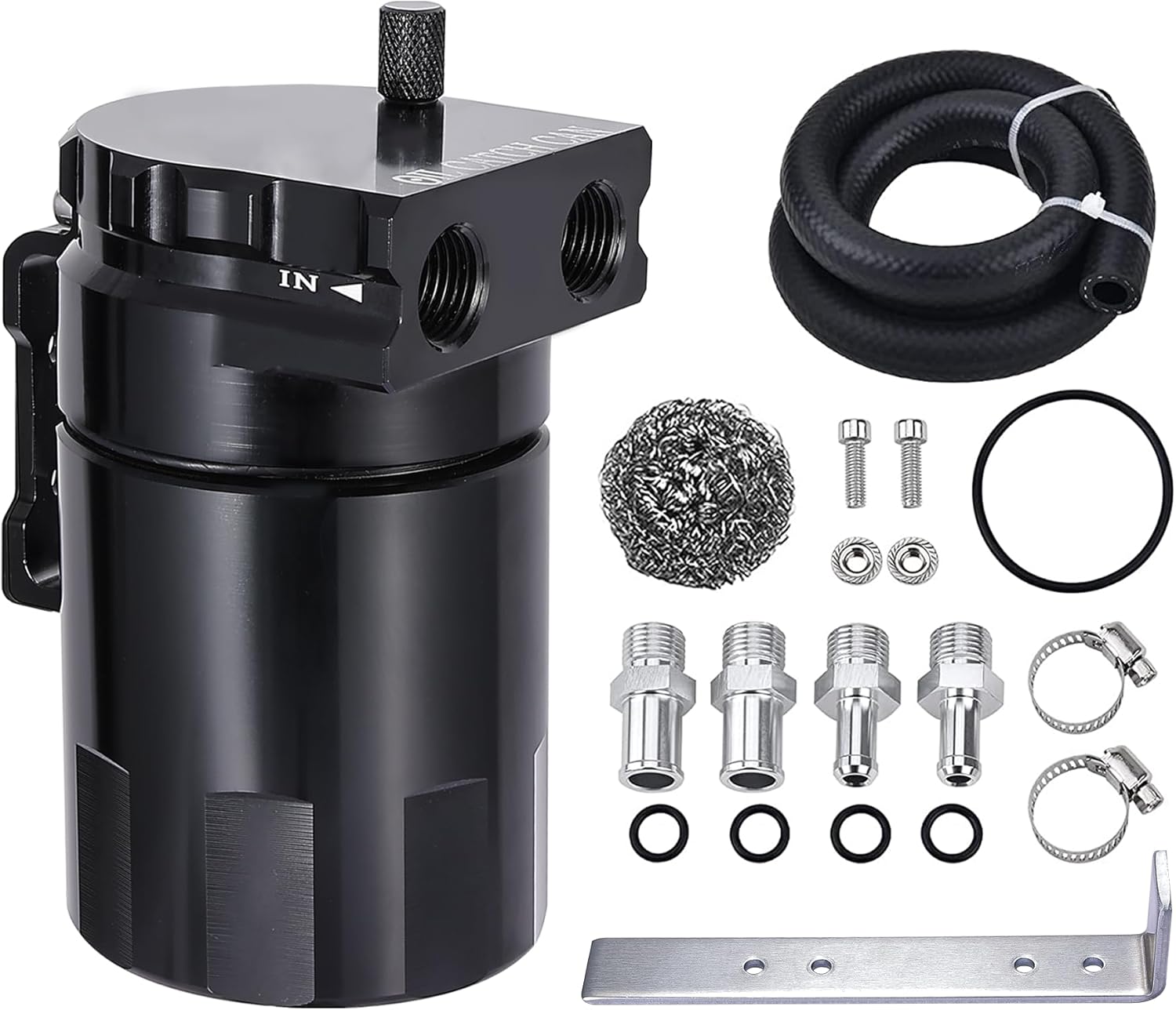
This EVIL ENERGY catch can is a compact, baffled 300ml unit intended to reduce oil and moisture entering the intake via the PCV/CCV system. It installs inline between PCV hoses or as a vented breather on pre-PCV setups and includes a removable baffle, stainless wool media and a dipstick for easy level checks. The kit ships with a heat- and wear-resistant NBR hose (3/8" ID, 2.6 ft) and M16x1.5 threaded ports for secure connections. For a heavy-duty truck like the Ford F-350, the can helps prevent intake valve and intake tract gumming on turbocharged or high-mileage engines when fitted in an appropriate location with secure mounting. Practical limits are the modest 300ml capacity, which means more frequent draining under high blow-by conditions, and the manufacturer warns of increased moisture and potential freezing in cold climates that can require weekly cleaning or temporary removal. Fitment is universal rather than vehicle-specific so plan mounting and hose routing for the F-350 before buying.
Best for: Buyers who prioritize a proven step to reduce intake contamination and want a compact, serviceable catch can that can be adapted to an F-350 with some planning and basic fabrication skills.
Less Ideal for: Drivers who need a large-capacity, bolt-on solution with vehicle-specific mounting hardware or those unwilling to perform periodic drains and inspections.
- Baffled internals plus stainless wool capture oil and moisture to reduce intake contamination.
- Includes a dipstick for quick visual fluid checks without disassembly.
- Supplied NBR hose offers good heat and abrasion resistance for engine bay routing.
- Universal mounting and M16x1.5 threaded ports allow flexible installation locations.
- 300ml capacity is relatively small and will require more frequent draining on high-blow-by or heavy-duty use.
- Universal design means no vehicle-specific brackets or fitment guidance for the F-350.
Verdict: A compact, serviceable baffled catch can that provides measurable protection against intake gunk for an F-350 when you can accommodate its universal mounting and frequent draining needs.
6. EVIL ENERGY 300ml Baffled Oil Catch Can Kit with Breather Filter

| Capacity | 300 Milliliters |
|---|---|
| Fuel Type | Gasoline |
| Fit Type | Universal |
| Thread Size | M16*1.5 |
This EVIL ENERGY catch can separates oil and condensate from crankcase ventilation gases before they reach the intake, which helps reduce intake-valve and intake-port carbon buildup. The 300ml aluminum tank is baffled and includes a dipstick, stainless wool internals and hose fittings so you can install it in-line with your PCV plumbing or run it as a vented breather on pre-PCV setups. Typical installation uses the supplied 3/8 in hose and M16x1.5 ports and is straightforward for anyone comfortable routing hoses and mounting a small can in the engine bay. The included breather filter gives flexibility for vehicles without a closed PCV loop while the dipstick makes level checks simple. Keep in mind the 300ml capacity means it needs periodic draining under heavy use and the universal fitment requires planning for a secure, out-of-the-way mount on a Ford F-350 to avoid heat and interference with factory components.
Best for: A Ford F-350 owner who wants a conservative, factory-minded modification to reduce intake contamination and is willing to perform periodic checks and drains as part of routine maintenance.
Less Ideal for: Not the best choice for owners seeking a large-capacity or heavy-duty catch can for constant towing, fleet use, or extended service intervals without frequent maintenance.
- Baffled design and stainless wool help trap oil and vapor effectively.
- Includes dipstick and hose kit for easier installation and maintenance.
- Option to fit a breather filter or run inline with PCV systems for flexibility.
- Aluminum tank is corrosion resistant and lightweight for engine-bay use.
- 300ml capacity requires more frequent draining on high-mileage or heavy-duty F-350 duty cycles.
Verdict: A compact, flexible baffled catch can that provides a practical, conservative way for Ford F-350 owners to limit intake oil contamination while keeping installation simple.
Choosing the Right Ford F-350 Oil Catch Can: Key Factors to Consider
Build Materials and Corrosion Resistance
Catch cans need to withstand heat, vibration, and corrosive engine bay conditions. Aluminum or stainless construction offers rigidity and longevity compared with thin stamped steel. Corrosion-resistant finishes or anodizing help the can survive road salt and moisture, while robust fittings and braided hoses reduce the risk of leaks.
Material choice also affects weight and heat transfer. A heavier, well-machined can will often seal and drain better, but it should still be mountable in the space available on the F-350. Check that the mounting hardware and clamps are similarly durable because fasteners that fail under vibration are a common weak point.
Internal Baffling and Separation Efficiency
The internal design determines how effectively a catch can removes oil droplets from crankcase vapors. Multi-stage baffling, mesh elements, or coalescing filters increase capture rates compared with a plain reservoir. Better separation reduces the frequency of required drains and lowers the volume of oil and sludge that reaches the intake.
For turbocharged or high-load F-350 engines, effective separation prevents oil from entering the intake tract and turbocharger, which can cause carbon buildup and reduce efficiency. But overly restrictive internals can impede crankcase ventilation, so look for designs that balance capture efficiency with unobstructed flow.
Capacity and Drain System
Tank capacity matters for owners who tow, run long idling periods, or drive extended distances between maintenance intervals. A larger reservoir reduces how often you must service the unit, but it may be bulkier and harder to package in the F-350 engine bay. Consider where a full can will sit and whether it will interfere with other components.
The drain method is equally important. Quick-drain ball valves or threaded plug drains that allow bottom-emptying are far more convenient than systems that require removing the can. A clear sight window or level indicator helps you track accumulation without disassembly. For heavy-duty use, a dependable sealed drain prevents spills during off-road or rutted driving.
Hose Routing and Fitment for the F-350
Proper hose length, routing, and fitting types affect both installation time and long-term reliability. Hoses should be rated for oil vapor exposure and engine-bay temperatures, and fittings should be compatible with OEM PCV or boost plumbing locations on the F-350. Kits that include vehicle-appropriate brackets, clamps, and pre-measured hoses reduce install errors.
Consider how hoses will be secured to avoid contact with hot exhaust components or sharp edges. A neat, well-routed install minimizes stress on fittings and reduces the chance of leaks. When hoses must be extended or adapters used, choose purpose-made hose and fittings rather than improvising with incompatible parts.
Installation Complexity and Required Tools
Some catch cans are plug-and-play with purpose-built brackets for the F-350, while others require drilling, bracket fabrication, or aftermarket adapters. Evaluate whether you have the tools and experience for the required work or if you prefer a simpler install that a typical DIYer can complete in an afternoon.
Installation complexity also affects the likelihood of correct hose routing and secure mounting. Kits that include clear instructions, labeled hoses, and necessary hardware reduce the chance of mistakes that could lead to leaks or restricted PCV flow. If professional installation is being considered, check compatibility notes so the installer can plan fittings and routing accordingly.
Maintenance Accessibility and Service Frequency
Routine servicing is essential for consistent performance. Units with easy-access drains, removable bottoms, or quick-release clamps make maintenance faster and less messy. Consider how often you will realistically check and empty the can based on your driving habits; heavy towing or frequent idling increases contamination rate.
Also look for visible level indicators or sight glasses that let you monitor accumulation without removing the can. Threaded drain plugs or inline valves that can be operated with minimal clearance are especially valuable on the F-350, where space around the engine can be tight.
Why an Oil Catch Can Helps the Ford F-350
Ford F-350 engines can accumulate oil vapors in the intake system over time from crankcase ventilation. These deposits reduce airflow consistency and can promote carbon build-up on intake ports and valves. For owners who tow, haul, or frequently idle, an effective catch can reduces the volume of oil entering the intake and the turbocharger if equipped.
By intercepting oil and sludge, catch cans help preserve intake cleanliness and maintain combustion efficiency. The net result is a cleaner intake tract and potentially more consistent long-term engine performance when regular maintenance is performed.
- Reduces oil and sludge reaching intake and turbo
- Helps maintain consistent airflow and combustion
- Eases long-term maintenance needs for intake components
Types of Catch Can Designs
Catch cans range from simple reservoir-style units to multi-stage designs with mesh or coalescing media. Simpler cans are lightweight and serviceable, while multi-stage units provide higher separation efficiency but can be bulkier. Choosing the right design depends on how hard you use the F-350 and how often you will service the unit.
Some systems incorporate sight windows, internal baffles, or removable filters that can be cleaned. Others rely on labyrinth-style airflow paths to cause oil to condense and fall out of suspension. Evaluate design tradeoffs between efficiency, ease of maintenance, and physical size for proper packaging in the engine bay.
- Reservoir-only: easy to service, lower capture efficiency
- Baffled or mesh: better separation, may need occasional cleaning
- Coalescing media: high efficiency, potential for higher cost and complexity
Mounting Locations and Clearance Considerations
Choosing a mounting location in the F-350 requires checking for clearance around intake plumbing, battery trays, and accessory brackets. The ideal spot gives secure attachment, easy access to drain points, and minimal hose length to the PCV and intake connections. Avoid mounting where the can may contact hot exhaust components or moving parts.
When planning placement, account for future service access. Mounts that position the drain valve within reach without removing other components will simplify maintenance. Use vibration-damping hardware if the selected location exposes the can to heavy chassis vibration.
- Prioritize accessible mounts with secure attachment points
- Avoid heat sources and moving components
- Ensure drain access and visible level monitoring
Hose Material and Fitting Types
Hoses should be rated for oil vapor and engine bay temperatures; silicone or reinforced rubber hoses are common choices. Use fittings that match the PCV and intake port diameters to avoid leaks. Clamps should be high quality and installed so they do not contact wiring or sharp edges.
When using adapters or reducing fittings, ensure the internal diameter remains sufficient to avoid creating backpressure in the crankcase ventilation system. Proper hose routing and secure clamps are critical to maintain reliability under load and during off-road use.
- Choose oil- and heat-rated hoses
- Use correct-diameter fittings and quality clamps
- Avoid restrictive adapters that impede ventilation flow
Maintenance Best Practices
Establish a regular inspection interval based on driving style. Heavy towing, long idling, or short trips will increase oil capture rates and require more frequent draining. Use sight windows or level indicators to verify when the can needs servicing rather than relying solely on mileage.
When draining, use a catch container and close the valve securely to prevent spills. Inspect hoses and fittings for degradation or looseness each time you service the can. Periodically check the internal elements if the can is serviceable and clean or replace them according to the manufacturer's guidance.
- Check levels more often under heavy load or frequent idling
- Drain into a container and reseal valves to prevent spills
- Inspect hoses and fittings for wear during each service
How We Chose the Best Ford F-350 Oil Catch Can
We selected these oil catch cans by prioritizing features that matter specifically to Ford F-350 owners. Primary evaluation criteria included material and build quality to resist corrosion and high under-hood temperatures; internal baffling and filtration design to maximize oil separation without restricting PCV flow; tank capacity and drain options to suit towing and long-haul use; and mounting and hose routing that fit the F-350 engine bay without extensive modification.We also assessed installation complexity and the availability of vehicle-specific or universal mounting hardware, since many owners prefer a kit that minimizes fabrication. Maintenance considerations such as easy-access drains and clear sight indicators were weighted because regular servicing affects long-term performance. Exclusions included any units lacking durable fittings or with unverified claims about filtration efficiency. The result is a shortlist focused on practical durability, serviceability, and effective oil separation for heavy-duty F-350 use.
Our full evaluation process is outlined in our review methodology.
FAQ
Will a catch can affect my F-350's PCV system operation?
A properly sized and installed catch can should not impede PCV function. It is important to choose a unit with sufficient internal flow characteristics and to use correct-diameter hoses so ventilation flow is maintained while oil is separated.
How often should I empty an oil catch can on the F-350?
Frequency depends on use. Towing or frequent idling will increase accumulation and may require checks every few hundred miles. For light duty, inspections every oil change may suffice. Using a sight glass helps avoid unnecessary servicing.
Can installing a catch can void my vehicle warranty?
Warranty impacts vary by situation and jurisdiction. Installing an oil catch can may be considered a modification, so document installations professionally and retain original parts. If warranty concerns are critical, consult a dealer or warranty specialist before modifying the ventilation system.
Is a catch can necessary for turbocharged F-350 engines?
Turbocharged engines are more sensitive to oil entering the intake and turbo assembly. A catch can can reduce oil ingestion and help limit carbon buildup on turbine and intake surfaces, though proper selection and maintenance are important for meaningful benefit.
Can I install a catch can myself on the F-350?
Many owners can install a catch can with basic hand tools if the kit includes vehicle-appropriate brackets and clear instructions. More complex installs that require fabrication or relocation of components are better handled by a professional.
Final Verdict
Prioritize a catch can that balances effective oil separation with easy servicing and secure mounting for the Ford F-350. Durable materials, reliable internal baffling, and a convenient drain system will matter more over time than marginal differences in capture claims. Be realistic about how often you will service the unit and choose a capacity and placement that fit your towing and duty cycle.When in doubt, favor a design that minimizes installation complexity while offering visible serviceability. That approach helps ensure consistent protection for the intake and turbo systems and gives the best long-term value for F-350 owners.
