

Note: This article contains affiliate links. If you click on these links and make a purchase, I may earn a small commission at no extra cost to you. This helps support my research and content. Read my full affiliate disclosure here.
If you drive a 1999-2007 Ford F-350 and rely on it for hauling or heavy-duty work, the turbocharger plays a central role in towing power, fuel efficiency, and engine longevity. Choosing the right 1999-2007 Ford F-350 turbocharger affects how your truck responds under load, how quickly it spools, and how resilient it is to high-mileage use.This guide covers a short list of the top turbocharger options for this F-350 model years. Each shortlisted turbocharger was evaluated for fitment, boost performance, durability, and ease of installation so you can narrow choices based on your priorities. Read on to compare the technical tradeoffs and decide which type of turbo upgrade or replacement best suits your truck and workload.
Top Picks at a Glance
| Best Overall The best all-around choice for most situations | ALL STATES DP GT3782V Turbocharger for Ford Powerstroke 6.0L (743250-5013S) |  |
| Best Quality Built to a higher standard if you want something more solid | AISIN Aftermarket GT3782VA Turbocharger for Ford 6.0L Super Duty (2003) |  |
| Best Value The sweet spot between price and what you get | A-Premium GT3782VA Turbocharger Assembly for 2005–2007 Ford Super Duty 6.0L |  |
| Best Budget The cheapest option that still gets the job done reliably | APFAITH Turbocharger Assembly GTP38 Compatible with Ford 7.3L Powerstroke (1999–2003) |  |
| Highest Rated A top-rated pick with lots of positive feedback | A-Premium Complete Turbocharger Kit with Wastegate Actuator and Gasket |  |
| Most Popular A crowd favorite that many people choose with confidence | maXpeedingrods GTP38 Turbocharger for 7.3L Ford Powerstroke (1999–2003) | 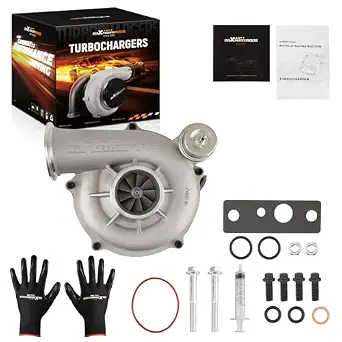 |
| Best Seller A high-volume bestseller chosen again and again | BuyAutoParts Remanufactured Turbocharger 40-30125R for 6.0L PowerStroke (2006–2007) |  |
1. ALL STATES DP GT3782V Turbocharger for Ford Powerstroke 6.0L (743250-5013S)
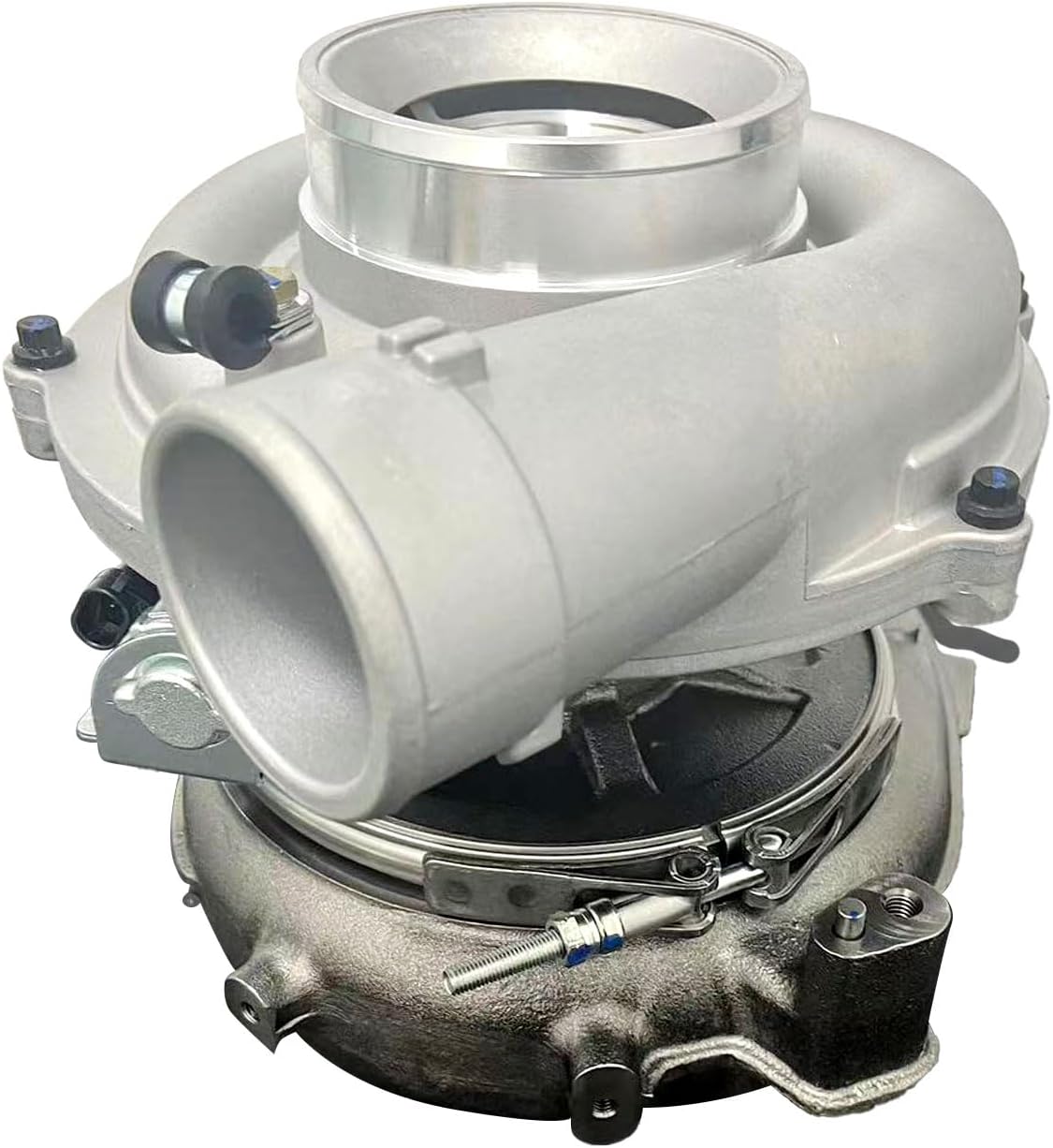
| Turbo Model | GT3782V |
|---|---|
| Manufacturer Part Number | 743250-5013S |
| Position | Front |
| Engine Fitment | 6.0L Powerstroke (2004-2005 listed; fits 2005-2007 Super Duty per application) |
This GT3782V turbocharger from ALL STATES DP is offered as a replacement for the 6.0L Powerstroke found in mid-2000s Ford Super Duty trucks. It swaps in place of common OEM part numbers listed in the description and uses a balanced rotor assembly, compressor wheel, and turbine wheel to restore boost and engine breathing. Typical use is direct fitment during turbo replacement or engine repair to regain lost power and reduce smoke from worn units. Notable features include a machined exterior, dynamic balancing for smoother rotation, and a design intended to improve combustion and intake air density. Practical benefits are restored throttle response, potential for improved fuel efficiency over a failing turbo, and availability of service parts like cartridges and actuators for future repairs. Limitations are that correct fitment depends on matching the turbo’s part number to your original unit and that this is a replacement turbo rather than a performance upgrade, so it will not significantly increase peak horsepower beyond factory expectations.
Best for: Owners of mid-2000s 6.0L Powerstroke trucks who want a reliable, like-for-like replacement turbo to restore factory performance and drivability.
Less Ideal for: Drivers seeking a high-performance upgrade or significant horsepower gains should look at performance-specific turbochargers instead.
- Lists multiple compatible OEM part numbers for straightforward fit confirmation
- Balanced rotor assembly and machined construction aimed at durability and smoother operation
- Designed to restore intake air density and combustion for recovered engine performance
- Includes availability of replacement cartridges and service parts for future repairs
- Intended as a factory-style replacement so it does not provide a meaningful performance increase over stock units
Verdict: Choose this GT3782V when you need a dependable, balanced factory-style replacement to restore the 6.0L Powerstroke's original turbo performance.
2. AISIN Aftermarket GT3782VA Turbocharger for Ford 6.0L Super Duty (2003)
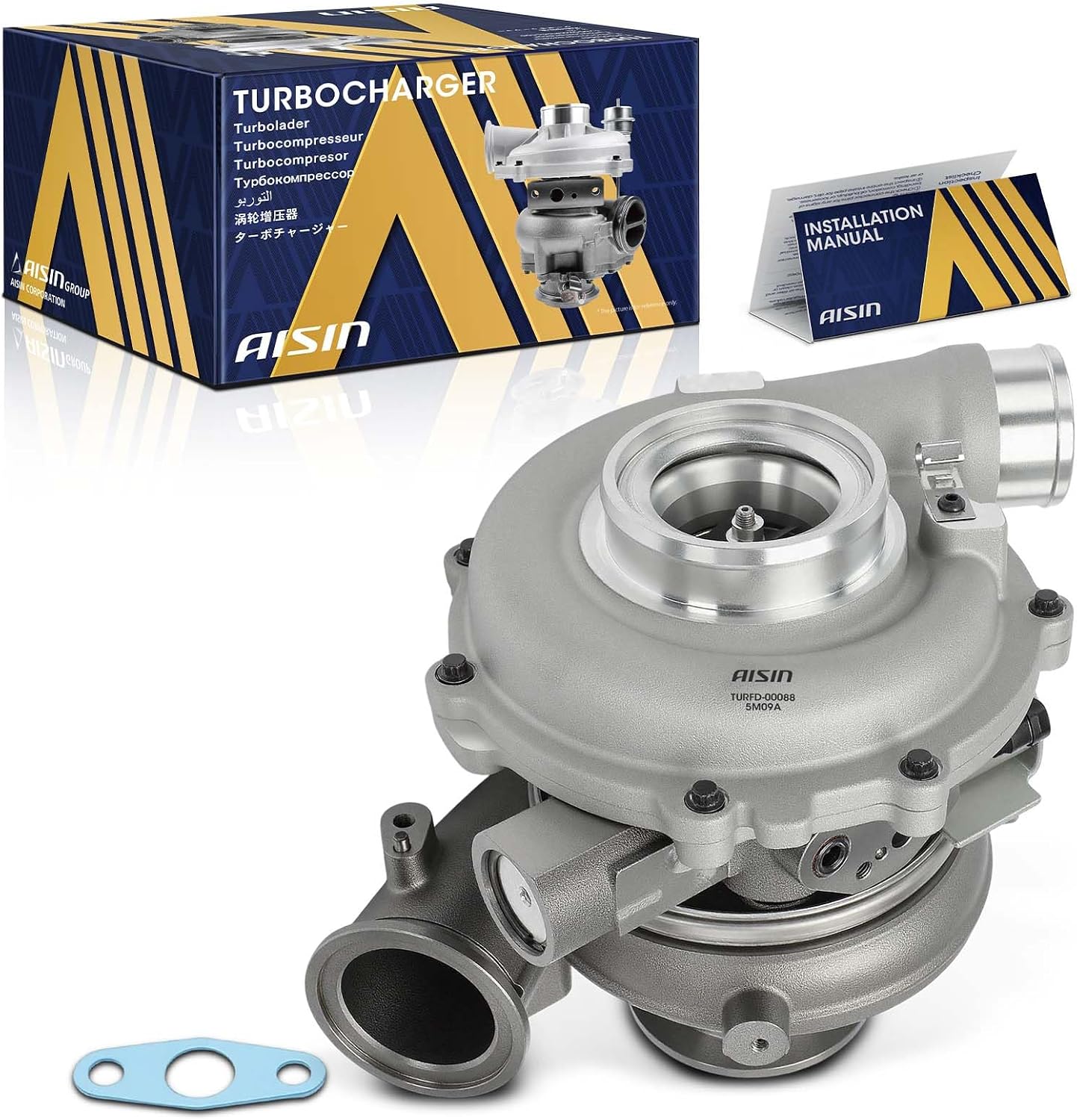
| Manufacturer | AISIN |
|---|---|
| Turbo Model | GT3782VA |
| Material | Aluminum Alloy, Cast Iron |
| Manufacturer Part Number | TURFD-00088 |
This AISIN GT3782VA turbocharger replaces the factory turbo on 6.0L Ford Super Duty and Excursion models from the early 2000s and is built with an aluminum-alloy compressor housing and cast-iron turbine. It is intended as a like-for-like replacement to restore boost and drivability after turbo failure. Installation is described as a precise, direct-fit swap to minimize modification and simplify refitment. The GT3782VA model is commonly used on performance-oriented diesel builds, so buyers focused on throttle response and reliable boost recovery will appreciate the familiar cart and turbine design. Practical benefits include factory-style fitment, materials suitable for exhaust-side heat, and compatibility with common Ford reference part numbers. Limitations are that this is an aftermarket replacement tuned for stock systems, so achieving higher-than-stock power will require supporting upgrades such as fueling, tuning, and stronger engine components. Also, the turbo’s long-term performance depends on correct installation, oil supply, and maintenance.
Best for: Buyers seeking a dependable, factory-style turbo replacement to restore boost and drivability on early 2000s 6.0L Ford Super Duty trucks, especially those who value a known turbo model and straightforward installation.
Less Ideal for: Drivers planning aggressive power upgrades or large-bore turbo swaps should look for a performance-specific turbo and matched supporting modifications instead.
- Direct-fit design for 6.0L Ford Super Duty and Excursion plug-in replacement
- GT3782VA model with aluminum-alloy compressor housing and cast-iron turbine for heat resistance
- Matches common OEM reference part numbers for straightforward ordering and fitment
- Engineered by an established manufacturer with aftermarket focus on airflow and durability
- Designed for stock or stock-replacement use and not optimized for high-horsepower forced-induction upgrades
- Requires proper oiling, installation, and potentially supporting mods to ensure long-term reliability
Verdict: Choose this AISIN GT3782VA turbo if you want a reliable, factory-style replacement to restore boost and drivability on a 6.0L Ford Super Duty with minimal modification.
3. A-Premium GT3782VA Turbocharger Assembly for 2005–2007 Ford Super Duty 6.0L

| Compatible vehicles | 2005–2007 Ford Super Duty F-250/F-350/F-450/F-550 6.0L V8 |
|---|---|
| Turbo model | GT3782VA |
| Wastegate actuator | Included |
| Gaskets/seals | Included |
| Manufacturer part number | APTBC178 |
This A-Premium GT3782VA turbocharger is a direct-fit replacement for 2005–2007 Ford F-250/F-350/F-450/F-550 Super Duty trucks with the 6.0L V8. It ships as a full assembly with the wastegate actuator and gaskets so installers can swap the unit without sourcing additional core parts. The manufacturer says the unit is built from alloy and meets or exceeds factory specifications, which should restore boost response and towing drivability when replacing a worn or failed turbo. Practical features include included seals and a one-year unlimited-mileage guarantee that reduces risk for budget-minded buyers. Expect typical installation via a mechanic familiar with the 6.0L engine and plan for standard break-in and tune checks after fitment. Limitations are that this is a direct replacement turbo rather than a performance upgrade, so it will not increase peak power beyond factory levels, and buyer compatibility checks are important because it replaces specific OEM part numbers for those model years.
Best for: Buyers who want a cost-conscious, ready-to-install replacement turbo to restore factory boost and towing performance on a 2005–2007 6.0L Super Duty without hunting for additional parts.
Less Ideal for: If you are seeking a performance upgrade, higher boost capability, or custom tuning parts for increased horsepower, choose a dedicated performance turbo instead.
- Complete assembly includes wastegate actuator and gaskets for easier installation
- Made from alloy and specified to meet or exceed factory specifications
- Replaces multiple OEM part numbers for direct fitment on 2005–2007 6.0L Super Duty trucks
- Designed as a factory-style replacement so it does not provide performance gains over stock turbochargers
Verdict: A practical, complete direct-replacement turbocharger for 2005–2007 6.0L Super Duty trucks that simplifies installation and restores factory boost performance.
4. APFAITH Turbocharger Assembly GTP38 Compatible with Ford 7.3L Powerstroke (1999–2003)

| Manufacturer | APFAITH |
|---|---|
| Model | Turbocharger Assembly |
| Exterior | Machined |
| Position | Front |
This APFAITH turbocharger is a replacement GTP38 unit intended for Ford 7.3L Powerstroke trucks from 1999 through 2003. It swaps into the factory location and, by using a precision-balanced turbine wheel and cast iron housing, aims to restore lost boost, improve throttle response, and recover highway passing power on tired engines. Installation is the same as other drop-in turbos for the platform, so shops familiar with the 7.3L will find it straightforward to fit when the original part number matches. The heat-resistant materials and machined exterior suggest durability under heavy use, though buyers should verify the part numbers and visual match before buying since fitment excludes early 1999 models. As a budget-focused replacement, it gives a practical way to bring back factory-style performance, but buyers expecting upgraded top-end power or extended warranty coverage should consider higher-end or performance-specific options instead.
Best for: Owners looking for a cost-conscious, factory-style replacement turbo to restore boost and drivability on a 1999–2003 7.3L Powerstroke without upgrading internal engine components.
Less Ideal for: Drivers seeking a performance upgrade for higher peak power or extended warranty coverage should look at performance turbos or options with documented warranty support.
- Designed to match GTP38 replacement part numbers used on 7.3L Powerstroke engines
- Precision-balanced turbine wheel to reduce vibration and improve spool-up
- Cast iron housing and heat-resistant materials for durability under high exhaust temperatures
- Drop-in style fit for straightforward installation when part numbers and visuals match
- Not validated for early 1999 models and requires careful part-number verification before purchase
- No explicit warranty details provided in the product information
Verdict: A practical, wallet-friendly replacement turbo for restoring factory-style boost and responsiveness to 1999–2003 Ford 7.3L Powerstroke trucks.
5. A-Premium Complete Turbocharger Kit with Wastegate Actuator and Gasket
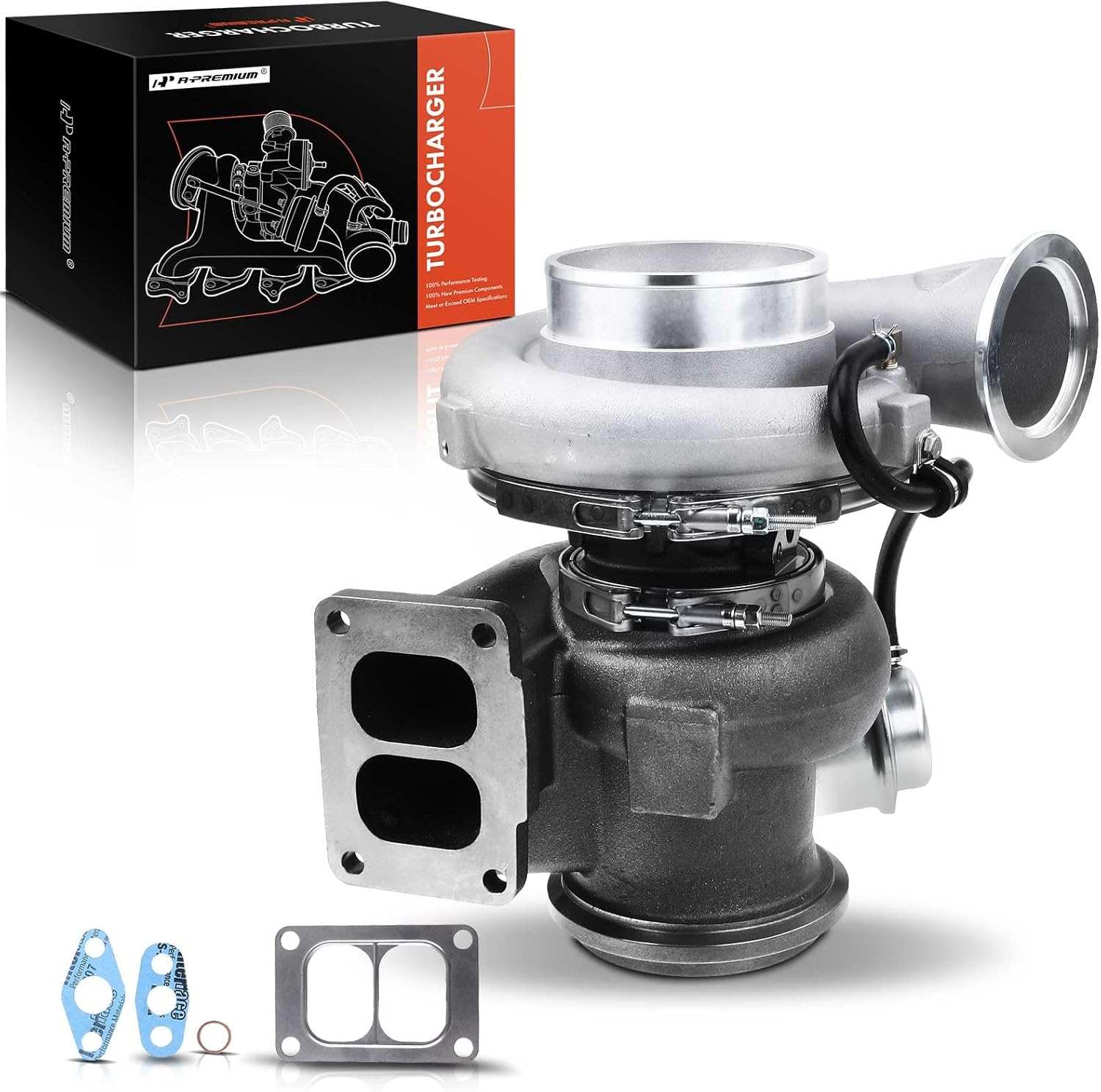
| Turbo Model | GTA4294 |
|---|---|
| Wastegate Actuator Included | Yes |
| Gasket Included | Yes |
| Exhaust Manifold Included | Yes |
| Material | Alloy |
This A-Premium turbocharger kit is a full replacement assembly built around the GTA4294 cartridge and aimed at heavy-duty Ford and GM diesel applications. It arrives as a complete kit with the wastegate actuator, gaskets, and an exhaust manifold, which reduces parts sourcing and simplifies installation for a competent mechanic. The alloy construction and inclusion of the actuator mean you get the key components that affect boost control and sealing at the flanges, and the kit covers common fitment for 2006 Ford F-350 Super Duty models in the specified range. Practical benefits include fewer back-and-forth parts orders and an easier swap when replacing a failed turbo on an older truck. Limitations are that this is a direct-fit aftermarket unit rather than a factory remanufacture, so buyers who need exact factory matching or want a branded OEM turbo may prefer other options. Professional installation and checking actuator calibration are recommended to ensure reliable boost behavior after fitment.
Best for: Buyers who prioritize a dependable, ready-to-install replacement for an older heavy-duty truck and want a complete kit that minimizes parts chasing and downtime.
Less Ideal for: Drivers seeking a factory-branded remanufactured turbo or a performance upgrade tuned beyond stock specifications should consider other options.
- Complete kit includes turbocharger, wastegate actuator, gaskets, and exhaust manifold for a single-source replacement.
- Designed for direct fitment to listed heavy-duty Ford and GM models, reducing modification during installation.
- Alloy construction and included actuator provide the main components needed to restore boost control and sealing.
- One-year unlimited-mileage guarantee from the brand gives added assurance for use on older work trucks.
- Aftermarket unit rather than factory remanufactured turbo, which may differ in internal tolerances from original parts.
Verdict: A full, single-source turbocharger kit that lets you swap a failed turbo on eligible 1999–2007 heavy-duty trucks with minimal parts sourcing and downtime.
6. maXpeedingrods GTP38 Turbocharger for 7.3L Ford Powerstroke (1999–2003)

| Turbo Model | GTP38 |
|---|---|
| Engine Code | 7.3L |
| Cooling Type | Oil cooling |
| Turbo Type | Twin-Scroll |
| Horsepower | Up to 275 HP |
This maXpeedingrods GTP38 is a replacement turbocharger built to fit late-1999 through 2003 Ford 7.3L Powerstroke trucks, restoring factory-style boost and airflow. It uses a twin-scroll, oil-cooled design with a forged aluminum compressor wheel and an alloy turbine wheel housed in ductile iron for high-temperature durability. The unit is intended as a direct OEM-style replacement for specific part numbers and is commonly used to replace failed or worn stock turbos without modifying plumbing or mounts. Practical benefits include improved boost response from the aerodynamic compressor wheel and robust heat resistance from the turbine materials, which helps under heavy towing or repeated load. Limitations to note are that it does not fit early 1999 Powerstroke engines that use the 4-bolt compressor housing, and installation still benefits from experienced fitting and proper oil priming to avoid startup damage. Buyers seeking exact fitment should verify compressor housing bolt count and listed part references before ordering.
Best for: Buyers who want a ready-to-install replacement turbo that restores factory performance on late-1999 to 2003 7.3L Powerstroke trucks and prefer parts with clear part-number cross-references for confidence.
Less Ideal for: Do not choose this if you have an early-1999 7.3L engine with the 4-bolt compressor housing or if you need a unit for a different engine family or year range.
- Direct OEM-style replacement for specified 7.3L Powerstroke applications, so no major modifications are required
- Twin-scroll and forged aluminum compressor wheel improve airflow and boost response compared with worn or damaged stock units
- Ductile iron turbine housing and alloy turbine wheel rated for high exhaust temperatures for durability under heavy use
- Not compatible with early 1999 7.3L engines that use the 4-bolt compressor housing
Verdict: Choose this GTP38 if you need a direct-fit replacement turbo to reliably restore factory-style boost and durability on late-1999 through 2003 7.3L Powerstroke trucks.
7. BuyAutoParts Remanufactured Turbocharger 40-30125R for 6.0L PowerStroke (2006–2007)
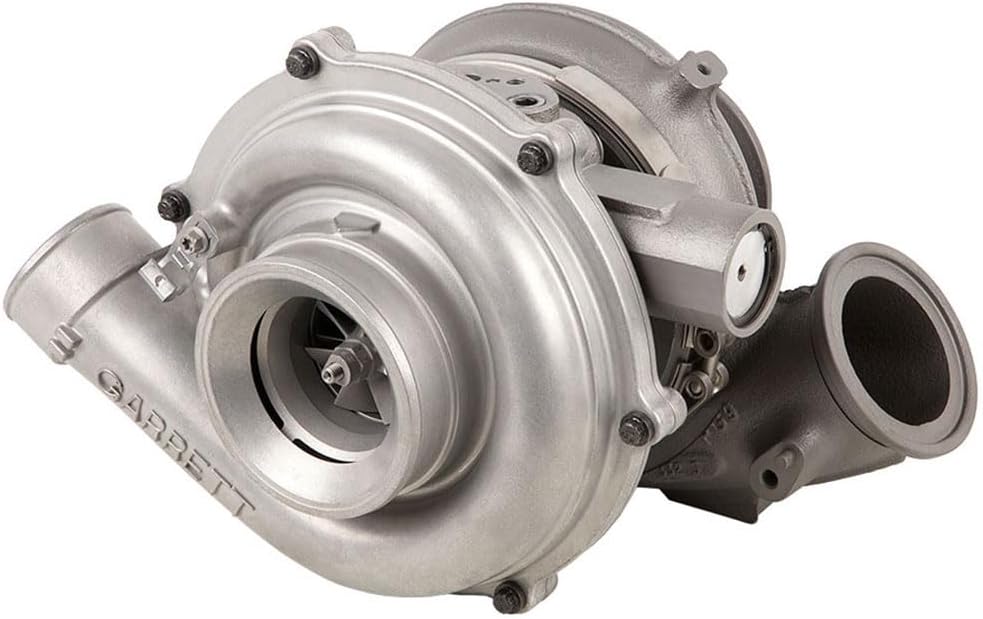
| Fits | 2006–2007 Ford 6.0L PowerStroke V8 |
|---|---|
| Manufacturer | BuyAutoParts |
| Item model number | 40-30125R |
| Remanufactured | Yes |
| Includes | Replaced bearings and seals, balanced and bench-tested |
This BuyAutoParts remanufactured turbocharger is built to replace the factory unit on 2006–2007 Ford 6.0L PowerStroke V8s. It arrives fully remanufactured with new bearings and seals, machined housings, dynamic balancing, and bench testing so the unit should match factory operation and fitment. Typical use is straightforward swap-in replacement during a turbo failure or as part of an engine rebuild; installation follows the original mounting points and connections for an OEM-like fit and finish. The seller emphasizes quality controls and ISO/TS 16949 processes, and the part is packaged securely to avoid shipping damage. Because it is a remanufactured factory-fit component, you get factory-style performance and durability without needing a custom tune or modification. Limitations are that this is not a performance upgrade turbo and applies only to 2006–2007 6.0L PowerStroke engines, so it will not increase power beyond stock and buyers should verify OE numbers to ensure correct application.
Best for: A buyer prioritizing low risk and dependable, factory-style repair for a 2006–2007 6.0L PowerStroke who wants a remanufactured part that installs like the original and avoids aftermarket tinkering.
Less Ideal for: Drivers seeking increased power, modified turbo setups, or cross-vehicle compatibility should look at performance or universal turbo options instead.
- Exact-fit remanufactured unit replacing bearings, seals, and balanced for smooth operation
- Bench-tested and machine-inspected housings to restore factory performance
- ISO/TS 16949 quality standards referenced indicating structured manufacturing controls
- Secure packaging and multiple warehouses reduce risk of arrival damage
- Fits the specified 2006–2007 Ford 6.0L PowerStroke application for straightforward installation
- Not a performance or aftermarket upgrade; designed only to restore stock function
- Limited to 2006–2007 6.0L PowerStroke fitment and OE number matching is required
Verdict: Choose this remanufactured, bench-tested turbocharger when you want a reliable, factory-fit replacement for a 2006–2007 6.0L PowerStroke with minimal installation risk.
Choosing the Right 1999-2007 Ford F-350 Turbocharger: Key Factors to Consider
Fitment and Physical Compatibility
Correct fitment is the foundation of any turbocharger decision for the 1999-2007 Ford F-350. Confirming bolt pattern alignment with the exhaust manifold, clearance for the intake and oil/coolant lines, and proper orientation of actuator and sensor ports prevents costly modifications. Fitment also determines whether factory heat shields and intercooler plumbing remain usable, which affects installation time and leak risk.
Poor fitment can force additional fabrication, extended downtime, and potential interference with steering or suspension components. For F-350 owners who use the truck for work, selecting a turbo that matches the vehicle's physical layout reduces labor and ensures the turbo can be serviced or replaced with standard shop tools.
Boost Characteristics and Driveability
How a turbo produces boost directly affects real-world towing and daily driving. For heavy loads, a turbocharger that delivers usable low-end boost and a progressive spool helps maintain throttle response under load and reduces the need to downshift. Conversely, a turbo that favors peak horsepower at high rpm may feel weak while towing and can increase transmission stress.
Consider the compressor map and intended application when evaluating boost behavior. Turbos designed to improve spool and torque at midrange suit the F-350's heavy-duty role better than units engineered purely for peak power. Matching boost goals to how you use the truck ensures predictable drivability and less wear on driveline components.
Durability and Thermal Resistance
Turbochargers operate in extreme heat and must withstand repeated thermal cycling, especially on diesel-equipped or heavily loaded gasoline engines in the F-350. Materials such as high-grade turbine alloys and robust bearing designs improve resistance to heat-related failure. A unit with better thermal management will tolerate heavy towing and stop-start cycles without accelerated wear.
Durability also encompasses shaft and bearing life, sealing reliability to prevent oil leaks, and resistance to soot or contamination in exhaust streams. For trucks that see commercial use or long-haul duty, choosing a turbo with proven materials and serviceable components reduces the likelihood of premature failure and lowers total ownership costs.
Serviceability and Rebuild Options
Over the long life of an F-350, the ability to service or rebuild a turbocharger is a practical advantage. Availability of rebuild kits, replacement cartridges, and common wear parts means less downtime and lower repair expense when a unit needs attention. Serviceability also covers how easily the turbo can be removed, whether the turbine housing or CHRA can be replaced independently, and whether local shops are familiar with common repair procedures for the unit.
Selecting a turbo with documented rebuild support and accessible parts helps owners who plan to keep their trucks for many years. It also makes it easier to source components if you encounter turbocharger symptoms that require repair.
Compatibility With Engine Management and Sensors
Modern turbocharger behavior is often tied to sensors and engine controls. Even for older 1999-2007 F-350s, maintaining compatibility with stock boost control, MAP/MAF sensors, and wastegate actuators is important. A turbo that requires extensive ECU tuning or additional sensors may deliver performance gains but increases complexity and potential for drivability issues if not calibrated properly.
Owners who prefer bolt-on reliability should prioritize turbochargers that work with the factory control strategy or have clear tuning pathways. This reduces the risk of check-engine lights, poor fuel control, or unintended interactions with emissions-related systems during daily use.
Cost of Installation and Long-Term Ownership
Upfront purchase cost is only part of the equation. Installation complexity, required ancillary parts, and the likelihood of future repairs determine total cost of ownership. Factors such as whether additional gaskets, oil lines, intercooler plumbing, or actuator brackets are needed will affect labor time and expense.
Also consider how long the turbo is expected to last under your typical loads. A lower-cost unit that requires frequent rebuilds can become more expensive over time than a higher-quality option with longer service intervals. Estimating both initial install effort and likely maintenance needs helps you choose a turbo that matches budget and durability expectations.
Common Turbocharger Symptoms and How to Diagnose Them
Recognizing turbocharger symptoms early keeps repair costs down and prevents collateral engine damage. Typical signs include reduced boost pressure under load, smoke from the exhaust that is blue or black, unusual whining or grinding noises from the turbo area, and oil leaks near the turbocharger or intercooler piping. Each symptom points to different failure modes and helps prioritize inspection steps.
- Reduced boost or poor spool often indicates compressor or turbine wear, wastegate issues, or boost leaks in intercooler piping.
- Blue smoke can mean oil is entering the intake from failed seals or bearing wear; black smoke often signals rich combustion or excessive fuel demand when boost control fails.
- Unusual high-pitched whining may indicate bearing damage while grinding or rattling suggests more severe internal contact or shaft failure.
- Oil in charge pipes or intercooler cores usually signals seal failure and should be inspected before replacing the turbo to rule out secondary damage.
Preparing Your F-350 for a Turbocharger Replacement or Upgrade
Preparation reduces installation time and helps avoid common pitfalls. Start by gathering vehicle-specific fittings such as oil feed and drain lines that match the 1999-2007 F-350 plumbing. Inspect associated components like the exhaust manifold, downpipe flange, and intercooler hoses for corrosion or damage that may need repair before installing a new unit.
If you plan a turbocharger upgrade, verify that supporting components like the intake, fuel delivery, and cooling systems are in good condition. Upgrading to a turbo with different flow characteristics may require adjusting boost control and ensuring your transmission and drivetrain are prepared for any changes in torque output.
- Clean or replace oil feed and drain lines to ensure proper lubrication on first start.
- Check exhaust flange surfaces and replace gaskets to prevent exhaust leaks.
- Inspect intercooler and charge piping for oil contamination and clean thoroughly before reassembly.
When to Consider a Rebuild Vs a Replacement
Deciding between a rebuild and a full replacement depends on the extent of damage, parts availability, and long-term goals for the vehicle. Rebuilding can be cost-effective when the housings are sound and only the CHRA or bearings need replacement. It also preserves any custom fitment pieces and can be faster if rebuild kits are available for the specific unit.
A full replacement is often preferable when housings are cracked, turbine or compressor wheels are severely damaged, or when you are changing to a different compressor/turbine size for performance reasons. For older F-350s with high miles, weigh the condition of surrounding components to avoid repeating labor for adjacent repairs.
- Rebuild when housings are intact and service parts are readily available.
- Replace when structural damage exists or when switching to a differently sized turbo for upgrade purposes.
Still looking for the perfect fit?
Select your Ford F-350 configuration to see the most relevant Turbochargers recommendations
How We Chose the Best 1999-2007 Ford F-350 Turbocharger
We focused on decision factors that matter for 1999-2007 Ford F-350 owners who need a reliable turbocharger for towing, frequent highway driving, or high-mileage use. Evaluation prioritized fitment accuracy to the Ford exhaust manifold and oil/coolant lines used on these model years, peak and low-end boost behavior that affects towing response, and component durability under elevated exhaust temperatures. We also considered compressor and turbine wheel materials, bearing types, and the availability of rebuild or service parts to reflect long-term ownership costs.Additional criteria included ease of installation given common shop practices for this vehicle, compatibility with stock engine management and sensors, and whether the unit supports common bolt-on upgrades without extensive fabrication. Units that required major manifold or driveline modification were excluded. We excluded anything that did not clearly document fitment for 1999-2007 Ford F-350 configurations or lacked supporting technical specifications. The result is a shortlist that balances real-world drivability, longevity, and serviceability for this truck platform.
Our full evaluation process is outlined in our review methodology.
FAQ
What are the most common turbocharger failure signs on a 1999-2007 F-350?
Common signs include reduced boost pressure, excessive exhaust smoke, oil in the intercooler piping, and unusual turbo noises. These symptoms often indicate worn seals, bearing failure, or boost leaks and should prompt a focused inspection.
Can I install a replacement turbocharger myself on a 1999-2007 F-350?
It depends on your mechanical experience. The job requires working with oil and coolant lines, precise torqueing of exhaust components, and careful pre-lubrication. Many owners with solid mechanical skills can do the swap, but those unfamiliar with turbo plumbing should consider professional help to avoid damage on first start.
How long should a properly installed turbocharger last on this F-350 model?
Lifespan varies by usage and maintenance, but a properly installed and maintained turbocharger often lasts many tens of thousands of miles. Heavy towing, frequent high-load operation, and poor maintenance shorten life, while clean oil and timely servicing extend it.
Is rebuilding a turbo a reliable long-term solution for a high-mileage F-350?
Rebuilding can be reliable if housings are in good condition and service parts are high quality. It is a practical option when parts are available, but inspect surrounding components to ensure the rebuild will not be undermined by adjacent wear or damage.
Will upgrading the turbocharger change my F-350's fuel economy?
An upgrade that increases boost and torque can change fuel use depending on driving style. If you use the extra power frequently, fuel consumption may rise. However, a properly matched turbo that improves efficiency at cruising loads can sometimes deliver better real-world economy under specific conditions.
What should I check after installing a new turbocharger?
After installation, verify oil and coolant lines are leak-free, check all exhaust and intake clamps, and pre-lube the turbo per instructions before first start. Monitor boost levels and listen for abnormal noises during the initial run-in period and recheck fasteners after a short break-in drive.
Final Verdict
For 1999-2007 Ford F-350 owners, prioritize fitment, boost behavior, and durability when selecting a turbocharger. Match the turbo's spool and torque delivery to your towing and workload needs, and confirm serviceability and parts availability if you plan to keep the truck long term.Balance initial installation effort and long-term ownership costs when deciding between rebuildable cores and full replacements. Prioritizing the factors above will help you select a turbo that enhances towing performance while minimizing downtime and maintenance headaches.
