

Note: This article contains affiliate links. If you click on these links and make a purchase, I may earn a small commission at no extra cost to you. This helps support my research and content. Read my full affiliate disclosure here.
If you want a firmer ride and a lower center of gravity for your 1997-2001 Honda CR-V, the right set of lowering springs can make a big difference. For CR-V owners of the 1997-2001 generation, choosing springs tuned to the vehicle's original suspension geometry matters for predictable handling, tire wear, and ride quality.This guide covers the top shortlisted lowering springs for the 1997-2001 CR-V, explains the key specs that affect fitment and performance, and outlines installation and alignment considerations. Use the evaluation criteria below to match a spring set to how you drive and what compromise between comfort and performance you will accept.
Looking for other parts? See all Honda CR-V parts & accessories.
Top Picks at a Glance
| Best Overall The best all-around choice for most situations | FAPO PS+ Coilovers for Honda CR-V (1996–2001) 16‑Level Adjustable Mono‑Tube Kit |  |
| Best Quality Built to a higher standard if you want something more solid | Godspeed MonoSS Coilover Lowering Kit for Honda CR-V (1997–2001) |  |
| Best Value The sweet spot between price and what you get | maXpeedingrods Adjustable Coilovers for 1996–2001 Honda CR-V (RD1–RD3) |  |
| Best Budget The cheapest option that still gets the job done reliably | maXpeedingrods Front Adjustable Coilovers for Honda CR-V 1996-2001 |  |
| Highest Rated A top-rated pick with lots of positive feedback | OCPTY Adjustable Coilover Lowering Kit for 1997–2001 Honda CR-V |  |
| Most Popular A crowd favorite that many people choose with confidence | maXpeedingrods Adjustable Coilovers for Honda CR-V (1996–2001) |  |
1. FAPO PS+ Coilovers for Honda CR-V (1996–2001) 16‑Level Adjustable Mono‑Tube Kit
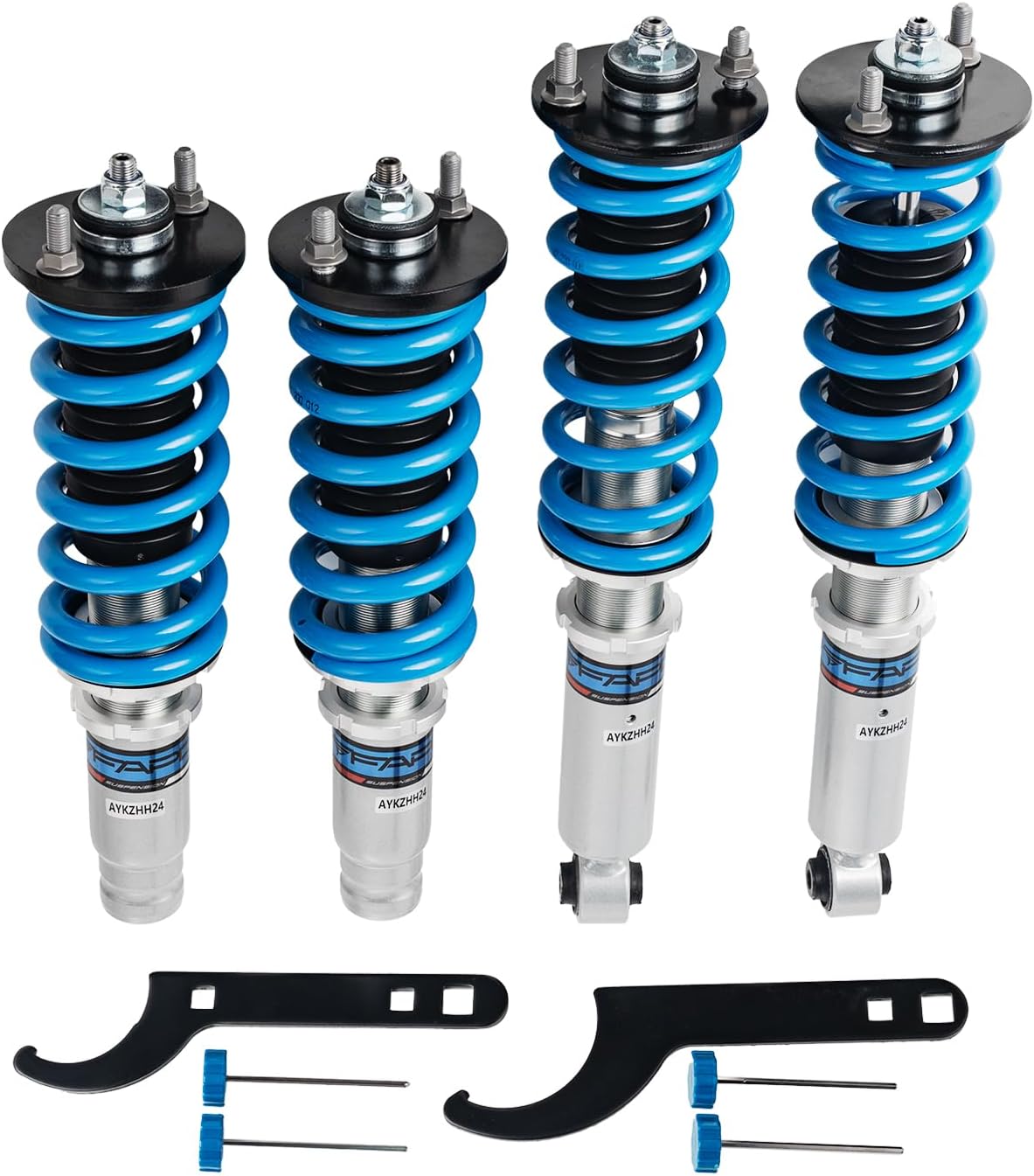
| Vehicle fit | Honda CR‑V 1996–2001 RD1/RD2/RD3 |
|---|---|
| Damping adjustment | 16 levels |
| Lowering range | 1–3 inches |
| Design | Mono‑tube |
| Package includes | 2 front coilovers, 2 rear coilovers, 2 wrenches |
This FAPO PS+ coilover kit replaces the CR‑V factory suspension with adjustable-height, performance‑oriented units for front and rear. Installation lowers the vehicle about 1 to 3 inches using an adjustable spring seat and provides 16 internal damping settings so you can tune firmness for daily driving or more spirited roads. The mono‑tube construction and forged top mounts aim to keep damping consistent and heat dissipation improved during extended or aggressive use, while silicone dust covers and reinforced bushings help protect moving parts. Spring rates are noticeably stiffer up front than the rear, so handling will feel more controlled than stock but firmer over bumps. These are a modified suspension product and require professional installation and alignment; they do not retain factory ride height and lack adjustable camber plates. Overall this kit is useful for buyers who want a single solution that improves handling and lets them dial ride feel, but expect a firmer ride and the need for proper setup.
Best for: Buyers who want a balanced upgrade that improves cornering control while still allowing tuning between comfort and firmness for daily driving and occasional spirited roads.
Less Ideal for: Drivers seeking a plush, comfort‑focused ride or those unwilling to pay for professional installation and alignment should consider alternative softer suspension options.
- Wide range of damping with 16 adjustment settings for fine tuning ride firmness
- Adjustable ride height allowing 1–3 inch lowering to change stance and center of gravity
- Mono‑tube design and forged top mounts for more consistent damping and improved heat dissipation
- Includes front and rear coilovers plus wrenches for a full kit replacement
- Requires professional installation and alignment and is not compatible with factory ride height
Verdict: A single, adjustable coilover kit that tightens handling and lets you dial ride firmness and ride height for a balanced daily‑driven CR‑V upgrade.
2. Godspeed MonoSS Coilover Lowering Kit for Honda CR-V (1997–2001)

| Compatible Models | Honda CR-V (RD1/RD2/RD3) 1997–2001 |
|---|---|
| Spring Rates (F/R) | 12 kg/mm front, 6 kg/mm rear |
| Damping Adjustment | 16 rebound levels |
| Shock Type | 52mm monotube stainless steel |
| Included Components | Coil springs and shock dampers |
The Godspeed MonoSS coilover kit replaces the CR-V factory suspension with a single-tube, performance-oriented setup that lets you lower ride height and tune spring tension and rebound across 16 damping positions. It is built around a 52mm carbon seamless steel monotube with a performance internal piston and uses high-strength cold-bent springs to balance street comfort with firmer handling. Independent spring tension and height adjustment let you dial stance and cornering roll, while the KOYO 6204Z bearing top mount and forged aluminum or carbon steel lower brackets aim to keep response and durability tight. This kit is typically installed by enthusiasts or shops who want a more engaging street and occasional track feel rather than a plush OEM ride. Practical benefits include clearer turn-in, reduced body roll, and broad damping range for tuning, but some users report durability and oil-leak issues over time so professional installation and periodic inspection are advisable. Rebuildable shocks and race-grade oil are positives for long-term servicing, though the setup will feel firmer than stock in daily driving.
Best for: Drivers prioritizing sharper handling and adjustable ride characteristics for street driving and occasional track days who are comfortable with a firmer, tuned suspension and scheduled maintenance.
Less Ideal for: If you want a soft, comfort-focused ride or prefer a maintenance-free factory replacement, this performance coilover is not the best choice.
- 16-level rebound damping lets drivers fine-tune ride firmness for street or track use
- Monotube 52mm stainless steel construction with performance piston for quicker damper response
- Independent height and spring tension adjustment for customizing stance and roll control
- Includes KOYO 6204Z bearing top mounts and forged aluminum/carbon steel lower brackets for improved durability
- Some reviewers report premature oil leakage and loss of damping force on a minority of units
Verdict: Choose the Godspeed MonoSS if you want an affordable, fully adjustable coilover that sharpens handling and lets you tune ride height and damping for a performance-focused 1997–2001 CR-V.
3. maXpeedingrods Adjustable Coilovers for 1996–2001 Honda CR-V (RD1–RD3)
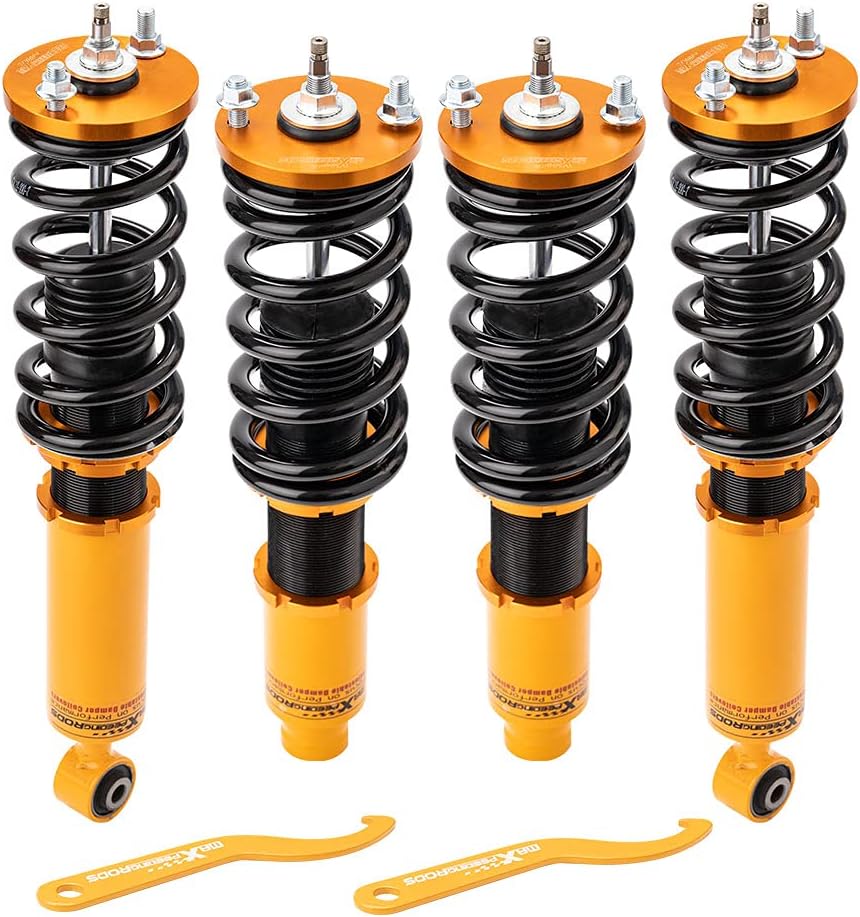
| Fitment | 1996–2001 Honda CR‑V RD1–RD3 FWD & AWD |
|---|---|
| Damping Levels | 24 rebound settings |
| Height Adjustment | 1–3 inches adjustable |
| Spring Rate Front | 10 kg/mm (560 lbs/in) |
These maXpeedingrods coilovers replace the stock struts and springs on 1996–2001 Honda CR‑V RD1–RD3 models to provide adjustable ride height and damping. Installation gives a lower stance—about 1–3 inches of drop—and 24 rebound settings let you tune from soft street comfort to much firmer responses for spirited driving. The kit uses twin‑tube shocks with aluminum components and high tensile springs tested for long life, and it ships with a wrench for height adjustment. In everyday use the package sharpens steering feel and reduces body roll compared with worn stock units, and the wide damping range makes it easy to dial a balance between comfort and control. Expect some compromises: these are aftermarket, budget coilovers not engineered for hard track competition, and achieving very low front ride height may require preload adjustments and careful setup. Fitment is specific to first‑gen CR‑Vs and they do not retain factory ride height when lowered.
Best for: A practical owner who wants to lower their first‑generation CR‑V and improve handling without spending on high‑end motorsport hardware; ideal for street use with occasional spirited driving.
Less Ideal for: Not a good choice for drivers who need a competition‑grade coilover for track days or for buyers who want to maintain factory ride height and suspension geometry unchanged.
- Vehicle‑specific fitment for 1996–2001 Honda CR‑V RD1–RD3 for straightforward replacement
- 24 rebound damping settings let you tune firmness across a wide range
- Height adjustable 1–3 inches for a lower stance and improved steering feel
- Aluminum construction and high tensile springs designed for durability
- Not intended for dedicated race use and may require setup tweaks for extreme lowering
Verdict: A budget‑minded way to lower a first‑gen CR‑V and tune ride firmness with wide damping and height adjustability.
4. maXpeedingrods Front Adjustable Coilovers for Honda CR-V 1996-2001

| Application | Honda CR-V 1996-2001 RD1-RD3 FWD & AWD |
|---|---|
| Damping Adjustment | 24 levels |
| Front Spring Rate | 10 kg/mm (front specified) |
| Included Components | 2 PCS Front Coilovers + C Spanners |
| Material | 6061 aluminum alloy T6 |
These maXpeedingrods front coilovers replace the factory front springs and dampers on 1996–2001 Honda CR‑V RD1–RD3 models to provide adjustable ride height and tunable damping. Installation replaces the front suspension with fully loaded coilover assemblies and includes C‑spanners for height adjustment. The unit offers 24 levels of rebound damping so you can dial soft settings for daily comfort, firmer clicks for spirited street driving, and the stiffest setting for occasional track use. Height is adjustable roughly 1–3 inches, letting you achieve a lower stance and sharper steering response. Build materials include T6 heat‑treated 6061 aluminum and high‑tensile springs subjected to fatigue testing for durability. Practical limitations are that this kit only covers the front, so full‑vehicle balance may require matching rear components, and true ride quality depends on correct setup and alignment after installation. For budget buyers it is a cost‑effective way to lower and improve handling, but expect some compromise versus higher‑end, professionally tuned coilovers.
Best for: Buyers looking to lower a first‑generation CR‑V on a limited budget who want tunable damping and a noticeable handling upgrade without paying for premium coilovers.
Less Ideal for: Drivers seeking a fully matched suspension overhaul or the highest‑end track performance should consider complete coilover sets or pro‑tuned systems instead.
- 24 levels of damping adjustment for noticeable control over ride comfort and handling
- Height adjustable about 1–3 inches to achieve a lower stance and improved steering feel
- Uses T6 6061 aluminum and high‑tensile springs for durability and corrosion resistance
- Includes installation tools (C‑spanners) so basic height adjustments can be done without extra purchases
- Front‑only kit — rear suspension is not included so full handling balance needs matching rear parts
Verdict: An affordable front coilover kit that gives 1996–2001 CR‑V owners adjustable ride height and 24‑level damping to lower the car and improve street handling.
5. OCPTY Adjustable Coilover Lowering Kit for 1997–2001 Honda CR-V

| Fitment | 1997-2001 Honda CR-V |
|---|---|
| Type | Adjustable coilover lowering kit |
| Includes | Struts and full coil springs |
| After-sales | 1 year service |
This OCPTY coilover kit replaces the CR-Vs stock struts and springs with an adjustable-height suspension intended to lower the vehicle and tighten handling. Installation is typical for a full strut-and-spring swap and is used by drivers wanting firmer body control and reduced roll during cornering. Notable features include height adjustability and treated components that the maker says improve durability and shock absorption compared with basic replacements. In practice the kit should make steering feel more direct and reduce squat and nose dive under acceleration and braking when set up correctly. Expect a firmer ride compared with stock and plan for an alignment after installation. The kit is marketed specifically for 1997–2001 Honda CR-V models, so fitment is straightforward if your year matches. The product description notes a one year after-sales service; buyers should confirm fit with their VIN or vehicle details before purchasing and be prepared for the extra work and cost of a full suspension replacement versus simple springs or shocks alone.
Best for: Buyers who prioritize dependable, factory-matching suspension upgrades to improve handling and lower their 1997–2001 CR-V while keeping a straightforward, year-specific fitment.
Less Ideal for: Drivers who prefer a soft, comfort-oriented ride or who want a simple shock-only replacement without changing ride height should consider other options.
- Vehicle-specific fit for 1997–2001 Honda CR-V for simpler installation
- Adjustable ride height lets you fine-tune stance and handling
- Treated components and upgraded shock absorption aimed at improved durability
- Designed to reduce body roll and improve tire contact for sharper handling
- Will produce a firmer ride compared with factory suspension which may reduce comfort on rough roads
Verdict: A year-specific adjustable coilover kit that lowers a 1997–2001 CR-V to noticeably tighten handling while offering straightforward fitment for reliability-minded owners.
6. maXpeedingrods Adjustable Coilovers for Honda CR-V (1996–2001)

| Fitment | Honda CR-V 1996-2001 RD1-RD3 FWD & AWD |
|---|---|
| Height adjustment | 1-3 inches |
| Material Type | 6061-T6 Aluminum |
| Spring rate (front) | 10 kg/mm (560 lbs/in) |
| Spring rate (rear) | 7 kg/mm (392 lbs/in) |
These coilovers replace the front and rear strut/spring assemblies with a height-adjustable, lowerable kit designed specifically for 1996–2001 Honda CR-V RD1–RD3 models. Installation is similar to a standard suspension swap and yields a 1–3 inch drop for a more aggressive stance and sharper steering response. The kit uses 6061-T6 aluminum components and high-tensile springs tested for long life, and the front preset damping aims to keep handling predictable without complicated setup. Practical benefits include a lower center of gravity and improved turn-in feel compared with stock springs, plus corrosion-resistant aluminum finishes. Important limitations are that these are not a comfort-oriented upgrade — the ride will be firmer and rear damping can feel stiff to some drivers — and the product does not retain original ride height. A few buyers report occasional units that did not adjust as expected, so check adjustment operation immediately after receiving the kit. Basic installation checks such as verifying torque and using threadlocker on spring perch hardware are recommended to prevent issues after fitment.
Best for: Buyers who prioritize a lowered look and crisper handling on a 1996–2001 CR-V and who want a vehicle-specific kit that is ready to install rather than a custom suspension tune.
Less Ideal for: Drivers who prioritize a soft daily driving ride or need to maintain original ride height should consider comfort-oriented springs or different suspension options.
- Vehicle-specific fitment for 1996–2001 Honda CR-V for straightforward replacement
- Height adjustable 1–3 inches for a noticeably lower stance
- 6061-T6 aluminum construction and high-tensile springs for durability
- Preset damping for consistent, predictable handling without complex setup
- Firmer ride compared with stock suspension which may reduce comfort on rough roads
- Some units reported by buyers had adjustment or build-quality issues requiring inspection on arrival
Verdict: A ready-to-install, vehicle-specific coilover kit that gives 1996–2001 CR-V owners a reliable way to lower ride height and sharpen handling without complex damping setup.
Choosing the Right 1997-2001 Honda CR-V Lowering Springs: Key Factors to Consider
Drop Height and Ground Clearance
Drop height determines how much lower your CR-V will sit compared with stock ride height. A modest drop reduces body roll and lowers the center of gravity, improving turn-in and stability, but too much drop can cause bottoming, reduced suspension travel, and scraping over common driveways.
Consider your regular driving environment before choosing a target drop. If you park in tight ramps or encounter speed bumps, favor conservative drops that retain sufficient ground clearance. Also keep in mind that advertised drop measurements are often average figures; actual drop can vary depending on vehicle load, tire size, and manufacturing tolerances.
Spring Rate and Ride Quality
Spring rate, measured in pounds per inch, controls how stiffly the suspension resists compression. A higher rate reduces body motion and improves handling response, but increases transmitted vibration and can make rough roads feel harsher. For a compact SUV like the CR-V, selecting a rate that balances reduced roll with acceptable comfort is crucial.
Think about passenger load and cargo when assessing rates. If you frequently carry heavy loads or passengers, slightly higher rates help control squat and bottoming. Progressive-rate springs offer a softer initial response for comfort and progressively stiffen under larger deflections, which can be useful for mixed daily driving and occasional spirited use.
Compatibility With Suspension Geometry
Lowering changes suspension geometry, affecting camber, caster, and roll center. On the 1997-2001 CR-V, excessive drop can induce negative camber and accelerate inner tire wear or alter steering feel. Springs that are engineered to maintain proper travel and work with the stock control arms will cause fewer alignment side effects.
Verify that the springs maintain sufficient jounce and rebound travel to avoid constant contact with bump stops or top mounts. Some spring sets are designed specifically for a vehicle's OEM mounting points and help preserve the intended suspension arc, which reduces the need for extensive corrective modifications.
Durability and Manufacturing Quality
The longevity of lowering springs depends on material quality, coating, and heat treatment. Corrosion-resistant finish prevents premature rusting, which is especially important for older CR-Vs exposed to road salt or humid climates. Proper shot-peening and stress-relief treatments reduce the risk of early sag or fatigue failure.
Inspect the supplier's stated manufacturing processes when possible and prefer springs with consistent coil spacing and uniform winding. Durable springs maintain their specified drop and rate longer, keeping handling predictable over time and reducing the chance of uneven ride height front to rear.
Effect on Ride Height Balance and Tire Wear
Lowering only the front or rear alters rake and handling balance. For the 1997-2001 CR-V, a matched front and rear set is important to avoid excessive nose dive or rear lift. Imbalanced ride heights can cause uneven tire wear patterns and may change braking response.
Plan for alignment after installation to set camber and toe within acceptable ranges and to mitigate accelerated wear. Consider whether the spring set includes recommended correction specs or if camber adjustments will require aftermarket alignment hardware.
Installation Needs and Additional Parts
While many lowering springs reuse stock struts or shocks, some require compatible dampers or upgraded top mounts to function correctly. Worn shocks paired with stiffer springs can lead to harsh or unsafe handling. Verify whether the springs are intended for use with OEM dampers or require matched performance shocks.
Account for installation tasks beyond spring replacement: a proper alignment, potential bump stop relocation, and inspection of mounts and rubber components. If you plan to install the springs yourself, confirm the procedure and necessary tools; if using a shop, factor in alignment and inspection into the overall plan.
How Much Lower Should You Go
For the 1997-2001 Honda CR-V, conservative drops in the 1.0 to 1.5-inch range typically offer a noticeable improvement in handling without creating major clearance or geometry issues. Drops in this range lower the center of gravity enough to reduce body roll while keeping suspension travel usable for daily driving.
If you want a more aggressive appearance or a sportier feel, drops up to about 2.0 inches are possible but increase the likelihood of rubbing, bottoming, and alignment tradeoffs. Prioritize how you use the vehicle and choose a target that preserves drivability on local roads.
- 1.0–1.5 inches: balanced handling and usability
- 1.5–2.0 inches: sportier stance, watch for clearance issues
- Over 2.0 inches: not recommended for daily-driven CR-Vs without additional suspension work
Progressive Versus Linear Rate Springs
Progressive-rate springs start softer and become stiffer as they compress. For a commuter-oriented CR-V, progressive springs can provide a smoother daily ride while offering firmer resistance during hard cornering or heavy loads.
Linear-rate springs deliver a consistent response throughout travel, which some drivers prefer for predictable handling feel. Linear springs are often used when paired with upgraded dampers because the constant rate lets the shock tuning control motion predictably.
- Progressive: comfort plus on-demand stiffness
- Linear: predictable, consistent handling response
Installation and Alignment Tips
Lowering spring installation typically involves disassembling the strut assembly. Inspect strut bearings, top mounts, and shock condition while the assembly is apart. Replacing worn dampers at the same time will prevent harshness and maintain control.
After installation, get a four-wheel alignment to correct camber and toe. Reset tire pressures to the manufacturer's recommendation and check ride height measurements to ensure the drop is within expected tolerances.
- Inspect and replace worn shock absorbers when fitting stiffer springs
- Always perform a post-installation alignment
- Test for spring-to-body or spring-to-tire interference before driving at speed
Common Questions About Performance and Comfort
Expect some increase in road harshness when moving to performance-oriented spring rates. The tradeoff is reduced body roll and crisper steering. How much comfort you lose depends on the chosen rates and whether shocks are matched.
If you prioritize daily comfort, choose modest drops and progressive-rate designs. For occasional spirited driving, a slightly firmer linear rate with compatible dampers can provide the responsiveness you want without making daily trips unbearable.
- Balance your comfort expectations with intended use
- Match springs to damper condition for best results
Maintenance and Long-Term Care
Inspect lowered suspension regularly for signs of uneven sag, corrosion, or coil damage. Clean and touch up worn finish to limit rust, and monitor ride height semiannually to detect progressive sag.
Pay attention to tire wear patterns and have alignments checked if you notice uneven wear. Replace springs that show visible deformity or that no longer maintain expected ride height.
- Check ride height and visual condition twice a year
- Address any unusual tire wear or noise promptly
How We Chose the Best 1997-2001 Honda CR-V Lowering Springs
We evaluated candidate lowering springs for the 1997-2001 Honda CR-V using criteria that reflect how owners use these vehicles and what matters for safe, durable modifications. Primary evaluation factors included nominal drop height and how that drop affects suspension geometry, spring rate selection relative to stock rates and vehicle load, and whether springs preserve acceptable ride comfort for daily driving. We also assessed coil quality and heat treatment processes that influence longevity and sag, the presence of progressive or linear rate designs, and compatibility with the CR-V's front and rear mounting points. Fitment notes, including whether the springs require additional parts such as bump stops or different top mounts, were factored into the selection. Exclusions: we did not include springs intended for other model years, convertible or commercial variants, or assemblies that require custom fabrication. The final short list favors options that balance real-world rideability, correct ride height for the 1997-2001 chassis, and durable construction.
Our full evaluation process is outlined in our review methodology.
FAQ
How much do lowering springs lower a 1997-2001 CR-V?
Typical lowering springs for this generation drop the CR-V between 1.0 and 2.0 inches. Actual results vary with spring rate, vehicle load, and condition of the original suspension components.
Can I install lowering springs on stock shocks?
You can install lowering springs on stock shocks, but if the shocks are worn or not matched to the new spring rates, ride quality and handling can suffer. Replacing aging dampers or choosing matched shocks improves performance and longevity.
Will lowering springs affect tire wear on my CR-V?
Lowering can change camber and toe, which may increase inner tire wear if not corrected. A proper post-installation alignment helps limit premature wear and keeps handling predictable.
Are progressive lowering springs better for daily driving?
Progressive springs often provide a more comfortable daily ride because they are softer at small displacements and firm up under heavier loads. They are a good compromise for owners who want improved handling without excessively harsh ride quality.
Do I need a wheel alignment after installing lowering springs?
Yes. Installing lowering springs alters suspension geometry and will require a four-wheel alignment to set camber and toe within safe limits and to prevent uneven tire wear.
Final Verdict
When choosing lowering springs for a 1997-2001 Honda CR-V, prioritize a drop and spring rate that match how you use the vehicle. Conservative drops and progressive-rate designs favor daily comfort, while slightly firmer linear rates sharpen handling at the cost of a firmer ride. Always pair new springs with sound dampers, inspect suspension components during installation, and finish with a proper alignment. By balancing drop, rate, and durability, you can achieve improved stability and a more confident driving feel without compromising everyday usability.
Explore More:
- Check out all Honda CR-V parts & accessories
- Explore Lowering Springs Maintenance & Repair Guides
- Explore Suspension & Steering
- Browse all Auto Parts
