

Note: This article contains affiliate links. If you click on these links and make a purchase, I may earn a small commission at no extra cost to you. This helps support my research and content. Read my full affiliate disclosure here.
If you drive a Toyota 4Runner, the condition of the lower control arms directly affects ride quality, steering response, and tire wear. Choosing the right lower control arm matters because it restores correct wheel alignment geometry, reduces unwanted vibration, and prolongs suspension life.This guide outlines the top shortlisted options for the Toyota 4Runner, selected for their fitment, construction, and bushing choices. We evaluated each pick against durability and fit criteria to help you decide which option suits your vehicle and driving style.
Looking for other parts? See all Toyota 4Runner parts & accessories.
Top Picks at a Glance


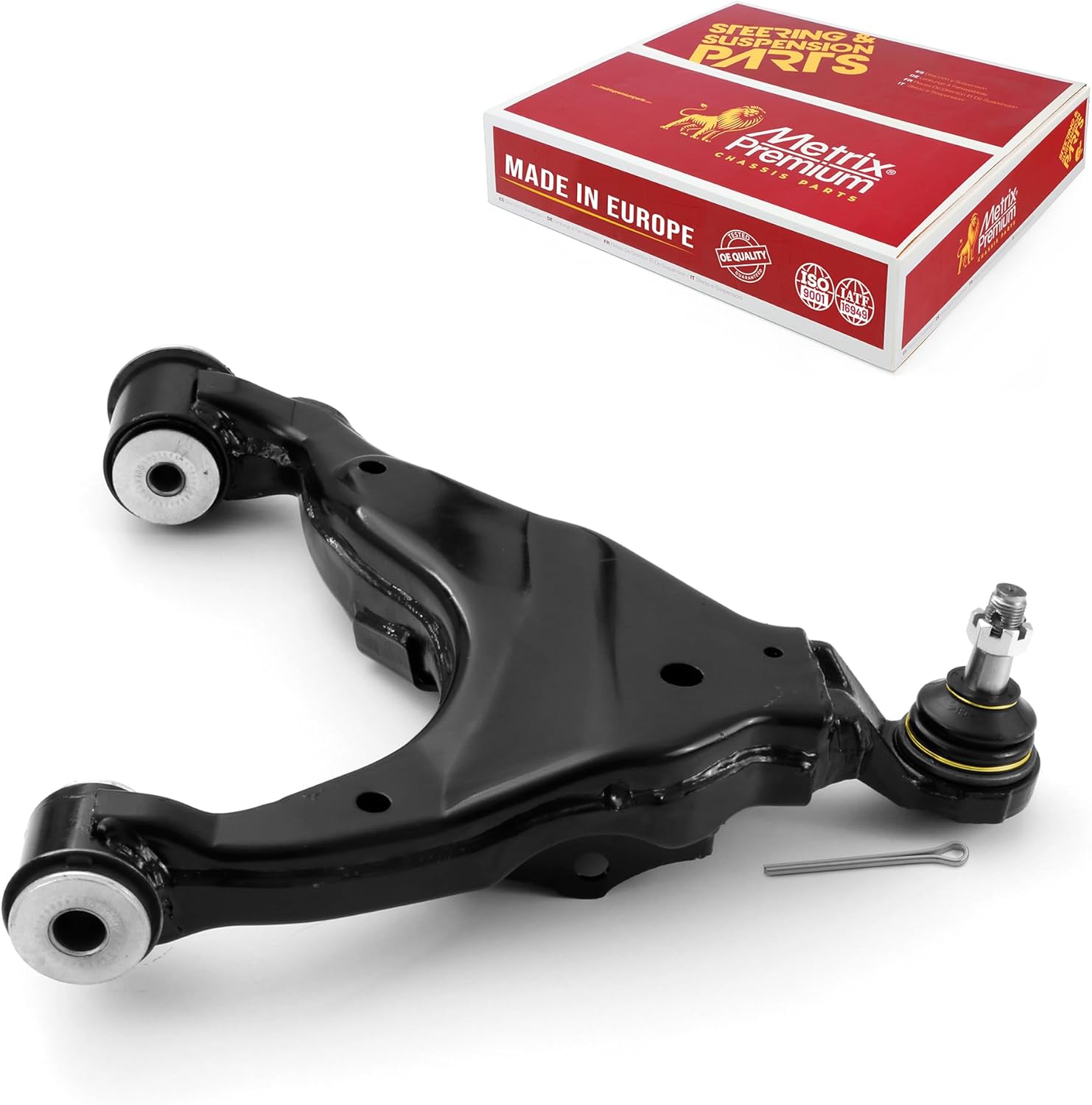
1. Metrix Premium Chassis Parts Front Right Lower Control Arm with Ball Joint
| Fit Type | Vehicle Specific Fit |
|---|---|
| Auto Part Position | Front Right Lower |
| Material | Carbon Steel |
| Manufacturer | METRIX PREMIUM CHASSIS PARTS |
This Metrix front right lower control arm is a direct-fit replacement for 2003–2009 Toyota 4Runner, certain FJ Cruiser and Lexus GX470 applications and arrives as a single passenger-side assembly with the ball joint and bushing preinstalled. It is made from carbon steel and finished with a machined exterior, which reviewers and product notes suggest yields a factory-quality fit and straightforward installation for DIYers or shops. The part includes a cotter pin and is produced by a supplier certified to industry quality standards, and the manufacturer offers a limited warranty for peace of mind. Practical benefits include easier installation because the ball joint is mounted and the part is vehicle-specific so alignment and steering feel should closely match factory geometry. Limitations to consider are that the supplied ball joint does not include a grease fitting and the listing is for one side only, so you may need an extra purchase for the opposite side or to match wear levels on both sides.
Best for: Reliability-focused buyers who prioritize a close-to-factory replacement that installs easily and restores steering stability on older Toyota 4Runner models.
Less Ideal for: Drivers seeking a performance upgrade or adjustable suspension component should look for aftermarket arms with reinforcement or adjustability rather than this direct-fit replacement.
- Vehicle-specific fit for 2003–2009 Toyota 4Runner and compatible models reduces fitment guesswork
- Comes with ball joint and bushing preinstalled for faster, simpler installation
- Manufactured to certified quality standards which aim to exceed factory specifications
- Machined exterior and carbon steel construction provide durability and a factory-like appearance
- Ball joint lacks a grease fitting which prevents easy routine greasing
- Sold as a single control arm so replacing both sides requires an additional purchase
Verdict A certified, vehicle-specific replacement control arm that gives a near-factory fit and easier installation but comes as a single side and has a non-greasable ball joint.
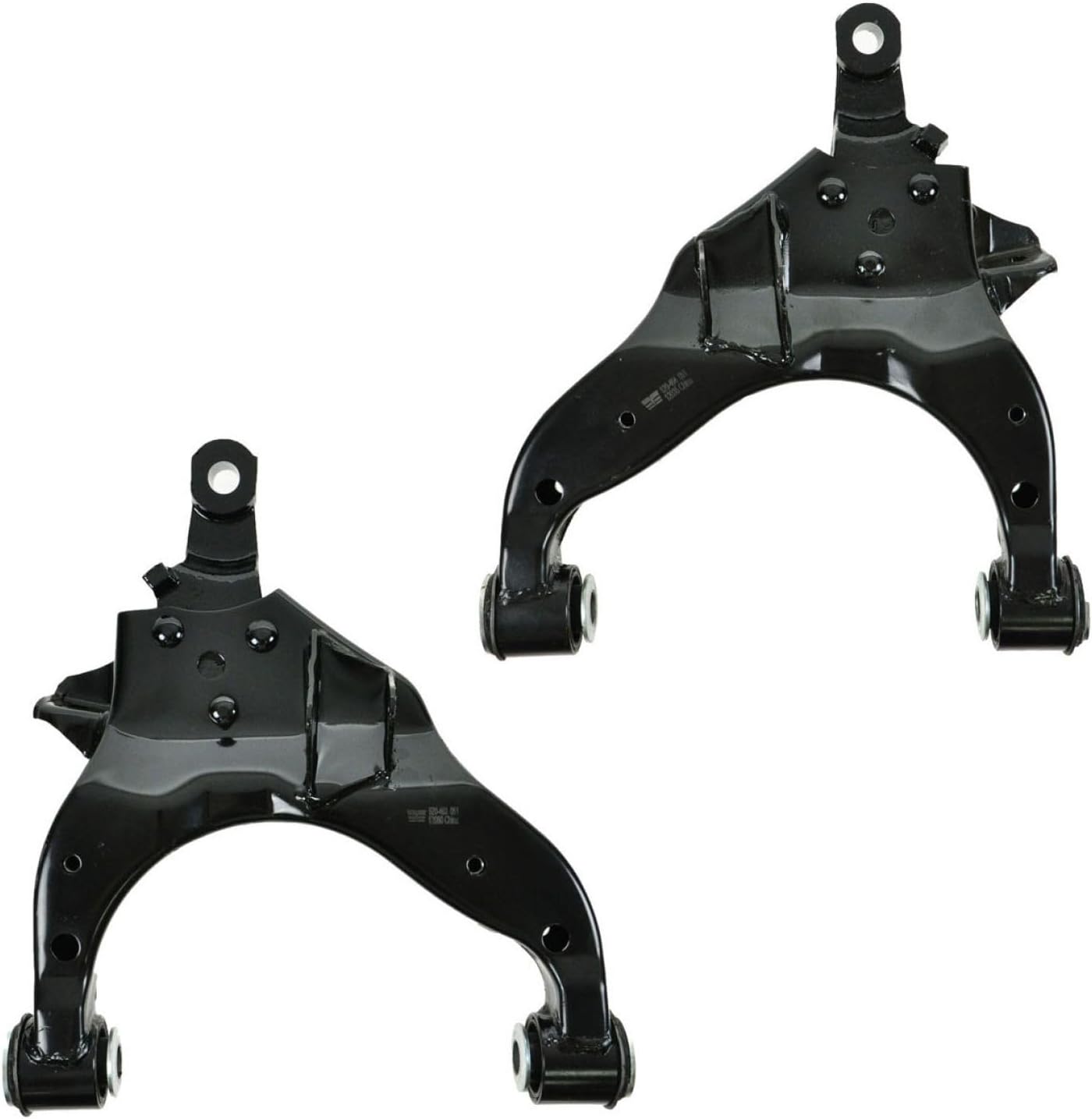
2. TRQ Front Lower Control Arm Set (Driver & Passenger) for Toyota 4Runner 1996–2002
| Fitment Years | 1996-2002 Toyota 4Runner |
|---|---|
| Quantity | 2 Piece Control Arm Set |
| Position | Front Lower |
| Manufacturer | TRQ |
This TRQ control arm set replaces both front lower arms on 1996–2002 Toyota 4Runner models and is built to match factory replacement fit and function. It ships as a two-piece kit with driver and passenger lower arms and arrives with ball joints and bushings preinstalled on most SKUs, which speeds up a DIY or shop install and reduces labor time. Buyers report the parts tighten up sloppy steering, improve ride quality, and produce more even tire wear once installed. TRQ emphasizes vehicle-specific fitment and provides installation videos to help first-time installers. Expect heavy welded construction and machined surfaces consistent with direct-fit replacements. Downsides include mixed longevity reports from some users and occasional installation difficulty on older or rusted vehicles that need seized hardware replaced. Also these are targeted replacements for the specified 4Runner years only, so confirm exact chassis fit before ordering.
Best for: Practical optimizers seeking the best value replacement for a worn front suspension on a 1996–2002 Toyota 4Runner who prioritize direct-fit parts and clear installation support to minimize shop costs.
Less Ideal for: Owners looking for upgraded performance or heavy-duty off-road modification parts should consider performance-oriented control arms instead; this kit is made as a factory-style replacement for stock suspension geometry.
- Direct-fit two-piece kit for both front lower arms that simplifies ordering and replacement.
- Preassembled ball joints and bushings on most units reduce installation time.
- Machined exterior and heavy-duty construction aimed at restoring steering stability and ride quality.
- Extensive vehicle-specific documentation and DIY videos to guide installation.
- Some buyers reported premature noise or ball-joint failures on certain vehicles, indicating variable longevity.
- Installation can be difficult on vehicles with seized bolts or heavy corrosion requiring extra parts and labor.
Verdict A budget-friendly, direct-fit replacement set that restores handling on 1996–2002 Toyota 4Runners while keeping installation approachable for DIYers, though longevity reports vary.
3. TRQ 4-Piece Front Control Arm Set with Ball Joints (Fits Toyota 4Runner 2010–2023, Front)

| Fitment | Toyota 4Runner 2010–2023 (without KDSS) |
|---|---|
| Quantity | 4 Piece set (2 upper, 2 lower) |
| Exterior | Machined |
| Model | TRQ PSA44182 4 Piece Control Arm with Ball Joint Set |
This TRQ kit supplies both left and right upper and lower front control arms with ball joints preinstalled, intended as direct-fit replacements for Toyota 4Runner 2010–2023 models without KDSS. Installation is aimed at DIY or shop repair: the arms arrive preassembled to reduce bench time and align with factory mounting points so no modifications should be necessary. Notable features include machined exterior finish, OEM-style bushings and welded construction, and TRQ’s library of installation videos to guide fitment. In use the set restores steering precision and front-end stability compared with worn arms, and customers report improved ride quality and reduced vibration after replacement. Important limitations are that the kit excludes KDSS-equipped 4Runners and long-term durability varies across reports, with a few users noting premature joint noise on heavy-duty use. Expect standard shop-level installation and alignment after fitting to ensure correct steering geometry.
Best for: Performance-oriented buyers who want to restore tight steering and front-end control on a 2010–2023 Toyota 4Runner without KDSS and prefer a near-direct factory replacement with quicker installation.
Less Ideal for: Drivers who need parts for a 4Runner with KDSS, or owners seeking heavy-duty aftermarket arms rated specifically for extreme off-road loads should consider alternative specialty options.
- Complete four-piece kit replaces both front upper and lower control arms for a coordinated repair
- Ball joints preinstalled to save installation time and reduce press-fit work
- Direct-fit design intended for factory mounting points minimizes need for modification
- Large library of step-by-step installation videos to support DIY or shop fitment
- Not compatible with Toyota 4Runner models equipped with KDSS front suspension
- Some reports of premature ball-joint noise or early failure under heavy use
- Long-term durability can vary by driving conditions and load
Verdict A convenient, factory-style four-piece front control arm kit for non-KDSS Toyota 4Runners that tightens steering and simplifies installation, but buyers should weigh mixed long-term durability reports for heavy-duty use.
4. SCITOO Front Lower Control Arm Pair for 1996–2002 Toyota 4Runner

| Fitment Years | 1996-2002 |
|---|---|
| Position | Front Lower Control Arm Pair |
| Material | Alloy Steel, Stainless Steel |
| Exterior | Electrophoretic Coated |
This SCITOO kit supplies both left and right front lower control arms built from steel alloys with an electrophoretic coating for corrosion resistance. It installs where the factory lower control arms attach, restoring steering geometry and ride control when worn bushings or ball joints cause looseness, noise, or poor handling. The parts come pregreased and include the two control arms identified by OEM cross numbers for direct vehicle-specific fitment, which makes them a straightforward replacement for routine suspension repairs. Practical benefits include rebuilt front-end stability and quieter steering without having to source individual components. Expect a budget-friendly aftermarket build rather than a factory-quality casting, so longevity may be shorter under heavy off-road use and professional installation is recommended to ensure alignment and torque specs are correct. This kit is a sensible inexpensive option to get a 4Runner back to normal handling when original arms show play or damage.
Best for: Budget-conscious DIYers and independent-shop buyers who need an affordable, direct-fit replacement to restore ride quality and steering feel on a 1996–2002 Toyota 4Runner.
Less Ideal for: Drivers who frequently use their 4Runner for heavy off-road, towing, or require a long-term factory-quality solution should consider heavy-duty or OEM-grade alternatives.
- Vehicle-specific pair includes driver and passenger lower control arms for direct replacement
- Electrophoretic coating helps resist corrosion for longer service life
- Comes pregreased to simplify installation and reduce initial maintenance
- Constructed from alloy and stainless steel for basic durability
- Aftermarket construction may not match factory longevity under severe off-road or heavy-load use
- Limited warranty information listed on the product page
Verdict A cost-effective, vehicle-specific pair of front lower control arms that restores handling for older 4Runners but is best for budget repairs rather than extreme-duty use.
5. MAC Front Control Arm, Tie Rod and Sway Bar Link Replacement Kit for Toyota 4Runner (2010–2023)

| Fit Type | Vehicle Specific Fit |
|---|---|
| Auto Part Position | Front |
| Manufacturer | Mac Auto Parts |
| Heated | false |
This MAC kit supplies a complete front suspension refresh for Toyota 4Runner models without Kinetic Dynamic Suspension, bundling left and right upper and lower control arms with ball joints, inner and outer tie rods, sway bar links, and protective boots. It is intended as a vehicle-specific replacement package to restore steering geometry and suspension articulation after wear or damage. The parts are produced in ISO-certified facilities and the listing says they are built to meet or exceed factory-quality fit, form, and function, which helps simplify installation when replacing multiple worn components at once. Practical benefits include getting matching components in one purchase and reduced diagnostic guesswork when multiple front-end symptoms are present. Limitations to consider are that the kit is specific to 4Runners without the Kinetic Dynamic Suspension and you should confirm fit for your model year, and professional alignment is still required after installation to ensure correct handling. The kit is best used during coordinated front suspension repairs rather than for single-part, incremental replacements.
Best for: Risk-averse mainstream buyers who prefer buying a complete, vehicle-specific front suspension package to restore factory-like handling and avoid sourcing individual parts.
Less Ideal for: Buyers who only need a single replacement part or owners of 4Runner models with Kinetic Dynamic Suspension should look for a different, more targeted option.
- Complete front kit includes upper and lower control arms with ball joints, inner and outer tie rods, sway bar links, and boots for matched replacement
- Vehicle-specific fit for Toyota 4Runner 2010–2023 without Kinetic Dynamic Suspension reduces fitment guesswork
- Manufactured in ISO-certified factories and inspected for consistent quality
- Replaces multiple wear items at once, simplifying repair and restoring steering geometry
- Not compatible with 4Runner models equipped with Kinetic Dynamic Suspension
- Requires professional alignment after installation to correct steering and tire wear
Verdict A convenient, vehicle-specific front suspension kit that restores worn steering and suspension components on Toyota 4Runners without Kinetic Dynamic Suspension, best for coordinated repairs rather than single-part fixes.
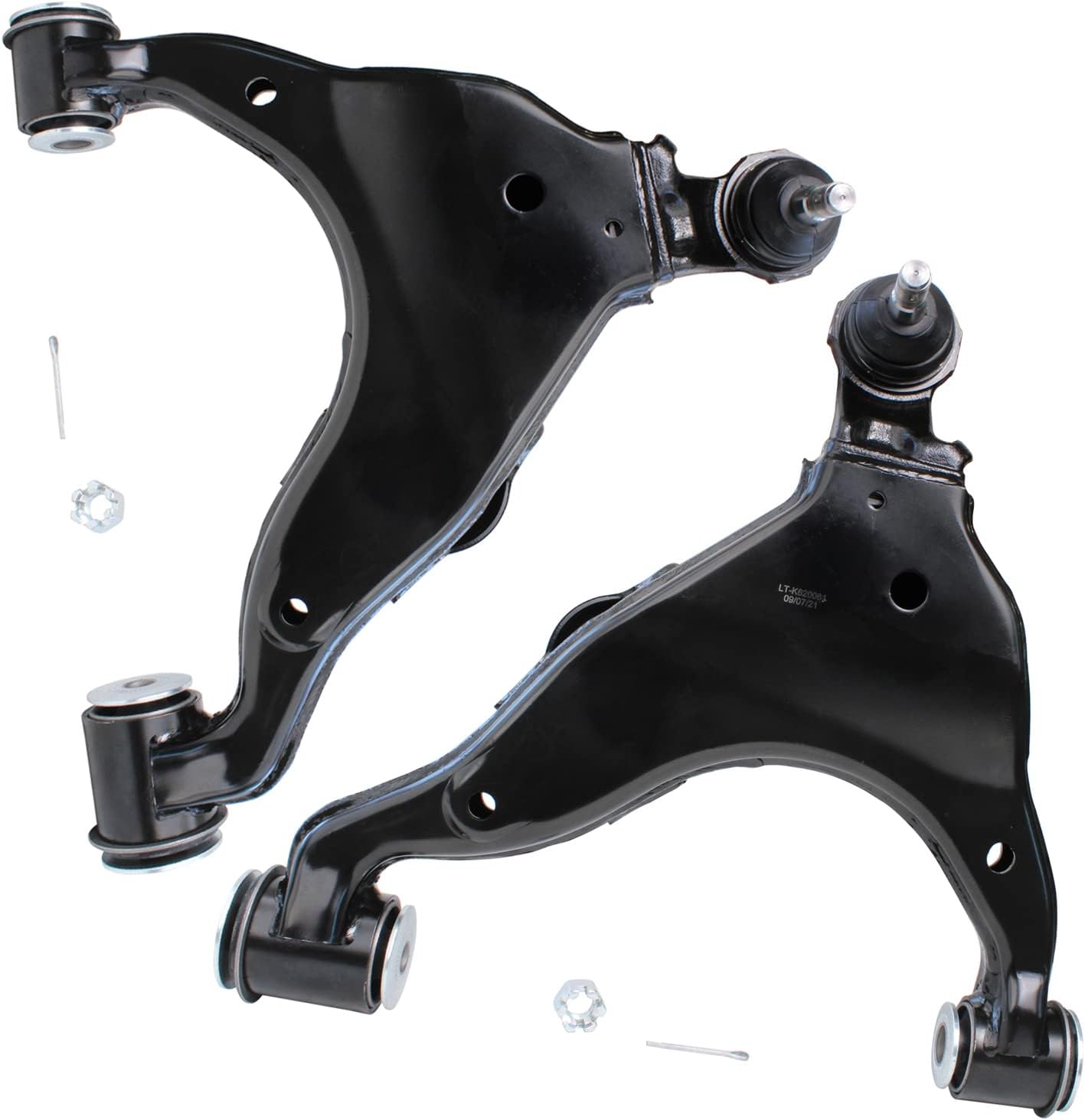
6. Detroit Axle Front Lower Control Arms with Ball Joints, pair (fits 2003–2009 Toyota 4Runner / Lexus GX470 / 2007–2009 FJ Cruiser)
| Fitment | 2003–2009 Toyota 4Runner (also Lexus GX470, 2007–2009 FJ Cruiser) |
|---|---|
| Position | Front lower control arms |
| Manufacturer | Detroit Axle |
| Includes | Pair of front lower control arms with ball joints |
| Warranty term | 10-Year Warranty |
These Detroit Axle front lower control arms replace the factory front lower arms and come with ball joints preinstalled, which speeds up suspension work and reduces press-fit labor at installation. They are intended as a direct-fit, factory-quality replacement for 2003–2009 Toyota 4Runner (and the related Lexus GX470 and FJ Cruiser fitments listed). Typical use is replacing worn control arms to restore handling, reduce play, and correct steering feel. Notable features include preinstalled ball joints and parts manufactured to ISO quality standards, and the listing notes impact, wear, and fatigue testing. In practice buyers report straightforward bolt-in fitment and improved front-end tightness after installation. Limitations to consider are occasional quality control issues reported by some users and the need for a proper alignment after installation. These are best for owners who want a ready-to-install replacement that restores factory ride and steering responsiveness without paying dealer prices, but expect to follow normal shop procedures for torque and alignment.
Best for: Performance-oriented buyers who prioritize restoring sharp, factory-like steering and handling on a 2003–2009 Toyota 4Runner and prefer ready-to-install suspension parts to speed repairs.
Less Ideal for: Buyers seeking lifetime-serviceable ball joints with grease fittings or those who need an upgraded performance arm with adjustable geometry should consider specialty performance arms instead.
- Preinstalled ball joints reduce installation time and avoid separate press work.
- Designed as a direct-fit factory-style replacement for 2003–2009 Toyota 4Runner fitment.
- Manufactured to ISO quality standards with reported impact and fatigue testing.
- Reported by multiple users to restore front-end tightness and steering feel after installation.
- Some customers reported occasional damaged or defective ball joints out of the box.
- May require light fitting or tapping on stubborn joints during installation.
- Does not include grease fittings on the ball joints if that is a required feature for some maintenance routines.
Verdict A practical, factory-style replacement that restores steering feel on 2003–2009 Toyota 4Runner with preinstalled ball joints, offering strong value for performance-minded owners.
7. Detroit Axle 12‑Piece Front End Suspension Kit for Toyota 1996–2002 4Runner

| Fit Type | Vehicle Specific Fit |
|---|---|
| Auto Part Position | Front |
| Material | Alloy Steel |
| Manufacturer Part Number | 12CS471248 |
This Detroit Axle 12-piece front end kit bundles the parts needed to refresh the 4Runner front suspension without sourcing components separately. It includes two front lower control arms, lower ball joints, inner and outer tie rod ends, sway bar end links, and rack-and-pinion boots so you can replace worn steering and suspension components in one job. The kit’s alloy-steel components are vehicle-specific and designed to fit factory mounting points, which makes installation straightforward for a professional shop or a competent home mechanic with the right pullers and alignment tools. Practical benefits include having matched parts on both sides and grease fittings on several components to prolong joint life. Limitations to note are quality variability reported by some users and occasional missing items in shipments, so inspect the box on receipt and be prepared to buy a few expendables like replacement bolts or paint for corrosion protection; an alignment will be required after installation. The included parts simplify a multi-component service and can save time versus buying each piece separately.
Best for: Balanced, practical buyers who want a single kit to restore the 1996–2002 4Runner front suspension and prefer the convenience of matched parts and fewer ordering steps.
Less Ideal for: This kit is not ideal for buyers seeking premium aftermarket upgrades or motorsport components, nor for owners who want to replace only a single small part without changing multiple front-end pieces.
- Comprehensive kit includes lower control arms, ball joints, tie rod ends, sway bar links and boots so multiple front-end repairs are handled at once
- Vehicle-specific fit for Toyota 1996–2002 4Runner to match factory mounting points
- Several suspension pieces include grease fittings to allow periodic lubrication and extend service life
- Alloy steel construction intended for durability under normal driving conditions
- Some buyers report inconsistent quality control and occasional missing parts in the box
- Upper ball joints in similar kits can be non-greaseable depending on application
- May require buying replacement hardware or applying corrosion protection before installation
Verdict A convenient, vehicle-specific all-in-one front suspension kit for 1996–2002 Toyota 4Runner owners who want to replace multiple worn front-end components in a single job.
Choosing the Right Toyota 4Runner Lower Control Arm: Key Factors to Consider
Fitment and Vehicle Specificity
Exact fitment is crucial because the geometry of the Toyota 4Runner suspension must be preserved to maintain alignment and handling. A control arm that matches factory mounting points and arm length reduces the need for additional alignment corrections and helps prevent premature tire wear.
Fitment details also determine whether included hardware or ball joints are compatible with your model year. Choosing an arm specified for the 4Runner avoids installation surprises and reduces the chance of needing modifications.
Bushing Type and Quality
Bushings absorb vibration and allow controlled joint movement, so their material and design strongly influence ride comfort and steering feel. Rubber bushings tend to isolate NVH well but can wear faster under heavy loads. Polyurethane bushings improve durability and steering precision but may transmit more road noise.
Consider how you use the 4Runner. If you prioritize comfort, softer bushing compounds may be preferable. For towing, off-road use, or performance driving, firmer bushings offer greater longevity and more direct feedback.
Ball Joint Integration and Serviceability
Some lower control arms come with preinstalled ball joints while others accept the factory joint. Preinstalled joints simplify replacement and ensure compatibility, while serviceable designs allow separate ball joint replacement if it wears out.
Assess whether you prefer a full arm swap for convenience or a serviceable setup for lower long-term maintenance costs. Also check whether ball joints are sealed or greasable, since greasable joints can extend service intervals when properly maintained.
Material, Construction, and Corrosion Protection
The base material and build quality determine how well a control arm resists bending and fatigue under load. Stamped steel arms are common and provide good strength, while forged or tubular designs can offer improved stiffness for heavy use.
Corrosion protection matters in wet or salted-road environments. Look for powder coating, zinc plating, or other durable finishes to prevent rust that can compromise mounting points and complicate future removal.
Installation and Included Hardware
Ease of installation affects total cost and downtime. Arms that include correct bolts, nuts, and alignment sleeves reduce the parts you must source separately and typically speed installation.
Also consider whether the arm requires special tools or alignment adjustments after installation. Simpler swaps that use factory torque specs and standard hardware can often be completed more quickly and with fewer surprises at the alignment shop.
Noise, Vibration, and Harshness Characteristics
Control arm design and bushing selection influence NVH experienced inside the cabin. Firmer components can improve steering precision but may increase clunking or vibration if not matched to the vehicle's use case.
If road noise and vibration are a priority, choose designs and bushing compounds known to dampen inputs. For heavier-duty or off-road use, expect a balance that favors durability over isolation.
FAQ
How do I know if my Toyota 4Runner needs a new lower control arm?
Common signs include uneven tire wear, wandering steering, or clunking noises from the suspension when driving over bumps. You may also notice increased vibration or a loose feeling in the front end. A visual inspection can reveal torn bushings or visible play at the ball joint, which often indicates replacement is needed.
Can I replace just the bushings instead of the whole lower control arm?
In some cases you can press out and replace bushings if the arm is otherwise straight and corrosion-free. This can restore isolation and extend service life. However, if the arm has damaged mounting points, bent structure, or a worn ball joint, replacing the entire arm is usually the more reliable option.
Will installing a new lower control arm affect wheel alignment?
Yes, swapping a lower control arm can change alignment settings because it affects suspension geometry. After installation, a professional alignment check is advisable to ensure proper toe and camber settings. Some arms include alignment features or sleeves that make returning to spec easier.
Are greasable ball joints better than sealed ones for the 4Runner?
Greasable ball joints allow periodic lubrication, which can prolong service life if maintained. Sealed joints require no regular greasing and are less maintenance intensive but may be harder to service if they fail. The best choice depends on whether you prefer lower routine maintenance or easier long-term repairability.
How long do lower control arms typically last on a Toyota 4Runner?
Longevity depends on driving conditions and maintenance. Under normal road use, control arms and their bushings can last many years, while frequent off-road use or exposure to corrosive environments tends to shorten life. Regular inspection of bushings and ball joints helps catch wear before it affects safety or alignment.
How We Chose the Best Toyota 4Runner Lower Control Arm
To assemble this list we focused on the dimensions and features that matter most for Toyota 4Runner owners. Key criteria included exact vehicle fitment compatibility, the type and quality of bushings, control arm material and corrosion protection, and the robustness of mounting points.We also considered ease of installation and whether hardware or ball joints were included, since these affect labor time and long-term reliability. Longevity factors such as weld quality and protective coatings were evaluated, along with customer feedback on noise and vibration after installation.Excluded items included universal or one-size-fits-many arms and products lacking clear fitment information for the Toyota 4Runner. We did not include parts advertised without verified bushing or ball-joint specifications. The resulting shortlist prioritizes arms that combine correct fit, solid construction, and durable bushing solutions.
Our full evaluation process is outlined in our review methodology.
Conclusion
When choosing a Toyota 4Runner lower control arm, prioritize exact fitment, bushing type, and the condition or serviceability of the ball joint. Those factors most directly affect steering precision, NVH, and long-term durability.Balance the tradeoffs between comfort and durability based on how you use the vehicle. Confirm corrosion protection and included hardware to minimize installation hassles, and plan for an alignment after replacement.
Explore More:
- Check out all Toyota 4Runner parts & accessories
- Explore Lower Control Arms Maintenance & Repair Guides
- Explore Suspension & Steering
- Browse all Auto Parts
