

Note: This article contains affiliate links. If you click on these links and make a purchase, I may earn a small commission at no extra cost to you. This helps support my research and content. Read my full affiliate disclosure here.
If your Toyota 4Runner feels loose in the steering, uneven in tire wear, or noisy over bumps, the tie rod end is often the cause. Picking the right Toyota 4Runner tie rod end matters because it directly affects steering accuracy, safety, and tire life. This guide highlights seven shortlisted options that meet common needs for fitment, durability, and steering response.We evaluated each pick using handling and build-quality criteria, plus fit and installation practicality. Read on to see which features matter most and what to expect when replacing this steering component.
Looking for other parts? See all Toyota 4Runner parts & accessories.
Top Picks at a Glance
| Best Reviewed A top-rated pick with lots of positive feedback | Metrix Premium Chassis Parts Front Left Outer Tie Rod End (Fits 1996–2002 Toyota 4Runner) |  |
| Most Popular A crowd favorite that many people choose with confidence | TRQ Front Outer Tie Rod End (PSA68318) |  |
| Best Quality Built to a higher standard if you want something more solid | Metrix 4-piece Front Inner & Outer Tie Rod End Kit for 1996-2002 Toyota 4Runner |  |
| Best Budget The cheapest option that still gets the job done reliably | FHEK ES80895 Front Outer Tie Rod End Pair |  |
| Most Sold A high-volume bestseller chosen again and again | A-Premium Front Inner and Outer Tie Rod End Kit (Set of 4) for Toyota 4Runner 1996-2002 |  |
| Best Value for Money The sweet spot between price and what you get | HHCM Front Outer Tie Rod End Kit (ES3547/ES3548) for Toyota 4Runner (1996–2002) |  |
| Best Overall The best all-around choice for most situations | Detroit Axle 4-Front Tie Rods Kit for Toyota 4Runner / Lexus GX470 / FJ Cruiser |  |
1. Metrix Premium Chassis Parts Front Left Outer Tie Rod End (Fits 1996–2002 Toyota 4Runner)
| Compatible vehicle | 1996-2002 Toyota 4Runner |
|---|---|
| Position | Front Left Outer |
| Manufacturer | METRIX PREMIUM CHASSIS PARTS |
| Model | 33644MT |
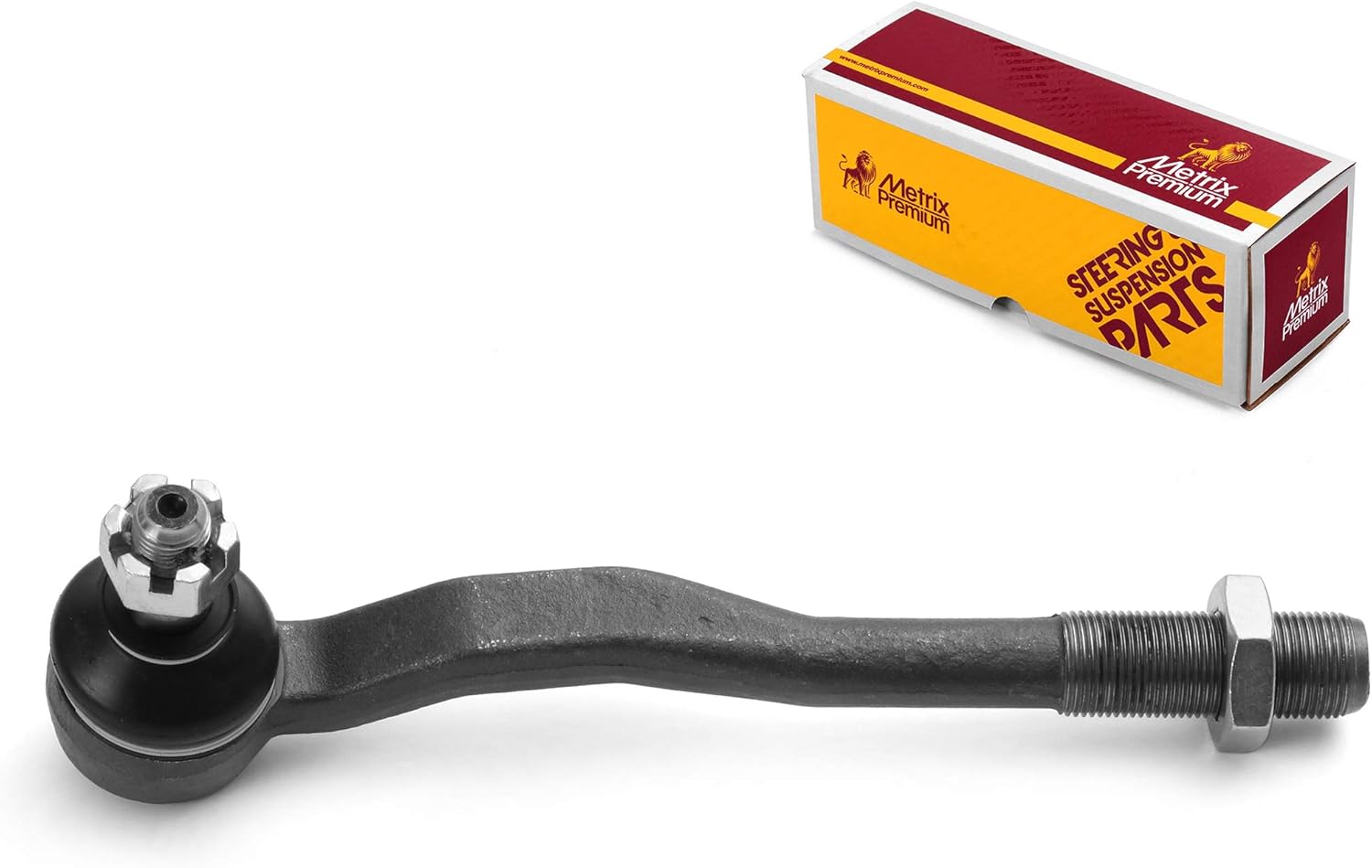
This Metrix front left outer tie rod end is a direct replacement for the steering linkage on 1996–2002 Toyota 4Runner and is designed to meet or exceed factory specifications. It installs like a standard outer tie rod end and ships with a cotter pin for a secure installation. The part is machined steel with OEM-compatible threads and fitment, so it bolts to the knuckle and threads onto the inner tie rod without modification. The manufacturer highlights IATF 16949 and ISO 9001 production standards, which supports consistent quality across units. In practice it provides the same steering feel and alignment stability as a factory part, and several users report straightforward installation and reliable fit. Limitations to note are that you should plan for a wheel alignment after replacement and verify left/right packaging on arrival since labeling errors have been reported; also this listing covers only the front left outer position so you must order the correct side. For reliability-focused buyers this is a solid replacement that mirrors factory performance while carrying a limited warranty.
Best for: Reliability-focused buyers who prioritize a factory-quality replacement for their Toyota 4Runner and want a part engineered to consistent production standards for steady, long-term steering performance.
Less Ideal for: Buyers seeking a universal or multi-side kit in one purchase or those who want upgraded performance tie rod ends rather than a factory-style replacement.
- Engineered to meet production quality standards (IATF 16949, ISO 9001) for consistent manufacturing
- Machined steel construction and OEM-compatible threading for direct fitment to factory steering components
- Includes cotter pin for secure installation at the wheel end
- Customers report simple installation and factory-like steering feel on compatible 4Runner models
- Product is sold per side and only available here as the front left outer unit
- Occasional packaging or labeling mix-ups reported which can swap left/right identification
Verdict A reliable, factory-quality front left outer tie rod end for 1996–2002 Toyota 4Runner owners who want a straightforward, OEM-style replacement.
2. TRQ Front Outer Tie Rod End (PSA68318)

| Fitment (example) | Toyota 4Runner 2010-2024 Front Outer |
|---|---|
| Material | Steel |
| Finish | E-Coated |
| Pre-Greased | Yes |
| Dust Boot Included | Yes |
This TRQ front outer tie rod end is a pre-greased, steel direct-replacement part intended to restore steering linkage on compatible Toyota 4Runner models. It installs in the vehicle's front outer tie rod position and ships with a dust boot and machined exterior so you can swap it in without modifying the steering geometry. TRQ lists this part as pre-assembled and pre-greased, which reduces installation time and the need for additional prep. Because it lacks a grease fitting the joint is sealed for life, which simplifies maintenance but removes the option of post-install lubrication. In practice this means straightforward DIY swaps or quick shop installs that return firm steering and correct toe alignment when fitted and aligned. The main limitations are the sealed design that prevents re-greasing and the fact that it is a single outer tie rod end, so replacement planning may require buying the matching inner or opposite side if wear is present.
Best for: Convenience-driven buyers who want a ready-to-install, factory-quality replacement that minimizes installation time and post-service maintenance.
Less Ideal for: Drivers who prefer serviceable, re-greasable suspension joints or who want to replace both steering sides at once without purchasing additional parts.
- Direct-fit design for easy installation on listed Toyota 4Runner front outer positions
- Pre-greased and pre-assembled to reduce install time
- Includes dust boot and machined exterior for corrosion resistance and smooth operation
- Sealed design has no grease fitting so it cannot be re-lubricated after installation
- Sold as a single outer tie rod end rather than a pair
Verdict A hassle-free, direct-fit front outer tie rod end for Toyota 4Runner owners who prioritize quick DIY or shop replacement over re-greasing serviceability.
3. Metrix 4-piece Front Inner & Outer Tie Rod End Kit for 1996-2002 Toyota 4Runner

| Compatible vehicle | 1996-2002 Toyota 4Runner |
|---|---|
| Kit contents | 2 inner tie rod ends + 2 outer tie rod ends |
| Manufacturing standards | IATF 16949, ISO 9001 |
| Corrosion protection | Cataphoresis plating |
This Metrix kit replaces both front inner and outer tie rod ends for 1996–2002 Toyota 4Runner and is intended as a direct, factory-quality replacement. The kit contains two inner and two outer tie rod ends plus the necessary hardware, and several components include grease fittings to ease routine maintenance. Parts are made in Europe to IATF 16949 and ISO 9001 standards and feature cataphoresis plating for improved corrosion resistance on vehicles exposed to salt and moisture. In use the kit restores steering precision and removes play that causes wandering and noise, and customers report straightforward fitment on the 4Runner with typical DIY installation. Limitations to note are that parts are not labeled for inner/outer or left/right which can add a small amount of installation time, and any tie rod replacement still requires a professional wheel alignment after fitting. The inclusion of greaseable joints and a manufacturer-backed warranty make this a performance-oriented choice for drivers seeking durable, high-quality steering parts for the 4Runner.
Best for: Performance-oriented drivers who want a durable, factory-quality steering repair for a 1996–2002 Toyota 4Runner and prioritize restored steering responsiveness and long-term reliability.
Less Ideal for: Buyers who prefer plug-and-play labeled parts or who lack access to alignment services after installation should consider alternatives or professional fitment.
- Complete 4-piece kit includes both inner and outer tie rod ends and required hardware for a full front steering replacement
- Grease fittings on select components allow periodic lubrication to extend joint life
- Cataphoresis plating improves corrosion resistance for vehicles in wet or salted-road conditions
- Manufactured to IATF 16949 and ISO 9001 standards for consistent factory-quality fit and finish
- Parts in the kit are not labeled for left/right or inner/outer which may require matching to old parts during installation
- Requires a professional wheel alignment after installation to ensure correct steering geometry
Verdict A high-quality, greaseable 4-piece tie rod kit built to factory-level standards that restores steering precision on 1996–2002 Toyota 4Runners, but plan for minor extra fitment steps and a post-install alignment.
4. FHEK ES80895 Front Outer Tie Rod End Pair

| Brand | FHEK |
|---|---|
| Position | Front |
| Kit contents | 2x front outer tie rod ends |
| Exterior | Painted |
These FHEK ES80895 front outer tie rod ends are a low-cost replacement designed to restore steering connection and wheel alignment on compatible Toyota models. Supplied as a matched pair, they replace worn outer tie rod ends to remove play in the steering, reduce wandering, and allow proper alignment after installation. The listing emphasizes precision engineering and manufacturing to factory-quality tolerances, and the parts arrive painted and ready to install. For DIYers and independent shops the kit simplifies a front-end job because both sides match and the parts are intended to fit without extensive modification. Expect the practical benefit of renewed steering response and the ability to complete an alignment immediately after fitting. The main limitations are that this is a budget aftermarket option rather than a brand OEM part and long-term durability will depend on installation and driving conditions. Buyers should also verify exact model-year fitment for their 4Runner before purchase.
Best for: Cost-conscious Toyota owners who prioritize restoring steering feel and alignment on a budget and prefer a straightforward DIY or independent-shop replacement.
Less Ideal for: Drivers seeking an exact factory-brand or heavy-duty, high-mileage upgrade should consider premium or OEM-sourced tie rod ends instead.
- Sold as a matched pair so both front outer tie rod ends have consistent fit and wear characteristics.
- Engineered to meet or exceed factory specifications for a direct replacement fit.
- Painted finish provides basic corrosion resistance out of the box.
- Designed for straightforward installation to allow timely alignment and return to service.
- Aftermarket budget part may not match long-term durability of higher-end or factory-brand replacements.
- Limited testing and warranty details compared with premium suppliers.
Verdict A practical, low-cost matched pair of front outer tie rod ends that gets a Toyota steering job done affordably while requiring realistic expectations about long-term durability.
5. A-Premium Front Inner and Outer Tie Rod End Kit (Set of 4) for Toyota 4Runner 1996-2002

| Position | Front Inner, Front Outer |
|---|---|
| Condition | Brand New |
| Pre-Greased | Yes |
| Exterior | Corrosion-Resistant Coating |
This A-Premium kit supplies two front inner and two front outer tie rod ends intended to restore steering feel and alignment on a Toyota 4Runner 1996–2002. It is sold as a complete front set and ships pre-greased with corrosion-resistant coating, so installation typically involves a straightforward swap of the worn ball joints and tie rod ends during a steering or alignment service. The parts are positioned to address common symptoms like loose or wandering steering, uneven tire wear, and suspension noise. Practical benefits include matching the factory mounting locations and providing a ready-to-install set for both sides of the vehicle, which saves time compared with buying pieces separately. Limitations are the absence of a grease fitting for post-installation lubrication and the listing does not include professional installation or alignment, so plan to have an alignment performed after fitting to avoid premature tire wear.
Best for: A risk-averse mainstream buyer who wants a factory-style replacement set that restores steering stability and reduces suspension noise with minimal parts sourcing hassle.
Less Ideal for: Buyers who prefer parts with serviceable grease fittings or who plan to perform extensive suspension modifications should consider other options.
- Complete front kit includes both inner and outer tie rod ends for left and right sides
- Pre-greased ball studs reduce initial break-in noise and simplify installation
- Corrosion-resistant coating helps longevity in wet or salted conditions
- Sold to fit Toyota 4Runner 1996–2002, matching factory mounting positions
- No grease fittings included for periodic re-greasing after installation
- Does not include alignment service or instructions for post-installation toe adjustment
Verdict A ready-to-install, pre-greased front tie rod end kit that restores steering feel on 1996–2002 Toyota 4Runners but lacks grease fittings for long-term servicing.
6. HHCM Front Outer Tie Rod End Kit (ES3547/ES3548) for Toyota 4Runner (1996–2002)

| Compatible vehicles | Toyota 4Runner 1996-2002 |
|---|---|
| Model numbers | ES3547, ES3548 |
| Thread diameters | 20.0mm and 14.0mm |
| Thread pitch | 1.5mm |
This HHCM front outer tie rod end kit supplies both left and right outer tie rod ends intended to replace worn steering components on Toyota 4Runner models from 1996 through 2002. Each end is made to factory-style thread sizes and pitches and is offered as a matched pair so you can swap both sides during a steering service or alignment. In use the parts provide the expected steering linkage function and reviewers report straightforward installation and proper fit when the vehicle application matches. The listing emphasizes corrosion resistance and precision tolerances, which help with installation and initial alignment. Limitations to note are fitment: a few buyers found mismatches on non-listed vehicles, so confirm thread sizes and part numbers before ordering for a different car or atypical variant. This kit is a budget-friendly replacement that performs like a practical, ready-to-install option for routine steering repairs on the specified 4Runner years.
Best for: Practical owners who prioritize getting a reliable, ready-to-install steering repair at a low cost and want parts that let them complete a home or shop alignment without sourcing individual components.
Less Ideal for: Buyers seeking the longest-lasting, highest-end aftermarket steering parts or those who need parts for vehicles not explicitly listed should consider other options.
- Sold as a matched pair (left and right) for a complete front outer tie rod replacement
- Manufactured to factory-style thread diameters and pitches for the listed 4Runner years
- Precision tolerances intended to simplify installation and initial steering alignment
- Corrosion-resistant finish and abrasion-resistant construction for longer service life
- Fitment issues reported on vehicles outside the listed Toyota 4Runner years or on unexpected variants
- Not a branded premium aftermarket option, longevity versus higher-end brands may vary
Verdict A budget-conscious, matched pair of front outer tie rod ends that fit 1996–2002 Toyota 4Runners and simplify a straightforward steering repair when fitment is confirmed.
7. Detroit Axle 4-Front Tie Rods Kit for Toyota 4Runner / Lexus GX470 / FJ Cruiser
| Vehicle fitment | 2003–2009 Toyota 4Runner, 2007–2009 FJ Cruiser, 2003–2009 Lexus GX470 |
|---|---|
| Kit contents | 2 front outer tie rod ends and 2 front inner tie rod ends |
| Manufacturer part number | 80101-4F |
| Warranty | 10-Year Warranty |
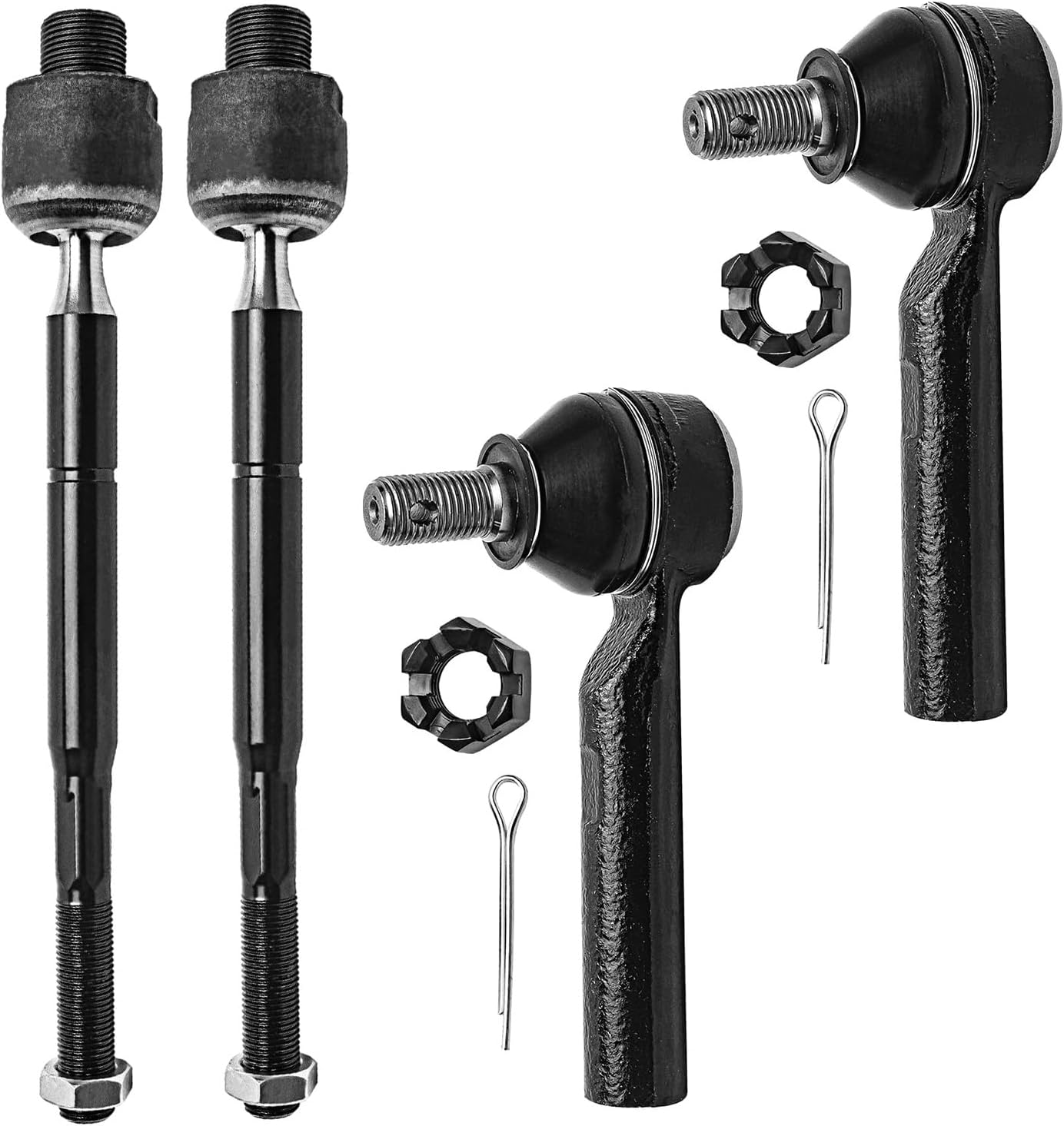
This Detroit Axle kit supplies two front outer and two front inner tie rod ends as a direct replacement for the steering linkage on 2003–2009 Toyota 4Runner, 2007–2009 FJ Cruiser and Lexus GX470. It is intended for a full front-end tie rod refresh during a steering service or when worn components produce play, wandering, or uneven tire wear. Parts are manufactured to meet factory-quality fit and undergo impact and fatigue testing, so installation typically bolts in using the vehicle’s existing hardware and then requires a professional alignment. The kit includes grease fittings on most pieces for periodic lubrication, and reviewers report straightforward fitment and acceptable durability for daily driving and light off-road use. Expect occasional quality-control hiccups such as an improperly tapped grease hole that may require minor rework. Also plan for an alignment and possible adjusting sleeves to match original assembly length if you replace inner and outer pieces in one assembly.
Best for: Buyers seeking a balanced, reliable factory-quality steering repair who value replacing the entire front tie rod assembly at once to restore steering feel and longevity.
Less Ideal for: Those who want a plug-and-play steering upgrade with no post-install alignment work or buyers needing heavy-duty components for extreme off-road use should consider alternatives.
- Complete front kit includes inner and outer tie rod ends for left and right so both sides can be serviced at once
- Manufactured to ISO-backed processes and marketed as factory-quality fit for direct replacement
- Grease fittings on most parts allow periodic lubrication to extend service life
- Multiple positive user reports of good fit and easy installation when using standard pull tools
- One reported quality-control issue where a pre-tapped grease hole did not accept the grease fitting without repair
- Does not include alignment-adjusting sleeves so additional parts or adjustment may be needed to restore factory toe settings
Verdict A full, factory-quality front tie rod kit that delivers reliable fit and value for a balanced buyer, but plan on alignment and minor QC checks during installation.
Choosing the Right Toyota 4Runner Tie Rod End: Key Factors to Consider
Fitment and Correct Sizing
Proper fitment ensures the tie rod end mounts without modification and maintains factory steering geometry. Correct thread pitch, stud diameter, and overall length preserve toe settings and reduce the need for corrective adjustments after installation. Mis-sized parts can cause premature wear, steering wander, or unsafe installation.
Verify that the replacement matches the vehicle-specific specifications for the Toyota 4Runner. Even small deviations in taper or mounting interface can affect how the part seats and holds under steering loads. Prioritizing exact-fit parts simplifies installation and alignment.
Material and Ball-Stud Construction
The materials used in the ball stud and housing determine how the tie rod end tolerates load, corrosion, and impact. Hardened steel studs and high-quality housings resist deformation from steering forces and pothole impacts, which lengthens service life and maintains consistent steering feel.
Pay attention to protective coatings and corrosion resistance, especially if you drive in wet or salty environments. Better metallurgy and surface treatments lower the chance of galling and failure over time.
Boot Quality and Sealing
A durable rubber or synthetic boot protects the ball joint from dirt, moisture, and road contaminants, which are primary causes of premature wear. A well-sealed boot prevents grease loss and keeps contaminants out, preserving smooth articulation and reducing noise.
Check for boots with robust folds and secure clamps or crimped metal bands. Boots that tear or allow water ingress lead to accelerated wear and play at the stud, so sealing integrity is an important longevity factor.
Thread Adjustment and End Play
Many tie rod ends interface with adjustable sleeves or threaded tie rods to set toe alignment. Smooth, well-machined threads make alignment adjustments easier and reduce the risk of binding during installation. Controlled end play at the ball stud preserves steering responsiveness and reduces free play in the wheel.
Look for parts with tolerances that limit axial movement while still allowing full steering travel. Excessive end play transfers vibration to the steering wheel and can accelerate tire wear, so controlled movement is preferable.
Durability Under Load and Off-Road Use
If you use the Toyota 4Runner for light off-road driving or tow, the tie rod ends must withstand higher lateral and impact loads. Components designed for heavier duty cycling and shock loads are less likely to deform or fail when stressed by rough terrain or sudden steering inputs.
Consider designs with reinforced housings or heavier-duty internal components if your driving includes trails, gravel roads, or frequent heavy loads. Durability choices affect how often you will need to inspect or replace the part.
Serviceability and Installation Ease
Ease of installation affects overall ownership cost and the likelihood of a clean, correct replacement. Parts that come with clear installation notes, necessary nuts or cotter pins, and standard taper sizes reduce installation time and the chance of improper fastening.
Consider whether the part allows for reusing alignment settings or if a full alignment is required after swap. While some toe adjustments may be tight, straightforward serviceability reduces shop time and complexity.
FAQ
How do I know if my Toyota 4Runner tie rod end is failing?
Common signs include looseness or play in the steering, uneven tire wear, clunking or knocking noises when turning, and vibration in the steering wheel. These symptoms often appear gradually, so regular inspection is useful.
Can I replace a tie rod end myself on a Toyota 4Runner?
Many owners with basic mechanical skills can replace a tie rod end using common tools and a jack. The job often requires loosening the adjuster sleeve and measuring toe orientation. After installation, an alignment is usually recommended to ensure proper steering geometry.
Will replacing a worn tie rod end fix steering pull or wandering?
Replacing a worn tie rod end often reduces steering play and can correct wandering or pull that is caused by excessive end play. If the issue is due to alignment, suspension wear, or tire problems, additional diagnosis may be needed.
How long do tie rod ends typically last on a Toyota 4Runner?
Lifespan depends on driving conditions and maintenance. Under normal road use they can last many tens of thousands of miles, but exposure to rough roads, off-road use, or corrosion can shorten service life. Regular inspection helps catch wear early.
Does replacing a tie rod end require a wheel alignment?
It often does because tie rod ends affect toe angle. Even if the physical replacement preserves the previous setting, a professional alignment ensures the steering geometry is within specification and prevents uneven tire wear.
How We Chose the Best Toyota 4Runner Tie Rod End
We focused on components engineered specifically for the Toyota 4Runner and prioritized long-term steering stability and correct fitment. Key evaluation criteria included construction quality and materials, how the part resists wear under load, ball-stud and boot durability, and whether the unit includes necessary mounting hardware or meets OE fit dimensions. We also considered ease of installation, availability of service information, and whether the design supports alignment tolerances common to the 4Runner.Products were excluded if fitment for the Toyota 4Runner was unclear, if the construction used underspecified materials, or if documentation failed to confirm compatibility with factory steering geometry. We did not consider aftermarket upgrades that change steering geometry beyond factory specifications. Our shortlist reflects parts that balance longevity, predictable steering feedback, and straightforward installation for typical on-road and light off-road use.
Our full evaluation process is outlined in our review methodology.
Conclusion
Prioritize exact fitment, robust ball-stud construction, and a durable boot when choosing a Toyota 4Runner tie rod end. Those factors most directly affect steering feel, longevity, and the need for follow-up service.Balance ease of installation and serviceability against durability. If you drive in rough conditions, favor parts designed to handle higher loads. After replacement, plan for an alignment check to restore proper toe settings and extend tire life.
Explore More:
- Check out all Toyota 4Runner parts & accessories
- Explore Tie Rod Ends Maintenance & Repair Guides
- Explore Suspension & Steering
- Browse all Auto Parts
