

Note: This article contains affiliate links. If you click on these links and make a purchase, I may earn a small commission at no extra cost to you. This helps support my research and content. Read my full affiliate disclosure here.
If your 2007-2011 Honda CR-V feels loose in turns, wanders down the road, or produces clunks over bumps, the lower control arm is often a primary suspect. Choosing the correct lower control arm matters because it directly affects steering geometry, suspension travel, and bushing life for this generation of CR-V. The shortlist below highlights the top seven options selected for fitment, durability, and ride quality specific to 2007–2011 Honda CR-Vs.This guide explains the key reasons a replacement may be necessary, how we evaluated candidates, and what to check during installation so you can restore stable handling and quiet operation. Next up are the recommended parts and quick notes on why each made the list.
Looking for other parts? See all Honda CR-V parts & accessories.
Top Picks at a Glance


1. TRQ Front Lower Control Arm and Ball Joint Set (2-piece) for 2007–2011 Honda CR-V

| Fitment | 2007–2011 Honda CR-V Front Lower |
|---|---|
| Quantity | 2 Piece |
| Position | Front Lower |
| Manufacturer | TRQ |
| Model | PSA62545 |
This TRQ kit replaces both front lower control arms with pre-assembled ball joints to restore steering stability and suspension geometry on 2007–2011 Honda CR-Vs. Intended for a direct-fit swap, the pair bolts in as a unit so installation is straightforward for a competent DIYer or a shop using common hand tools. Notable features include machined exterior finishes and TRQ’s online installation videos that help guide step-by-step mounting and alignment prep. In real driving the parts tighten up steering feel and reduce front-end play when the originals are worn, and several buyers report a clear improvement in turn-in and ride stability. The kit uses non-greasable ball joints and riveted construction, so long-term serviceability and durability vary by use; some owners have needed earlier-than-expected replacements while others see multi-year service. Fitment references and multiple part cross-numbers are provided to confirm correct application before purchase.
Best for: Buyers who want an affordable, ready-to-install replacement to restore front-end stability on a 2007–2011 Honda CR-V and prefer a balance of cost and convenience over premium serviceability.
Less Ideal for: Drivers who need long-term, greaseable ball joints for high-mileage driving or heavy-duty use should consider higher-end or serviceable aftermarket options.
- Vehicle-specific direct-fit design simplifies installation and avoids modifications
- Includes both driver and passenger lower control arms with ball joints for a complete front-end refresh
- Machined exterior and pre-assembled joints speed installation and reduce prep work
- Extensive fitment references and step-by-step installation videos support DIY repairs
- Ball joints are not serviceable or greasable which can limit long-term durability for high-mileage or heavy-use vehicles
- Some users report premature wear or stretching on a minority of units
Verdict: A cost-conscious, direct-fit replacement set that restores steering feel and handling on 2007–2011 Honda CR-Vs with easy installation and strong DIY support.
2. MOOG RK620500 Front Left Lower Control Arm with Preinstalled Ball Joint

| Fit Type | Vehicle Specific Fit |
|---|---|
| Auto Part Position | Front Left Lower |
| Material | Alloy Steel, Iron |
| Orientation | Drivers Side |
The MOOG RK620500 is a direct-fit front left lower control arm designed for 2007–2011 Honda CR-Vs and arrives with the ball joint already installed and sealed. It replaces the factory arm to restore steering precision and suspension geometry, making it useful when correcting pull, uneven tire wear, or loose steering. The arm is heat treated for added structural strength and features coated studs and e-coated cast components to resist corrosion. Preinstalled sealed ball joints eliminate immediate maintenance and simplify installation, and the part is engineered to meet factory tolerances so alignment needs are minimal after replacement. In real-world use this arm provides a convincing replacement for worn components and is straightforward for independent mechanics or DIYers comfortable with suspension work. Some users report longer-term wear on ball joint boots compared with older MOOG runs, so while the initial fit and function are strong, longevity can vary with driving conditions. Expect reliable, easy-to-install performance but monitor the joint boot over time on vehicles exposed to heavy salt or off-road use.
Best for: Drivers and DIY mechanics who want a factory-quality replacement that restores steering feel and suspension geometry with an easy installation and minimal setup.
Less Ideal for: People who need a heavy-duty or off-road upgraded control arm designed for extreme loads or extended off-road abuse should consider a reinforced performance arm instead.
- Direct-fit design matched to factory mounting points for straightforward installation
- Preinstalled sealed ball joint reduces initial maintenance and speeds replacement
- Heat-treated construction for enhanced structural strength
- Coated studs and e-coated components for improved corrosion resistance
- Some reports of ball joint boot splitting after a few years under heavy-use conditions
Verdict: Choose this MOOG control arm when you want a factory-quality, easy-to-install replacement that restores steering precision on 2007–2011 Honda CR-Vs.
3. TIEZFUL 8‑Piece Front Suspension Kit for 2007–2011 Honda CR‑V
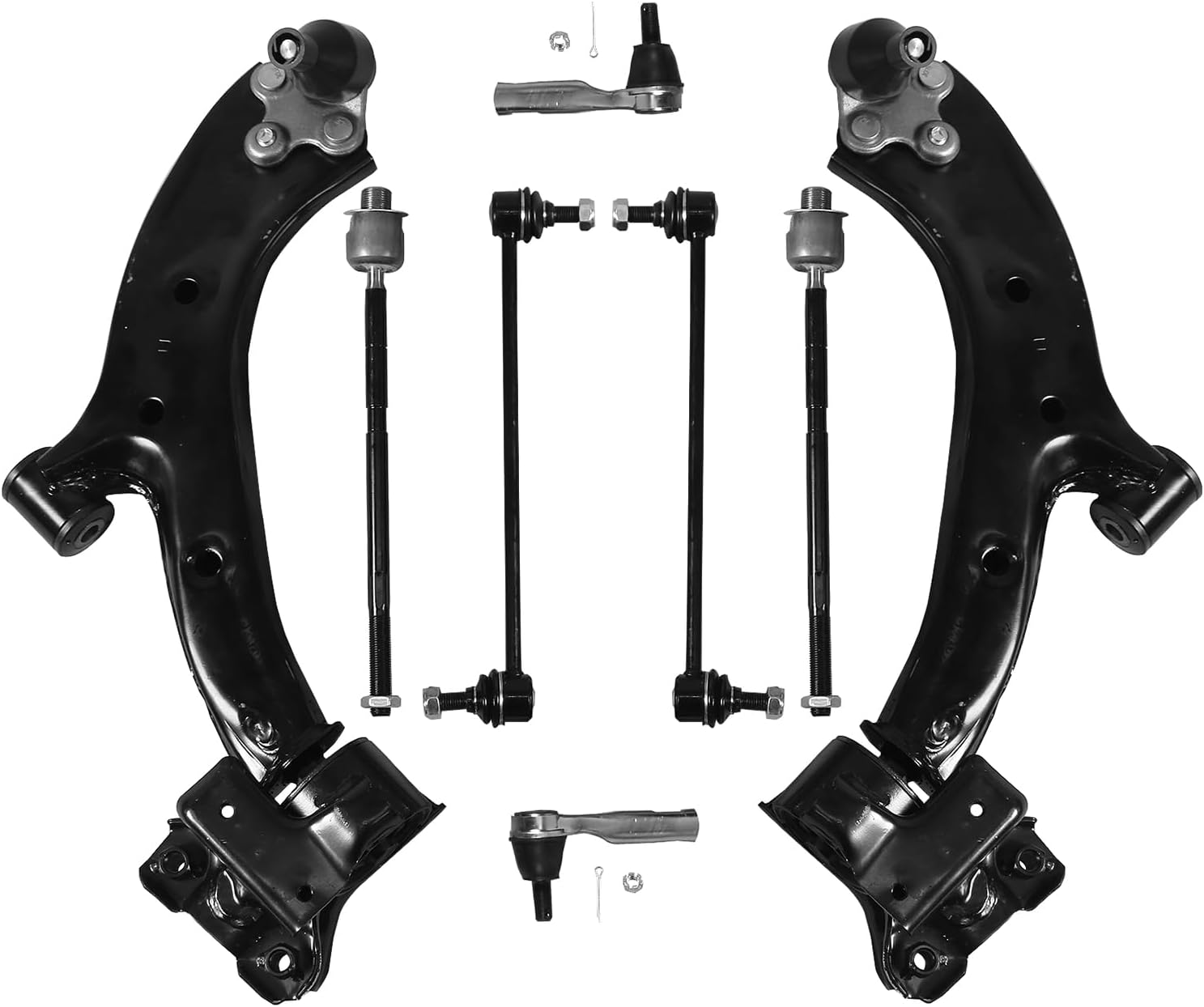
| Fit Type | Vehicle Specific Fit |
|---|---|
| Auto Part Position | Front Left Lower, Front Right Lower |
| Material Type | Alloy Steel, Electrophoretic Coating |
| Included Components | Lower control arms w/ball joints, inner & outer tie rod ends, sway bar end links |
This TIEZFUL kit bundles the front left and right lower control arms with ball joints plus inner and outer tie rod ends and sway bar end links so you can refresh the whole front suspension on a 2007–2011 Honda CR‑V. The control arms are made from high‑strength alloy steel with an electrophoretic rust‑resistant coating and solid mounting brackets, which should provide sturdier steering geometry and longer service life compared with worn factory parts. Typical use is a full front suspension repair or refresh to eliminate play, reduce steering shimmy, and restore wheel alignment limits without mixing new parts from different makers. The parts are described as direct fit to factory specifications, so installation is straightforward for a shop or competent DIYer and saves time versus sourcing individual components. Limitations: this is a vehicle‑specific package for Japan‑produced CR‑Vs in the listed years only and does not include hardware like control arm bushings beyond the assembled items, so expect alignment after installation and possible additional small parts depending on vehicle condition.
Best for: Buyers who want a practical, time‑saving solution to restore front suspension geometry and steering feel on a 2007–2011 CR‑V without sourcing individual parts.
Less Ideal for: If you need parts for non‑Japan produced CR‑V variants, a single replacement component rather than a full kit, or performance/upgraded suspension parts, look elsewhere.
- Complete front suspension kit replaces both lower control arms plus inner and outer tie rod ends and sway bar end links
- High strength alloy steel construction with electrophoretic coating for corrosion resistance
- Sold as vehicle‑specific direct fit parts to simplify installation and save shop time
- Fitment limited to 2007–2011 Honda CR‑V produced in Japan, so confirm your vehicle before buying
Verdict: A convenient, factory‑fit front suspension kit that replaces both lower control arms and related steering components to quickly restore steering stability on 2007–2011 Honda CR‑Vs produced in Japan.
4. Detroit Axle Front Left Lower Control Arm with Ball Joint for 2007–2011 Honda CR-V

| Fit Type | Vehicle Specific Fit |
|---|---|
| Auto Part Position | Front Left Lower |
| Auto Part Orientation | Drivers Side |
| Manufacturer Part Number | K620500 |
This Detroit Axle front left lower control arm is a direct-fit replacement for 2007–2011 Honda CR-Vs that comes with an integrated ball joint to simplify installation. It is intended to replace a worn or damaged lower control arm and restore proper suspension geometry and steering feel. The arm is made from a premium alloy with a high-strength structure intended to resist corrosion and repeated impact loads, and the assembly ships unfinished so some surface preparation or rust protection may be desired before installation. For a DIY installer or independent shop this part reduces labor compared with swapping or reusing old ball joints because the joint is included. Detroit Axle positions the unit as factory-quality and backs it with a long warranty, which adds reassurance for budget-minded buyers. The main compromises are that it is sold as a single driver-side piece and arrives unfinished, so matching finish or replacing both sides at once will add time and cost to a repair.
Best for: Buyers fixing a worn or damaged front suspension on a tight budget who want a ready-to-install, factory-quality replacement that keeps repair time and parts swapping to a minimum.
Less Ideal for: Those who prefer pre-finished cosmetic parts or want to replace both lower control arms at once without buying two separate units.
- Direct-fit, vehicle-specific replacement designed for 2007–2011 Honda CR-V front left lower position
- Includes integrated ball joint to simplify installation and reduce labor
- Manufactured from premium alloy with reinforced structure for improved durability
- Backed by a long 10-year warranty for added buyer confidence
- Arrives unfinished which may require surface treatment to prevent corrosion
- Sold as a single driver-side unit so replacing both sides requires an additional purchase
Verdict: A budget-friendly, direct-fit lower control arm with ball joint that simplifies repair and restores suspension function on 2007–2011 Honda CR-Vs.
5. KDSA 8‑Piece Front Suspension Kit – Lower Control Arms with Ball Joints, Tie Rods and Sway Bar Links for Honda CR‑V 2007–2011 (Japan-built)

| Fitment | 2007–2011 Honda CR‑V (Japan-built models, 1st VIN digit J) |
|---|---|
| Unit Count | 8 Count |
| Included Components | 2 lower control arms w/ ball joints, 2 inner tie rods, 2 outer tie rods, 2 sway bar links |
| Fit Type | Vehicle Specific Fit |
This KDSA 8-piece front suspension kit bundles two front lower control arms with integrated ball joints, two inner and two outer tie rod ends, and two front sway bar links so you can refresh the entire front steering and lower suspension at once on a 2007–2011 Honda CR‑V Japan-built model. Typical use is a coordinated repair when the vehicle shows worn steering play, uneven tire wear, or clunks over bumps; replacing all related components together simplifies alignment and reduces repeat shop visits. The control arms claim factory-quality tolerances and the kit is produced in a Taiwan facility with long production experience. Practical benefits include a full-front refresh in one package, matched parts that help speed installation and alignment, and included sway bar links to restore handling. Limitations to note are occasional reports of nonfunctional grease fittings on ball joints and basic hardware quality that may not match higher-end aftermarket brands, so professional installation and inspection of fittings is recommended for long-term service life.
Best for: Buyers who prioritize dependable, practical repairs and want a single kit to renew the front suspension and steering components on a 2007–2011 Honda CR‑V Japan-built model without sourcing parts separately.
Less Ideal for: Drivers seeking top-tier OEM-equivalent materials or rebuilds for performance applications should consider premium single-component replacements instead.
- Complete front kit replaces both lower control arms, inner and outer tie rods, and sway bar links for a coordinated repair
- Parts are manufactured to factory-style tolerances aiming for a direct fit and straightforward installation
- Bundling related components reduces the need for separate purchases and simplifies alignment after installation
- Some units have reported grease fittings that do not accept grease requiring replacement fittings
- Hardware quality is basic compared with premium aftermarket options
Verdict: A convenient, reliability-minded complete front suspension kit to replace worn lower control arms and associated steering parts on 2007–2011 Honda CR‑V Japan-built models.
6. Detroit Axle 10pc Front Suspension Kit for 2007–2011 Honda CR-V (Japan-built)

| Fitment | 2007–2011 Honda CR-V (Japan built, 1st VIN digit J) |
|---|---|
| Kit contents | 2 lower control arms w/ ball joints, 2 sway bar end links, 2 inner tie rod ends, 2 outer tie rod ends, 2 tie rod boots |
| Manufacturer | Detroit Axle |
| Position | Front Lower |
This Detroit Axle kit is a one-stop replacement for worn front-end components on 2007–2011 Honda CR-V models built in Japan. It bundles two front lower control arms with ball joints, inner and outer tie rod ends, sway bar end links, and tie rod boots so you can replace the steering and lower suspension hardware at once. The control arms are made from a premium alloy and the brand says they are engineered to match factory fit and function, which simplifies installation for a home mechanic or a shop doing a full front-end refresh. In practice the kit reduces play in the steering and often returns a firmer, quieter ride compared with aged OEM parts. Because it is a full kit, you avoid mixing new and old components that would leave weak links in the system. Some buyers have reported fitment and tolerance issues on other vehicle applications, so expect to check clearances during install and be prepared for minor adjustments. This kit is best used when doing a thorough front suspension rebuild rather than replacing a single failed part.
Best for: Buyers who want to rebuild the entire front suspension and steering of a 2007–2011 Japan-built Honda CR-V in a single purchase, prioritizing convenience and restoring steering feel.
Less Ideal for: If you only need a single small part or prefer OEM-branded components from the dealer, this all-in-one kit is more than required and a simpler single-part replacement may be a better choice.
- Complete 10-piece kit replaces multiple front suspension and steering components at once
- Control arms made from premium alloy for corrosion resistance and increased rigidity
- Designed as direct-fit replacements to simplify installation and reduce workshop time
- Includes both inner and outer tie rod ends and sway bar links to restore steering precision
- Reported isolated fitment/tolerance problems on some vehicles requiring inspection or minor modification
Verdict: Choose this kit when you want a convenient, factory-quality complete front suspension refresh for a 2007–2011 Japan-built Honda CR-V.
7. Detroit Axle 12pc Front End Suspension Kit for 2007–2011 Honda CR-V

| Fitment | 2007–2011 Honda CR-V (Japan built models, 1st VIN J) |
|---|---|
| Kit contents | 2 front lower control arms w/ ball joints, 4 tie rod ends, 4 sway bar end links, 2 tie rod boots |
| Material Type | Alloy Steel |
| Auto Part Position | Front Lower |
| Unit Count | 2.0 Count |
This Detroit Axle 12-piece front end kit bundles the two front lower control arms with ball joints plus inner and outer tie rod ends, multiple sway bar end links, and rack-and-pinion tie rod boots so you can rebuild the front suspension in one job. It is intended as a direct-fit replacement for 2007–2011 Honda CR-V (Japan-built) models, which simplifies installation and reduces the need to source individual parts. The control arms are made from alloy steel with a reinforced structure and come with preinstalled ball joints on the lower arms, while tie rod boots and end links complete the steering and stabilizer hardware. Buyers will appreciate the kit approach when the whole front end needs work and the manufacturer backing with a long warranty provides extra reassurance. However, some users report inconsistent component quality and occasional missing small items such as clamps or non-greasable joints, so inspect hardware on arrival and plan for minor prep or replacements before installation.
Best for: Buyers who prioritize replacing the entire front suspension in one go and want a vehicle-specific kit that minimizes parts hunting and simplifies installation, with a preference for a long-backed aftermarket option.
Less Ideal for: If you only need a single replacement part or expect exact OEM-factory finishes on every small component, this all-in-one kit may be more than you require or may include parts you will replace separately.
- Complete kit covers lower control arms, tie rod ends, sway bar end links, and tie rod boots for a full front-end refresh.
- Vehicle-specific direct-fit design for 2007–2011 Japan-built Honda CR-V to simplify installation and alignment.
- Alloy steel control arms with reinforced structure aim to resist wear and rust and provide stable handling.
- Includes both inner and outer tie rod ends and multiple end links so you do not need to source separate steering/stabilizer parts.
- Some customers report variable quality on smaller components like boot clamps and grease fittings, requiring extra parts or prep.
- At least one control arm may be non-greasable and arrive without lubricant in the boot, which could shorten joint life if not addressed.
Verdict: If you need a one-stop, vehicle-specific front suspension rebuild for a 2007–2011 Japan-built CR-V, this Detroit Axle kit gives the most parts and a simple direct-fit solution.
Choosing the Right 2007-2011 Honda CR-V Lower Control Arm: Key Factors to Consider
Fitment and Mounting Geometry
Correct fitment is critical because even small deviations change wheel alignment and steering response. For the 2007–2011 CR-V you must ensure the lower control arm matches the factory mounting points, ball-joint taper, and orientation for left or right side. Mismatched geometry can lead to uneven tire wear, pull to one side, or premature wear of other suspension components.
When assessing fitment, check whether the arm is intended for the specific model years and whether it replaces both the arm and the ball joint or requires transfer of original hardware. Verify bolt hole spacing and bushing placement against the vehicle's service manual or a confirmed OEM part number to avoid alignment headaches after installation.
Bushing Type and Durability
Bushings control how suspension loads transfer into the chassis and are a primary source of noise and vibration. For a CR-V, original-style rubber bushings isolate road noise but can degrade with age and exposure to oil and road salts. Upgraded polyurethane bushings offer firmer control and longer life, but they may transmit more vibration into the cabin.
Consider whether a replacement arm includes preinstalled bushings or if you will reuse the factory bushings. Arms with sealed, multi-piece bushings or bonded constructions tend to last longer and reduce the chance of creak or clunk noises under load.
Ball Joint Quality
The ball joint links the lower control arm to the steering knuckle and directly affects steering precision and safety. A high-quality ball joint resists play through durable joint materials, proper grease sealing, and correct taper sizing for the CR-V's knuckle.
Inspect the replacement arm for a serviceable or replaceable ball joint and for features like grease fittings or a sealed dust boot. Excessive play in a ball joint shows up as looseness, uneven tire wear, or a clunk when hitting a bump, so prioritize arms with robust ball-joint construction to maintain safe handling.
Material, Strength, and Corrosion Protection
Lower control arms must withstand repeated loads from cornering, braking, and bumps. The material and manufacturing process matter: stamped steel arms are common and affordable, while forged or cast designs can offer added strength. For CR-V owners in regions with road salt or wet conditions, corrosion resistance is a top concern to prevent structural degradation over time.
Look for arms with protective coatings, zinc plating, or e-coat finishes and solid welds at stress points. Reinforced mounting areas and thicker gauge steel reduce the chance of premature bending or cracking under normal use.
Ride Quality and NVH Impact
A replacement lower control arm influences noise, vibration, and harshness. Switching from aged rubber bushings to firmer materials can tighten steering and reduce deflection, improving perceived handling. However, firmer bushings may transmit more vibration into the cabin, which is a tradeoff owners must weigh.
Decide whether you prioritize a quieter, compliant ride or crisper handling. Consider the arm's bushing durometer, overall stiffness, and whether the design includes isolation features to minimize squeaks and clunks when driving over rough surfaces.
Installation Complexity and Serviceability
Some lower control arms arrive with the ball joint and bushings already installed, while others require pressing in bushings or transferring the ball joint from the old arm. For many CR-V owners and independent shops, a preassembled arm reduces labor time and avoids the need for a press.
Also factor in whether alignment adjustments are straightforward after installation or if additional parts are commonly replaced at the same time, such as tie rod ends or sway bar links. Clear instructions and included hardware can make the repair faster and reduce workshop downtime.
Symptoms That Point to a Failing Lower Control Arm
On a 2007–2011 Honda CR-V, failing lower control arm components typically present as clunking or knocking noises when driving over bumps, a loose or wandering steering feel, or accelerated tire wear on the inner or outer edge. Drivers may also notice uneven braking feedback or a change in vehicle tracking during highway driving.
Specific signs include lateral play felt through the steering wheel, a distinct metallic clunk during low-speed maneuvers, and visible separation or cracking in the arm's bushing material. Routine inspection during oil changes or tire rotations can help catch these symptoms before they lead to more extensive suspension damage.
- Clunking or knocking over bumps
- Loose steering or wandering
- Uneven or accelerated tire wear
- Visible bushing deterioration or ball-joint play
Preparing for Replacement on the 2007–2011 CR-V
Before removing the old arm, record the vehicle's alignment specs or have the current alignment checked. Lifting the CR-V and supporting it securely, remove the wheel and inspect adjacent components so any worn pieces can be replaced at the same time. Take photos of the original orientation and note torque values.
Gather the proper tools: a torque wrench, ball-joint separator, breaker bar, and potentially a press if bushings must be transferred. If the replacement arm comes preassembled, installation is typically simpler and faster, but a final alignment is always recommended after the repair.
- Check and record alignment before removal
- Inspect sway bar links, tie rods, and wheel bearings
- Have torque specs and proper tools on hand
When to Replace Bushings Versus the Entire Arm
If the arm's structure is sound and only the bushings are worn, replacing just the bushings can restore quietness and control while saving money. However, pressed-in bushings require a hydraulic or shop press and some skill to install correctly. On older CR-Vs where corrosion or bending is present, replacing the whole arm is often more reliable.
Choose bushing replacement when the metal arm shows no cracks, machining damage, or deformation and when you have access to appropriate pressing tools. Opt for a full-arm replacement if the ball joint is worn, if the arm is bent, or if you prefer a preassembled unit to reduce labor time.
- Replace bushings when arm is structurally sound
- Choose full-arm replacement for bent or corroded arms
- Full-arm replacements reduce shop labor if preassembled
Alignment Considerations After Installation
Replacing a lower control arm affects camber and caster, so a professional alignment is essential to prevent rapid tire wear and to restore correct steering geometry. For the 2007–2011 CR-V, alignment adjustments commonly focus on camber and toe corrections after the new arm is tightened to specification.
Drive the vehicle to settle suspension components before final alignment if recommended by the installer. Verify the alignment shop adjusts both sides as necessary and provides a printout of final measurements for your records.
- Professional alignment required after replacement
- Camber and toe are the most commonly affected settings
- Drive prior to final alignment when advised
Avoiding Common Installation Pitfalls
Do not reuse visibly damaged or corroded mounting hardware. Bolts can stretch or threads can be compromised, so replace fasteners if their condition is questionable. Also avoid overtorquing new components which can distort bushings or stress the arm.
Ensure the ball joint taper and nut torque follow the service manual to prevent premature wear. If pressing bushings, support the arm correctly to avoid bending. Finally, double-check that the replacement arm matches left or right orientation to prevent setup errors.
- Replace questionable mounting hardware
- Follow torque specs and service procedures
- Confirm left/right orientation before final installation
Still looking for the perfect fit?
Select your Honda CR-V configuration to see the most relevant Lower Control Arms recommendations
How We Chose the Best 2007-2011 Honda CR-V Lower Control Arm
We prioritized components that deliver correct fit and durability for 2007–2011 Honda CR-Vs and focused on criteria that matter to owners and technicians. Evaluation criteria included precise OE-compatible fitment to the CR-V suspension mounting points and ball joint taper, bushing design and material to gauge long-term noise and vibration control, and structural strength and corrosion protection for longevity in varied driving conditions. We also considered ease of installation, including whether parts come with necessary hardware or bushings preinstalled, and a practical warranty or quality assurance indicator from the manufacturer.Excluded items were universal or multi-fit arms that do not list explicit fitment to the 2007–2011 CR-V studs and control arm locations. We also set aside components intended for heavy-duty race use, since those typically alter ride height and steering geometry. The surviving candidates were cross-checked for correct left/right orientation, ball-joint taper size, bushing construction, and corrosion-resistant coatings to ensure they meet the real-world needs of CR-V owners seeking a direct-fit replacement or like-for-like upgrade.
Our full evaluation process is outlined in our review methodology.
FAQ
How do I tell if my CR-V's lower control arm needs replacing?
Common indicators include clunking noises over bumps, loose or wandering steering, and uneven tire wear. A visual inspection may reveal cracked or separated bushings or play at the ball joint. If you observe these signs, have the suspension inspected and tested for play.
Can I replace just the bushings instead of the whole arm?
You can if the arm is not bent or corroded and you have access to a press and the skills to perform the job. Replacing only bushings saves cost but requires proper tooling and care to avoid damaging the arm during pressing.
Will replacing the lower control arm fix steering pull?
Replacing a worn or damaged lower control arm often corrects steering pull caused by altered geometry or uneven bushing wear. However, an alignment after replacement is necessary to fully resolve pulling issues and ensure proper tracking.
Do new lower control arms come with bushings and ball joints installed?
Some replacement arms arrive fully preassembled with bushings and ball joints installed, while others require transferring parts from the old arm. Choosing a preassembled unit reduces labor time and the need for pressing equipment.
How long does a lower control arm typically last on a CR-V?
Lifespan varies with driving conditions, but under normal driving many arms last years. Exposure to road salt, potholes, and heavy loads shortens life. Regular inspections will help catch wear early before it affects handling.
Will I need an alignment after installing a new lower control arm?
Yes. Replacing a lower control arm changes suspension geometry, so a professional alignment is recommended to correct camber and toe and prevent premature tire wear.
Final Verdict
When replacing lower control arms on a 2007–2011 Honda CR-V, prioritize correct fitment, durable bushings, and a solid ball-joint design. Balance the desire for firmer handling against potential increases in cabin vibration when choosing bushing materials. If the arm shows structural wear or the ball joint has play, a full-arm replacement typically provides the most reliable outcome and minimizes future labor.After installation, always perform a professional alignment and inspect related suspension parts. Focusing on these priorities will restore safe handling and reduce unwanted noise, helping you drive confidently again.
Explore More:
- Check out all Honda CR-V parts & accessories
- Explore Lower Control Arms Maintenance & Repair Guides
- Explore Suspension & Steering
- Browse all Auto Parts
