

Note: This article contains affiliate links. If you click on these links and make a purchase, I may earn a small commission at no extra cost to you. This helps support my research and content. Read my full affiliate disclosure here.
If you drive a GMC Sierra 1500, worn lower ball joints can make steering sloppy, accelerate tire wear, and create unsafe handling. Picking the right lower joint matters because this part directly affects wheel alignment, suspension geometry, and how the truck responds under load and over rough roads.This guide covers our seven shortlisted lower ball joints chosen for the Sierra 1500 and explains the practical differences you should care about. We evaluate each option on fitment accuracy, durability, and installation practicality to help you pick a replacement that restores steering precision and service life. Read on to see the criteria behind our selections and what to expect during installation.
Looking for other parts? See all GMC Sierra 1500 parts & accessories.
Top Picks at a Glance
| Best Overall The best all-around choice for most situations | TRQ Front Lower Ball Joint Set, 2-Piece |  |
| Best Quality Built to a higher standard if you want something more solid | MOOG K6541 Front Lower Suspension Ball Joint |  |
| Best Value The sweet spot between price and what you get | KFVF K6541 Front Lower Ball Joint — 2‑Piece Kit |  |
| Best Budget The cheapest option that still gets the job done reliably | BOXI Front Lower Ball Joint (K6541) |  |
| Highest Rated A top-rated pick with lots of positive feedback | MOOG K500007 Front Lower Suspension Ball Joint |  |
| Most Popular A crowd favorite that many people choose with confidence | Detroit Axle Front Lower Ball Joints (Passenger Side) – Replacement Kit, 2-Pack |  |
| Best Seller A high-volume bestseller chosen again and again | A-Premium Front Lower Ball Joint Pair (front lower left & right) |  |
1. TRQ Front Lower Ball Joint Set, 2-Piece

| Brand | TRQ |
|---|---|
| Model | TRQ PSA63255 2 Piece Ball Joint Set |
| Position | Front Lower |
| Quantity | 2 Piece |
This TRQ two-piece front lower ball joint set replaces both left and right lower joints and is intended for rear-wheel-drive Silverado/Sierra 1500 trucks with front coil spring suspension on the listed model years. It installs as a direct-fit replacement and includes the nuts and cotter pins needed for assembly, which makes it a practical choice for a DIY suspension refresh. The machined exterior and tight press-fit reported by users suggest secure seating in the control arm and improved steering response with reduced squeaks. TRQ also provides installation videos that help guide the replacement process. Not every unit will be identical to factory parts for every application, so some buyers have needed minor shimming or washers to achieve proper nut clearance; that means careful fit verification before final torque is wise. For routine maintenance and restoring steering feel on the specified Sierra/Silverado trucks, this kit is a solid, budget-conscious option with good real-world feedback.
Best for: Buyers who want a reliable, do-it-yourself friendly replacement to restore steering tightness and stop suspension noise on the specified Sierra/Silverado 1500 rear-wheel-drive trucks.
Less Ideal for: If you prefer an exact factory-spec reproduction without any fitment adjustments or you need parts for vehicles outside the listed model years and configurations, look elsewhere.
- Includes both driver and passenger front lower ball joints for a complete front-end refresh
- Machined exterior and tight press-fit improve steering response and reduce suspension noise
- Includes necessary hardware such as nuts and cotter pins to simplify installation
- Accessible installation videos from the maker help DIYers complete the job correctly
- Some units may require minor shims or washers to achieve proper nut clearance and torqueing in certain control arms
Verdict: A practical, budget-friendly two-piece front lower ball joint kit that restores steering feel and quiets suspension for the listed Sierra/Silverado 1500 rear-wheel-drive trucks.
2. MOOG K6541 Front Lower Suspension Ball Joint

| Brand | MOOG |
|---|---|
| Model | K6541 |
| Exterior | Machined |
| Manufacturer Part Number | K6541 |
The MOOG K6541 is a serviceable front lower ball joint built for truck duty. It installs like a factory replacement and includes a grease zerk, pre-installed boot, and a robust machined stud that resists premature wear. Typical use is a front-end rebuild on Silverado/Sierra trucks where you want a durable, serviceable joint — the grease fitting lets you refresh lubrication without removing the control arm, and the reinforced boot and preload washer keep contaminants out and maintain tightness as the bearing wears. Installers report straightforward fitment with a ball-joint press and improved steering feel after replacement. Potential downsides are the occasional manufacturing defect in the dust boot that requires inspection before assembly and a supplied castle nut that could corrode over time in salted climates. Expect to perform an alignment after installation as with any suspension work.
Best for: Buyers who prioritize long-term front-end durability and want a serviceable, truck-grade replacement that tightens steering feel and can be maintained with periodic greasing.
Less Ideal for: Drivers who prefer permanent, maintenance-free sealed joints or who plan to replace suspension components infrequently and avoid regular inspections.
- Greaseable design with zerk fitting for easy periodic lubrication
- Pre-installed dust boot and machined bearing surface to reduce contamination and friction
- Built stronger than many factory lower joints with heat-treated ball stud for improved durability
- Precision tolerances for straightforward, bolt-in fitment using standard tools
- Occasional defective dust boots reported so inspect parts before final assembly
- Supplied hardware may be prone to corrosion in regions that use road salt
Verdict: Choose the MOOG K6541 when you want a heavy-duty, greaseable lower ball joint that restores steering tightness and can be serviced to extend lifespan.
3. KFVF K6541 Front Lower Ball Joint — 2‑Piece Kit

| Brand | KFVF |
|---|---|
| Model | K6541 |
| Greaseable | Yes |
| Fits | Select Chevrolet, GMC and Cadillac full‑size trucks/SUVs (see fitment) |
The KFVF K6541 is a front lower ball joint kit intended as a direct replacement for a range of Chevrolet, GMC and Cadillac full‑size trucks and SUVs. It installs in the lower control arm to restore steering geometry and front-end stability; the kit is greaseable which helps extend service life by flushing contaminants and reducing corrosion. Buyers will appreciate the cast‑iron arm design and the included boots that reviewers describe as sturdy. Typical use is a routine suspension repair or refreshing worn front-end components; installation requires common tools and, for some vehicles, a ball-joint press or cutting of existing fasteners. Limitations to consider are fitment variability—accurate vehicle compatibility checks are essential because some buyers reported size mismatches—and the part is sold without aluminum knuckles, which matters if your vehicle has that configuration. Overall it offers a durable, serviceable replacement at a value-oriented level for owners who want to get their steering and suspension back to factory-type performance.
Best for: Practical owners who need a durable, serviceable replacement to restore steering and front-end stability on full‑size GM trucks and SUVs and who prioritize longevity and the ability to re-grease suspension components.
Less Ideal for: People seeking a plug-and-play, exact factory-matched OEM swap for every vehicle variant or those unwilling to perform or pay for moderate installation work and fitment checks.
- Greaseable socket allows periodic lubrication to reduce wear and corrosion
- Cast iron arm construction for durable, heavy-duty use
- Includes protective boots that reviewers note are sturdier than factory in some cases
- Designed specifically to fit many Chevrolet, GMC and Cadillac full‑size trucks and SUVs
- Some buyers reported fitment differences requiring modification or extra work
- May require a ball-joint press or cutting existing fasteners for installation
Verdict: A durable, greaseable lower ball joint kit that restores steering performance on full‑size GM trucks and SUVs while offering serviceable longevity for practical owners.
4. BOXI Front Lower Ball Joint (K6541)

| Position | Front Lower |
|---|---|
| Manufacturer | ShangHai BOXI Auto Parts Co., Ltd. |
| Manufacturer Part Number | BX02400011-1 |
| OEM Part Number | K6541 AK6541 810258 13501-13000 12475478 12472819 104267 |
This BOXI front lower ball joint is a direct-fit replacement for many GMC Sierra 1500 front suspensions and is intended for routine repair or maintenance. It installs in the lower control arm to restore proper steering geometry and front-end stability after a worn ball joint is removed. The part is made from alloy material with a claimed high-strength design and corrosion resistance, and BOXI positions it to meet or exceed factory form and function. In practice you get a simple swap-in unit that works for standard street use and light-duty driving. Expect easy installation for a mechanic or competent DIYer when the correct hardware is included. Limitations to note: some buyers reported missing hardware like castle nuts or snap rings in a few packages, so check the box before starting the job and have replacements on hand. Long-term durability can vary compared with higher-end branded replacements, so this is best for cost-conscious repairs rather than heavy-duty or long-term performance upgrades.
Best for: Buyers seeking an affordable, factory-style lower ball joint to get a GMC Sierra 1500 back on the road quickly without paying for premium parts; good for standard daily driving and routine suspension repairs.
Less Ideal for: Drivers who need a heavy-duty, high-mileage performance upgrade or who prefer a fully guaranteed hardware kit included should consider higher-end aftermarket or professional-grade replacements.
- Direct-fit design for straightforward replacement on compatible GM trucks
- Manufactured from alloy with reinforced structure for wear resistance
- Meets fit, form, and basic function expectations for routine street use
- Affordable option for budget repairs
- Some packages have arrived missing small hardware such as nuts or snap rings
- Not positioned as a heavy-duty or performance-grade ball joint for extreme use
Verdict: A low-cost, direct-fit front lower ball joint that restores steering function on a GMC Sierra 1500 with good value for budget repairs.
5. MOOG K500007 Front Lower Suspension Ball Joint
| Brand | MOOG |
|---|---|
| Manufacturer | MOOG Chassis Products |
| Position | Front |
| Item model number | K500007 |
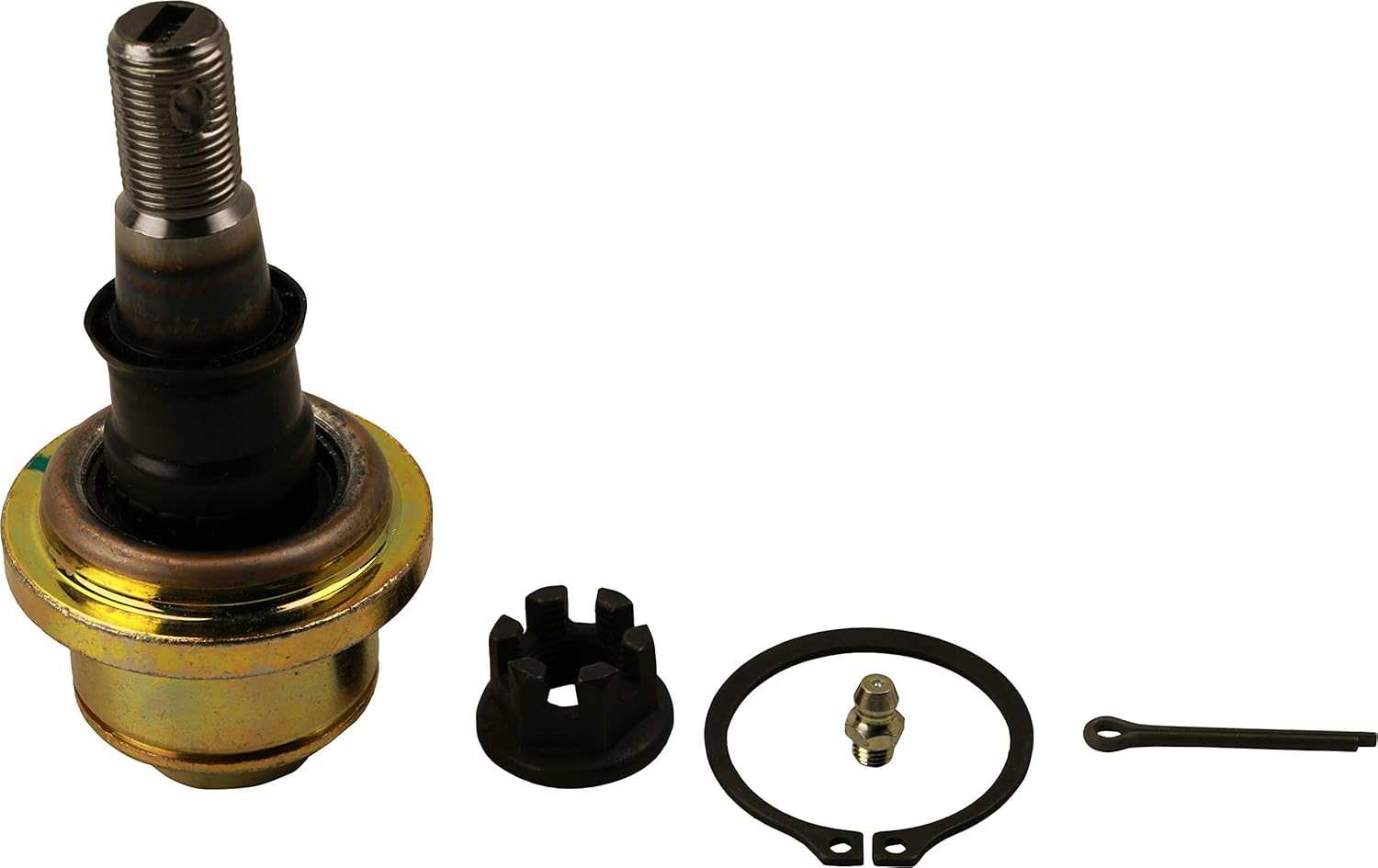
The MOOG K500007 is a replacement front lower ball joint aimed at restoring steering stability and suspension control on affected GMC Sierra 1500 model years. It installs in the lower control arm and provides the pivot point between the control arm and steering knuckle so wheel alignment and handling return to factory-like behavior. MOOG emphasizes durability features such as a heat-treated stud, pressed cover plate to seal out debris, and a greasable socket or gusher bearing in applicable applications to reduce wear and allow periodic lubrication. In practice this means fewer premature failures and smoother steering feel after replacement. Installation is straightforward with the right tools, and the unit is manufactured to match factory fit so no modification is required. Limitations to note are that fitment is vehicle-specific so confirm exact year and submodel before buying and some listings indicate a non-greasable version depending on application, which removes the ability to service the joint later.
Best for: Buyers prioritizing long-term reliability and a factory-quality replacement for front lower ball joints on their Sierra who value durable materials and serviceable design.
Less Ideal for: Drivers wanting a one-size-fits-all aftermarket upgrade or a performance-tuned suspension component should consider alternatives tailored to those goals.
- Factory-style fit for direct replacement on specified GM trucks and SUVs
- Heat-treated stud for improved fatigue strength and resistance to premature failure
- Sealed cover plate design helps keep debris out and reduce bearing wear
- Greasable socket or gusher bearing on applicable versions allows lubrication to extend life
- Fitment varies by model year and control arm material so ordering the wrong variant is possible
Verdict: Choose the MOOG K500007 when you need a durable, factory-fit front lower ball joint that restores steering stability and is built for long service life.
6. Detroit Axle Front Lower Ball Joints (Passenger Side) – Replacement Kit, 2-Pack

| Fit Type | Vehicle Specific Fit |
|---|---|
| Auto Part Position | Front |
| Material | Alloy Steel |
| Manufacturer | Detroit Axle |
These Detroit Axle front lower ball joints are a two-piece replacement kit intended to restore front suspension fit and steering feel on compatible GM SUVs and trucks. They install into the lower control arm and are used where 4.150in length lower ball joints are required. The joints are alloy steel with a sealed boot and come as a passenger-side set of two; Detroit Axle advertises durability testing and a long warranty. In real-world use they offer a straightforward way to eliminate popping or looseness and many buyers report solid fitment and improved front-end stability after installation. Some users note low initial grease and no grease zerk on these units, so additional lubrication or careful inspection during install is prudent. Fitment inconsistency appears in a minority of reports, so verify the specified length and application before ordering. This kit is a cost-conscious option that can requre a press for removal/installation and may not match OEM tolerances in every case.
Best for: Buyers who want an affordable, vehicle-specific replacement to restore steering feel and remove front-end play while relying on other owners confirming fit and performance.
Less Ideal for: Those who prioritize exact OEM tolerances or long-term serviceability without adding grease; professional shops seeking guaranteed factory-matching fit may prefer a premium OE-spec part.
- Vehicle-specific fitment for many GM trucks and SUVs with 4.150in lower ball joints
- Alloy steel construction with sealed boot for basic corrosion and wear resistance
- Sold as a two-piece kit to replace both front lower joints at once
- Backed by long-term warranty and manufacturer testing claims
- Not greased well out of the box and lacks a service zerk for easy re-lubrication
- Some users report occasional fitment variance versus factory dimensions
Verdict: A budget-friendly, vehicle-specific front lower ball joint kit that restores steering tightness for GMC Sierra front suspensions when you confirm the 4.150in fitment.
7. A-Premium Front Lower Ball Joint Pair (front lower left & right)

| Position | Front Lower |
|---|---|
| Greased Fitting Included | Yes |
| Pre-Greased | Yes |
| Exterior | Corrosion-Resistant Coating |
| Manufacturer Part Number | APCA1721 |
These front lower ball joints replace the driver and passenger side lower joints on a range of GM full-size trucks and SUVs with steel control arms. They are sold as a pair, arrive pre-greased and include grease fittings plus castle nuts and cotter pins for secure installation. The rubber bushings are intended to absorb vibration and reduce noise, and the corrosion-resistant coating helps resist surface rust. Installation is typical of lower ball joint swaps and requires control arm removal or a press depending on your vehicle and tools. Buyers should expect improved steering stability and reduced clunking or uneven tire wear when worn joints are swapped out. Some reviewers report long trouble-free use and good fitment, while others have seen early failures and torn rubber boots, so longevity can vary by vehicle and driving conditions. This makes them a practical, budget-friendly replacement if you follow recommended installation and lubrication practices, but expect mixed results compared with higher-end OE-quality units.
Best for: A careful buyer who values correct fitment and straightforward replacement for a GMC Sierra 1500 with steel control arms and wants an affordable, easy-to-lubricate repair that restores steering feel.
Less Ideal for: Drivers seeking a long-term, premium OEM-equivalent joint for heavy-duty or high-mileage use should consider higher-end replacements or upgraded aftermarket options.
- Sold as a matched front lower left and right pair for one-step replacement.
- Pre-greased and equipped with grease fittings for ongoing lubrication.
- Includes castle nuts and cotter pins so fasteners can be secured properly.
- Corrosion-resistant coating helps reduce surface rust during service life.
- Some users report premature failure or torn rubber boots on certain vehicles, indicating variable durability.
Verdict: A-Premium's pre-greased, complete front lower ball joint pair is a practical, budget-conscious replacement to restore steering stability on compatible GM trucks when careful installation and maintenance are followed.
Choosing the Right GMC Sierra 1500 Lower Ball Joint: Key Factors to Consider
Fitment and Taper Geometry
Correct fitment is the single most important factor when selecting a lower ball joint for a GMC Sierra 1500. The taper angle and stud diameter must match the knuckle to prevent play, uneven wear, or a loose steering feel. Mismatched taper geometry can lead to quick failure or compromised torque retention, which affects handling.
Check whether the replacement uses the same press-in or bolt-in method as the original. For the Sierra 1500, the difference between a slip-fit press-in and a flanged or bolted design changes installation steps and may require different tools. Accurate fitment also reduces the need for extra shims or modifications during front-end alignment.
Material Quality and Corrosion Resistance
Lower ball joints endure high loads, impact forces, and exposure to water, salt, and road debris. Materials such as heat-treated steel and hardened bearing surfaces extend service life under these conditions. Corrosion-resistant finishes and protective coatings help prevent rust that can seize the joint or degrade sealing surfaces.
Good metallurgy reduces wear at the stud and socket interface and helps maintain consistent steering feel over time. If you plan to use the truck in salted winter roads or off-road conditions, prioritize joints with proven coatings and durable seal designs to avoid early failure.
Seal Design and Greasability
A durable seal keeps contaminants out and lubricant in, which directly impacts longevity. Some replacements have serviceable grease fittings that let you re-lubricate the joint during scheduled maintenance, significantly extending life compared with sealed-for-life designs when used in harsh conditions.
Evaluate whether the joint includes a grease zerk or a high-quality captive seal. On a GMC Sierra 1500 that sees heavy hauling or off-road use, the ability to periodically add grease helps preserve bearing surfaces and prevents premature wear.
Load Capacity and Durability
Lower ball joints on a full-size pickup must handle higher vertical loads and side forces than on smaller vehicles. A joint rated for higher load capacities or built with reinforced housings will better resist deformation and maintain geometry under payload.
Durability also comes from internal bearing design and the thickness of the ball stud. Consider how you use the Sierra — frequent towing, heavy payloads, or rough-terrain driving demand more robust components. Choosing a joint built for heavier duty reduces the risk of sudden failures and keeps steering consistent.
Installation Method and Serviceability
The installation method affects cost and time for replacement. Press-in joints require a press or a ball joint press tool and sometimes careful removal of the old pressed-in cup. Bolt-in or stud-replacement styles may be simpler but must match the knuckle mounting. Confirm whether the joint includes the necessary hardware or if additional cups, retaining clips, or brackets are required.
Also consider whether the joint can be serviced after installation. Serviceable joints with grease fittings are often the easiest to maintain long-term, while sealed units may offer convenience but require replacement when worn.
Fitment Accuracy and Alignment Impact
Even small dimensional differences in ball joint height or mounting location can alter caster and camber geometry during replacement. Accurate reproduction of OE dimensions helps maintain alignment specs and prevents uneven tire wear. Some aftermarket joints have slightly different stack heights that can necessitate a front-end alignment after installation.
Plan for alignment checks after replacing lower ball joints and verify that the chosen joint restores original suspension geometry to avoid handling quirks or accelerated tire wear.
When To Replace Your Lower Ball Joints
Knowing the signs that a lower ball joint is failing helps you avoid sudden steering problems. Common indicators include clunking noises over bumps, a loose or wandering steering feel, and uneven tire wear concentrated on the inner or outer edges of the front tires.
Inspect joints visually for torn boots, grease leakage, or visible rust at the stud. If you detect excessive vertical or lateral play when prying at the joint with the suspension unloaded, replacement is prudent rather than risky to continue driving. Addressing issues early prevents collateral damage to control arms and wheel bearings.
- Clunking or knocking when driving over bumps
- Loose or imprecise steering feel
- Uneven front tire wear
- Visible torn boot or grease contamination
Tools and Workshop Prep for the Sierra 1500
Preparing the right tools saves time and reduces the chance of damaging suspension parts. For press-in lower ball joints, a quality ball joint press tool and appropriate adapters are often required. For bolt-in styles you still need torque wrenches, a breaker bar, and possibly a small press to remove the old joint cleanly.
Other useful items include a dedicated snap-ring plier for retaining rings, a torque wrench set to factory specs, and penetrating oil to ease removal of stubborn components. Have alignment equipment or a plan to visit an alignment shop after installation because even accurate replacements can shift suspension geometry slightly.
- Ball joint press tool with adapters
- Torque wrench and breaker bar
- Snap-ring pliers and punch set
- Penetrating oil and clean rags
Grease Fittings Versus Sealed Units
Serviceable joints with grease fittings allow periodic lubrication, which is valuable for trucks that see heavy duty cycles or off-road use. Repacked joints can often outlast sealed versions in harsh environments because you can replenish lubricant and flush contaminants during maintenance.
Sealed units reduce maintenance needs and simplify replacement, but once the seal fails you must replace the entire joint. Consider your maintenance habits and exposure to contaminants when deciding which design suits your Sierra 1500 best.
- Greaseable joints: longer service life with regular maintenance
- Sealed joints: low maintenance but non-serviceable
- Choose greaseable for heavy-use trucks and sealed for low-mileage street use
Impact On Alignment and Tire Wear
Replacing lower ball joints can change caster or camber if the replacement joint does not match OE stack height. Misalignment accelerates tire wear and can make steering feel off-center. After replacing lower joints, plan a front-end alignment to restore proper geometry.
If you notice new tire wear patterns after installation, re-check the fitment dimensions and confirm the joint seat and taper are correct. Proper torque on ball joint castle nuts and use of new cotter pins or locking hardware also helps maintain alignment over time.
- Always align after replacement
- Verify stack height and taper match OE specs
- Use correct torque and new locking hardware
DIY Versus Professional Replacement
A competent DIYer with the right tools can replace lower ball joints on a Sierra 1500, but expect the job to take several hours. Press-in jobs often require patience and the correct adapters to avoid damaging the control arm. If you do not have a press or the experience to control alignment outcomes, professional installation reduces the risk of improper seating or incorrect torque.
Professional shops can also confirm load-bearing components and detect secondary wear that may affect the new joints. Budget time for a post-install alignment whether you do the work yourself or hire a shop.
- DIY: requires tools, time, and careful removal techniques
- Professional: faster, includes alignment and inspection
- Plan for post-replacement alignment in either case
Still looking for the perfect fit?
Select your GMC Sierra 1500 configuration to see the most relevant Ball Joints recommendations
How We Chose the Best GMC Sierra 1500 Lower Ball Joint
We focused on replacement lower ball joints that meet the fitment and load demands of the GMC Sierra 1500. Our selection filters prioritized correct OE-style dimensions, robust bearing surfaces or stud designs, and materials that resist corrosion and premature wear. We also weighed ease of installation, including whether the joint accepts common press-in or bolt-in procedures used on the Sierra 1500 and compatibility with standard suspension components. Durability indicators such as high-grade steel, serviceable seals, and quality control features were important because the Sierra often carries heavy loads and sees varied road conditions.We excluded options lacking clear fitment specifications or those that require extensive suspension modification. Units without replacement grease fittings or with unclear warranty support were also filtered out. The dimensions we considered include taper angle, stud diameter, and housing fit to ensure a secure, vibration-free connection. Finally, we favored options that offer straightforward compatibility with common installation tools, including a ball joint press tool when a press is required.
Our full evaluation process is outlined in our review methodology.
FAQ
How long do lower ball joints typically last on a GMC Sierra 1500?
Service life varies widely based on driving conditions. Under normal street use, lower ball joints can last many tens of thousands of miles, but heavy towing, off-road driving, or exposure to road salt often shortens life and may require earlier replacement.
Can I replace only the lower ball joint or do I need additional suspension parts?
Often you can replace just the lower ball joint if the control arm and knuckle are in good condition. However, if there is corrosion, worn bushings, or damage to mating surfaces, additional components may need inspection and replacement to ensure proper fit and alignment.
Will replacing the lower ball joint fix wheel vibration?
It depends on the root cause. A loose or worn lower ball joint can contribute to wheel vibration, but vibrations may also stem from tires, wheel imbalance, or wheel bearings. Diagnose all potential sources before assuming the ball joint is solely responsible.
Do I need a ball joint press tool to replace the lower joint on a Sierra 1500?
Many lower ball joints are press-in type and require a ball joint press tool and appropriate adapters. Some replacement designs are bolt-in and avoid a press, but confirm the installation method for your specific joint before starting the job.
How soon should I get an alignment after replacing lower ball joints?
An alignment should be performed immediately after replacement or within a few miles of normal driving. This ensures caster and camber are set correctly and helps avoid accelerated tire wear or poor steering behavior.
What are common symptoms that signal a failing lower ball joint?
Typical symptoms include clunking noises over bumps, looseness or wandering in steering, uneven tire wear on the front tires, and visible deterioration of the joint boot. Any of these signs should prompt a thorough inspection.
Final Verdict
When choosing lower ball joints for a GMC Sierra 1500, prioritize accurate fitment, durable materials, and a seal or grease option that matches your usage. Consider how you use the truck — heavier loads and off-road driving justify more robust, serviceable joints, while low-mileage street trucks may accept sealed replacements for convenience.Balance ease of installation with long-term serviceability and plan for a front-end alignment after installation. Focusing on these criteria will help you restore steering precision and extend component life with confidence.
Explore More:
- Check out all GMC Sierra 1500 parts & accessories
- Explore Ball Joints Maintenance & Repair Guides
- Explore Suspension & Steering
- Browse all Auto Parts
