

Note: This article contains affiliate links. If you click on these links and make a purchase, I may earn a small commission at no extra cost to you. This helps support my research and content. Read my full affiliate disclosure here.
If your GMC Sierra 1500 feels loose at the front end or you notice uneven tire wear, the tie rod ends are a likely cause. Choosing the right tie rod end matters because it directly affects steering precision, tire life, and handling stability under load and on rough roads. This guide focuses on the top tie rod end options available for the Sierra 1500 and highlights the parts we shortlisted based on fitment, durability, and serviceability. You'll get practical information on compatibility, common failure symptoms, and the factors that matter when replacing tie rod ends so you can make a confident selection for your truck. Read on for our top picks and what to watch for when changing steering components.
Looking for other parts? See all GMC Sierra 1500 parts & accessories.
Top Picks at a Glance
| Best Quality Built to a higher standard if you want something more solid | KSP Heavy Duty Adjustable Tie Rod Ends Kit (0-6") for 1999–2007 Silverado/Sierra 1500 and Select GM Trucks |  |
| Best Value The sweet spot between price and what you get | Detroit Axle Front Outer Tie Rod Ends (pair) |  |
| Best Budget The cheapest option that still gets the job done reliably | HAWK BROTHER Front Outer Steering Tie Rod End, 2-Pack |  |
| Highest Rated A top-rated pick with lots of positive feedback | MOOG ES3492T Outer Steering Tie Rod End |  |
| Most Popular A crowd favorite that many people choose with confidence | Detroit Axle Front Outer Tie Rod Ends (kit of 2) |  |
| Best Seller A high-volume bestseller chosen again and again | Detroit Axle Front Inner and Outer Tie Rod End Kit (4 pcs) |  |
1. KSP Heavy Duty Adjustable Tie Rod Ends Kit (0-6") for 1999–2007 Silverado/Sierra 1500 and Select GM Trucks

| Fitment years/models | 1999–2007 Silverado/Sierra 1500 and select GM trucks (4×4 only) |
|---|---|
| Adjustability | 0–6 inch adjustable |
| Includes | Right, left, inner and outer tie rods |
| Exterior | Machined |
This KSP kit replaces the factory lower inner and outer tie rods with beefier, reinforced units intended for demanding use. Installation is direct-fit for the listed 4×4 models and the rods are adjustable from 0 to 6 inches by loosening the jamb nuts and rotating the body, which simplifies alignment adjustments after lift or wear. The design includes larger-diameter tubing, a reinforced ball joint with grease zerks, and corrugated gaskets to improve nut retention. In practice that means firmer steering feel, stronger resistance to bending on rough trails, and easy periodic lubrication to extend service life. Buyers should note mixed user reports about isolated stud failures; while many owners praise durability under off-road and even demolition-derby use, any aftermarket heavy-duty part can be sensitive to installation torque and suspension geometry changes. Expect a more solid steering center and longer life versus stock tie rods if installed and torqued correctly, but plan for a professional alignment after fitment.
Best for: Drivers who prioritize stronger steering components for off-road, lifted, or heavy-use GMC Sierra or Silverado trucks and want an adjustable, serviceable replacement to tighten steering feel.
Less Ideal for: If you prefer an exact factory-replacement geometry for street-only daily driving or are unwilling to have a professional alignment after installation, this heavy-duty, adjusted kit may be more than necessary.
- 0–6 inch adjustability lets you correct toe after lifts or during installation
- Thicker, reinforced rod body improves resistance to bending under heavy off-road loads
- Greaseable ball joints with two zerks for easier maintenance and longer joint life
- Direct-fit design for listed 4×4 models avoids cutting or modification
- Some reviewers reported isolated failures at the outer stud, indicating installation and torqueing care is important
Verdict: Choose this kit if you need a beefier, adjustable lower tie rod setup to stiffen steering and survive aggressive off-road or heavy-duty use.
2. Detroit Axle Front Outer Tie Rod Ends (pair)
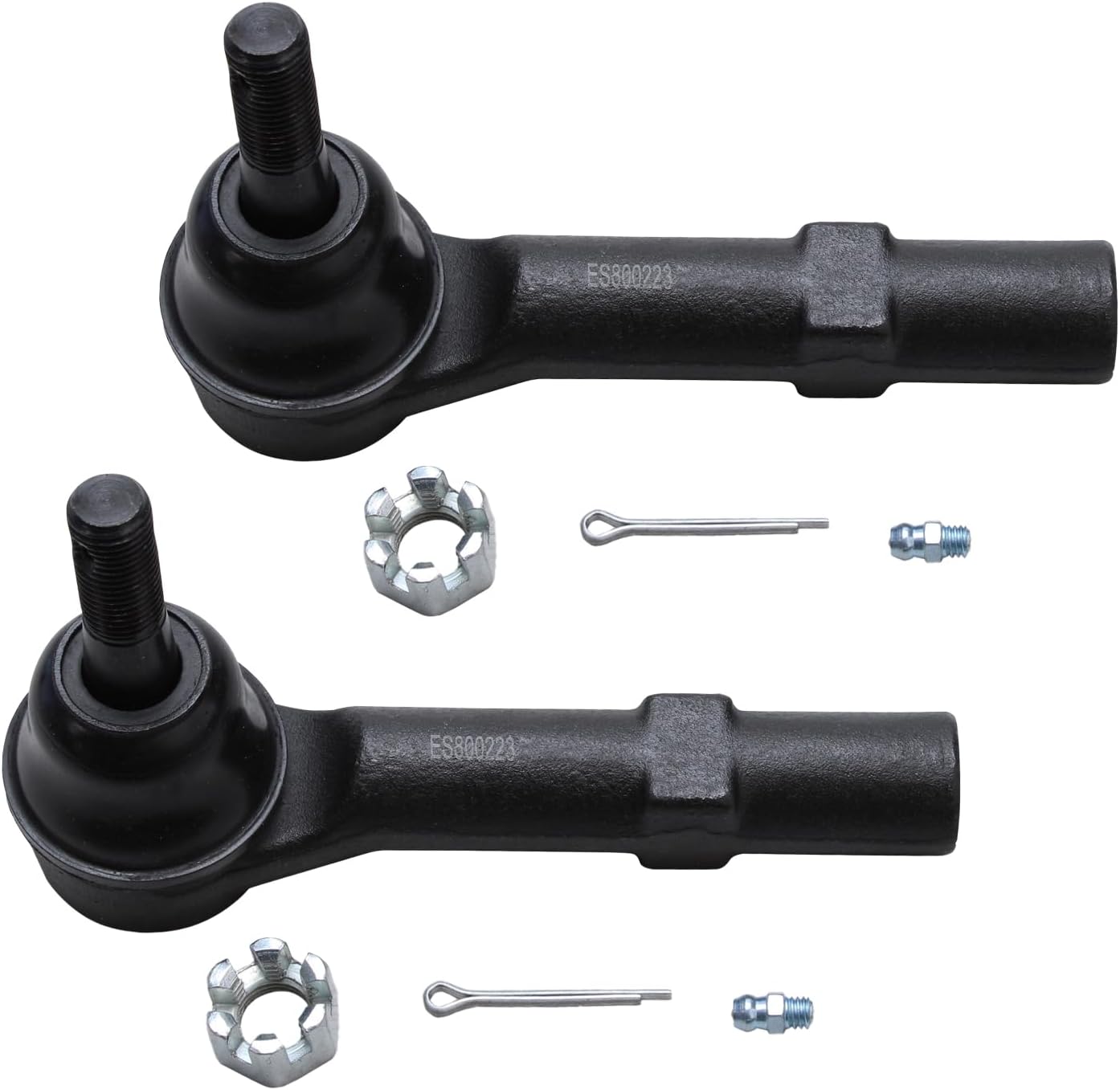
| Fitment years | 2007-2014 (select models listed) |
|---|---|
| Includes | 2x front outer tie rod ends |
| Manufacturer | Detroit Axle |
| Part number | ES800223 x2 |
These Detroit Axle front outer tie rod ends replace worn outer tie rods on compatible Chevy, GMC and Cadillac full-size trucks and SUVs. The kit includes two outer tie rod ends and is intended for direct replacement during steering repairs or alignment service. Notable features include grease zerts for easier servicing and factory-style fitment that reviewers report matches original components. In practice they restore steering feel and eliminate vibration tied to worn joints, and installation is straightforward for a DIYer with basic tools; you will still need an alignment after installation. The parts are made to aftermarket quality standards and Detroit Axle says they undergo impact and fatigue testing. Limitations to note are that the kit does not include new jam nuts or OEM-style locking nuts and some users recommend adding the proper washer or self-locking hardware when fitting to aluminum knuckles. For a practical buyer wanting reliable, serviceable replacements that match factory geometry, these are a sensible choice.
Best for: Buyers who prioritize practical, cost-effective steering repairs and want parts that restore factory steering feel while being serviceable and easy to install.
Less Ideal for: If you prefer a complete hardware refresh with locking nuts and washers included or require premium heavy-duty performance variants, consider a kit that supplies those extras or upgraded components.
- Direct-replacement fit for specified GM full-size trucks and SUVs
- Grease zerks included for periodic lubrication and longer joint life
- Reportedly matches factory geometry and restores steering feel
- Simple installation suitable for DIY mechanics
- Does not include new jam nut or OEM locking nut or washer which may be needed for proper installation
Verdict: A practical, serviceable direct-replacement pair that restores steering feel and is easy to install for routine repairs on the specified full-size GM trucks and SUVs.
3. HAWK BROTHER Front Outer Steering Tie Rod End, 2-Pack

| Position | Front Left Outer, Front Right Outer |
|---|---|
| Brand | HAWK BROTHER |
| Material | Forged steel with induction heat-treated studs |
| Boot | Sealed dust boot |
| Fitment years | 1999-2007 Silverado/Sierra 1500 |
These HAWK BROTHER tie rod ends are a budget-focused replacement for the front outer connection on 1999–2007 Silverado/Sierra 1500 trucks. They replace the ball-and-socket steering joint that transmits driver input to the wheel, so installation restores steering responsiveness and helps correct play or wandering. The parts are forged steel with induction-hardened studs, anti-corrosion coating, and sealed dust boots to resist road debris and extend service life. They come as a two-piece set covering left and right outer positions. Practical benefits include basic durability from heat-treated components and a sealed boot that reduces contamination risk. The package does not include locking nuts, so you will need to supply OEM-style or aftermarket nuts during installation, and fitment is limited to the specified model years. Expect a straightforward swap for mechanics or experienced DIYers seeking an affordable factory-style replacement rather than a premium performance upgrade.
Best for: Buyers looking to restore steering feel on a budget who prioritize a direct-fit, serviceable replacement over premium performance parts.
Less Ideal for: Those seeking long-term heavy-duty upgrades or high-performance steering components should consider premium aftermarket options or upgraded heavy-duty tie rod ends.
- Sold as a left/right pair for complete front outer replacement
- Forged steel construction with induction-hardened studs for basic strength
- Sealed dust boots and anti-corrosion coating to help resist contaminants
- Direct-fit for 1999–2007 Silverado/Sierra 1500 models for straightforward installation
- Does not include locking nuts required by some installers
Verdict: A cost-effective, direct-fit pair that brings steering responsiveness back to 1999–2007 Silverado/Sierra 1500 trucks without costly upgrades.
4. MOOG ES3492T Outer Steering Tie Rod End

| Brand | MOOG |
|---|---|
| Bearing Type | Ball Bearing |
| Compatible Lubricant | Grease |
| Manufacturer | MOOG Chassis Products |
The MOOG ES3492T is an outer tie rod end designed to restore steering precision and durability on compatible Silverado/Sierra 1500 rack-and-pinion front ends. It replaces a worn rod end at the steering knuckle connection and is intended for direct-fit installation with factory-style tolerances so alignment work is straightforward after fitting. Notable features include a heat-treated ball stud for improved fatigue strength, a pressed-in cover plate to seal out debris, a greasable socket to flush contaminants, and Moog’s gusher bearing design that promotes grease flow and reduced friction. In practice this means smoother steering feel, reduced play, and longer service life compared with many budget replacements. Installation is typical for outer tie rod swap and benefits from the greasable design during service intervals, but this part must be matched to the correct steering type and vehicle fitment before ordering. It is a focused steering replacement rather than an upgrade for heavy-duty off-road use, and alignment is required after installation.
Best for: Buyers who prioritize long-term steering reliability and want a factory-quality replacement that minimizes return visits and premature wear.
Less Ideal for: Drivers seeking heavy off-road or performance-modified steering upgrades should consider purpose-built heavy-duty components instead.
- Factory-style fit and precision tolerances simplify installation and alignment.
- Heat-treated ball stud and gusher bearing design improve durability and reduce friction.
- Pressed-in cover plate and greasable socket help keep contaminants out and extend service life.
- Designed and tested for long-term steering performance rather than short-term cost savings.
- Intended as a direct replacement for rack-and-pinion steering configurations only, so correct part selection is essential.
Verdict: Choose this MOOG tie rod end when you want a durable, factory-quality replacement that restores steering precision and reduces the chance of premature failure.
5. Detroit Axle Front Outer Tie Rod Ends (kit of 2)

| Fitment | 2014-2019 Silverado/Sierra 1500; 2015-2020 Tahoe/Suburban/Yukon; 2015-2020 Escalade (per listing) |
|---|---|
| Kit contents | 2x Front Outer Tie Rod Ends |
| Manufacturer | Detroit Axle |
| Manufacturer Part Number | ES800948 x2PRIME |
These Detroit Axle front outer tie rod ends come as a two-piece kit intended to replace worn outer tie rods on compatible Chevrolet, GMC, and Cadillac trucks and SUVs. They are built from premium alloy and designed as direct-fit replacements so installation is straightforward for someone doing front-end work. Notable features include a grease fitting and a high-strength construction aimed at resisting wear and corrosion. In practice that means you can expect a part that installs without modification, accepts routine greasing, and restores steering feel after a worn tie rod is removed. Several verified buyers report consistent fit and value, though a few found length differences compared with previously installed parts and one isolated report of defective threads. If you want to avoid extra fabrication steps budget-minded DIYers and independent shops will appreciate the cost and claimed durability, but plan on verifying length and scheduling an alignment after installation to ensure steering geometry is correct.
Best for: Buyers who prioritize proven user feedback and want an affordable, ready-to-install replacement that restores steering feel without aftermarket modification.
Less Ideal for: Shoppers seeking guaranteed exact OEM geometry without first checking measurements or those who want parts covered only by dealer-sourced units should consider other options.
- Direct-fit design for straightforward replacement on specified GM trucks and SUVs
- Premium alloy construction for corrosion resistance and structural strength
- Includes grease fitting for preventive maintenance and extended joint life
- Sold as a two-piece kit so both sides can be replaced at once
- Some users reported small length differences versus previous parts which can affect alignment setup
- Occasional quality control issues reported, such as missing internal threads
Verdict: A budget-friendly, greaseable direct-fit outer tie rod kit with strong user endorsement for fit and value, ideal if you want a practical replacement and will verify alignment after install.
6. Detroit Axle Front Inner and Outer Tie Rod End Kit (4 pcs)

| Manufacturer | Detroit Axle |
|---|---|
| Manufacturer Part Number | 4S1300702 |
| Fitment Years | 2014-2019 (select models) |
| Kit Contents | 2 inner + 2 outer tie rod ends |
This Detroit Axle kit supplies two front inner and two front outer tie rod ends intended as a direct-fit replacement for specified 2014–2019 Silverado, Sierra, Tahoe, Suburban, Yukon and Escalade models. Installation is typical for a front-end steering job: remove the old tie rods, screw in the new inner pieces to set toe, fit the outer ends, and finish with a professional alignment. Detroit Axle reports factory-quality manufacturing and the parts undergo impact and fatigue testing, which shows in the generally positive user feedback for fit and immediate drivability. The kit is useful when multiple steering joints need replacing at once and is more cost-effective than buying pieces individually. Limitations are that you will need an alignment after install and the kit does not include related wear items such as steering dampers or control arm components that often get checked during a front-end service. For a buyer prioritizing dependable, factory-style replacements without performance upgrades, this kit covers the core steering joints reliably.
Best for: Buyers who want a straightforward, factory-quality steering replacement kit for a specified GM full-size truck or SUV and prefer minimizing risk with tested, direct-fit parts.
Less Ideal for: Shoppers looking for heavy-duty or performance steering upgrades or those who need a comprehensive front-end overhaul that includes dampers and control arms.
- Complete 4-piece kit covers inner and outer front tie rod ends for both sides
- Designed to match factory fitment for listed 2014–2019 full-size GM trucks and SUVs
- Parts undergo impact, wear and fatigue testing per brand claims
- Generally positive owner reports for fit and ease of installation
- Does not include related steering components such as dampers or ball joints that may also need replacement
- Requires professional wheel alignment after installation
Verdict: A practical, factory-style four-piece tie rod end kit that gives risk-averse buyers a direct-fit replacement for specified 2014–2019 GM full-size trucks and SUVs.
Choosing the Right GMC Sierra 1500 Tie Rod End: Key Factors to Consider
Fitment and Correct Steering Geometry
Proper fitment is essential because a tie rod end must match the Sierra 1500's steering knuckle and rack ends to maintain factory steering geometry. An incorrect taper, thread pitch, or length can alter toe settings or prevent proper seating, which leads to accelerated tire wear and unstable steering.
When evaluating fitment, check taper angle, stud diameter, and thread direction. Also confirm whether the part is intended for the truck's front outer or inner location if applicable. Accurate fitment minimizes installation headaches and reduces the need for additional adjustments at the alignment shop.
Ball Joint Quality and Sealing
The ball joint inside a tie rod end transfers steering loads while allowing articulation. Higher-quality ball joints use harder bearing surfaces and close tolerances to limit play. Equally important is the sealing system: durable rubber or synthetic boots keep contaminants out and grease in, which prolongs service life.
Inspect whether the design uses a crimped or bolted-on boot and whether there is a grease fitting. Parts with effective sealing and accessible grease points typically last longer on trucks that see wet or dirty conditions.
Materials and Corrosion Resistance
Tie rod ends are exposed to moisture, salt, gravel, and road chemicals, so materials and finishes matter for longevity. Components made from corrosion-resistant alloys and treated with protective coatings resist pitting and thread seizure. Zinc plating, e-coating, or additional topcoats help preserve the threaded portions and the housing under harsh conditions.
Consider whether replacement hardware like castle nuts and cotter pins are also corrosion-resistant. Better materials reduce the chance of frozen joints during service and maintain reliable steering response over time.
Adjustability and Alignment Control
Most tie rod end replacements require some form of adjustment to set toe. The adjustability range and the ease of locking the adjustment affect how easily you can get and hold proper alignment. Some designs allow fine length changes without disturbing the inner tie rod, while others are fixed-length and rely on an adjustable sleeve.
Evaluate whether the part's thread length and locking method will permit the alignment technician to reach the correct toe spec for the Sierra 1500. Parts that make it simpler to dial in toe reduce alignment time and the risk of corrective shimming.
Serviceability and Installation
Installation characteristics such as stud taper type, included hardware, and whether a grease zerk is present affect serviceability. A tie rod end that installs with common tools and standard puller methods saves time and lowers labor complexity. Inclusion of replacement nuts or boots in the package is a practical benefit.
Also consider removal scenarios: units with press-fit studs or unusual retainers can complicate future maintenance. Choosing parts designed for straightforward service reduces time in the shop and the chance of damaging adjacent steering components during replacement.
Expected Lifespan Under Truck Use
Tie rod ends on a Sierra 1500 endure heavier loads and broader travel than on smaller vehicles, so expected lifespan is a key practical factor. Lifespan is influenced by driving conditions, load cycles, and how well the part resists contamination.
Look for designs and materials suited to truck duty and for any indications of extended-wear features such as reinforced housings or longer boot coverage. Knowing a reasonable service interval helps plan maintenance and prevents progressive steering degradation.
Common Signs You Need Tie Rod End Replacement
Several vehicle-level symptoms point to worn tie rod ends on the Sierra 1500. Steering play or a vague, wandering feel at the wheel is often the first sign, especially at low speeds or when driving on uneven pavement. You may also notice uneven tire wear that appears on the inner or outer edges of the front tires because toe has shifted.
Other indicators include a clunking or knocking noise from the front end when going over bumps and a tendency for the truck to pull to one side. During a physical inspection, excessive axial or radial movement at the ball stud, torn boots, or visible grease leakage are clear signals that replacement is needed. Addressing worn tie rod ends promptly helps avoid compounding wear to adjacent steering and suspension parts.
- Loose or vague steering feel
- Uneven front tire wear
- Clunking over bumps
- Visible boot damage or grease loss
- Difficulty holding alignment
Outer Vs Inner Tie Rod Ends on the Sierra 1500
The steering linkage on the Sierra 1500 uses both inner and outer tie rod components depending on the model year and steering rack design. Outer tie rod ends connect directly to the steering knuckle and typically experience higher articulation and road-surface impacts, so they are more commonly replaced due to wear.
Inner tie rod ends are closer to the rack and can be more protected, but when inner components wear they often cause quicker steering play because small movements at the inner end translate to larger movements at the wheel. When replacing tie rod ends, confirm whether your truck requires an outer replacement only or a matched inner and outer service to restore correct geometry.
- Outer parts endure more exposure and articulation
- Inner wear can produce pronounced steering play
- Inspect both sides during replacement to catch hidden wear
Preparing for a Tie Rod End Replacement Job
Prepare the truck by jacking it to access the front wheels, supporting it securely on stands, and removing the front wheels for clear access to the steering knuckle and tie rod. Gather common tools such as a ball joint separator, torque wrench, breaker bar, and alignment tools or measuring tape if you plan to pre-set the toe.
Before disassembly, measure the current center-to-center length of the assembled tie rod and marking the position of the adjustment sleeve can help get the truck close to spec before visiting an alignment shop. Always replace any damaged cotter pins or nuts and consider cleaning the steering knuckle and rack threads before installing the new hardware.
- Jack and support the truck safely
- Remove wheels for access
- Measure tie rod length and note settings
- Have replacement hardware and tools ready
Alignment Considerations After Replacement
Replacing a tie rod end changes toe settings and almost always requires a professional alignment. Even if you zero the difference by matching the old length, small shifts in ball joint seating and steering arm orientation can move toe out of spec. A two-wheel or four-wheel alignment will verify and correct toe and caster as needed for safe handling.
If alignment services are not immediately available, at minimum recheck toe and gross steering center using straight-line measurements. Driving with significant toe misalignment increases tire wear and can mask the benefits of a new tie rod end by causing persistent steering drift.
- Replacement typically requires a professional alignment
- Match old lengths to reduce alignment work
- Verify steering center after install
Maintaining New Tie Rod Ends for Longevity
After installing replacement tie rod ends, periodic inspection preserves their life. Look for boot integrity, absence of leaks, and smooth articulation without binding. If the replacement part includes a grease zerk, apply fresh grease at recommended intervals or during other front-end service.
Also monitor wheel alignment and tire wear in the months following replacement. Early detection of boot damage or contamination helps avoid accelerated joint wear. Routine underbody cleaning in climates with road salt will also reduce corrosion risk and help threads and nuts remain serviceable.
- Inspect boots and grease points regularly
- Re-grease if fittings are provided
- Watch for new uneven tire wear after install
How We Chose the Best GMC Sierra 1500 Tie Rod End
We prioritized parts and suppliers that match the factory steering geometry and offer proven durability under truck use. Evaluation focused on fitment accuracy, ball-joint materials and sealing, and the quality of threads and adjustability needed to maintain correct toe settings. Corrosion resistance and protective boots were weighted heavily because Sierra 1500 trucks often see road salt and off-road exposure that accelerate wear. Serviceability factors included whether the part supports standard installation techniques, availability of replacement boots or hardware, and whether the design allows for accurate toe adjustment without forcing other tie rod components.We excluded units that required custom modification or nonstandard steering arms. We also excluded parts that do not provide clear compatibility information for the GMC Sierra 1500. The final list reflects parts that balance longevity, straightforward installation, and the ability to achieve and hold proper alignment settings under normal driving and light off-road conditions. Durability testing history, warranty terms, and user-reported longevity were considered as supporting context rather than sole deciding factors.
Our full evaluation process is outlined in our review methodology.
FAQ
How can I tell if a tie rod end is bad on my Sierra 1500?
Look for steering play or a wandering feel, clunking noises over bumps, and uneven front tire wear. During a physical check, excessive movement at the ball stud or torn boots are clear indicators that the component needs replacement.
Do I need to replace both tie rod ends at once?
Not always. If only one side shows wear, you can replace just that side, but inspect the opposite side for similar age or damage. Replacing both when one is worn can be a preventive choice to ensure balanced steering response.
Will replacing a tie rod end fix pulling or drifting issues?
It can if the pull or drift is caused by excessive play or incorrect toe due to a worn tie rod end. However, alignment, tire condition, and other suspension components can also cause pulling, so verify those areas if the issue persists after replacement.
Can I drive the Sierra 1500 with a failing tie rod end?
Driving with a failing tie rod end is risky because it can worsen steering precision and may lead to sudden loss of steering control. It is safer to limit driving and address the issue promptly to avoid further damage.
How soon after replacing tie rod ends should I get an alignment?
You should get a professional alignment immediately after replacement or within the first short drive. Small seating changes at the joint can alter toe, so prompt alignment ensures correct tire wear and steering behavior.
Are there visual signs that indicate early tie rod end wear?
Yes. Look for cracked or split boots, grease leakage, or visible rust around the ball stud. Also watch for slight steering looseness during low-speed maneuvers which often precedes more obvious symptoms.
Final Verdict
When selecting tie rod ends for your GMC Sierra 1500, prioritize correct fitment, robust ball-joint sealing, and materials that resist corrosion under truck duty. Consider parts that allow accurate adjustment so an alignment shop can restore toe without extra labor. Balance longevity against ease of service by checking for accessible grease points and standard hardware designs.Addressing worn tie rod ends promptly restores steering precision and prevents accelerated tire wear. Use the decision factors above to choose the right replacement and plan for a follow-up alignment to ensure safe, predictable handling.
Explore More:
- Check out all GMC Sierra 1500 parts & accessories
- Explore Tie Rod Ends Maintenance & Repair Guides
- Explore Suspension & Steering
- Browse all Auto Parts
