

Note: This article contains affiliate links. If you click on these links and make a purchase, I may earn a small commission at no extra cost to you. This helps support my research and content. Read my full affiliate disclosure here.
Picking the right intake manifold for your Mercedes-Benz E-Class matters because it directly affects engine breathing, drivability, and long-term reliability. A properly matched manifold maintains correct air distribution and seals cleanly to prevent vacuum loss or coolant intrusion.This guide highlights seven shortlisted intake manifolds that meet common fitment and durability requirements. We evaluated candidates on compatibility, material quality, and sealing performance to help you decide which option suits your intended use. Read on for the key factors we considered before the product list.
Looking for other parts? See all Mercedes-Benz E-Class parts & accessories.
Top Picks at a Glance
| Best Overall The best all-around choice for most situations | TRQ Intake Manifold for Mercedes-Benz V6 3.5L (select E‑Class and related models) |  |
| Best Quality Built to a higher standard if you want something more solid | Pierburg Intake Manifold for Mercedes‑Benz V8 (OE 2731400701) |  |
| Best Value The sweet spot between price and what you get | FORRIE Upper Intake Manifold with Metal Swirl Flap Runner Lever for Select Mercedes-Benz |  |
| Best Budget The cheapest option that still gets the job done reliably | WOWAUTO Intake Manifold Assembly for Mercedes-Benz (A2721402401) |  |
| Highest Rated A top-rated pick with lots of positive feedback | LLNSEAUTO Intake Manifold with Gasket for Mercedes M272 V6 Engines |  |
| Most Popular A crowd favorite that many people choose with confidence | MOSTPLUS Intake Manifold for Mercedes C230/C280/CLK350/SLK300/E280/ML350 (fits 3.0L/3.5L) |  |
| Best Seller A high-volume bestseller chosen again and again | MILIPARTS Intake Manifold for Mercedes V6 272 Engine (fits C/E/GLK/ML/SLK/R/SL models) |  |
1. TRQ Intake Manifold for Mercedes-Benz V6 3.5L (select E‑Class and related models)

| Brand | TRQ |
|---|---|
| Model | TRQ IMA08083 Intake Manifold |
| Material | Magnesium Alloy |
| OEM Part Number | 2721402101, 2721402201, 2721402401, A2721402101, A2721402201 |
This TRQ intake manifold is a direct-replacement aftermarket part intended for Mercedes-Benz V6 3.5L engines used in E‑Class and several related models. It installs in place of the factory upper intake to restore airflow and sealing after a failed or cracked original manifold. The part is machined magnesium alloy construction and is offered pre-assembled to simplify installation for a competent DIYer or a professional tech. Buyers benefit from TRQ support resources and fitment guidance to confirm compatibility before purchase. Reviews report generally good fit and improved throttle response when properly installed, though a few users noted internal baffle failures and rattling on some vehicle families after extended use. The kit does not include gaskets in all listings so plan to source seals if not provided. Expect a straightforward swap that returns proper engine operation for vehicles covered by the compatibility chart, while monitoring for any unusual noises that could indicate internal loose components.
Best for: Balanced buyers who want a durable, ready-to-install replacement that restores engine operation and drivability on Mercedes-Benz V6 3.5L cars without chasing specialty performance parts.
Less Ideal for: Owners seeking a performance-tuned intake or a lifetime-guaranteed OEM part should consider purpose-built performance manifolds or factory replacements instead.
- Direct-fit replacement designed for Mercedes-Benz V6 3.5L applications, simplifying installation
- Machined magnesium alloy construction that offers a factory-like appearance and rigidity
- Pre-assembled design and TRQ DIY video resources reduce installation time and uncertainty
- Broad vehicle compatibility across E-Class and related Mercedes models when confirmed with fitment tool
- Some buyers reported internal baffles breaking loose and causing rattles after several hundred miles
- Not all listings include intake gaskets or lower manifold components, requiring separate purchase
Verdict: A practical, factory-style aftermarket intake manifold that restores fit and function on Mercedes-Benz V6 3.5L models while keeping installation straightforward.
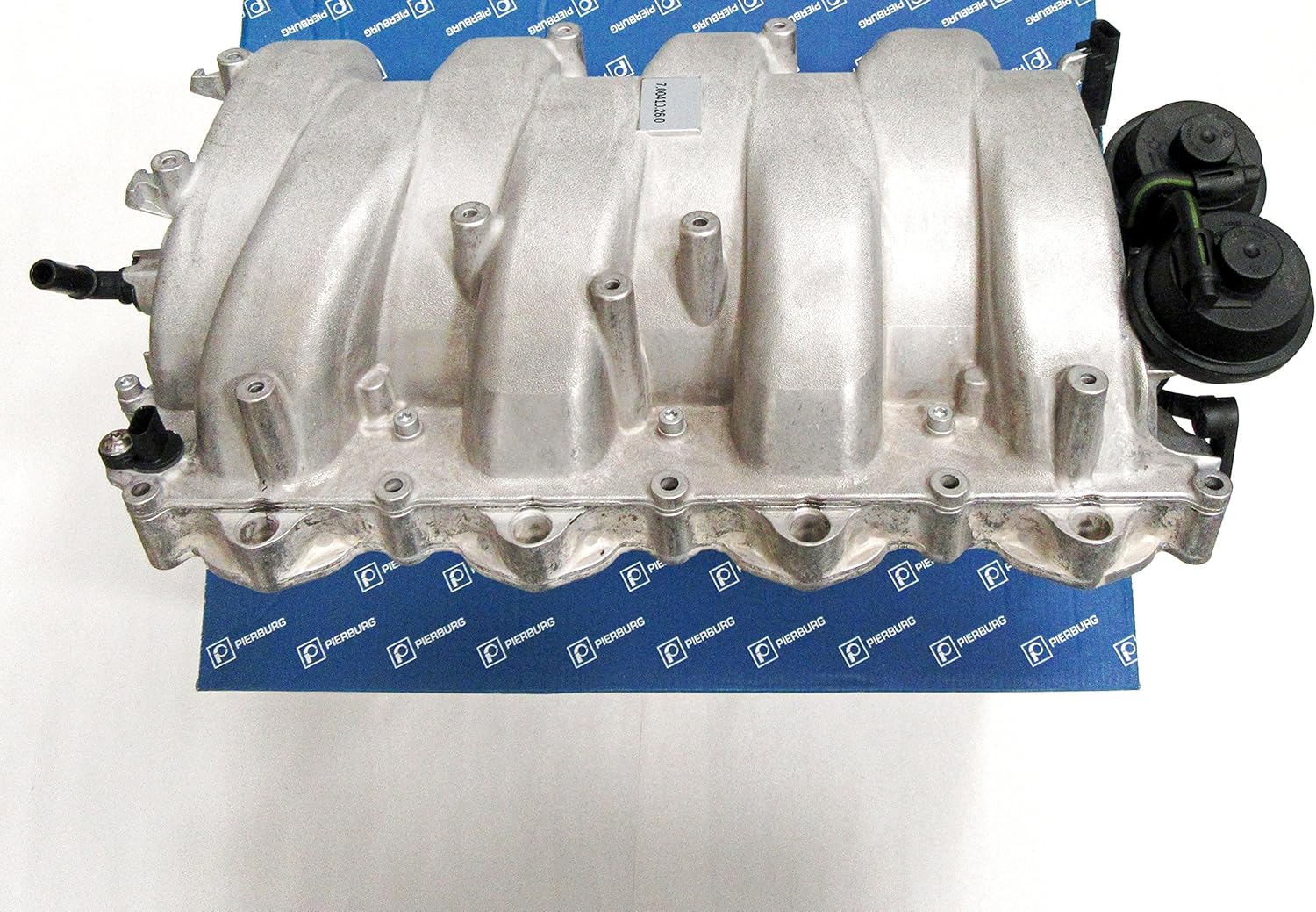
2. Pierburg Intake Manifold for Mercedes‑Benz V8 (OE 2731400701)
| Manufacturer | Pierburg |
|---|---|
| Manufacturer Part Number | 2731400701, 273 140 07 01 |
| Item model number | 7.00410.26.0, 700410260 |
This Pierburg intake manifold is a direct replacement designed for Mercedes‑Benz V8 engines and intended to restore factory air delivery and fitment on affected E‑Class and related models. It is typically used when the original manifold is cracked, leaking, or otherwise failing and needs a like‑for‑like replacement to recover drivability and eliminate vacuum or idle issues. The unit is manufactured by Pierburg in Germany and carries the factory part number 2731400701, which simplifies parts matching and installation for professionals and experienced DIYers. Practical benefits include full coverage of the intake ports for a precise seal and the reassurance of a factory‑quality component rather than a generic reman. Limitations are that fitment must be verified against VIN and exact engine variant before purchase and installation can require removal of surrounding components on these V8 engines, so expect a moderate labor investment to replace it.
Best for: Performance‑oriented owners seeking a high‑quality, factory‑spec replacement to restore engine breathing and driving character on mid‑2000s Mercedes V8 models.
Less Ideal for: Buyers looking for a universal or low‑cost aftermarket manifold or those unwilling to confirm VIN compatibility and pay for professional installation should consider other options.
- Factory‑quality Pierburg manufacturing appropriate for Mercedes V8 replacement needs
- Direct fit for the listed Mercedes models using part number 2731400701 which eases matching
- Restores proper air delivery and sealing for improved idle and drivability after manifold failure
- Fitment depends on exact VIN and engine variant so buyers must verify compatibility before ordering
- Installation on V8 models can be labor intensive due to surrounding components
Verdict: A factory‑quality Pierburg intake manifold built to replace the Mercedes‑Benz V8 original and restore proper engine air delivery.
3. FORRIE Upper Intake Manifold with Metal Swirl Flap Runner Lever for Select Mercedes-Benz

| Material | Aluminum |
|---|---|
| Exterior Finish | Aluminium-Magnesium Alloy |
| Manufacturer | Forrie |
| Manufacturer Part Number | FIM006 |
This FORRIE upper intake manifold replaces the factory plastic unit with a metal-aloy casting and an upgraded metal swirl flap runner lever intended for a direct fit on compatible Mercedes-Benz V6 engines. It is used as a full upper intake replacement during engine repairs or to address common failures like broken plastic runners and leaking vacuum adjusters. Notable features include an aluminium-magnesium alloy construction for improved durability over stock plastic and self-tapping bolt holes that match factory mounting practice. In practice the part installs like a factory piece for mechanically inclined owners or a professional tech, and many buyers report straightforward installations and restored drivability. Practical benefits are lower cost compared with dealer parts and a more robust material that resists the typical plastic cracking failure. Important limitations: this is an aftermarket replacement so you should inspect vacuum adjusters and sealing surfaces during install, and some users reported needing to address a leaking center adjuster after installation. The manifold does not include intake gaskets in all cases so confirm what is supplied before beginning the job.
Best for: Practical optimizers who want a cost-effective, longer-lasting replacement for a failing plastic intake on Mercedes E-Class V6 engines and prefer value over buying dealer parts.
Less Ideal for: Buyers who want guaranteed plug-and-play dealer-sourced parts with full factory warranty support or those unwilling to have a mechanic verify vacuum pots and seals during installation.
- Aluminium-magnesium alloy construction offers greater durability than factory plastic manifolds
- Upgraded metal swirl flap runner lever reduces risk of flap breakage
- Designed for direct, factory-style fit with self-tapping bolt holes for secure mounting
- Consistent buyer reports of good fitment and restored engine performance
- Some units required attention to vacuum adjusters after installation
- May not include all intake gaskets needed for a full replacement in every package
Verdict: A budget-friendly, more durable aftermarket replacement that restores function and reduces the risk of plastic intake failures on compatible Mercedes-Benz V6 engines.
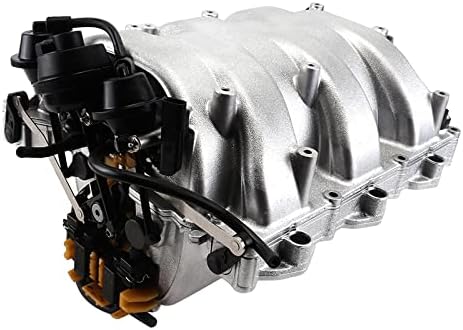
4. WOWAUTO Intake Manifold Assembly for Mercedes-Benz (A2721402401)
| Manufacturer Part Number | A2721402401 |
|---|---|
| Brand | WOWAUTO |
| Fits Models | Multiple Mercedes-Benz V6 models listed (see part number fitment) |
This WOWAUTO intake manifold assembly is a direct replacement-style manifold intended for Mercedes-Benz V6 engines that use part number A2721402401. It installs in place of the factory manifold and is used to route the air-fuel mixture evenly to each cylinder. The listing specifies broad fitment across many C-, E-, CLK-, GLK-, ML-, R- and SLK-models from the mid 2000s to early 2010s, so it is typically used during repairs for intake leaks, rough idle, or throttle response issues. Notable features include full assembly form factor and compatibility with the referenced OE numbers, which simplifies sourcing the correct part. In practice this can restore drivability when the original manifold is cracked or leaking, and it avoids the time and cost of remanufacturing a factory unit. Important limitations are mixed user feedback about condition on arrival and fuel economy differences reported by one reviewer, so expect to verify gasket and seal completeness on delivery and consider professional inspection at install. Buying this saves money up front but confirm fit and completeness before installation.
Best for: Budget-conscious Mercedes owners focused on affordable repairs who prioritize getting a working replacement manifold quickly without paying dealer prices.
Less Ideal for: Buyers seeking factory-direct parts with guaranteed OEM packaging or those who need a verified remanufactured unit with warranty should consider dealer or premium options instead.
- Direct replacement-style assembly compatible with Mercedes part A2721402401
- Covers many common Mercedes V6 models so one part can serve multiple repairs
- Sold as a full assembly to simplify installation compared with piecemeal components
- Customer reports indicate some units may arrive used or missing gaskets and seals
- Some buyers reported higher fuel consumption after installation in one review
Verdict: A cost-focused replacement manifold that restores function for many Mercedes V6 engines using part number A2721402401.
5. LLNSEAUTO Intake Manifold with Gasket for Mercedes M272 V6 Engines

| Brand | LLNSEAUTO |
|---|---|
| Model | E118-2721402201 |
| Manufacturer Part Number | E118-2721402201 |
| Compatible Engine | Mercedes M272 V6 Engine |
This LLNSEAUTO intake manifold kit replaces the factory intake for Mercedes M272 V6 engines and includes three metal gaskets for installation. It is used as a direct replacement when the original manifold develops leaks or cracks that upset air-fuel balance and cause drivability issues. The unit is polished and appears to be manufactured to match OEM fitment references listed for many C‑, E‑, CLK‑, S‑, GLK‑, ML‑, R‑ and SLK‑model years; customers report straightforward installation when performed by a competent technician. Practical benefits include restoring proper air distribution to cylinders, eliminating vacuum leaks that cause rough idle or reduced efficiency, and delivering a ready-to-install set with gaskets. Limitations are that compatibility is limited to vehicles with the M272 V6 and buyers should verify engine code and part numbers before ordering; professional installation is recommended to ensure torque sequence and gasket sealing are correct.
Best for: Reliability-focused buyers who prioritize restoring factory performance and eliminating intake leaks on older Mercedes E-Class vehicles with the M272 V6 engine.
Less Ideal for: Buyers looking for a performance aftermarket manifold or a universal fit part should look elsewhere; those unwilling to confirm engine compatibility or to pay for professional install may be better served by a dealer or direct OEM part.
- Includes three metal gaskets for a complete manifold replacement
- Designed to match factory fitment for Mercedes M272 V6 engines listed in the description
- Polished finish and packaged for protected shipping based on customer feedback
- Reportedly straightforward installation when installed by a knowledgeable mechanic
- Fitment is specific to M272 V6 applications so it is not universal
- Buyer must verify compatibility with exact model years and engine codes before purchase
Verdict: A direct-fit replacement intake manifold kit aimed at reliably restoring proper air distribution and eliminating vacuum leaks on Mercedes M272 V6 E‑Class models.
6. MOSTPLUS Intake Manifold for Mercedes C230/C280/CLK350/SLK300/E280/ML350 (fits 3.0L/3.5L)

| Manufacturer Part Number | M34005 |
|---|---|
| Exterior | Machined |
| OEM Part Number | 2721402101, 2721402201, 2721402401 |
This MOSTPLUS intake manifold is a direct-replacement aftermarket unit intended to restore intake function on compatible Mercedes 3.0L and 3.5L models. It installs in place of the original plenum and provides the passages and actuator mounting points required for the engine to breathe normally. Typical use is a like-for-like swap when the factory manifold has cracked plastic linkages or leaking seals. Buyers report a close fit to the factory part, and the machined exterior and included mounting points make installation straightforward for a competent technician. Practical benefits include much lower cost than a dealer unit and the ability to get the car running again without sourcing an expensive OEM part. Important limitations are variable long-term durability of plastic actuators and occasional need to deburr casting marks or replace small actuator components; some installers also recommend using updated metal actuator parts for greater longevity. Verify vehicle year and engine before purchase and plan for careful gasket alignment during installation.
Best for: Convenience-driven buyers who want an affordable, ready-made replacement to get a Mercedes E-Class back on the road quickly without hunting for used OEM parts.
Less Ideal for: Owners who prioritize maximum long-term durability or who prefer factory-authorized parts should consider a factory-quality manifold or upgraded components instead.
- Designed to match factory mounting points for straightforward replacement
- Machined exterior and accurate casting provide good fit against OEM manifolds
- Significantly lower cost than dealer or factory replacement units
- Multiple customers report successful installs and normal operation after replacement
- Some internal actuator components use plastic and have reported failures over time
- Does not include plenum gaskets so additional parts may be required during installation
Verdict: A budget-friendly, direct-fit replacement that restores intake function on compatible Mercedes 3.0L and 3.5L engines.
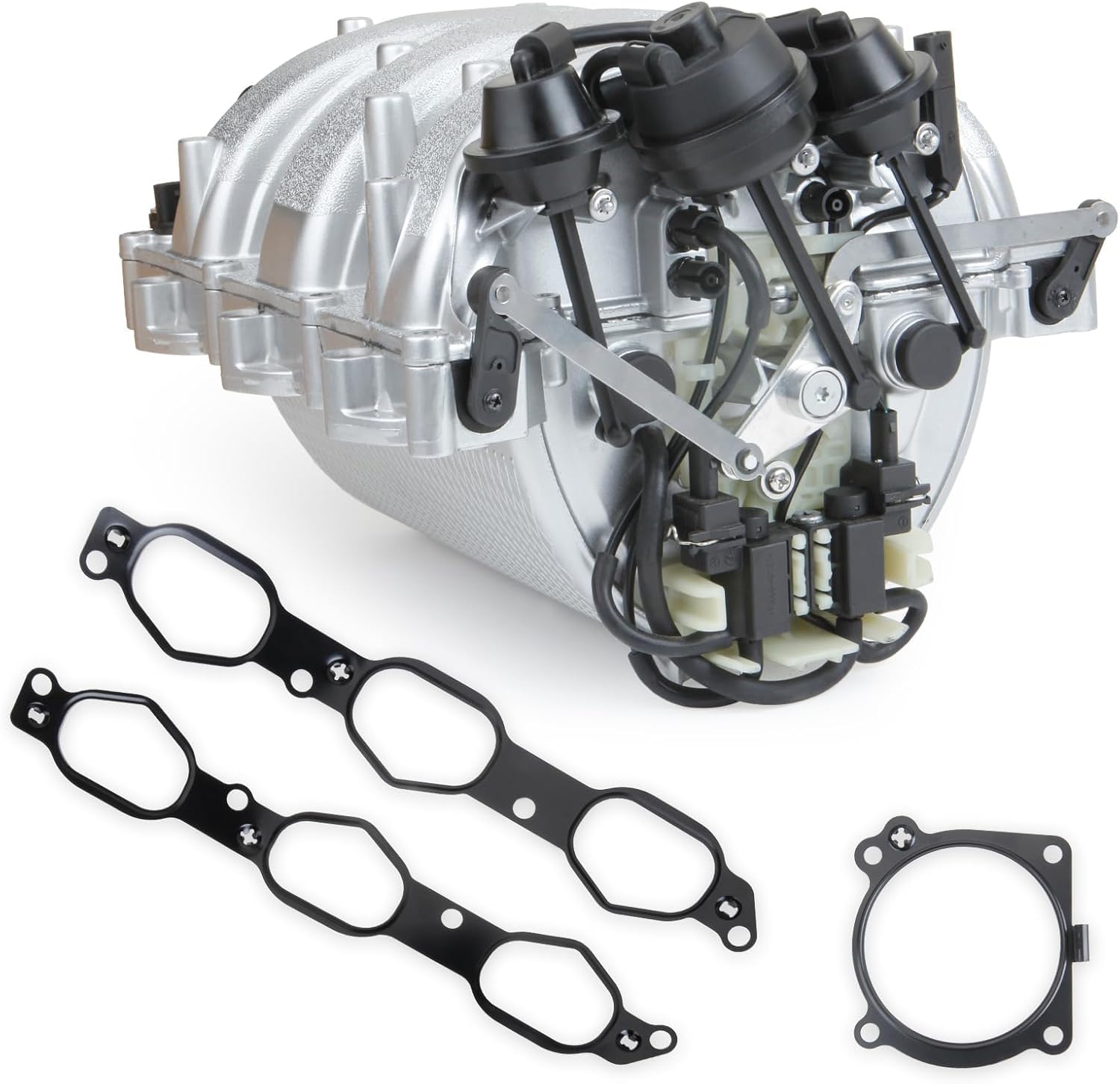
7. MILIPARTS Intake Manifold for Mercedes V6 272 Engine (fits C/E/GLK/ML/SLK/R/SL models)
| Manufacturer | MILIPARTS |
|---|---|
| Model | Intake Manifold |
| Exterior | Polished |
| Manufacturer Part Number | 3009-044 |
This MILIPARTS intake manifold replaces the factory unit on Mercedes-Benz V6 272 engines and is supplied as a kit that includes the gasket, swirl flap lever and sensor fittings. It is typically used when the original manifold leaks, the swirl flaps fail, or the engine is running poorly due to intake issues. Constructed from aluminum, the manifold aims to match factory geometry so it can swap into late-2000s C‑class and E‑class models with minimal modification. Practical benefits include a near-direct fit for compatible engines and improved drivability when the failed manifold is the root cause of rough idle or loss of power. Users should prepare to clean casting debris from injector ports and to tap a few bolt bosses before installation since some units arrive with untapped holes. Installation can be several hours and may require metric taps or modest machine work, so factor that into the repair plan rather than expecting a completely drop-in part.
Best for: Risk-averse mainstream owners who prioritize restoring reliable, factory-like performance on late-2000s Mercedes E‑class models and prefer a direct replacement over extensive modification.
Less Ideal for: Buyers seeking a guaranteed drop-in plug-and-play part with no prep work or those unwilling to perform moderate workshop tasks should consider alternatives or professional installation.
- Designed to match factory fit and mounting points for V6 272 engines
- Supplied as a kit including gasket, swirl flap lever and sensor to simplify rebuilds
- Aluminum construction intended for durability and heat resistance
- Multiple positive owner reports of restored drivability after replacement
- Some units have untapped bosses requiring tapping before fuel rail or accessory bolts can be installed
- Injector port casting residue may need to be removed to avoid engine contamination
Verdict: A budget-friendly, factory-replacement style aluminum intake manifold kit that restores drivability for Mercedes V6 272 engines.
Choosing the Right Mercedes-Benz E-Class Intake Manifold: Key Factors to Consider
Fitment and Port Alignment
Correct fitment ensures the manifold mounts cleanly to the cylinder head and matches intake ports and sensor locations. Poorly aligned ports can cause uneven airflow, increased turbulence, and possible damage to mating surfaces when forced into position.
Check that bolt patterns, vacuum ports, and sensor bosses line up with your engine. Differences in port shape or spacing often require adapters or machining, which adds complexity and risk. A manifold that fits without modification reduces installation time and the chance of leaks.
Material and Thermal Stability
Intake manifolds are commonly made from plastic composites, aluminum, or magnesium alloys, each with different heat transfer and expansion characteristics. Materials that warp or change dimensions under repeated thermal cycles can compromise sealing and alignment over time.
Choose a material with proven resistance to heat soak and thermal fatigue for the operating temperatures of the E-Class engine. Consider how material choice affects weight, heat absorption, and long-term dimensional stability under engine bay conditions.
Sealing Surface Quality
The condition and flatness of sealing surfaces determine how well the manifold mates to the head and prevents vacuum or coolant leaks. Imperfect flanges or rough sealing faces require gasket compensation or may degrade over time, leading to performance issues and drivability symptoms.
Look for machined, deburred flange surfaces and clear guidance on required gasket type and torque sequences. Good sealing surfaces reduce the need for repeat disassembly and minimize the chance of intake manifold gasket failure.
Compatibility with Sensors and Vacuum Lines
Modern E-Class engines rely on sensors, vacuum ports, and actuator connections integrated into or routed around the intake manifold. Missing or poorly placed sensor bosses can complicate installation and affect engine management systems.
Verify that vacuum fittings, PCV connections, and sensor ports are present and positioned correctly. Confirm whether included provisions meet the requirements of your engine variant to avoid aftermarket modifications that could degrade reliability.
Ease of Installation and Hardware
Installation complexity affects labor time and the likelihood of installation errors. Manifolds that ship with correct gaskets, bolts, and clear torque guidance reduce uncertainty and rework.
Consider whether the manifold requires special tools, new fasteners, or specific torque sequences. Availability of clear instructions and the inclusion of necessary hardware are important for straightforward, repeatable installations.
Serviceability and Long-Term Maintenance
Serviceability covers how easy it is to access and maintain the manifold, swap gaskets, or address related issues like vacuum leak diagnosis. Designs that allow reasonable access to sensors and mounting points reduce labor for future repairs.
Also consider how the manifold handles cleaning or inspections for carbon buildup. A design that facilitates routine maintenance lowers long-term ownership effort and helps detect issues like intake manifold symptoms early.
How We Chose the Best Mercedes-Benz E-Class Intake Manifold
We focused on intake manifolds that deliver correct fitment and consistent airflow for Mercedes-Benz E-Class engines. Primary evaluation criteria included mounting and port alignment accuracy, material selection and thermal stability, sealing surface quality and flange flatness, and compatibility with related sensors and vacuum lines. We also assessed manufacturing tolerances that affect installation ease and bolt pattern accuracy, plus the availability of replacement gaskets and hardware.We excluded manifolds that required extensive modification, did not match OEM mounting patterns, or lacked clear specifications about material and port dimensions. We prioritized items with clear compatibility data for specific E-Class engine variants and those with robust sealing surfaces to reduce the risk of vacuum or coolant leaks. Final selections were based on objective fitment and longevity factors rather than brand recognition alone.
Our full evaluation process is outlined in our review methodology.
FAQ
How do I know if the intake manifold on my E-Class needs replacement?
Signs often include rough idle, loss of power, or coolant in the intake area. You may also notice unusual vacuum-related drivability symptoms that suggest a leak or failed gasket. A visual inspection for cracks, warped flanges, or coolant residue around mating surfaces can help confirm whether replacement is necessary.
Can I reuse the old intake manifold gasket when installing a new manifold?
It usually depends on the gasket condition and type. Most technicians recommend replacing gaskets whenever the manifold is removed because reused gaskets may not seal properly. New gaskets help ensure consistent sealing and reduce the likelihood of future leaks.
What role does intake manifold torque sequence play during installation?
Correct torque sequence and specified torque values ensure even clamping across the flange, which helps maintain a reliable seal and prevents warping. Following published torque specs and a stepwise tightening pattern reduces stress on mounting surfaces and lowers the chance of leaks or distortion.
How can I diagnose an intake manifold vacuum leak?
Vacuum leaks are often detected by listening for hissing sounds, observing unstable idle, or using a smoke test to find escaping air. Pressure and vacuum testing at intake ports can pinpoint leaks. A careful visual check of seals, hoses, and mating surfaces is also helpful for locating the source.
Is cleaning the intake manifold effective for improving performance?
Cleaning can restore airflow if carbon buildup or deposits restrict port flow, which may improve idle quality and throttle response. However, cleaning is most effective when the manifold structure and sealing surfaces are intact; cleaning will not fix warped flanges or cracked passages that require replacement.
Conclusion
When choosing an intake manifold for a Mercedes-Benz E-Class, prioritize correct fitment, durable materials, and high-quality sealing surfaces. These factors most directly affect engine breathing, reliability, and the risk of vacuum or coolant leaks.Balance ease of installation and serviceability against material and design considerations. Addressing compatibility with sensors and following proper torque and gasket guidance will reduce the chance of repeat work and help maintain consistent performance over time.
Explore More:
- Check out all Mercedes-Benz E-Class parts & accessories
- Explore Intake Manifolds Maintenance & Repair Guides
- Explore Engine
- Browse all Auto Parts
