

Note: This article contains affiliate links. If you click on these links and make a purchase, I may earn a small commission at no extra cost to you. This helps support my research and content. Read my full affiliate disclosure here.
Picking the right oxygen sensor for your Mercedes-Benz E-Class matters because the sensor directly affects engine performance, emissions, and fuel economy. A failing sensor can cause poor idle quality, higher emissions, and trigger diagnostic trouble codes that complicate repairs.This guide presents seven shortlisted oxygen sensors that meet strict fitment and signal-response criteria. We evaluate each option on likely compatibility, signal accuracy, and durability to help you narrow choices before you inspect parts or consult a technician.
Looking for other parts? See all Mercedes-Benz E-Class parts & accessories.
Top Picks at a Glance
| Best Overall The best all-around choice for most situations | Bosch 16749 Premium Oxygen Sensor (Direct-fit) |  |
| Best quality Built to a higher standard if you want something more solid | Bosch 17020 Premium Original Equipment Oxygen Sensor |  |
| Best Value The sweet spot between price and what you get | Bosch 13146 Premium Original Equipment Oxygen Sensor |  |
| Best budget The cheapest option that still gets the job done reliably | GAGOLCAR Oxygen Sensor (Replacement 17016) |  |
| Highest Rated A top-rated pick with lots of positive feedback | A-Premium Heated Oxygen Sensor for Mercedes-Benz |  |
| Most Popular A crowd favorite that many people choose with confidence | HiSport 4-Wire Heated Oxygen Sensor (HSOS24465) |  |
| Best Seller A high-volume bestseller chosen again and again | BOSCH 17200 Premium Original Equipment Oxygen Sensor |  |
1. Bosch 16749 Premium Oxygen Sensor (Direct-fit)

| Maximum Supply Voltage | 12 Volts (DC) |
|---|---|
| Measuring Range | 0.1 – 21 vol% |
| Mounting Type | Flange Mount |
| Upper Temperature Rating | 1000 Degrees Celsius |
This Bosch 16749 is a direct-fit oxygen sensor intended to replace a failed upstream sensor on compatible Mercedes-Benz engines. It uses a fast-acting heater to bring the sensor up to operating temperature quickly, so the engine control system can resume accurate air-fuel adjustments soon after startup. The stainless steel, double laser-welded body and factory testing aim to improve durability in exhaust conditions, and the sensor ships with pre-coated threads and a matching connector for straightforward installation. In practice this delivers predictable check-engine light clearance and stable fuel trim behavior when the part matches the vehicle and sensor position. Limitations are fitment sensitivity and pin count differences across model years and sensor positions, so verify you need the upper 4-pin configuration this part provides; misidentifying upper versus lower sensors is the most common source of returns or failures to resolve codes.
Best for: Balanced all-round Mercedes-Benz owners who want a factory-quality direct replacement to restore proper engine control and emissions operation without overpaying for specialty parts.
Less Ideal for: Do not buy this if you cannot confirm the exact sensor position and pin configuration for your E-Class or if you need a lower 6-pin downstream sensor instead.
- Direct-fit connector and pre-coated threads simplify installation
- Fast-acting heater reduces warm-up time for quicker closed-loop operation
- Stainless steel double laser-welded body resists exhaust corrosion for longer service life
- Factory testing for functionality helps ensure a working sensor on arrival
- Fitment varies by sensor position and pin count so ordering the wrong position is a real risk
- Some users report early failures which suggests occasional quality or shipping damage issues
Verdict: A factory-quality direct-fit Bosch oxygen sensor built for quick warm-up and long-term durability on compatible Mercedes-Benz models.
2. Bosch 17020 Premium Original Equipment Oxygen Sensor

| Mounting Type | Flange Mount |
|---|---|
| Output Type | Analog |
| Specific Uses For Product | Temperature |
| Material Type | Stainless Steel |
The Bosch 17020 is a direct-fit oxygen sensor intended to replace a failed factory unit on compatible Mercedes-Benz models. It measures exhaust oxygen levels and feeds that data to the engine control system to help maintain correct fuel trim and emissions control. Bosch’s double laser-welded stainless steel housing and factory testing mean the sensor is built for longevity in a high-heat, corrosive exhaust environment. A fast-acting integrated heater brings the sensor to operating temperature quickly, improving response during cold starts and reducing the time the engine runs in an open-loop condition. True direct-fit connectors and pre-coated threads simplify installation for mechanics or experienced DIYers. Limitations are that this part is fitment-specific and only listed for certain Mercedes-Benz models and years, and it does not cover every engine variant, so verifying correct position and engine compatibility is essential before purchase.
Best for: Performance-oriented buyers who prioritize factory-quality replacements that restore precise air/fuel feedback and emissions control for Mercedes-Benz maintenance or tune support.
Less Ideal for: If you need a universal sensor for multiple vehicle makes or a model covering a wide range of engines, choose a different multi-fit or vehicle-specific option that lists your exact engine variant.
- Direct-fit, factory-quality connectors and harness for straightforward installation.
- Double laser-welded stainless steel body resists exhaust corrosion for longer service life.
- Fast-acting heater reduces time to operating temperature for quicker, more accurate readings.
- 100% functional testing at the factory provides consistent performance out of the box.
- Compatibility limited to select Mercedes-Benz models and may not fit all engine variants.
Verdict: A durable, factory-style oxygen sensor built for fast warm-up and reliable emissions feedback on compatible Mercedes-Benz models.
3. Bosch 13146 Premium Original Equipment Oxygen Sensor

| Mounting Type | Flange Mount |
|---|---|
| Output Type | Push-Pull |
| Specific Uses For Product | Temperature |
| Material Type | Stainless Steel |
| Style Name | OE |
This Bosch 13146 oxygen sensor is a direct-fit replacement intended for older Mercedes‑Benz 300 series engines and is built to match factory performance. It installs like a factory-quality sensor with pre-coated threads and a direct-fit connector, so typical use is swapping a failed upstream or downstream oxygen sensor to clear engine codes and restore proper fuel trims. Notable features include a stainless steel, double laser-welded body for corrosion resistance and a fast-acting heater that brings the sensing element to operating temperature quickly for reliable readings shortly after startup. Bosch also tests each unit for functionality before shipping. Practical benefits include straightforward installation for DIYers or independent shops and durable construction that helps avoid premature failure in exhaust environments. Limitations are that fitment is specific to certain 1990–1992 Mercedes models and the part listing does not include extensive modern vehicle coverage or multiple connector variations, so confirming exact model year and sensor position is required before buying.
Best for: Practical optimizers who prioritize durable, factory-quality replacements that restore engine control without paying dealer prices or overbuying features.
Less Ideal for: Buyers who need coverage for modern Mercedes‑Benz E‑Class model years or those who require multi-vehicle fitment flexibility should look at alternatives with broader compatibility.
- Direct-fit connector and pre-coated threads simplify installation and reduce prep time.
- Stainless steel double laser-welded body resists exhaust corrosion for longer service life.
- Fast-acting heater shortens warm-up time so the sensor reaches operating temperature quickly.
- 100% functional testing provides confidence the sensor will operate on arrival.
- Compatibility is limited to select early 1990s Mercedes models and may not fit later E-Class vehicles.
- Listing does not specify connector variations or exact sensor position for every engine, so verification is required before purchase.
Verdict: A durable, direct-fit Bosch oxygen sensor that gives practical, factory-quality replacement performance for select early 1990s Mercedes models.
4. GAGOLCAR Oxygen Sensor (Replacement 17016)
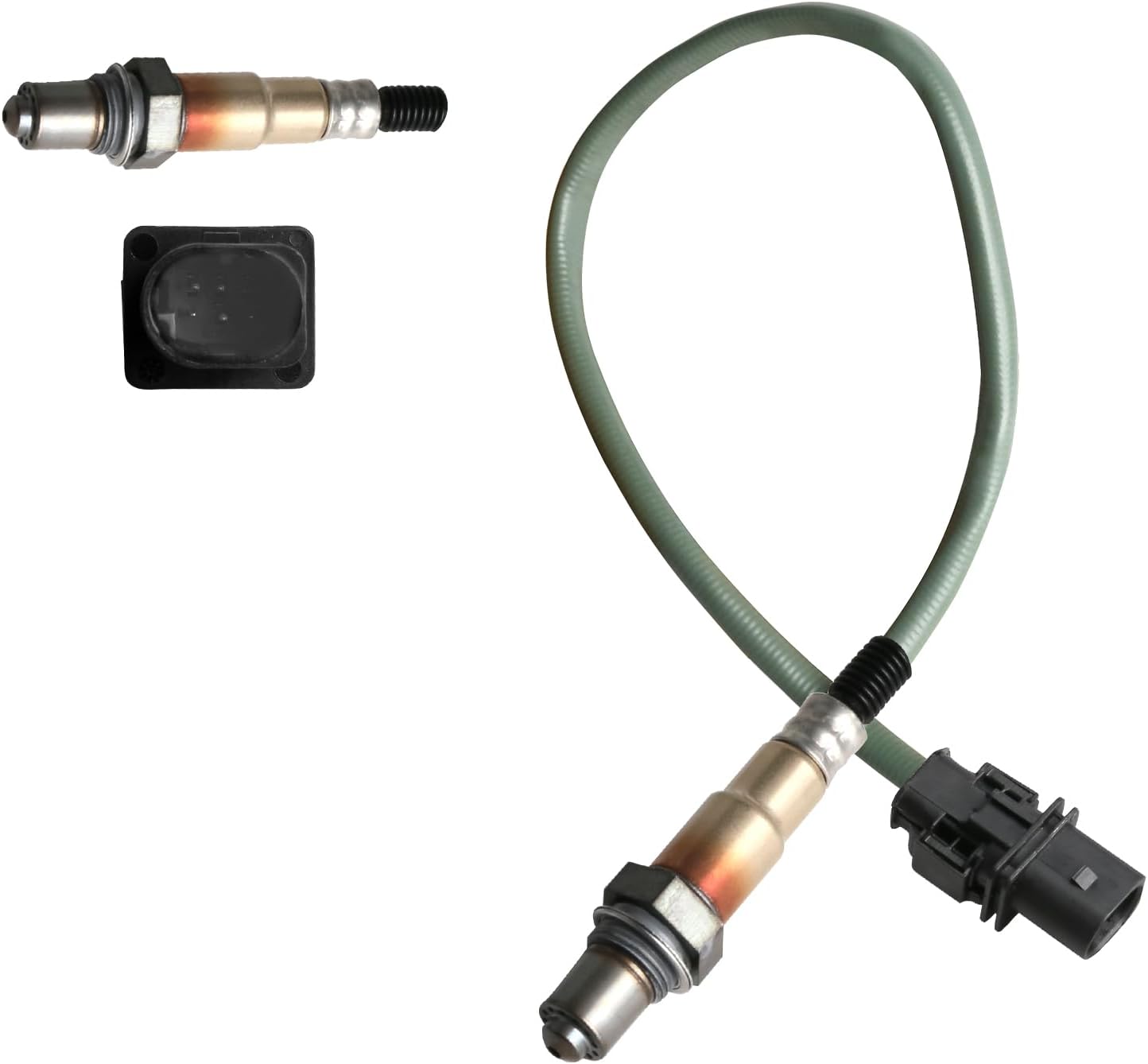
| Measuring Range | 12.5 – 18.0 % |
|---|---|
| Output Type | electrical signal |
| Specific Uses For Product | automotive, engine |
| Material Type | Stainless Steel, Ceramic, High-Temperature-Resistant Polymer |
This GAGOLCAR oxygen sensor is a direct-replacement style part that measures the air-fuel mixture and sends an electrical signal to the engine control system. It is typically installed in the exhaust upstream location to restore correct O2 readings, clear related trouble codes, and help the engine run more efficiently. Notable features listed include a stainless steel, ceramic, and high-temperature polymer construction and a specified measuring range of 12.5 to 18.0 percent, which supports quick response to changing exhaust conditions. In practice this sensor offers a budget-friendly way to address slow or failed factory sensors and many buyers report straightforward fit and function on Mercedes-Benz applications. Limitations are variable quality control and occasional early failures reported by some customers, so it may be best for owners who want an inexpensive repair or a temporary fix rather than a long-term factory-quality replacement.
Best for: Budget-conscious Mercedes-Benz owners looking for an inexpensive, quick replacement to clear O2-related codes and restore drivability on E-Class models.
Less Ideal for: Owners seeking a long-term factory-quality part or a guaranteed extended warranty should consider higher-end branded sensors or dealer-sourced replacements.
- Lists compatibility with many Mercedes-Benz models in the product details, simplifying fit checks for E-Class variants.
- Uses high-temperature-resistant materials and a double laser-welded stainless steel body for improved durability compared with cheap cast sensors.
- Electrical output and a defined measuring range allow the sensor to restore proper air-fuel feedback to the engine control system.
- Compact single-unit design is easy to install where access and standard tools are available.
- Inconsistent quality reported by some buyers, with occasional early failures that require replacement.
- Not sold as a guaranteed factory-quality item, so lifespan may be shorter than OEM Mercedes sensors.
Verdict: A low-cost replacement that restores O2 feedback quickly for Mercedes-Benz E-Class owners but may not match OEM longevity.
5. A-Premium Heated Oxygen Sensor for Mercedes-Benz

| Output Type | Analog |
|---|---|
| Mounting Type | Flange Mount |
| Upper Temperature Rating | 400 Degrees Celsius |
| Wire Quantity | 4 |
| Sensor Type | Heated |
This A-Premium heated oxygen sensor is a direct-fit replacement designed to restore proper oxygen measurement and closed-loop fuel control on supported Mercedes-Benz models. It is used as an upstream or downstream threaded sensor with a four-wire male connector, so typical use is swapping the failed sensor on the exhaust manifold or downstream of the catalytic converter to clear oxygen-sensor related fault codes and return fuel trims to normal. Notable features include a heated element for quicker activation, flange/threaded mounting for factory-style installation, and stainless steel construction with a 400 C upper temperature rating for durability. In practice the sensor provides fast warm-up and reliable analog output to the ECU, which helps reduce rough idle, poor fuel economy, and persistent check-engine lights when the original sensor has degraded. Limitations are that fitment is specific to certain model years and VIN ranges and installation may require an oxygen-sensor socket or penetrating lubricant to remove a seized original sensor. Expect a straightforward plug-and-play swap when the correct fit is selected but budget installers should plan for access and removal effort on older cars.
Best for: Reliability-focused buyers who prioritize restoring factory-like engine management on older Mercedes-Benz E-Class models and prefer a direct-fit, heated sensor to clear emissions faults and stabilize fuel trims.
Less Ideal for: Buyers who need universal multi-vehicle compatibility or who prefer aftermarket sensors with advanced programmable features should consider other options.
- Heated design reaches operating temperature quickly for reliable closed-loop control
- Four-wire connector provides separate heater circuit for consistent ECU readings
- Stainless steel body and 400 C rating for resistance to exhaust temperatures
- Threaded flange mounting matches factory-style installation for direct replacement
- Fitment is limited to specific Mercedes-Benz years and VIN ranges so selection matters
- Removing a corroded original sensor can be difficult and may require special tools
Verdict: A practical, heated direct-fit oxygen sensor aimed at restoring reliable emissions and fuel control on specific Mercedes-Benz E-Class models when the original sensor fails.
6. HiSport 4-Wire Heated Oxygen Sensor (HSOS24465)

| Wire Quantity | 4-Wires |
|---|---|
| Mounting Type | Threaded |
| Measurement Accuracy | High |
| Specific Uses For Product | Oxygen Sensor |
This HiSport 4-wire heated oxygen sensor is designed to replace a factory downstream O2 sensor on compatible vehicles and restore proper exhaust oxygen readings. It installs in the threaded sensor port downstream of the catalytic converter and is used to clear emission-related codes, recover fuel trim accuracy, and help the engine control module resume correct fuel adaptation. Notable features include a threaded heated element and high measurement accuracy listed by the manufacturer, plus wiring and protective sleeves for plug-and-play connection. In practice the sensor often resolves check-engine codes and improves driveability when the original sensor has failed, and many users report an easy installation with basic hand tools. Limitations to keep in mind are variable long-term reliability versus factory sensors and occasional reports of early failure, so expect mixed lifespan compared with OEM parts. Also confirm exact fitment for your E-Class model before ordering because fitment is specific to engine and year combinations.
Best for: A convenience-driven buyer who wants a straightforward, budget-friendly replacement to clear emission codes and get an E-Class back on the road quickly without sourcing dealer parts.
Less Ideal for: Owners seeking guaranteed factory-quality longevity or those who prefer dealer-supplied sensors for extended service intervals should consider OEM replacements instead.
- Direct threaded, heated 4-wire design for downstream installation
- Manufacture-stated high measurement accuracy suitable for restoring oxygen readings
- Wiring and protective sleeves provided for straightforward installation
- Common replacement for emission-related check-engine codes and fuel-trim corrections
- Reported variability in long-term durability compared with factory-quality sensors
- Fitment must be confirmed carefully for specific E-Class engine/year combinations
Verdict: A practical, plug-in heated 4-wire downstream oxygen sensor that commonly fixes emission codes and restores proper fuel trimming on compatible E-Class models.
7. BOSCH 17200 Premium Original Equipment Oxygen Sensor

| Mounting Type | Flange Mount |
|---|---|
| Output Type | Push-Pull |
| Response Time | 5 seconds |
| Upper Temperature Rating | 1200 Degrees Celsius |
| Material Type | Stainless Steel |
The Bosch 17200 is a direct-fit oxygen sensor intended to replace a failed sensor on compatible Mercedes-Benz E-Class applications. It measures exhaust oxygen to help the engine control unit adjust fuel trim and emissions systems, and includes a fast-acting heater to reach operating temperature within seconds for consistent readings during cold starts. The sensor uses a stainless steel, double laser-welded body and arrives with pre-coated threads and a factory-style connector for straightforward installation. Those construction details and factory testing mean the part is built to last and should drop straight into the existing harness without modification. Limitations are its vehicle-specific fitment so confirm it matches the E350 sensor position and engine variant before ordering, and like all replacement sensors it will not correct issues caused by wiring or ECU faults. For Mercedes E-Class owners seeking a reliable, OEM-quality replacement that behaves like the original, this Bosch unit offers a practical, low-risk repair option.
Best for: Risk-averse mainstream buyers who prioritize a dependable, factory-quality replacement that installs like the original and minimizes the chance of follow-up problems.
Less Ideal for: Drivers looking for universal or performance-tuned aftermarket sensors or those needing an upgrade beyond restoring factory function should consider other options.
- Direct-fit factory-style connector and pre-coated threads simplify installation without modification.
- Fast-acting heater reduces warm-up time so the sensor reaches operating temperature quickly for accurate readings.
- Stainless steel double laser-welded body and factory testing increase durability in exhaust conditions.
- Compatibility depends on engine and sensor position so fitment must be verified for the specific E-Class variant.
Verdict: A reliable, factory-style oxygen sensor that restores proper air-fuel sensing on compatible Mercedes-Benz E-Class models with minimal installation fuss.
Choosing the Right Mercedes-Benz E-Class Oxygen Sensor: Key Factors to Consider
Fitment and Connector Type
Correct fitment is the first practical requirement because oxygen sensors must match the thread size and reach for the exhaust boss on the E-Class. Mismatched threads or incorrect probe length can cause leaks or inaccurate readings, both of which affect engine control and emissions.
Connector type matters because many vehicles use a keyed electrical plug. A sensor with the wrong connector may require splicing or an adapter, which introduces failure points. Confirming mounting orientation and harness compatibility reduces installation time and the chance of electrical issues.
Signal Response and Accuracy
A sensor's response speed determines how quickly the engine control unit sees changes in exhaust oxygen and adjusts fuel trim. Faster, stable signal transitions help maintain optimal air-fuel ratio, improving idle quality and throttle response.
Accuracy across a range of temperatures ensures correct feedback during cold starts and at operating temperature. Sensors that drift or produce noisy signals can cause hesitation, increased emissions, and unnecessary diagnostic codes, so look for specifications on output stability and response time.
Durability and Heat Resistance
Oxygen sensors sit in a harsh thermal and chemical environment. Materials and internal protective coatings influence how well a sensor resists heat cycling, exhaust contaminants, and soot buildup. Sensors designed with high-temperature ceramics and robust housings typically last longer under normal driving conditions.
Durability also ties to service life expectations. Sensors that degrade quickly will cause recurring maintenance and potentially damage catalytic converter function over time. Choosing a sensor rated for extended thermal cycles reduces the likelihood of premature failure.
Heater Circuit Functionality
Many modern oxygen sensors include an integrated heater to bring the probe up to operating temperature fast. A working heater shortens the time the vehicle operates in open-loop mode, reducing emissions and improving drivability on cold starts.
Verify that the replacement sensor supports the same heater voltage and connector pins as the factory unit. A heater mismatch can prevent the sensor from reaching proper operating temperature, causing incorrect fuel trims and persistent check-engine indications.
Upstream Vs Downstream Location
Sensors placed upstream of the catalytic converter influence fuel control directly, while downstream sensors monitor converter efficiency. Understanding which location you are replacing changes the performance expectations and diagnostic impact.
Upstream sensors require faster, more accurate readings because the engine control unit uses their data for immediate fuel adjustments. Downstream sensors need stability and durability to monitor long-term converter function. Confirm the target bank and sensor position before ordering or installing a replacement.
Installation and Serviceability
Ease of installation affects both cost and the risk of damage during replacement. Features such as an integrated anti-seize coating on the threads, correct harness length, and clear orientation markings reduce installation errors and the chance of cross-threading.
Consider accessibility of the sensor location on the E-Class exhaust path; some positions may require lifting the vehicle or removing heat shields. Choosing a sensor with installation-friendly features and reliable sealing reduces rework and ensures a proper exhaust seal.
How We Chose the Best Mercedes-Benz E-Class Oxygen Sensor
We selected candidates by focusing on fitment to Mercedes-Benz E-Class engine layouts and verified OEM-style connector and thread specifications where available. Key evaluation criteria included electrical signal response time, long-term durability under exhaust heat and contamination, and compatibility with the vehicle wiring and mounting locations. We also considered sensor sealing and thread quality to minimize exhaust leaks after installation, plus expected service life under typical driving conditions.We excluded products lacking clear fitment data for the E-Class or those without manufacturer specifications on signal output and temperature range. We also left out sensors designed strictly for motorsport or non-road use, and any items that require substantial vehicle wiring modifications. Our aim was to surface options that simplify installation while offering reliable closed-loop fuel control.
Our full evaluation process is outlined in our review methodology.
FAQ
What are common symptoms of a failing oxygen sensor in an E-Class?
Common signs include a rough or unstable idle, reduced fuel economy, and illuminated diagnostic trouble lights that point to oxygen sensor circuits. You may also notice more frequent engine hesitation or a sulfur-like exhaust odor. These symptoms often occur gradually, so monitoring performance changes helps pinpoint sensor issues.
How do I know if I need upstream or downstream sensor replacement?
Diagnostic trouble codes and live data from a scan tool typically identify the affected bank and sensor location. Upstream sensors will show rapid voltage switching and directly impact fuel trims, whereas downstream sensors are steadier and used to verify catalytic converter performance. If you are unsure, a trained technician can read the codes and interpret live readings.
Can I test an oxygen sensor myself?
You can perform basic checks such as inspecting the wiring and connector for damage and using a scan tool to observe sensor voltage and heater status. Some tests, like measuring response time under controlled conditions, require specialized equipment. If you are comfortable with diagnostic tools, basic live-data checks often reveal whether a sensor is responding appropriately.
Will replacing the oxygen sensor clear a check engine light?
Replacing a faulty oxygen sensor can resolve the underlying issue that triggered the light, but the code may persist until you clear it with a scan tool or the vehicle completes its drive cycle and rechecks the system. If unrelated faults exist, the light may return, so confirm the root cause before assuming a single replacement fixes everything.
How long do oxygen sensors typically last in an E-Class?
Service life varies, but oxygen sensors are usually designed to last many tens of thousands of miles under normal conditions. Factors such as frequent short trips, fuel contamination, or engine oil consumption can shorten lifespan. Regular inspection and prompt attention to driving symptoms help avoid unexpected failures.
Does sensor wiring or grounding matter when installing a replacement?
Yes. Secure wiring and proper grounding ensure reliable signal transmission and heater operation. Damaged insulation, corroded connectors, or poor grounds can cause intermittent readings and false diagnostic codes. Inspect harnesses and connectors during installation and repair any issues to ensure correct sensor function.
Conclusion
Choose an oxygen sensor for your Mercedes-Benz E-Class by prioritizing correct fitment, reliable signal response, and heater compatibility. Those factors most directly affect drivability, emissions, and diagnostic clarity.Balance durability and serviceability against the specific sensor location you are replacing. Confirm connector type and mounting details before purchase, and address wiring and exhaust sealing during installation to maximize service life.
Explore More:
- Check out all Mercedes-Benz E-Class parts & accessories
- Explore Oxygen Sensors Maintenance & Repair Guides
- Explore Engine
- Browse all Auto Parts
