

Note: This article contains affiliate links. If you click on these links and make a purchase, I may earn a small commission at no extra cost to you. This helps support my research and content. Read my full affiliate disclosure here.
If your Santa Cruz is showing rough idling, poor throttle response, or reduced fuel economy, a faulty ignition coil could be the culprit. Choosing the right Hyundai Santa Cruz ignition coil matters because the wrong unit can cause ongoing misfires, electrical issues, or premature failure. You need a part that matches the vehicle's electrical requirements, installs cleanly, and delivers consistent spark under load.This guide covers our shortlisted top ignition coils for the Santa Cruz, with straightforward explanations of fitment, electrical performance, durability, and installation considerations. Read on for the evaluation criteria we used and the practical tradeoffs to weigh when picking a replacement coil for your truck.
Looking for other parts? See all Hyundai Santa Cruz parts & accessories.
Top Picks at a Glance
| Best Overall The best all-around choice for most situations | ENA Ignition Coil Pack Set of 4, Replacement for UF890 2.5L Naturally Aspirated Engines |  |
| Best Quality Built to a higher standard if you want something more solid | DTMAP Ignition Coil Pack 4‑Piece Set for 2.5L Hyundai/Kia (Replaces UF890) |  |
| Best Value The sweet spot between price and what you get | Powerlord PLA021 Ignition Coil Pack for Hyundai/Kia 2.5L (4‑pack) |  |
| Best Budget The cheapest option that still gets the job done reliably | Powerlord PLA08 Ignition Coil Pack with Spark Plugs (4-pack) for 2.5L Hyundai/Kia Non‑Turbo |  |
| Highest Rated A top-rated pick with lots of positive feedback | DUEYU Ignition Coil 4-Pack Compatible with Hyundai 2.5L and Kia 2.5L (UF890) |  |
| Most Popular A crowd favorite that many people choose with confidence | ECCPP Ignition Coils Pack UF890, Set of 4 |  |
| Best Seller A high-volume bestseller chosen again and again | Vertiwell Ignition Coil Pack — Set of 4, Replacement for UF890 273002S000 |  |
1. ENA Ignition Coil Pack Set of 4, Replacement for UF890 2.5L Naturally Aspirated Engines

| Terminal Quantity | 4 |
|---|---|
| Mount Type | Bolt On |
| Voltage | 12V |
| Part Interchange Info | Replacement for UF890, 5C2368, 27300-2S000 |
These ENA coil packs replace the factory coils on 2.5L naturally aspirated Hyundai and Kia engines and come as a set of four for a full-bank service. Installation is plug-and-play with bolt-on mounting and a standard 12V electrical interface, so most mechanically inclined owners can swap them in without special tools. The pack is positioned as a direct replacement for part numbers UF890 and 27300-2S000 and is intended only for naturally aspirated engines, not turbocharged variants. In everyday use the coils aim to restore consistent spark delivery across cylinders to eliminate misfires, rough idle, and sluggish throttle response caused by failing coils. Practical benefits include replacing all cylinders at once and avoiding fitment headaches thanks to the vehicle-specific design. Limitations are clear: compatibility is restricted to the specified 2.5L naturally aspirated lineup, and some buyers may prefer an OEM-branded coil or a part with broader documented interchange listings.
Best for: Buyers who want a straightforward, full-bank replacement to restore reliable ignition on specified 2.5L naturally aspirated Hyundai or Kia engines and value ease of installation and fitment confidence.
Less Ideal for: People who need coils for turbocharged engines, who want OEM-branded parts, or who require cross-reference listings for multiple part numbers and vehicle models.
- Set of four covers all cylinders for a complete replacement
- Plug-and-play bolt-on design simplifies installation
- Made to match factory fitment for listed 2.5L naturally aspirated applications
- Only compatible with naturally aspirated 2.5L engines and not suitable for turbocharged variants
- Limited interchange information compared with some OEM parts
Verdict: If you need a simple, vehicle-specific full-bank replacement for 2.5L naturally aspirated Hyundai or Kia engines, this set provides an easy plug-and-play fix.
2. DTMAP Ignition Coil Pack 4‑Piece Set for 2.5L Hyundai/Kia (Replaces UF890)

| Unit Count | 4 Count |
|---|---|
| Compatible with Vehicle Type | Car |
| Part Interchange Info | UF890, UF-890, 27300-2S000 |
| Connector Gender | Male |
| Installation Type | coil pack |
This DTMAP four-piece ignition coil pack set replaces OE UF890-style coils for 2.5L Hyundai and Kia engines and is intended as a direct vehicle-specific swap. Install it in-line with the factory ignition system to restore spark delivery on affected cylinders, addressing misfires, rough idle, and loss of power. The coils are built with heat-resistant materials and claim factory-spec manufacturing standards, which should improve durability under typical driving and reduce nuisance check-engine lights caused by coil failure. Buyers will appreciate receiving all four coils for a full-bank replacement and the male connector that matches factory harnesses for a plug-and-play fitment on the listed Santa Cruz, Santa Fe, Sonata, Tucson, Sorento, and Sportage applications. Keep in mind this is an aftermarket replacement rather than a factory-branded part so long-term longevity can vary compared with dealer parts, and proper installation and correct part number confirmation are needed to avoid fitment issues. For performance-focused drivers, the upgraded ignition response can help smooth throttle response and reduce hesitations when coils were the limiting factor.
Best for: Drivers who want to restore or improve ignition performance on recent 2.5L Hyundai/Kia vehicles and prefer a complete, vehicle-specific replacement to eliminate misfires and rough running.
Less Ideal for: Anyone seeking an original factory-branded coil or those who prefer dealer parts with direct manufacturer warranty support should consider dealer-sourced options instead.
- Sold as a complete 4-piece set for replacing all cylinders at once
- Vehicle-specific fit and male connector for direct plug-and-play installation
- Heat-resistant construction intended to improve durability under engine temperatures
- Manufactured to industry quality standards claimed to match OEM specifications
- Aftermarket part so long-term durability may differ from factory parts
Verdict: If you need a full-bank, vehicle-specific replacement to stop misfires and restore spark on 2.5L Hyundai/Kia engines, this four-piece DTMAP coil pack set is a practical performance-focused choice.
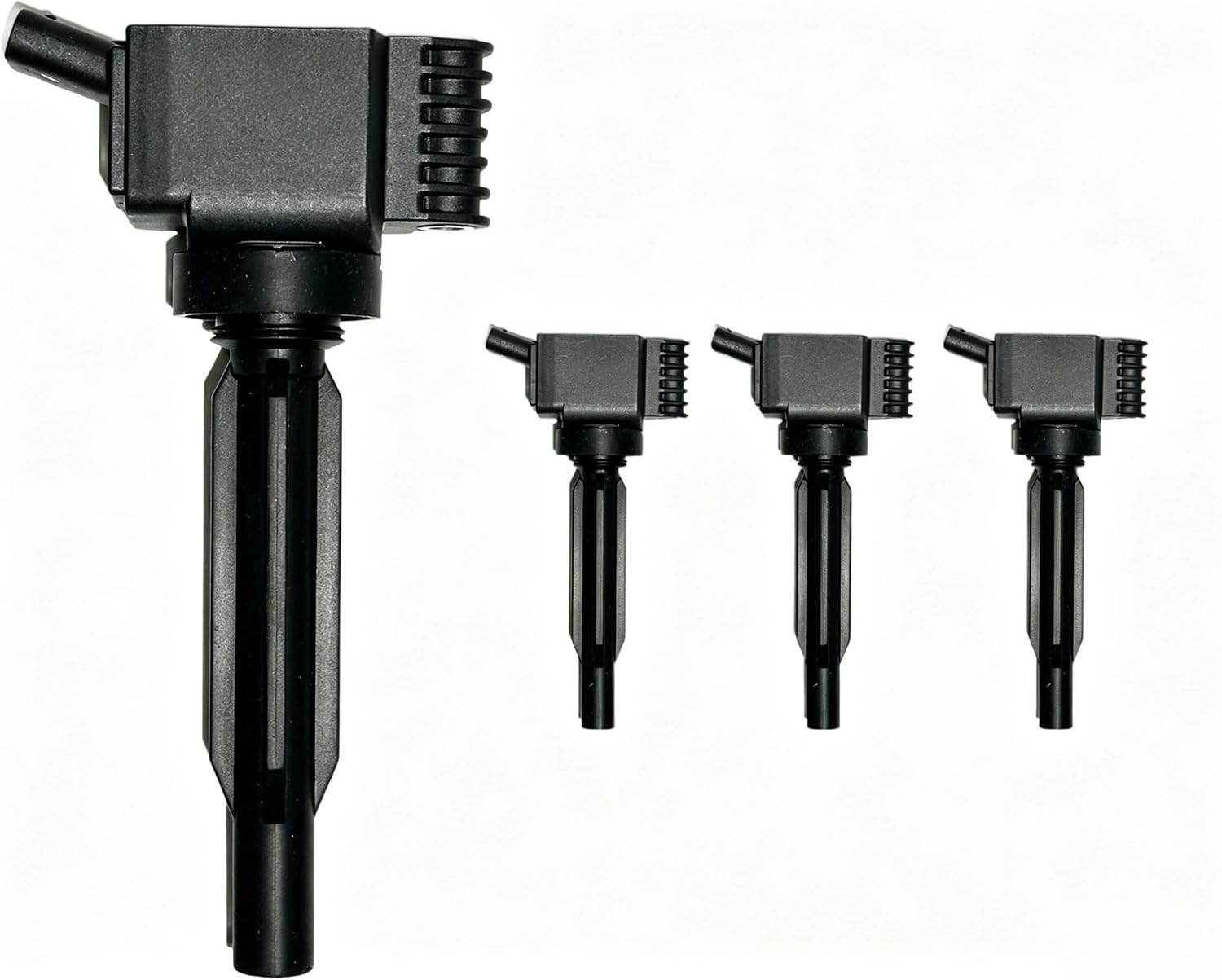
3. Powerlord PLA021 Ignition Coil Pack for Hyundai/Kia 2.5L (4‑pack)
| Unit Count | 4 Count |
|---|---|
| Compatible with Vehicle Type | Car |
| Part Interchange Info | 27300-2S000 |
| Installation Type | coil-on-plug |
This Powerlord PLA021 kit supplies four coil-on-plug ignition coils intended as a direct replacement for non-turbo 2.5L Hyundai and Kia engines using part number 27300-2S000. It is sold as a complete set so you can replace all coils at once, which helps avoid repeat failures and uneven performance from a mixed-age coil set. Typical use is simple swap-out during routine tune-ups or to clear misfire codes tied to failing coils; the coils come with housings and standard male electrical connectors for factory-style installation. The practical benefit is a cost-effective, vehicle-specific replacement that restores consistent spark delivery and engine smoothness without having to source individual OEM coils. Limitations are that this unit is explicitly for vehicles with the listed OE number and non-turbo 2.5L configurations only, and the product is marketed as a standard replacement rather than a high-performance or extended-lifespan option.
Best for: Buyers wanting a practical, cost-conscious repair who prefer replacing the whole coil set to restore engine smoothness and prevent recurring misfires.
Less Ideal for: Drivers looking for performance or long-life upgraded ignition coils or those who need coils for turbocharged or different-engine variants should consider other options.
- Sold as a complete 4-pack to replace all coils at once and reduce repeat failures
- Vehicle-specific fit for non-turbo 2.5L Hyundai and Kia engines using part number 27300-2S000
- Coil-on-plug design with factory-style male connectors for straightforward installation
- Includes housings so units are ready to install without additional parts
- Only compatible with non-turbo 2.5L models that match the listed OE number
- Positioned as a standard replacement with a recommended lifespan rather than an upgraded performance part
Verdict: A budget-minded, vehicle-specific four-pack that lets you quickly replace all ignition coils on non-turbo 2.5L Hyundai/Kia engines to restore smooth running.
4. Powerlord PLA08 Ignition Coil Pack with Spark Plugs (4-pack) for 2.5L Hyundai/Kia Non‑Turbo

| Fitment type | Vehicle Specific Fit |
|---|---|
| OEM equivalent part number | 273002S000 |
| Package contents | 4 coils + 4 spark plugs |
| Spark plug gap | 0.044 inch (1.1 mm) pre-gapped |
| Recommended life | Coils 4 years/70,000 mi; plugs 3 years/50,000 mi |
This Powerlord PLA08 kit combines four ignition coils and four pre-gapped iridium-platinum spark plugs to replace a failing coil pack set on non-turbo 2.5L Hyundai and Kia vehicles. It is intended for direct fitment where OE number 27300-2S000 is specified and is sold as a complete set so you can swap all cylinders at once. The plugs arrive pre-gapped to 0.044" (1.1 mm) though minor adjustment may be needed to match manufacturer tolerances. The listing notes a recommended lifespan (coils ~4 years/70,000 miles; plugs ~3 years/50,000 miles) and advises replacing the full set to avoid repeated failures. Practical benefits include getting a full matched kit in one purchase and avoiding pull-and-replace hassles for individual coils. Limitations are that this is for non-turbo engines only and compatibility must match the listed OE equivalent, and buyer experience may vary since this is an aftermarket standard-replacement part rather than a factory branded unit.
Best for: Buyers who want an affordable, all-in-one replacement set to restore ignition reliability on qualifying non-turbo 2.5L Hyundai or Kia vehicles and prefer doing a full-kit swap instead of replacing coils one-by-one.
Less Ideal for: Do not choose this if your vehicle is turbocharged or uses a different OEM coil number, or if you require a factory-brand or performance upgrade part.
- Complete kit includes four ignition coils plus four pre-gapped iridium-platinum spark plugs for a one-step replacement
- Pre-gapped spark plugs reduce installation prep and speed up service
- Vehicle-specific fit for applications that use OEM part number 27300-2S000, simplifying compatibility checks
- Recommended service intervals provided to help plan preventive maintenance
- Only compatible with non-turbo 2.5L engines that use the specified OEM number
- Aftermarket standard-replacement unit rather than a factory-brand part so exact longevity and performance may vary
Verdict: A budget-friendly matched four-coil and spark-plug kit that makes a quick, practical full-set replacement for non-turbo 2.5L Hyundai and Kia engines using OEM 27300-2S000.
5. DUEYU Ignition Coil 4-Pack Compatible with Hyundai 2.5L and Kia 2.5L (UF890)

| Unit Count | 4 Count |
|---|---|
| Compatible with Vehicle Type | Car |
| Part Interchange Info | UF890 |
| Installation Type | Bolt-On |
This four-pack of DUEYU ignition coils replaces factory coils on select 2.5L Hyundai and Kia engines to restore consistent spark and smooth running. Installers bolt each coil into the original mounting location and connect the male plug for a straightforward factory-style replacement. The coils are built with high-temperature resistant materials, silicone boots, and tin-plated terminals to resist heat-related degradation and maintain reliable spark energy under normal driving. In practice they reduce engine misfires and improve throttle response when old coils are failing, and having a full set makes it easy to replace all cylinders at once for matched performance. The product is vehicle-specific and sold as a direct-fit set for UF890-equivalent part numbers, so compatibility matters and you should confirm the original part number before purchase. These are practical for DIY swaps or a quick shop installation, but buyers who need OE-brand warranty or dealer-level parts tracking may prefer an OEM-branded coil instead.
Best for: Buyers who prioritize restoring dependable day-to-day ignition performance with a straightforward, vehicle-specific replacement and prefer to address all coils at once for matched operation.
Less Ideal for: Drivers seeking factory-branded parts with dealership support or those who require a parts supplier with extended certified warranties should consider alternative sources.
- Full four-coil set for replacing all cylinders at once
- Direct-fit design matching UF890/27300-2S000 part numbers for straightforward installation
- High-temperature resistant construction with silicone boots and tin-plated terminals to improve longevity
- Bolt-on installation compatible with factory mounting and male connector for easy swap
- Not an OEM-branded part so long-term dealer-level support and tracking differ from factory parts
Verdict: Choose this four-pack when you want a direct-fit, heat-resistant replacement set to quickly restore reliable ignition on UF890 2.5L Hyundai and Kia engines.
6. ECCPP Ignition Coils Pack UF890, Set of 4

| Unit Count | 4 Count |
|---|---|
| Installation Type | Bolt-On |
| Voltage | 12V |
| Part Interchange Info | UF890 UF-890 27300-2S000 C2010031332B0 |
This ECCPP set supplies four bolt-on ignition coils intended as a direct replacement for UF890-equipped 2.5L Hyundai engines. Installed in place of worn coils, they restore consistent spark delivery to address misfires, rough idle, and poor throttle response. The kit is vehicle-specific for certain Santa Cruz, Santa Fe, Sonata, Tucson and select Kia 2.5L models and lists the manufacturer part interchange numbers so you can confirm fit before buying. Because they follow factory-equivalent specs and run at standard 12V, installation is straightforward for a home mechanic or tech and requires no special programming. Practical benefits include returning engine smoothness and helping maintain fuel economy without replacing other ignition system components. Limitations are typical of aftermarket coil packs: long-term durability may vary compared with higher-cost brand-name units and warranty coverage is limited to 12 months, so buyers who want extended assurance or OEM-branded parts may prefer other options.
Best for: Buyers who want an affordable, vehicle-matched replacement to restore factory running quality on 2.5L Hyundai engines and who check compatibility carefully before ordering.
Less Ideal for: Shoppers seeking extended warranty protection or factory-branded parts for long-term peace of mind should consider OEM options or premium aftermarket brands.
- Vehicle-specific fit for UF890 applications simplifies fit verification and installation.
- Built to factory-equivalent specifications to restore consistent spark and engine smoothness.
- Bolt-on installation with standard 12V operation suitable for DIY replacement.
- Pack of four covers all cylinders so you replace the whole set to avoid mixed-age coils.
- Warranty coverage is limited to 12 months, shorter than some competitors.
- Aftermarket longevity can vary versus higher-priced OEM-branded coils.
Verdict: If you need a straightforward, vehicle-specific four-pack to restore smooth engine operation on UF890 2.5L Hyundai engines, this ECCPP kit is a practical, ready-to-install choice.
7. Vertiwell Ignition Coil Pack — Set of 4, Replacement for UF890 273002S000

| Unit Count | 4 Count |
|---|---|
| Compatible with Vehicle Type | Car |
| Part Interchange Info | UF890 273002S000 |
| Automotive Fit Type | Vehicle Specific Fit |
These Vertiwell ignition coils are a four-pack intended to directly replace UF890/273002S000 coil packs on 2.5L L4 Hyundai and Kia models. They install with a plug-and-play design so a routine coil swap requires no modification and is suitable for routine maintenance or replacing failed coils. The listing emphasizes copper-wound construction to deliver consistent spark energy, which in real-world use should smooth acceleration and help combustion efficiency when the rest of the ignition system is healthy. The set covers multiple model years for the Santa Cruz, Santa Fe, Sonata and Tucson, simplifying a full-bank replacement at once. Limitations to consider are that performance gains depend on the rest of the ignition and fuel system and these are aftermarket replacements rather than factory-brand parts. Buyers should confirm exact year and engine fit with a fitment tool before ordering and be prepared to swap coils back-to-back if diagnosing misfires.
Best for: A buyer who wants a straightforward, low-risk full-bank coil replacement for routine maintenance or to address misfires on 2.5L L4 Hyundai models and values easy installation and predictable fitment.
Less Ideal for: Drivers seeking factory-brand parts for warranty or branding reasons or those wanting performance-tuned ignition upgrades should consider other options.
- Complete set of four for replacing all bank coils at once
- Plug-and-play vehicle-specific fit for straightforward installation
- Copper winding cited for consistent spark delivery and smoother running
- Covers a wide range of 2.5L L4 Hyundai and Kia model years so one SKU can fit multiple vehicles
- Aftermarket part so it is not the factory-brand coil and may differ slightly from original equipment
Verdict: Buy this set when you need a simple, full-bank replacement for UF890/273002S000 coils on 2.5L L4 Hyundai models and prefer a plug-and-play aftermarket option.
Choosing the Right Hyundai Santa Cruz Ignition Coil: Key Factors to Consider
Electrical Compatibility
An ignition coil must match the Santa Cruz ignition system's primary and secondary electrical characteristics. Primary resistance and coil turns influence how the engine control module drives the coil; mismatched values can cause weak spark, ECM error codes, or excessive current draw.
Secondary voltage capability and insulation quality determine whether the coil can produce a consistent high-voltage spark across a range of operating conditions. For this vehicle, verify connector pinout, coil pack voltage ratings, and any required suppression for interference with onboard electronics. Failure to match electrical specs can result in recurring misfires or trigger diagnostic trouble codes that mask the real issue.
Mechanical Fitment
Mechanical fitment covers mounting points, physical dimensions, and the ability to seat properly against the spark plug or ignition lead. A coil that does not align with the plug or mounting bosses can cause poor sealing, vibration, or premature wear.
Check that the replacement uses the same bolt pattern, orientation, and boot length so it reaches the spark plug reliably. Proper fitment also affects heat transfer and exposure to engine fluids. For the Santa Cruz, ensure the replacement coil clears surrounding components and retains factory clip or fastener positions to avoid installation complications.
Thermal Durability
The engine bay of the Santa Cruz exposes ignition coils to significant heat cycles. Thermal durability relates to a coil's ability to resist breakdown of insulation and internal adhesives over repeated heating and cooling.
Look for coils rated for higher operating temperatures, with robust potting compounds and heat-resistant materials. Thermal failure often begins as intermittent misfire or degraded spark under load, so a coil with superior heat tolerance will last longer and maintain performance during towing, long highway runs, or hot-climate operation.
Moisture and Contaminant Resistance
Exposure to oil, coolant, and road spray can introduce moisture that leads to coil tracking or shorts. A properly sealed coil housing, quality boot material, and corrosion-resistant terminals reduce the chance of moisture-related failures.
For the Santa Cruz, consider coils with integrated moisture barriers and boots made from high-grade silicone or equivalent compounds. Good sealing also helps prevent tracking along the boot surface that can cause misfires, especially in wet or humid conditions.
Durability and Manufacturing Quality
Internal construction quality, including winding consistency, insulation, and epoxy potting, affects lifetime performance. Coils made with precise windings and rigorous quality control will produce more consistent spark energy and resist premature degradation.
Assess available technical documentation on manufacturing and look for features such as reinforced terminals, robust housings, and proven assembly methods. Durability matters for owners who expect long service intervals and want to avoid repeat replacements due to manufacturing defects.
Installation and Serviceability
Ease of installation impacts both DIYers and technicians. Coils that use the factory connector, standard mounting hardware, and clear orientation simplify the replacement process and reduce the chance of installation errors.
Consider whether the coil requires special tools to seat boots or if it needs anti-seize on fasteners. Clear instructions and accessible terminal locations minimize installation time and risk of damage. For owners who plan a DIY replacement, preferring coils designed for straightforward swap-in compatibility reduces complexity.
Common Symptoms and Quick Diagnostics
Recognizing typical ignition coil symptoms helps you decide if a replacement is warranted. Intermittent misfires, rough idle, reduced acceleration, or illumination of the check engine light with misfire-related codes often point toward a coil issue.
Before replacing a coil, perform some quick diagnostic checks. Look for engine codes indicating misfires on specific cylinders, inspect boots and connectors for corrosion or damage, and observe whether the fault appears only when the engine is hot or under load.
- Intermittent rough idle that clears after a restart often indicates thermal-related coil problems.
- Cylinder-specific misfire codes localize which coil or spark plug to inspect first.
- Visible arcing, cracked boots, or oil contamination are strong evidence that a coil needs replacement.
Testing Methods You Can Use
There are several practical ways to test an ignition coil on the Santa Cruz. A basic resistance check with a digital multimeter can reveal open or shorted windings by comparing primary and secondary resistance to expected values provided in service literature.
If you have access to a spark tester, you can observe the coil's ability to create a consistent spark under cranking conditions. More advanced diagnostic tools such as an oscilloscope or a dedicated ignition analyser will show waveform shape and dwell time, which helps identify intermittent failures that simple resistance checks might miss.
- Measure primary and secondary resistance and compare to factory specs.
- Use a spark tester to verify high-voltage output under load.
- Perform a swap test by exchanging suspect coil with another cylinder to see if the misfire follows the coil.
Installation Tips for a Reliable Swap
When replacing a coil, take steps that reduce the chance of new problems after installation. Disconnect the battery before starting, use correct torque on mounting bolts, and ensure the connector latches fully to avoid intermittent electrical contact.
Inspect and, if necessary, replace the spark plug and boot or terminal at the same time. A marginal spark plug or damaged boot can cause the new coil to appear defective even though it is functioning correctly. Finally, route wiring and secure fasteners so the coil is not exposed to unnecessary vibration.
- Clean mating surfaces and remove oil or debris before seating the new coil.
- Apply dielectric grease sparingly on the inside of boots to protect against moisture while avoiding contamination of the spark gap.
- Torque bolts to factory spec and verify connector engagement after installation.
When To Replace Coils Versus Troubleshoot Other Systems
Not all misfires originate from ignition coils. Fuel delivery issues, faulty spark plugs, vacuum leaks, and sensor errors can produce similar symptoms. Use targeted diagnostics to isolate the coil before replacing multiple components.
If misfire codes are cylinder-specific and visually confirmed by a faulty boot or coil connector, replacement is more likely. If misfires are random across cylinders or accompany fuel trim abnormalities, expand troubleshooting to injectors, fuel pressure, and intake leaks before committing to coil replacements.
- Cylinder-specific error codes suggest coil or plug issues.
- Random misfires paired with fuel trim changes indicate fuel or air intake problems.
- Use systematic swap and test methods to avoid unnecessary parts replacement.
Maintenance Practices to Extend Coil Life
Routine engine bay cleaning and prompt repair of oil or coolant leaks help protect ignition coils from contamination that shortens life. Regular inspection during scheduled maintenance catches deteriorating boots, cracked housings, or corroded terminals early.
Replacing spark plugs at recommended intervals reduces coil stress because worn plugs require higher voltage to fire. Keeping the electrical connectors clean and ensuring proper engine cooling performance will also reduce thermal cycling stress that contributes to coil failure.
- Inspect coil boots and connectors at every spark plug service.
- Address oil leaks and coolant seepage promptly to avoid contaminating coils.
- Follow recommended spark plug replacement intervals to reduce coil load.
How We Chose the Best Hyundai Santa Cruz Ignition Coil
We prioritized candidates that meet the Santa Cruz electrical and mechanical fitment requirements, offer verified coil windings and insulation ratings, and have documented reliability for modern multi-coil ignition systems. Evaluation focused on compatibility with factory connector and mounting points, primary and secondary resistance or voltage ratings, thermal tolerance, and manufacturing quality of internal components such as epoxy potting and high-voltage leads.Other criteria included warranty length and available technical documentation, ease of installation for service technicians and DIYers, and the design approach to dampen electrical interference that can affect engine management sensors. We excluded units without clear electrical specifications, coils intended for different engine variants, and items lacking sufficient installation guidance or OE-style mounting features.In short, selected coils had to match Santa Cruz fitment, demonstrate appropriate electrical characteristics, show attention to thermal and moisture protection, and offer clear installation compatibility. Units missing any of these dimensions were not considered.
Our full evaluation process is outlined in our review methodology.
FAQ
What are common symptoms of a failing ignition coil on a Santa Cruz?
Common symptoms include rough idle, reduced acceleration, intermittent misfires, and check engine light codes that point to specific cylinders. You may also notice poor fuel economy or difficulty starting when a coil weakens.
Can I test an ignition coil at home without special tools?
Yes. A multimeter can check primary and secondary resistance values against service specifications, and a basic spark tester can confirm whether the coil is producing spark. More subtle intermittent failures may require advanced diagnostics.
Should I replace the spark plugs when installing new coils?
Often it is wise to replace spark plugs when fitting new coils. Worn plugs increase the voltage demand on coils, accelerating coil wear. Installing fresh plugs helps the new coil operate within normal load conditions.
How long do ignition coils typically last in the Santa Cruz?
Lifespan varies with driving conditions and maintenance but coils often last several years. Heat exposure, contamination, and repeated high-load use shorten service life, so inspect coils if you experience symptoms or after significant engine work.
Will a bad coil always trigger a check engine light?
Not always. Some coil issues start as intermittent misfires that may not immediately set a persistent code. Persistent or frequent misfires are more likely to illuminate the check engine light and store diagnostic codes.
Is it better to replace one coil or all coils at once?
It depends. If only one coil shows failure or specific cylinder misfire codes, replacing that coil can be sufficient. If the vehicle has high mileage or multiple coils show signs of wear, replacing several at once reduces the chance of repeat failures and saves diagnostic time.
Final Verdict
When selecting a replacement ignition coil for your Hyundai Santa Cruz, prioritize electrical compatibility, proper mechanical fitment, and durability against heat and contaminants. Ensure the coil's resistance and voltage capabilities match the vehicle's ignition system and that the housing and boot provide reliable sealing.Balance the immediate need to fix a misfire with longer-term considerations such as thermal rating and manufacturing quality. If diagnostics point to a single failing coil, a targeted replacement is reasonable. For older vehicles or when multiple symptoms appear, consider addressing all related ignition components to restore dependable engine performance.
Explore More:
- Check out all Hyundai Santa Cruz parts & accessories
- Explore Ignition Coils Maintenance & Repair Guides
- Explore Engine
- Browse all Auto Parts
