

Note: This article contains affiliate links. If you click on these links and make a purchase, I may earn a small commission at no extra cost to you. This helps support my research and content. Read my full affiliate disclosure here.
If you own a 2001-2005 Honda Civic you know reliable fuel delivery is essential for drivability and engine longevity. Faulty or worn injectors can cause rough idle, poor fuel economy, and inconsistent throttle response that undermine daily use or a performance-minded build. This guide focuses on direct-fit fuel injectors for the 2001-2005 Civic (ES, EM, and EP), covering options that restore stock behavior or provide modest performance upgrades while matching the chassis wiring and mounting.Below are our top shortlisted injectors for this Civic generation, each evaluated for fitment, flow consistency, and durability. Read on to understand the evaluation criteria and practical steps for deciding which injector type suits your needs before you get into replacement or testing.
Looking for other parts? See all Honda Civic parts & accessories.
Top Picks at a Glance
| Best Quality Built to a higher standard if you want something more solid | YZHIDIANF High Performance Fuel Injectors 16450PLC003 (Set of 4) |  |
| Best Value The sweet spot between price and what you get | HiSport Fuel Injectors 16450-PLC-003 — 4-Pack for 2001–2005 Honda Civic 1.7L L4 |  |
| Best Budget The cheapest option that still gets the job done reliably | ANGLEWIDE Fuel Injector Set FJ338 (4-Pack) Replacement for 2001–2005 Honda Civic / 2001–2005 Acura EL |  |
| Highest Rated A top-rated pick with lots of positive feedback | Oktiger Upgraded Fuel Injectors Set for 2001–2005 Honda Civic 1.7L (4-pack) |  |
| Most Popular A crowd favorite that many people choose with confidence | TRQ Fuel Injector Set for 2001–2005 Honda Civic (4‑Piece) |  |
1. YZHIDIANF High Performance Fuel Injectors 16450PLC003 (Set of 4)
| Compatible models | Honda Civic 2001–2005 1.7L L4 |
|---|---|
| Material | Stainless Steel |
| Inlet/Outlet connection | Push-In, 0.13 Inches |
| Voltage | 12 Volts |
| Number of ports | 4 |
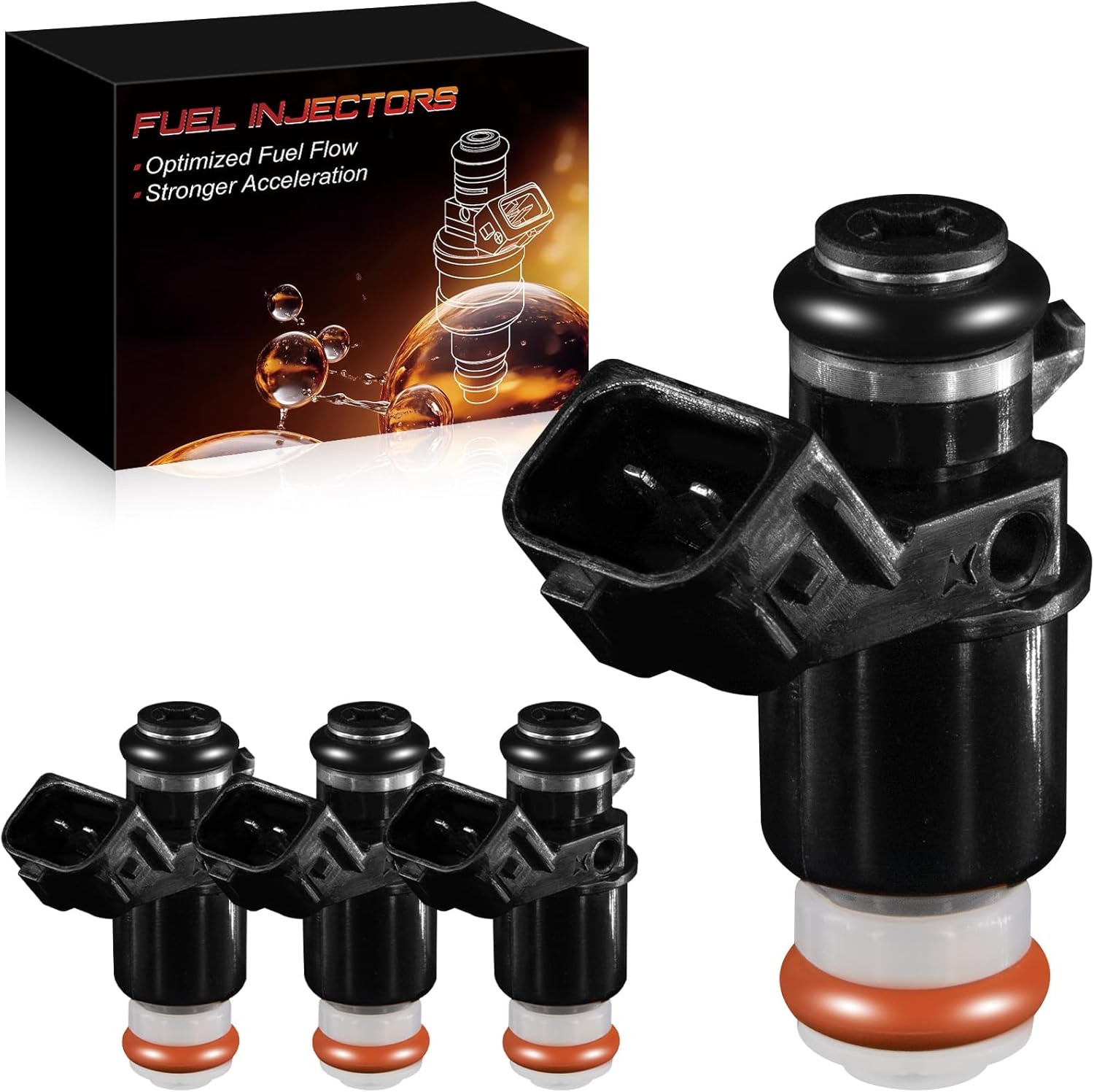
These YZHIDIANF fuel injectors are sold as a set of four and intended as a direct-fit replacement for 2001–2005 Honda Civic 1.7L engines. They are made with stainless steel internals, push-in inlet and outlet connections, and 12-volt operation to match the vehicle fuel system. In use they aim to restore even fuel spray and balanced delivery across cylinders, which customers report translates to smoother idle, crisper throttle response, and improved fuel economy compared with worn injectors. The seller notes extensive bench testing and a high-performance sealing O-ring to reduce leaks. Installation is plug-and-play for the specified Civic models and typically requires no modification beyond standard injector replacement steps. Limitations to note are that these are aftermarket parts rather than factory-brand components and long-term durability compared with OEM injectors depends on installation and fuel quality. Also, fitment must be confirmed for the specific Civic submodel before purchase.
Best for: Enthusiasts who want to restore or improve throttle response and efficiency on a 2001–2005 Honda Civic 1.7L without major engine work; good for DIY installers comfortable swapping injectors.
Less Ideal for: Drivers seeking OEM-branded injectors with manufacturer-backed warranties or those who prefer having parts purchased and installed through a dealer service.
- Direct-fit set of four matched injectors for 2001–2005 Civic 1.7L for simple replacement
- Stainless steel slide and spring assembly intended to improve longevity compared with worn units
- Designed to spray evenly for more balanced fuel delivery and potential fuel economy gains
- Plug-and-play push-in connections and 12 V design make installation straightforward
- Aftermarket unit so long-term reliability may vary versus factory-brand injectors
Verdict: If you want a straightforward, performance-minded direct replacement to restore throttle response and even fuel delivery on a 2001–2005 Civic 1.7L, this matched set of four injectors is a practical choice.
2. HiSport Fuel Injectors 16450-PLC-003 — 4-Pack for 2001–2005 Honda Civic 1.7L L4

| Compatible vehicles | Honda Civic 2001-2005 1.7L L4 |
|---|---|
| Manufacturer part number | HSFILC003-4 |
| Set configuration | 4 injectors per pack |
These HiSport injectors are a direct-fit replacement set for the 1.7L L4 Honda Civic (2001–2005) sold as a four-pack. They are metal-and-composite units designed to match factory mounting and electrical connections so installation is straightforward for anyone swapping all four injectors. HiSport highlights internal seal protection and pre-shipment bench testing to improve durability and consistent spray patterns, which helps smoother idling, more accurate fuel metering and easier cold starts in everyday driving. Use is typical: remove the fuel rail, swap each injector, replace seals and reinstall; a basic repair shop or experienced DIYer can complete the job in a few hours. Limitations include that these are aftermarket parts so long-term longevity may vary compared with factory replacements and the listing asks buyers to verify fitment carefully before buying. There is no detailed flow or impedance spec in the listing, so tuners or users needing exact matched flow rates should look for parts with published specs.
Best for: Buyers wanting an affordable, practical factory-style replacement set to restore drivability and smooth idling on a 2001–2005 Civic 1.7L without aftermarket tuning priorities.
Less Ideal for: People who need matched, documented flow and impedance data for engine tuning or those who prefer OEM-branded parts for long-term warranty support.
- Sold as a complete four-pack for full-bank replacement
- Designed to match factory mounting and electrical connections for straightforward installation
- Internal seal protection and warehouse testing aimed at improved durability and consistent spray
- Manufactured from metal and composite materials for practical balance of strength and corrosion resistance
- Listing does not provide flow rate or electrical impedance specifications needed for performance tuning
Verdict: A cost-effective four-pack replacement that restores factory-style fueling for 2001–2005 Civic 1.7L engines when you need a practical, full-bank swap.
3. ANGLEWIDE Fuel Injector Set FJ338 (4-Pack) Replacement for 2001–2005 Honda Civic / 2001–2005 Acura EL

| Inlet Connection Type | Compression |
|---|---|
| Outlet Connection Type | Compression |
| Number of Ports | 8 |
| Valve Type | pintle valve |
| Material Type | Metal composite plastic |
These ANGLEWIDE injectors are a budget-oriented replacement set intended to restore proper fueling on compatible 1.7L Civics and Acura ELs from 2001 to 2005. The pack includes four injectors built to compression inlet/outlet connections with a pintle valve design and is described as manufactured to factory specifications. Installation is typical for direct-swap injectors and suits DIYers or a shop doing a fuel-system refresh; because they come as a four-pack you can replace the whole bank at once. The product claims metal composite plastic construction and multiple inspections before shipping, which suggests adequate durability for everyday driving. Expect practical benefits like more consistent idling and improved fuel delivery compared with worn units, plus potential fuel economy gains versus failing injectors. Limitations are that documentation of flow rates or electrical specs is not provided and vehicle compatibility is specific to certain trims and years, so confirm fitment before buying. This is a straightforward, economical option when replacing all four injectors to get a tired 1.7L engine running cleanly again.
Best for: Buyers looking for an affordable, full-bank replacement to restore reliable fueling on a 2001–2005 1.7L Civic or 2001–2005 Acura EL and who prioritize a direct-swap, cost-effective repair over performance upgrades.
Less Ideal for: Those seeking high-performance injectors, measured flow matching, or parts for other engine sizes and model years should consider alternative options tailored to those needs.
- Sold as a complete four-injector kit for replacing an entire cylinder bank at once
- Manufactured to match factory specifications with compression inlet and outlet fittings
- Metal composite plastic construction aimed at everyday durability
- Claims multiple inspections before shipment which can reduce DOA units
- No published flow rate or electrical specification makes precise tuning or verification difficult
- Fitment is limited to specific 1.7L Civic/Acura model years so compatibility must be checked
Verdict: A practical, wallet-friendly full set for owners who need a straightforward factory-spec replacement to restore fueling on 2001–2005 1.7L Civics and Acura ELs.
4. Oktiger Upgraded Fuel Injectors Set for 2001–2005 Honda Civic 1.7L (4-pack)

| Vehicle fitment | Honda Civic 2001-2005 1.7L L4 |
|---|---|
| Holes quantity | 4 |
| Static flow | 104 ml/30s |
| Maximum pressure | 300 Kilopascal |
| Material type | Metal, Plastic |
These Oktiger injectors are a direct-fit replacement for the 1.7L Civic and are supplied as a set of four with preinstalled O-rings and male terminals. Each injector is factory-tested for spray pattern and flow to help restore consistent fuel delivery and engine response after a worn or clogged unit. The design combines metal and composite plastic components, a four-hole spray tip and claimed ±2% flow tolerance to promote even atomization and smoother idling through full throttle. Practical benefits include improved throttle response, potential fuel economy gains reported by the manufacturer, and a sealed O-ring outlet for reliable sealing at typical rail pressures. Installation follows standard procedures and the listing recommends lubricating O-rings during fitment. Important limitations: these are an aftermarket upgraded part rather than a factory unit, so long-term durability can vary with fuel quality and installation care, and professional installation or verification of fitment is advised if you are unsure about part numbers or connector differences.
Best for: Buyers who prioritize restoring reliable, factory-like fuel delivery in a 2001–2005 Honda Civic and want a pretested replacement that minimizes install guesswork.
Less Ideal for: If you need an exact factory-authorized part or expect extreme long-term warranty support, consider sourcing a factory-quality injector or dealer-supplied option instead.
- Direct-fit set for 2001–2005 Honda Civic 1.7L engines so no ECU reprogramming is required
- Pretested for spray pattern and flow to help ensure consistent performance out of the box
- Preinstalled O-rings and standard inlet/outlet connections simplify installation
- Four-hole spray design and tight flow tolerance aimed at improved atomization and throttle response
- Aftermarket construction means long-term durability may differ from factory parts depending on conditions
Verdict: A practical, pretested four-pack replacement built to restore consistent fuel delivery and throttle response for 2001–2005 Honda Civic 1.7L engines.
5. TRQ Fuel Injector Set for 2001–2005 Honda Civic (4‑Piece)
| Fitment | 2001–2005 Honda Civic EX |
|---|---|
| Set Contents | 4 Fuel Injectors |
| Inlet Connection Type | Threaded |
| Exterior Finish | Machined |
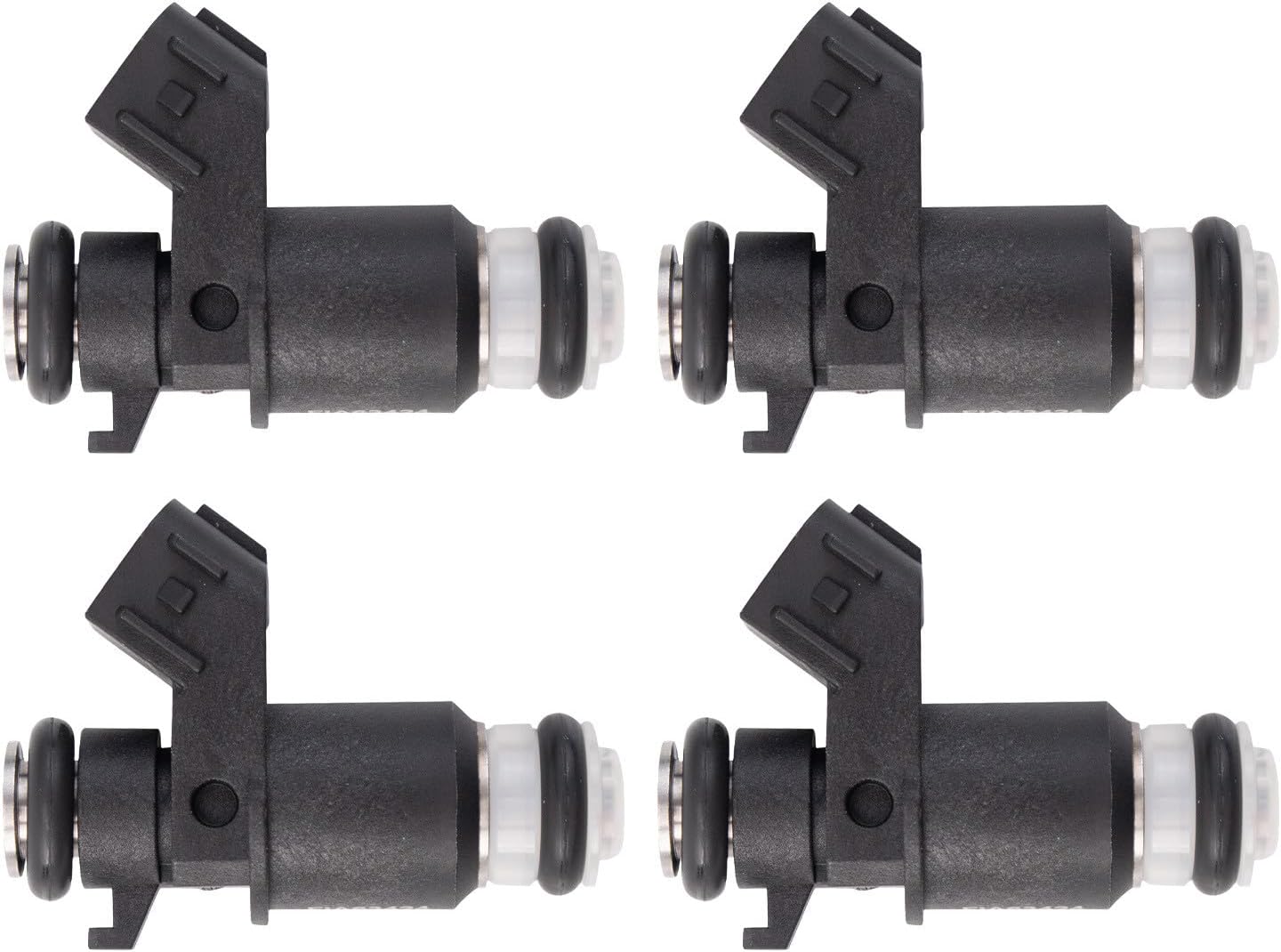
This TRQ four-piece injector kit is sold as a direct-fit replacement for 2001–2005 Honda Civic EX engines and is intended to restore proper fuel delivery and resolve misfires or rough idle caused by worn injectors. The kit includes four injectors pre-assembled for straightforward installation and TRQ supplies installation videos to guide DIYers. In practice these injectors aim to improve throttle response and fuel metering compared with failing OEM units, and several buyers report smooth running after replacement. Notable features listed are a machined finish and threaded inlet connection which support a factory-style installation. Drawbacks to plan for include occasional reports of leaking units and missing O-rings or seals, so source replacement seals beforehand and inspect each injector before installation. Some reviewers also describe variable long-term reliability and one case of serious failure, so consider testing and careful installation rather than assuming long-term parity with factory injectors.
Best for: Buyers who prefer a tested direct-replacement kit with installation guidance and want to fix misfires or rough idle themselves while relying on other owners' experiences to judge fit and initial performance.
Less Ideal for: People who need guaranteed long-term OEM-level durability without additional parts or those unwilling to inspect and possibly source seals before installing.
- Direct-fit 4-piece kit intended for 2001–2005 Honda Civic EX for easier replacement
- Pre-assembled injectors and supporting installation videos make DIY installation more accessible
- Machined finish and threaded inlet support a solid, factory-style connection
- Multiple buyers report restored engine smoothness and resolved misfires after replacement
- Some units have been reported to leak or fail, indicating inconsistent quality control
- Injectors may be shipped without O-rings or seals requiring separate purchase before install
- Mixed long-term durability in reviews means longevity is not guaranteed
Verdict: A convenient direct-fit four-injector kit that helps DIYers fix misfires and restore smooth running on 2001–2005 Civic EXs while leaning on community feedback for fit and early performance.
Choosing the Right 2001-2005 Honda Civic Fuel Injector: Key Factors to Consider
Fitment and Electrical Compatibility
Correct physical fit and electrical connector match are essential for a painless swap on the 2001-2005 Civic (ES, EM, and EP). The injector must seat properly in the fuel rail and intake manifold, and the connector must mate with the factory harness to avoid splicing or adapter use. Incorrect fit can cause fuel leaks, poor sealing, or electrical errors that trigger engine warning lights.
Beyond plug fit, consider the injector's rated operating pressure and whether it aligns with the Civic's fuel rail pressure. Voltage and impedance characteristics should match the engine control unit's expectations to preserve injector pulse behavior and avoid overheating of the driver circuit. Ensuring compatibility reduces installation time and prevents costly rework.
Flow Rate and Spray Pattern
Flow rate determines the volume of fuel delivered and directly affects air/fuel ratio. For a stock 2001-2005 Civic, choosing injectors with flow rates close to OEM maintains drivability and emissions compliance, while slightly higher flows may be appropriate for modest bolt-on upgrades. Mismatched flow requires retuning to avoid lean or rich conditions.
Spray pattern impacts how fuel mixes with intake air. A focused, consistent spray promotes even cylinder distribution and complete combustion. Look for injectors with published flow tolerances and spray characteristics to reduce the need for extensive calibration and to keep idle quality and throttle response predictable.
Durability and Resistance to Clogging
Fuel quality, ethanol content, and time are common contributors to injector fouling. Materials and internal coatings affect resistance to varnish buildup and corrosion. For the 2001-2005 Civic, which often sees high-mileage service, choosing injectors with proven resistance to clogging extends service intervals and preserves performance.
Consider injectors that tolerate common fuel blends and include features like hardened pintles or protective filters. Also evaluate recommended maintenance practices such as periodic cleaning; injectors that are easier to service or clean reduce long-term ownership hassle.
Response Time and Idle Characteristics
Injector electrical response time influences how quickly fuel delivery follows throttle inputs. Faster response can sharpen throttle feel, while slower injectors may cause hesitation or uneven idling. For everyday driving in the Civic, balanced response ensures smooth transitions between idle and load and predictable cruise behavior.
When replacing injectors, matching the response characteristics to the vehicle's ECU tuning helps avoid driveability issues. If planning a performance upgrade, consider whether the ECU can accommodate faster injectors without introducing stiction or idle hunting.
Serviceability and Maintenance Options
Access to cleaning kits, rebuildable options, or straightforward replacement units affects long-term cost and convenience. For Civic owners who prefer DIY maintenance, injectors that are simple to remove, inspect, and clean save labor and reduce downtime. Availability of rebuild kits or recommended cleaning intervals should factor into the decision for high-mileage cars.
Also review recommended diagnostic procedures for the injectors you choose, including whether specialized equipment is needed for flow testing or whether basic shop tools suffice. Serviceability choices influence total ownership effort over the life of the injector.
Warranty and Manufacturer Support
Warranty length and coverage scope provide a safety net against early failures. For parts that influence engine performance and emissions, warranty terms suggest the manufacturer's confidence in their product and can affect replacement decisions. Civic owners should favor injectors with clear coverage for flow failures, leaks, or electrical defects.
Also consider availability of technical support and documentation. Clear installation instructions and accessible technical resources reduce installation risk and can help diagnose issues quickly if they arise.
When To Suspect Injector Problems on a 2001-2005 Civic
Recognizing symptoms early helps avoid secondary damage like fouled spark plugs or catalytic converter stress. Common signs on the Civic include rough idle, stumbling on acceleration, increased fuel consumption, and intermittent misfires that are not linked to ignition components. These can stem from clogged nozzles, leaking seals, or weakened spray patterns.
Electrical issues such as an illuminated check engine light often accompany injector faults. Running basic tests like watching live fuel trim numbers or doing an injector balance test can help confirm whether an injector is underperforming. If you notice a specific cylinder showing consistently different trim values, the injector for that cylinder is a likely suspect.
- Rough or fluctuating idle that does not resolve with basic tune-up
- Hesitation or bogging under throttle
- Higher than normal fuel consumption
- Intermittent misfire codes tied to a single cylinder
- Fuel odor around the engine indicating potential leaks
DIY Checks and Basic Injector Testing
Before replacing injectors, run simple diagnostics that you can perform with basic tools. Start with a visual inspection for fuel leaks at the injector O-rings and wiring connector corrosion. A fuel smell or dampness at the injector rail often indicates a sealing issue that can be addressed before replacing the injector itself.
Electrical testing with a multimeter can verify coil resistance is within expected range. More advanced testing, like using a noid light to confirm injector pulse or a basic fuel pressure check to ensure the rail maintains required pressure, helps isolate the problem. For flow testing, specialized equipment is ideal but you can still detect gross discrepancies by observing fuel trims and engine behavior.
- Check for fuel leaks and damaged O-rings
- Measure injector coil resistance with a multimeter
- Use a noid light to confirm injector pulse
- Verify fuel rail pressure is within specifications
- Monitor short-term and long-term fuel trims for anomalies
Cleaning Vs Replacement: What Makes Sense
Deciding between cleaning and replacing depends on the nature and severity of the issue. Light varnish or clogging can often be resolved with professional ultrasonic cleaning or a chemical cleaning service, restoring spray pattern and flow without swapping parts. For older, heavily pitted, or mechanically damaged injectors, replacement is the safer, longer-term solution.
Cleaning is cost-effective for maintainable injectors and can extend service life, but it is not guaranteed to fix electrical failures or internal mechanical damage. If multiple injectors show degraded performance or there are signs of leaking or stuck pintles, replacement ensures consistent performance across all cylinders and simplifies tuning.
- Use cleaning for minor clogging and varnish buildup
- Replace if injectors leak, have electrical faults, or are physically damaged
- After cleaning, re-test flow and spray pattern to confirm improvement
- Consider replacement when matching flow across cylinders is critical
Installation Tips for 2001-2005 Civic Owners
When installing injectors on a 2001-2005 Civic, ensure the engine is cool and relieve fuel system pressure before disconnecting the fuel rail. Replace O-rings and seals with high-quality replacements to prevent leaks. Lightly lubricate O-rings with clean engine oil during installation to avoid tearing and to ensure proper seating.
Torque specifications and sequencing for rail bolts matter to maintain uniform sealing. After installation, perform a leak check at keypoints and then monitor idle and fuel trims during a short road test. If the vehicle runs roughly after installation, recheck electrical connections and confirm that the injector harness pins are correctly seated.
- Relieve fuel pressure before starting work
- Replace injector O-rings and seals
- Lubricate O-rings to ease installation
- Follow proper rail bolt torque sequencing
- Check for leaks and monitor fuel trims after install
When to Consider a Performance-Oriented Injector
If you are planning modest power additions such as intake or exhaust upgrades, stepped-up injector flow can help maintain proper air/fuel ratio without pushing into major fuel system changes. For the 2001-2005 Civic, select injectors whose flow increase is compatible with ECU capabilities or be prepared to retune the fuel maps accordingly.
Remember that increasing injector flow alone does not produce power. It enables supporting modifications to operate safely. Ensure that the chosen injector flow is documented and that your tuning strategy accounts for the new delivery characteristics to avoid rich or lean faults.
- Use larger injectors only with matching tuning changes
- Verify new flow rates against ECU fueling strategy
- Avoid oversized injectors that compromise idle control
- Consider staged upgrades instead of one large jump
Still looking for the perfect fit?
Select your Honda Civic configuration to see the most relevant Fuel Injectors recommendations
How We Chose the Best 2001-2005 Honda Civic Fuel Injector
We narrowed candidates using criteria that matter specifically for the 2001-2005 Honda Civic chassis and typical owner priorities. Primary filters were correct electrical connector and mounting compatibility with the Civic ES, EM, and EP fuel rail and intake, measured flow rate tolerances within OEM or modestly increased ranges, and spray pattern consistency proven by measured flow or manufacturer specifications. We also weighed materials and coatings that resist clogging and corrosion under common fuel formulations, plus injector response time for throttle feel. Reliability signals such as rated operating pressure range and warranty coverage were included to reflect long-term ownership impact.Excluded from consideration were universal or heavily modified injectors that require custom harnesses, extensive machining, or nonstock fueling system changes that go beyond routine replacements. We prioritized parts that allow straightforward installation and minimal tuning on stock or mildly modified engines. Final selections balanced fitment accuracy, flow uniformity, and practical durability for day-to-day driving and modest performance upgrades.
Our full evaluation process is outlined in our review methodology.
FAQ
How can I tell if a fuel injector is clogged on my 2001-2005 Civic?
Common signs include rough idle, hesitation under acceleration, and uneven fuel trims on specific cylinders. Visual inspection for varnish or testing spray pattern and flow at a shop confirms clogging.
Is it worth cleaning injectors or should I replace them?
Light clogging often responds well to professional cleaning, which is cost-effective for otherwise sound injectors. Replace injectors if they leak, have electrical faults, or show mechanical damage that cleaning cannot fix.
Will installing different flow injectors trigger a check engine light?
Possibly. Changing flow without adjusting fueling strategy can alter fuel trims and cause emissions-related trouble codes. Minor flow changes may be tolerated, but significant increases usually require ECU recalibration.
Can I test injector function at home on a Civic ES, EM, and EP?
You can perform basic checks like visual leak inspection, multimeter resistance tests, and noid light pulse checks with common tools. For precise flow and spray pattern testing, professional equipment is recommended.
What maintenance helps prevent injector problems in these Civics?
Using clean fuel, replacing fuel filters at recommended intervals, and periodic chemical or ultrasonic cleaning for high-mileage injectors help prevent buildup. Addressing fuel system leaks and keeping the intake clean also reduces contamination risk.
Do injector seals and O-rings need to be replaced when swapping injectors?
Yes. Always install new O-rings and seals to ensure proper sealing and prevent fuel leaks. Reusing old seals increases the risk of seepage and can complicate diagnosis after installation.
Final Verdict
Prioritize fitment and flow consistency when selecting fuel injectors for a 2001-2005 Honda Civic. Matching electrical characteristics and spray pattern to the Civic ES, EM, and EP fuel system preserves idle quality and drivability while minimizing tuning needs. Durability and serviceability determine long-term ownership costs, so weigh cleaning options against outright replacement for high-mileage or damaged injectors.For modest performance goals, choose injectors with documented flow increases and plan for tuning to maintain safe air/fuel ratios. Focus on correct fit, reliable sealing, and consistent flow across all cylinders to ensure dependable operation and avoid downstream engine issues.
Explore More:
- Check out all Honda Civic parts & accessories
- Explore Fuel Injectors Maintenance & Repair Guides
- Explore Fuel System
- Browse all Auto Parts
