

Note: This article contains affiliate links. If you click on these links and make a purchase, I may earn a small commission at no extra cost to you. This helps support my research and content. Read my full affiliate disclosure here.
If you drive a 2016-2021 Honda Civic, protecting the wheel wells and inner body panels should be a top maintenance priority. Fender liners keep salt, mud, and debris away from vulnerable sheet metal and suspension components while also helping reduce road noise. This guide focuses on the best options shortlisted for Civics from 2016 to 2021, covering the FC and FK generation fitment so you can pick liners that match your chassis code.We evaluated candidates on material durability, fitment accuracy, and ease of installation to narrow the list to six top choices. Below you will find the strengths and practical tradeoffs for each type, plus guidance on installation, longevity, and common fitment issues to watch for.
Looking for other parts? See all Honda Civic parts & accessories.
Top Picks at a Glance
| Best Quality Built to a higher standard if you want something more solid | TRQ Front Inner Fender Liner Set for 2020–2021 Honda Civic (Sport Hatchback) |  |
| Best Value The sweet spot between price and what you get | Parts N Go Front Left and Right Fender Liner Set for 2016–2018 Civic |  |
| Best Budget The cheapest option that still gets the job done reliably | Garage-Pro Fender Liner, Front Left for 2016-2018 Honda Civic |  |
| Highest Rated A top-rated pick with lots of positive feedback | TRQ Front Inner Fender Liner Set for 2020–2021 Honda Civic |  |
| Most Popular A crowd favorite that many people choose with confidence | JMTAAT Front Inner Fender Liner Pair for 2016–2019 Honda Civic |  |
1. TRQ Front Inner Fender Liner Set for 2020–2021 Honda Civic (Sport Hatchback)

| Fitment | 2020-2021 Honda Civic Sport/Sport Touring Hatchback Front |
|---|---|
| Included Components | 2 Front Inner Fender Liners |
| Manufacturer | TRQ |
| Manufacturer Part Number | BDA14888 |
| OEM Equivalent Part Number | 74101-TGG-A70 / 74151-TGG-A70 |
These TRQ front inner fender liners replace the factory front driver and passenger inner splash guards on 2020–2021 Honda Civic Sport and Sport Touring hatchbacks. Sold as a two-piece kit, the liners are molded to match the factory contours so they install without trimming or major modification. Typical use is to restore protection behind the front wheels from road spray, salt, and debris that can corrode suspension and body components. Notable features include vehicle-specific fitment referencing Honda part numbers and pre-assembled mounting points intended to speed DIY installation. In practice the liners give solid coverage and should limit moisture and grit reaching vulnerable areas; they are useful after collision damage or when the originals have deteriorated. Expect the parts to be functional and affordable, though they are a direct replacement rather than an upgraded performance-style liner with extra sealing or sound deadening. If you need heavy-duty off-road protection or quieter operation, consider higher-end or reinforced alternatives.
Best for: Buyers wanting a straightforward, direct-fit replacement to restore original splash protection on a 2020–2021 Civic Sport hatchback and who prefer a DIY-friendly part that installs quickly.
Less Ideal for: Drivers who need reinforced, heavy-duty liners for off-road use or who want aftermarket liners focused on additional noise reduction or custom sealing.
- Vehicle-specific fit for 2020–2021 Civic Sport and Sport Touring hatchbacks for easier installation
- Includes both left and right front inner liners so you replace the full front pair
- Molded mounting points and pre-assembled features reduce installation time for DIYers
- Designed as a factory-style replacement and does not add reinforced protection or extra sound insulation
Verdict: A straightforward, vehicle-specific two-piece front liner kit that restores factory-level splash protection on 2020–2021 Civic Sport hatchbacks with minimal effort.
2. Parts N Go Front Left and Right Fender Liner Set for 2016–2018 Civic

| Auto Part Position | Front |
|---|---|
| Compatible with Vehicle Type | Car |
| Automotive Fit Type | Vehicle Specific Fit |
| OEM Equivalent Part Number | 74101TBAA00, 74151TBAA00 |
These Parts N Go fender liners are a direct replacement set for the front driver and passenger sides on 2016–2018 Civic models. Sold as a left/right pair, they are molded to match the factory mounting points and intended to snap or bolt into place without trimming or modification. In use they keep road debris, salt, and water away from suspension and inner body panels, helping prevent rust and keeping engine bay components cleaner. The material and fit are described as durable and close to factory quality, so installation is straightforward for a DIYer with basic tools. Limitations are that this is an aftermarket part so surface texture and exact fit can vary slightly from factory pieces and mounting clips or fasteners are not listed as included, so you may need to reuse OEM hardware or buy replacements. Overall this set is a practical, no-frills repair option to restore protection after damage or wear.
Best for: Buyers who want a straightforward, cost-conscious repair that restores splash protection and prevents corrosion without needing professional installation.
Less Ideal for: If you need an exact factory-match finish for show-quality restoration or require included fasteners and hardware, consider sourcing OEM parts or a kit that lists hardware.
- Vehicle-specific fit for 2016–2018 Honda Civic front left and right positions
- Durable molded construction intended to match factory mounting points
- Sold as a complete front pair so both sides are replaced at once
- Aftermarket part so surface finish and exact fit can differ slightly from factory pieces
Verdict: A practical, vehicle-specific front fender liner pair that restores protection affordably and installs with minimal modification.
3. Garage-Pro Fender Liner, Front Left for 2016-2018 Honda Civic

| Compatible Years | 2016-2018 |
|---|---|
| Position | Front Left |
| Fit Type | Vehicle Specific Fit |
| Material Type | Plastic |
| OEM Equivalent Part Number | 74151TBAA00 |
This Garage-Pro fender liner is a direct-fit plastic replacement for the front left wheel well on 2016–2018 Honda Civic coupes and sedans. It installs in place of the factory liner to protect the engine bay and inner fender from road debris, water, and salt. The part is produced using CAD-checked tooling for a close fit and is intended to be a straightforward bolt-in swap using basic hand tools. As a budget-oriented option it gives the core protection the original part provides without fancy materials or add-ons. Garage-Pro lists part interchange numbers to match factory reference and offers a one-year warranty. Limitations to be aware of are the simple plastic construction, which matches factory function but may not be as durable as higher-end aftermarket composites, and fit can vary slightly by trim so confirm the listed interchange numbers before ordering.
Best for: Buyers replacing a damaged or missing front left fender liner who prioritize an affordable, straightforward repair and want a part that aims to fit like the original.
Less Ideal for: Do not choose this if you want a heavy-duty or upgraded liner for off-road use or frequent high-impact driving conditions.
- Vehicle-specific direct-fit design for 2016–2018 Civic front left position
- CAD-designed shape intended to match factory contours for easier installation
- Includes part interchange references to help confirm fitment
- Protects engine bay and inner fender from debris and moisture
- Basic plastic construction may not resist impacts as well as premium materials
Verdict: A cost-conscious, vehicle-specific front left fender liner that restores factory protection for 2016–2018 Honda Civic owners.
4. TRQ Front Inner Fender Liner Set for 2020–2021 Honda Civic

| Auto Part Position | Front |
|---|---|
| Compatible with Vehicle Type | Car |
| Automotive Fit Type | Vehicle Specific Fit |
| Included Components | 2 Piece Inner Fender Liner Set |
| Manufacturer Warranty Description | 2 years |
This TRQ two-piece front inner fender liner set replaces the factory liners on 2020–2021 Honda Civic front driver and passenger sides and is intended as a direct-fit repair part. It ships as pre-assembled panels that match the original mounting points so installation is straightforward for a DIYer using basic hand tools. The liners keep road debris, water, and salt away from the wheel wells and engine bay surfaces, helping prevent corrosion and protecting wiring and brake components. TRQ highlights vehicle-specific fit and supplies reference part numbers to simplify matching to the Civic EX, EX-L, and LX trims listed. The main practical benefit is restoring the barrier that prevents splash damage after a missing or damaged liner, without cutting or trimming. Limitations are typical for aftermarket plastic liners: they are replacement-grade rather than upgraded heavy-duty guards, and color comes in white which may require paint if visible and you prefer a factory dark finish.
Best for: Buyers who prioritize a reliable, factory-style repair to restore full wheel-well protection on a 2020–2021 Honda Civic and prefer parts that simplify DIY installation.
Less Ideal for: Drivers looking for heavy-duty or reinforced off-road splash guards or those who want a factory-dark finish without painting should consider other options.
- Vehicle-specific fit for 2020–2021 Honda Civic front driver and passenger sides
- Pre-assembled panels that align with factory mounting points for easier DIY installation
- Restores protection against road debris, water, and salt to prevent corrosion and damage
- Offered as a standard replacement plastic liner rather than a reinforced or heavy-duty upgrade
Verdict: If you need a dependable, direct-fit front inner fender replacement to restore protection on a 2020–2021 Honda Civic, this TRQ two-piece set is a practical, easy-to-install choice.
5. JMTAAT Front Inner Fender Liner Pair for 2016–2019 Honda Civic
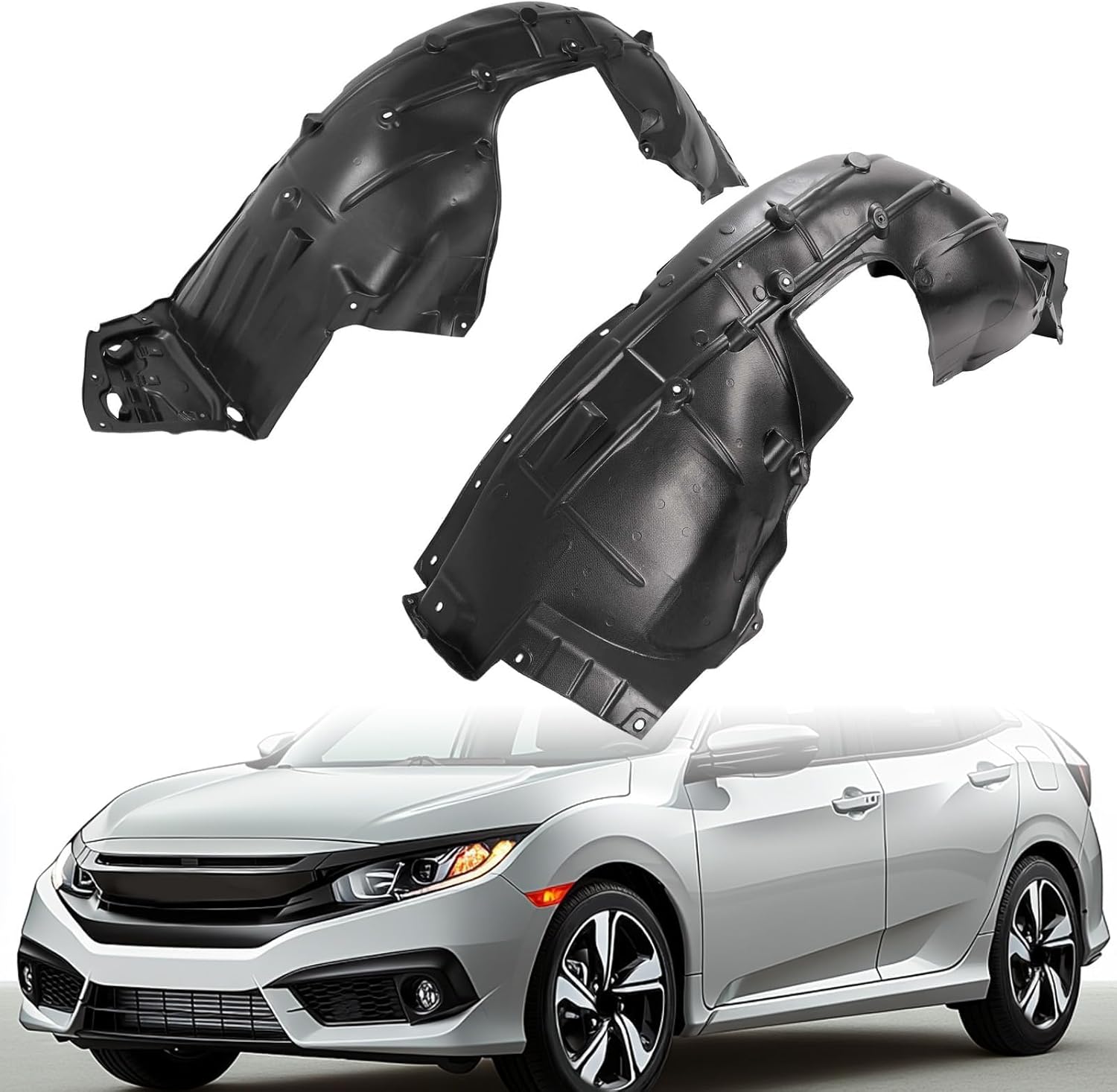
| Compatible vehicles | 2016–2019 Honda Civic |
|---|---|
| Included components | 1 pair front inner fender liners (driver + passenger) |
| Material Type | Plastic (PE) |
These JMTAAT front inner fender liners are replacement panels for 2016–2019 Honda Civic that protect the wheel well and inner body from road debris, mud, and stone strikes. Sold as a driver and passenger pair, the panels are molded from PE plastic to be lightweight yet impact resistant, and they are intended to reduce tire noise while keeping the inner arches cleaner over time. Installation is described as a direct replacement but buyers should be prepared to fine-tune hole positions and compare fit before fastening; some owners report needing zip ties or minor trimming to achieve a secure fit. The set does not include mounting hardware or instructions, so modest DIY skills and basic fasteners are required. For routine driving and corrosion prevention these liners offer a practical, durable option at a budget-friendly level, but expect occasional fitment adjustments rather than factory-exact alignment on every vehicle.
Best for: Buyers who prioritize protecting the wheel wells on a 2016–2019 Honda Civic and want an affordable, replaceable panel rather than an exact factory-refurbishment.
Less Ideal for: If you need a perfect factory-match with guaranteed hole alignment or want a plug-and-play kit with all fasteners included, this set may not meet those expectations.
- Sold as a driver and passenger pair for full front coverage.
- Made from PE plastic for a lightweight but impact-resistant panel.
- Designed to reduce tire noise and keep inner wheel arches cleaner.
- Vehicle-specific fit claimed for 2016–2019 Honda Civic models.
- Does not include mounting hardware or installation instructions.
- Fit can require minor trimming or additional fasteners on some cars.
Verdict: A cost-conscious replacement pair that restores wheel-well protection for 2016–2019 Honda Civics, though modest fitment tweaking may be needed.
Choosing the Right 2016-2021 Honda Civic Fender Liner: Key Factors to Consider
Fitment Accuracy
Correct fitment is the most important factor for a 2016-2021 Honda Civic fender liner because gaps or misalignment will defeat the liner's purpose. A liner that follows the FC and FK inner wheel well contours prevents water, gravel, and salt from reaching suspension mounts and inner fenders. Poor fitment often causes rubbing against tires or interference with brake cooling ducts, so ensure the liner lists explicit compatibility with the Civic 2016-2021 FC and FK or FK chassis code.
Additionally, pay attention to whether the liner uses the factory mounting points and accepts OEM-style fasteners. Liners requiring new holes or unconventional hardware increase installation time and risk improper sealing. A well-fitting liner should sit flush with the wheelhouse and match the bumper and fender edges to minimize debris ingress.
Material and Durability
Materials determine how well a fender liner resists impact, UV exposure, and seasonal temperature swings. Thermoplastic and polypropylene liners are common because they balance toughness and flexibility; they flex under impact rather than cracking. Thinner, cheaper plastic liners may warp from heat or become brittle in cold climates, causing premature failure on a Civic driven year-round.
Also consider whether the material has reinforcement ribs or thicker sections in high-wear zones. Reinforcements near mounting points reduce stress concentrations that lead to tears. For wheel wells that see frequent gravel or salt exposure, choose liners rated for abrasion resistance and UV stabilization to minimize degradation over multiple seasons.
Mounting System and Hardware
How a liner secures to the vehicle affects both installation complexity and long-term retention. The best liners use the Civic's existing clip points and accept standard push rivets or screws used on the 2016-2021 models. Kits that include high-quality fasteners and clear hardware lists reduce lost trips to the hardware store and ensure a secure fit.
Consider whether the kit provides replacement clips for corroded original hardware. Some liners add additional mounting tabs to eliminate flapping at highway speeds. If you plan to service brakes or suspension frequently, pick a liner that permits easy removal and reinstallation without damaging retaining clips.
Drainage and Corrosion Protection
A liner's design should promote drainage and keep water from pooling against the steel body panels. Standing water accelerates corrosion, especially around seam welds and suspension mounting points on the Civic. Look for drain channels, cutouts, or molded pathways that direct runoff away from critical areas.
Also evaluate whether the liner seals gaps where salt and grit can accumulate. While a liner is not a substitute for rustproofing, it substantially reduces exposure. For Civics driven in winter conditions, proper drainage and a tight seal at the fender edge are essential to prolong body integrity.
Ease of Installation and Serviceability
Installation time and the ability to remove liners for service matter for owners who perform their own maintenance. A liner that uses factory access points and standard fasteners typically installs in under an hour per wheel well with basic tools. Complex designs that require trimming or bracket fabrication add time and potential for error.
Serviceability also includes whether the liner blocks access to common service areas like strut tops, brake lines, and sensor mounts. Prefer liners with removable sections or access panels where routine checks are needed. Clear instructions and labeled fasteners reduce the chance of incorrect reassembly that could lead to rattles or loose components.
Front Versus Rear Liner Differences for the Civic
Front and rear fender liners serve different roles and face distinct exposures on the 2016-2021 Civic. Front liners shield against direct road spray, stones, and salt kicked up by the front tires, so they typically see more impact and need thicker sections around the wheel opening. Rear liners protect the trailing edge of the body and are more focused on preventing debris from entering trunk seams and rear suspension pockets.
When selecting replacements, check that both front and rear pieces are specified for the FC and FK chassis to ensure proper contours and mounting points. Some front liners include additional cutouts or mounts for brake cooling ducts or sensor wiring that the rear liners do not require.
- Front liners often require more reinforcement near the bumper and fender junction.
- Rear liners focus on sealing body seams and drain paths behind the wheel.
- Ensure both front and rear kits list specific fitment to avoid trimming.
Common Installation Steps and Time Estimates
Installing fender liners on a 2016-2021 Civic generally follows a repeatable process: remove the wheel for better access, take out old clips and damaged liner sections, clean attachment points, dry-fit the new liner, and secure it with the supplied fasteners. Using a lift or jack stands improves accessibility but is not mandatory for basic installations.
For most owners the job takes about 45 to 90 minutes per wheel well depending on experience and whether replacement clips are needed. Plan extra time if corrosion has fused original fasteners or if you need to replace multiple clips.
- Required tools: trim panel tool, ratchet, screwdrivers, and replacement fasteners.
- Work on a flat surface and protect painted edges during installation.
- Keep removed hardware organized to match reinstallation points.
Addressing Fitment Gaps and Trimming Safely
Even with vehicle-specific parts, minor interference or gaps can occur due to prior repairs, aftermarket bumper changes, or bent mounting tabs. If trimming is necessary, make minimal cuts and use the liner as a template to preserve protection. Avoid trimming away drain channels or structural ribs that provide impact resistance.
When gaps remain along the fender edge, use foam tape or automotive-grade sealant at the seam to block fine grit and salt. Refrain from adding large fasteners through the liner in non-structural zones, as this can create new failure points.
- Test-fit before final fastening.
- Use clean, coarse-cutting tools for plastic to prevent jagged edges.
- Seal small gaps to stop fine particulate ingress.
Maintaining and Inspecting Liners Over Time
Inspect liners at least twice a year and after winter for cracks, loose fasteners, and clogged drain paths. Remove accumulated mud and debris that can trap moisture against the body. Pay particular attention to mounting points where stress and corrosion commonly cause failures.
Replacing a damaged liner promptly prevents further rust and suspension exposure. During routine inspections, also check surrounding seams for early signs of corrosion and address them before they progress.
- Rinse liners with low-pressure water after off-road or salty conditions.
- Replace missing or broken clips to maintain a secure fit.
- Document any trimming or modifications for future service reference.
Material Tradeoffs: Plastic Versus Molded Composite
Plastic fender liners are light and inexpensive, but quality varies. Thicker molded composite liners add stiffness and better resist impact and deformation but often weigh more. Consider the driving conditions: frequent gravel roads or harsh winters favor tougher molded options, while urban drivers may prioritize weight and cost.
Also consider UV exposure and cold-weather performance. Some plastics become brittle in low temperatures, increasing crack risk on roads with frozen debris impacts. Reinforced sections and UV-stabilized resins extend service life in varied climates.
- Plastic: lighter, cheaper, variable durability.
- Molded composite: stiffer, better impact resistance, slightly heavier.
- Check for UV and cold-weather ratings if applicable to your region.
Dealing With OEM Fitment and Front Fender Liner OEM Compatibility
If you prefer OEM-style fitment, verify the liner accepts factory clips and aligns with original mounting points. OEM-compatible liners simplify installation and are more likely to retain factory clearance around sensor mounts and splash shields. For front fender liner OEM compatibility, look for parts that reference the Civic FC and FK mounting pattern and include replacement clips when necessary.
Aftermarket liners that purposefully mirror OEM geometry reduce the chance of interference with brake ducting or wheel sensor harnesses and typically require less trimming.
- Confirm clip type and count for direct OEM replacement.
- OEM-compatible liners often include instructions matching factory service steps.
- Retaining factory access to sensors and harnesses avoids electrical issues.
Still looking for the perfect fit?
Select your Honda Civic configuration to see the most relevant Fender Liners recommendations
How We Chose the Best 2016-2021 Honda Civic Fender Liner
We prioritized criteria that matter for protecting the 2016-2021 Honda Civic chassis and delivering long-term value. First, fitment accuracy was a primary filter since liners that do not follow the FC and FK inner wheel well profile leave gaps that let water and debris in. We examined material durability next, favoring thicker thermoplastic or polypropylene constructions that resist cracking from road debris and seasonal temperature swings. Fastening and mounting design was another key factor, including whether the liner accepts OEM-style clips and screws used on the Civic.Corrosion resistance and drainage features were assessed because trapped water accelerates rust on Civic body seams. We also considered maintenance factors like ease of removal for cleaning or routine repairs and whether the design interferes with suspension or brake servicing. Exclusions: we did not include universal-fit pieces that require extensive trimming or fabrication, nor products that lack clear fitment information for the FC and FK 2016-2021 Civic range. Final selections balanced longevity, fitment, and installation convenience specifically for this vehicle scope.
Our full evaluation process is outlined in our review methodology.
FAQ
How often should I inspect the fender liners on my 2016-2021 Civic?
Inspect liners at least twice a year and after winter or heavy off-road use. Focus on cracks, loose fasteners, and clogged drainage that can trap moisture against the body.
Can I replace just one damaged liner or should I replace both sides?
You can replace a single damaged liner if the other side is intact. However, matching material and fitment on both sides ensures consistent protection and appearance, so consider replacing both if the vehicle has high mileage or age-related wear.
Will an aftermarket liner affect brake cooling or sensor operation?
A properly specified liner for the 2016-2021 Civic FC and FK should not interfere with brake cooling or sensors. Confirm the liner preserves factory openings and mounting geometry to avoid obstructing ducts or harnesses.
What tools do I need to replace a Civic fender liner?
Common tools include a trim panel tool, screwdriver set, ratchet with sockets, and replacement clips or rivets. Removing the wheel improves access but is not always required for front or rear work.
How can I stop small gaps between the liner and fender from letting in salt and grit?
Use automotive-grade foam tape or seam sealant on small gaps after ensuring the liner is properly seated. Avoid large modifications that change drainage paths or block existing runoff channels.
Are plastic liners durable enough for winter use with road salt?
Durability depends on resin quality and thickness. UV-stabilized, thicker plastic or molded composite liners resist abrasion and salt better than thin, economy plastics. Prioritize abrasion resistance and secure fastening for winter durability.
Final Verdict
When choosing fender liners for a 2016-2021 Honda Civic, prioritize accurate FC and FK fitment, durable material, and a mounting system that uses factory attachment points. These attributes reduce the chance of water intrusion, corrosion, and interference with suspension or sensors.Balance your needs between heavier molded liners for high-impact protection and lighter plastic options for simpler urban use. Focus on fitment and drainage first; that will deliver the most meaningful protection for your Civic over time.
Explore More:
- Check out all Honda Civic parts & accessories
- Explore Fender Liners Maintenance & Repair Guides
- Explore Body & Exterior
- Browse all Auto Parts
