

Note: This article contains affiliate links. If you click on these links and make a purchase, I may earn a small commission at no extra cost to you. This helps support my research and content. Read my full affiliate disclosure here.
If your Honda Accord 4-cylinder is showing rough idle, reduced fuel economy, or an emissions warning, the EGR valve is a common culprit. Picking the right EGR valve matters because fitment, flow characteristics, and durability affect drivability and long-term engine health. This guide covers six carefully shortlisted EGR valves suited to the Accord 4-cylinder configuration, each chosen for reliable fit and proper exhaust-gas recirculation.Below we summarize what to expect from the options and the technical factors we evaluated, then walk through practical advice for installation and maintenance.
Looking for other parts? See all Honda Accord parts & accessories.
Top Picks at a Glance
| Best Overall The best all-around choice for most situations | Rareelectrical Aftermarket EGR Valve (5-Prong) for Honda Accord 2.4L 4‑Cyl |  |
| Best Quality Built to a higher standard if you want something more solid | TUCAREST EGR Valve EGV981 with Gasket for L4 2.4L (2003–2007 Honda Accord) |  |
| Best Value The sweet spot between price and what you get | AULINK EGV981 EGR Exhaust Gas Recirculation Valve for Honda Accord 2.4L L4 (2003–2007) |  |
| Best Budget The cheapest option that still gets the job done reliably | AULINK EGR Exhaust Gas Recirculation Valve (18011-PAA-A00) |  |
| Highest Rated A top-rated pick with lots of positive feedback | EMTMOUN EGR Valve for Honda Accord 2.4L L4 (2003–2007) |  |
1. Rareelectrical Aftermarket EGR Valve (5-Prong) for Honda Accord 2.4L 4‑Cyl

| Manufacturer | RAREELECTRICAL |
|---|---|
| Model | Aftermarket EGR Valve |
| Manufacturer Part Number | RH50920003A2 |
| Connector Type | 5‑prong male terminal |
This Rareelectrical EGR valve is an aftermarket replacement intended to match the factory function for Honda Accord 2.4L 4‑cylinder models. It uses a 5‑prong male terminal and machined exterior, and is offered as a new blade‑type valve that replaces part number RH50920003 and OEM 18011RAAA00. In practice it installs in the same location and restores exhaust gas recirculation to correct rough idle, poor fuel economy, and emission faults caused by a failing valve. The product suits routine DIY swaps or shop installations where a direct aftermarket replacement is required. Notable benefits are the OEM interchange compatibility and familiar electrical connector, which simplify fitment when the part numbers match. Limitations are the usual ones for aftermarket parts: compatibility depends on confirming your original part number and some buyers may prefer factory‑branded units for long‑term durability. Expect typical replacement‑level performance rather than an upgraded or performance variant.
Best for: Buyers who want a straightforward replacement to restore proper EGR function on a mid‑2000s Honda Accord 2.4L and prefer matching OEM part numbers for fitment confidence.
Less Ideal for: Those seeking a factory‑branded Honda part for guaranteed OEM provenance or buyers wanting performance‑tuned EGR solutions should consider other options.
- Direct replacement for Honda part numbers RH50920003 and 18011RAAA00 so fitment is straightforward when matched
- 5‑prong male terminal with a blade‑type connector matches factory wiring for simple installation
- Machined exterior and new condition reduce risk of preexisting wear or corrosion
- Aftermarket unit so long‑term durability can vary compared with factory‑branded parts
Verdict: A practical aftermarket replacement that restores EGR function on the specified 2.4L Accord models when the OEM part number matches.
2. TUCAREST EGR Valve EGV981 with Gasket for L4 2.4L (2003–2007 Honda Accord)

| Inlet Connection Type | Threaded |
|---|---|
| Outlet Connection Type | NPT |
| Number of Ports | 2 |
| Material Type | Steel, Silicon |
The TUCAREST EGV981 is a replacement exhaust gas recirculation valve supplied with a gasket and calibrated to match factory performance for 2003–2007 Honda Accord 2.4L four-cylinder engines. It installs as a direct-fit replacement and is aimed at both DIY mechanics and professional shops needing to clear EGR-related drivability issues such as rough idle, hesitation, and check engine codes. The valve uses a steel body with a silicon diaphragm and is bench-tested for leakage, response, and flow to approximate factory behavior. Practical benefits include improved starting and smoother throttle response compared with a stuck or leaking EGR, plus the included gasket simplifies installation. Limitations are that this is a standard replacement part rather than a performance-modified unit, so it will restore stock behavior rather than increase flow for tuned engines, and fitment must be confirmed against the vehicle details before purchase. The part comes from an aftermarket brand that offers a 12 month warranty and customer support for fitment questions.
Best for: Drivers who want a reliable, factory-equivalent replacement to fix EGR-related drivability issues on a 2.4L Honda Accord and prefer an easy direct-fit part they can install themselves or hand to a mechanic.
Less Ideal for: Owners seeking a high-flow or performance EGR for modified engines or those who want custom tuning beyond restoring stock emission recirculation behavior should look at performance-specific alternatives.
- Direct-fit replacement calibrated to match factory performance for 2.4L Accord engines
- Steel body with silicon diaphragm designed for high-temperature durability
- Bench-tested for leakage, response, and flow to help restore reliable operation
- Includes gasket for easier installation
- Not a performance-upgraded or high-flow EGR for tuned engines
Verdict: Choose this EGR valve if you need a straightforward factory-equivalent replacement to restore proper EGR function on a 2003–2007 Honda Accord 2.4L four-cylinder.
3. AULINK EGV981 EGR Exhaust Gas Recirculation Valve for Honda Accord 2.4L L4 (2003–2007)
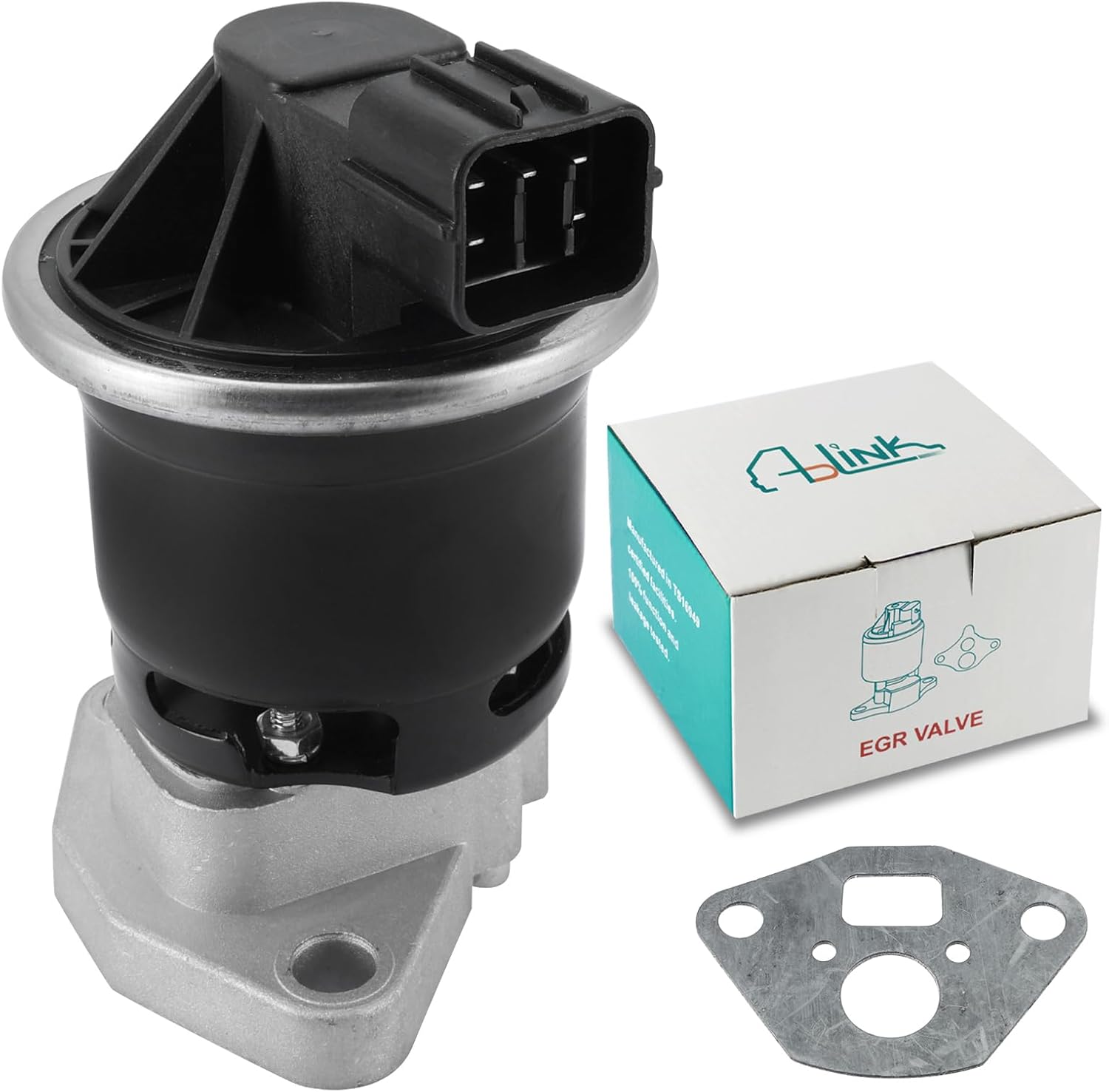
| Material Type | Stainless Steel |
|---|---|
| Inlet Connection Type | Flange |
| Connector Type | Flanged |
| Fitment | Honda Accord 2.4L L4 2003-2007 |
This AULINK EGV981 EGR valve replaces the factory unit on 2.4L four-cylinder Accords from 2003 through 2007 to reinstate proper EGR flow and resolve related drivability and emissions issues. It uses stainless-steel valve components, heavy-duty solenoids, and an alloy sensor contact aimed at durability, and the listing states each unit is function and leakage tested and includes a graphite-impregnated gasket. Typical use is straightforward: remove the failed valve, swap in the AULINK unit, and reattach vacuum/electrical connections and the provided gasket. The stainless construction and tested assembly suggest good resistance to corrosion and a long service life compared with cheaper cast or plastic alternatives. Limitations to note are that fitment is limited to the single 2.4L L4 Accord application and the product listing relies on manufacturer test claims rather than independent performance data. Installation may require basic mechanical skill and common hand tools. For someone restoring EGR operation on the specified Accord engine, this is a practical factory-replacement style option that focuses on durability and direct fitment.
Best for: Buyers who want a direct-fit, durable replacement to restore EGR function on a 2.4L Accord and prefer a tested, repair-focused part over a generic low-cost alternative.
Less Ideal for: If you need an EGR valve for a different engine, model year, or a performance-modified vehicle, this unit is not appropriate and you should seek a part matched to that application.
- Built from stainless-steel components for improved corrosion resistance
- Includes graphite-impregnated gasket to help ensure a proper seal
- Heavy-duty solenoid and alloy sensor contact for claimed durability
- Function and leakage tested before shipping
- Fitment is specific to the 2.4L L4 Accord 2003–2007 and not universal
Verdict: AULINK EGV981 is a durable, tested direct-replacement EGR valve built to restore proper EGR operation on 2003–2007 Honda Accord 2.4L four-cylinder engines.
4. AULINK EGR Exhaust Gas Recirculation Valve (18011-PAA-A00)

| Compatible part number | 18011-PAA-A00 |
|---|---|
| Material | graphite gasket, metal valve body |
| Number of ports | 2 |
| Fitment | Honda Accord 1998-2002 2.3L; Odyssey 1998 2.3L; Acura CL 1998-1999 2.3L |
This AULINK EGR valve is a direct-fit replacement for the 2.3L Honda Accord and compatible 1998–2002 models, intended to restore EGR flow and clear related diagnostic codes. Installers will use it the same way as a factory replacement: remove the old valve, swap the gasket and electrical/hoses, and bolt the assembly back in place. The unit ships with a graphite-impregnated gasket and is described as function and leakage tested at the factory. Practical benefits include straightforward fitment for the listed engines, a metal body that matches the factory appearance, and compatibility with the OEM part number 18011-PAA-A00. Reported limitations are variable durability across users and occasional fitment or movement problems noted in some reviews, so expect to verify proper sealing and operation after installation. For a budget-focused repair this part can get a problematic EGR system working again, but buyers who need long-term peace of mind may prefer a higher-end or dealer-sourced replacement.
Best for: Buyers who need an affordable replacement to clear EGR-related codes and restore engine drivability on the specified 2.3L Accord and similar vehicles and who prioritize getting the car back on the road quickly.
Less Ideal for: Shoppers who want the most durable, long-term OEM-backed option or who cannot tolerate any risk of early failure should consider dealer or premium aftermarket alternatives.
- Direct-fit for 2.3L Honda Accord and listed compatible models using part number 18011-PAA-A00
- Includes graphite-impregnated gasket and is stated to be function and leakage tested
- Metal construction matches factory replacement form and mounting points
- User reports show inconsistent longevity and some failures after a few weeks or months
Verdict: A budget-friendly direct-fit EGR valve that restores function quickly for 2.3L Honda Accord applications, making it a practical choice for cost-conscious repairs.
5. EMTMOUN EGR Valve for Honda Accord 2.4L L4 (2003–2007)

| Fitment | Honda Accord 2.4L L4 2003-2007 |
|---|---|
| Part Number | EGV981 / EM-EGR-N030 |
| OEM References | 18011RAAA00, EGR1740, 2-26640, 4F1767 |
This EMTMOUN EGR valve is a replacement part designed to restore exhaust gas recirculation on Honda Accord 2.4L four-cylinder models from 2003 to 2007. It installs in place of the factory unit and is intended to reduce combustion temperatures, lower NOx emissions, and help maintain smooth idle and drivability when the original valve fails or sticks. The listing highlights OE-equivalent manufacturing and a range of referenced part numbers for fit confirmation, which simplifies matching to older Accords. In real-world use you can expect improved engine efficiency and reduced knocking compared with a clogged or nonfunctional EGR system, and the part is compact for straightforward access during routine repair. Limitations are typical for aftermarket EGR valves: fit and long-term durability may vary by vehicle condition, and installation can require some basic tools and care to avoid vacuum or electrical connector issues. Buyers seeking a reliable, direct replacement for restoring EGR function will find this unit practical, but be prepared to verify fitment and follow proper installation procedures.
Best for: Buyers who prioritize restoring reliable, factory-quality EGR operation on a 2003–2007 Honda Accord 2.4L and want a direct-replacement part they can install or have fitted quickly.
Less Ideal for: Drivers looking for a performance modification or universal-fit component should consider other solutions; this is intended strictly as a vehicle-specific replacement for stock EGR function.
- Made to match factory specifications for direct replacement on specified Honda Accord 2.4L models
- Lists multiple OEM part numbers to simplify fit verification
- Intended to restore EGR function to reduce combustion temperatures and help engine efficiency
- Aftermarket part so long-term durability can vary compared with a known long-running original part
Verdict: A practical, factory-spec replacement EGR valve for 2003–2007 Honda Accord 2.4L owners who need a reliable restoration of proper EGR function.
Choosing the Right Honda Accord 4-Cylinder EGR Valve: Key Factors to Consider
Fitment And Connector Compatibility
Correct fitment is essential for a trouble-free replacement. An EGR valve must match the Accord 4-cylinder's mounting pattern, bolt spacing, and orientation so that the intake and exhaust ports align without stress on the plumbing or manifold. Electrical connectors or vacuum fittings must also match so you do not have to modify harnesses or hoses, which can introduce leaks or electrical faults.
A poor fit can cause exhaust leaks, vacuum loss, or misrouted hoses that change flow behavior and trigger diagnostic codes. Always verify part numbers and connector types for your specific Accord 4-cylinder to ensure plug-and-play installation.
Flow Characteristics And Valve Type
EGR valves vary by how much exhaust gas they allow back into the intake and how they modulate that flow. The correct flow profile for the Accord 4-cylinder preserves combustion stability while reducing NOx formation. Selecting a valve with flow characteristics close to factory specification helps maintain smooth idle, throttle response, and engine performance across load conditions.
Consider whether the valve is vacuum-actuated or electronically controlled. Electronic actuators can offer finer control and better integration with the engine control unit, while vacuum types are simpler and sometimes easier to diagnose. Match the valve type to the Accord 4-cylinder's original setup for predictable behavior.
Durability Against Soot And Heat
EGR valves operate in a high-heat, high-soot environment that can clog passages and impair movement. Materials and internal coatings that resist carbon buildup, corrosion-resistant housings, and robust actuator components extend service life on the Accord 4-cylinder.
Look for valves with smooth internal passages, replaceable gaskets, and designs that minimize soot traps. Durable components reduce the frequency of cleaning or replacement and support stable emissions control over time.
Seal And Gasket Quality
A reliable seal between the EGR valve and the intake or exhaust port prevents exhaust leaks that can upset air-fuel ratios and trigger fault codes. Gaskets should be made from high-temperature materials and supplied as part of the replacement where possible.
Poor gasket fit or low-grade material leads to leaks, rough idle, or failed emissions testing. For the Accord 4-cylinder, use gaskets designed for the specific flange and port geometry to ensure a lasting seal.
Actuator Response And Diagnostics
How quickly and accurately the valve opens and closes affects engine behavior. On an Accord 4-cylinder, sluggish or sticking actuators often produce hesitation, uneven idle, or fault codes. Choose valves with responsive actuators and predictable modulation that allow the engine control unit to maintain proper combustion timing and emissions control.
Also consider ease of diagnosing failures. Valves with testable electrical terminals or straightforward vacuum ports simplify troubleshooting and reduce diagnostic time during maintenance.
Serviceability And Replacement Parts
Ease of service matters because EGR valves occasionally require cleaning or gasket replacement on the Accord 4-cylinder. Valves designed for straightforward access to mounting bolts, with replaceable gaskets or rebuild kits available, make future maintenance less invasive.
Availability of compatible gaskets and hardware reduces downtime and prevents owners from resorting to makeshift seals that compromise longevity. Prioritize parts with clear documentation and accessible replacement components.
Common Symptoms That Point To The EGR Valve
Several symptoms commonly indicate EGR valve issues on the Honda Accord 4-cylinder. Rough or fluctuating idle, hesitation under light load, reduced fuel efficiency, frequent triggering of the check engine light, or a persistent exhaust smell in the cabin are all signs to inspect the valve or its passages. A specific diagnostic trouble code may also single out the EGR system, but symptoms can appear before codes set.
A careful symptom check helps you decide whether cleaning, gasket replacement, or full valve replacement is the right first step. Always confirm with basic diagnostic tests before replacing parts.
- Rough or erratic idle
- Loss of low-load performance
- Check engine light or emissions code related to EGR
- Reduced fuel economy
- Exhaust odor or increased emissions
Basic Tests You Can Do Before Replacing The Valve
Before buying a replacement, perform simple checks to isolate the EGR valve as the source of the problem. Inspect vacuum lines and electrical connectors for damage or corrosion. For vacuum-actuated valves, verify vacuum supply at the port with a hand-held pump. For electronic valves, check for power and ground at the connector and verify control signals with a suitable scanner.
If the valve can be removed easily, a visual inspection of the valve pintle and passages for heavy carbon build-up can indicate whether cleaning will restore function. These checks save time and money and ensure the replacement you choose addresses the real issue.
- Inspect vacuum hoses and electrical connectors
- Check for vacuum at the actuator port
- Scan for codes and monitor EGR control signals
- Visual check for carbon buildup in passages
EGR Valve Cleaning And Maintenance Tips
Regular maintenance can extend the life of an EGR valve on the Accord 4-cylinder. Gentle cleaning with appropriate solvents and soft brushes can remove carbon buildup in accessible ports and restore movement. Avoid aggressive scraping that could damage sealing surfaces or valve seats.
When cleaning, replace gaskets and inspect mating surfaces for warping or corrosion. If the valve shows signs of physical wear, scoring, or a seized actuator, replacement is the prudent choice rather than repeated cleaning.
- Use solvents designed for carbon removal
- Replace gaskets after disassembly
- Avoid damaging sealing surfaces
- Check actuator movement after cleaning
Installation Considerations For The Accord 4-Cylinder
Installation on the Honda Accord 4-cylinder tends to be straightforward but requires attention to torque specs and hose routing. Clean the mating surfaces thoroughly before fitting the new gasket and torque bolts to the vehicle-specified values to prevent warping or leaks. Reconnect vacuum lines or electrical connectors securely and ensure no hoses are kinked or pinched.
After installation, run the engine to operating temperature and monitor for improved idle and the absence of codes. A short road test under light load can confirm drivability improvements and ensure the EGR passages are functioning as expected.
- Clean mating surfaces and replace gaskets
- Torque bolts to spec to avoid leaks
- Verify hose and connector routing
- Warm engine and test for improved idle and drivability
When To Consider Refurbished Versus New Units
Refurbished EGR valves can be a cost-effective option if they have been properly rebuilt with new seals, tested actuators, and verified fitment for the Accord 4-cylinder. However, refurbished units vary in quality, so prioritize those with clear refurbishment documentation and a warranty or limited guarantee.
New valves eliminate uncertainty about previous wear and often include updated components or improved coatings that resist soot. Balance the lower upfront cost of refurbished parts against the longer-term reliability and peace of mind a new unit can provide.
- Verify rebuild documentation and included replacement parts
- Prefer refurbished units with tested actuators and new gaskets
- New units typically offer predictable longevity and fresh components
Still looking for the perfect fit?
Select your Honda Accord configuration to see the most relevant EGR Valves recommendations
How We Chose the Best Honda Accord 4-Cylinder EGR Valve
We focused on items that meet the specific mechanical and electrical interfaces of the Honda Accord 4-cylinder engine. Primary evaluation criteria included accurate fitment to factory mounting and connectors, correct valve flow characteristics to match stock EGR rates, and construction quality to resist heat, soot, and corrosion. We also assessed actuator response for vacuum or electronic types, gasket and seal quality, and whether replacement hardware was included.Other practical filters were availability of OE-equivalent replacement parts, documented compatibility with the Accord 4-cylinder plumbing, and manufacturer-backed materials or testing claims. We excluded units with unclear fitment specifications, ambiguous electrical or vacuum connections, or known reports of premature failure. Long-term reliability, ease of installation, and parts support were weighted heavily because they directly affect real-world performance and ownership satisfaction.
Our full evaluation process is outlined in our review methodology.
FAQ
What are the most common codes indicating an EGR problem on my Accord 4-cylinder?
Codes related to EGR flow, position, or control often indicate issues, but the specific code can vary. P0401 commonly points to insufficient EGR flow, which can be caused by a clogged passage, bad valve, or vacuum/electrical fault. Use a scanner to read live data and confirm the source.
Can I clean the EGR valve instead of replacing it?
Often cleaning restores function if the issue is carbon buildup and the valve moves freely. If the actuator is sticking or electrical faults exist, cleaning may be temporary. Inspect the valve and passages to determine if cleaning is likely to be effective.
How do I check the EGR valve location on my Accord 4-cylinder?
The EGR valve is typically mounted between the exhaust manifold and the intake tract where it can route exhaust gases back into the intake. Inspect the area around the intake plenum and the exhaust manifold for the valve body and its connector or vacuum port.
Do I need a new gasket when replacing the EGR valve?
Yes. Always install a new, high-temperature gasket when replacing the EGR valve. Reusing an old gasket risks leaks that can cause rough idle, reduced performance, or diagnostic codes.
How long does an EGR valve typically last on a Honda Accord 4-cylinder?
Lifespan varies with driving conditions and maintenance. In general, a well-made EGR valve can last many years, but vehicles with frequent short trips or heavy city driving tend to accumulate carbon faster and may need service or replacement sooner.
What is the difference between a vacuum and an electronic EGR actuator?
Vacuum-actuated valves use engine vacuum to move the valve and are mechanically simpler, while electronic actuators use a motor or solenoid controlled by the engine computer for finer modulation. The correct type for your Accord 4-cylinder should match the original system for proper control.
Final Verdict
Prioritize fitment, valve flow characteristics, and resistance to soot when choosing an EGR valve for the Honda Accord 4-cylinder. Verify connector types and gasket compatibility to avoid installation issues, and weigh the benefits of rebuilds against new units based on documentation and warranty.Focus on the root cause first by performing basic diagnostics and cleaning if appropriate. If replacement is required, selecting a valve that matches the Accord 4-cylinder's original control method and sealing geometry will deliver the most reliable outcome and restore smooth idle and emissions performance.
Explore More:
- Check out all Honda Accord parts & accessories
- Explore EGR Valves Maintenance & Repair Guides
- Explore Engine
- Browse all Auto Parts
