

Note: This article contains affiliate links. If you click on these links and make a purchase, I may earn a small commission at no extra cost to you. This helps support my research and content. Read my full affiliate disclosure here.
If your Ford Explorer Sport Trac shows vibration, clunking, or driveline shudder, replacing the driveshaft or serviceable components can restore smooth operation and confidence behind the wheel. The right driveshaft solution improves alignment with the differential, reduces vibration at cruising speeds, and addresses recurring u-joint wear that commonly affects the Sport Trac.This guide presents our seven shortlisted driveshaft options for the Sport Trac, chosen for fitment accuracy, balance, and durability. We also explain the evaluation criteria and common symptoms to watch for so you can pick the right replacement or rebuild path with confidence.
Looking for other parts? See all Ford Explorer parts & accessories.
Top Picks at a Glance
| Best Overall The best all-around choice for most situations | SCITOO Rear Steel Driveshaft Assembly for Ford Explorer Sport Trac (2007–2010) |  |
| Best Quality Built to a higher standard if you want something more solid | A-Premium Rear Driveshaft Assembly for Ford Explorer Sport Trac (Rear, 4WD) |  |
| Best Value The sweet spot between price and what you get | SCITOO Rear Steel Driveshaft Assembly for Ford Explorer Sport Trac (2007–2010) 4WD | |
| Best Budget The cheapest option that still gets the job done reliably | Youxmoto Rear Driveshaft Assembly for Ford Explorer Sport Trac (2007–2010) |  |
| Highest Rated A top-rated pick with lots of positive feedback | Amzdrive Rear Drive Shaft Assembly for Ford Explorer Sport Trac (2007–2010) 4WD |  |
| Most Popular A crowd favorite that many people choose with confidence | PartsFlow 64.29" Rear Drive Shaft Assembly for 2007–2010 Ford Explorer Sport Trac 4WD |  |
1. SCITOO Rear Steel Driveshaft Assembly for Ford Explorer Sport Trac (2007–2010)

| Compatible vehicles | Ford Explorer Sport Trac 2007-2010 (4WD) |
|---|---|
| Location | Rear |
| Material | Steel |
| Total length | 65.375" |
This SCITOO rear driveshaft assembly replaces the factory rear prop shaft on 4WD Ford Explorer Sport Trac models from 2007 to 2010. It is a one-piece steel shaft engineered to transmit engine torque to the rear differential and includes the fittings needed for direct replacement of the OEM-style unit. In use the driveshaft restores drivetrain smoothness and eliminates vibration caused by a worn or bent shaft, and its stated high-strength construction and tight manufacturing tolerances aim to keep balance at highway speeds. Buyers will appreciate the direct-fit focus that simplifies swap-in installation and avoids modification. Limitations include the single-material steel construction, which is heavier than some aftermarket lightweight options, and the listing does not detail included hardware or a balance certificate, so professional installation and pre-fit verification are recommended for best results.
Best for: A practical buyer who wants a direct-fit, durable replacement to restore factory driveline function on a 2007–2010 Sport Trac and prefers a straightforward swap over aftermarket performance upgrades.
Less Ideal for: Drivers seeking a lighter, performance-oriented driveshaft for weight savings or high-performance builds should consider specialty alloy or carbon options instead.
- Direct-fit replacement specified for Ford Explorer Sport Trac 2007–2010 4WD rear location
- Steel construction designed for high strength and durability
- Manufactured with precision to maintain balance and stable power transmission
- Restores drivetrain smoothness and reduces vibration from a damaged shaft
- Heavier steel design compared with lightweight alloy or carbon-fiber aftermarket shafts
- Product listing does not specify included hardware or provide a balance certificate
Verdict: Choose this driveshaft if you want a durable, direct-fit steel replacement to reliably restore factory driveline performance on a 2007–2010 Ford Explorer Sport Trac.
2. A-Premium Rear Driveshaft Assembly for Ford Explorer Sport Trac (Rear, 4WD)

| Auto Part Position | Rear |
|---|---|
| Automotive Fit Type | Vehicle Specific Fit |
| Material Type | Alloy Steel |
| Included Components | 1 x Rear Driveshaft Assembly |
This complete rear driveshaft from A-Premium replaces the factory rear prop shaft on 2007–2010 Ford Explorer Sport Trac 4WD Crew Cab pickups. It is a vehicle-specific replacement that transfers torque from the transfer case to the rear differential and is intended for direct fitment to the listed Sport Trac models. Constructed from alloy steel, the assembly aims to restore smooth, consistent power delivery and reduce driveline vibration compared with a worn original shaft. Notable details include designed fitment to factory reference numbers and packaged as a full rear assembly so you do not need to rebuild universal joints separately. Practical benefits are straightforward installation when matching the 4WD Sport Trac application and a one-year part guarantee for the cost of the item. Important limitations are that it fits 4WD only and mounting bolts are not included, so plan for fasteners and possible alignment or balancing if your vehicle had prior driveline issues.
Best for: Buyers who want a ready-to-install replacement that restores driveline performance on a 4WD Sport Trac and prioritize direct-fit reliability over custom fabrication.
Less Ideal for: Do not choose this if your Sport Trac is rear-wheel-drive, if you need mounting hardware included, or if you plan custom driveline modifications.
- Vehicle-specific design for Ford Explorer Sport Trac 2007–2010 4WD to simplify fitment
- Complete rear assembly so universal joints and yokes are pre-installed
- Alloy steel construction for durable, corrosion-resistant strength
- Matches factory reference numbers for straightforward replacement
- Mounting bolts are not included with the assembly
Verdict: A practical, vehicle-specific rear driveshaft replacement that restores smooth power delivery for 4WD Ford Explorer Sport Trac owners needing a direct-fit swap.
3. SCITOO Rear Steel Driveshaft Assembly for Ford Explorer Sport Trac (2007–2010) 4WD

| Fitment | Ford Explorer Sport Trac 2007-2010 4WD Crew Cab |
|---|---|
| Position | Rear |
| Compatible engines | V6 4.0L / V8 4.6L |
| Shaft diameter | 2.5 inch |
This SCITOO rear driveshaft is a direct-fit replacement intended for 2007–2010 Ford Explorer Sport Trac 4WD Crew Cab pickups with the 4.0L V6 or 4.6L V8. It arrives as a complete painted steel assembly sized to the factory compressed and extended lengths so installation follows the factory mounting points. In use it transmits torque from the transmission to the rear differential and is built with attention to dimensional precision and material strength to minimize vibration and improve driveline stability. The unit includes factory-style joint locations and a 2.5 inch shaft diameter designed to handle stock driveline loads. Practical benefits include straightforward swap-in replacement, reduced driveline noise when properly installed, and a painted finish for basic corrosion resistance. Limitations are that it is for 4WD Sport Trac models only and does not fit rear-wheel-drive variants, and it is a direct replacement rather than an upgraded high-performance or heavy-duty shaft for towing beyond stock ratings.
Best for: Buyers who want a practical, straightforward replacement driveshaft that restores factory drivability and minimizes installation time for a 2007–2010 Sport Trac 4WD.
Less Ideal for: Drivers who need a heavy-duty or performance driveshaft for increased towing, off-road modification, or power beyond stock specifications should consider upgraded specialty shafts.
- Direct-fit lengths and mounting points for 2007–2010 Explorer Sport Trac 4WD make installation simple
- Painted steel construction offers basic corrosion protection and factory-style durability
- Designed with precise geometric tolerances to reduce vibration and improve driveline balance
- Complete assembly replaces the entire rear shaft including joint areas so no separate parts are required
- Made as a factory-style replacement so it is not designed for higher-than-stock towing or performance upgrades
Verdict: A cost-conscious, factory-style rear driveshaft replacement that restores proper driveline function for 2007–2010 Explorer Sport Trac 4WDs.
4. Youxmoto Rear Driveshaft Assembly for Ford Explorer Sport Trac (2007–2010)

| Position | Rear |
|---|---|
| Compatible Models | Ford Explorer Sport Trac 2007-2010, 4.0L/4.6L, 4WD |
| Reference Numbers | 936-896, 7A2Z-4R602-(D/G/K/N) |
| Condition | 100% New, pre-balanced |
This Youxmoto rear driveshaft replaces the rear prop shaft on 4WD Ford Explorer Sport Trac 2007–2010 with 4.0L or 4.6L engines. It is supplied as a complete, pre-balanced assembly intended to install like a factory replacement and is treated with a corrosion-resistant coating on yokes and u-joints. Typical use is a straightforward swap for a worn, damaged, or noisy driveshaft where you need a like-for-like replacement for the crew cab pickup models listed. The pre-balance reduces vibration risk and the premium coating helps delay rust in exposed underbody conditions. Because it is a full assembly, installation restores driveline geometry without sourcing separate u-joints or slip yokes. Limitations are that fitment is strictly for the specified Sport Trac 4WD models and the listing gives limited brand history and warranty details, so buyers who want extended coverage or dealer backing should factor that in.
Best for: Buyers who need an affordable, ready-to-install rear driveshaft that matches factory dimensions for a 2007–2010 Sport Trac 4WD and want to fix driveline vibration or damage without extra parts sourcing.
Less Ideal for: Shoppers seeking dealer-supported parts, extended warranty coverage, or a universal/custom driveshaft solution should consider alternative options.
- Factory-dimension replacement for direct fit on specified Sport Trac 4WD models
- Supplied pre-balanced to reduce vibration after install
- Premium coating on yokes and u-joints to resist corrosion
- Comes as a complete assembly so no need to source separate components
- Fitment limited to 4WD Ford Explorer Sport Trac 2007–2010 crew cab configurations
Verdict: A budget-friendly, pre-balanced rear driveshaft that installs like a factory replacement for 4WD Ford Explorer Sport Trac 2007–2010.
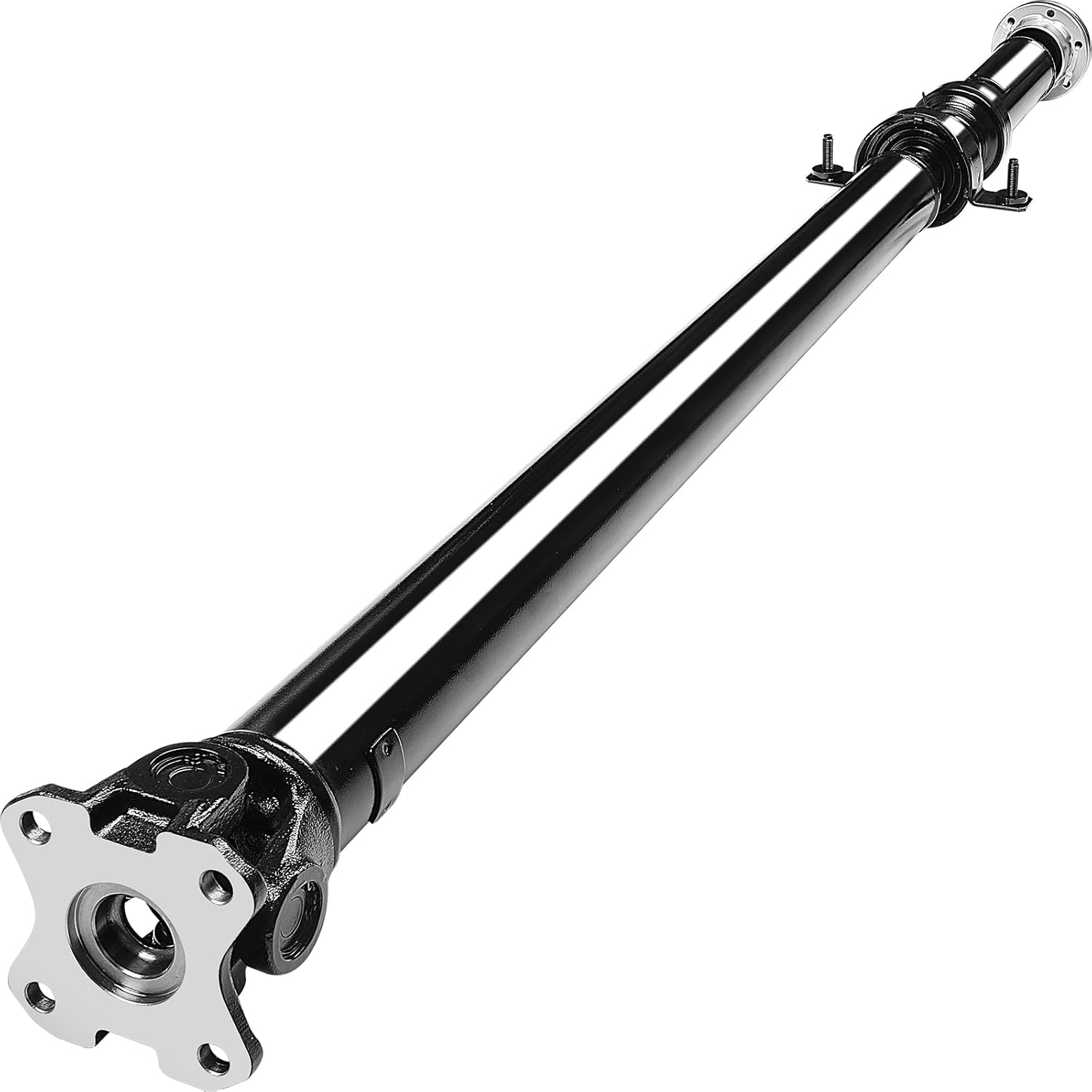
5. Amzdrive Rear Drive Shaft Assembly for Ford Explorer Sport Trac (2007–2010) 4WD
| Position | Rear |
|---|---|
| Fitment years | 2007-2010 |
| Engine fit | 4.0L V6 / 4.6L V8 |
| Installation length | 64.17in – 67.2in |
This Amzdrive rear driveshaft is a complete prop shaft assembly intended to replace the factory rear driveshaft on 2007–2010 Ford Explorer Sport Trac crew cab 4WD models. It arrives greased and balanced, with new universal joints and a sliding yoke to restore drivetrain smoothness and reduce vibration and noise compared with a worn shaft. Constructed from high-strength steel with a corrosion-resistant baked-on coating, the shaft is tested for torsional and wear durability and is designed to meet factory-spec fitment for the listed reference numbers. Installation requires the original mounting bolts because they are not included, and you should verify fit using VIN or the listed vehicle years before ordering. For a reliability-first repair this shaft returns driveline stability and longer service life, but expect a professional or experienced DIY installation to ensure proper alignment and torque of fasteners.
Best for: Buyers who want a durable, factory-quality rear driveshaft to restore driveline stability and minimize vibration after a failed or worn shaft on a Sport Trac 4WD.
Less Ideal for: If you are replacing multiple drivetrain components or need hardware included for a bolt-on swap, consider a kit that supplies fasteners and alignment services from a shop.
- Direct-fit replacement for 2007–2010 Ford Explorer Sport Trac 4WD rear driveshafts matching listed reference numbers
- Greased, balanced assembly with new universal joints and sliding yoke to reduce vibration and noise
- High-strength steel construction with baked-on coating for corrosion resistance
- Manufacturer testing documented for torsional and wear durability
- Mounting bolts are not included so additional fasteners may be required for installation
Verdict: A tested, factory-fit replacement driveshaft built for long-term reliability on 2007–2010 Ford Explorer Sport Trac 4WD models.
6. PartsFlow 64.29" Rear Drive Shaft Assembly for 2007–2010 Ford Explorer Sport Trac 4WD

| Shaft Material | Steel |
|---|---|
| Shaft Length | 64.29 inch |
| Shaft Diameter | 2.5 inch |
| Shaft Wall Thickness | 0.083 inch |
| Fitment | 2007–2010 Ford Explorer Sport Trac rear, 4WD only |
This PartsFlow rear driveshaft is a complete rear-side assembly intended to replace the factory shaft on 2007–2010 Ford Explorer Sport Trac 4WDs. It restores driveline connectivity and returns serviceability to U-joints that on some originals are permanently staked. Constructed from steel with a corrosion-resistant coating and shipped with lubricating grease, the shaft is sized to match the original 64.29 inch length and includes the recommended universal joint mounting points for a direct replacement swap. Installation is typical for a driveshaft swap and should be straightforward for a mechanic or experienced DIYer with basic tools. The product is presented as a factory-spec aftermarket replacement rather than a performance upgrade, so expect OEM-like fit and function rather than added strength or refinement. A one-year warranty is offered, but buyers who need heavy-duty or performance improvements should look for reinforced aftermarket options instead.
Best for: Buyers who prioritize a straightforward, reliable replacement that restores factory fit, function, and serviceability on a 2007–2010 Explorer Sport Trac 4WD will appreciate this driveshaft.
Less Ideal for: Drivers planning to use the vehicle for high-torque towing, off-road abuse, or who want an uprated performance driveshaft should consider heavier-duty aftermarket assemblies instead.
- Direct-fit replacement for 2007–2010 Ford Explorer Sport Trac 4WD rear position
- Serviceable U-joint design simplifies future maintenance compared with permanently staked shafts
- Steel construction with coating and supplied grease for corrosion resistance and immediate installation
- Sold as a complete assembly so no need to source separate universal joints or yokes
- Designed as a factory-spec aftermarket part and not intended as a performance- or heavy-duty upgrade
Verdict: Choose this PartsFlow rear driveshaft when you want a direct, serviceable factory-style replacement for a 2007–2010 Ford Explorer Sport Trac 4WD.
Choosing the Right Ford Explorer Sport Trac Driveshaft: Key Factors to Consider
Fitment and Flange Compatibility
Correct fitment is the foundational requirement for a driveshaft on the Ford Explorer Sport Trac. The driveshaft must match the vehicle's flange bolt pattern, spline count, and length so the yokes seat properly and the differential and transfer case retain their designed alignment.
An improperly fitted shaft can place undue load on bearings and u-joints and can change driveline angles, which increases wear and can create vibration. Always check spline engagement depth and the flange seating surface when evaluating a replacement to ensure a secure, repeatable connection.
Balance and Runout
Driveshaft balance directly affects vibration and long-term drivetrain health. Even small amounts of unbalance translate to perceptible vibration at specific road speeds on the Sport Trac because of its drivetrain geometry.
Look for shafts that are dynamically balanced or have documented runout tolerances. Acceptable concentricity and minimal runout reduce stress on the differential, bearings, and transmission output, and they extend the life of u-joints and center bearings.
U-Joint Type and Serviceability
Universal joints are wear items that determine how serviceable the driveshaft will be over its life. Greasable u-joints allow periodic lubrication to extend service intervals, while sealed joints reduce maintenance but can require full replacement when they fail.
Consider whether the driveshaft design allows easy replacement of u-joints or the center support bearing without changing the entire shaft assembly. Availability of OEM-equivalent replacement parts matters for long-term ownership and cost-effective repairs.
Material and Corrosion Protection
Material choice affects both durability and weight. Steel shafts are common for strength and cost-effectiveness, while higher-end options may use lighter alloys or composite elements for reduced rotational mass. For the Sport Trac, robustness against impacts and fatigue is important for towing or rough-road use.
Corrosion protection such as coatings, plated hardware, and sealed welds prolong life in wet or salted-road environments. Check for protective finishes on splines, yokes, and the shaft body to prevent early failure from rust or pitting.
Center Support and Phasing
If the Sport Trac application uses a two-piece driveshaft with a center support bearing, the quality and alignment of that support are critical. A worn or misaligned center bearing causes vibration and places axial loads on the transmission and differential.
Phasing of yokes is also important to prevent torque-induced vibration and to maintain smooth torque transfer. Ensure the replacement option matches the original phasing or provides guidance for correct installation to avoid introducing driveline shake.
Warranty and Documentation
Clear warranty terms and installation documentation indicate a manufacturer that stands behind their driveshaft. A warranty covering defects in materials and workmanship helps mitigate the risk of premature failure.
Documentation should include fitment notes, torque specs for flange bolts, and any special installation steps such as marking phasing or recommended balancing checks. These resources simplify installation and reduce the chance of post-install issues.
Common Driveshaft Symptoms on the Sport Trac
Knowing the typical symptoms helps you decide whether a driveshaft replacement or targeted repair is necessary. Vibration felt through the floor or steering at certain speeds is a hallmark sign of imbalance, worn u-joints, or incorrect alignment. The vibration often intensifies with speed and may change with load or vehicle attitude.
Clunking or a sharp noise when shifting from drive to reverse or when accelerating can indicate excessive play in u-joints or a failing slip spline. A rhythmic knocking that varies with vehicle speed often points to a failing u-joint or a bent shaft.
Unusual noises during acceleration or deceleration, such as whining or growling near the rear, can also come from a damaged center support bearing or contaminated bearing surfaces. Visual inspection for torn boots, grease leakage, rust at splines, or visible bends provides clues before removing the shaft.
- Vibration at steady highway speed
- Clunk when shifting or taking off
- Rhythmic knocking tied to wheel speed
- Grease leaks or torn boots at joints
- Visible rust or dents on the shaft tube
Repair Vs Replace: Making the Right Call
Deciding between repairing the existing driveshaft and installing a new or remanufactured unit depends on the extent of damage and the availability of serviceable components. If the issue is limited to worn u-joints or a failing center bearing, replacing those components can restore function at lower cost.
However, a bent shaft, severe corrosion, or damage to welded areas generally warrants replacement. A remanufactured or new driveshaft brings documented balance and warranty coverage, which can be important if the vehicle carries heavy loads or is used for towing.
- Repair when damage is localized and parts are serviceable
- Replace when the shaft is bent, heavily corroded, or structurally compromised
- Consider replacement for chronic vibration after repairs
Installation Tips to Avoid Post-Install Vibration
Proper installation practices prevent many common post-install issues. Start by ensuring flange bolt torque follows specification and that mating surfaces are clean and free of burrs. Torque sequence and correct tightening values are essential to maintain flange alignment.
Mark and maintain yoke phasing during removal so the replacement can be installed in the same orientation. If the shaft was balanced with a specific phasing, altering it can introduce vibration. After installation, road-test at varied speeds to verify vibration resolution and recheck flange torque after initial mileage.
- Clean mating surfaces and torque bolts to spec
- Maintain yoke phasing from the original shaft
- Test drive at different speeds and re-torque hardware
Service Parts: U-Joints, Splines, and Support Bearings
Understanding the replaceable parts can save time and money. Greasable u-joints let you refresh lubrication at intervals, while sealed joints require replacement when worn. Inspect splines for wear patterns; excessive play at the slip spline can cause driveline lash and noise.
Center support bearings should spin freely without roughness. Replace any bearing that shows play or noise. When ordering service parts, confirm spline count and diameter, bearing inner and outer dimensions, and flange bolt pattern to ensure correct fitment for the Sport Trac.
- Choose greasable u-joints for long-term serviceability
- Inspect slip spline for play and corrosion
- Measure center bearing dimensions before ordering replacement
Maintenance Practices That Extend Driveshaft Life
Regular inspection and prompt attention to early symptoms prevent larger failures. Grease greasable u-joints at recommended intervals, and keep an eye out for torn boots or leaking seals that let contaminants in. Address minor vibration early to avoid cascading wear on other driveline components.
Avoid repeated hard launches or abrupt torque spikes that stress the driveshaft and joints, especially if the vehicle is used for towing. If you frequently carry heavy loads, consider more frequent inspections of u-joints, splines, and the center support bearing.
- Inspect joints and boots every oil change or at least twice yearly
- Grease serviceable joints per manufacturer interval
- Avoid repeated hard launches and check after towing events
Still looking for the perfect fit?
Select your Ford Explorer configuration to see the most relevant Driveshafts recommendations
How We Chose the Best Ford Explorer Sport Trac Driveshaft
We focused on direct-fit and properly balanced driveshaft options that suit the Ford Explorer Sport Trac drivetrain layout and typical owner usage. Primary evaluation criteria included accurate fitment to the Sport Trac flange and spline dimensions, factory-compatible yokes and flange patterns, and attention to critical tolerances that affect vibration.We also weighed balance quality using dynamic or static balancing practices, since imbalance is a leading cause of driveline vibration. Serviceability was another filter: designs that allow for replacement of u-joints, center support bearings, or phased yokes scored higher. Materials and construction were considered with emphasis on fatigue resistance and corrosion protection appropriate for regional road conditions.Excluded from consideration were generic universal-fit shafts without Sport Trac-specific mounting patterns, and rebuilt cores with unknown balance history. We prioritized options that meet or exceed OEM spec for runout and concentricity, and that offer clear documentation for fitment and installation.
Our full evaluation process is outlined in our review methodology.
FAQ
How can I tell if the driveshaft or a u-joint is causing vibration?
Vibration that changes with vehicle speed and is felt through the floor or seat often indicates driveshaft imbalance or a failing u-joint. A clicking or clunk when shifting or accelerating usually points to a worn u-joint. Visual inspection for play in the joint or torn boots helps confirm the cause.
Is it okay to replace only the u-joints instead of the whole driveshaft?
Often it is acceptable to replace worn u-joints when the shaft is otherwise straight and properly balanced. If the shaft is bent, heavily corroded, or has unknown balance history, replacing the entire shaft is the safer long-term option.
Will a new driveshaft fix vibration immediately after installation?
A properly balanced and correctly fitted driveshaft usually resolves vibration related to imbalance or joint wear. However, improper phasing, loose flange bolts, or other driveline issues can still cause vibration, so follow installation best practices and recheck torque after initial driving.
When should the center support bearing be replaced on a two-piece shaft?
Replace the center support bearing if you hear growling, feel vibration near the midpoint of the vehicle, or detect play in the bearing during inspection. Bearings with rough rotation or visible wear should be replaced rather than reused.
Can corrosion or minor dents on the shaft be repaired?
Minor surface rust can be cleaned and protected, but dents that cause deformation of the tube or compromised welds are not reliably repairable. Structural damage or dents that affect concentricity usually require shaft replacement to restore proper balance.
How important is phasing when installing a replacement driveshaft?
Phasing is important to maintain smooth torque transfer and avoid torque-induced vibration. Installing the shaft with incorrect phasing can introduce driveline shake even if the shaft is otherwise balanced and properly fitted.
Final Verdict
When choosing a driveshaft for the Ford Explorer Sport Trac, prioritize correct fitment, proper balancing, and serviceable joints. These factors drive the difference between a temporary fix and a durable repair that restores smooth operation.Balance quality and correct phasing are the most common determinants of vibration-free performance, while greasable u-joints and corrosion protection improve long-term ownership. Use the symptom checklist and installation tips above to decide between repair and replacement and to ensure the chosen solution performs reliably.
Explore More:
- Check out all Ford Explorer parts & accessories
- Explore Driveshafts Maintenance & Repair Guides
- Explore Transmission & Drivetrain
- Browse all Auto Parts
