

Note: This article contains affiliate links. If you click on these links and make a purchase, I may earn a small commission at no extra cost to you. This helps support my research and content. Read my full affiliate disclosure here.
If your 2002-2006 Honda CR-V is showing vibration, clunking, or uneven acceleration, the driveshaft is a likely place to inspect. Replacing this component matters because a correctly matched driveshaft restores smooth power transfer, protects the transmission and differential, and prevents secondary damage to related driveline parts.This guide presents six shortlisted driveshaft options chosen for the 2002-2006 Honda CR-V. It explains the evaluation criteria you should consider, highlights common symptoms that indicate replacement, and outlines practical installation and maintenance notes to help you pick the right driveshaft for your needs.
Looking for other parts? See all Honda CR-V parts & accessories.
Top Picks at a Glance
| Best Overall The best all-around choice for most situations | PartsFlow Rear Driveshaft Assembly for 2002–2006 Honda CR-V |  |
| Best Value The sweet spot between price and what you get | ECCPP Rear Drive Shaft Propeller Shaft Assembly for Honda CR-V 2002–2006 AWD/4WD |  |
| Best Budget The cheapest option that still gets the job done reliably | AutoForever Rear Drive Shaft Assembly for Hummer H3 (Front/Rear fitments listed) |  |
| Highest Rated A top-rated pick with lots of positive feedback | Amzdrive Rear Driveshaft Assembly for Honda CR-V 2002–2006 L4 2.4L 4WD |  |
| Most Popular A crowd favorite that many people choose with confidence | BDFHYK Rear Drive Shaft Assembly for 2002–2006 Honda CR-V 2.4L |  |
1. PartsFlow Rear Driveshaft Assembly for 2002–2006 Honda CR-V

| Fitment | 2002,2003,2004,2005,2006 Honda CR-V |
|---|---|
| Shaft Material | Steel |
| Installation Position | Rear Side |
| Manufacturer Part Number | 40100-S9A-E01, 936-001, 65-4000, 40100S9AE01 |
This PartsFlow rear driveshaft assembly is a direct-fit aftermarket replacement for 2002–2006 Honda CR-V rear driveline applications. It ships as a complete rear drive shaft kit with steel construction, coated finish, and pre-greased universal joints to simplify installation. In use it restores driveline connection and eliminates vibration, clunking, or looseness caused by worn bearings and U-joints. The unit is intended for professional or competent DIY install since no instructions are included, but it arrives ready to bolt in and is advertised as tested for key components. Practical benefits include a full-assembly replacement that removes the need to press in separate U-joints and a factory-style fitment for the specified CR-V years. Limitations are typical of aftermarket assemblies: fit and finish can vary compared with factory parts and professional installation is recommended to ensure correct alignment and balance. Buyers should also verify the listed part numbers match their vehicle before ordering.
Best for: Buyers seeking a balanced, ready-to-install replacement that restores rear driveline function on a 2002–2006 CR-V and who prefer a complete assembly over sourcing individual parts.
Less Ideal for: If you want an exact factory-original part or require documented installation guidance with the part, consider sourcing a factory-quality unit or having a shop handle the replacement end-to-end.
- Complete rear driveshaft kit supplied as a full assembly for easier replacement
- Steel shaft with protective coating aimed to resist corrosion
- Pre-lubricated universal joints reduce initial maintenance and simplify installation
- No installation instructions included so professional installation is recommended
Verdict: A convenient full rear driveshaft assembly that lets CR-V owners quickly replace a worn prop shaft and restore smooth driveline operation.
2. ECCPP Rear Drive Shaft Propeller Shaft Assembly for Honda CR-V 2002–2006 AWD/4WD
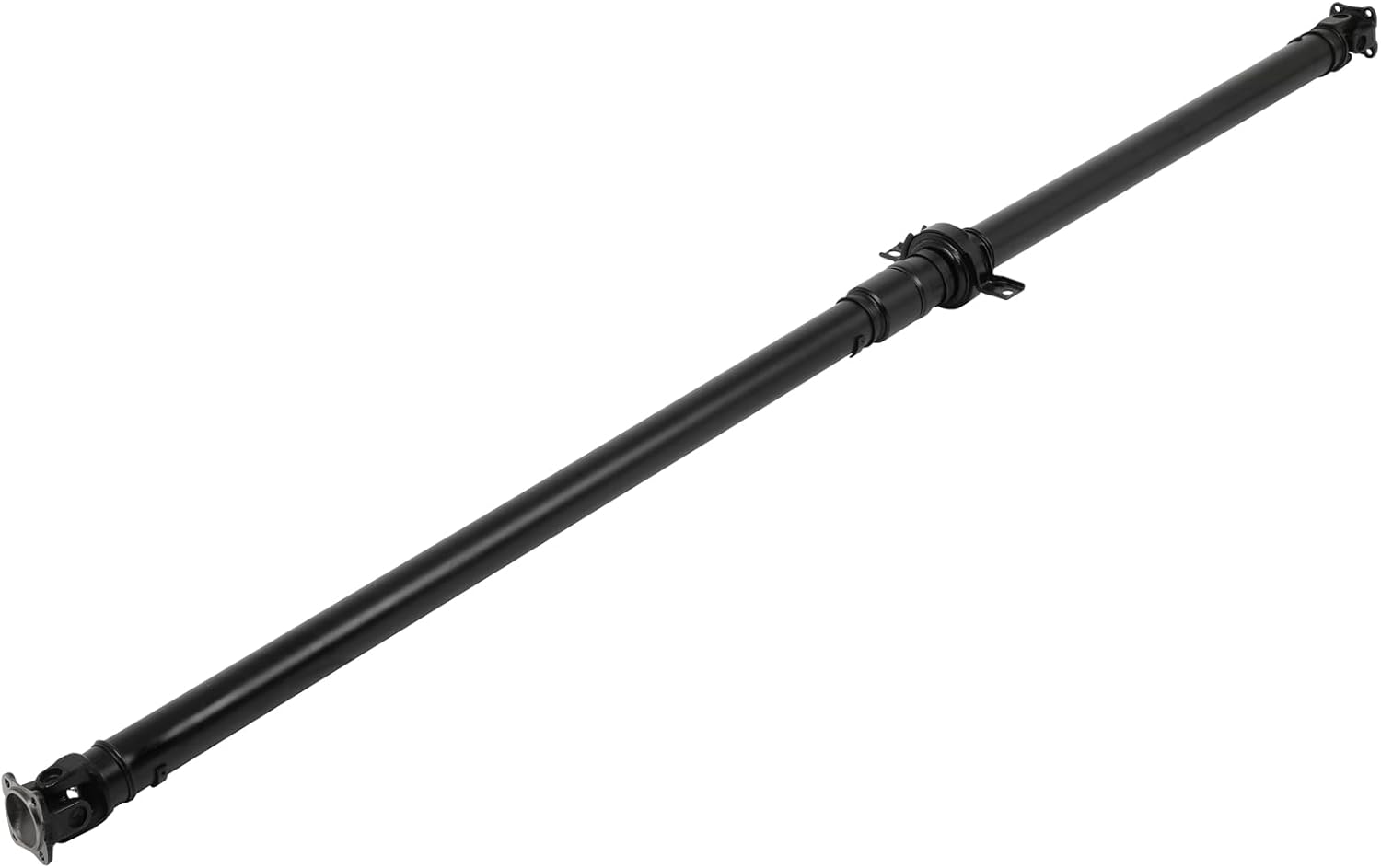
| Vehicle fitment | Honda CR-V 2002–2006 AWD/4WD |
|---|---|
| Position | Rear side |
| Shaft material | Steel |
| Reference numbers | 40100-S9A-E01, 65-4000, 40100S9AE01 |
| Exterior | Coated & Polished |
This ECCPP rear drive shaft is a full propeller shaft assembly made to replace the factory unit on 2002–2006 Honda CR-V AWD and 4WD models. It arrives as a single assembled shaft with universal joints and is produced from steel with a coated and polished finish to resist corrosion. The listing says each unit is dynamically balanced during production, which helps prevent high-speed vibration when properly installed. Typical use is a direct swap for a worn or damaged rear driveshaft; installation requires basic hand tools but correct flange alignment and torque are important to avoid driveline vibration. ECCPP includes OEM reference numbers so you can confirm fitment before ordering, and the part is intended to match factory dimensions for straightforward replacement. Limitations: successful performance depends on correct installation and complementary drivetrain components like center support bearings and axle U-joints; improper installation or unrelated worn parts can still cause vibration after replacement.
Best for: Buyers who want a practical, factory-style replacement to restore driveline function on a 2002–2006 Honda CR-V and prioritize straightforward fitment and long-term use.
Less Ideal for: Do not choose this if you need a performance-upgraded or custom-length driveshaft; this is not intended for modified suspension or drivetrain builds.
- Built to original equipment dimensions for direct fit on specified CR-V years.
- Dynamically balanced at the factory to reduce high-speed vibration.
- Steel construction with coated and polished exterior for durability and corrosion resistance.
- Proper performance requires correct alignment and torque during installation; DIY mistakes can cause vibration.
Verdict: A factory-dimension, pre-balanced steel replacement driveshaft built to restore smooth, reliable rear driveline performance on 2002–2006 Honda CR-V AWD/4WD models.
3. AutoForever Rear Drive Shaft Assembly for Hummer H3 (Front/Rear fitments listed)

| Manufacturer | AutoForever |
|---|---|
| Model | Front Drive Shaft Prop Propeller Shaft Driveshaft |
| Item Weight | 28.7 pounds |
| Exterior | Painted |
| Manufacturer Part Number | AF-Driveshaft-08 |
This AutoForever driveshaft assembly is a direct-replacement propeller shaft intended to restore power transfer on compatible 4WD Hummer H3/H3T models. It arrives as a painted, preassembled unit meant to bolt in where a worn or damaged shaft is removed. Typical use is straightforward: replace a failed driveshaft to remove vibration, clunking, or driveline looseness and to return smooth torque delivery to the axles. The listing highlights robust construction and a finish intended to resist corrosion, and the assembled unit avoids the need to rebuild joints on the vehicle. Practical benefits include faster installation compared with sourcing individual components and a full assembly that should match factory mounting points referenced by the listed part numbers. Limitations are that fitment is presented for Hummer H3/H3T models only, so buyers must confirm the exact reference numbers match their vehicle; the product information is broad and does not include detailed materials, torque specs, or a stated warranty in the listing.
Best for: Buyers looking to replace a failed propeller shaft on a compatible 4WD SUV who prioritize a ready-to-install assembly that minimizes shop time and parts sourcing.
Less Ideal for: People who need a driveshaft specifically for a 2002–2006 Honda CR-V or other non-Hummer vehicles should look for units listed expressly for that model instead.
- Supplied as a full, preassembled driveshaft for quicker replacement
- Painted exterior to help resist surface corrosion
- Lists multiple factory reference numbers to aid fitment matching
- Engineered for heavy-duty performance suitable for 4WD duty
- Fitment details focus on Hummer H3/H3T and are not universal across other vehicles
Verdict: Choose this preassembled driveshaft if you need a ready-to-install replacement for a compatible Hummer H3/H3T and want a robust unit that reduces installation time.
4. Amzdrive Rear Driveshaft Assembly for Honda CR-V 2002–2006 L4 2.4L 4WD

| Fitment | Honda CR-V 2002–2006 L4 2.4L 4WD |
|---|---|
| Position | Rear |
| Reference numbers | 40100S9AE01, 40100S9AJ01, 40100SCAA01 |
| Pre-greased | Yes |
This Amzdrive rear driveshaft is a direct-fit replacement for 2002–2006 Honda CR-V L4 2.4L 4WD rear prop shafts. Built from high-strength steel with a baked-on protective coating, the assembly arrives pre-greased and balanced to reduce vibration and restore smooth driveline power delivery. Typical use is a like-for-like swap when the original shaft, carrier bearing, or universal joints wear out and cause noise or shudder. Notable features include new universal joints and a sliding yoke installed with high-temperature grease plus factory-style balance pieces at each end. In practice that means easier installation, quieter operation, and longer corrosion resistance compared with an uncoated shaft. Limitations: the part is specific to the listed CR-V 4WD application only and includes the full assembly rather than an individual carrier bearing replacement. Buyers should confirm fitment against the reference numbers and vehicle configuration before ordering. For owners seeking a maintenance-free replacement that aims to match factory behavior, this is a practical option.
Best for: Buyers who prioritize a durable, maintenance-free replacement that restores factory driveline smoothness and reduces vibration in older CR-V 4WDs.
Less Ideal for: If you only need a single small part or a carrier bearing, this full-assembly replacement is more than required and a component-level repair would be more economical.
- Direct-fit design for 2002–2006 CR-V 2.4L 4WD to simplify installation
- High-strength steel construction with baked-on coating for corrosion resistance
- Pre-greased universal joints and balanced assembly to reduce vibration and driveline noise
- Includes new sliding yoke and U-joints so no separate joint replacement is required
- Replaces the entire shaft so you cannot buy only a single worn component such as just the carrier bearing
Verdict: Choose this driveshaft if you want a factory-style, corrosion-resistant rear assembly that restores smooth, reliable driveline performance on a 2002–2006 CR-V 4WD.
5. BDFHYK Rear Drive Shaft Assembly for 2002–2006 Honda CR-V 2.4L

| Shaft Position | Rear |
|---|---|
| Material | Steel |
| Shaft Length | 80.9 Inch |
| Shaft Diameter | 2.2 Inch |
This BDFHYK rear drive shaft is a direct replacement intended for 2002–2006 Honda CR-V 2.4L models. It arrives as a complete rear shaft built from precision forged steel with high-strength alloy joints and is dynamically balanced before shipping to reduce vibration. In practical use it replaces the factory rear driveshaft to restore smooth power delivery to the rear of the drivetrain, which helps remove vibration, clunking, and driveline judder caused by a worn shaft or bad joints. Notable features include factory-style construction, pre-balance to minimize installation debugging, and explicit fitment to CR-V 2.4L model years. Limitations are that fitment is specific to the listed model years and engine; buyers should confirm part numbers and vehicle configuration before ordering because shafts are dimension-sensitive and the listing references several related part numbers. Installation requires typical underbody access and should be done with proper torque and alignment to keep the balancing effective.
Best for: A buyer who wants a factory-style replacement to stop driveline vibration and restore smooth rear power transfer on a 2002–2006 CR-V 2.4L and who values products with documented balance and material construction.
Less Ideal for: Do not choose this if your vehicle is a different year, engine, or has been heavily modified; also avoid if you prefer a custom or performance driveshaft solution rather than a direct replacement.
- Built from precision forged steel and high-strength alloy joints for durability under torque
- Dynamically balanced at the factory to reduce vibration after installation
- Sold as a complete rear drive shaft assembly so no separate U-joints or carrier pieces are needed
- Designed to match common replacement part numbers for straightforward fitment to 2002–2006 CR-V 2.4L
- Fitment is specific to the listed CR-V model years and engine so it will not work for other configurations without verification
Verdict: A factory-style, dynamically balanced rear driveshaft built to replace worn units and reduce vibration on 2002–2006 Honda CR-V 2.4L models.
Choosing the Right 2002-2006 Honda CR-V Driveshaft: Key Factors to Consider
Exact Fit and Spline Compatibility
Driveshaft fit starts with matching the transmission and differential splines and flange dimensions for the 2002-2006 Honda CR-V. An accurate spline count and correct pilot diameter prevent misalignment and reduce the risk of premature wear on the transmission input and differential side. When a driveshaft uses adapters or requires modification, it increases installation time and can introduce weak points.
For this vehicle, choosing a driveshaft that lists direct fitment avoids trial-and-error adjustments. If exact fit information is unavailable, verify measurements against the vehicle's factory service manual or the failed component before purchasing. Proper fit reduces installation torque variances and helps preserve the life of surrounding driveline components.
Joint Type and Material Quality
The driveshaft's U-joints or CV joints are the first items to fail under load or from contamination. Higher-grade forged or heat-treated joint components resist deformation and last longer through stop-and-go driving and occasional off-road use. Sealed joints with grease fittings make maintenance easier, while press-fit or welded joints may be maintenance-free but can be harder to service.
Material quality matters because a weak joint transmits shock loads to the shaft and hub flanges, leading to vibration and eventual failure. Inspect spec sheets for common alloy designations, heat treatment notes, and whether the joint uses hardened bearing caps or upgraded seals suitable for the CR-V's operating environment.
Balance and Runout Specifications
Even a well-made driveshaft can cause vibration if it is not balanced or has excessive runout. Proper dynamic balancing reduces vibration at highway speeds and minimizes stress on the transmission output shaft and bearings. Manufacturers that state balancing tolerances or provide balancing certificates give buyers confidence that the shaft will not introduce new NVH problems.
If a driveshaft shows signs of runout or imbalance, you may notice vibration that increases with speed. For the 2002-2006 CR-V, where NVH is noticeable to drivers, choosing a driveshaft with documented balance specs helps maintain a smooth driving experience and reduces the chance of repeat work.
Shaft Construction and Corrosion Resistance
Shaft tube thickness, material grade, and weld quality determine how well a driveshaft resists bending and fatigue. Thicker tube walls and higher-grade steels offer better resistance to denting and stress cracking, which matters if the vehicle encounters rough roads or debris. Welds should be continuous and penetration-tested where possible to avoid crack initiation points.
Corrosion protection is also important for longevity. Coatings, galvanizing, or e-coat finishes slow rust progression that could compromise splines, flange faces, or welds. For older CR-Vs, where cumulative environmental exposure is a factor, prioritize shafts with explicit anti-corrosion measures to extend service life.
Ease of Installation and Serviceability
How easy a driveshaft is to fit affects labor time and the potential for installation errors. Direct-fit shafts that use factory bolt patterns and do not require modification save time and reduce the chance of misalignment. Features like pre-installed centering rings, compatible flange hardware, or serviceable joint fittings speed up both initial installation and future maintenance.
Serviceability also covers whether joints are replaceable or if the entire shaft must be swapped when a joint fails. Replaceable joints can lower lifecycle costs, while sealed, non-serviceable designs may be simpler initially but costlier over time if failure occurs.
Warranty and Technical Documentation
Warranty coverage and available technical documentation indicate manufacturer confidence and support. Clear installation guides, torque specs, and compatibility charts reduce the risk of incorrect fitment. Warranties that cover structural failure or premature wear provide recourse if a driveshaft fails under normal use.
Consider what the warranty excludes, such as labor or damage from improper installation. For a 2002-2006 CR-V, documentation that includes torque values and grease intervals helps you or your mechanic complete a reliable installation and keep the driveshaft in good condition.
Common Driveshaft Symptoms on a 2002-2006 CR-V
Driveshaft problems often present as vibration during acceleration or at steady speeds, audible clunks when shifting or taking off, and visible grease near U-joints or flange connections. Vibration that changes with engine load or vehicle speed can indicate an unbalanced shaft, worn joint, or failing center support bearing if equipped.
Other symptoms include intermittent binding when turning, which points to joint wear or a failing CV assembly, and unusual drivetrain noises that vary with acceleration. Early attention helps prevent transmission input damage, making symptom recognition important for timely driveshaft replacement or repair.
- Vibration that increases with speed or engine RPM
- Clunking noise during acceleration or gear changes
- Grease leakage around U-joints or flange areas
- Binding or tightness when making turns
Inspecting the Driveshaft Before Replacement
A careful inspection often reveals whether a driveshaft can be serviced or must be replaced. Check for play in the U-joints by grasping the shaft near the joint and rocking it laterally and rotationally. Excessive movement or roughness indicates worn bearings or caps.
Examine the shaft tube for dents, bends, or signs of impact, and inspect welds and flange faces for cracks. Measure for runout if you have access to a dial indicator; excessive runout suggests the shaft has been bent and should be replaced rather than repaired.
- Test U-joints for axial and radial play
- Inspect welds and flange faces for cracks
- Look for dents, bends, or corrosion on the tube
- Check for grease leaks around seals
Installation Tips Specific to the CR-V
When installing a replacement driveshaft on a 2002-2006 Honda CR-V, follow factory torque values and alignment procedures to avoid introducing new vibration. Make sure mating surfaces are clean and free of old gasket material or corrosion before bolting flanges together.
If the replacement includes new centering sleeves or bolts, use them rather than reusing old hardware. After installation, perform a short test drive and re-torque flange bolts to confirm nothing loosened during initial settling.
- Use factory torque specs for flange bolts
- Clean mating surfaces before assembly
- Replace centering components and bolts if supplied
- Re-torque bolts after a short break-in drive
When to Repair Versus Replace
Minor U-joint wear or a failed bearing can sometimes be addressed by replacing only the joint or bearing, especially if the shaft tube and welds are in good condition. Serviceable joints and replaceable components can make repair cost-effective for shafts that are otherwise sound.
However, if the shaft tube is dented, bent, or the welds show cracking, replacement is safer. Excessive runout or a history of vibration after repairs are signs that a new driveshaft with documented balance specifications is the more reliable choice.
- Repair when joints fail but shaft integrity is intact
- Replace when shaft tube is bent, dented, or cracked
- Prefer replacement if excessive runout is present
- Consider lifecycle costs of repairable vs sealed designs
Maintaining Driveshaft Health on Older CR-Vs
Regular inspection and preventative maintenance extend driveshaft life. Grease service intervals for serviceable joints should follow recommendations for driving conditions. Keep an eye out for early signs of wear, such as small vibrations or new noises, and address them before they escalate.
Protect exposed areas from corrosion by cleaning road grime and applying appropriate protectants. During routine maintenance, check flange hardware torque and confirm there is no movement at joints. These small steps reduce the likelihood of sudden failures on an older CR-V.
- Follow grease intervals for serviceable joints
- Clean and protect exposed metal surfaces
- Check flange bolt torque during routine service
- Address minor vibration early to prevent escalation
Tools and Workshop Requirements
Replacing a driveshaft on this CR-V typically requires basic hand tools, a torque wrench, and in some cases a press or specialized U-joint tool if joints must be serviced. A lift or good jack and stands improve access and safety during removal and installation.
If measuring runout or balancing is necessary, a dial indicator and access to a balancing machine will be required. Many owners opt to have a shop handle balancing or final fitment checks if such equipment is not available at home.
- Torque wrench for accurate flange torque
- U-joint press or removal tool for serviceable joints
- Lift or stable jack stands for safe undercar access
- Dial indicator or shop balancing for runout checks
Still looking for the perfect fit?
Select your Honda CR-V configuration to see the most relevant Driveshafts recommendations
How We Chose the Best 2002-2006 Honda CR-V Driveshaft
We focused on criteria that directly affect long-term performance and fitment on the 2002-2006 Honda CR-V. Primary evaluation factors included exact fit and splines count to ensure the driveshaft mates cleanly with the factory transmission and differential; construction quality of the shaft tube and yokes to resist bending and fatigue; the type and grade of U-joints or constant velocity joints used; and balance and runout tolerances that control vibration at cruising speeds.Durability assessments emphasized corrosion protection, weld quality, and whether components like flange bolts and centering sleeves meet OEM specifications. We also considered parts availability and how straightforward the driveshaft is to install with common hand tools. Exclusions included driveshafts without clear fitment data for the 2002-2006 CR-V, universal shafts requiring custom fabrication, or options lacking basic material and tolerance specifications.In short, products on this list met tight fitment and balance specs, used robust joint components, and offered documentation that supports a confident, correct installation on the specified CR-V model years.
Our full evaluation process is outlined in our review methodology.
FAQ
How long does a driveshaft typically last on a 2002-2006 CR-V?
It often depends on driving conditions and maintenance. Under normal road use with regular inspections, driveshafts can last many years, but exposure to corrosion, impacts, or high-mileage use shortens service life.
Can I replace only the U-joint instead of the whole driveshaft?
Sometimes yes. If the shaft tube and welds are sound and the shaft is balanced, replacing worn U-joints can be a cost-effective repair. If there is bending, dents, or excessive runout, a full replacement is safer.
What causes vibration after a driveshaft replacement?
Vibration can result from improper balance, incorrect spline engagement, loose flange bolts, or failure to follow torque specifications. It can also occur if the replacement has different runout tolerances than the original part.
Are there maintenance steps that prevent premature driveshaft failure?
Yes. Regularly inspect joints for play, service greaseable joints on schedule, keep flange areas clean, and address small noises or vibrations promptly to avoid more extensive damage.
Is balancing always necessary for a replacement driveshaft?
Balancing is important when a new or rebuilt shaft is installed to prevent vibration. Many direct-fit replacement shafts come pre-balanced, but if you see vibration after installation, a professional dynamic balance may be required.
Will a bent driveshaft damage other components on my CR-V?
A bent shaft can transmit abnormal loads to the transmission output and differential bearings, potentially accelerating wear or causing failure if not addressed. Replacing a bent shaft helps protect the rest of the driveline.
Final Verdict
Choose a driveshaft for your 2002-2006 Honda CR-V by prioritizing exact fit, robust joint components, and documented balance tolerances. Weigh repairability against outright replacement based on shaft integrity and runout measurements, and factor in corrosion protection for older vehicles.Focusing on these priorities helps you restore smooth power delivery and avoid recurring vibration or driveline damage. Select the option that best matches the vehicle's condition, whether a serviceable shaft to minimize initial cost or a fully balanced replacement for longer-term reliability.
Explore More:
- Check out all Honda CR-V parts & accessories
- Explore Driveshafts Maintenance & Repair Guides
- Explore Transmission & Drivetrain
- Browse all Auto Parts
