

Note: This article contains affiliate links. If you click on these links and make a purchase, I may earn a small commission at no extra cost to you. This helps support my research and content. Read my full affiliate disclosure here.
If you drive a 1997-2001 Honda CR-V, worn or damaged CV axles can cause steering vibration, clicking when turning, and a loss of smooth power delivery to the front wheels. Choosing the right CV axle for your CR-V matters because fitment, joint durability, and proper spline counts determine whether the part will install cleanly and last through normal driving.This guide covers six shortlisted CV axles that meet the fit and durability needs for the 1997-2001 Honda CR-V. We evaluated each option on key criteria like boot quality, joint construction, and shaft alignment so you can pick a reliable front axle for your vehicle. Read on to see the priorities we used and practical notes to help with installation and maintenance.
Looking for other parts? See all Honda CR-V parts & accessories.
Top Picks at a Glance
| Best Overall The best all-around choice for most situations | KAX Front CV Axle Shaft Assembly for Honda CR-V 1997–2001 (Driver & Passenger) |  |
| Best Quality Built to a higher standard if you want something more solid | AISIN Front Right CV Axle Shaft Assembly (CVAH-00946) for Honda CR-V 1997–2001 |  |
| Best Value The sweet spot between price and what you get | A-Premium Front Right CV Axle Shaft Assembly for Honda CR-V 1997–2001 |  |
| Best Budget The cheapest option that still gets the job done reliably | PHILTOP Front Right CV Axle Shaft for 1997–2001 Honda CR-V |  |
| Highest Rated A top-rated pick with lots of positive feedback | PHILTOP Front CV Axles (pair) for Honda CR-V 1997–2001 |  |
| Most Popular A crowd favorite that many people choose with confidence | TRQ Front Driver and Passenger CV Axle Assembly Set (2-Piece) for 1997–2001 Honda CR-V |  |
1. KAX Front CV Axle Shaft Assembly for Honda CR-V 1997–2001 (Driver & Passenger)

| Position | Front |
|---|---|
| ABS Ring Included | Yes |
| Axle Nut Included | Yes |
| Input Shaft Spline Count | 27 |
| Output Shaft Spline Count | 28 |
This KAX front CV axle pair replaces the worn half-shafts on 1997–2001 Honda CR-V 2.0L vehicles and is intended for direct, bolt-in replacement of the front driver and passenger sides. Each assembly includes the ABS ring and axle nut and is built with heat-treated steel shafts, precision-machined joints, and neoprene boots designed to resist extreme temperatures. For a DIY or shop installation the 1:1 factory-matching design and included hardware simplify fitment and reduce installation time. In real-world use the axles eliminate typical symptoms of failing CV joints such as clicking on turns and vibration under acceleration when fitted correctly. Buyers should note opinions on overall quality vary in reviews, so careful inspection at install is worthwhile and professional installation can avoid alignment or fit issues. KAX backs the product with a two-year unlimited mileage warranty and the assemblies come pre-greased and ready to install for routine road use and daily driving demands.
Best for: Buyers who want a balanced, factory-style replacement that restores quiet, vibration-free driving on a 1997–2001 Honda CR-V and prefer a ready-to-install axle set that simplifies the repair.
Less Ideal for: Not a good choice for heavily modified vehicles or off-road use where upgraded high-torque axles are required; also avoid if you need a premium OEM-brand part.
- Direct 1:1 fitment for 1997–2001 Honda CR-V front driver and passenger sides, reducing modification during installation
- Includes ABS ring and axle nut so no additional parts are required for standard repairs
- Heat-treated, precision-machined steel shaft and pre-greased joints for improved durability and smoother power transfer
- Neoprene boots formulated to resist extreme temperatures help protect joints from contamination
- Some buyers reported inconsistent build quality, so parts should be inspected before installation
Verdict: A ready-to-install, factory-matching front CV axle pair that reliably restores smooth steering and driveline performance on 1997–2001 Honda CR-Vs.
2. AISIN Front Right CV Axle Shaft Assembly (CVAH-00946) for Honda CR-V 1997–2001

| Position | Front Right |
|---|---|
| Input Shaft Connection Style | Splined |
| Output Shaft Connection Style | Splined |
| ABS Ring Included | Yes |
| ABS Ring Tooth Count | 50 |
This Aisin CV axle shaft assembly is a direct-fit front right replacement for 1997–2001 Honda CR-Vs intended to restore factory-style driveability and steering feel. It installs like a factory unit using splined input and output connections and includes a 50-tooth ABS ring and installation manual, so it supports the vehicle's ABS system without modification. In service it is built to minimize vibration and noise, which helps maintain precise steering feedback and a comfortable cabin at highway speeds. The assembly lists specific spline counts and a spindle nut thread size so it aligns with stock hubs and knuckles, reducing installation surprises for experienced DIYers or shops. Limitations are typical of OE-style replacements: it restores factory performance but does not change gearing, strength, or track width for higher-power builds, and buyers wanting heavier-duty or upgraded performance axles should look to aftermarket performance-specific options. Fitment is limited to the stated CR-V model years and the front right position only.
Best for: A buyer who wants a reliable, factory-quality replacement CV axle that restores stock driving characteristics on a 1997–2001 Honda CR-V and prioritizes fitment accuracy and quiet operation.
Less Ideal for: Do not choose this if you are building increased engine power, off-road modifications, or need a reinforced performance axle; seek performance-oriented aftermarket shafts instead.
- Direct-fit front right replacement for 1997–2001 Honda CR-Vs, simplifying installation
- Includes integrated 50-tooth ABS ring to maintain ABS functionality
- Splined input and output connections with specified spline counts for accurate hub mating
- Designed to reduce vibration and noise for smoother steering feedback and cabin comfort
- Designed as a factory-style replacement and not intended as a high-performance or heavy-duty upgrade
Verdict: Choose this Aisin assembly when you want a dependable, factory-quality front-right CV axle that restores stock feel and ABS compatibility on a 1997–2001 Honda CR-V.
3. A-Premium Front Right CV Axle Shaft Assembly for Honda CR-V 1997–2001

| Vehicle fitment | Honda CR-V 1997-2001, L4 2.0L, automatic transmission |
|---|---|
| Location | Front Right (Passenger Side) |
| ABS ring | Yes |
| Axle nut included | Yes |
| Spindle nut thread size | M24 x 1.5 |
This CV axle shaft assembly replaces the front right (passenger) half-shaft on compatible 1997–2001 Honda CR-Vs and is supplied with the ABS ring and axle nut for a straightforward swap. It is intended as a direct-fit factory-quality replacement, so typical use is a like-for-like repair when a worn boot, clicking in turns, or vibration indicates a failed CV joint. Notable features include included spindle nut hardware and a specified spline count that matches the vehicle, which simplifies installation and helps avoid sourcing extra parts. Buyers report easy installation and correct fitment when vehicle match is confirmed. The product comes with a one-year unlimited-mileage guarantee, which provides short-term peace of mind. Expect typical aftermarket trade-offs such as variable long-term durability compared with higher-end OEM or remanufactured units; a minority of users have reported early noise on some units. For a practical repair on an older CR-V this axle gives a balance of convenience and value when matched to the exact model and transmission specified.
Best for: Buyers who need a practical, budget-conscious replacement axle that fits the specified 1997–2001 CR-V lineup and prefer a unit that arrives with the typical hardware for a quick repair.
Less Ideal for: Drivers seeking a long-term, high-mileage upgrade or a factory OEM axle for extended service life should consider higher-end or remanufactured options instead.
- Direct-fit design for 1997–2001 Honda CR-V passenger side, reducing modification or adaptation.
- Includes ABS ring and axle nut so no additional hardware is typically required for installation.
- Supplied spline counts and spindle nut thread size match the listed vehicle specifications for straightforward replacement.
- Backed by a one-year unlimited-mileage guarantee for short-term coverage.
- Some customers reported premature noise or failure on a small number of units, indicating variable long-term durability.
Verdict: A practical, direct-fit front right CV axle that includes needed hardware and is a good value choice for repairing 1997–2001 Honda CR-Vs when you want a straightforward, low-hassle replacement.
4. PHILTOP Front Right CV Axle Shaft for 1997–2001 Honda CR-V

| Vehicle fitment | 1997-2001 Honda CR-V automatic |
|---|---|
| OEM part numbers | 44010S10A50, 664173, 44305S10C51, 44010S10A00, 44305S10C00 |
| Manufacturer | PHILTOP |
| Item model number | 664173 |
This PHILTOP front right CV axle is a direct-replacement half-shaft made for 1997–2001 Honda CR-V automatic models. It replaces the factory unit and is built with normalized shafts and ground surfaces to improve ball path and joint life. Typical use is a one-for-one swap when the original axle shows torn boots, vibration, or clicking on turns. Notable features include OEM-matched design numbers for fast verification and a triple factory inspection process that aims to ensure dimensional accuracy. In practice the axle should restore driveline smoothness and steering stability without the need for modification, and the painted finish helps resist corrosion. Expect straightforward installation for anyone comfortable with basic suspension work, though professional installation is commonly used for torque and alignment checks. The main limitations are that fitment is limited to the specified CR-V years and this is an aftermarket replacement rather than a factory-sourced part, so long-term durability may vary with driving conditions and maintenance of boots.
Best for: Buyers replacing a failed front right CV axle on a 1997–2001 CR-V who prioritize an affordable, direct-fit replacement that gets the vehicle back on the road quickly.
Less Ideal for: Drivers seeking a factory-sourced or lifetime-guaranteed axle or those planning heavy off-road or performance use should consider higher-end or OEM options instead.
- Designed to match factory fitment numbers for direct replacement
- Shafts are normalized and ball paths ground to improve joint life
- Triple factory inspection reported to ensure dimensional accuracy
- Painted finish offers basic corrosion resistance
- Aftermarket unit so long-term durability may differ from factory parts
Verdict: A budget-friendly, direct-fit front right CV axle built to replace the original 1997–2001 CR-V half-shaft and restore drivability quickly.
5. PHILTOP Front CV Axles (pair) for Honda CR-V 1997–2001
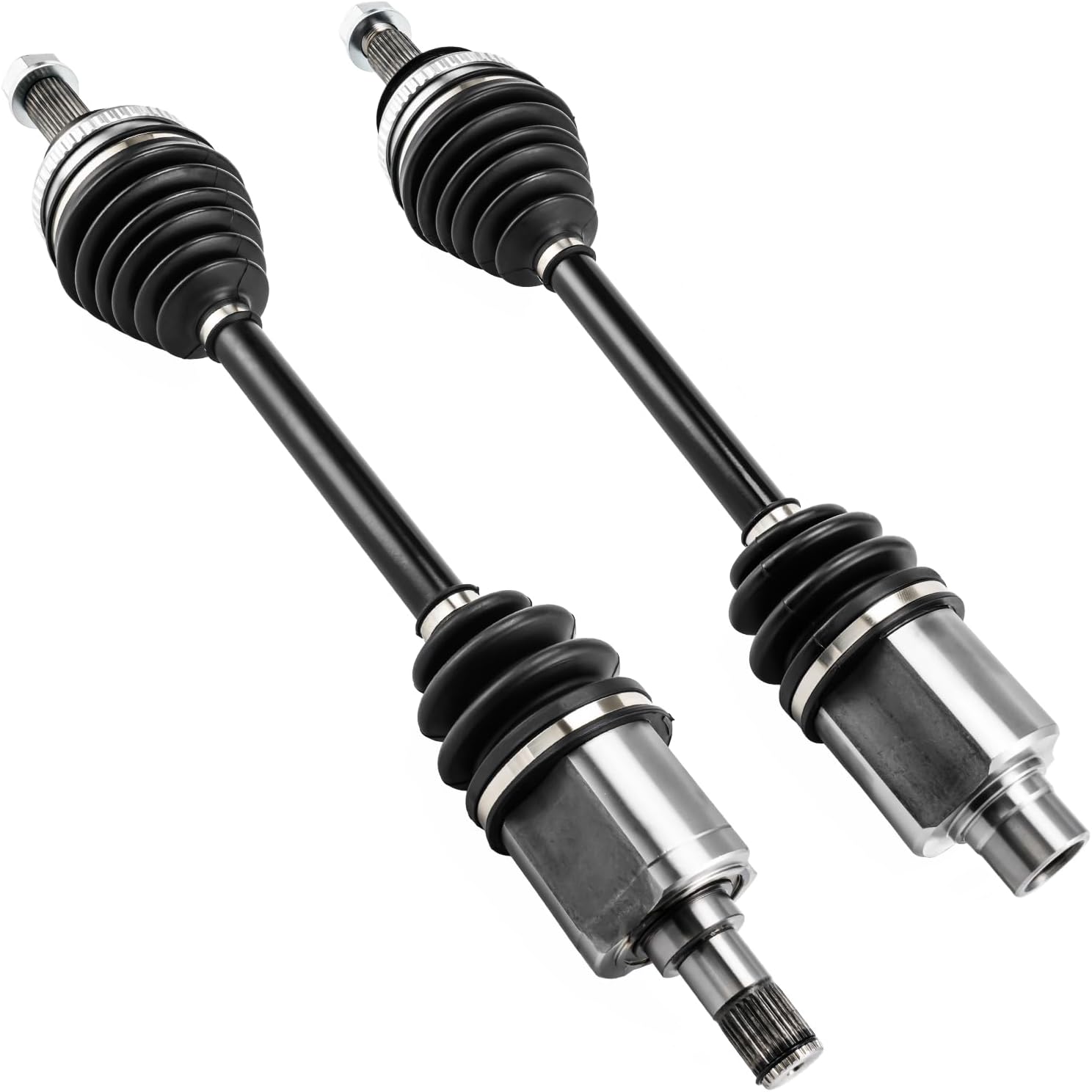
| Fitment | 1997–2001 Honda CR-V front axle (automatic) |
|---|---|
| Included | 2 PCS axle shaft |
| Manufacturer Part Number | 9232SHA764AUS |
| OEM Reference | 44306S10C51, 44011S10A50, 44306S10C00, 664147, 664173 |
These PHILTOP front CV axles are sold as a pair and intended as direct front axle replacements for 1997–2001 Honda CR-Vs with automatic transmission. They replace the half-shaft assemblies that transfer drive torque while allowing wheel steering and suspension travel. The listing emphasizes factory-style machining and 100% inspection of key mating dimensions, which should make installation straightforward for a competent DIYer or a local shop. Buyers will notice the product comes fully assembled so there is no boot or joint assembly required, and customer feedback indicates good fitment out of the box and reliable operation in normal use. Practical benefits include renewed steering smoothness, elimination of clicking or vibration from worn CV joints, and a lower-cost alternative to dealer parts. Limitations: the listing does not include detailed materials or lifespan projections and weight and packaging suggest these are substantial parts, so expect a standard axle installation procedure and possible alignment check after fitting.
Best for: Buyers who prioritize a dependable, factory-style replacement for worn front axles and prefer parts that are ready to install with minimal fuss.
Less Ideal for: Drivers seeking performance upgrades, lightweight racing components, or parts for vehicles outside the specified 1997–2001 CR-V scope should look elsewhere.
- Sold as a complete pair ready to install, avoiding joint assembly
- Manufactured with ground surfaces and 100% inspection for mating dimensions
- Designed to match factory mating points for straightforward fitment
- Multiple customer reports of correct fit and reliable performance
- Manufacturer does not publish detailed material specs or expected service life
Verdict: Choose these PHILTOP axles when you want a ready-to-install, factory‑matched front axle pair that restores smooth, reliable drive and steering for a 1997–2001 Honda CR-V.
6. TRQ Front Driver and Passenger CV Axle Assembly Set (2-Piece) for 1997–2001 Honda CR-V

| Position | Front |
|---|---|
| Manufacturer | TRQ |
| Model | TRQ CSA82464 2 Piece CV Axle Assembly Set |
| OEM Part Number | 44010S10A00, 44010S10A50, 44010SW5950, 44011S10A00, 44011S10A50 |
This TRQ two-piece front CV axle kit supplies both driver and passenger side assemblies as a direct-fit replacement for 1997–2001 Honda CR-Vs. Designed to be pre-assembled and application specific, the axles use neoprene boots and moly greased joints intended to improve durability and resist premature wear compared with older stock components. Typical use is a like-for-like swap during front-end drivetrain repairs when torn boots or worn joints cause noise, vibration, or grease loss. Key practical benefits are the direct-fit design that reduces installation time and the included materials intended for longer service life. TRQ also provides DIY installation videos which helps owners confirm steps before starting the job. Limitations to note are that this is an aftermarket replacement rather than a factory part and long-term performance depends on proper installation and driving conditions; buyers replacing only one side will receive both axles in the kit.
Best for: Buyers who want a reliable, ready-to-install front axle replacement for a 1997–2001 CR-V and prefer parts backed by user feedback and installation guidance.
Less Ideal for: People seeking an exact factory-manufactured unit or those who only need a single axle replacement and want to avoid buying a two-piece kit.
- Direct-fit, application-specific design minimizes need for modifications during installation
- Neoprene boots for improved durability over older stock boot materials
- Moly greased joints and grease shield designed to reduce premature wear
- Kit includes both driver and passenger side axles for a coordinated repair
- Aftermarket unit that may differ from factory part in materials or long-term durability
Verdict: A practical, direct-fit two-axle replacement for 1997–2001 Honda CR-V owners who want a straightforward DIY-friendly repair supported by solid user reviews.
Choosing the Right 1997-2001 Honda CR-V CV Axle: Key Factors to Consider
Fitment and Spline Compatibility
Correct fitment is the single most important factor for the 1997-2001 Honda CR-V CV axle. The axle must match the vehicle's spline count, outer joint flange pattern, and any retained-clip or nut style used on the front hubs. An axle with the wrong spline or flange can fail to seat, damage the hub, or cause premature wear.
Confirming exact match reduces installation time and prevents issues like axle end play or improper preload on wheel bearings. When replacing an axle, check the old shaft for part numbers or measure splines and flange dimensions to verify compatibility with the replacement.
CV Joint Construction and Materials
The internal design and materials of the CV joint determine resistance to wear and noise. Joints using forged or heat-treated components tend to survive higher loads and resist deformation. Look for robust cage and bearing designs that keep grease around the joints under steering angles common to the CR-V.
Materials and finish on the joint housings and bearings affect longevity, especially in areas with road salt or moisture. Better joint construction reduces symptoms like clicking when turning and helps maintain smooth power transfer through the full range of steering motion.
Boot Quality and Sealing
Boots are the first line of defense for CV joints; torn or poorly sealed boots let grease escape and contaminants enter, which accelerates failure. Boot material should flex well in cold weather while resisting abrasion from road debris. Secure clamp systems or crimped bands provide more reliable sealing than loose-style clamps.
Inspect how the boot interfaces with the joint and shaft. Reinforced or multi-ribbed boots resist splitting around the joint fold and can significantly extend service life on a vehicle that sees frequent turning or high-mileage use.
Shaft Straightness and Balance
A straight, balanced shaft minimizes vibration at highway speeds and reduces load on wheel bearings. Bent or improperly centered shafts can cause axle vibration at highway speed and uneven wear on tires and suspension components. Manufacturers that supply axles with straightness tolerances and balance checks reduce the risk of vibration after installation.
Balance also matters when replacing only one side; pairing a new axle with an older shaft can sometimes reveal differences that show up as vibration. If vibration persists after installation, rechecking shaft straightness and mounting torque is a practical troubleshooting step.
Corrosion Resistance and Finish
The front axle is exposed to water, dirt, and salt, so corrosion-resistant finishes on splines and shaft surfaces help maintain serviceability. Galvanized or e-coated shafts and splines resist rust that makes future removal difficult. Corrosion on splines can compromise fitment and may lead to binding or seizing during installation.
Pay attention to protective end treatments and whether the splines are lightly greased for shipping and storage, which protects them until installation.
Included Hardware and Warranty Coverage
An axle that includes necessary installation hardware such as retaining clips, new axle nuts, or hub shims reduces the chance of forgotten components during the repair. Some assemblies are sold as complete units with hardware, while others require reuse of old parts; using new hardware where specified ensures correct torque values and secure retention.
Warranty terms indicate the manufacturer's confidence in the assembly. Clear warranty coverage and return policies provide protection if a part fails early, and documentation of torque specs or installation notes is helpful for a reliable repair.
Common Symptoms of a Failing CV Axle
CV axle problems often present in a few recognizable ways on a 1997-2001 Honda CR-V. The most common symptom is a clicking or popping noise when turning sharply at low speeds, which indicates the outer joint may be worn and losing grease. Another frequent sign is vibration or shuddering when accelerating or at highway speed; this can come from joint wear or a bent shaft.
- Clicking or popping noise when turning.
- Axle vibration at highway speed or under acceleration.
- Grease splatter or visible boot damage indicating a CV joint boot torn.
- Clunking during shifts from drive to reverse or when accelerating from a stop.
Diagnosing Boot Damage and Grease Loss
Inspect the axle boots visually with the wheel turned to expose the CV joints. A torn boot will often show grease flung onto the suspension or inside the wheel well. Small cracks can be more apparent when the joint is flexed, so rotate the steering while looking for splits along the boot folds. If the boot is torn, contaminants will enter and accelerate joint wear, making replacement of the entire axle assembly the most reliable repair in many cases.
- Look for grease on inner fender or wheel face.
- Check for cracks along the boot folds with the steering turned.
- If the joint has lost grease, expect accelerated wear and possible clicking noises.
Installation Tips for the 1997-2001 CR-V
Prepare a clean workspace and support the vehicle safely on jack stands. Remove the wheel and hub nut while the vehicle is safely supported. Compare the replacement axle to the removed unit to verify spline count, flange pattern, and overall length before installing. When sliding the axle into the transmission or differential, do so gently to avoid damaging seals or splines.Torque the axle nut to the factory specification and tighten hub hardware in the correct sequence. After installation, road test at varied speeds to check for any remaining vibration or noise and re-torque the axle nut if required after initial driving.
- Verify replacement axle dimensions match the removed shaft before installation.
- Use proper torque values for the axle nut and wheel fasteners.
- Perform a post-installation road test to confirm there is no remaining vibration.
When to Replace Instead of Repairing Boots
Minor boot tears can sometimes be repaired with a replacement boot and clamp kit, but on the 1997-2001 CR-V you should consider full axle replacement when the joint shows any signs of internal damage. If grease has been lost for an extended time or you hear clicking noises, the joint bearings and races may be compromised. Replacing the entire axle saves labor and avoids repeated disassembly if the joint fails shortly after a boot-only repair.Full axle replacement also ensures factory-correct balance and fit, minimizing the risk of vibration that can result from an imprecisely reassembled joint.
- Replace the axle if there is clicking or extensive contamination.
- Consider boot-only repair only for newly damaged boots with no noise.
- Full axle replacement often reduces total labor and future downtime.
Maintenance Practices to Extend Axle Life
Regular visual inspections during routine service catch boot cracks and early grease loss. Avoid driving through deep standing water or off-road conditions that fling abrasive debris into joint folds. When servicing the front suspension, clean any grease deposits and check clamps for tightness.Keeping steering and suspension components in good condition reduces side loads on the CV joints, helping them last longer. Address worn tie rods, ball joints, or wheel bearings promptly to avoid secondary stress on the axle assembly.
- Inspect boots at oil changes or tire rotations.
- Clean and re-torque clamps if they show loosening.
- Repair worn suspension components to reduce joint stress.
Still looking for the perfect fit?
Select your Honda CR-V configuration to see the most relevant CV Axles recommendations
How We Chose the Best 1997-2001 Honda CR-V CV Axle
Our selection process focused on factors that directly affect installation reliability and long-term performance for the 1997-2001 Honda CR-V. We prioritized correct fitment to the specified year range, including matching spline counts, flange patterns, and clip styles. Durability of the CV joint and shaft was judged by construction type, heat treatment indications, and protective design elements such as reinforced boots and clamps.We also considered boot material and sealing methods because torn boots are a primary failure mode. Ease of installation was assessed through shaft straightness, pre-greased joints, and whether the axle is supplied as a complete assembly versus requiring additional parts. Corrosion resistance of splines and shaft finish was another key filter, since rusted splines make removal and future service difficult.Excluded items included incomplete repair kits that lack necessary clips or hardware, universal or multiple-vehicle fit parts that do not guarantee exact fitment, and items that required additional machining or modification. The final list emphasizes directly compatible axles built to withstand typical driving and the common failure modes experienced by this CR-V generation.
Our full evaluation process is outlined in our review methodology.
FAQ
What are the most common signs that a CV axle is failing on my 1997-2001 CR-V?
Common signs include a clicking noise when turning, vibration or shuddering under acceleration or at highway speed, and visible grease or a torn boot. Any of these symptoms usually indicate the joint is compromised and should be inspected promptly.
Can I replace only the CV boot instead of the whole axle?
If the boot was recently torn and the joint has not lost grease or developed noise, a boot replacement may be feasible. However, if there is clicking, extensive contamination, or grease loss over time, replacing the entire axle is generally more reliable and often saves labor in the long run.
How hard is the CV axle installation on a 1997-2001 Honda CR-V?
Installation difficulty is moderate for a competent DIYer with basic tools. Key steps include safely lifting the car, removing the hub nut, and carefully sliding the axle out of the transmission. Ensuring correct spline engagement and proper torque on the axle nut are critical for a successful repair.
Will a slightly bent axle shaft cause vibration at highway speed?
Yes, a bent shaft can produce vibration at higher speeds because it creates imbalance and uneven loads on bearings. If vibration persists after replacing other components, the shaft straightness should be checked as a likely cause.
How can I tell if a CV joint boot is torn without removing the axle?
Turn the steering to flex the joints and inspect the boot folds for cracks or splits. Look for grease splatter on the wheel face or inner fender. Grease around mating surfaces or on suspension parts is a common external indicator of a torn boot.
Are there special considerations for the transmission seal when installing a new axle?
When removing and installing axles, take care not to damage the transmission or differential seal lips. Gently align and slide the axle in straight to prevent seal tearing. If the seal shows wear or leaks during disassembly, replace it to avoid future leaks and contamination.
Final Verdict
Prioritize correct fitment, CV joint durability, and boot integrity when choosing a CV axle for the 1997-2001 Honda CR-V. The right axle will match spline counts and flange patterns, use robust joint construction, and include durable boots and clamps to limit the chance of early failure. Balance the convenience of included hardware and warranty coverage against the need for corrosion-resistant finishes and straightness to minimize vibration.Focus on addressing symptoms such as clicking when turning or vibration at speed promptly; replacing a compromised axle often avoids repeated repairs. With attention to fit and sealing, you can restore smooth steering and reliable front-drive performance for this CR-V generation.
Explore More:
- Check out all Honda CR-V parts & accessories
- Explore Transmission & Drivetrain
- Browse all Auto Parts
