

Note: This article contains affiliate links. If you click on these links and make a purchase, I may earn a small commission at no extra cost to you. This helps support my research and content. Read my full affiliate disclosure here.
Picking the right coolant for a 1998-2011 Ford Ranger matters more than most owners realize. The coolant you choose affects corrosion control, heat transfer, and how often you need to do a coolant flush. Using an incompatible formula can shorten component life or reduce cooling efficiency.This guide covers the top shortlisted coolants suited to the 1998-2011 Ranger, explaining the performance traits and service-life characteristics that matter for these model years. We evaluated compatibility, corrosion inhibition, and maintenance intervals so you can choose a product that keeps your Ranger running cool and reliable. Read on to see the options and the criteria we used to pick them.
Looking for other parts? See all Ford Ranger parts & accessories.
Top Picks at a Glance
| Best Overall Coolant A balanced, widely compatible coolant with strong corrosion and heat protection | Zerex G05 Phosphate-Free 50/50 Ready-to-Use Antifreeze/Coolant 1 Gal |  |
| Best Budget Coolant An affordable ready-to-use or concentrate option for routine coolant changes | PEAK All Vehicles 50/50 Prediluted Antifreeze and Coolant, 1 Gal. |  |
| Best Pre‑Diluted Coolant Ready-to-use 50/50 jugs that save mixing time and avoid dilution errors | Zerex Dex-Cool 50/50 Ready-to-Use Antifreeze Coolant, 1 Gallon |  |
| Best Concentrate Coolant Concentrated coolant you mix to spec for customizable freeze/boil protection | Valvoline Zerex Dex-Cool Concentrate Antifreeze/Coolant 1 Gallon |  |
| Best OEM Ford Coolant Factory-formulated coolant that matches Ford specifications and color coding | Ford Genuine VC-13-G Yellow Concentrated Antifreeze/Coolant — 1 Gallon |  |
| Best Heavy‑Duty / Extended‑Life Coolant Long-life OAT/HD formulas built for extended service intervals and tougher conditions | Zerex Heavy Duty Nitrite Free Extended Life Concentrate Antifreeze/Coolant (1 gal) |  |
| Best Universal Multi‑Vehicle Coolant Broadly compatible formula labeled for use across many makes and models | Valvoline Multi-Vehicle 50/50 Ready-to-Use Antifreeze/Coolant, 1 Gallon |  |
1. Zerex G05 Phosphate-Free 50/50 Ready-to-Use Antifreeze/Coolant 1 Gal
Best Overall Coolant

| Included Components | Engine Coolant / Antifreeze |
|---|---|
| Model | G05 |
| Automotive Fit Type | Universal Fit |
| Manufacturer | Valvoline |
Zerex G05 is a ready-to-use 50/50 antifreeze designed to protect modern engines from freezing, overheating and internal corrosion. It uses hybrid organic acid technology to combine conventional and organic inhibitor benefits, which helps guard aluminum and other metals against pitting and rust while providing reliable freeze protection to around -34F and boil-over protection up to about 265F when mixed as directed. Typical use is a system top-off or a full flush and refill; the premixed gallon eliminates the need to measure concentrate and distilled water. Practical benefits include manufacturer-approved chemistry for many late-model vehicles, corrosion inhibitors that extend service life, and additives that are safe for hoses, gaskets and plastics. The product is widely available in a single-gallon ready mix and comes from a long-established brand, making it a convenient choice for DIY maintenance. It is not a universal match for every older coolant specification, so confirming compatibility with your vehicle manual or coolant color requirements before switching is advisable.
Best for: DIY mechanics who want a proven, ready-to-use coolant that delivers dependable freeze/boil protection and corrosion resistance without mixing or special handling.
Less Ideal for: People who need a coolant tailored to a very specific or uncommon factory specification or who require an extended-concentrate option for custom mixing.
- Premixed 50/50 ready-to-use formula removes the need to dilute concentrate
- Hybrid Organic Acid Technology protects aluminum and other metals from corrosion and liner pitting
- Provides strong freeze protection to about -34F and boil-over protection to about 265F when used as directed
- Formulated to be safe for hoses, gaskets, plastics and typical cooling system materials
- Manufacturer-approved chemistry used by many Ford and Chrysler applications
- Chemistry may not match every legacy coolant spec so compatibility check is required before swapping
Verdict: The go-to coolant for most DIY mechanics who want reliable freeze/boil protection and corrosion resistance in a single, proven formula.
2. PEAK All Vehicles 50/50 Prediluted Antifreeze and Coolant, 1 Gal.
Best Budget Coolant

| Compatible with Vehicle Type | Car, Truck, Motorcycle, SUV |
|---|---|
| Automotive Fit Type | Universal Fit |
| Liquid Volume | 1 Gallons |
| Size | 50/50 |
This PEAK 50/50 prediluted coolant is a simple, no-frills option for routine cooling-system maintenance on a 1998–2011 Ford Ranger. It arrives ready to pour, so topping off the radiator or performing a coolant flush is quick and avoids mixing errors. The formula is designed to protect common cooling-system metals including aluminum and claims extended-life performance for long service intervals. Because it is labeled as universal fit and compatible with multiple coolant colors and technologies, it works for the Ranger’s factory cooling system without needing color matching. The practical benefits are ease of use, immediate corrosion protection, and a reduced need to buy concentrated coolant or distilled water. Limitations are that it is a general-purpose product rather than a vehicle-specific formula, and it does not list vehicle-specific approvals; drivers wanting manufacturer-specified formulations should verify compatibility before a full system refill. For budget-focused scheduled maintenance, this is a convenient, low-effort coolant choice.
Best for: Buyers performing routine scheduled maintenance on a 1998–2011 Ford Ranger who want an inexpensive, ready-to-use coolant that restores protection without extra features.
Less Ideal for: Drivers restoring a Ranger to factory-spec detail or those requiring a coolant with specific manufacturer approvals or mix ratios should consider vehicle-specified alternatives.
- Prediluted 50/50 mix for immediate use with no onsite mixing required
- Formulated to protect aluminum and other common cooling-system metals from rust and corrosion
- Universal fit compatible with multiple coolant colors and technologies
- Extended-life formulation intended for long service intervals
- Not a vehicle-specific OEM-recommended formula and no explicit manufacturer approvals listed
Verdict: Choose this pick if you need a low-cost coolant that restores protection without extra features, ideal for scheduled maintenance on a tight budget.
3. Zerex Dex-Cool 50/50 Ready-to-Use Antifreeze Coolant, 1 Gallon
Best Pre‑Diluted Coolant

| Formulation | 50/50 premixed |
|---|---|
| Technology | Organic Acid Technology (OAT) |
| Volume | 1 Gallon |
| Color | Orange |
Zerex Dex-Cool 50/50 Ready-to-Use is a premixed antifreeze designed to top off or replace a vehicle cooling system without the need to mix concentrate and water. It uses an organic acid technology (OAT) carboxylate formulation intended to resist corrosion, scale and deposits across aluminum and other metals found in modern engines. In practice this makes refilling a radiator simple and clean: pour the gallon into the system after draining or topping off and you have the intended 50/50 protection against freezing and boiling. The formula is silicate and phosphate-free and omits amines, borates, nitrates and nitrites, which helps reduce buildup and extend component life when matched to a compatible vehicle spec. Important limitations are fitment and chemistry: Dex-Cool is the orange OAT formula specified for certain vehicles and should only be used where that coolant type is required; mixing it with different coolant chemistries can reduce protection. The ready-to-use fill is convenient for DIYers doing quick service or complete flushes on compatible trucks and cars.
Best for: Buyers who want the quickest, mess-free way to top off or refill a cooling system on vehicles that call for an orange OAT coolant and prioritize convenience and correct chemistry.
Less Ideal for: Do not choose this if your vehicle requires a different coolant chemistry or if you need a concentrate to adjust freeze/boil protection ratios for extreme climates.
- Premixed 50/50 ready to use so no measuring or dilution required
- Organic acid technology resists corrosion and helps keep aluminum components clean
- Formulated to protect against freezing and boiling for extended service life
- Silicate- and phosphate-free chemistry reduces risk of deposit formation
- Requires vehicle compatibility with orange OAT Dex-Cool chemistry and should not be mixed with other coolant types
Verdict: This slot is for premixed 50/50 coolants that let you top off or replace the system quickly without measuring water or concentrate.
4. Valvoline Zerex Dex-Cool Concentrate Antifreeze/Coolant 1 Gallon
Best Concentrate Coolant

| Brand | Valvoline |
|---|---|
| Type | Concentrate OAT (Dex‑Cool) |
| Volume | 1 gallon |
| Item model number | ZXEL1 |
| Contains bittering agent | Yes |
Valvoline Zerex Dex‑Cool is a concentrated Organic Acid Technology (OAT) antifreeze designed to be mixed to the dilution you need for topping off or full system fills. It is typically used by DIYers and technicians who want to match manufacturer dilution recommendations or tune freeze/boil protection for extreme climates. The formula is silicate and phosphate free and claims compatibility with aluminum and other cooling system metals while resisting rust, scale, and deposits. Because it is a concentrate, you mix it with water at common ratios such as 50/50 for everyday climates or stronger blends for very cold conditions, giving precise control over freeze and boil points. The product also omits amines, borates, nitrates, and nitrites and includes a bittering agent to discourage ingestion. Important limits are that this is a GM‑style orange OAT formula intended for systems specified for Dex‑Cool chemistry, so verify your vehicle’s coolant type before switching and follow recommended flush procedures when changing coolant to avoid mixing incompatible chemistries.
Best for: Buyers who need a concentrate to match Ford Ranger service intervals and to set a specific freeze/boil point for their local climate, and who will follow proper flush and refill procedures.
Less Ideal for: People who prefer pre-mixed coolant for convenience or owners whose vehicles specify a different coolant chemistry than Dex‑Cool.
- Concentrate format lets you control dilution for specific temperature ranges and service needs.
- OAT formula resists rust, scale, and corrosion on aluminum and other metals.
- Silicate and phosphate free and free of amines, borates, nitrates, and nitrites to match manufacturer specs requiring Dex‑Cool chemistry.
- Proven product from a major brand with lab and fleet testing backing its corrosion protection.
- Not suitable for vehicles that require green or hybrid silicated coolants; mixing incompatible chemistries can cause deposits and reduced protection.
Verdict: Pick a concentrate when you want to control the dilution ratio for extreme temps or to meet specific service intervals and manufacturer recommendations.
5. Ford Genuine VC-13-G Yellow Concentrated Antifreeze/Coolant — 1 Gallon
Best OEM Ford Coolant

| Type | Concentrated ethylene glycol antifreeze/coolant |
|---|---|
| Mix Ratio | 50/50 with distilled water |
| Freeze Protection | Down to -34°F (-37°C) at 50/50 mix |
| Boil Protection | Up to 265°F (129°C) at 50/50 mix |
This Ford Genuine VC-13-G concentrated coolant is a manufacturer-formulated ethylene glycol antifreeze designed to restore or top up the cooling system in compatible Ford vehicles. Sold as a concentrate, it is intended to be mixed 50/50 with distilled water to deliver freeze protection to about -34°F and boiling protection up to roughly 265°F while providing corrosion inhibitors for engine metals. Use is straightforward for coolant changes, flushes, or when replacing fluid after repairs, and the product cautions against mixing different colors or types of coolant to avoid chemical incompatibilities. Practical benefits include factory-directed chemistry for maintaining cooling-system longevity and a bittering agent to discourage ingestion. Important limitations are that it is a concentrate requiring proper dilution and that the yellow formula must be matched to vehicles specified for this coolant color and chemistry to avoid adverse reactions with other coolant types.
Best for: Buyers who prioritize using factory-formulated fluids to preserve Ford cooling-system chemistry and avoid cross-contamination when servicing a 1998–2011 Ranger.
Less Ideal for: Users who want a ready-to-use premixed coolant or need a universal, multi-vehicle fluid that tolerates mixing with other coolant types.
- Manufacturer-formulated chemistry matched to Ford specifications
- Concentrate allows 50/50 mixing for precise freeze and boil protection
- Provides corrosion protection for engine cooling components
- Includes bittering agent to deter accidental ingestion
- Requires correct dilution with distilled water before use
Verdict: This category suits buyers who prefer a manufacturer-formulated fluid to match OEM specs and avoid mixing incompatible chemistries in the cooling system.
6. Zerex Heavy Duty Nitrite Free Extended Life Concentrate Antifreeze/Coolant (1 gal)
Best Heavy‑Duty / Extended‑Life Coolant
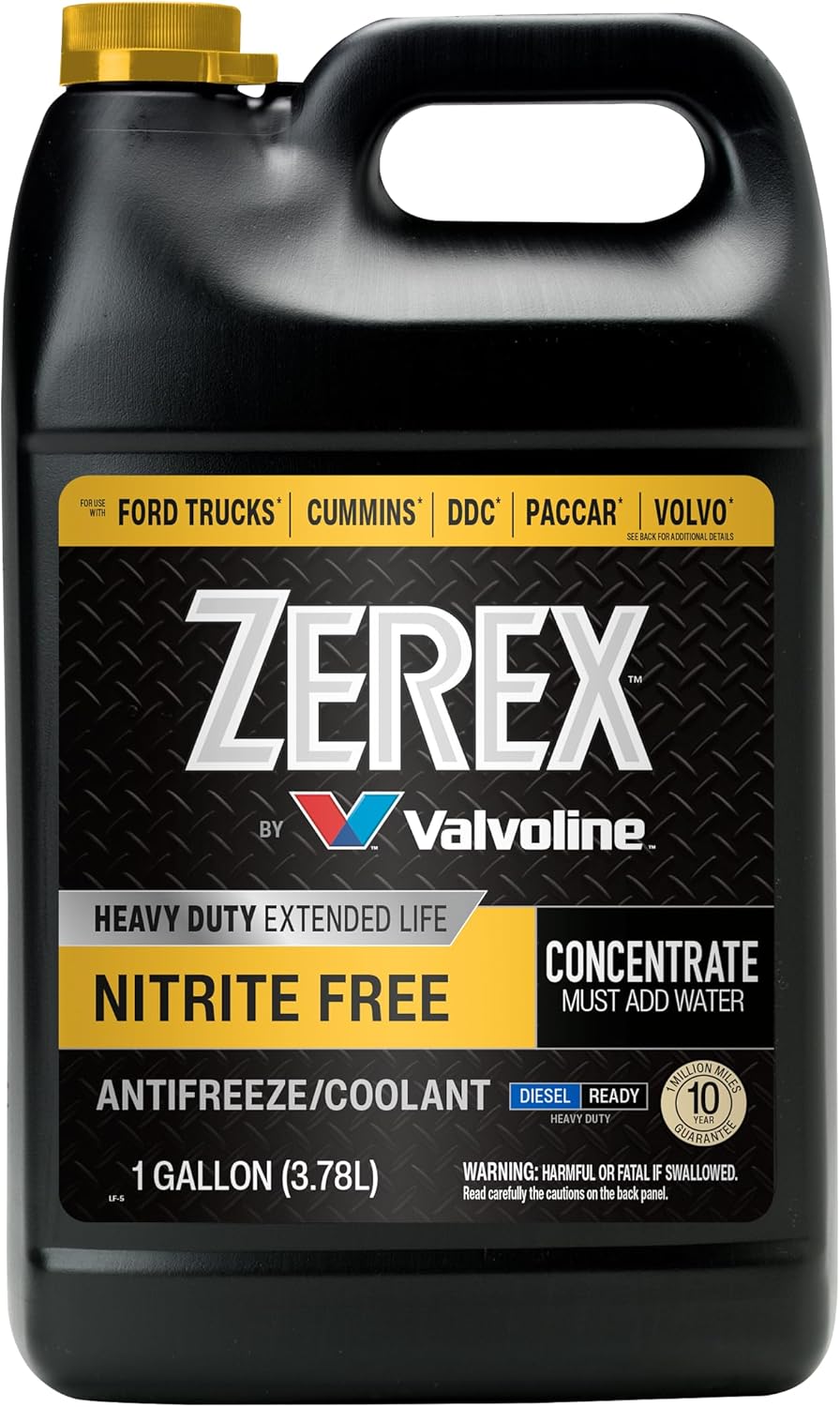
| Brand | Zerex by Valvoline |
|---|---|
| Formulation | Concentrate, mix 50/50 |
| Chemistry | Organic Acid Technology (nitrite free) |
| Special Features | Silicate, amine, and borate free |
This Zerex extended‑life concentrate is designed for heavy‑duty engines and for buyers who need a long‑lasting, nitrite‑free coolant. It uses Organic Acid Technology to protect internal engine parts from corrosion, cavitation, and hard‑water scale while remaining silicate, amine, and borate free. Typically mixed 50/50 with water, the concentrate is suitable for fleet diesel engines and can also be used in gasoline, marine, stationary power, and natural gas applications where a nitrite‑free ELC is required. Notable features include manufacturer claims of up to 10 years or 1,000,000 miles/20,000 hours of protection without supplemental additives and formulation aimed at protecting cylinder liners and water pumps. Practical benefits are longer service intervals, reduced risk of pitting in critical components, and broad compatibility with modern heavy‑duty engine technologies. Limitations are that it is a concentrate that requires proper dilution and that its heavy‑duty, nitrite‑free chemistry is intended primarily for engines specifying that formulation rather than generic multi‑vehicle ready‑to‑use coolants.
Best for: Buyers who prioritize extended‑service intervals and corrosion resistance for heavy‑duty or modern engines and want a coolant formulated to meet nitrite‑free ELC specifications.
Less Ideal for: Those looking for a ready‑to‑use, off‑the‑shelf universal coolant or anyone whose vehicle requires a nitrite‑containing or different chemistry should consider other options.
- Organic Acid Technology reduces corrosion and helps prevent cavitation damage
- Silicate, amine, and borate free formulation protects cylinder liners and water pumps
- Long service life with a manufacturer claim of up to 10 years or 1,000,000 miles/20,000 hours when used per instructions
- Sold as a concentrate so correct 50/50 mixing is required before use
Verdict: Select this coolant if you want extended‑life organic‑acid or heavy‑duty formulations that resist corrosion and last longer between changes.
7. Valvoline Multi-Vehicle 50/50 Ready-to-Use Antifreeze/Coolant, 1 Gallon
Best Universal Multi‑Vehicle Coolant

| Size | 1 Gallon |
|---|---|
| Flash Point | 250 Degrees Fahrenheit |
| Automotive Fit Type | Universal Fit |
| Model | Multi-Vehicle |
Valvoline Multi-Vehicle 50/50 Ready-to-Use is a pre-mixed antifreeze/coolant intended as a single, universal option for topping off or refilling cooling systems. It ships ready at the proper 50/50 concentration so you can pour it in without dilution. The formula includes Alugard Plus additives that Valvoline says improve compatibility with other ethylene glycol-based coolants and protect aluminum and other cooling-system metals from corrosion, deposits, and leaks. In practice that makes it convenient for owners who want a straightforward, low-effort coolant during routine maintenance or after a system flush. Because it is pre-mixed it protects against freezing and boiling across typical seasonal extremes without needing measurement. Limiting factors are that it is a conventional ethylene glycol formula rather than a vehicle-specific long‑life or hybrid organic acid coolant, so for Ford Ranger models that originally specify a particular extended‑life coolant you may prefer a factory-replacement fluid for maximum interval life and warranty-style conformity.
Best for: Someone who wants a simple, no-mix coolant that is marketed for universal use and makes topping off or refilling a cooling system quick and foolproof.
Less Ideal for: Drivers seeking a manufacturer-specified extended‑life or hybrid organic acid formula for long drain intervals or strict OEM conformity should consider a coolant matched to their vehicle’s factory recommendation.
- Ready-to-use 50/50 concentration eliminates mixing and measuring errors
- Alugard Plus additive improves compatibility with other ethylene glycol coolants and protects aluminum components
- Protects against corrosion, deposits, freezing and boiling across normal climates
- Pre-mixed formulation simplifies topping off after a flush or small loss of coolant
- Not a vehicle-specific extended-life or hybrid organic acid coolant preferred by some manufacturers
Verdict: Use this pick when you need a one‑product solution that’s advertised for universal fitment and safe use in a wide variety of engines.
Choosing the Right 1998-2011 Ford Ranger Coolant: Key Factors to Consider
Chemical Formulation and Compatibility
Coolants use different inhibitor packages that interact with metals, seals, and hoses in the cooling system. For a 1998-2011 Ford Ranger you need a formulation that protects aluminum heads, cast-iron blocks, brass or copper heater cores, and common hose compounds without causing swelling or accelerated degradation.
Compatibility matters because mixing incompatible chemistries can reduce corrosion protection and create sludge that blocks passages. Check whether the coolant is intended as a direct replacement for Ford-specified formulas or if it requires conversion steps. If the coolant is a concentrate, know the correct mix ratio and whether distilled water is recommended to avoid mineral deposits.
Corrosion Inhibitors and Longevity
The inhibitor package determines how well the coolant resists pitting, galvanic corrosion, and electrochemical damage over time. For Rangers in the 1998-2011 window, long-term inhibitor performance is especially important because older systems may already have surface wear or minor corrosion initiating points.
A coolant with robust, long-life inhibitors can extend service intervals and limit the need for premature radiator or component replacement. Consider the advertised service life, but also whether the manufacturer provides data on inhibitor depletion or recommends periodic testing to confirm continued protection.
Freeze and Boil Protection
Freezing and boiling points depend on the coolant-to-water ratio as well as the base fluid. The right mix prevents freeze damage in cold climates and raises the boil-over threshold when the engine is loaded or the vehicle is towing. For a Ranger, which may be used in seasonal climates or for light hauling, maintaining adequate freeze and boil protection is essential for reliability.
Pay attention to recommended mixing ratios and whether the product is a pre-diluted ready-to-use formula or a concentrate. Ready-to-use options simplify installation, but concentrates allow precise adjustment for the local climate.
Compatibility With Existing System Condition
Older Rangers can have residue, rust, or deposits in the cooling passages. Some coolants are formulated to be more forgiving when introduced to mildly contaminated systems, while others are meant for clean systems after a complete coolant flush. Choosing the wrong product without assessing system condition can accelerate deposit formation or reduce inhibitor effectiveness.
If the system shows signs of contamination, plan for a proper coolant flush or choose a coolant explicitly described as compatible with systems that have older deposits. Always follow vehicle-specific guidance about flushing frequency and acceptance of new chemistry.
Service Interval and Maintenance Requirements
Different formulas have different recommended service lives, from traditional 2-year products to long-life formulas rated for several years or specific mileages. For a 1998-2011 Ford Ranger owner, longer service intervals can reduce maintenance, but only if the coolant maintains protection for that duration.
Consider the tradeoff between extended drain intervals and the need for monitoring inhibitor levels. Some long-life coolants require testing or conditioner top-ups, while others are labeled as maintenance-free for the stated interval. Understand the recommended interval and any condition-based checks.
Ease Of Use And Label Clarity
Clear labeling on mix ratios, compatibility, and instructions for topping off or refilling matters in real-world maintenance. For Rangers, many owners perform DIY coolant service, so easy-to-follow guidance on whether to use distilled water, how to bleed air from the system, and compatibility with other coolants will reduce the chance of error.
Products with explicit guidance on concentrate dilution, safe mixing with existing coolant types, and disposal instructions are preferable. Avoid products with vague recommendations or confusing conversion instructions that could lead to improper mixing or compromised protection.
When To Do A Coolant Flush On A 1998-2011 Ranger
Routine coolant replacement intervals depend on the coolant type and the vehicle's service history. If your Ranger has undocumented coolant changes or shows milky residue or heavy rust in the reservoir, plan for a full system flush before changing to a new chemistry.
For trucks used for towing or frequent short trips that do not fully warm the engine, monitor coolant condition more often. After a flush, follow a recommended break-in schedule of checking levels and inspecting hoses and clamps for leaks during the first few hundred miles.
- Look for cloudy or discolored coolant and sediment in the reservoir as signs to flush.
- Check the radiator cap, hoses, and heater core for leaks when you service the coolant.
- After a flush, drive for a short period and recheck levels to ensure there are no hidden leaks.
Mix Ratios and Seasonal Adjustment
Most Ranger owners will choose either a 50/50 coolant-to-water mix or a pre-diluted ready-to-use formula. A 50/50 mix offers balanced freeze and boil protection across most climates. If you live in an area with particularly harsh winters, a slightly higher concentrate can increase freeze protection but may reduce heat transfer marginally.
Always use low-mineral water, such as distilled water, when diluting concentrate coolants. Tap water can introduce minerals that promote scale and reduce overall cooling efficiency over time.
- 50/50 mix is a common baseline for both freeze and boil-over protection.
- Use distilled water to avoid mineral deposits in the cooling passages.
- Follow the product label for manufacturer-recommended mix for extreme climates.
Bleeding Air And Filling Best Practices
Air trapped in the cooling system reduces heat transfer and can cause hot spots. After refilling the system on a 1998-2011 Ranger, use the proper bleeding procedure: run the engine with the heater on high and the radiator cap off if safe, or use bleed screws where equipped to purge air pockets.
Top off the reservoir as air escapes and re-secure the cap when the coolant level stabilizes. Check the system pressure and look for leaks after the engine reaches operating temperature, then recheck levels after a short drive.
- Run the heater at full to circulate coolant through the heater core during bleeding.
- If the truck has known hot spots, allow the engine to reach operating temperature while monitoring for temperature fluctuations.
- Always follow safety precautions when opening the radiator cap on a warm engine.
Signs Of Incompatible Or Degraded Coolant
Watch for sludging, a gelatinous appearance, or a layer of residue in the expansion tank. These are often signs that inhibitors have failed or two incompatible chemistries were mixed. Incompatible mixes can accelerate corrosion or create deposits that restrict flow.
Other symptoms include rapid coolant level loss without visible leaks, localized overheating, or erratic temperature gauge behavior. If you observe these issues after a coolant change, consider draining and flushing the system and returning to a compatible chemistry.
- Sludge or a thick residue in the reservoir indicates degraded inhibitor packages.
- Localized overheating may point to blocked passages or trapped air from improper bleeding.
- Persistent low coolant level without visible leaks could be internal seepage or boil-off from improper mix.
How Long-Life Coolants Compare To Traditional Formulas
Long-life coolants typically rely on different inhibitor technologies that protect longer without frequent replacement. For a Ranger owner, the advantage is reduced maintenance intervals, but only if the system is clean and compatible with that chemistry.
Traditional formulations may require more frequent changes but are sometimes easier to match with older system conditions. Choose long-life options when you want extended service intervals and the system has been properly flushed and inspected beforehand.
- Long-life formulas reduce drain frequency but may demand a clean system before adoption.
- Traditional coolants can be more forgiving in systems with existing deposits.
- Check the product guidance on mixing with existing coolant types before switching.
Still looking for the perfect fit?
Select your Ford Ranger configuration to see the most relevant Coolants recommendations
How We Chose the Best 1998-2011 Ford Ranger Coolant
We prioritized products that match the chemical and service expectations for 1998-2011 Ford Ranger cooling systems. Key evaluation criteria included coolant formulation compatibility with Ford-specified materials, corrosion inhibition performance on common engine and radiator metals, and recommended service interval that reduces maintenance frequency. We also assessed freeze and boil-over protection ratings because these Ranger model years see a range of climates and operating loads.Additional filters included compatibility with mixed-metal radiators and hoses used in these Rangers, whether the coolant is suitable for older systems that may contain legacy deposits, and label clarity on mixing ratios and maintenance instructions. Products that required unusual additives, nonstandard mixing guidance, or explicit incompatibility with Ford coolant chemistry were excluded. We did not consider aftermarket cooling system hardware or performance-only additives that change OEM chemistry. The resulting list focuses on balanced coolants that prioritize corrosion control, thermal stability, and predictable maintenance for the 1998-2011 Ford Ranger.
Our full evaluation process is outlined in our review methodology.
FAQ
Can I mix a new long-life coolant with the existing coolant in my Ranger?
It depends. Some long-life formulas are compatible for top-off mixing, while others require a full flush before switching. Check the product guidance and system condition; if the system is old or contaminated, a full flush is usually safer.
How often should I check coolant levels on a 1998-2011 Ford Ranger?
Check levels at every oil change or at least quarterly. Vehicles used for towing or short-trip driving should have levels inspected more frequently because those conditions stress the cooling system.
Is a pre-diluted ready-to-use coolant better than a concentrate?
Ready-to-use products simplify installation and reduce mixing errors, which is helpful for DIY maintenance. Concentrates allow precise adjustment for climate but require correct dilution with low-mineral water to avoid deposit buildup.
Will switching coolant chemistry harm older Ranger cooling components?
Switching to a different chemistry can be safe if done correctly, usually with a thorough flush first. Switching without flushing might reduce inhibitor performance or mobilize deposits, so evaluate system condition before changing chemistries.
What are the signs my coolant is no longer providing protection?
Look for discolored or cloudy coolant, sediment or sludge in the reservoir, unexplained overheating, or corrosion around hose clamps and fittings. These signs indicate the inhibitor package may be depleted or the chemistry is compromised.
Should I use distilled water when diluting coolant for my Ranger?
Yes. Using distilled or deionized water helps prevent mineral deposits and scale in the cooling passages. Tap water can introduce minerals that reduce long-term heat transfer efficiency.
Final Verdict
For the 1998-2011 Ford Ranger, prioritize coolant formulations that explicitly match the vehicle's material compatibility and provide adequate corrosion inhibition for mixed-metal systems. Decide between long-life and traditional formulas based on the system condition: long-life products reduce maintenance when the system is clean, while traditional formulas may be more forgiving in older or partially contaminated systems.Ultimately, focus on proper flushing, correct mix ratio, and thorough bleeding after installation. Those practices matter as much as product choice and will help you maintain stable engine temperatures and prolong the life of the cooling system.
Explore More:
- Check out all Ford Ranger parts & accessories
- Explore Fluids & Chemicals
- Browse all Accessories
