

Note: This article contains affiliate links. If you click on these links and make a purchase, I may earn a small commission at no extra cost to you. This helps support my research and content. Read my full affiliate disclosure here.
The right control arm has an outsized effect on steering precision, ride comfort, and tire wear on a 1997-2004 Dodge Dakota. Worn or damaged control arms lead to vague steering, uneven tire wear, and a rougher ride, so choosing a proper replacement matters whether you are repairing a daily driver or refreshing suspension geometry.This guide shortlists the top control arm options for the 1997-2004 Dodge Dakota and explains the criteria used to evaluate them, including fitment accuracy, bushing and ball-joint quality, and long-term durability. Below you will find the shortlisted products followed by practical buying guidance and installation considerations to help you pick the best fit for your truck.
Looking for other parts? See all Dodge Dakota parts & accessories.
Top Picks at a Glance
| Best Overall The best all-around choice for most situations | MOOG RK620474 Front Left Lower Control Arm with Ball Joint |  |
| Best Quality Built to a higher standard if you want something more solid | TRW JTC2335 Front Right Lower Suspension Control Arm with Ball Joint |  |
| Best Value The sweet spot between price and what you get | Detroit Axle Front Lower Control Arms with Ball Joints, 2‑Piece Kit for 2000–2004 Dodge Dakota / 2000–2003 Durango (4WD) |  |
| Best Budget The cheapest option that still gets the job done reliably | Garage-Pro Front Left Lower Control Arm for Dodge Dakota (1997–2004) |  |
| Highest Rated A top-rated pick with lots of positive feedback | MOOG RK620475 Front Right Lower Control Arm with Pre-Installed Ball Joint |  |
| Most Popular A crowd favorite that many people choose with confidence | Detroit Axle Front End 10‑Piece Suspension Kit for 2000–2004 Dodge Dakota / 2000–2003 Durango |  |
| Best Seller A high-volume bestseller chosen again and again | Detroit Axle Front Left Lower Control Arm with Ball Joint (Driver Side) |  |
1. MOOG RK620474 Front Left Lower Control Arm with Ball Joint

| Vehicle fitment | 1997-2004 Dodge Dakota |
|---|---|
| Position | Front left lower |
| Includes | Control arm with preinstalled ball joint |
| Brand | MOOG |
The MOOG RK620474 is a direct-fit front left lower control arm assembly that replaces a worn unit and restores proper suspension geometry on 1997–2004 Dodge Dakota models. It combines a stamped arm with a preinstalled ball joint to simplify installation and reduce labor compared with separate part replacements. Built for durability, the assembly is engineered to withstand everyday road stress and to help maintain wheel alignment so steering feel and directional stability are more consistent after replacement. Typical use is as a one-for-one replacement during a steering or suspension refresh where worn control arm bushings or a failing ball joint are causing play, uneven tire wear, or vague steering. The main limitations are that this is a single-side, vehicle-specific assembly and it does not include additional bushings or hardware beyond the assembled unit, so check whether complementary parts are needed during installation.
Best for: Buyers looking for a straightforward, factory-quality replacement to restore steering feel and ride stability on a 1997–2004 Dodge Dakota who prioritize a direct-fit part that minimizes garage time.
Less Ideal for: Drivers seeking a performance or heavy-duty aftermarket upgrade with altered geometry or different materials should consider purpose-built performance suspension parts instead.
- Direct-fit assembly with preinstalled ball joint simplifies replacement and cuts installation time.
- Engineered to preserve suspension geometry for improved steering response and stability.
- Durable construction intended to handle everyday road stresses for reliable service life.
- Designed specifically for 1997–2004 Dodge Dakota fitment ensuring correct alignment and mounting points.
- Sold as a single left-side assembly so buyers replacing both sides must purchase two units.
Verdict: Choose this MOOG front left lower control arm assembly when you want a durable, direct-fit replacement that restores steering response and suspension stability on a 1997–2004 Dodge Dakota.
2. TRW JTC2335 Front Right Lower Suspension Control Arm with Ball Joint

| Fit Type | Vehicle Specific Fit |
|---|---|
| Auto Part Position | Front Right Lower |
| Included Components | Control Arm and Ball Joint Assembly, Applicable Hardware, Instruction Sheet |
| Material Type | Rubber,Steel |
The TRW JTC2335 is a direct-fit front right lower control arm that includes a sealed ball joint and the hardware needed for installation. It replaces the factory unit on compatible Dodge Dakota and Durango years to restore steering feel and suspension geometry after wear or damage. TRW’s design uses forged or cold-formed steel and low-friction polymer bearings to reduce internal friction and heat, while heavy-duty rubber dust covers protect the joint from contaminants for longer service life. The part ships as an assembly, which speeds replacement and avoids separate ball joint press work. Installation is typically performed by a professional and the manufacturer recommends replacing both sides together for balanced handling. The assembly is vehicle-specific, so it restores factory alignment and ride characteristics, but it does not cover multiple vehicle applications and requires confirming fitment for your exact year and configuration.
Best for: Buyers who want a ready-to-install, factory-quality front lower control arm to restore steering precision and suspension behavior on a 1997–2004 Dodge Dakota or 2000–2003 Durango.
Less Ideal for: Those looking for a performance-upgrade arm with altered geometry or wider vehicle compatibility should consider aftermarket performance arms instead.
- Direct-fit replacement that includes the ball joint and necessary hardware for faster installation
- Forged or cold-formed steel construction with low-friction polymer bearings for durable, OEM-style performance
- Sealed dust covers to keep out water and dirt and extend service life
- Vehicle-specific fit preserves factory steering geometry and ride characteristics
- Fits only the listed Dodge Dakota and Durango model years so it is not a universal part
Verdict: Choose the TRW JTC2335 when you need a factory-quality, ready-to-install front lower control arm assembly that restores steering feel and durability on the specified Dodge trucks.
3. Detroit Axle Front Lower Control Arms with Ball Joints, 2‑Piece Kit for 2000–2004 Dodge Dakota / 2000–2003 Durango (4WD)

| Fit Type | Vehicle Specific Fit |
|---|---|
| Auto Part Position | Front Lower |
| Fitment | 2000–2004 Dodge Dakota (4WD); 2000–2003 Dodge Durango (4WD) |
This Detroit Axle kit replaces both front lower control arms and includes factory-style ball joint assemblies so you get a ready-to-install pair for 4WD Dodge Dakota and Durango models in the specified years. The arms are cast from a premium alloy and marketed as high-strength, corrosion-resistant components that aim to restore proper front suspension geometry and steering response after worn arms cause play or uneven tire wear. Installation is straightforward for a competent DIYer or shop because the parts are vehicle-specific direct-fit replacements and come preassembled with ball joints. Expect improved stability and reduced front-end noise compared with worn originals. The parts are performance-minded for daily driving and light-duty use rather than heavy off-road abuse; the alloy construction prioritizes rigidity and longevity but may not match heavy-duty aftermarket or billet designs for extreme loads. If you need a complete front lower replacement that balances fit, value, and serviceability for a daily-driven Dakota or Durango, this kit covers the basics cleanly and efficiently.
Best for: Buyers who want a practical, vehicle-specific replacement to restore factory steering feel and suspension alignment on daily-driven 2000–2004 Dodge Dakota or 2000–2003 Durango 4WD trucks without upgrading to heavy-duty parts.
Less Ideal for: Drivers who regularly subject their vehicle to severe off-road use, heavy towing, or who want upgraded billet or oversized control arms for modified suspensions should look at heavy-duty aftermarket options.
- Direct-fit replacement for specified 4WD Dakota and Durango years reduces fitment hassles
- Comes as a pair with integrated ball joints so no separate assembly required
- Premium alloy construction and reinforced design for improved rigidity and corrosion resistance
- Designed to restore steering precision and reduce front-end play compared with worn arms
- Not engineered for extreme off-road or heavy-load use compared with heavy-duty aftermarket alternatives
Verdict: A ready-to-install, vehicle-specific front lower control arm pair with ball joints that restores factory steering feel and alignment for daily-driven 4WD Dakotas and Durangos.
4. Garage-Pro Front Left Lower Control Arm for Dodge Dakota (1997–2004)
| Fit Type | Vehicle Specific Fit |
|---|---|
| Auto Part Position | Front Left Lower |
| Auto Part Orientation | Drivers Side |
| Material Type | Rubber |
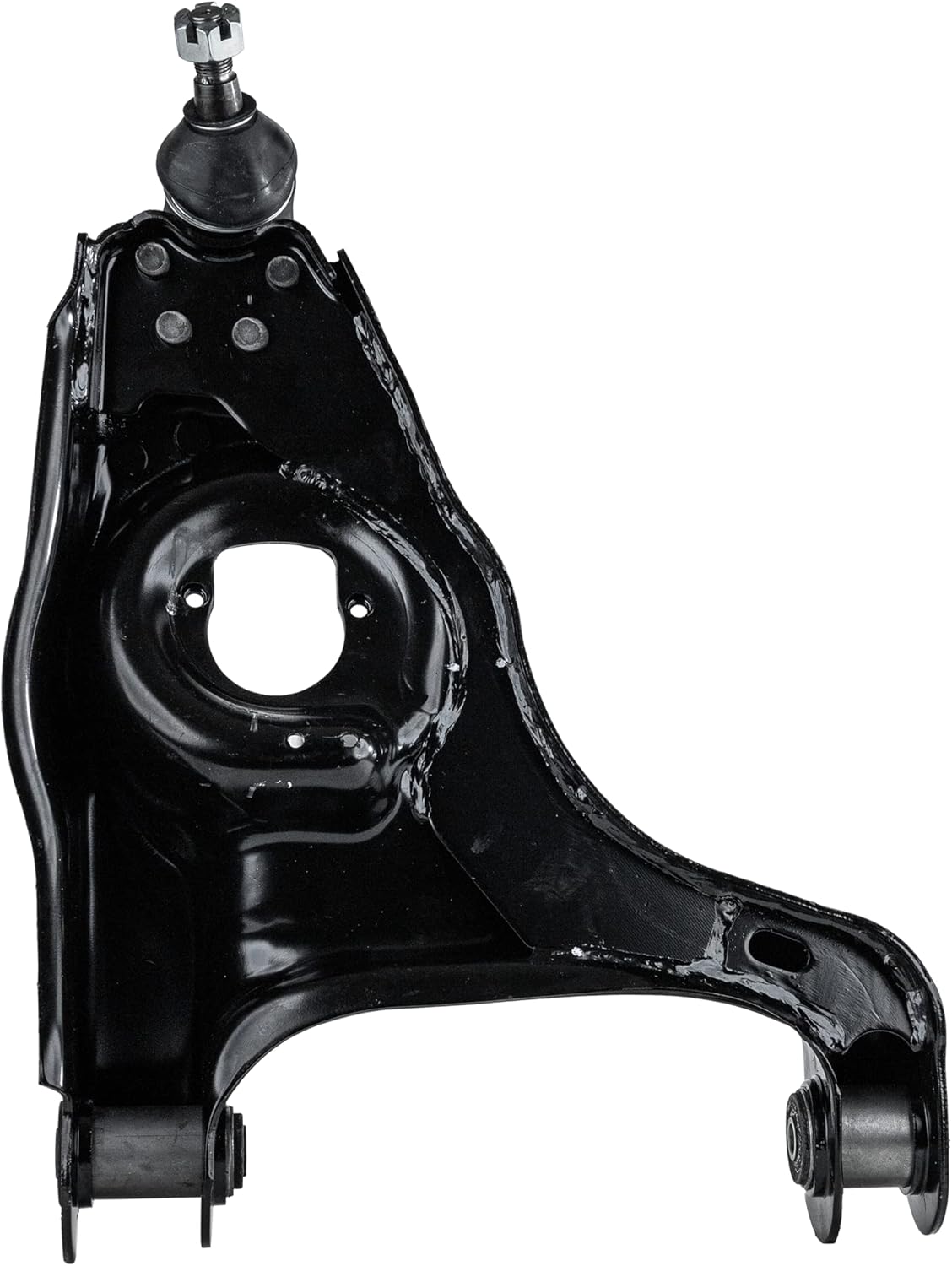
This Garage-Pro control arm replaces the front left lower unit on Dodge Dakota 1997–2004 (and compatible Durango years) as a direct-fit, stamped steel assembly that comes with bushings, a rubber material bushing, and a ball joint and nut(s) for straightforward installation. It is designed for everyday street use and routine suspension repairs where maintaining factory suspension geometry and steering stability is the goal. The vehicle-specific fit reduces modification and alignment surprises, and the inclusion of the ball joint and hardware saves a trip to source parts separately. Because it is a stamped design with rubber bushings, expect a stock-like ride and NVH (noise, vibration, harshness) similar to factory parts rather than a firmer performance feel. The unit carries a one-year unlimited-mileage warranty from the brand, which offers some assurance for budget repairs. This is a practical, cost-focused replacement for owners repairing a worn lower control arm without seeking upgraded performance components.
Best for: Buyers replacing a worn or damaged lower control arm who prioritize an affordable, straightforward repair that restores factory ride and steering behavior.
Less Ideal for: Drivers seeking performance upgrades, firmer handling, or heavy-duty aftermarket suspension components should consider reinforced or performance-oriented alternatives.
- Vehicle-specific direct-fit reduces installation complexity and fitment guesswork.
- Includes ball joint and hardware so fewer separate parts are needed.
- Stamped construction with rubber bushings provides factory-like ride comfort.
- Backed by a one-year unlimited-mileage warranty from the brand.
- Rubber bushings and stamped design prioritize comfort over upgraded handling or performance longevity.
Verdict: A budget-friendly, direct-fit front left lower control arm that restores factory ride and steering for 1997–2004 Dodge Dakota owners needing a reliable replacement.
5. MOOG RK620475 Front Right Lower Control Arm with Pre-Installed Ball Joint

| Fit Type | Vehicle Specific Fit |
|---|---|
| Auto Part Position | Right |
| Orientation | Front |
| Material | Alloy Steel, Iron |
| Manufacturer | MOOG Chassis Products |
This MOOG front right lower control arm replaces the factory unit and arrives with a pre-installed sealed ball joint so you can reinstall the suspension without sourcing separate components. It is engineered for heavy use with heat-treated construction and corrosion-resistant coatings on studs and surfaces to resist road salt and grime. The assembly is a direct-fit replacement intended to simplify installation and steering alignment, and the sealed ball joint reduces ongoing maintenance. In practice this part is most valuable when repairing worn suspension that causes steering play, tire wear, or rattling under load. Its robust design and factory-style fit make it a good long-term repair option, though the unit is heavier than some aftermarket alternatives and is built as a single assembly so replacing a failed component inside the arm requires swapping the whole part. If you want a durable, installation-ready replacement that restores steering feel and suspension geometry, this is a practical choice for the specified Dodge Dakota model years.
Best for: Buyers who prioritize a durable, installation-ready replacement to restore steering precision and reduce future maintenance on a 1997–2004 Dodge Dakota.
Less Ideal for: Drivers looking for the lightest-weight aftermarket performance arm or those wanting a rebuildable/serviceable multi-piece assembly should consider other options.
- Direct-fit, vehicle-specific design for straightforward installation and correct steering alignment
- Pre-installed sealed ball joint for maintenance-free operation and faster repair
- Heat-treated construction for increased structural strength under repetitive loads
- Corrosion-resistant coatings on studs and e-coated components to extend service life
- Entire assembly must be replaced if an internal component like the ball joint fails rather than servicing a separate part
Verdict: Choose this MOOG assembly when you want a durable, maintenance-minimizing direct-fit replacement to reliably restore front suspension and steering on a 1997–2004 Dodge Dakota.
6. Detroit Axle Front End 10‑Piece Suspension Kit for 2000–2004 Dodge Dakota / 2000–2003 Durango

| Fit Type | Vehicle Specific Fit |
|---|---|
| Auto Part Position | Front |
| Material | Aluminum |
| Manufacturer Part Number | 80407-10F |
| Warranty | 10-Year Warranty |
This Detroit Axle 10‑piece front end suspension kit supplies factory‑style replacement control arms and steering components for 4WD 2000–2004 Dodge Dakota and 2000–2003 Durango vehicles. It includes two upper control arms with ball joints, two lower control arms with ball joints, four tie rods, and two tie rod boots plus bellows, so you can refresh the entire front linkages at once rather than swapping parts piecemeal. The components are aluminum, shipped black, and Detroit Axle states the parts undergo impact and fatigue testing; in practice this means a direct replacement that restores steering geometry and reduces play from worn ball joints and tie rods. The kit is useful for routine overhaul after high miles or when diagnosing loose steering and uneven tire wear. Limitations are that the kit fits 4WD models only and installation will require alignment after assembly; some buyers may prefer OEM parts for exact finish or for specific heavy‑duty use. The included pieces simplify sourcing and cut time compared with ordering each part separately.
Best for: Buyers who want a one‑stop solution to rebuild the front suspension on a 4WD Dakota or Durango and who prioritize restoring firm steering feel backed by broad customer use.
Less Ideal for: Anyone restoring a 2WD vehicle, or owners seeking OEM factory finish or heavy‑duty aftermarket components for racing or commercial towing use.
- Complete kit covers upper and lower control arms plus tie rods and boots so you can replace the entire front linkage in one job
- Aluminum construction helps reduce corrosion compared with untreated steel
- Includes ball joints preinstalled which speeds installation and reduces parts matching errors
- Manufacturer states products undergo impact, wear, and fatigue testing to support durability claims
- Fits 4WD models only, so it is not suitable for 2WD Dakotas or Durangos
- Installation requires front-end alignment and basic suspension tools; not a quick bolt-on for inexperienced DIYers
Verdict: If you need to rebuild the 4WD front suspension on a 2000–2004 Dodge Dakota or 2000–2003 Durango quickly, this all‑in‑one kit gives the necessary control arms and steering pieces in a single purchase.
7. Detroit Axle Front Left Lower Control Arm with Ball Joint (Driver Side)

| Fit Type | Vehicle Specific Fit |
|---|---|
| Auto Part Position | Front Left Lower |
| Auto Part Orientation | Drivers Side |
| Material Type | Alloy Steel |
This Detroit Axle control arm replaces the front left lower suspension arm and includes a pressed-in ball joint for a single, ready-to-install unit. It is a vehicle-specific fit for 4WD Dodge Dakota (2000–2004) and Dodge Durango (2000–2003), so installation is straightforward for a mechanic or competent DIYer swapping a worn lower arm. Made from alloy steel with a high-strength structure, the arm is treated to resist corrosion and withstand repeated impact loads, which helps restore steering stability and reduce roadside vibration. Because the ball joint is preinstalled, it saves time compared with sourcing separate components and simplifies alignment checks after installation. Buyers should note this is a single arm for the driver side only and not a heavy-duty aftermarket upgrade, so it is best where you want a reliable, factory-quality replacement rather than race-level performance. Expect typical shop labor for removal and reinstallation and an alignment after fitment.
Best for: Buyers who prioritize a reliable, factory-quality replacement that installs quickly and restores original steering feel without upgrading suspension geometry.
Less Ideal for: Drivers seeking heavy-duty, performance-oriented control arms or those who need a complete multi-piece suspension overhaul should consider specialized aftermarket options instead.
- Direct-fit, vehicle-specific design simplifies installation and fitment checks.
- Includes an integrated ball joint so you get a ready-to-install assembly.
- Alloy steel construction with corrosion-resistant treatment for improved durability.
- Engineered to withstand repeated impact loads for stable steering and ride quality.
- Sold as a single driver-side lower arm so you must buy separately for the passenger side or as a kit.
Verdict: A straightforward, vehicle-specific replacement that gives risk-averse buyers a reliable, ready-to-install lower control arm with a preinstalled ball joint.
Choosing the Right 1997-2004 Dodge Dakota Control Arm: Key Factors to Consider
Fitment and Mounting Accuracy
Correct fitment is the most important factor for a 1997-2004 Dodge Dakota control arm. Mounting hole spacing, bracket orientation, and overall geometry must match the truck's suspension to maintain steering alignment and avoid introducing stress into other suspension components. Even small deviations can change caster or camber enough to cause alignment issues and uneven tire wear.
When assessing fitment, check that the control arm shares the same mounting method as the original—whether it bolts directly to frame brackets or uses factory-style bushings and sleeves. Proper fitment reduces installation time, minimizes the need for aftermarket modifications, and ensures predictable handling once installed.
Bushing Material and Design
Bushing choice affects ride quality, NVH, and suspension compliance. Rubber bushings generally provide a quieter, more compliant ride but can degrade faster under heavy loads or exposure to oil and road chemicals. Polyurethane or compounded elastomer bushings offer increased durability and firmer handling but may transmit more vibration into the cabin.
For the Dodge Dakota, consider how you use the truck. If you prioritize daily comfort and quiet operation, factory-style rubber bushings that match original geometry are a sensible option. If you tow, haul, or want sharper steering response, higher-durometer bushings may be appropriate, but be prepared for a firmer ride.
Ball Joint Quality and Serviceability
Many control arms integrate a ball joint that connects to the steering knuckle. Ball-joint strength, taper quality, and the presence of grease fittings affect long-term performance. A well-made ball joint resists play and wear, preserving steering responsiveness and wheel alignment.
Serviceability options matter too. Some control arms include replaceable or press-in ball joints, while others are sealed and must be replaced as a complete arm when the joint fails. Replaceable joints can reduce future maintenance cost, but sealed assemblies are often simpler to install and may have better initial sealing against contaminants.
Material and Construction
Control arms are commonly made from stamped steel, cast components, or forged metals. Stamped steel arms are lighter and cost-effective, while forged or cast parts can offer higher strength and resistance to bending under load. Welding quality, gusseting, and reinforcement around mounting points influence longevity, particularly for trucks that carry heavy loads or encounter off-road conditions.
When choosing for a 1997-2004 Dodge Dakota, weigh the tradeoff between strength and weight. For daily driving, a well-made stamped steel arm with good corrosion protection will be adequate. For heavier duty use or if the truck frequently encounters rough terrain, look for stronger construction and robust welds.
Corrosion Protection and Finish
Road salt, moisture, and road debris accelerate corrosion on suspension parts. A control arm with a high-quality protective finish—such as electrocoating, powder coat, or durable zinc plating—will resist rust and retain structural integrity longer. Corrosion at mounting points or bushing interfaces can complicate future removal and increase the risk of component failure.
Consider the environment in which the Dakota operates. In areas with frequent winter salt or coastal exposure, opt for arms with superior anti-corrosion treatments. Routine inspection and underbody cleaning also extend service life regardless of finish quality.
Installation Complexity and Alignment Impact
Installation difficulty varies by design and the tools required. Some control arms are straightforward bolt-on replacements, while others may require ball-joint pressing, special tools, or partial suspension disassembly. DIYers should account for time, tools, and whether a professional alignment will be needed after installation.
After replacing a control arm on the 1997-2004 Dodge Dakota, an alignment is often necessary to correct caster, camber, and toe. Choosing an arm that matches factory geometry reduces the amount of alignment adjustment required and lowers labor time and cost at the shop.
Common Control Arm Symptoms and Troubleshooting
Recognizing the signs of a failing control arm can help you address issues before they cause broader suspension damage. Typical symptoms include clunking or knocking noises over bumps, loose or vague steering, uneven tire wear, and vibration at speed. These symptoms often stem from worn bushings or ball joints allowing excessive movement.
When you notice symptoms, start with a visual inspection. Look for cracked or torn bushings, rust or deformation in the arm itself, and play at the ball joint. A simple pry-bar test at the wheel can reveal excessive movement. Document the findings before replacing parts to ensure you address the root cause.
- Clunking over bumps often indicates worn bushings or ball joint looseness.
- Vibration or wandering at highway speeds can point to alignment changes from control arm wear.
- Uneven tread wear on the inner or outer edges of the tire suggests camber or toe shifts.
Upper Control Arm Vs Lower Control Arm: Roles On The Dakota
On double-wishbone style setups, upper and lower control arms work together to locate the wheel and control camber changes through suspension travel. For the 1997-2004 Dodge Dakota, understanding which arm you are working on matters because replacement procedures and the parts you inspect differ.
Upper arms often handle less vertical load but play a significant role in camber control, while lower arms bear more of the load and commonly house the ball joint. Replacement frequency can differ between them, so confirm which arm is worn before ordering parts.
- Upper arms influence static camber and steering geometry.
- Lower arms usually incorporate the ball joint and take greater load.
- Service steps and torque requirements vary between upper and lower arms.
Preparing For Control Arm Installation
Preparation reduces time under the truck and helps prevent mistakes. Before starting, secure the vehicle on level ground and support the frame with jack stands. Have a torque wrench, appropriate sockets, and a ball-joint press or separator if needed. A service manual or torque specification sheet for the 1997-2004 Dodge Dakota will ensure correct fastener torque values.
Mark pre-change alignment settings when possible and document the condition of other suspension parts. Replace any worn related components during the job to avoid repeating labor. After installation, always get a professional alignment to restore correct caster, camber, and toe.
- Gather tools: torque wrench, jack stands, pry bar, ball-joint press or separator.
- Record existing alignment specs if available.
- Inspect adjacent components such as tie rods, bushings, and sway-bar links.
Serviceability And Future Maintenance
Think about long-term maintenance when choosing a control arm. Some designs allow the ball joint to be replaced separately, while others require the entire arm be swapped when the joint wears out. Greaseable joints with fittings extend service intervals and can be maintained with periodic lubrication, which is valuable on trucks used for towing or in off-road environments.
Also consider the availability of replacement bushings and the expected lifespan of the chosen bushing material. Regular inspections during routine service will help you catch progressive wear before it affects handling or causes additional component damage.
- Grease fittings on ball joints facilitate periodic maintenance.
- Replaceable ball joints reduce long-term replacement cost and waste.
- Inspect control arms during oil changes or tire rotations for early detection.
Alignment Issues After Control Arm Service
Replacing a control arm almost always affects alignment; torsional differences and bushing compression can change toe and camber. Expect to have a professional alignment performed after installation. Specifying that the replacement arm matches factory geometry reduces correction time at the alignment shop.
If you notice pulling to one side, uneven steering wheel position, or abnormal tire wear after installation, return to the alignment shop promptly. Small adjustments to toe and camber often resolve these issues, but ignoring them accelerates tire and suspension wear.
- Always perform a four-wheel alignment after control arm replacement.
- Bring the vehicle back for recheck if symptoms persist after alignment.
Still looking for the perfect fit?
Select your Dodge Dakota configuration to see the most relevant Control Arms recommendations
How We Chose the Best 1997-2004 Dodge Dakota Control Arm
We focused on attributes that directly affect fitment, safety, and longevity for the 1997-2004 Dodge Dakota. Primary evaluation criteria included vehicle-specific fitment accuracy, factory-equivalent mounting points and dimensions, and bushing design and material. We prioritized control arms that use durable bushings or bushings that replicate original geometry, as those preserve steering alignment and minimize premature tire wear. Ball-joint quality and serviceability was another key filter; where applicable, we favored designs with press-in or replaceable ball joints to simplify future maintenance.Corrosion protection and finish were considered to ensure parts resist road salt and moisture common in many regions. We also looked at manufacturing and material quality, including stamped steel vs forged components, to balance strength and cost. Finally, we checked documented user fit experiences and installation complexity so our picks would suit DIYers and shops alike.Excluded items included universal or non-vehicle-specific assemblies, parts without confirmed fitment for the 1997-2004 Dodge Dakota, and components that required significant modification. The result is a list of options that meet strict fit and durability expectations for this truck.
Our full evaluation process is outlined in our review methodology.
FAQ
How can I tell if a control arm is bad on my 1997-2004 Dodge Dakota?
Common indicators include clunking noises over bumps, loose or wandering steering, and uneven tire wear. Visually inspect for torn bushings, rusted or bent arms, and play at the ball joint with a pry bar.
Should I replace bushings or the entire control arm?
It depends on the arm design. If the arm has replaceable bushings or a serviceable ball joint, you can replace individual components. If the arm is heavily corroded or has an integrated, non-serviceable joint, replacing the whole arm is often safer and more efficient.
Do I need an alignment after replacing a control arm?
Yes. Replacing a control arm affects camber and toe, so a professional alignment is recommended to correct geometry and prevent premature tire wear.
Can I install a control arm myself on the Dakota?
A competent DIYer with the right tools can install a control arm, but expect to need a ball-joint press or separator and a torque wrench. Plan for an alignment afterward and consider professional help if you lack the tools or experience.
What causes control arm bushing wear on the Dodge Dakota?
Bushing wear is often due to age, exposure to oil and road chemicals, heavy loads, and frequent off-road use. Repeated suspension movement and harsh impacts accelerate wear and can lead to increased play and noise.
How long do control arms typically last on this generation Dakota?
Lifespan varies widely based on driving conditions and maintenance. Under normal highway use, well-made control arms can last many years, while trucks used for towing or off-road can see earlier wear. Regular inspections are the best way to gauge remaining life.
Final Verdict
When replacing control arms on a 1997-2004 Dodge Dakota, prioritize correct fitment, bushing design, and ball-joint quality to preserve handling and alignment. Consider the truck's typical use—daily driving, towing, or off-road—when choosing between firmer bushing materials and factory-style compliance.Plan for proper installation and a post-replacement alignment. Balancing durability, serviceability, and corrosion protection will help you select an option that delivers reliable steering feel and long-term value for this truck.
Explore More:
- Check out all Dodge Dakota parts & accessories
- Explore Control Arms Maintenance & Repair Guides
- Explore Suspension & Steering
- Browse all Auto Parts
