

Note: This article contains affiliate links. If you click on these links and make a purchase, I may earn a small commission at no extra cost to you. This helps support my research and content. Read my full affiliate disclosure here.
Swapping a faulty catalytic converter on a Subaru Crosstrek XV can resolve emissions failures, reduce check-engine warnings, and restore drivability. Because the converter sits at the heart of the exhaust system, choosing the right replacement affects fitment, long-term durability, and how the engine runs under load.This guide shortlists seven top catalytic converters suited to the Crosstrek XV and explains the evaluation criteria used to assess fitment, construction, and emissions performance. Read on to compare options and learn which attributes matter most for reliable, road-legal operation.
Looking for other parts? See all Subaru Crosstrek parts & accessories.
Top Picks at a Glance


1. PHILTOP High Flow Catalytic Converter Compatible with Subaru Crosstrek/Forester/Impreza

| Fitment | Rear catalytic converter for specified Subaru 2.0L and 2.5L models |
|---|---|
| Material | Stainless steel body with aluminized pipes |
| Carrier | Double-layer high temperature ceramic carrier |
| Position | Rear |
| Compliance | EPA compliant |
This PHILTOP catalytic converter is a bolt-in rear replacement for select Subaru Crosstrek, Forester, and Impreza models that aims to restore emissions control and maintain engine performance. It uses a stainless steel body with aluminized piping and a double-layer ceramic carrier to increase flow area and oxygen storage, which can help smooth exhaust flow and support fuel economy compared with a clogged original. The unit ships with gaskets and hardware for a plug-and-play swap without cutting or drilling, so installation is straightforward for a shop or experienced DIYer familiar with exhaust work. It is EPA compliant, so it meets federal emissions requirements for most states but cannot be sold for use in California or Colorado. Buyers should confirm the listed reference numbers and rear position fitment for their exact year and engine before ordering since it is produced for specific Subaru applications. For those who need a like-for-like emissions replacement that prioritizes flow and fitment, this is a practical choice.
Best for: Buyers who want a straightforward, emissions-compliant replacement that restores exhaust flow and performance on a balanced budget while keeping installation simple.
Less Ideal for: Do not choose this if you require a California-compliant converter or are seeking a performance-focused downpipe for racing or heavily modified engines.
- Direct-fit rear replacement for specified Subaru 2.0L and 2.5L models reducing installation complexity
- Stainless steel and aluminized piping resist corrosion for longer service life
- Double-layer ceramic carrier increases flow area to help restore power and fuel efficiency
- Includes gaskets and hardware for a plug-and-play installation
- EPA compliant for federal emissions requirements where allowed
- Not legal for sale or installation in California or Colorado due to state regulations
Verdict: A practical, direct-fit rear converter that restores emissions control and exhaust flow for specified Subaru Crosstrek/Forester/Impreza models without complicated installation.
2. MagnaFlow Catalytic Converter 52510, Direct-Fit, Federal/EPA Compliant

| Manufacturer | MagnaFlow |
|---|---|
| Model | OEM Grade |
| Exterior | Stainless Steel |
| Position | Rear |
| Manufacturer Part Number | 52510 |
This MagnaFlow direct-fit catalytic converter is built to replace the factory rear converter on compatible Subaru models while meeting Federal/EPA emissions rules. It replicates the factory spun body design using 3D scanning and laser fusion welding to reduce leaks and maintain exhaust flow dynamics, so you get near-factory performance and thermal efficiency. The unit ships with gaskets and hardware to avoid reusing corroded factory parts and simplify installation. Constructed from stainless steel with mandrel-bent tubing, it offers improved corrosion resistance and preserves exhaust geometry for consistent engine operation and fuel economy. Note that this is a federal-compliant part and is not legal for sale or use in California, Colorado, or New York, so it is only suitable where federal replacement converters are permitted. Buyers should also confirm exact fitment against OEM part numbers before ordering to ensure compatibility with their Crosstrek.
Best for: Buyers who want a performance-minded, factory-quality replacement that preserves exhaust flow and engine efficiency on compatible Subaru Crosstrek XV models while meeting federal emissions standards.
Less Ideal for: Drivers in states that require California-specific emission parts or anyone needing a CARB-compliant converter should look for a state-legal alternative.
- Direct-fit design replicates factory geometry for consistent exhaust flow and engine performance
- Stainless steel construction and mandrel-bent tubing improve corrosion resistance and longevity
- Includes gaskets and hardware to reduce the need to reuse corroded factory parts and simplify installation
- Manufactured with laser fusion welds to reduce the risk of leaks and improve thermal efficiency
- Not legal for sale or use in California, Colorado, or New York
Verdict: Choose this direct-fit MagnaFlow converter if you want a factory-like replacement that maintains exhaust flow and durability while complying with federal emissions for your Crosstrek XV.
3. PHILTOP High-Flow Catalytic Converter Rear Direct-Fit for Subaru Forester/Impreza/Crosstrek

| Position | Rear |
|---|---|
| Manufacturer | PHILTOP |
| Compatible engines | Subaru 2.0L and 2.5L (listed models) |
| EPA compliance | Yes (federal) |
This PHILTOP catalytic converter is a direct-fit rear replacement intended for certain Subaru Forester, Impreza, and Crosstrek models and comes with OE-style gaskets and installation hardware. It uses a double-layer ceramic substrate and a high-flow design to reduce backpressure, which can restore engine breathing and marginally improve fuel economy compared with a clogged or damaged converter. The stainless aluminized steel housing aims to resist rust for longer service life, and the kit is sold as EPA-compliant for federal emissions regions. Installation is straightforward for a competent DIYer or a shop, typically taking a few hours without cutting or custom work. Important limitations are that this EPA-compliant unit is not for sale in some states with stricter rules and it replaces only the rear position, so buyers must confirm exact fitment for their Crosstrek variant and year before purchasing.
Best for: Buyers who want a practical, factory-style replacement that restores exhaust flow and emissions function without custom work and who prioritize durability and a straightforward install.
Less Ideal for: People who need a California or other state-specific compliant converter or who require an upstream/front catalytic converter replacement rather than the rear unit.
- Direct-fit design with OE-style gaskets and hardware for hassle-reduced installation
- High-flow double-layer ceramic substrate to lower backpressure and improve catalytic efficiency
- Stainless aluminized steel body resists rust and extends service life
- Includes necessary mounting hardware so no modifications are typically required
- EPA-compliant designation restricts sale and use in states with stricter aftermarket converter rules
Verdict: A practical direct-fit rear converter that restores flow and emissions performance for compatible Subaru Crosstrek models with minimal fuss.
4. RILONH Catalytic Converter 674-311 for Subaru Crosstrek / Forester / Impreza / Legacy / Outback (EPA Compliant)

| Reference Number | 674-311 |
|---|---|
| Applicable Engines | 2.0L and 2.5L Subaru models listed |
| Material | 409L stainless steel |
| Certification | EPA Compliant |
| Includes | Gaskets and mounting hardware |
This RILONH catalytic converter is a bolt-on, flange-to-flange replacement intended for Subaru 2.0L and 2.5L models in the listed year ranges. It uses 409L stainless steel construction and welded connections to resist heat and corrosion while the high-flow internal design aims to improve conversion efficiency without overly restricting exhaust flow. The unit arrives with gaskets and mounting hardware to simplify installation for a competent DIYer or a workshop tech. Its EPA certification means it meets emissions standards for its stated applications, and the included one-year unlimited-mileage guarantee provides short-term coverage. Expect a heavier, full-metal unit compared with aftermarket universals, which helps durability but may require attention to fitment and hanger alignment during install. Some buyers may prefer a longer warranty or brand-recognized aftermarket options, but for a budget-focused replacement that keeps emissions compliant, this model covers the essentials.
Best for: Buyers who prioritize a low-cost, emissions-compliant replacement that installs with standard flange connections and want a durable metal unit without premium-brand pricing.
Less Ideal for: Shoppers seeking an extended warranty, brand-name assurance, or performance-tuned aftermarket converters for racing or heavy modifications should look elsewhere.
- Direct flange-to-flange fit for specified Subaru models so installation is straightforward
- 409L stainless steel construction and welded joints provide good resistance to heat and corrosion
- Includes gaskets and hardware so no extra parts are required for a standard replacement
- EPA compliant high-flow design preserves emissions compliance while improving flow
- Warranty is limited to one year which is shorter than some competing replacements
Verdict: A practical, budget-minded EPA-compliant replacement that provides durable stainless-steel construction and bolt-on fitment for the listed Subaru models.
5. PHILTOP Catalytic Converter for Subaru Forester/Impreza/Crosstrek (EPA Compliant)
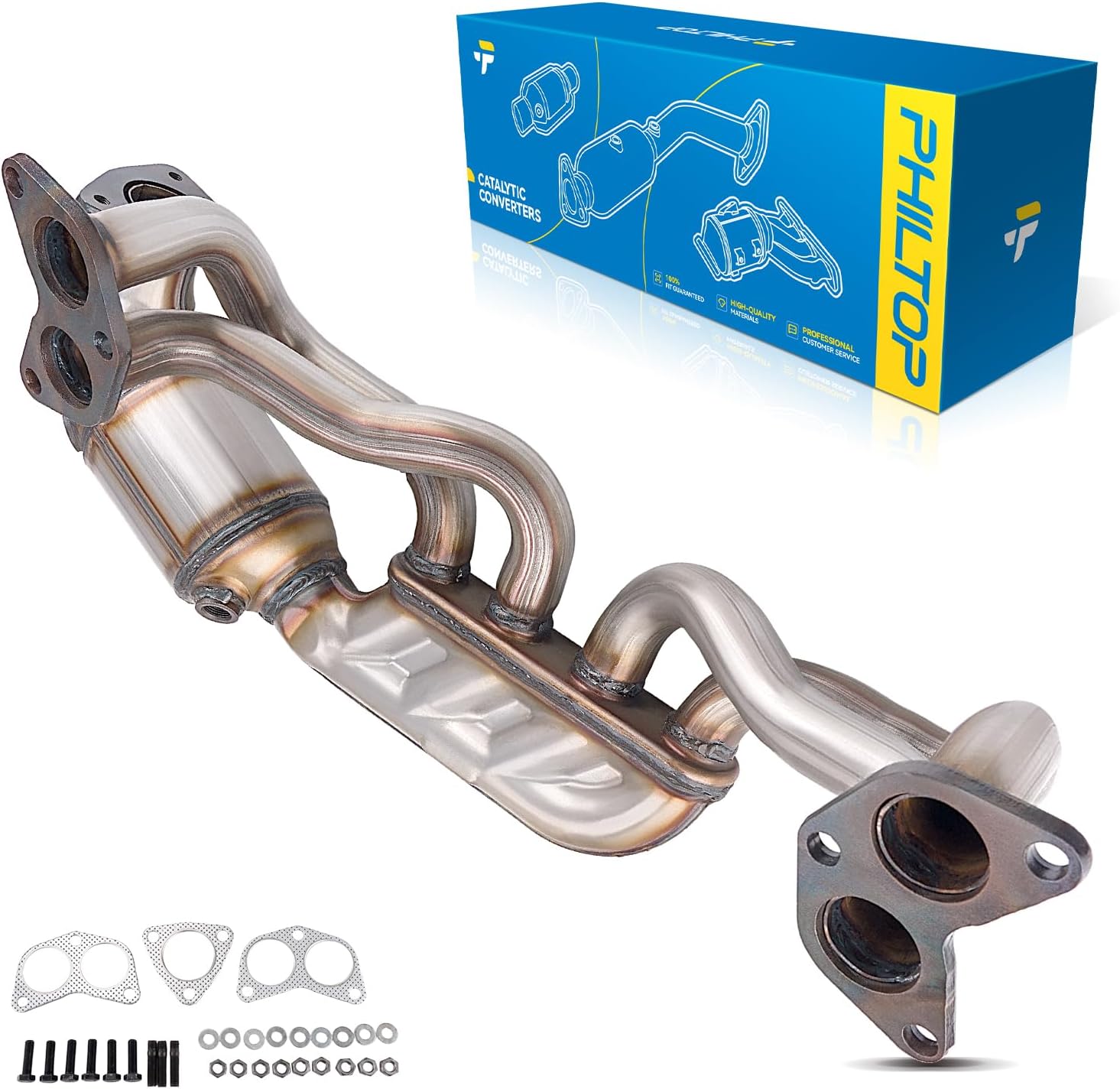
| Manufacturer | PHILTOP |
|---|---|
| Model | 2014-2016 Forester Catalytic Converter |
| Manufacturer Part Number | 2555EXP251AUS |
| OEM Part Number | 16689, 44620AC780, 44620AC580, 44620AC620, 44620AD170, 44620AC621, 44620AD16A, 44620AD17A, 44620AC770, 44620AD160, 44620AC581, 52587, 641559, 44620AD83C, 44620AD83B, 44620AD83A, 44620AD16B, 44620AD17B, 41209 |
This PHILTOP catalytic converter is a direct-fit replacement built to restore emissions control and engine breathing on compatible Subaru models. It uses a high-flow ceramic honeycomb substrate to reduce backpressure, which can help the engine run cleaner and maintain fuel efficiency compared with a clogged or damaged unit. The unit ships with OE-style gaskets and hardware so it installs to factory mounting points and typically can be fitted within a few hours without modification. PHILTOP states the converter is EPA compliant for federal emissions regions and should pass smog checks where permitted. Practical benefits include quieter operation if a worn converter was causing rattles and avoiding check engine lights tied to catalytic failures when the correct fit is used. Important limitations are regulatory: this EPA-compliant unit is not for use in states with stricter aftermarket rules, and buyers must verify exact model fitment using the vehicle compatibility tool before ordering.
Best for: A Crosstrek owner prioritizing a reliable, factory-style replacement that restores emissions performance and avoids aftermarket fitment hassles.
Less Ideal for: Drivers in states with strict aftermarket catalytic converter laws or anyone unsure about model-year compatibility who cannot verify fit before buying.
- Direct-fit design with OE-style gaskets and hardware for straightforward installation
- High-flow ceramic substrate to reduce backpressure and help maintain fuel efficiency
- EPA-compliant for federal emissions regions and intended to pass smog where allowed
- Not eligible for sale or installation in states with stricter aftermarket converter regulations
Verdict: Choose this PHILTOP unit when you want a factory-style, EPA-compliant replacement that restores emissions function and installs using original mounting points.
6. KAX Front Catalytic Converter for Subaru Forester/Impreza/Outback/Crosstrek/Legacy

| Manufacturer | KAX |
|---|---|
| Position | Front |
| Model | Catalytic Converter Subaru Forester 2014-2016 |
| OEM Part Number | 16689, 44620AC780, 44620AC580, 44620AC620, 44620AD170, 44620AC621, 44620AD16A, 44620AD17A, 44620AC770, 44620AD160, 44620AC581 |
This KAX front catalytic converter replaces the original unit on compatible Subaru models and is built to the factory-style layout so it bolts in without modification. It uses a high-flow ceramic substrate and a precision washcoat to reduce tailpipe emissions and help keep the check-engine light off. The unit ships with OE-style gaskets, flanges, hangers, and mounting hardware so installation typically takes a home mechanic or shop about three to four hours. Aluminized heat shields and machined exterior surfaces mirror the original design to protect surrounding components and improve durability. Because it is a federal-emissions model it is not legal for use in California, New York, or Maine. Expect a solid factory-replacement fit and improved exhaust flow compared with a failing converter, but confirm the exact OEM part number and emissions designation before buying to ensure compliance with local regulations.
Best for: Buyer seeking a proven, direct-replacement catalytic converter with visible fitment and review history who prioritizes a straightforward installation and maintaining factory emissions performance.
Less Ideal for: Do not choose this if you need a California-compliant emissions part or if you prefer an aftermarket high-performance unit tuned for increased power rather than emission matching.
- Direct-fit front replacement that uses factory-style flanges and hangers for straightforward installation
- Comes with OE-style gaskets and hardware so no modification is typically required
- High-flow ceramic substrate and optimized washcoat aimed at reducing emissions and improving exhaust flow
- Aluminized heat shields and machined exterior for enhanced durability and heat protection
- Not legal for sale or use in California, New York, or Maine due to emissions regulations
Verdict: If you need a reliable, bolt-on front catalytic converter that matches factory fit and emissions performance for the listed Subaru models, this KAX unit is a practical choice.
7. SPEEDFusion High-Flow Catalytic Converter (EPA Compliant)

| Compatible engines | 2.0L and 2.5L H4 |
|---|---|
| EPA status | EPA compliant |
| Substrate | OEM-grade 400-hole ceramic |
| Shell material | 409L stainless steel |
| Warranty | 5-year structural; 2.5-year emissions |
This SPEEDFusion catalytic converter is a direct-fit replacement intended for Subaru Crosstrek, Forester, Impreza, Legacy and Outback models with 2.0L or 2.5L H4 engines that meet federal emission standards. It pairs a 409L stainless steel shell with an OEM-grade 400-hole ceramic substrate coated with platinum, rhodium and palladium to improve conversion efficiency and help prevent check-engine codes related to catalytic performance. Installation is typical of factory-replacement converters and is best handled by a professional to ensure proper sealing and sensor alignment. The unit is EPA certified so it is legal for use in most states, but it is not CARB-compliant and cannot be used where California-style regulations apply. SpeedFusion backs the part with a 5-year structural warranty and a limited emissions performance warranty, which provides extra assurance for buyers focused on reliability. Buyers should confirm exact fitment using their vehicle details before ordering and be aware that use in CARB states is restricted.
Best for: Buyers who want a factory-style, EPA-certified replacement to restore emissions function with a reliable warranty and who prioritize minimizing inspection failures and check-engine lights.
Less Ideal for: Vehicle owners located in California, New York, Colorado, Maine, or other states that require CARB-compliant parts, or buyers seeking a California-legal aftermarket converter.
- Direct-fit design for the listed Subaru 2.0L and 2.5L H4 applications simplifies installation.
- EPA compliant for federal emissions standards, so it restores legal emissions performance in non-CARB states.
- Construction uses 409L stainless steel and an OEM-grade 400-hole ceramic substrate for durability and effective catalytic conversion.
- Includes a 5-year structural warranty and a 2.5-year/25,000-mile emissions performance warranty for added buyer protection.
- Not CARB-compliant and therefore illegal for use or sale in states with California-style emissions rules.
Verdict: Choose this EPA-certified direct-fit converter if you need a factory-style replacement for a Subaru Crosstrek XV that restores emissions performance and comes with a solid warranty.
Choosing the Right Subaru Crosstrek XV Catalytic Converter: Key Factors to Consider
Fitment and Mounting
Correct fitment is the single most important factor for the Subaru Crosstrek XV because the factory exhaust routing and flange positions are specific to this vehicle. A converter that matches the XV's flange pattern and pipe diameter minimizes the need for cutting or adaptors, preserving exhaust geometry and preventing leaks.
Improper fitment can introduce exhaust leaks, generate vibration noises, or cause sensor misalignment that triggers a check-engine light. Always verify bolt pattern, pipe size, and sensor bung locations against your vehicle before purchasing to ensure a hassle-free installation.
Emissions Substrate and Catalyst Type
The internal substrate and catalyst coating determine how effectively the unit converts hydrocarbons, carbon monoxide, and nitrogen oxides. For the Crosstrek XV, choosing a substrate with an appropriate cell density balances emissions performance and backpressure. Too dense a substrate can raise backpressure and affect throttle response, while too coarse a substrate may not reduce pollutants sufficiently.
Consider converters designed to meet or exceed emissions standards relevant to your vehicle. If your Crosstrek XV is equipped with multiple oxygen sensors, ensure the converter supports the proper catalyst zoning so sensor readings remain within expected ranges.
Oxygen Sensor Compatibility
Modern Subaru Crosstrek XV engines rely on upstream and downstream oxygen sensors to manage fuel trim and verify catalyst efficiency. A replacement catalytic converter must provide correct sensor bungs positioned to match factory locations and maintain proper sensor signal timing.
Incorrect sensor placement or absence of the necessary bungs can lead to persistent check-engine lights, failed emissions tests, and poor engine management. Confirm the number and location of sensor ports before installation.
Construction Quality and Corrosion Resistance
A catalytic converter endures high temperatures and exposure to salt, moisture, and road debris. Materials such as stainless steel shells, high-strength welds, and corrosion-resistant coatings increase service life on the Crosstrek XV, particularly in regions with winter road salt.
Inferior shell metal, weak welds, or poor bonding of the catalyst substrate can lead to premature failure, rattling from broken substrate, or exhaust leaks. Prioritizing robust construction reduces the likelihood of repeat repairs.
Backpressure and Driveability
Catalytic converters affect exhaust flow and therefore engine breathing. For the Subaru Crosstrek XV, which balances fuel economy with everyday responsiveness, a unit that maintains similar backpressure to the factory part helps preserve throttle response and fuel-efficiency characteristics.
High backpressure units can make the engine feel sluggish under acceleration and may increase fuel consumption. Look for designs that replicate factory flow characteristics or are specifically tuned for the vehicle's engine to avoid negative driveability impacts.
Legal and Emissions Compliance
Replacements must meet local emissions regulations applicable to the Crosstrek XV. Choosing a converter designed to comply with emissions standards reduces the risk of failing a smog check. Where required, opt for converters that explicitly state compliance with regional emissions rules.
Using a noncompliant unit can lead to inspection failures or legal issues. Check that the replacement supports the emissions control strategy of your vehicle, including oxygen sensor placement and catalyst efficiency claims.
Signs Your Crosstrek XV Needs a New Catalytic Converter
Several symptoms commonly indicate catalytic converter issues on the Subaru Crosstrek XV. A persistent check-engine light combined with codes related to catalyst efficiency or oxygen sensor readings is a primary indicator. You may also notice reduced engine performance, sluggish acceleration, or difficulty reaching top speed if the converter is clogged.
Physical signs include rattling noises from underneath the vehicle when the substrate has degraded, or a noticeable rotten-egg sulfur smell when the catalyst is malfunctioning. Any of these symptoms merit inspection before proceeding with replacement.
- Check-engine codes related to catalyst efficiency or oxygen sensors
- Reduced throttle response or acceleration lag
- Rattling from under the vehicle at idle or low speeds
- Sulfur or rotten-egg odor from exhaust
- Failed emissions or smog inspection
Preparing for Installation on a Subaru Crosstrek XV
Preparation reduces labor time and avoids fitment surprises. Raise the vehicle safely and secure it on jack stands or a lift. Let the exhaust cool completely before working on the converter to avoid burns. Gather the factory service manual or a reliable repair guide for torque specs and recommended procedures.
Inspect surrounding components such as exhaust hangers, heat shields, and oxygen sensors. Replace degraded gaskets and mounting hardware during the job to prevent leaks. Having the correct replacement gaskets and sensor hardware on hand ensures a clean installation.
- Verify sensor bung locations and count before ordering
- Replace exhaust gaskets and rusty bolts during installation
- Use anti-seize on sensor threads where recommended
Sensor Testing and Post-Install Checks
After installing a replacement converter, test oxygen sensor behavior to confirm the engine management system recognizes the new unit. Monitor live sensor readings if you have an OBD-II scanner; upstream sensors should show switching activity while downstream sensors should stabilize once the converter heats up.
Perform a road test under varied throttle conditions to detect any exhaust leaks, abnormal noises, or drivability changes. Re-scan for diagnostic trouble codes following the test and clear codes only after verifying the issue is resolved.
- Monitor upstream and downstream oxygen sensor voltages
- Listen for exhaust leaks at flanges and gasket surfaces
- Clear and re-scan engine codes after confirming proper operation
Maintaining Your Replacement Catalytic Converter
Good maintenance habits extend converter life. Avoid burning oil or coolant into the exhaust, as contamination can coat the catalyst and reduce efficiency. Address misfires promptly since unburned fuel entering the converter can overheat and damage the substrate.
Regular inspections for rust or physical damage and ensuring exhaust clamps and hangers remain tight will prevent premature failure. Keeping the engine tuned and the fuel system in good condition protects the converter from chemical and thermal stress.
- Fix misfires and fuel trim issues promptly
- Avoid prolonged idling with rich-running conditions
- Inspect for rust, dents, or loose hangers annually
Common Installation Pitfalls to Avoid
One common mistake is assuming universal fitment. The Crosstrek XV has specific exhaust geometry, so forcing a mismatched converter can create leaks or strain the exhaust system. Another pitfall is reusing old gaskets or bolts that are corroded; they often fail to seal properly and complicate the repair.
Over-tightening bolts can warp flanges and create misalignment, while under-tightening leads to leaks. Follow torque specifications and use new gaskets to secure a reliable seal.
- Do not reuse corroded flanges, gaskets, or bolts
- Avoid universal converters that require modification
- Follow torque specs to prevent flange warping
Still looking for the perfect fit?
Select your Subaru Crosstrek configuration to see the most relevant Catalytic Converters recommendations
How We Chose the Best Subaru Crosstrek XV Catalytic Converter
We evaluated replacements using criteria that reflect real-world needs for Subaru Crosstrek XV owners. Key evaluation factors included exact fitment to the XV exhaust routing and flange pattern, substrate type and cell density for emissions control, and overall construction quality such as welded seams and corrosion-resistant materials. Backpressure characteristics and compatibility with factory oxygen sensors were assessed because they influence drivability and check-engine behavior. Durability under road conditions was judged by heat-resistant coatings, materials that resist rust, and evidence of robust bonding between the substrate and shell.We excluded universal or heavily modified converters that require extensive fabrication or cutting of the factory exhaust. We also excluded options that lack clear fitment details for the Crosstrek XV or do not support the original oxygen sensor locations. The final shortlist favors units with explicit vehicle fitment, adequate emissions substrate design, and proven construction features relevant to Subaru Crosstrek XV owners.
Our full evaluation process is outlined in our review methodology.
FAQ
How long does a catalytic converter usually last on a Crosstrek XV?
It often lasts many years, but life depends on driving conditions and maintenance. Regular engine tune-ups and avoiding oil or coolant contamination extend service life.
Will replacing the catalytic converter clear a check-engine light?
Sometimes it will, particularly if the cause is a failing catalyst that triggered efficiency codes. In many cases you should clear codes and verify sensor readings after installation to ensure the light stays off.
Can I drive the Crosstrek XV with a damaged catalytic converter?
Short-term driving is possible, but a badly damaged or clogged converter can reduce power, increase emissions, and risk further engine or exhaust damage. It is best to diagnose and repair promptly.
Do I need to replace oxygen sensors when I replace the converter?
Not always. If sensors are within service life and show proper operation, they can usually be reused. Replace sensors that show slow response, contamination, or are near the end of their expected life to avoid future issues.
How do I confirm the new converter fits correctly on my XV?
Verify manufacturer fitment information for the Crosstrek XV, confirm flange patterns and pipe diameter, and check sensor bung locations against your vehicle before purchasing.
Will a new catalytic converter affect fuel economy?
A properly matched converter should restore normal engine efficiency. If the old converter was clogged, replacing it can improve fuel economy; however, a converter that significantly changes backpressure could alter fuel consumption slightly.
Final Verdict
When choosing a catalytic converter for a Subaru Crosstrek XV, prioritize correct fitment, oxygen sensor compatibility, and durable construction. Those factors most directly affect drivability, emissions compliance, and long-term reliability. Balance substrate design and backpressure to preserve the vehicle's engine characteristics while meeting emissions needs.Focus on replacements that explicitly match the XV's flange pattern and sensor locations, and address any related engine issues before installation. Doing so will help you achieve a reliable repair and minimize the chance of repeat work.
Explore More:
- Check out all Subaru Crosstrek parts & accessories
- Explore Catalytic Converters Maintenance & Repair Guides
- Explore Exhaust & Emissions
- Browse all Auto Parts
