

Note: This article contains affiliate links. If you click on these links and make a purchase, I may earn a small commission at no extra cost to you. This helps support my research and content. Read my full affiliate disclosure here.
If your 2013-2017 Subaru Crosstrek needs a catalytic converter, choosing the right replacement matters for emissions, drivability, and legal compliance. A poorly matched converter can trigger persistent check engine lights, reduce engine performance, or fail state inspections.This guide covers seven shortlisted catalytic converters chosen for fitment and emissions performance specifically for the 2013-2017 Crosstrek. We explain the decision criteria used to evaluate options and highlight practical considerations like sensor compatibility, physical fit, and expected impact on exhaust behavior. Read on to see which converters meet the most important needs for this vehicle and why they made the list.
Looking for other parts? See all Subaru Crosstrek parts & accessories.
Top Picks at a Glance


1. PHILTOP High Flow Catalytic Converter (Front) Compatible with Select 2011–2017 Subaru Models
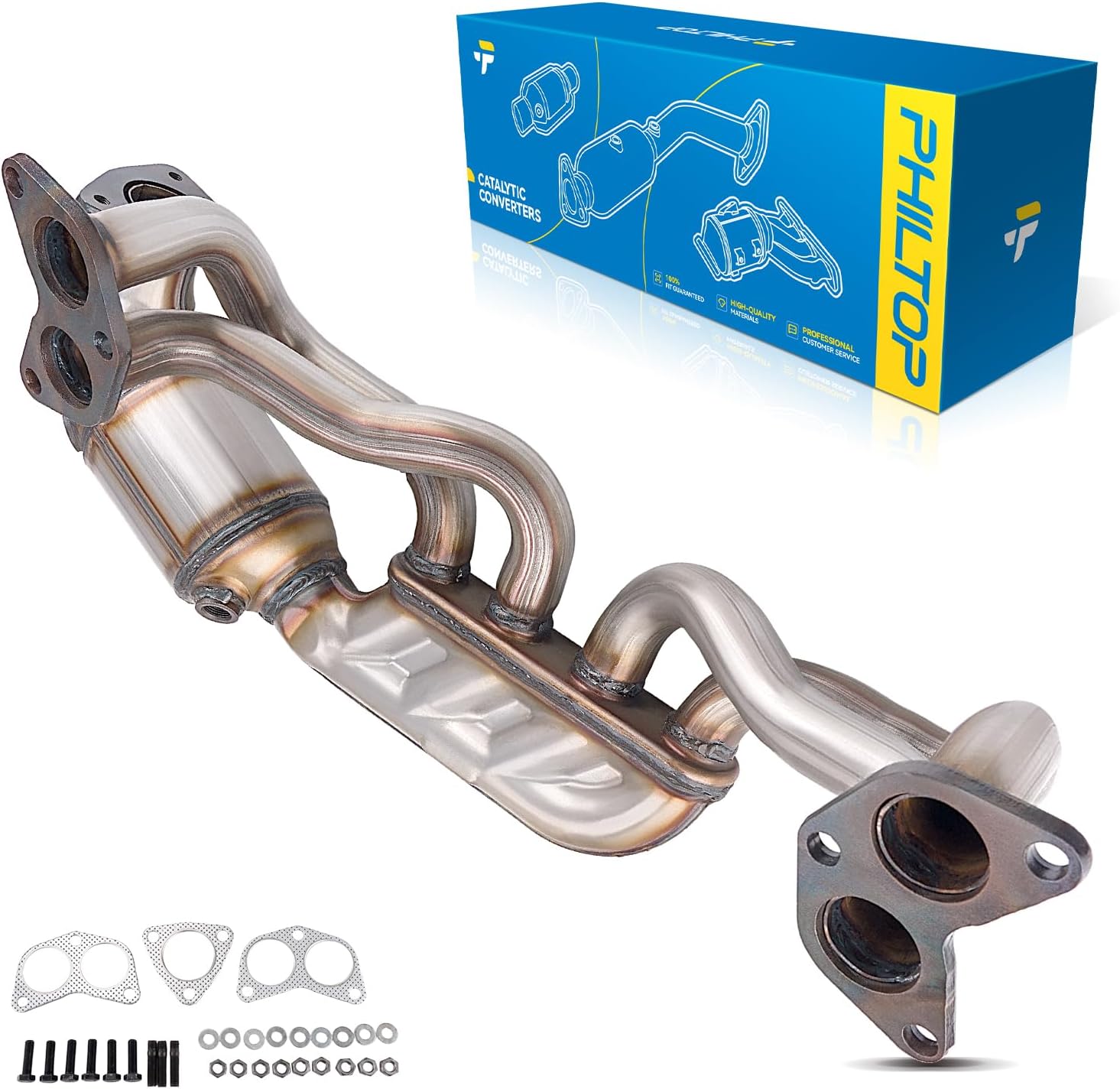
| Position | Front |
|---|---|
| Manufacturer | PHILTOP |
| Material | 409L stainless steel |
| EPA compliance | Federal emissions model |
| Compatible engines | Select 2.0L and 2.5L Subaru models 2011–2017 |
This PHILTOP catalytic converter replaces the front unit on select Subaru 2011–2017 models and is intended as a direct-fit factory-style replacement. It uses a high-flow ceramic honeycomb substrate to lower backpressure, which can help the engine breathe better and may improve throttle response compared with a clogged or failing original converter. The listing notes EPA federal compliance, OE-style gaskets and hardware included, and stainless steel construction for corrosion resistance and longer service life. Installation is described as straightforward using the original mounting points and should take a competent DIYer or a shop about 3 to 4 hours. Important limitations are that this federal-emissions unit is not legal for sale or installation in certain states with stricter rules and that compatibility must be confirmed against your specific VIN or the confirmed-fit tool; pricing and core/exchange policies are not discussed in the listing. For a balanced buyer this is presented as a practical, durable replacement that prioritizes fit and emissions compliance over performance tuning.
Best for: Buyers who want a reliable, factory-style front catalytic converter replacement that restores emissions compliance and improves exhaust flow without modifying the vehicle.
Less Ideal for: Do not choose this if you live in a state with stricter emissions laws or if you are seeking a performance aftermarket converter for racing or off-road use.
- High-flow ceramic substrate to reduce backpressure and improve exhaust flow.
- Includes OE-style gaskets and hardware for direct-fit installation.
- Constructed from 409L stainless steel for corrosion resistance and longer service life.
- EPA federal-compliant design suitable for non-California federal-emissions vehicles.
- Not legal for sale or installation in states with stricter emissions rules such as California, Colorado, Maine, and New York.
Verdict: A solid factory-style front catalytic converter replacement that restores emissions compliance and improves exhaust flow for the specified Subaru models.
2. MagnaFlow OEM-Grade Direct-Fit Catalytic Converter 52587

| Position | Front |
|---|---|
| Body Material | Stainless Steel |
| Type | Direct-Fit Federal/EPA Compliant |
| Main Piping Diameter | 2.25" |
| Mounting Hardware Included | Yes |
This MagnaFlow 52587 is a direct-fit manifold catalytic converter built to replace the factory unit on compatible Subaru applications from the 2011–2017 era. It uses a spun body with stainless-steel construction, mandrel-bent piping, and a ceramic substrate to meet federal EPA OBDII requirements and keep the check engine light from triggering when installed correctly. Installation is bolt-on and includes gaskets and hardware, which reduces the need to reuse corroded factory parts. The unit’s low-mass, compact design and single laser fusion weld are intended to lower leak risk and improve thermal efficiency compared with crude aftermarket assemblies. Practical benefits include corrosion resistance, a fit intended to mirror factory geometry, and preserved sensor locations for emissions monitoring. Limitations are that this part is federally restricted from sale in several states and uses a ceramic substrate rather than a high-flow metallic core favored by some high-performance tuners, so it is best for drivers who need compliant, reliable replacement rather than maximum unrestricted flow for heavy modifications.
Best for: Drivers who want a reliable, emissions-compliant replacement that preserves factory diagnostics and fitment on their Subaru while maintaining sensible exhaust flow and durability.
Less Ideal for: Enthusiasts building a high-horsepower or heavily modified engine who prioritize maximum unrestricted flow and catalytic performance beyond federal compliance.
- Direct-fit bolt-on design with included gaskets and hardware for simpler installation
- Stainless-steel, mandrel-bent construction for corrosion resistance and consistent exhaust flow
- Engineered to meet federal EPA OBDII monitoring so it helps avoid check engine light issues
- Replicates factory geometry using 3D scanning to reduce leak risk and improve fit
- Restricted from sale or use in several states, limiting legal fitment in those markets
- Uses a ceramic substrate which may not provide the highest possible flow for aggressive performance builds
Verdict: Choose this MagnaFlow if you need a factory-quality, emissions-compliant direct-fit replacement that maintains factory diagnostics and durable stainless-steel construction for your Subaru.
3. PREMIER MILES Catalytic Converter for Subaru 2.5L/2.0L (2011–2016 Forester, 2012–2016 Impreza, 2013–2014 Outback, 2013–2016 Crosstrek)
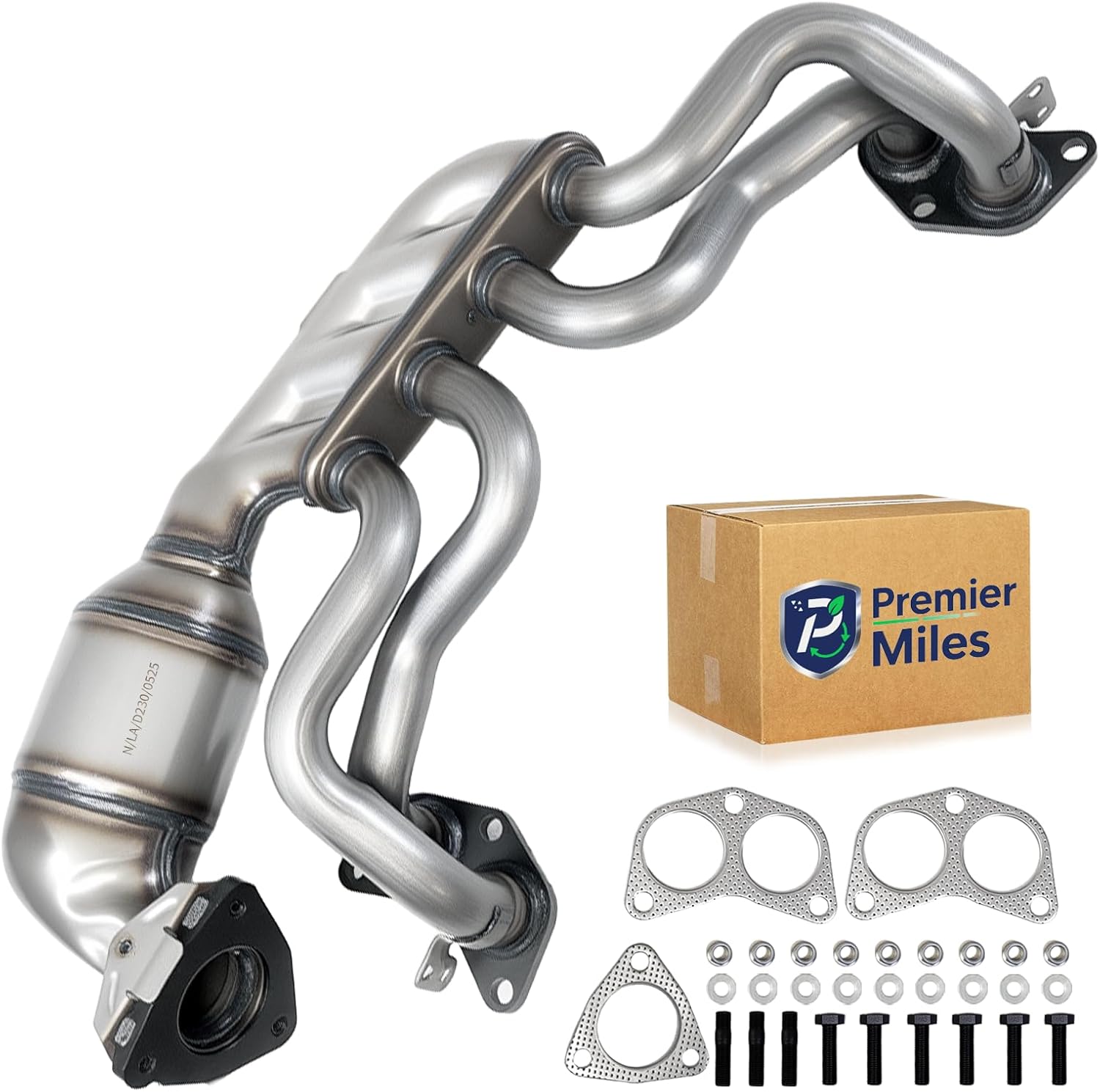
| Manufacturer | PREMIER MILES |
|---|---|
| Model fit | Fit for Subaru Forester 2011-2016, Impreza 2012-2016, Outback 2013-2014, Crosstrek 2013-2016 |
| Substrate | 400-cell ceramic |
| EPA compliance | Passed 25,000-mile long-term test |
| Warranty | 5-year structural; 2.5-year/25,000-mile emissions |
This catalytic converter is built as a direct replacement for specified Subaru 2.5L and 2.0L models, including the Crosstrek years listed, and is intended to restore proper emissions performance and exhaust flow after a failed unit. It uses a 400-cell ceramic substrate with precious metal catalysts to reduce backpressure and maintain catalytic activity, and the seller reports EPA long-term testing and compliance for a 25,000-mile durability standard. Typical use is bolt-in replacement during exhaust repairs or when passing emissions testing; the polished exterior and factory-style connections make installation straightforward for a shop or experienced DIYer. The main benefits are restored engine performance and emissions compliance outside CARB jurisdictions, plus a 5-year structural warranty and a shorter emissions performance warranty. Limitations are that it is not CARB compliant so it cannot be used where California regulations apply, and buyers should verify exact fit for their Crosstrek submodel before ordering to avoid fitment surprises.
Best for: Buyers who want a practical, factory-style replacement to restore emissions function and maintain everyday drivability on eligible Subaru Crosstreks without dealing with custom fabrication.
Less Ideal for: Drivers in California or regions that require CARB-approved parts and anyone seeking a performance-oriented or high-flow aftermarket converter.
- Designed as a direct-fit replacement for the listed Subaru 2.5L/2.0L models for simplified installation
- 400-cell ceramic substrate intended to optimize exhaust flow and reduce backpressure
- EPA-compliant with documented long-term 25,000-mile durability testing
- Includes a 5-year structural warranty and a 2.5-year/25,000-mile emissions performance warranty
- Not CARB compliant so it is not legal for use in California or other CARB jurisdictions
Verdict: A practical, EPA-tested direct-fit replacement for eligible Subaru Crosstreks that restores emissions control and exhaust flow without requiring modification.
4. PHILTOP High-Flow Catalytic Converter Rear Direct-Fit (Compatible with Subaru Forester/Impreza/Crosstrek)

| Position | Rear |
|---|---|
| Manufacturer | PHILTOP |
| Compatible Engines | 2.0L / 2.5L (listed models) |
| EPA Compliance | Federal emissions model (EPA-compliant) |
This PHILTOP catalytic converter replaces the rear unit on compatible Subaru Forester, Impreza, and Crosstrek 2.0/2.5L models and is intended as a budget-friendly factory-style replacement. It uses a double-layer high-temperature ceramic carrier and a high-flow honeycomb design to reduce backpressure, which can help engine breathing and modestly improve fuel efficiency compared with a clogged or damaged original. The stainless/aluminized steel body resists rust and the kit includes OE-style gaskets and mounting hardware for direct installation without modification, typically doable in 3 to 4 hours. It is EPA-compliant for federal emissions regions but is not legal for sale or installation in states that require California-equivalent parts. Expect a straightforward swap that restores emissions control and reduces exhaust noise caused by a failing converter, but this is an aftermarket replacement rather than a factory-brand part so long-term durability and fitment can vary by vehicle and installation quality.
Best for: Buyers prioritizing a low-cost, direct-replacement catalytic converter to restore emissions function and reduce exhaust noise without paying dealership labor or OEM part premiums.
Less Ideal for: Drivers in states that mandate California-equivalent converters or buyers seeking an OEM-branded part with manufacturer-backed warranty support should look elsewhere.
- Direct-fit design with included gaskets and hardware for bolt-on installation
- High-flow double-layer ceramic substrate to reduce backpressure and improve catalytic efficiency
- Stainless/aluminized steel construction resists corrosion for longer service life
- EPA-compliant federal model not legal for states requiring California-equivalent converters
Verdict: A budget-minded, direct-fit rear catalytic converter that restores emissions control and reduces backpressure on compatible Subaru models.
5. A-Premium Rear Catalytic Converter, Direct-Fit, EPA Compliant
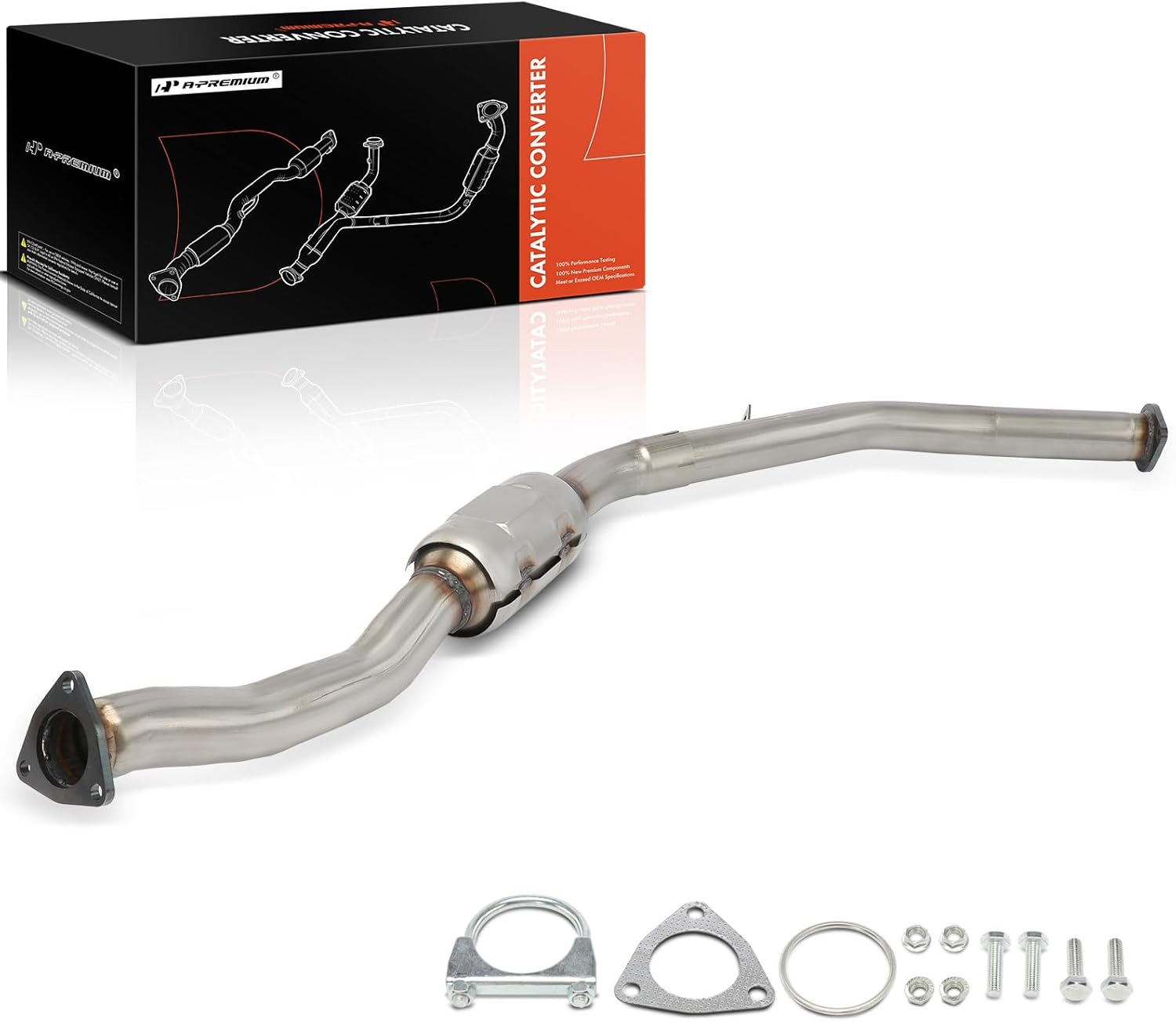
| Position | Rear |
|---|---|
| E.P.A. Compliant | Yes |
| Body Material | Stainless Steel |
| Inlet Type | 3 Bolt Welded Flange |
| Outlet Type | 2 Bolt Welded Flange |
This A-Premium rear catalytic converter replaces the factory unit on compatible Subaru Crosstrek, Forester, Impreza and XV Crosstrek models and is intended as a direct-fit replacement for the rear position. It uses a stainless steel body with 3-bolt inlet and 2-bolt outlet welded flanges to match the stock exhaust connections, so installation typically involves unbolting the old unit and bolting this one in place without extensive modifications. The EPA-compliant construction means it meets federal emissions requirements for non-restricted states, and the seller provides a one-year unlimited-mileage warranty for peace of mind. Practical benefits include factory-style fitment, corrosion-resistant stainless construction, and an inlet/outlet flange configuration that mirrors OEM mounting points. Limitations are state emissions restrictions that prevent sale or use in California, Colorado, New York and Maine, and as an aftermarket replacement it may differ slightly from factory components in layout or sound characteristics under load.
Best for: Buyers who prioritize a reliable, factory-style replacement for a rear catalytic converter on supported Subaru models and want corrosion-resistant construction and straightforward installation.
Less Ideal for: Drivers in states with stricter emissions rules or those needing a certified state-specific converter should look for options approved for their state.
- Direct-fit rear replacement that matches OEM flange configuration for simpler installation
- Stainless steel construction offers corrosion resistance for longer service life
- EPA-compliant for federal-emissions vehicles and includes a 1-year unlimited-mileage warranty
- Designed specifically for Subaru 2.0L and 2.5L models listed, reducing the need for modifications
- Not legal for sale or use in California, Colorado, New York, and Maine due to state emissions regulations
Verdict: Choose this direct-fit stainless steel rear converter when you want a reliable, factory-style EPA-compliant replacement for compatible Subaru 2.0L and 2.5L models.
6. ECHO AUTOMILES Catalytic Converter for Subaru Forester/Impreza/Outback/Legacy 2.5L (EPA Compliant)
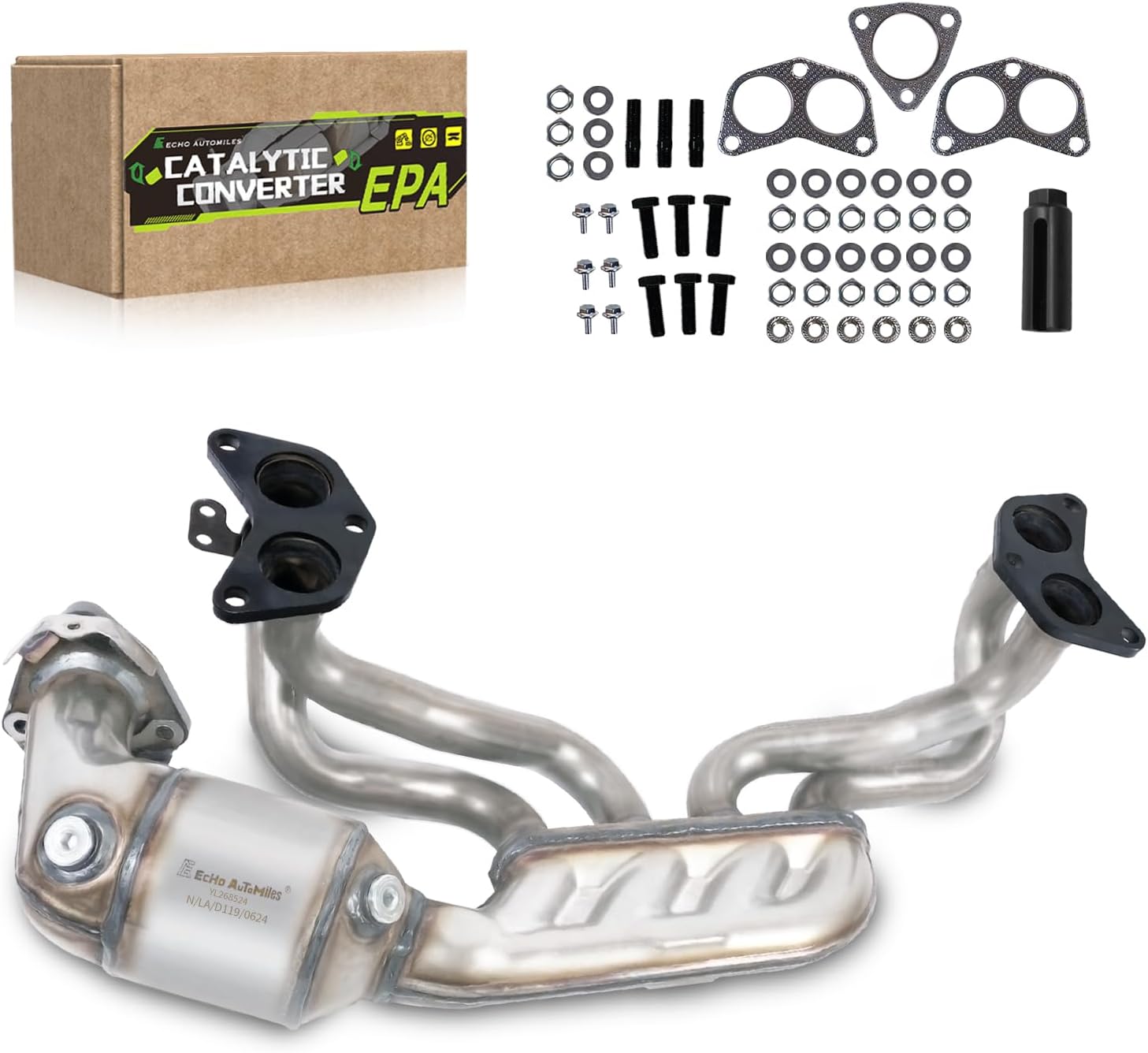
| Brand | ECHO AUTOMILES |
|---|---|
| Model | For Forester 2011-2016 |
| Manufacturer Part Number | YL268524 |
| Cell Count | 400-Cell honeycomb substrate |
This catalytic converter replaces the factory unit on compatible Subaru 2.5L engines and uses a 400-cell honeycomb substrate intended to balance emissions control with exhaust flow. It is typically installed where the original converter has failed or to restore emissions compliance after damage; the kit includes gaskets and mounting hardware to simplify installation. The higher-cell count and high-flow structure aim to minimize backpressure so the engine retains near-stock power and fuel economy while still meeting EPA-compliant emissions standards outside of restricted states. Practical benefits include a complete hardware kit and a 2.5-year or 25,000-mile warranty for added confidence. Important limitations are the regional restrictions: it is not eligible for sale or installation in California and Colorado and has specific restrictions in Maine and New York, so verify local rules before buying. Fitment is for certain Subaru 2.5L applications, so confirm compatibility with your exact model and year before ordering.
Best for: Buyers who prioritize proven performance and want a direct replacement that restores emissions function with included hardware and a short warranty for peace of mind.
Less Ideal for: Those in states with strict emissions laws or anyone who needs a California-compliant or CARB-approved converter should look for an alternative.
- 400-cell honeycomb substrate balances emissions control with reduced backpressure
- Includes necessary gaskets and hardware for a straightforward replacement
- Designed to preserve near-stock engine power and fuel economy
- 2.5-year or 25,000-mile warranty provides post-installation reassurance
- Not eligible for sale or installation in California and Colorado and has restrictions in other states
Verdict: Choose this unit if you need a complete, EPA-compliant direct replacement that keeps exhaust flow and engine performance close to factory while including installation hardware and a warranty.
7. SPEEDFusion High-Flow Catalytic Converter (EPA Compliant)

| Manufacturer | SPEEDFusion |
|---|---|
| Exterior | Polished |
| Manufacturer Part Number | SF_SB_FORT |
| EPA compliance | Yes |
| Applicable OEM ref | 16689, 17367 |
This SPEEDFusion catalytic converter is a direct-fit replacement intended for select Subaru H4 engines and is built to meet federal emission standards. It uses a stainless steel shell and an OEM-grade 400-hole ceramic substrate with attached precious metals to increase catalytic conversion and help keep the check-engine light from triggering for O2 sensor related codes. Installation is typical of an aftermarket direct-fit unit and is best handled by a shop to ensure proper sealing and hangar alignment. Notable features include EPA certification for federal compliance, 409L stainless construction and anti-core-detachment welding for durability, plus a claimed high-flow design that may help reduce backpressure relative to older clogged units. Limitations: it is not CARB-compliant so it cannot be used in states that require California standards, and buyers should verify exact fitment for their year and trim before ordering. Expect a straightforward replacement that focuses on emissions compliance and long-term durability rather than performance tuning.
Best for: Buyers who prioritize a reliable, emissions-compliant factory-style replacement for a Subaru H4 vehicle and want to avoid check-engine light issues from a failing converter.
Less Ideal for: Drivers in states that require California emissions certification or buyers seeking a performance-tuned or race-oriented exhaust component.
- Direct-fit design simplifies installation and alignment for compatible Subaru H4 models.
- EPA certification ensures the part meets federal emissions requirements.
- 409L stainless steel shell and anti-core-detachment welding improve long-term durability.
- OEM-grade 400-hole ceramic substrate with precious metals supports effective catalytic conversion.
- Not CARB-compliant so it is illegal for use in states with California emission rules.
- Professional installation is recommended to ensure proper seal and avoid exhaust leaks.
Verdict: Choose this EPA-certified, direct-fit converter when you want a durable, factory-style replacement that restores emissions compliance for compatible Subaru H4 models.
Choosing the Right 2013-2017 Subaru Crosstrek Catalytic Converter: Key Factors to Consider
Fitment and Sensor Compatibility
Accurate fitment is the top practical concern for a Crosstrek catalytic converter. The replacement must match the factory pipe diameter, flange pattern, and oxygen sensor port locations so the vehicle's upstream and downstream sensors remain usable.
If ports are in the wrong place or absent, you may need sensor extensions or welding, which increases labor and the risk of exhaust leaks. Correct sensor compatibility helps prevent persistent check engine light catalytic converter codes and ensures the engine control unit receives reliable feedback for fuel trim and emissions control.
Emissions Performance
Emissions effectiveness depends on the substrate type and catalytic washcoat. A converter designed with an appropriate cell density and precious metal loading reduces hydrocarbons, carbon monoxide, and nitrogen oxides more efficiently for the Crosstrek's engine output.
Choosing a converter that meets applicable emissions standards for the 2013-2017 Crosstrek helps ensure the vehicle can pass inspections and maintain clean exhaust emissions. Consider certifications or manufacturer statements about emissions performance when available.
Durability and Thermal Resistance
Catalytic converters operate under high temperatures and repeated thermal cycling. Durability factors include the quality of the metal housing, internal bonding of the ceramic or metallic substrate, and thermal insulation design.
Poor thermal resistance can lead to substrate breakdown, rattling, or premature failure. For Crosstrek owners who tow, drive in hilly terrain, or use the vehicle for extended highway runs, prioritize converters with proven construction that resists thermal shock and vibration.
Installation and Serviceability
Consider how easy the converter will be to install on a Crosstrek. Direct-fit units that bolt to existing flanges and use factory hangers reduce labor time and avoid exhaust alignment issues. Availability of replacement gaskets, bolts, and clear installation instructions also matters.
If a converter requires cutting, welding, or adapter pieces, expect higher installation complexity and potential for leaks if not done by an experienced technician. Serviceable designs also make future maintenance and replacement simpler.
Backpressure and Engine Performance
A converter's internal flow characteristics affect exhaust backpressure and can influence throttle response and fuel economy. Converters with overly restrictive substrates may hurt low-end torque or cause the engine to feel less responsive.
Balance emissions needs with acceptable backpressure for the Crosstrek's engine. Look for designs that provide effective aftertreatment while minimizing unnecessary restriction to preserve normal drivability.
Warranty and Manufacturer Support
Warranty coverage signals confidence in product longevity. For the Crosstrek, a converter backed by a clear warranty and accessible customer support reduces long-term risk.
Check warranty terms for coverage duration and what is excluded, such as damage from misuse or external impacts. Manufacturer support resources, including fitment guidance and installation help, also improve the ownership experience.
Understanding Catalytic Converter Fitment For 2013-2017 Crosstrek
Fitment for the 2013-2017 Subaru Crosstrek depends on the vehicle's exhaust routing and oxygen sensor locations. When evaluating replacements, verify pipe diameters, flange styles, and where upstream and downstream sensors must mount. A direct-fit converter avoids exhaust modification and reduces installation time.
If your vehicle shows a check engine light catalytic converter code, the issue can sometimes be corrected with a properly fitted unit that restores sensor readings. Confirming fitment early prevents common installation headaches such as misaligned flanges or sensor extension needs.
- Measure pipe diameters and note flange types before purchasing.
- Confirm the number and placement of oxygen sensor ports required.
- Prefer direct-fit options to minimize welding or adapters.
Common Symptoms That Point To Converter Problems
Catalytic converter symptoms often appear as reduced engine performance, a persistent check engine light catalytic converter-related code, or a sulfur-like exhaust odor. You may also notice decreased fuel economy or rough idling if the converter is partially clogged.
Some symptoms overlap with other components, so use diagnostic scans and a physical inspection to isolate the converter as the root cause. Addressing symptoms early can prevent further engine and emissions system damage.
- Reduced acceleration or sluggish throttle response.
- Persistent check engine light with emissions-related trouble codes.
- Unusual exhaust odors or increased cabin fumes under certain conditions.
Legal And Inspection Considerations For Emissions
Replacing a converter on a 2013-2017 Crosstrek may need to meet federal or state emissions requirements. Select a unit that aligns with those rules for your region and the vehicle's model years to avoid inspection failures.
Some jurisdictions require specific certifications or OEM-equivalent emissions performance. Keep documentation of the replacement part and any installation work to present during inspections when necessary.
- Verify local emissions regulations before choosing a replacement.
- Retain installation receipts and part documentation for inspections.
- Avoid modifications that alter emissions control systems beyond the converter itself.
Practical Tips For Installation And Maintenance
Have a technician inspect mounting surfaces and exhaust hangers before installing a new converter. Replacing rusty hardware and gaskets during installation prevents leaks and future rework.
After installation, clear any stored emissions codes and perform a short drive cycle to allow the engine control unit to relearn sensor parameters. Periodic visual checks for external damage, dents, or corrosion help extend converter life.
- Replace gaskets and bolts when installing a new converter.
- Reset and monitor the vehicle computer after installation for at least one drive cycle.
- Inspect heat shields and surrounding components to prevent rattles or heat damage.
When To Repair Versus Replace
Minor exhaust leaks at flanges or damaged heat shields can sometimes be repaired without full converter replacement. However, internal substrate breakdown, severe clogging, or damage that affects emissions performance usually warrants replacement.
Consider the vehicle's age, remaining life expectancy, and the severity of converter failure. For a 2013-2017 Crosstrek, factors like longstanding check engine light codes or failed emissions tests typically justify replacement rather than repair.
- Repair: flange leaks, heat shield reattachment, minor external damage.
- Replace: internal substrate failure, major clogging, or failed emissions testing.
Still looking for the perfect fit?
Select your Subaru Crosstrek configuration to see the most relevant Catalytic Converters recommendations
How We Chose the Best 2013-2017 Subaru Crosstrek Catalytic Converter
We focused on criteria that directly affect performance, compliance, and durability for the 2013-2017 Subaru Crosstrek. First, fitment accuracy: a correct physical fit and oxygen sensor port placement determine whether installation is straightforward and whether factory sensors work without modification. Second, emissions effectiveness: converters were assessed on their substrate type and washcoat chemistry that influence how well they reduce hydrocarbons, CO, and NOx for this engine and exhaust layout. Third, thermal durability: we considered construction materials and mounting details that affect resistance to thermal shock and premature breakdown under typical Crosstrek operating conditions. Fourth, serviceability: ease of installation, availability of replacement gaskets and flanges, and compatibility with existing exhaust hangers were important. Fifth, warranty and manufacturing quality were factored in as indicators of expected lifespan and manufacturer confidence.We excluded units that require extensive exhaust modification or custom fabrication, converters lacking proper oxygen sensor ports for the Crosstrek, and any parts that do not address federal or state emissions requirements in their intended fitment. The final selections balance correct fit, emissions performance, and practical installation concerns relevant to Crosstrek owners.
Our full evaluation process is outlined in our review methodology.
FAQ
What symptoms indicate my Crosstrek's catalytic converter is failing?
Common signs include reduced acceleration, decreased fuel economy, a persistent check engine light catalytic converter code, and unusual exhaust odors. These symptoms often overlap with other issues, so use diagnostics and inspection to confirm converter failure.
Can I install a replacement catalytic converter myself?
If you have welding experience and the correct tools, you may install some converters, but direct-fit units are much easier for DIY installation. For converters requiring cutting or welding, professional installation is recommended to prevent leaks and ensure correct sensor placement.
Will replacing the catalytic converter clear a check engine light?
Replacing a faulty converter can resolve emissions-related trouble codes, but the engine control unit may need a reset and a drive cycle to relearn sensor behavior. If codes persist, further diagnostics are required to rule out sensor or engine issues.
How important is choosing the exact fit for my Crosstrek?
Exact fit is very important. Correct flange pattern, pipe diameter, and oxygen sensor port placement reduce installation complexity and help maintain proper sensor readings and emissions performance.
Are there maintenance steps to extend converter life?
Regular engine tune-ups, fixing fuel system issues promptly, and avoiding prolonged misfires help prevent premature catalytic converter failure signs. Also inspect for damage after road debris impacts or underside corrosion.
Will a new converter affect drivability or fuel economy?
A properly chosen converter typically restores normal drivability and can improve fuel economy if the old unit was clogged or failing. Converters that are too restrictive, however, can negatively impact throttle response and efficiency.
Final Verdict
For the 2013-2017 Subaru Crosstrek, prioritize a catalytic converter that matches factory fitment and preserves correct oxygen sensor placement. Balance emissions effectiveness with acceptable exhaust flow to maintain normal engine performance and avoid drivability issues. Consider durability and warranty as indicators of long-term value, and choose direct-fit units when possible to minimize installation complexity.Focus on the tradeoffs between emissions performance and backpressure, and address any related engine or sensor problems before or during replacement. With the right fit and attention to installation, you can restore emissions compliance and reliable drivability for your Crosstrek.
Explore More:
- Check out all Subaru Crosstrek parts & accessories
- Explore Catalytic Converters Maintenance & Repair Guides
- Explore Exhaust & Emissions
- Browse all Auto Parts
