

Note: This article contains affiliate links. If you click on these links and make a purchase, I may earn a small commission at no extra cost to you. This helps support my research and content. Read my full affiliate disclosure here.
If you own a Jeep Grand Cherokee with the 4.7L V8, a failing catalytic converter affects drivability, emissions, and whether the vehicle passes inspection. Choosing the right catalytic converter matters because fitment, durability, and emissions performance all influence whether the repair resolves check-engine lights and restores acceptable exhaust output.This guide covers six shortlisted catalytic converters chosen for the Grand Cherokee 4.7L V8. We evaluated each option for correct flange and pipe dimensions, emissions efficiency, and durability so you can pick what best addresses your needs. Read on for the decision factors and practical guidance to help you replace a faulty unit with confidence.
Looking for other parts? See all Jeep Grand Cherokee parts & accessories.
Top Picks at a Glance
| Best Overall The best all-around choice for most situations | MagnaFlow Direct-Fit Catalytic Converter 23221 (Federal/EPA Compliant) |  |
| Best Quality Built to a higher standard if you want something more solid | Walker Ultra Direct-Fit Catalytic Converter 54447 |  |
| Best Value The sweet spot between price and what you get | pulcherflow Catalytic Converter for 2005–2009 Jeep Grand Cherokee / 2006–2009 Jeep Commander 4.7L |  |
| Best Budget The cheapest option that still gets the job done reliably | Northeastern Exhaust Avenger EPA-Approved Catalytic Converter for 2002–2004 Jeep Grand Cherokee 4.0L/4.7L |  |
| Highest Rated A top-rated pick with lots of positive feedback | A-Premium Rear Catalytic Converter Direct-Fit for Jeep Grand Cherokee WJ 2002-2004 |  |
| Most Popular A crowd favorite that many people choose with confidence | HIGHBRICK Catalytic Converter Y-Pipe for 1999–2001 Jeep Grand Cherokee 4.7L V8 (EPA Compliant) |  |
MagnaFlow Direct-Fit Catalytic Converter 23221 (Federal/EPA Compliant)

| Brand Name | MagnaFlow Exhaust Products |
|---|---|
| Included Components | Catalytic Converter |
| Material | Stainless Steel |
| Warranty Description | 5 Year / 50,000-Mile Construction Limited Warranty |
This MagnaFlow direct-fit catalytic converter is designed as a bolt-in replacement to restore emissions control and exhaust flow to factory-like levels. It is intended for professional or experienced DIY installers and typically replaces a failed unit without major exhaust modifications; the converter matches original flow characteristics to preserve fuel economy and engine performance. Notable features include 409 stainless steel tubing for corrosion resistance, 308 stainless steel MIG welds, and included gaskets and hardware to simplify fitment. The unit meets federal EPA requirements but is not legal for sale or use in certain states. Some buyers report the need for minor pipe reducers or cutting on older systems, so measure connections before ordering. The build quality and materials suggest good long-term durability, and the product is backed by a limited construction warranty. If you need a straightforward emissions-legal replacement that prioritizes longevity and OEM-like performance, this is a solid choice, but confirm state compliance and exact pipe sizes for your installation.
Best for: Buyers seeking a balanced, long-lasting emissions-compliant replacement that preserves factory performance and who prioritize durability and straightforward installation.
Less Ideal for: People in states that prohibit federal aftermarket converters or buyers who need a guaranteed direct bolt-on fit without any pipe modification should consider alternatives.
- Constructed from 409 stainless steel tubing for improved corrosion resistance
- Designed to replicate factory flow dynamics to maintain performance and fuel economy
- Includes gaskets and hardware to simplify installation
- Durable 308 stainless steel MIG welds for longevity
- Meets federal EPA emissions requirements
- Not legal for sale or use in several states which restrict aftermarket federal converters
- Some installations require pipe cutting or reducers rather than a perfect bolt-on fit
Verdict: A durable, EPA-compliant direct-fit converter that restores factory-like emissions control and performance while prioritizing corrosion resistance and long service life.
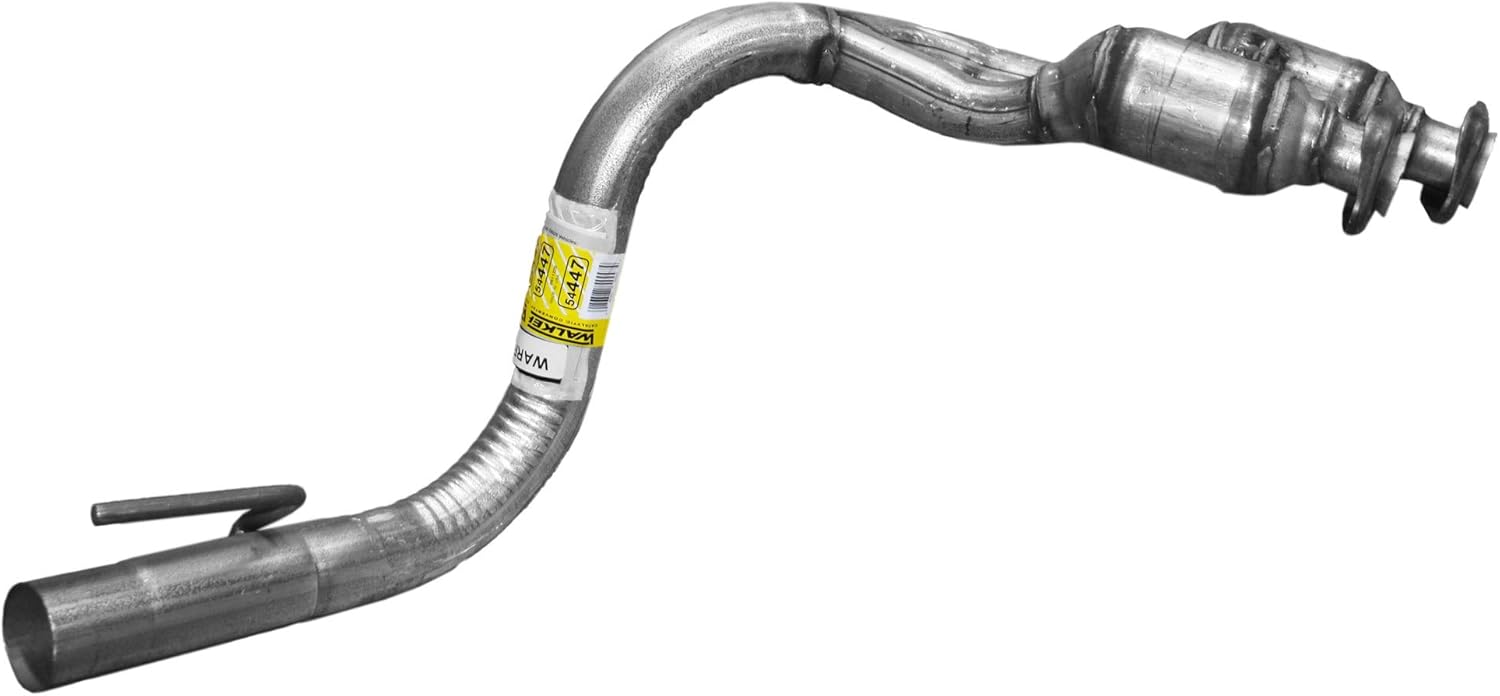
Walker Ultra Direct-Fit Catalytic Converter 54447
| Item model number | 54447 |
|---|---|
| Manufacturer | Walker Exhaust |
| Brand | Walker |
| Fits vehicles | Jeep Grand Cherokee (specified model years) |
The Walker Ultra 54447 is a direct-fit catalytic converter built to replace the factory unit on compatible Jeep Grand Cherokee 4.7L V8 applications. It installs as a bolt-on replacement using OE-style flanges, hangers, brackets and heat shields so a professional or competent DIY tech can swap it in without welding or custom fabrication. The converter is EPA-compliant for OBDII vehicles and uses a factory-style washcoat and precious metal loading intended to restore emissions control and reduce tailpipe pollutants to the required level. Notable practical features include thick, OE-style flanges and integrated heat shields to protect underbody components and retain factory routing. Reports over time show generally good fitment and straightforward installs, though a minority of users experienced quality-control issues such as loose substrate or misaligned sensor bungs, so careful inspection at installation is advised. This unit is best if you need a direct replacement that preserves factory fit and emissions compliance for the Grand Cherokee.
Best for: Buyers who prioritize restoring factory emissions compliance and fitment on a Jeep Grand Cherokee 4.7L V8 and want a straightforward bolt-on replacement without welding or fabrication.
Less Ideal for: Drivers seeking a high-flow performance converter or those focused solely on increasing horsepower should consider performance-specific units rather than this factory-style replacement.
- Direct-fit design with factory-style flanges, hangers and brackets for bolt-on installation
- EPA-compliant washcoat and precious metal loading to restore emissions control
- Includes aluminized heat shields to protect the undercarriage and match factory routing
- Sturdy OE-style construction intended for durability under normal use
- Some reported quality-control problems including loose internal substrate or mis-welded sensor bungs on certain production batches
Verdict: Choose the Walker Ultra 54447 when you need a reliable, bolt-on factory-style catalytic converter to restore emissions compliance and fitment on a Jeep Grand Cherokee 4.7L V8.
pulcherflow Catalytic Converter for 2005–2009 Jeep Grand Cherokee / 2006–2009 Jeep Commander 4.7L

| Vehicle Fitment | 2005–2009 Jeep Grand Cherokee 4.7L; 2006–2009 Jeep Commander 4.7L |
|---|---|
| Included Components | Catalytic Converter, Gasket, Screws |
| Material Type | Cast Iron, Ceramic, Stainless Steel |
| Automotive Fit Type | Vehicle Specific Fit |
This pulcherflow catalytic converter is a direct-fit replacement for the 4.7L Jeep Grand Cherokee and Commander, intended to restore emissions control and exhaust flow after a failed factory unit. It installs using the supplied gaskets and screws and aligns with factory mounting points for a straightforward swap. The unit uses an enlarged ceramic honeycomb substrate with increased precious metal loading, which should improve conversion efficiency and help clear or prevent emissions codes when matched to the vehicle’s sensors. The stainless steel outer shell and mandrel-formed internals are built to resist corrosion and heat cycling for long-term service. It is sold as a 46-state compliant part so it is appropriate for federal-emissions vehicles but not for restricted states listed in the product notes. Some buyers report perfect fitment while a few experienced check-engine light problems after install, so expect to verify sensor operation and clear codes after fitting. Overall it is a solid, budget-conscious option to replace a worn or failed converter on the specified 4.7L Jeep applications.
Best for: Buyers who prioritize restoring emissions performance and fitment at a practical cost and want a plug-and-play replacement that minimizes fabrication and installation time.
Less Ideal for: Owners in states with stricter emissions rules or those who need a part explicitly certified for those state-specific programs should look for an approved local alternative.
- Direct-fit design with factory-style mounting holes and included gasket and hardware for easier installation
- Enlarged ceramic substrate and higher precious metal loading for improved catalytic efficiency
- Stainless steel shell and mandrel bends improve corrosion resistance and durability
- Meets EPA standards for federal-emissions vehicles
- Not legal for sale or use in certain states with stricter emissions regulations
Verdict: A practical, direct-fit EPA-compliant replacement that restores emissions function and fits the 4.7L Jeep Grand Cherokee/Commander with minimal hassle.
Northeastern Exhaust Avenger EPA-Approved Catalytic Converter for 2002–2004 Jeep Grand Cherokee 4.0L/4.7L

| Applicable vehicles | 2002–2004 Jeep Grand Cherokee 4.0L & 4.7L |
|---|---|
| Exterior | 409 stainless steel |
| EPA approval | Yes |
| Manufacturer | Northeastern Exhaust |
This Northeastern Exhaust Avenger catalytic converter is a direct-fit replacement for 2002–2004 Jeep Grand Cherokee 4.0L and 4.7L models that aims to restore emissions compliance without major modifications. Constructed from 409-grade stainless steel and sold as EPA-approved, it converts CO, NOx, and hydrocarbons to reduce pollutants while resisting corrosion and high exhaust temperatures. The direct-fit design and included clamps simplify installation for a professional or competent DIYer, and the smoother internal surface is intended to improve exhaust flow for modest gains in efficiency. It is not CARB compliant so it cannot be used in California or Colorado. The unit comes with a one-time replacement warranty for defects but that coverage excludes installation or labor. For budget-focused buyers needing a federal-compliant replacement that balances durability and straightforward fitment, this converter delivers the essential function without added performance bells and whistles.
Best for: Buyers needing an affordable, legally compliant federal replacement catalytic for a 2002–2004 Grand Cherokee who prioritize a straightforward direct-fit swap and durable stainless construction.
Less Ideal for: People in states that require CARB-certified parts or buyers seeking a high-performance or modified-exhaust solution should look for a different, compliant converter.
- EPA-approved for federal emissions compliance where allowed
- 409-grade stainless steel construction for corrosion and heat resistance
- Direct-fit design that eases replacement and often avoids welding
- Aims to improve exhaust flow compared with a clogged or damaged original
- Not CARB compliant so cannot be sold for use in California or Colorado
- Warranty is a one-time replacement and does not cover labor or installation costs
Verdict: A budget-friendly, EPA-approved direct-fit catalytic that restores emissions compliance for 2002–2004 Grand Cherokee 4.0L/4.7L with durable stainless construction.
A-Premium Rear Catalytic Converter Direct-Fit for Jeep Grand Cherokee WJ 2002-2004

| Position | Rear |
|---|---|
| Vehicle Emissions | Federal Emissions |
| Material | Stainless Steel |
| Inlet Type | Pipe Connection |
| EPA Compliant | Yes |
This A-Premium rear catalytic converter is a direct-fit replacement intended for the Jeep Grand Cherokee WJ (2002–2004) and meets federal EPA emissions requirements. It installs with pipe connections at the inlet and outlet and is made from stainless steel, which helps resist corrosion compared with mild steel converters. Typical use is as a factory-style replacement when the original rear converter is damaged or the check engine light indicates an emissions fault. Notable features include EPA compliance for federal states, a single inlet and outlet pipe connection, and a one-year unlimited-mileage guarantee from the manufacturer. In practice the unit provides a straightforward swap for mechanics familiar with exhaust work and should restore emissions function and clear related diagnostic codes when fitment matches. Limitations to note are that mounting hardware is not included and this specific EPA-compliant unit is restricted from sale or installation in California, Colorado, New York, and Maine, so buyers in those states must seek an approved alternative.
Best for: Buyers who prioritize a reliable, factory-style replacement to restore emissions function on a 2002–2004 Grand Cherokee and want a corrosion-resistant direct-fit part from a parts supplier.
Less Ideal for: People in states with stricter emissions laws or anyone who needs a complete installation kit included should look for region-compliant units or kits that supply hardware and gaskets.
- Direct-fit design for Jeep Grand Cherokee WJ 2002–2004 minimizes modification during installation
- Stainless steel construction improves corrosion resistance for longer service life
- EPA-compliant for federal emissions areas to meet regulatory requirements
- Single inlet and outlet pipe connections match factory exhaust geometry for straightforward replacement
- Does not include mounting hardware or gaskets, so additional parts may be required for installation
- Not legal for sale or installation in California, Colorado, New York, and Maine
Verdict: A straightforward, corrosion-resistant direct-fit rear converter for 2002–2004 Grand Cherokee WJ owners who need a reliable federal-emissions replacement.
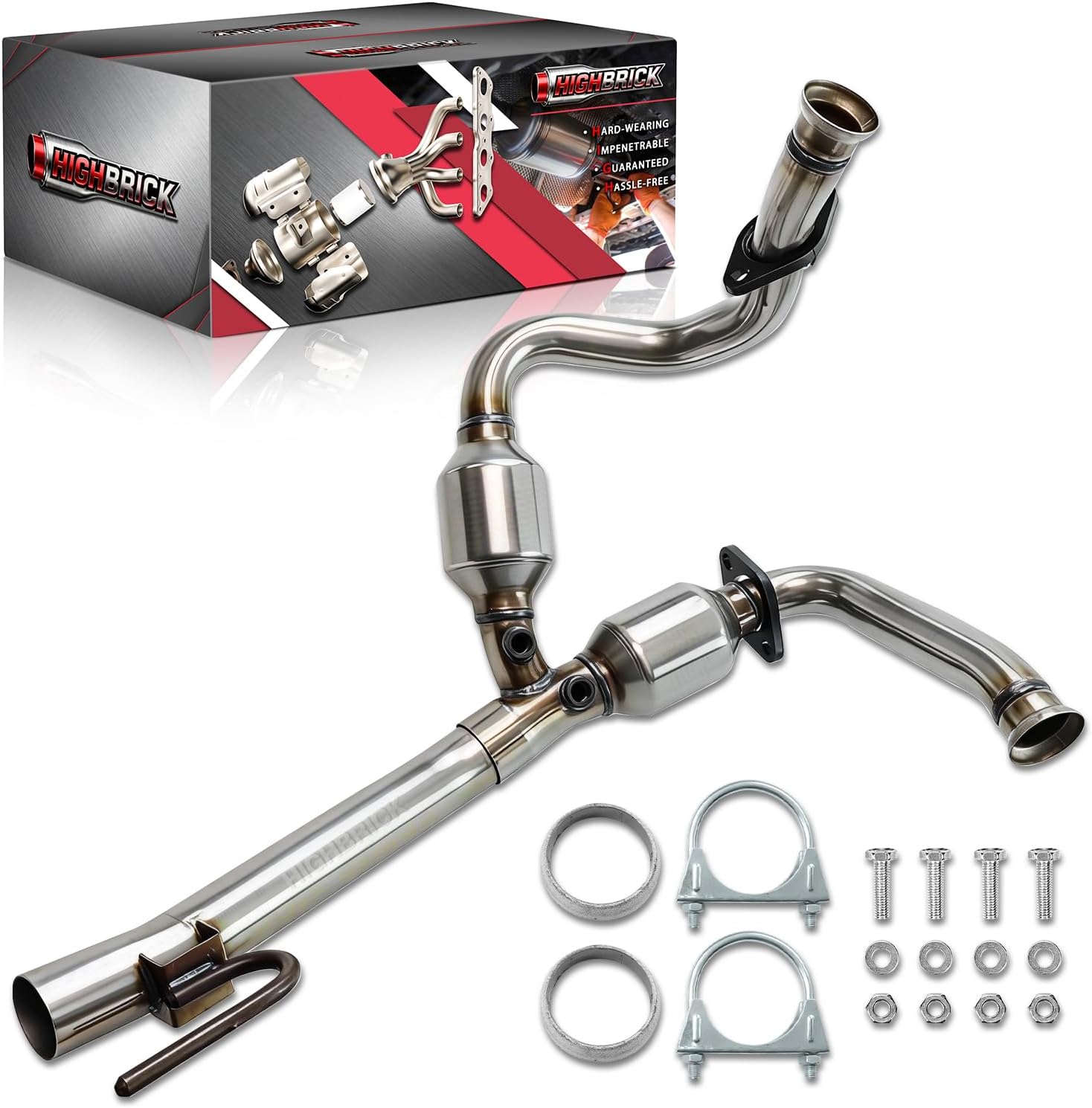
HIGHBRICK Catalytic Converter Y-Pipe for 1999–2001 Jeep Grand Cherokee 4.7L V8 (EPA Compliant)
| Automotive Fit Type | Vehicle Specific Fit |
|---|---|
| Material Type | Ceramic, Stainsless Steel |
| Included Components | Catalytic converter, Gaskets, Bolts, Seals, Mounting Hardware, Screws, Seal |
| Manufacturer Warranty Description | 1 Year Manufacturer |
This HIGHBRICK catalytic converter is a vehicle-specific Y-pipe designed as a bolt-on replacement for 1999–2001 Jeep Grand Cherokee 4.7L V8 models. It uses a three-way catalytic process with ceramic substrate and stainless steel construction, and ships with gaskets, bolts, and mounting hardware to make installation straightforward for a competent DIYer or shop. The unit is EPA certified for federal emission standards and claims OEM-compatible fitment so it aligns with factory mounting points and exhaust flow. In practice buyers report easy installation when factory bolts are usable and included hardware can simplify the job for most installs. However, several users noted mixed long-term catalyst efficiency results and a few saw persistent check engine codes, so buyers should be prepared to verify post-install emissions performance and have a plan if the vehicle triggers a P0420. The converter is not legal for sale or use in certain states with stricter rules, so confirm local regulations first.
Best for: Buyers who value a direct-fit, EPA-certified replacement that minimizes installation hassle and want to rely on other owners' installation experiences before committing.
Less Ideal for: Drivers in states with stricter emissions laws or anyone who needs guaranteed emissions-code-free performance without post-install verification should consider alternatives or a dealer-supplied factory-quality unit.
- Direct bolt-on, vehicle-specific Y-pipe designed to match factory mounting points
- Includes gaskets, bolts, seals, and mounting hardware to simplify installation
- EPA federal certification for allowed states and stainless steel body for corrosion resistance
- Three-way ceramic catalyst intended to reduce harmful emissions and restore exhaust flow
- Not approved for sale or use in California, New York, Colorado, or Maine due to state regulations
- Some users reported check engine codes or below-spec catalyst efficiency after installation
Verdict: A practical, bolt-on EPA-certified replacement Y-pipe for 1999–2001 Grand Cherokee 4.7L owners who want a direct-fit option backed by other buyers' install experience.
Choosing the Right Jeep Grand Cherokee 4.7L V8 Catalytic Converter: Key Factors to Consider
Fitment and Flange Pattern
Correct fitment is the baseline requirement for a catalytic converter on the Grand Cherokee 4.7L V8. The converter must match the factory flange spacing, pipe diameter, and oxygen sensor bung locations so it installs without modifying the exhaust or introducing leaks.
Improper fitment can lead to exhaust leaks, higher under-hood temperatures, and recurring check-engine lights. When assessing options, verify the listed flange type, bolt pattern, and center-to-center measurements. Also confirm whether the unit is intended as a direct-fit replacement or requires adapter pipes, because adapters add joints that can fail or rattle over time.
Emissions Performance and Substrate Type
The core function of the catalytic converter is to reduce harmful exhaust gases. Different substrates and washcoat formulations vary in how effectively they convert hydrocarbons, carbon monoxide, and nitrogen oxides produced by the 4.7L V8.
Look for information about substrate cell density and catalytic coating. A higher-quality substrate with the appropriate precious metal loading will generally deliver better conversion efficiency and maintain performance under repeated thermal cycles. This matters for passing emissions inspections and preventing persistent check-engine codes tied to efficiency loss.
Durability and Thermal Tolerance
The 4.7L V8 produces significant exhaust heat, so the converter must withstand high temperatures without substrate collapse or coating loss. Durable construction includes robust internal bonding, heat-resistant casings, and welded joints that resist cracking from vibration and heat cycling.
Corrosion resistance matters for longevity, especially if you drive in areas with road salt or frequent moisture. A converter with thicker stainless steel or protective coatings will last longer than a thin, untreated unit. Consider expected mileage and local driving conditions when weighing durability.
Oxygen Sensor Compatibility
The Grand Cherokee 4.7L V8 relies on oxygen sensors for fuel trim and emissions monitoring. A replacement converter must provide proper sensor bung placement and thread type so upstream and downstream sensors report accurate readings.
Incorrect bung location or poor sealing around the sensor can trigger false fault codes or erratic fuel trim behavior. If a converter relocates a sensor significantly from the factory position, it can affect sensor temperatures and response, leading to driveability issues.
Installation Complexity
Installation can range from simple bolt-on replacement to cutting and welding depending on the unit chosen. Direct-fit units that match the factory connections minimize tools and labor, which reduces the chance of installation-related leaks or errors.
If a unit requires welding or custom pipes, budget for additional labor and potential alignment issues. Consider whether you will perform the swap yourself and have the tools and skills to remove rusted hardware and properly torque bolts, or if you will use a shop.
Regulatory Compliance and Inspection Readiness
Local emissions regulations determine whether a replacement converter is acceptable for inspection. Some units are designed to meet specific regional standards and include documentation or markings that demonstrate compliance.
Choosing a converter that aligns with inspection requirements reduces the risk of a failed emissions test. Check whether the unit supports the same emissions family or certifying documentation your jurisdiction expects, and confirm whether any warranty or paperwork is provided to help with inspections.
Common Catalytic Converter Symptoms on the 4.7L V8
Recognizing early symptoms helps you address converter issues before they become costly. On the Grand Cherokee 4.7L V8, typical warning signs include an illuminated check engine light tied to oxygen sensor or catalyst efficiency fault codes, a noticeable decline in acceleration, and a rotten-egg smell from the exhaust.
Other indicators are increased exhaust backpressure that can reduce fuel economy and cause rough idling, and loud rattling inside the converter housing when a substrate breaks loose. Not all symptoms require immediate replacement, but they warrant diagnosis to determine whether cleaning, sensor replacement, or a full converter swap is necessary.
- Check engine light with catalyst efficiency or O2 sensor codes
- Reduced throttle response or sluggish acceleration
- Unusual sulfur or rotten-egg exhaust odor
- Rattling noises under acceleration or at idle
- Failed emissions test or unexpectedly high tailpipe readings
Diagnosing Problems Before Replacing the Converter
Start with a full inspection and basic tests before committing to a replacement. Scan for diagnostic trouble codes, compare upstream and downstream oxygen sensor voltages during warm running, and perform a visual check for obvious damage, corrosion, or exhaust leaks around flanges and gaskets.
A backpressure test or differential temperature check across the converter can indicate internal restriction. Also inspect the condition of the oxygen sensors and wiring, since sensor faults or wiring shorts often mimic converter failure. Addressing sensor issues first can avoid unnecessary converter replacements.
- Scan for specific catalyst efficiency and O2 sensor codes
- Compare upstream and downstream O2 sensor signals
- Perform a temperature differential test across the converter
- Visually inspect flanges, gaskets, and welds for leaks
- Verify sensor wiring and connectors are intact
Direct-fit Versus Universal Units
Direct-fit converters are made to match the original exhaust geometry and bolt pattern of the Grand Cherokee 4.7L V8, which simplifies installation and reduces leak risk. Universal units can be adapted but typically require cutting, welding, or clamping and may introduce additional joints that can corrode or loosen over time.
If you prioritize a straightforward swap and minimal exhaust modification, a direct-fit unit is usually the practical choice. Universal options can be suitable for custom exhaust builds but expect extra labor and potential alignment concerns.
- Direct-fit: minimal modifications, faster install, less leak potential
- Universal: flexible routing, requires cutting/welding, more labor
Maintenance Tips to Extend Converter Life
Good engine maintenance reduces the likelihood of premature converter failure. Keep ignition components, fuel injectors, and air/fuel systems in good condition to prevent unburned fuel from entering the converter and causing overheating.
Address oil or coolant leaks promptly, since contamination can coat the substrate and reduce efficiency. Regularly inspect the exhaust system for leaks, loose heat shields, and mounting hardware condition to avoid vibration-related damage.
- Maintain ignition and fuel systems to prevent raw fuel dumping
- Repair oil or coolant leaks immediately
- Inspect and tighten exhaust hangers and heat shields
- Replace worn oxygen sensors before they damage the converter
Tools, Parts, and Preparations for Replacement
If you plan to replace the converter yourself, assemble the right tools: a jack and stands, ratchets and extensions, penetrating oil for rusted hardware, torque wrench, and any specialty sockets for exhaust bolts. Have replacement gaskets and new hardware ready to ensure a proper seal.
Plan for safety and workspace ventilation when working on the exhaust. If welding is required, a qualified shop or experienced technician can ensure clean joints and proper alignment to avoid exhaust leaks and stress on the exhaust system.
- Penetrating oil and breaker bar to loosen seized bolts
- Replacement gaskets, bolts, and anti-seize compound
- Torque wrench for proper flange sealing
- Jack stands and safety gear for under-vehicle work
Still looking for the perfect fit?
Select your Jeep Grand Cherokee configuration to see the most relevant Catalytic Converters recommendations
How We Chose the Best Jeep Grand Cherokee 4.7L V8 Catalytic Converter
We focused our selection on catalytic converters that meet the physical and emissions needs of the Jeep Grand Cherokee 4.7L V8. Primary evaluation criteria included fitment accuracy, emissions reduction performance, internal substrate quality, and build durability under typical V8 exhaust temperatures. We prioritized units with flange and pipe dimensions compatible with factory exhaust routing and those designed to accept existing oxygen sensor locations.Additional considerations included heat-resistant materials, corrosion protection for road salt exposure, and clear indications of compliance with relevant emissions standards where applicable. We also weighed ease of installation, including whether the unit required modification or additional gaskets. Units that commonly required extensive exhaust modification or did not support the Grand Cherokee 4.7L V8 flange pattern were excluded. We did not include options that lacked verifiable material or fitment specifications or those with known durability issues reported by multiple independent sources.
Our full evaluation process is outlined in our review methodology.
FAQ
How long does a catalytic converter last on a Jeep Grand Cherokee 4.7L V8?
Typical life depends on driving conditions and maintenance. With good care and no contamination from oil or unburned fuel, converters often last many years, but exposure to road salt, frequent short trips, or engine problems can shorten lifespan.
Will a bad catalytic converter cause a check engine light?
Yes. A failing converter commonly triggers catalyst efficiency or oxygen sensor-related trouble codes that illuminate the check engine light. However, sensor faults or wiring issues can cause similar codes, so diagnosis is important before replacement.
Can I replace only the oxygen sensors instead of the converter?
Sometimes replacing faulty oxygen sensors resolves codes if the converter itself is still functioning. Comparing upstream and downstream sensor readings and performing a visual inspection helps determine whether sensor replacement will clear the issue or if the converter needs service.
Is a universal converter acceptable for the Grand Cherokee 4.7L V8?
Universal converters can work but usually require cutting and welding to match factory piping. That increases installation time and potential for leaks. For a straightforward replacement, a direct-fit unit that matches flange and sensor locations is usually preferable.
What are the signs of catalytic converter failure signs I should watch for?
Listen for rattling inside the converter, notice a drop in acceleration, smell sulfur in the exhaust, and watch for persistent catalyst-related diagnostic codes. These are common failure signs that warrant further testing or replacement.
Do emissions inspections always detect a bad converter?
Inspections vary by jurisdiction, but a converter that is significantly degraded often produces tailpipe readings or onboard diagnostics that lead to a failed inspection. Some early-stage failures may still pass emissions tests while showing inefficiency codes.
Final Verdict
When replacing the catalytic converter on a Jeep Grand Cherokee 4.7L V8, prioritize proper fitment, emissions performance, and durability to ensure the repair resolves codes and restores reliable exhaust flow. Balance the tradeoff between a direct-fit unit that minimizes installation work and a universal option that may require additional fabrication.Confirm oxygen sensor compatibility, inspect related engine components that can damage a converter, and factor in local inspection requirements. With those priorities in mind, you can choose a converter that provides lasting emissions control and dependable operation for your Grand Cherokee.
Explore More:
- Check out all Jeep Grand Cherokee parts & accessories
- Explore Catalytic Converters Maintenance & Repair Guides
- Explore Exhaust & Emissions
- Browse all Auto Parts
