

Note: This article contains affiliate links. If you click on these links and make a purchase, I may earn a small commission at no extra cost to you. This helps support my research and content. Read my full affiliate disclosure here.
If you own a 1994-2001 Ram 1500 and are facing emissions failures, persistent check-engine lights, or performance issues, choosing the right catalytic converter matters. A correct replacement restores exhaust emissions control, reduces the risk of recurring diagnostic trouble codes, and keeps your truck running smoothly without introducing fitment headaches.This guide walks through our top shortlisted catalytic converters for the 1994-2001 Ram 1500, explains the evaluation criteria we used, and outlines the practical signs and installation considerations you should expect. Use it to narrow options and find a durable, properly fitting converter that meets emissions and driveway-repair needs.
Looking for other parts? See all Ram 1500 parts & accessories.
Top Picks at a Glance
| Best Overall The best all-around choice for most situations | DNA MOTORING Factory-Style Bolt-On Catalytic Converter (OEM-CONV-081) |  |
| Best Quality Built to a higher standard if you want something more solid | MagnaFlow Catalytic Converter 23285 HM Grade, Direct-Fit |  |
| Best Value The sweet spot between price and what you get | PHILTOP Catalytic Converter Direct-Fit Replacement (Front) |  |
| Best Budget The cheapest option that still gets the job done reliably | PHILTOP Catalytic Converter for 1996–1999 Ram 1500/2500/3500 (Front) |  |
| Highest Rated A top-rated pick with lots of positive feedback | Walker Ultra Direct-Fit Catalytic Converter Model 50505 |  |
| Most Popular A crowd favorite that many people choose with confidence | MAYASAF 2.5" Universal Catalytic Converter with O2 Port |  |
| Best Seller A high-volume bestseller chosen again and again | RZOCARULE Universal 2.5" High Flow Catalytic Converter with O2 Port and Heat Shield |  |
DNA MOTORING Factory-Style Bolt-On Catalytic Converter (OEM-CONV-081)

| Fitment | 1994–2001 Dodge Ram 1500/2500/3500 (3.9L, 5.2L, 5.9L gasoline) |
|---|---|
| Compliance | Federal/EPA compliant (not for CA, ME, NY) |
| Material | Stainless steel body with aluminized mandrel-bends |
| Included | Installation hardware |
This DNA MOTORING converter is a bolt-on, direct-fit replacement intended to restore emissions control and exhaust flow to Dodge Ram 1994–2001 3.9L, 5.2L and 5.9L gasoline engines. It uses a premium substrate and high-tech washcoat to improve oxygen storage capacity and meet federal EPA requirements outside of restricted states. The unit is stainless steel with aluminized mandrel-bent tubing for corrosion resistance and smoother bends, and it ships with the hardware needed for installation. In practice it replaces a worn or failed factory converter to clear emissions faults and return the vehicle to legal federal emissions standards where allowed. Expect straightforward installation for anyone with intermediate mechanical skills, though sensor removal and pipe mating may require penetrating oil, an expander and two-person handling. Important limitations: it is not legal for sale or use in California, Maine, or New York and does not cover any state-specific emissions rules, so verify local regulations before purchasing.
Best for: Drivers wanting a factory-style, emissions-compliant replacement that restores proper catalytic function on 1994–2001 Ram trucks and who prioritize a direct-fit, do-it-yourself install with reliable materials.
Less Ideal for: People in states with stricter emissions rules or buyers seeking a high-flow performance converter for increased power rather than emissions restoration.
- Direct-fit design tailored for 1994–2001 Dodge Ram 1500/2500/3500 gasoline V6/V8 applications.
- Federal/EPA compliant for use outside restricted states to address emissions faults.
- Stainless steel body with aluminized mandrel-bends for improved durability and exhaust flow.
- Includes required installation hardware for a complete swap.
- Not legal for sale or use in California, Maine, or New York which restricts aftermarket converters.
- May require specialty tools and a second person to separate and seat exhaust pipes during installation.
Verdict: A straightforward, factory-style direct-fit replacement that returns emissions control to 1994–2001 Ram trucks where federal converters are allowed.
MagnaFlow Catalytic Converter 23285 HM Grade, Direct-Fit

| Construction Type | Stainless Steel Mandrel Bent |
|---|---|
| Automotive Fit Type | Vehicle Specific Fit |
| OEM Part Number | 23285 |
| Model | HM Grade |
This MagnaFlow 23285 direct-fit catalytic converter is designed to replace the factory unit on late-1990s Dodge Ram pickups and restore emissions control while keeping a bolt-on installation approach. It uses mandrel-bent stainless-steel piping, OEM-like oxygen sensor port locations, and a clamshell assembly to ease alignment and reduce exhaust restrictions compared with many old or clogged converters. The HM grade substrate contains extra catalytic material, which helps conversion efficiency and can improve drivability and throttle response on high-mileage engines. Installation usually bolts up without cutting or welding, but some applications may need minor welding or different clamps to match altered exhaust hardware such as shorty headers. It meets federal EPA standards for 48-state use but is not legal in several states that require stricter certification. Buyers should expect a heavier, more robust factory-style replacement that favors emissions performance over outright free-flow performance for racing applications.
Best for: A buyer who wants a durable, near-factory replacement that restores emissions performance and improves throttle response on a high-mileage 1994–2001 Ram 1500 while keeping installation mostly bolt-on.
Less Ideal for: People building a race or high-horsepower street truck who need maximum unrestricted flow or California-compliant parts should look at purpose-built high-flow or state-certified alternatives.
- Direct-fit design with OEM-like O2 port locations for straightforward bolt-on installation in most cases
- Mandrel-bent stainless-steel construction improves flow compared with crushed or restricted units and resists corrosion
- HM grade substrate contains extra catalyst material to improve emissions conversion and drivability on older engines
- Meets federal EPA requirements for 48-state legality where allowed
- Not legal for sale or use in some states with stricter emissions rules
- May require additional welding, different clamps, or modifications with non-factory exhaust components such as shorty headers
- Converter core is smaller than some factory units, which could limit peak free-flow compared with high-flow performance options
Verdict: Choose this MagnaFlow direct-fit HM-grade converter if you want a sturdy, factory-style replacement that improves emissions conversion and drivability on a 1994–2001 Ram 1500.
PHILTOP Catalytic Converter Direct-Fit Replacement (Front)

| Position | Front |
|---|---|
| Manufacturer | PHILTOP |
| Model | Catalytic Converter |
| Manufacturer Part Number | 6331EXP274ZUS |
| Compliance | EPA compliant (not CARB) |
This PHILTOP catalytic converter is a bolt-on, flange-to-flange direct-fit replacement intended for front exhaust on 1994–2001 Ram 1500/2500 (3.9/5.2/5.9L) and 1997–2001 Ram 3500 (5.9L). It uses a high-flow internal design to maintain exhaust flow while restoring catalytic conversion, and the stainless steel outer shell and welded connections are built to resist heat and corrosion for longer service life. Installation is straightforward because the converter includes gaskets and hardware for a factory-style swap, so it is suitable for typical DIY or shop replacement without custom fabrication. It is EPA-compliant for use in most states except those requiring California-level certification. Note that the listing references a lifetime warranty from the manufacturer and that it is sized specifically for the listed Dodge Ram applications, so confirm fitment references and local emissions rules before purchase.
Best for: Buyers who want a cost-effective, direct replacement to restore emissions function and drivetrain performance on the specified Ram pickup years with minimal modification and straightforward installation.
Less Ideal for: Do not choose this if you require California-compliant emission parts or if you need a universal or custom-fit collector for modified exhaust systems.
- Direct-fit flange-to-flange design for bolt-on installation
- High-flow construction intended to preserve exhaust flow and conversion efficiency
- Stainless steel shell and welded joints for improved durability
- Includes gaskets and hardware to simplify replacement
- Not legal for use in states that require California emission standards
Verdict: A practical, bolt-on stainless steel direct-fit converter that restores emissions function and keeps exhaust flow for 1994–2001 Ram front applications.
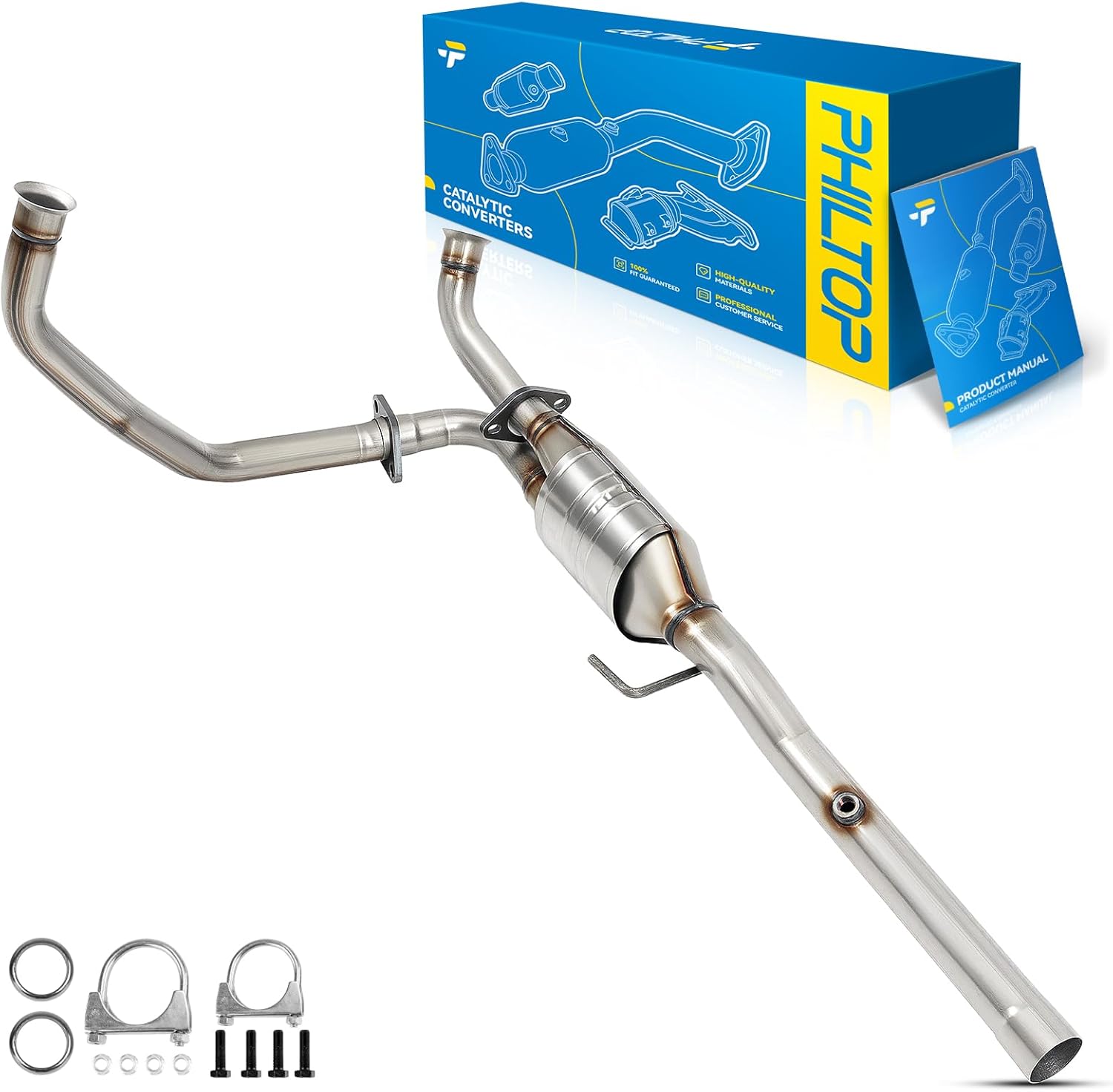
PHILTOP Catalytic Converter for 1996–1999 Ram 1500/2500/3500 (Front)
| Position | Front |
|---|---|
| OEM Part Number | 20303, 51274, 645937, 50505 |
| Item model number | 5083EXP274HUS |
| Manufacturer | PHILTOP |
This PHILTOP catalytic converter is a bolt-on, front-position replacement made to match factory mounting points on compatible Ram 1500/2500/3500 models. It uses a high-flow ceramic honeycomb substrate intended to reduce backpressure and help the engine breathe more efficiently, which the listing says can aid fuel economy and reduce rattling from a damaged unit. PHILTOP includes OE-style gaskets and hardware to simplify installation; a typical DIY or independent-shop swap should take a few hours without modification. The unit is described as EPA-compliant for federal emissions but is not sold for use in states with stricter rules such as California. Practical benefits are straightforward: restores emissions control, can quiet exhaust noise caused by a failing converter, and fits directly to the original exhaust routing. Expect a basic factory-style replacement rather than a performance upgrade, and confirm exact vehicle fitment before buying since compatibility is limited to specified years and engines.
Best for: A buyer on a budget who needs a straightforward, factory-style replacement to restore emissions performance and quiet a failing converter on a compatible late 1990s Ram truck.
Less Ideal for: Drivers in states with stricter emissions regulations or anyone seeking a high-performance aftermarket converter should look for state-compliant or performance-focused alternatives.
- Direct-fit design with OE-style gaskets and hardware for bolt-on installation
- High-flow ceramic substrate intended to reduce backpressure and improve catalytic efficiency
- EPA-compliant for federal emissions to restore emissions control and pass smog testing outside restricted states
- Not approved for sale or use in states with stricter emissions rules such as California, New York, Colorado, and Maine
Verdict: A cost-conscious, direct-fit replacement that restores emissions function and is simple to install on the specified late 1990s Ram trucks.
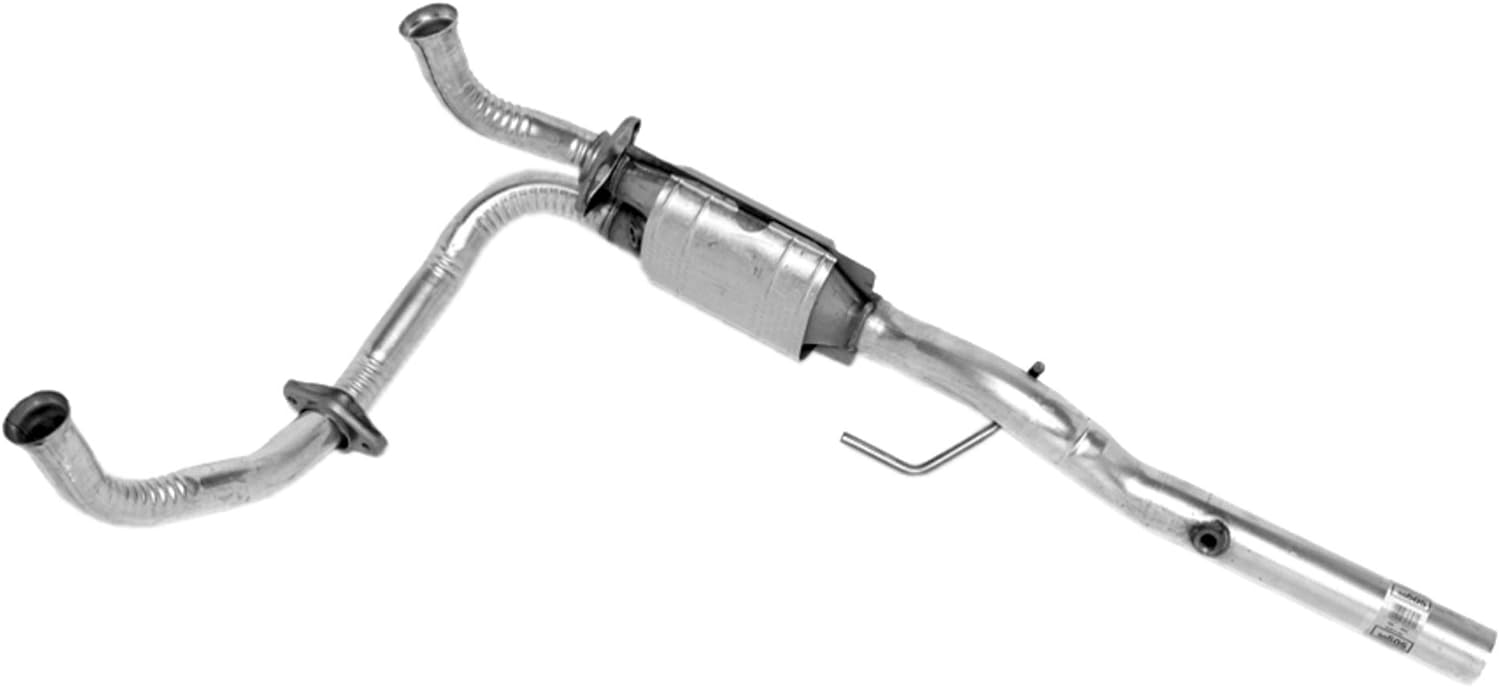
Walker Ultra Direct-Fit Catalytic Converter Model 50505
| Model | 50505 |
|---|---|
| Manufacturer | Walker Exhaust |
| Compatibility note | Fits 1996-1999 Dodge Ram 1500/2500/3500 ranges listed |
The Walker Ultra 50505 is a direct-fit catalytic converter built to replace the factory unit on compatible Dodge Ram trucks from the late 1990s. It installs as a bolt-on with OE-style flanges, hangers and heat shields so most installs require no fabrication and can be handled by a competent DIYer or shop. The converter uses a high-technology washcoat and a calibrated precious-metal load intended to meet EPA emissions reduction requirements on OBDII vehicles. Buyers will appreciate the thick flanges and brackets that improve durability compared with cheap universal converters and the inclusion of aluminized heat shields where originally equipped to protect underbody components. Because it is an aftermarket replacement sized for specific Ram applications, fitment should still be confirmed against vehicle details before purchase, and removal of the old assembly can be the most time-consuming part of the job. Expect a reliable, factory-style replacement that restores emissions control and drivability without custom welding.
Best for: Buyers who prioritize a dependable, factory-style emissions repair for late 1990s Ram trucks and want a straightforward replacement that restores proper emissions function and drivability.
Less Ideal for: People planning a performance exhaust upgrade or custom fabrication should choose a performance-specific converter or a shop-made solution instead.
- Direct-fit design with OE-style flanges and hangers for simpler bolt-on installation
- EPA-compliant washcoat and precious metal formulation aimed at restoring emissions control
- Thick flanges, hangers and brackets for improved strength and durability over universal parts
- Includes aluminized heat shields where originally equipped to protect the undercarriage
- Older rusted or modified exhaust assemblies can make removal and installation labor-intensive
Verdict: Choose the Walker Ultra 50505 when you want a reliable, factory-style catalytic converter replacement that restores emissions compliance and drivability on late 1990s Ram trucks.
MAYASAF 2.5" Universal Catalytic Converter with O2 Port

| Inlet/Outlet ID | 2.5 inches |
|---|---|
| Overall length | 11 inches |
| Oxygen sensor port | Yes |
| Exterior | Machined |
This MAYASAF catalytic converter is a compact, universal replacement meant for exhaust systems with a 2.5-inch inside diameter and an 11-inch overall length. It includes an O2 sensor port so you can reuse the vehicle’s oxygen sensor, and the machined exterior suggests a sturdier finish than the cheapest alternatives. Installation is typical for universal converters: it can be clamped, but many installers cut and weld it into the exhaust for a leak-free fit. Buyers report the part clears drive cycles and restores normal running in many cases, though fit can be slightly oversized on some pipes and the listing warns it may not be allowed in certain states. For a 1994–2001 Ram 1500 this unit can work as an affordable mid-pipe or tailpipe replacement when the stock converter has failed, but expect some shop time to trim and weld for a precise fit and to confirm emissions legality in your state.
Best for: A buyer who values peer feedback and wants an affordable, serviceable replacement converter for a 1994–2001 Ram 1500 and is willing to have a shop adjust and weld the part for a proper fit.
Less Ideal for: Do not choose this if you need a direct-fit, vehicle-specific factory-quality converter or if your local emissions rules prohibit aftermarket universal converters.
- Includes O2 sensor port so the existing sensor can be reused.
- Universal 2.5" inlet/outlet fits many standard exhaust pipes with minor modification.
- Machined exterior and stainless-type construction give a more durable feel than basic stamped units.
- Compact 11" length fits tight mid-pipe or tailpipe locations on many Ram 1500 exhaust layouts.
- Universal design often requires cutting and welding for a secure, leak-free installation.
Verdict: A budget-friendly universal converter with an O2 port that makes a practical, low-cost replacement for a 1994–2001 Ram 1500 when trimmed and welded by a shop.
RZOCARULE Universal 2.5" High Flow Catalytic Converter with O2 Port and Heat Shield

| Inlet/Outlet | 2.5 inches OD |
|---|---|
| Housing | Stainless steel |
| Sensor provision | Threaded O2 port |
| Core type | Ceramic honeycomb |
This universal 2.5-inch catalytic converter is designed as a high-flow, flow-through replacement that accepts a 2.5-inch outer diameter exhaust pipe and includes a threaded O2 sensor port and heat shield. It uses a porous ceramic honeycomb substrate coated with catalyst to reduce harmful emissions while maintaining exhaust flow, and the stainless steel shell resists heat and corrosion for extended service life. Typical use is as a bolt-in replacement or grafted fitment into an aftermarket or repaired exhaust where a matching 2.5-inch section exists; weld or clamp installation may be required for a secure fit. For a 1994-2001 Ram 1500, this converter can work on systems that use a 2.5-inch pipe and need a basic catalytic function without vehicle-specific flanges. Practical benefits include improved exhaust noise dampening compared with a missing or damaged cat and relatively high flow for minimizing backpressure. Important limitations are its universal fit nature, which means it is not a vehicle-specific direct-fit part for most Ram 1500 exhaust configurations and may require modification, and it may not resolve engine fault codes on some models that need a vehicle-specific catalyst or exact sensor placement.
Best for: Buyers who prioritize restoring basic catalytic function and exhaust quieting on an older Ram 1500 and are comfortable measuring pipe diameters and doing or arranging simple exhaust modifications.
Less Ideal for: Owners seeking a guaranteed direct-fit, vehicle-specific catalytic converter or those who need California or other state-compliant CARB-certified parts for registration.
- High-flow honeycomb core reduces emissions while keeping exhaust flow higher than many OEM-style bricks
- Stainless steel housing and heat shield improve resistance to rust and high temperatures
- Includes threaded O2 sensor port for retaining the factory sensor without relocation
- Universal 2.5-inch inlet/outlet fits many aftermarket exhaust sections
- Multiple positive user reports of restored sound control and passing emissions inspections when fitted correctly
- Universal sizing means it often requires cutting, welding, or adapter flanges to fit a Ram 1500 exhaust
- Not CARB-compliant for sale in certain states so it may be unusable for emissions-regulated registrations there
Verdict: A practical, corrosion-resistant 2.5-inch universal converter that restores catalytic function and reduces exhaust noise on a 1994–2001 Ram 1500 when you can modify the exhaust to fit.
Choosing the Right 1994-2001 Ram 1500 Catalytic Converter: Key Factors to Consider
Correct Fitment and Flange Compatibility
Fitment is the single most important factor when replacing a catalytic converter on a 1994-2001 Ram 1500. The exhaust geometry, flange type, and pipe diameter must match existing sections to avoid leaks, misalignment, or the need for extensive fabrication.
A converter that matches OE flange patterns and hanger positions simplifies installation, reduces exhaust leaks that can trigger check-engine lights, and prevents undue stress on exhaust joints. When exact-fit options are not available, ensure any universal unit can be adapted without cutting into structural components or altering sensor locations. Proper fitment minimizes exhaust backpressure changes that could affect drivability.
Catalyst Substrate and Material Quality
The substrate inside the catalytic converter is where the chemical conversion happens. Higher quality substrates and a consistent, well-applied washcoat improve conversion efficiency and reduce the risk of premature clogging or collapse.
Look for converters that specify substrate cell density and materials suitable for the Ram 1500's engine and fuel profile. More robust substrates tolerate thermal cycling and occasional soot better, which matters on older trucks that may experience varied driving patterns. Inferior substrate quality can lead to failure signs such as increased backpressure or reduced performance.
Durability and Thermal Management
Trucks like the Ram 1500 are often used for towing or heavy loads, creating higher exhaust temperatures and more thermal stress. A converter's shell thickness, internal supports, and thermal shielding affect how well it handles repeated heat cycles.
Durable construction reduces the chance of cracking, weld failure, or buckling of the substrate. Thermal management features such as heat shields or insulated shells help protect nearby components and preserve substrate life. Consider the expected operating conditions of your truck when weighing durability claims.
Emissions Performance and Certification
Restoring emissions compliance is a primary goal for many buyers. Units that provide emissions test data, compliance statements, or meet known regulatory benchmarks give more confidence that the converter will reduce tailpipe pollutants effectively.
Certification or test-backed performance is especially important if you need to pass a state or local emissions inspection. Even when explicit certification is not present, look for technical details about conversion efficiency and the types of pollutants reduced. Better-performing converters can prevent recurring test failures and the associated inconvenience.
Oxygen Sensor Compatibility and Placement
The 1994-2001 Ram 1500 relies on oxygen sensors to monitor catalyst performance and engine mixture. A replacement converter must preserve sensor locations and provide proper bungs or provisions for upstream and downstream sensors.
Incorrect sensor placement can yield false diagnostic trouble codes or cause the engine control unit to adapt fuel trim incorrectly. Confirm that the converter includes the correct number and position of sensor ports and that the bung threads and spacing match your truck's harness routing.
Serviceability and Long-Term Maintenance
Consider how easy the converter will be to service or replace again in the future. Direct-fit converters that bolt into the existing exhaust system are simpler to remove and replace. Units that require heavy fabrication or welding increase labor time and cost when future work is needed.
Also factor in resistance to clogging and how the design handles soot and oil contamination. Converters that clog frequently because of poor substrate selection or thin construction will lead to repeated maintenance and possible engine performance issues.
Common Catalytic Converter Symptoms on 1994-2001 Ram 1500
Recognizing failure signs early helps avoid secondary engine or exhaust damage. Typical symptoms on this Ram 1500 generation include a persistent check-engine light with catalyst-related trouble codes, decreased acceleration or unexpected power loss, and unusual exhaust odors. Excessive backpressure from a partially blocked converter can also cause higher engine temperatures and reduced fuel economy.
Some owners notice rattling from under the truck when the substrate has deteriorated. Intermittent issues that clear after a drive often indicate a thermal or sensor-related condition rather than a full mechanical obstruction, so proper diagnosis is important before replacing the converter.
- Persistent check-engine light with catalyst or O2 sensor codes
- Reduced throttle response or loss of power
- Rattling sounds from the converter housing
- Strong sulfur or rotten-egg exhaust odor
- Higher engine operating temperature or reduced fuel economy
How Converter Fitment Affects Check Engine Light Diagnostics
On the 1994-2001 Ram 1500, improper fitment or incorrect sensor placement can trigger recurring diagnostic trouble codes even if the converter itself is functional. If downstream sensor readings do not reflect expected post-catalyst oxygen levels because of poor bung location or exhaust leaks, the engine control unit may throw catalyst efficiency codes.
When diagnosing, confirm mechanical fit first: check for leaks at flanges and ensure sensors are in the correct positions. Addressing fitment issues often resolves false-positive check-engine situations without the need to swap converters.
- Verify flange seals and hanger alignment before replacing the converter
- Confirm sensor port placement matches the harness and wiring length
- Use smoke or pressure tests to detect exhaust leaks that can skew sensor readings
Installation Considerations for Older Ram 1500 Exhausts
Older exhaust systems may have rusted flanges, seized studs, or distorted pipes that complicate installation. Plan for possible hardware replacement, anti-seize application, and careful flange alignment to prevent leaks. If welding is required, ensure shop welds preserve sensor locations and do not introduce restrictive bends.
Inspect surrounding components like heat shields, hangers, and the oxygen sensor wiring. Replacing corroded bolts and using new gaskets where appropriate reduces post-installation issues and helps the new converter seat correctly.
- Prepare replacement bolts or studs and new gaskets
- Assess the condition of hangers and heat shields before fitting a new converter
- Consider having a qualified shop handle rusted or welded joints to avoid sensor misalignment
Maintenance Tips to Extend Converter Life
Routine maintenance can prolong a catalytic converter's service life. Keep the engine properly tuned to avoid rich running conditions that lead to premature substrate fouling. Address oil consumption and coolant leaks promptly, as both can contaminate the catalyst and reduce efficiency.
Avoid frequent short-trip driving patterns that do not allow the converter to reach optimal operating temperature. When towing, monitor engine load and temperature to prevent excessive thermal stress on the catalyst.
- Maintain scheduled tune-ups and control oil consumption
- Fix coolant or oil leaks quickly to prevent contamination
- Limit prolonged high-load conditions without proper cooling when possible
Sensor Testing and Pre-Replacement Diagnostics
Before replacing a catalytic converter, verify that oxygen sensors and engine management systems are functioning. Testing upstream and downstream sensor voltages across drive cycles pinpoints whether the converter is not functioning or if sensors themselves are failing. Conduct a visual inspection for physical damage and perform a backpressure test if you suspect restriction.
A thorough diagnostic approach reduces unnecessary replacement costs and ensures that the new converter will resolve the underlying issue rather than masking a separate problem.
- Compare upstream and downstream O2 sensor readings during warm idle and load
- Use a backpressure gauge to detect partial blockages
- Inspect wiring and connectors for corrosion or damage that could affect sensor signals
Still looking for the perfect fit?
Select your Ram 1500 configuration to see the most relevant Catalytic Converters recommendations
How We Chose the Best 1994-2001 Ram 1500 Catalytic Converter
We focused on criteria that directly affect long-term performance and fitment for the 1994-2001 Ram 1500. Primary evaluation factors included verified vehicle fitment and flange/pipe dimensions, catalyst substrate quality and washcoat formulation, thermal and structural durability, emissions certification or test data when available, and ease of installation including availability of OE-style flanges or direct-fit kits. We also assessed expected longevity under typical highway and towing duty cycles and resistance to clogging or substrate collapse.Excluded were converters that lacked clear fitment documentation for the full 1994-2001 Ram 1500 range, units with ambiguous materials or construction, and products intended for off-road or race-only use where emissions compliance is not feasible. Our shortlist favors direct-fit or exact-replacement designs over universal muffler-shop solutions when possible, because proper mating to existing exhaust geometry and sensors reduces installation time and post-install diagnostics. Finally, we prioritized products with robust mounting points and thermal shielding to withstand repeated heat cycles common to older pickup use.
Our full evaluation process is outlined in our review methodology.
FAQ
What are the most common causes of catalytic converter failure on a 1994-2001 Ram 1500?
Common causes include prolonged engine misfires, oil or coolant contamination, and substrate wear from age and thermal cycling. Heavy towing or sustained high exhaust temperatures can accelerate deterioration.
Can a bad oxygen sensor mimic a failing catalytic converter on this truck?
Yes. Faulty upstream or downstream oxygen sensors can produce incorrect readings that look like catalyst inefficiency. It is important to test sensor operation before replacing the converter.
Will replacing the catalytic converter fix a persistent check-engine light?
It depends. If the cause is a degraded or clogged converter, replacing it should clear catalyst-related codes once the system completes readiness cycles. However, if sensor faults, exhaust leaks, or engine management issues exist, the light may persist.
Is welding a universal converter into the exhaust acceptable for the Ram 1500?
Welding a universal unit can work but requires ensuring correct sensor placement and avoiding added restrictions. Direct-fit or exact-replacement converters minimize fabrication and reduce the chance of fitment-related problems.
How can I check if my converter is clogged on this Ram 1500?
A backpressure test at the exhaust or comparing upstream and downstream sensor behavior under load can reveal restrictions. Noticeable loss of power, increased engine temperature, or persistent rich conditions can also indicate clogging.
Are there maintenance steps that help prevent early converter failure?
Yes. Keeping the engine tuned, repairing oil or coolant leaks, and avoiding extended idling or short-trip driving that prevents proper catalyst heating all help extend converter life.
Final Verdict
For the 1994-2001 Ram 1500, prioritize converters that provide verified fitment, correct sensor provisions, and durable construction designed to handle higher exhaust temperatures. Balance emissions performance with long-term resistance to clogging when choosing a unit. Addressing upstream issues such as sensors, leaks, and engine tune before installing a new converter reduces the chance of repeated failures.Focus on fitment and substrate quality first, then consider durability and thermal protection based on your truck's typical use. That approach will help you select a converter that restores emissions control and provides reliable service.
Explore More:
- Check out all Ram 1500 parts & accessories
- Explore Catalytic Converters Maintenance & Repair Guides
- Explore Exhaust & Emissions
- Browse all Auto Parts
