

Note: This article contains affiliate links. If you click on these links and make a purchase, I may earn a small commission at no extra cost to you. This helps support my research and content. Read my full affiliate disclosure here.
If you own a 2009–2018 Ram 1500 and are facing emissions test failures, poor idle, or a persistent Check Engine light, choosing the right catalytic converter matters for reliability and legal compliance. This guide focuses on properly fitting catalytic converters for the 2009–2018 Ram 1500, covering options that restore exhaust emissions performance and correct common drivability symptoms. The shortlist includes six top-rated direct-fit and application-specific converters selected for fit, emissions control, and durability. Below we explain the evaluation criteria and what to expect during installation and use, so you can pick the best replacement for your truck. Read on to understand the tradeoffs and how each factor affects real-world performance.
Looking for other parts? See all Ram 1500 parts & accessories.
Top Picks at a Glance
| Best Overall The best all-around choice for most situations | ABysmauto Direct-Fit Catalytic Converter for Ram/Dodge 5.7L V8 |  |
| Best Quality Built to a higher standard if you want something more solid | Walker Ultra Direct-Fit Catalytic Converter (50363) for Ram 1500 |  |
| Best Value The sweet spot between price and what you get | Nilight Catalytic Converter for Dodge Ram 1500 5.7L 2009–2016 (EPA Standard) |  |
| Best Budget The cheapest option that still gets the job done reliably | Koomaha Catalytic Converter Replacement for 2009–2019 Ram 1500 5.7L (EPA Compliant) |  |
| Highest Rated A top-rated pick with lots of positive feedback | MagnaFlow 49664 Direct-Fit Catalytic Converter for Ram 1500 (2009-2018) |  |
| Most Popular A crowd favorite that many people choose with confidence | PREMIER MILES Catalytic Converter for Ram 1500 5.7L V8 (2009–2016) |  |
ABysmauto Direct-Fit Catalytic Converter for Ram/Dodge 5.7L V8

| Vehicle fitment | Dodge 1500 2009-2010; Ram 1500 2011-2019 5.7L V8 |
|---|---|
| Material | Stainless steel |
| Compliance | EPA compliant (not CARB) |
| Manufacturer | ABysmauto |
This ABysmauto catalytic converter is a direct-fit replacement for Dodge 1500 (2009–2010) and Ram 1500 (2011–2019) 5.7L V8 applications, designed to swap into the factory exhaust with minimal modification. Constructed from stainless steel with a coated substrate, it aims to deliver corrosion resistance and high-temperature durability for everyday driving and towing. The unit is advertised as EPA compliant and built to OEM-style fitment with engineered flanges and hangers so most shops can install it using the vehicle's existing mounts and sensors. Its high-flow design should help maintain engine breathing and avoid throttle lag while keeping emissions within federal limits in non-CARB states. Limitations to note are that it is not legal for use in California, Colorado, Maine, or New York registered vehicles and will not meet state-specific CARB requirements. Buyers should also plan on professional installation and confirm exact fit for their model year and chassis before purchasing.
Best for: Buyers who want a cost-effective, factory-style replacement that fits with minimal modification and maintains emission compliance under federal (EPA) rules for 5.7L V8 Ram and Dodge trucks.
Less Ideal for: Owners who need a CARB-approved converter for states with stricter emissions or those looking for a universal or performance-only aftermarket exhaust component.
- Direct-fit design with application-engineered flanges and hangers for straightforward installation
- Constructed from stainless steel for improved corrosion and heat resistance
- EPA compliant for use in most states outside CARB jurisdictions
- High-flow substrate intended to preserve engine breathing and performance
- Not CARB compliant and restricted from use in California, Colorado, Maine, and New York registered vehicles
Verdict: A direct-fit, stainless-steel EPA-compliant replacement that restores emissions control and preserves performance for 5.7L Ram/Dodge trucks outside CARB states.
Walker Ultra Direct-Fit Catalytic Converter (50363) for Ram 1500

| Manufacturer | Walker Exhaust |
|---|---|
| Item model number | 50363 |
| Compatibility | Fits 2009-2010 Dodge Ram 1500; 2011-2018 Ram 1500; 2019 Ram 1500 Classic |
| EPA compliance | For OBDII vehicles (1996 and newer) |
The Walker Ultra 50363 is a direct-fit catalytic converter built to replace the factory unit on compatible Ram 1500 models without welding or major modification. It installs with OE-style hangers, flanges, brackets and heat shields so a muffler shop or a competent DIYer can bolt it in place and retain original routing. Walker says the internal washcoat and precious metal load are sized to meet required emissions reductions for OBDII applications, and the aluminized heat shields protect underbody components like the original part. In practice buyers report a mix of outcomes: many find it fits well and clears emissions checks, while others report alignment or weld quality issues and a few premature failures that required warranty handling. If you value a plug-and-play replacement that aims for factory-spec emissions performance, this unit delivers convenience and a factory-style fit, but expect variability in build quality and occasional need for minor alignment or service follow-up.
Best for: Buyers who need a factory-style, bolt-on replacement that restores emissions compliance quickly and prefer a ready-made unit they can have installed by a shop or fit themselves.
Less Ideal for: Those seeking a guaranteed long-term performance upgrade or a high-end performance converter should consider OEM Ram parts or premium aftermarket options with stronger track records for longevity.
- Direct-fit design with OE-style hangers and flanges for bolt-on installation
- EPA-compliant washcoat and precious metal load intended to meet emissions reduction requirements
- Includes aluminized heat shields to match factory underbody protection
- Designed for 1996+ OBDII vehicles so it fits modern emissions systems
- Some buyers report inconsistent weld quality and occasional holes or defects
- A number of users experienced premature failures requiring warranty claims or replacement
- Fitment can require minor alignment or shop adjustments on some trucks
Verdict: Choose this Walker direct-fit converter if you want a bolt-on, factory-style replacement that restores emissions compliance for the specified Ram 1500 model years.
Nilight Catalytic Converter for Dodge Ram 1500 5.7L 2009–2016 (EPA Standard)

| Manufacturer | Nilight |
|---|---|
| Model | CON052 |
| Compliant | EPA Standard |
| Fitment | Custom Fit for specified years |
This Nilight catalytic converter is a direct-fit replacement for the Ram 1500 5.7L that aims to restore emissions control without fabrication or welding. It uses stainless/aluminized construction, OE-style flanges, hangers and heat shields so installation is similar to a factory swap and usually fits where the factory unit did. The converter is filled with a high-flow catalyst washcoat intended to meet EPA reduction targets and help keep the check engine light from returning for common P0420/P0430 codes. In practice you get a sturdy, corrosion-resistant unit that maintains exhaust routing and vehicle ground-clearance while supporting normal engine power. Limitations include state-by-state emissions rules — it is not legal in California or Colorado — and some buyers report fitment or quality inconsistencies, so double-check fitment and inspect the part on arrival. For someone replacing a failed converter on a 2009–2016 Ram 1500 this is a practical, relatively straightforward option that balances emissions compliance and durability for street use.
Best for: Buyers who want a practical, bolt-on replacement to restore emissions control on a 2009–2016 Ram 1500 5.7L without custom welding and who prioritize compliance and ease of installation.
Less Ideal for: Drivers in states with stricter aftermarket emissions rules or anyone seeking a premium OEM-branded converter with guaranteed factory-level fit and finish.
- Direct-fit design with OE-style flanges, hangers and heat shields for bolt-on installation
- Stainless and aluminized construction for corrosion resistance and high-temperature durability
- Engineered catalyst washcoat to meet EPA-standard emissions and prevent common CEL codes
- High-flow honeycomb packing to preserve engine power and exhaust flow
- Not legal for sale or use in California or Colorado
- Some customers report occasional fitment or quality inconsistencies between units
Verdict: A practical, direct-fit EPA-standard replacement that gets a 2009–2016 Ram 1500 5.7L back to factory-style emissions performance with minimal fuss.
Koomaha Catalytic Converter Replacement for 2009–2019 Ram 1500 5.7L (EPA Compliant)

| Compatible with Vehicle Type | Car |
|---|---|
| Installation Type | Bolt-On |
This Koomaha catalytic converter is a direct-replacement, bolt-on unit intended for Ram 1500 trucks with the 5.7L V8 and federal emissions systems. It installs like a factory replacement and is marketed as EPA compliant for most states, so it is useful for restoring exhaust function and clearing emissions-related check-engine lights on out-of-state or federal-spec vehicles. The listing notes compatibility with common OEM part numbers and covers 2009–2019 model years that share the same exhaust layout. Practical benefits include straightforward installation and a price point aimed at cost-conscious buyers who need a working converter rather than an exact factory unit. Important limitations are that it is not legal for sale in California, New York, Colorado, or Maine and it is labeled as not suitable for Asian vehicles, so check state emissions rules and fitment carefully before buying. Build quality and long-term durability are not detailed in the listing, so buyers should be prepared for potential variability compared with higher-end or factory-quality parts.
Best for: Buyers on a tight budget who need a functioning, bolt-on replacement catalytic converter for a 2009–2019 Ram 1500 with the 5.7L V8 and federal emissions system and prioritize getting the truck back on the road affordably.
Less Ideal for: Owners in states with strict emissions rules or anyone who needs a certified California-compliant unit or verified long-term durability from a premium manufacturer.
- Bolt-on design for direct replacement on compatible Ram 1500 5.7L exhausts
- Covers model years 2009–2019 that share the federal emissions system layout
- Lists multiple OEM reference numbers to simplify fitment checks
- Marketed as EPA compliant for federal emissions systems, suitable outside restricted states
- Not legal for sale in California, New York, Colorado, or Maine which limits use in those states
- Listing provides limited information about long-term durability and materials
Verdict: A budget-focused, bolt-on replacement that restores emissions hardware for 2009–2019 Ram 1500 5.7L trucks outside strict-emission states.
MagnaFlow 49664 Direct-Fit Catalytic Converter for Ram 1500 (2009-2018)

| Model | 49664 |
|---|---|
| Exterior | Stainless Steel |
| Manufacturer | MagnaFlow Exhaust Products |
| Date First Available | January 15, 2011 |
The MagnaFlow 49664 is a direct-fit catalytic converter designed to replace the factory unit on compatible Ram 1500 trucks and restore emissions compliance while maintaining exhaust flow. MagnaFlow uses 3D scanning to match factory mounting points and includes hardware to simplify installation, which helps experienced DIYers and shops avoid headaches from corroded parts. The stainless steel clamshell construction and mandrel-bent piping deliver durable corrosion resistance and smooth exhaust routing, and the converter is produced to meet federal EPA OBDII requirements. In real-world use buyers report improved throttle response and removal of leaks common with aged Y-pipes, though installation can be challenging if the old exhaust is heavily corroded and occasional trimming or minor modification to mating pipes may be required. The part is NOT for sale in certain states with different emissions rules, so confirm local legality before buying. For drivers who want a long-lasting, factory-style replacement that restores performance and emissions compliance, this unit is a practical choice.
Best for: Buyers who prioritize a durable, factory-quality replacement to restore emissions compliance and reliable performance on a Ram 1500 and who value a product designed to fit like the original.
Less Ideal for: Drivers in states with nonfederal emissions rules or buyers seeking a universal or performance-oriented aftermarket converter should consider other options.
- Direct-fit design with included hardware reduces installation fiddling and aligns with factory mounting points
- Stainless steel clamshell construction resists corrosion for longer service life
- Mandrel-bent piping and OEM-like O2 port locations support smooth exhaust flow and easy sensor installation
- Meets federal EPA emissions requirements for OBDII registered vehicles
- Not legal for sale or use in several states with stricter emissions rules
- Installation can be difficult on vehicles with heavily corroded exhaust and may require pipe trimming or shop assistance
Verdict: Choose this MagnaFlow converter when you want a durable, factory-grade direct replacement that restores emissions compliance and reliable performance on compatible Ram 1500 trucks.
PREMIER MILES Catalytic Converter for Ram 1500 5.7L V8 (2009–2016)
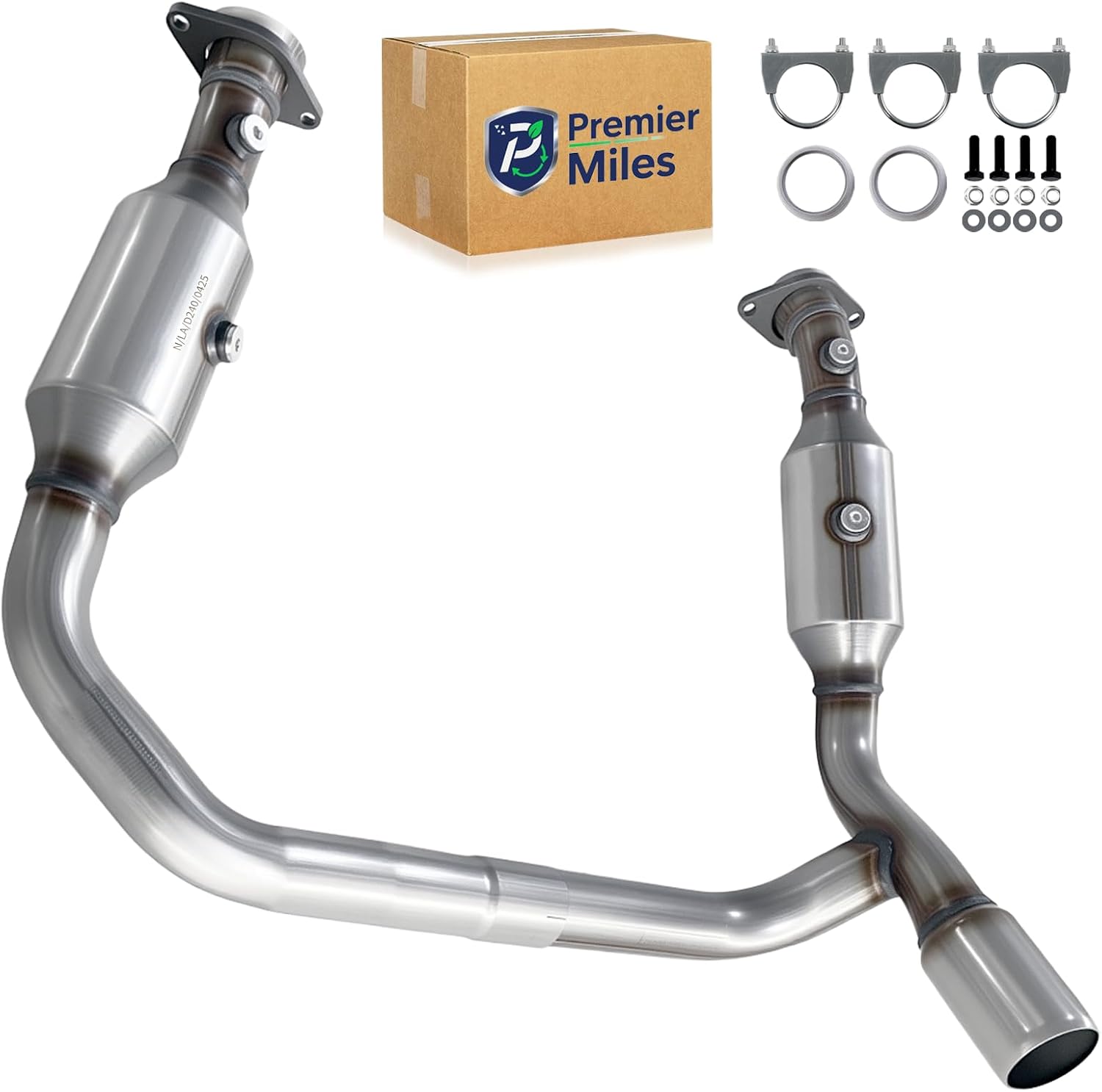
| Vehicle fitment | Ram 1500 5.7L V8 (2009–2016) |
|---|---|
| Substrate | 400-cell ceramic |
| Emissions | EPA-compliant (25,000-mile test) |
| Manufacturer | PREMIER MILES |
This PREMIER MILES catalytic converter is built as a direct replacement for Ram 1500 trucks with the 5.7L V8 (2009–2016) and is intended to restore emissions control and exhaust flow after a failed factory unit. It uses a 400-cell ceramic substrate and a precious-metal catalyst to reduce pollutants while keeping backpressure low, which helps maintain fuel economy and engine responsiveness. The unit is advertised as EPA-compliant and tested to the 25,000-mile long-term standard, and the fit is reported as plug-and-play in many installs though some customers needed minor pipe cutting or muffler-shop adjustments for perfect alignment. Practical benefits include restored check-engine code resolution, improved drivability compared with a clogged converter, and a multi-year structural and emissions-performance warranty. Limitations are that it is not CARB-compliant so it cannot be used in California or CARB-covered areas, and occasional fitment adjustments may be required depending on the vehicle's existing pipe and flange condition.
Best for: Buyers who want a tested, emissions-compliant replacement to clear catalytic converter faults and restore normal engine performance while prioritizing documented long-term testing and dealer-level reassurance.
Less Ideal for: Drivers in California or other CARB-regulated areas and those who need a guaranteed bolt‑in with no possibility of pipe or flange work should consider other options.
- Designed specifically for Ram 1500 5.7L V8 years 2009–2016 for straightforward replacement
- EPA-compliant and tested to the 25,000-mile long-term emissions standard
- OEM-grade 400-cell ceramic substrate helps reduce backpressure and preserve performance
- Includes precious-metal catalyst formulation aimed at extended durability and emissions control
- Not CARB-compliant so unusable in California and other CARB jurisdictions
- Some installs may require cutting or pipe work and professional shop help for exact alignment
Verdict: A tested EPA-compliant direct-replacement catalytic converter for Ram 1500 5.7L owners who want a documented emissions fix and restored performance without buying a dealer part.
Choosing the Right 2009-2018 Ram 1500 Catalytic Converter: Key Factors to Consider
Fitment and Exhaust Geometry
Correct fitment is vital for the 2009–2018 Ram 1500 because differences in pipe diameter, bend placement, and sensor locations can make installation difficult. A direct-fit converter that matches the factory flange spacing and oxygen sensor bungs minimizes modifications and reduces labor time.
Poor fitment can lead to leaks, sensor errors, or the need for exhaust shops to cut and re-weld piping, which increases cost and can compromise sealing surfaces. When evaluating options, confirm exact inlet and outlet diameters, flange types, and the position and thread type of any required O2 sensor ports to ensure a straightforward swap.
Emissions Performance
The primary role of the catalytic converter is to reduce harmful exhaust emissions so the vehicle meets regulatory and inspection standards. For the Ram 1500, you should look for converters with substrate designs and washcoat formulations engineered to oxidize hydrocarbons and CO and to reduce NOx effectively under the truck's typical operating temperatures.
Some units specify regulatory compliance or test results, which can be useful indicators of likely performance during inspection. Consider how the converter behaves on short trips and at highway speeds since temperature and exhaust flow will affect conversion efficiency on this truck.
Substrate Type and Durability
Catalytic substrates vary by material and cell density. Ceramic honeycomb substrates are common and cost-effective, while metallic substrates can offer better thermal shock resistance. For a 2009–2018 Ram 1500 that sees towing or heavy-duty use, thermal resilience matters because repeated temperature cycling can fracture fragile substrates.
Higher-quality substrates and protective mounting strategies reduce the likelihood of internal collapse or separation, which are common failure modes. Check for features that mitigate contamination and physical damage from road debris or backfiring events.
Oxygen Sensor Compatibility
Modern Ram 1500 engines rely on upstream and downstream oxygen sensors to monitor catalyst efficiency and engine tuning. A replacement converter must have correctly positioned sensor ports that accept the truck's sensor thread and location to avoid triggering diagnostic codes.
Mismatched sensor placement can lead to persistent Check Engine lights and incorrect fuel trims. When evaluating options, verify the number of sensor ports and their exact locations relative to the mounting flanges to prevent sensor harness strain or misreading.
Corrosion Resistance and Shell Construction
The converter shell and weld quality affect how long the unit lasts in real road conditions, especially in regions that use road salts or see frequent moisture. Stainless steel shells and robust welds resist corrosion better than lower-grade materials and help maintain seal integrity at flange joints.
Look for corrosion-resistant finishes and attention to seam welding. A well-constructed shell reduces the risk of exhaust leaks and structural failures that can occur after a few seasons of exposure.
Installation Complexity and Serviceability
Some converters are true bolt-on replacements, while others require cutting and re-welding. For many owners, minimizing shop time and avoiding fabrication is a priority, so prefer designs that use factory mount points and standard flanges.
Also consider whether the converter allows easy access to O2 sensors and whether replacement gaskets or hardware are included. Units that align with factory fitment reduce labor costs and the chance of installation errors that can affect emissions performance.
Why Catalytic Converters Fail on the 2009–2018 Ram 1500
Catalytic converters fail for a handful of recurring reasons that are especially relevant to the 2009–2018 Ram 1500. Engine misfires, rich running conditions, or oil and coolant contamination can coat the catalyst and block flow, reducing conversion efficiency and causing the Check Engine light to trigger.
Physical damage from road debris, impact, or thermal shock from extreme temperature swings can also fracture the substrate. Repeated short-trip driving prevents the catalyst from reaching optimal operating temperatures, which accelerates fouling and reduces useful life on this truck.
- Contamination from oil, coolant, or unburned fuel
- Substrate collapse from thermal cycling
- External damage from impacts or corrosion
- Improper air-fuel ratios or persistent misfires
Diagnosing Catalyst Problems on Your Ram 1500
Start diagnostics by scanning for fault codes; codes related to catalyst efficiency or oxygen sensor discrepancies point toward the converter or upstream engine issues. Measure exhaust backpressure and listen for rattling noises that indicate a broken substrate.
Visual inspection can reveal external damage, rusted flanges, or sensor bung problems. If the truck runs rough, loses power, or fails emissions tests, isolate engine misfires and fuel delivery problems first because they commonly cause secondary converter damage.
- Use an OBD-II scanner to read catalyst and sensor codes
- Inspect flanges and shell for leaks or holes
- Check for rattles under light tapping that suggest internal breakage
- Verify spark and fuel system health before replacing the converter
Sensor Port Placement and Wiring Considerations
The 2009–2018 Ram 1500 uses specific sensor placements that must align with replacement converters. Improper sensor positioning or thread mismatch can strain wiring harnesses or cause incorrect readings that trigger emissions codes.
When selecting a replacement, ensure the converter has the correct number of sensor ports in the right locations. If a sensor must be relocated, plan for adequate heat shielding and secure routing to prevent damage from exhaust heat or road debris.
- Confirm sensor bung thread size and depth
- Avoid routing harnesses near high-heat areas without shielding
- Plan for replacement hardware and anti-seize on sensor threads
Installation Tips to Avoid Future Problems
Use new gaskets and properly torqued flange bolts to ensure a leak-free seal. If the converter includes welded flanges that match factory specs, test-fit before final assembly to confirm alignment.
Apply anti-seize on sensor threads to ease future service, but avoid over-torque which can strip threads. After installation, clear stored codes and perform a short drive cycle to let the ECU re-learn sensor baselines and confirm the Check Engine light does not return.
- Replace gaskets and hardware during installation
- Torque bolts to factory specifications
- Clear codes and complete a drive cycle to verify repairs
When to Repair Versus Replace the Converter
Minor external damage or small leaks at flange joints can sometimes be repaired if the internal substrate is intact and emissions performance is not degraded. However, internal substrate damage, heavy contamination, or failing efficiency sensors usually necessitate replacement.
Consider the vehicle's usage pattern; if the truck is used for towing or frequent short trips, investing in a more durable replacement with better thermal resilience is often the more reliable long-term choice.
- Repair only for superficial shell damage with intact substrate
- Replace for internal breakage, contamination, or failed catalyst codes
- Choose a durable replacement for towing or heavy use
Still looking for the perfect fit?
Select your Ram 1500 configuration to see the most relevant Catalytic Converters recommendations
How We Chose the Best 2009-2018 Ram 1500 Catalytic Converter
We prioritized items that directly address the most common issues Ram 1500 owners report with worn or damaged catalytic converters. Our selection criteria emphasized fitment accuracy to the 2009–2018 Ram 1500 exhaust geometry, emissions performance under typical driving conditions, and materials and construction that influence longevity. We also considered thermal management features that reduce the chance of premature substrate breakdown and flange and gasket compatibility to simplify installation.Evaluation points included: verified vehicle-specific fitment, catalyst substrate type and cell density, inlet/outlet flange and sensor port locations, corrosion-resistant shell materials and weld quality, and manufacturer-specified emissions performance claims where available. We excluded universal or heavily modified converters that require custom fabrication, and we did not include units lacking clear fitment or sensor port information. The result is a focused list of six converters that balance correct fitment, emissions control, and service life for the 2009–2018 Ram 1500 without introducing complex fitment compromises.
Our full evaluation process is outlined in our review methodology.
FAQ
What symptoms specifically suggest the catalytic converter on my 2009–2018 Ram 1500 is failing?
Common signs include a persistent Check Engine light with catalyst-related codes, reduced engine power, poor fuel economy, a rotten egg or sulfur smell from the exhaust, and unusual rattling from under the vehicle. Often these symptoms appear alongside upstream engine issues that should be diagnosed first.
Can a bad oxygen sensor cause the same symptoms as a failing catalytic converter?
Yes. A failing O2 sensor can mimic converter problems by reporting incorrect exhaust readings and causing the engine control system to run improperly. It is important to scan for and interpret codes and inspect sensors before assuming the converter is at fault.
Is a direct-fit converter always better for the Ram 1500 than a universal unit?
Direct-fit converters generally reduce installation complexity and the chance of fitment-related leaks because they match factory flanges and sensor locations. Universal units can work but often require cutting, welding, and more labor, which may introduce additional potential failure points.
Will replacing the catalytic converter fix a Check Engine light immediately?
Replacing the converter can clear catalyst-related codes, but the ECU may need time and driving cycles to re-check efficiency. If upstream engine problems remain, the light can return. Clear codes after repair and complete the required drive cycles to confirm the issue is resolved.
How long does a replacement catalytic converter typically last on a Ram 1500?
Lifespan varies with driving habits, maintenance, and exposure to contaminants. Well-installed, high-quality converters can last many years, but repeated short trips, engine misfires, or contamination can shorten life significantly. Monitoring engine health helps extend service life.
Do I need to replace gaskets or hardware when installing a new converter?
Yes. Replacing gaskets and flange hardware helps ensure a proper seal and reduces the risk of exhaust leaks. Using the correct torque and replacing any corroded bolts prevents future failures and makes sure the converter performs as expected.
Final Verdict
For the 2009–2018 Ram 1500, prioritize a catalytic converter that matches factory fitment and sensor placement, offers robust substrate construction, and resists corrosion. Address any underlying engine issues before replacement so the new converter is not compromised by misfires or contamination. Balance durability and installation simplicity when choosing between direct-fit options and avoid universal units that require fabrication. Choosing a properly specified converter and following correct installation practices will restore emissions performance and reduce the chance of repeat failures.
Explore More:
- Check out all Ram 1500 parts & accessories
- Explore Catalytic Converters Maintenance & Repair Guides
- Explore Exhaust & Emissions
- Browse all Auto Parts
