

Note: This article contains affiliate links. If you click on these links and make a purchase, I may earn a small commission at no extra cost to you. This helps support my research and content. Read my full affiliate disclosure here.
Upgrading the exhaust on your Toyota Sequoia can change how the vehicle sounds, breathes, and responds to throttle input. Choosing the right cat-back exhaust system affects durability, fitment, and the balance between everyday comfort and a more aggressive exhaust tone. This guide highlights the top four shortlisted cat-back exhaust systems for the Sequoia and explains the criteria we used to evaluate them, including material quality and installation complexity. Read on to find the options that match your driving goals and preferred level of sound.
Looking for other parts? See all Toyota Sequoia parts & accessories.
Top Picks at a Glance
| Best Quality Built to a higher standard if you want something more solid | MBRP S5326AL 2.5" Aluminized Steel Cat-Back Exhaust System |  |
| Best Budget The cheapest option that still gets the job done reliably | KAX Stainless Steel Cat-Back Exhaust System |  |
| Most Sold A high-volume bestseller chosen again and again | Flowmaster Outlaw Cat-back Exhaust System |  |
| Best Overall The best all-around choice for most situations | MBRP Black Series Cat-Back Exhaust System (3" Mandrel-Bent) |  |
1. MBRP S5326AL 2.5" Aluminized Steel Cat-Back Exhaust System
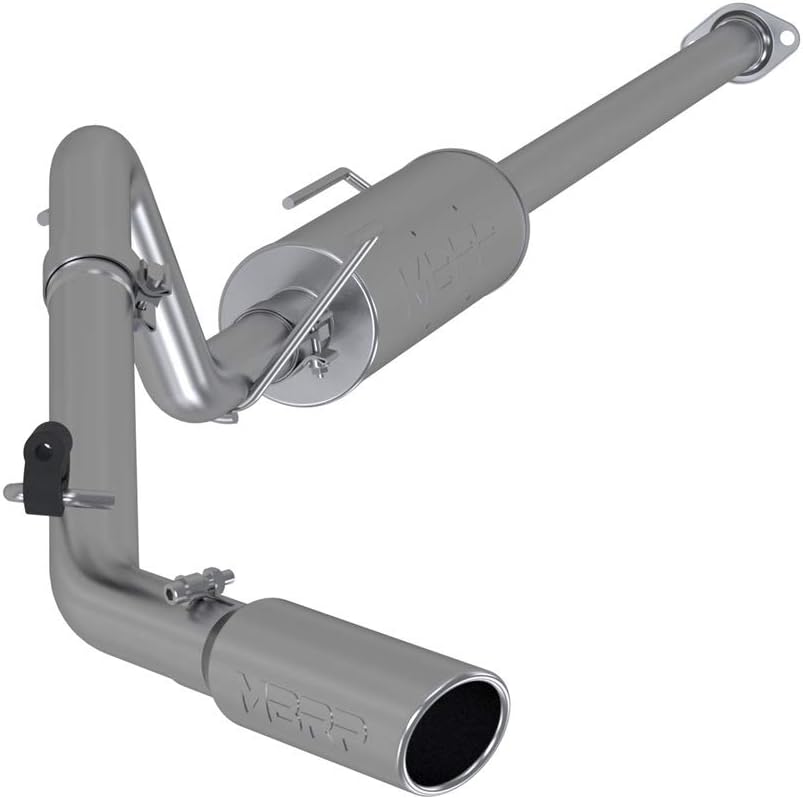
| Installation Type | Bolt-On |
|---|---|
| Finish Type | ALUMINIZED |
| Manufacturer | MBRP |
| OEM Part Number | S5326AL |
This MBRP S5326AL cat-back system replaces the factory rear section with mandrel-bent 2.5 inch tubing and an aluminized finish for corrosion resistance. It is a bolt-on kit intended to free up exhaust flow, produce a deeper, throatier tone and a more responsive feel in the midrange when paired with a 4.0L engine. Typical installation is straightforward for a competent home mechanic and most users report matching hangers and clamp connections that align without extensive modification, though some short-bed or crew cab vehicles require trimming of the straight pipe to fit. The mandrel bends help maintain smooth flow and reduce backpressure compared with folded tubing, and the aluminized steel strikes a balance between durability and cost versus stainless options. Expect a noticeable increase in exhaust volume and occasional low-speed drone under some conditions. The kit does not include a flange gasket so plan to source that separately and factor in cutting for certain bed/cab configurations.
Best for: Performance-oriented buyers who prioritize a stronger exhaust note and improved midrange responsiveness and are comfortable with basic mechanical work or paying a shop for bolt-on installation.
Less Ideal for: Drivers who need a near-silent daily driver or who prefer stainless steel longevity and are unwilling to perform minor trimming or source missing small parts.
- Mandrel-bent 2.5 inch tubing for smoother exhaust flow and reduced internal rippling
- Aluminized steel finish improves corrosion resistance over plain steel
- Bolt-on design with matched hangers simplifies installation for most trucks
- Produces a deeper, more aggressive exhaust note and improved throttle response
- Can produce low-speed drone in some setups
- Does not include the exhaust flange gasket
- Requires pipe trimming on certain short-bed or crew-cab configurations
Verdict A cost-effective, mandrel-bent aluminized cat-back that brings a deeper sound and better flow for performance-minded owners willing to accept occasional drone and minor trimming for fitment.
2. KAX Stainless Steel Cat-Back Exhaust System

| Fitment | 2000–2006 full-size Suburban/Yukon XL 1500 applications (listed) |
|---|---|
| Material | Stainless steel |
| Exterior | Polished |
| Manufacturer Part Number | 4290ESK0071US |
This KAX cat-back exhaust kit is a budget-focused stainless steel replacement intended to restore or upgrade the exhaust path on compatible full-size SUVs. It is typically used to replace a worn stock exhaust to maintain proper exhaust flow, reduce backpressure, and change the exhaust note. The kit emphasizes corrosion resistance and durable welds thanks to its stainless construction, and several buyers report straightforward bolt-on installation with no cutting or drilling required for the correct application. Practical benefits include improved long-term corrosion resistance compared with cheap painted systems and a fuller sound under acceleration. Limitations to keep in mind are fitment sensitivity and lighter hanger hardware compared with factory parts, which can require minor trimming or adjustment at installation; some users also report mid-range drone around 2000 to 2300 rpm. For a budget system it delivers solid value, but expect to spend a little time aligning hangers and checking clearances during install on a Sequoia chassis.
Best for: Budget-conscious owners who want a durable, lower-cost replacement exhaust to restore performance and add a fuller tone without paying for an expensive aftermarket brand.
Less Ideal for: Drivers seeking a perfectly quiet, factory-matched sound or turnkey premium fitment should consider higher-end, vehicle-specific systems or professional installation instead.
- Stainless steel construction resists corrosion better than painted systems
- Mandrel-bent sections and visible weld quality for smoother flow and cleaner joints
- Designed for bolt-on installation with no cutting or drilling for listed fitments
- Noticeably fuller exhaust tone under acceleration compared with stock
- Packaged with welded hangers positioned for direct mounting on many full-size SUV frames
- Hanger rods and mounting hardware are lighter than factory-spec and may need reinforcement
- Some reviewers report a noticeable drone in the 2000–2300 rpm band
- Fitment can be tight near suspension components and may require minor adjustment
Verdict A cost-effective stainless steel cat-back that delivers durable corrosion resistance and a stronger exhaust note for budget-focused owners, but expect some fitment and hanger adjustments on installation.
3. Flowmaster Outlaw Cat-back Exhaust System

| Vehicle Service Type | Car, Truck |
|---|---|
| Inlet Connection Size | 3 Inches |
| Manufacturer | Flowmaster |
| Model | 817854 |
This Flowmaster Outlaw cat-back replaces the back half of the exhaust to deliver a louder, deeper tone and modest performance gains. It uses mandrel-bent stainless steel tubing, a Super 10 Series stainless muffler, and dual 3.00-inch tailpipes that end in large 4.00-inch ceramic-coated stainless tips; the kit installs using factory hanger locations and includes hardware and instructions for a bolt-on fit. In practice the system produces an aggressive interior and exterior sound that many owners describe as attention-getting while providing up to the claimed dyno gains in mid-range torque and horsepower. The kit offers exit options—rear or side behind the wheels—useful when towing to avoid blowing exhaust onto trailers. Downsides are the loudness level, which may be excessive for daily-driving in neighborhoods, and the system is large and requires correct fitment; it does not fit vehicles with factory dual tailpipes or certain 2WD drivetrains. Expect a straightforward home installation for mechanically comfortable owners but plan for professional help if you want precise hangar alignment or welding adjustments.
Best for: Risk-averse mainstream buyers who want a proven, bolt-on upgrade that reliably delivers a louder, more aggressive exhaust character without extensive modifications.
Less Ideal for: Buyers seeking a subtle or quiet signature or those who need an exhaust guaranteed to meet strict neighborhood or campground noise expectations should look elsewhere.
- Mandrel-bent stainless tubing for smoother flow and durability
- Super 10 Series stainless muffler tuned for a deep, aggressive tone
- Includes installation hardware and uses factory hanger locations for bolt-on fit
- Choice of rear or side-exit tailpipe routing to avoid blowing exhaust when towing
- Large coated stainless tips provide a finished, custom look
- Very loud sound profile that may be unsuitable for quiet neighborhoods or long highway cruising
- Not compatible with trucks that have factory dual exhaust or specific 2WD drivetrains
Verdict A hard‑hitting, bolt‑on cat-back that reliably ups sound and mid-range performance but is best for buyers who accept a loud exhaust profile.
4. MBRP Black Series Cat-Back Exhaust System (3" Mandrel-Bent)

| Tubing | Mandrel-bent 3" |
|---|---|
| Tips | T-304 stainless steel |
| Finish | Black coated |
| Installation | Bolt-on |
This MBRP Black Series cat-back replaces the factory rear pipe and muffler with mandrel-bent 3" tubing, T-304 stainless tips, and a black coated finish for a darker look. It is installed as a bolt-on system and is intended to give a deeper, more aggressive exhaust note while maintaining a drone-free character at many driving speeds. The sealed seam construction aims to resist rust and the kit includes hardware for a straightforward install for a competent DIYer or shop. In practical use the system visibly changes the vehicle sound and gives a more performance-oriented feel under acceleration, though the larger 3" intermediate piping can increase cabin resonance on some V6 setups. The black coating offers a “murdered-out” appearance but is recommended only for vehicles not regularly exposed to road salt or heavy chemicals because coating deterioration has been reported on tips. Fitment discussion in this article is focused on Toyota Sequoia owners seeking a balanced, sporty exhaust upgrade with a strong visual finish rather than a quiet, OEM-like replacement.
Best for: Balanced, all-round buyers who want a visible performance upgrade and richer exhaust tone for daily-driven Sequoias while keeping installation and longevity practical.
Less Ideal for: Drivers prioritizing a strictly quiet, factory-like exhaust or those who regularly drive on salted roads and want a fully corrosion-proof painted finish alternative.
- Mandrel-bent 3" tubing for smoother exhaust flow and improved performance potential
- Bolt-on design with included hardware makes installation straightforward
- T-304 stainless steel tips resist corrosion compared with mild-steel tips
- Sealed seams to reduce rusting risk under normal driving conditions
- Black-coated finish provides a factory-style murdered-out appearance
- Black coating and painted tips may deteriorate if exposed to road salt or harsh chemicals
- 3" intermediate pipe may create increased interior drone on some engine and gearing combinations
Verdict A stylish, performance-minded cat-back that gives the Sequoia a deeper sound and clean blacked-out look, best for owners who want audible presence and easy installation rather than a quiet factory-style system.
Choosing the Right Toyota Sequoia Cat-back Exhaust System: Key Factors to Consider
Material and Corrosion Resistance
The metal and finish determine long-term durability, especially in regions with road salt or high humidity. Stainless steel variants resist rust better than aluminized steel, which helps preserve fitment points, welds, and flanges over time.
Beyond base alloy, gauge thickness and weld quality influence how well the system holds up to vibration and thermal cycling. Consider whether replacement sections or warranty coverage are available in case of corrosion-related failure, since repairability affects lifecycle cost.
Exhaust Diameter and Flow Characteristics
Pipe diameter affects backpressure and flow; larger diameters can support higher-power builds while smaller ones can preserve low-end torque and scavenging. Choose a diameter that matches your engine output and any future tuning plans to avoid reducing responsiveness or creating excessive drone.
Pay attention to transitions and bends because abrupt changes can introduce turbulence. Mandrel-bent tubing typically maintains a more consistent internal profile than crush-bent sections, improving flow predictability.
Muffler Design and Sound Profile
Muffler internal architecture—chambered, straight-through, or baffled—drives the character of the exhaust note. Chambered designs often yield deeper, more refined tones at cruise, while straight-through constructions tend to be louder and more aggressive under load.
Also consider the presence of resonators and whether the system is described as tuned to reduce cabin drone. If you spend significant time on long highway drives, a design that minimizes unpleasant vibration frequencies will matter more than peak loudness.
Fitment and Installation Complexity
A correct fit reduces installation time and the risk of leaks or hangar stress. Systems engineered for the Sequoia should match factory hanger locations and flange types to allow a bolt-on installation. Check whether clamps or gaskets are included and whether cutting or welding is commonly required.
Installation complexity affects whether you can install the system at home or should plan for professional labor. Consider access under the vehicle, the need for lifts or jack stands, and whether heat shields or crossmembers require temporary removal.
Muffler and Pipe Orientation
Tip placement, exit angle, and pipe routing influence clearance to the bumper, ground, and suspension components. Poorly routed pipes can contact heat-sensitive components or reduce departure angle, so ensure the design maintains adequate spacing for towing and off-road use if applicable.
Tip options and finish treatments also alter appearance. Verify that the exit locations match your preferences and that tips are secured to resist vibration and corrosion over time.
Maintenance, Warranty, and Serviceability
Consider how easy it is to service or replace sections if damage occurs. Systems with modular clamps or replaceable mufflers reduce future repair complexity. Review warranty coverage for corrosion and structural defects, as that can meaningfully affect ownership costs.
Also think about availability of replacement gaskets, hangers, and tips. Readily available parts and clear documentation simplify both DIY maintenance and professional service work.
FAQ
Will a cat-back exhaust change my Toyota Sequoia’s fuel economy?
A cat-back exhaust can slightly alter efficiency by reducing backpressure and improving engine breathing, but effects are usually modest. Gains tend to be more noticeable when combined with tuning or other bolt-on modifications, and results depend on driving conditions and driving style.
How difficult is catback exhaust installation on the Sequoia?
Difficulty varies by design but many Sequoia-specific systems are designed for bolt-on installation using common tools. Some jobs require lifts or jack stands and occasional loosening of heat shields or hangers. If you are uncomfortable working under the vehicle, professional installation is a practical option.
Does selecting a larger pipe always make the exhaust sound louder?
Larger pipe diameter can contribute to a louder, freer-flowing sound, but muffler design and resonators have a major impact on tone and perceived loudness. A well-designed muffler with a larger pipe can still produce a refined note, while a straight-through small-diameter section can be surprisingly loud under load.
Is stainless steel worth it for a Sequoia exhaust?
Stainless steel typically offers better corrosion resistance and a longer service life than other common materials, which can be worthwhile if you keep your vehicle for many years or drive in corrosive environments. It is a practical choice for durability, though you should also consider weld quality and hardware.
Will adding a cat-back affect my vehicle’s emissions equipment?
A cat-back system replaces piping behind the catalytic converter and normally does not alter emissions control hardware. However, ensure the system does not interfere with sensors or heat shields and that any required OBD checks are not obstructed by installation.
How We Chose the Best Toyota Sequoia Cat-back Exhaust System
We focused on upgrades that specifically fit Toyota Sequoia models and provide measurable changes to exhaust flow and sound without altering emissions equipment. Our editorial filters prioritized construction material, flange and hanger compatibility, muffler design, and the clarity of fitment instructions. We also considered installation complexity, including whether common hand tools suffice, and whether any modifications to factory hangers or heat shields are typically required. Excluded items included full systems that replace headers or catalytic converters, universal-fit mufflers without Sequoia-specific hardware, and components that require fabrication to fit. The dimensions and inlet/outlet diameters, weld quality, and corrosion resistance informed the technical evaluation, while expected installation steps and required clearances guided our assessment of real-world fitment and labor time.
Our full evaluation process is outlined in our review methodology.
Conclusion
Prioritize material quality, fitment accuracy, and muffler design when choosing a cat-back exhaust system for a Toyota Sequoia. Balance the desired sound profile with everyday comfort to avoid excessive cabin drone on long drives. Also weigh installation complexity and serviceability against your DIY comfort level. Opt for systems that match factory hanger locations and provide clear installation guidance to minimize surprises during fitment.
Explore More:
- Check out all Toyota Sequoia parts & accessories
- Explore Exhaust & Emissions
- Browse all Auto Parts
