

Note: This article contains affiliate links. If you click on these links and make a purchase, I may earn a small commission at no extra cost to you. This helps support my research and content. Read my full affiliate disclosure here.
If your Kia Soul is showing ABS warnings or erratic speed readings, choosing the right ABS wheel speed sensor matters for safety and drivability. You want a sensor that fits correctly, provides a clean speed signal, and holds up to road and weather exposure. This guide highlights the top shortlisted ABS wheel speed sensors chosen for their fitment reliability and signal consistency. Below you'll find the criteria we used to evaluate each option and what to expect when replacing the sensor on your vehicle.
Looking for other parts? See all Kia Soul parts & accessories.
Top Picks at a Glance
| Best Overall The best all-around choice for most situations | Kia 95671-B2050 ABS Wheel Speed Sensor (Front Right) |  |
| Best quality Built to a higher standard if you want something more solid | A-Premium ABS Wheel Speed Sensor (Front Left & Right) for Kia Soul 2010–2013 |  |
| Best Value The sweet spot between price and what you get | Gfdoso 58980-B2050 Rear ABS Wheel Speed Sensor for Kia Soul (2014–2019) |  |
| Best budget The cheapest option that still gets the job done reliably | Partuto Front Right ABS Wheel Speed Sensor for Kia Soul 2012 |  |
| Highest Rated A top-rated pick with lots of positive feedback | Auto Parts Port Front Left and Right ABS Wheel Speed Sensor Set for 2010–2013 Kia Soul |  |
| Most popular A crowd favorite that many people choose with confidence | TRQ ABS Wheel Speed Sensor (BSA12811) |  |
| Best Seller A high-volume bestseller chosen again and again | Gfdoso Rear ABS Wheel Speed Sensor 58980-B2050 (2-pack) |  |
1. Kia 95671-B2050 ABS Wheel Speed Sensor (Front Right)

| Mounting Type | Flange Mount |
|---|---|
| Output Type | electrical signal |
| Specific Uses For Product | automotive, motorcycle |
| Material Type | Acrylonitrile Butadiene Styrene |
This genuine Kia 95671-B2050 is a factory replacement front-right ABS wheel speed sensor intended to restore wheel-speed input to the vehicle's anti-lock brake and traction systems. It mounts with a flange and outputs an electrical signal that the vehicle control modules use to monitor wheel rotation. Typical use is straightforward: swap the failed sensor for this unit to eliminate ABS, traction control, or speed-signal faults caused by a damaged or worn sensor. Being a manufacturer part, fitment and connector compatibility are aimed at factory-spec restoration which reduces the need for modification or wiring changes. The ABS sensor is molded from ABS plastic and comes as a single wheel sensor assembly. Limitations are minimal but include that this listing supplies the front-right side only and it does not include additional hardware or a matched left-side unit, so buyers replacing both sides will need two separate purchases.
Best for: Balanced buyers who want a straightforward, factory-quality replacement to restore ABS and traction functions without custom wiring or fitment work.
Less Ideal for: Drivers seeking a universal or heavy-duty aftermarket sensor for extreme off-road use or those who need a two-sensor kit in a single purchase.
- Genuine Kia factory replacement for direct fit and connector compatibility
- Flange mount design for straightforward swap-in installation
- Electrical output designed to match vehicle control module expectations
- Single-component assembly reduces troubleshooting and replacement complexity
- Sold as a single front-right sensor so replacing both sides requires multiple purchases
- Material is ABS plastic which may be less robust than sensors with metal housings in extreme off-road conditions
Verdict: A direct-fit genuine Kia front-right ABS wheel speed sensor that restores factory wheel-speed signaling for reliable ABS and traction control performance.
2. A-Premium ABS Wheel Speed Sensor (Front Left & Right) for Kia Soul 2010–2013

| Compatible Models | Kia Soul 2010-2013 L4 1.6L/2.0L |
|---|---|
| Location | Front Left and Right |
| Connector Pins | 2 Pins |
| Output Type | Digital |
| Measuring Range | 0-120 mph |
This A-Premium sensor kit provides a direct-fit replacement for the front left and right wheel speed sensors on Kia Soul 2010–2013 L4 1.6L and 2.0L models. It converts wheel rotational speed into a digital signal for the vehicle ABS/traction control module and is used when a failing sensor triggers warning lights or degrades stability control performance. Notable features include flange mounting, a two-pin connector, digital output, and a measuring range rated up to 120 mph. The parts are tested for performance and intended to meet or exceed factory specifications, which makes installation straightforward for a standard sensor swap and often clears ABS or traction-control codes immediately. Practical benefits include stable, fast-response output that restores proper ABS feedback and directional stability. Limitations to consider are that this is an aftermarket replacement so long-term durability depends on installation and road conditions, and customers should confirm exact fit by vehicle year and engine before ordering.
Best for: Performance-oriented buyers who prioritize restoring accurate ABS feedback and crisp traction control response on a Kia Soul 2010–2013 and want a tested, direct-fit replacement.
Less Ideal for: Buyers seeking a manufacturer-backed factory replacement with long-term dealer support should consider dealer-sourced factory-quality parts instead.
- Direct-fit design for front left and right positions on Kia Soul 2010–2013, simplifying installation
- Digital output with fast response aimed at restoring ABS and traction-control function quickly
- Performance testing and claimed factory-spec compliance for consistent signal accuracy
- Includes two sensors in one kit so both sides can be replaced together to ensure matched operation
- Aftermarket construction may have slightly different wire routing or connector firmness compared with factory parts
- Long-term durability can vary with harsh driving conditions and is not guaranteed beyond the seller warranty
Verdict: A tested, direct-fit front sensor pair that restores ABS and traction control performance on 2010–2013 Kia Soul models without complicated modifications.
3. Gfdoso 58980-B2050 Rear ABS Wheel Speed Sensor for Kia Soul (2014–2019)

| Mounting Type | Plug Mount |
|---|---|
| Output Type | Digital |
| Measurement Accuracy | ±1% |
| Upper Temperature Rating | 125 Degrees Celsius |
This Gfdoso 58980-B2050 rear ABS wheel speed sensor replaces the factory unit on Kia Soul and Soul EV models from 2014 through 2019 to restore accurate wheel-speed input for the ABS and traction systems. It is a plug-mount, two-pin digital sensor made of ABS plastic and rated for operation up to 125 C, so installation is straightforward for a DIYer and the part tolerates typical underbody heat. Buyers can expect quick diagnostics clearing and restored ABS/traction control behavior when the original sensor has failed or produced erratic readings. Several customers report an exact fit and immediate resolution of warning lights, though a minority experienced fitment issues, so confirming connector and part number before installing is important. The sensor is a budget-friendly choice that trades brand-name OEM backing for lower cost while covering the core functional needs of wheel-speed sensing on the specified Kia Soul models.
Best for: Practical optimizers who want a low-cost, functional replacement to fix ABS or traction warning lights quickly and get their Kia Soul back on the road without paying for dealer parts.
Less Ideal for: Owners seeking a factory-branded or long-term guaranteed part for high-mileage or heavy-duty use should consider a manufacturer-backed sensor instead.
- Direct fit design for Kia Soul 2014–2019 and Soul EV 2015–2019 simplifies replacement
- Plug-mount two-pin connector enables quick DIY installation
- Digital output with ±1% measurement accuracy for reliable wheel-speed readings
- Upper temperature rating of 125 C and ABS plastic construction for durability under engine-bay conditions
- Not a branded OEM part so long-term durability may vary between vehicles
Verdict: A cost-effective, plug-in replacement that restores ABS wheel-speed sensing for Kia Soul models from 2014–2019 without the premium of dealer parts.
4. Partuto Front Right ABS Wheel Speed Sensor for Kia Soul 2012
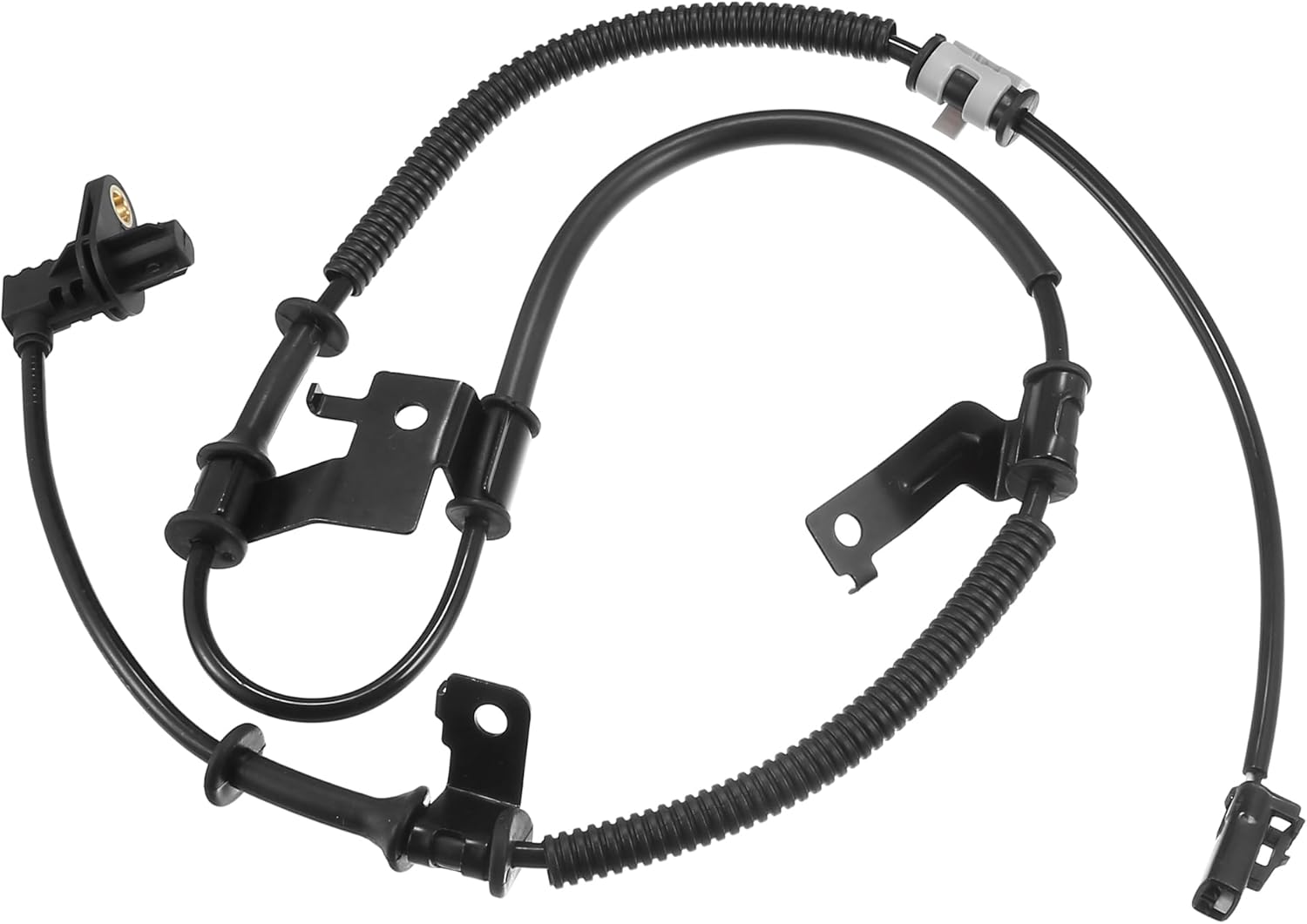
| Placement on Vehicle | Front Right |
|---|---|
| Compatibility | Kia Soul 2012 |
| Material Type | Acrylonitrile Butadiene Styrene, Metal |
| Mounting Type | Flange Mount |
| Output Type | Push-Pull |
This Partuto front right ABS wheel speed sensor is a budget replacement intended to clear ABS warning lights and restore wheel speed input on a 2012 Kia Soul. It installs as a direct plug-and-play replacement and is used to replace a failed or noisy factory sensor that causes ABS codes or degraded stability control performance. The sensor claims accurate speed detection and a flange-mount design with push-pull output for straightforward wiring and mounting. Practical benefits include simpler DIY replacement without special tools and the ability to return the system to normal ABS operation, which helps braking stability and steering response. Limitations are that this is a non-OEM aftermarket part so long-term durability may differ from factory components and fit should be confirmed against your vehicle VIN before purchasing. Expect basic, cost-effective functionality best suited for repairs rather than performance upgrades.
Best for: Budget-conscious buyers wanting a low-cost, straightforward repair for a 2012 Kia Soul who prioritize restoring safe ABS function quickly and economically.
Less Ideal for: Drivers seeking extended factory-quality longevity or a factory-branded replacement should consider OEM-sourced parts or higher-end aftermarket options.
- Plug-and-play design simplifies DIY installation without special tools
- Specifically listed to fit the Kia Soul 2012 front right position
- Flange mount and push-pull output match common factory mounting and connector styles
- Low-cost option to resolve ABS warning lights and restore speed signal input
- Aftermarket non-OEM construction may not match long-term durability of factory parts
- Limited to a single front right sensor; additional sensors must be purchased separately
Verdict: A cost‑effective, plug-and-play front right ABS speed sensor for a 2012 Kia Soul that restores basic ABS function but is an aftermarket alternative to factory parts.
5. Auto Parts Port Front Left and Right ABS Wheel Speed Sensor Set for 2010–2013 Kia Soul

| Mounting Type | Wheel Mount |
|---|---|
| Output Type | Push-Pull |
This set supplies both left and right front ABS wheel speed sensors intended to replace factory parts for 2010–2013 Kia Soul. Installation is typical of wheel-mounted speed sensors: remove the wheel, unbolt the old sensor, unplug the connector, and fit the new sensor in the wheel hub with the original mounting hardware. The sensors use a push-pull output style and come as a matched pair, which helps ensure balanced input to the vehicle ABS and traction systems after replacement. Practical benefits include avoiding ABS warning lights and restoring proper wheel-speed reporting that affects braking and stability controls. The product lists compatibility with the OEM part numbers that Kia uses, and the seller offers a one-year replacement warranty. Limitations are that fitment should be confirmed against your vehicle VIN or OEM number before purchase and that replacement still requires moderate mechanical skill or a shop visit for proper calibration and safe reassembly.
Best for: A reliability-focused owner who prioritizes restoring factory ABS functionality and wants a direct replacement pair to eliminate warning lights and maintain vehicle safety systems.
Less Ideal for: Drivers looking for a plug-and-play option without any mechanical work or those who prefer extended warranties covering labor and incidental costs should consider alternatives.
- Sold as a matched left and right set to restore balanced wheel-speed input
- Directly lists compatible OEM part numbers for easier verification
- Push-pull output type compatible with standard ABS inputs
- Includes a one-year replacement warranty from the seller
- Requires vehicle-specific fit confirmation and may need professional installation for some owners
- Warranty covers replacement parts only and excludes labor or incidental costs
Verdict: A straightforward matched front sensor pair that restores ABS wheel-speed sensing on 2010–2013 Kia Soul when you confirm fitment and install correctly.
6. TRQ ABS Wheel Speed Sensor (BSA12811)

| Mounting Type | Flange Mount |
|---|---|
| Output Type | Push-Pull |
| Specific Uses For Product | automotive |
| Material Type | Acrylonitrile Butadiene Styrene |
This TRQ ABS wheel speed sensor is a direct-replacement sensor intended to restore wheel speed input to the ABS and traction control systems. It installs in the factory mounting location and uses the same flange mount and push-pull output style as typical factory sensors, so installation is straightforward for someone who can remove a wheel and access the sensor harness. Notable features include pre-assembled connectors and routing clips that match factory attachment points and a plastic housing made from ABS material. In practical use the sensor clears erroneous ABS/traction codes and returns normal ABS operation when the original sensor has failed, and TRQ provides DIY video resources to help with installation. Limitations to consider are occasional fitment or routing issues reported on some vehicles, so double-check routing and connector position before final assembly, and some buyers encountered quality-control mismatches that required a return or adjustment. For routine replacements this sensor offers a lower-cost alternative to dealer parts with generally good real-world performance.
Best for: Convenience-driven buyers who prioritize an easy DIY fix and clear installation guidance to get ABS and traction systems working again quickly.
Less Ideal for: Users who need dealer-specific or OEM-sourced parts for warranty or long-term heavy-duty use should consider factory-brand replacements instead.
- Direct-fit flange mount designed to replace factory sensor without modifications
- Pre-assembled connector and harness clips to simplify installation and routing
- Includes factory-style mounting points and grommets for a snug fit
- TRQ provides DIY videos and resources to guide installation
- Some users reported fitment or wiring slack issues on certain vehicles indicating inconsistent quality control
- Made from ABS plastic which may be less durable than higher-grade materials in aggressive environments
Verdict: A budget-friendly, direct-fit replacement that gets ABS and traction systems back to normal with simple DIY installation, but check fitment and wiring routing carefully before finalizing.
7. Gfdoso Rear ABS Wheel Speed Sensor 58980-B2050 (2-pack)

| Mounting Type | Plug Mount |
|---|---|
| Output Type | electrical signal |
| Specific Uses For Product | wheel speed measurement for ABS system |
| Upper Temperature Rating | 170 Degrees Celsius |
This Gfdoso 58980-B2050 two-pack replaces the rear wheel speed sensor on Kia Soul and Soul EV models from 2014 through 2019. The sensors measure wheel rotation and send an electrical signal to the ABS module so traction control and anti-lock braking functions operate correctly. They are made from ABS plastic with a plug‑mount, two‑pin design intended for direct replacement and relatively simple installation by a competent DIYer or technician. Practical benefits include restoring ABS/traction light faults when a failed sensor is the cause and reestablishing correct wheel speed readings for stability systems. Users report straightforward fitment on compatible years and immediate resolution of warning lights. Limitations are that fitment must match the listed part number and vehicle years, and a few buyers noted occasional mismatch requiring returns, so confirm connector and mounting before installation. The sensors are basic replacements rather than performance upgrades, focused on restoring factory functionality rather than improving durability beyond stock levels.
Best for: Risk‑averse mainstream buyers seeking a straightforward, factory‑replacement style sensor to clear ABS or traction warnings and restore normal system operation on a Kia Soul.
Less Ideal for: Drivers who want heavy‑duty or performance sensors or those with vehicles outside the 2014–2019 Kia Soul/Soul EV range should consider other options.
- Sold as a two‑pack for replacing both rear sensors at once
- Plug‑mount two‑pin design simplifies installation and connector mating
- Manufactured from ABS plastic with a high temperature rating listed for under‑hood conditions
- Directly replaces part number 58980-B2050 for specified Kia Soul/Soul EV years
- Not a performance or heavy‑duty upgrade compared with premium aftermarket options
- Some buyers reported fitment issues requiring return or exchange
Verdict: A practical two‑pack factory‑replacement rear ABS wheel speed sensor that restores ABS and traction control function for 2014–2019 Kia Soul models.
Choosing the Right Kia Soul ABS Wheel Speed Sensor: Key Factors to Consider
Fitment and Mounting
Correct mechanical fit is the foundation of a successful sensor replacement. A sensor that matches the Kia Soul's mounting points and clearance requirements reduces the risk of rubbing, misalignment, or premature failure. Proper fitment also ensures the sensor's tip sits at the correct distance from the tone ring or reluctor wheel, which is critical for generating an accurate signal.
When assessing fitment, check the physical housing shape, mounting hole spacing, and any retaining clips or brackets. Even small variations can complicate installation or lead to intermittent readings, so prioritize sensors with explicit compatibility information and matching connector geometry.
Electrical Signal Quality
The sensor's electrical output determines how the ABS module interprets wheel speed. Look for sensors that produce stable, clean waveforms across a range of wheel speeds and that maintain signal integrity when exposed to vibration. Active sensors with built-in electronics can offer more consistent voltage output, while passive sensors depend on the reluctor and may be more sensitive to gap and alignment.
Noise immunity and consistent output at low speeds matter for preventing false ABS warnings and ensuring smooth operation of traction control and speedometer systems. Ask for specifications or test data when available, and consider how the sensor performs in both low- and high-RPM conditions.
Connector and Wiring Compatibility
A sensor that uses the correct connector type for the Kia Soul simplifies installation and reduces the chance of connector corrosion or poor contacts. Match pin count, clip style, and locking features to avoid splicing or adapter use, which can introduce failure points. Wiring length and routing also matter; a harness that is too short or routed incorrectly may be exposed to heat or abrasion.
If a harness repair is necessary, use high-quality terminals and heat-shrink insulation to preserve signal integrity and environmental protection. Proper strain relief at the connector prevents repeated flexing from causing intermittent faults.
Environmental Durability
Wheel speed sensors are exposed to water, road salt, debris, and temperature swings. Durable sealing, corrosion-resistant materials, and robust cable jackets extend service life in these conditions. Sensors with proven ingress protection and durable moulded housings lower the chance of moisture-driven failures and electrical shorts.
Consider the expected operating environment in your area. If you frequently drive on salted roads or through deep water, prioritize sensors with reinforced seals and heavy-duty cabling to minimize long-term maintenance.
Installation Complexity and Serviceability
Some sensors are straightforward bolt-in replacements, while others require partial disassembly of suspension or brake components. Evaluate the installation steps, required tools, and whether special procedures like torqueing the mounting fastener to a specific value are needed. Ease of access affects labor time and the chance of error during replacement.
Also consider serviceability features such as replaceable harness sections, common fastener types, and clear polarity markings. Easier-to-install sensors reduce the risk of installation-related problems and make future maintenance simpler.
Signal Diagnostics and Troubleshooting
Being able to test the sensor before and after installation helps confirm proper operation. Check whether the sensor type allows common diagnostics such as resistance checks, AC voltage generation at wheel spin, or live waveform capture with a scan tool or oscilloscope. Some sensors and wiring setups are more amenable to on-vehicle diagnostics than others.
Understanding typical failure modes such as wiring breaks, connector corrosion, or tone-ring damage aids troubleshooting. Choose sensors and installation approaches that make it easy to isolate faults and verify a successful replacement.
How We Chose the Best Kia Soul ABS Wheel Speed Sensor
We focused specifically on sensors that fit the Kia Soul and deliver reliable wheel speed data under typical driving conditions. Primary evaluation criteria included mechanical fitment and mounting integrity, electrical signal stability and waveform consistency, environmental durability against moisture and road debris, and connector and wiring compatibility to minimize installation issues. We also considered sensor type (active versus passive), installation complexity, and documented longevity in real-world use.We excluded sensors that lacked clear fitment information for the Kia Soul, components without compatible connectors, and units that did not provide measurable signal specifications or durability details. Final selections emphasize accurate fit, dependable electrical performance, and robust construction so buyers can address ABS warnings and speed-sensor faults with confidence.
Our full evaluation process is outlined in our review methodology.
FAQ
What are common symptoms of a failing ABS wheel speed sensor on a Kia Soul?
Common signs include an illuminated ABS or traction control warning light, inconsistent speedometer readings, or ABS activation when braking under normal conditions. You may also notice stability control interventions that seem unwarranted. Symptoms often vary with speed and can be intermittent if the issue is wiring or connector related.
Where is the ABS wheel speed sensor located on the Kia Soul?
On the Kia Soul the ABS wheel speed sensor is mounted at each wheel hub or near the wheel bearing assembly, positioned close to the tone ring or reluctor. Access typically requires lifting the vehicle and removing the wheel and sometimes the brake caliper or dust shield, depending on the model year and hub design.
Can I test a wheel speed sensor before replacing it?
Yes. You can perform basic checks such as visual inspection of the connector and wiring, measuring resistance for continuity on passive sensors, or spinning the wheel and checking for AC voltage output. More thorough diagnostics use a scan tool to view live speed sensor data or an oscilloscope to inspect waveform quality. Testing helps distinguish between a sensor fault and wiring or tone-ring issues.
Is it necessary to replace the wheel hub or tone ring when replacing a sensor?
Not always. Replace the hub or tone ring only if there is visible damage, warping, or if the tone ring gap is outside specification. Sensors fail regularly without tone-ring wear, but a damaged reluctor can cause erratic signals. Inspect both components and address any physical defects before or during sensor replacement.
Will replacing a faulty ABS sensor clear an ABS code such as P0500?
Replacing a faulty sensor can resolve codes related to wheel speed signal loss, but clearing a code depends on the vehicle's diagnostic system. After installing a new sensor you may need to clear stored codes with a scan tool and verify that live data returns to expected values. If the code persists, further diagnostics on wiring and the ABS module may be necessary.
Conclusion
Prioritize correct fitment, signal reliability, and robust environmental protection when choosing an ABS wheel speed sensor for a Kia Soul. Balance ease of installation and connector compatibility to minimize installation errors and future faults.Focus on sensors that make diagnostics straightforward so you can confirm proper operation after replacement. Address any related tone-ring or wiring issues at the same time to ensure the ABS system returns to stable, predictable behavior.
Explore More:
- Check out all Kia Soul parts & accessories
- Explore ABS Wheel Speed Sensors Maintenance & Repair Guides
- Explore Electrical System
- Browse all Auto Parts
