

Note: This article contains affiliate links. If you click on these links and make a purchase, I may earn a small commission at no extra cost to you. This helps support my research and content. Read my full affiliate disclosure here.
Upgrading the exhaust on a 2003-2008 Subaru Forester can transform how the vehicle drives and sounds without changing the engine internals. The right cat-back exhaust system improves exhaust flow, reduces backpressure, and gives a more confident exhaust note while retaining everyday drivability. For Forester owners, fitment, material quality, and sound profile matter more than one-size-fits-all claims.This guide presents the top shortlisted cat-back exhaust systems for the 2003-2008 Forester and explains the factors we used to evaluate them, including build materials, fit and finish, and how they affect power delivery and cabin noise. Read on to see which options match your goals and installation comfort level.
Looking for other parts? See all Subaru Forester parts & accessories.
Top Picks at a Glance
| Best Quality Built to a higher standard if you want something more solid | Invidia G200 Stainless Steel Rolled Cat-Back Exhaust for Subaru Forester XT |  |
| Best Value The sweet spot between price and what you get | Northeastern Exhaust Stainless Steel Resonator Pipe Muffler Kit for Subaru Forester 2006–2008 2.5L |  |
| Best Budget The cheapest option that still gets the job done reliably | CHYKORLA Cat-Back Exhaust Muffler and Resonator Kit for 2006–2008 Subaru Forester 2.5L |  |
| Highest Rated A top-rated pick with lots of positive feedback | Northeastern Exhaust Resonator Pipe Muffler Kit for Subaru Forester 2002–2005 2.5L |  |
| Most Popular A crowd favorite that many people choose with confidence | Northeastern Exhaust Resonator Pipe Muffler Kit for Subaru Forester 2002–2005 2.5L |  |
1. Invidia G200 Stainless Steel Rolled Cat-Back Exhaust for Subaru Forester XT
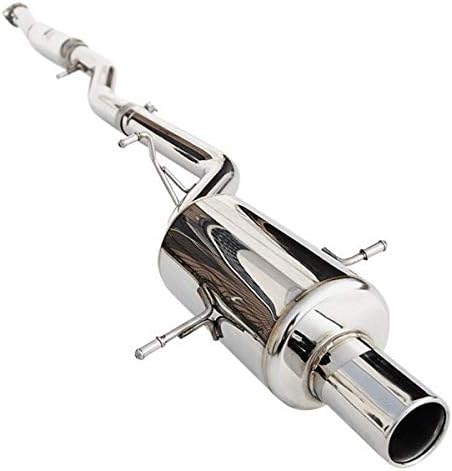
| Compatible years | 2004-2008 |
|---|---|
| Piping diameter | 76 millimeter |
| Tip size | 110 millimeter |
| Installation type | Bolt-On |
| Material | Stainless Steel |
The Invidia G200 cat-back replaces the factory rear exhaust on 2004–2008 Subaru Forester XT to free up flow and produce a sportier tone. It is a bolt-on stainless steel system with 76 millimeter piping and large 110 millimeter rolled tips, intended for drivers seeking improved exhaust flow and a more aggressive sound without custom fabrication. Installation uses existing hangers and hardware for a straightforward fit, and the rolled construction offers a smooth internal profile that helps reduce turbulence. In practice the G200 delivers a noticeable increase in exhaust note and a fuller midrange sound under throttle while keeping droning to a moderate level on highway cruising. The system is durable thanks to stainless construction but adds weight compared with some lighter aftermarket options. Expect stronger auditory and slight performance benefits on tuned or higher-output Forester XT engines, while naturally aspirated or stock setups will see audible improvement but smaller power gains.
Best for: Enthusiasts who prioritize a stronger exhaust sound and improved flow on a 2004–2008 Forester XT and are likely running or planning engine tuning to take advantage of the system.
Less Ideal for: Buyers seeking the lightest possible aftermarket option or those who want a quiet, factory-like exhaust for daily commuting.
- Full stainless steel construction resists corrosion for long service life
- 76 mm piping and rolled internal profile promote improved exhaust flow
- Bolt-on design fits existing hangers for relatively simple installation
- 110 mm tips provide a strong visual upgrade and fuller exhaust tone
- Heavier than some lightweight performance systems
- Performance gains are modest on completely stock engines
Verdict: If you want a durable bolt-on exhaust that brings a louder, fuller tone and better flow to a tuned 2004–2008 Forester XT, the Invidia G200 is a solid choice.
2. Northeastern Exhaust Stainless Steel Resonator Pipe Muffler Kit for Subaru Forester 2006–2008 2.5L

| Compatible Model Years | 2006-2008 |
|---|---|
| Engine | 2.5L |
| Material Type | Stainless Steel |
| Included Components | Bolt Kit, Gaskets, Hangers |
| Automotive Fit Type | Vehicle Specific Fit |
This Northeastern Exhaust resonator pipe and muffler kit replaces the rear section of the Forester 2.5L exhaust with a stainless steel, vehicle-specific assembly. It is intended as a direct-fit replacement, so installation typically uses the included gaskets, hangers, and bolt kit and can be completed by a competent DIYer or professional shop without welding. The 409-grade stainless construction improves corrosion resistance versus plain steel and the resonator design helps control drone while allowing freer exhaust flow for modest gains in efficiency and throttle response. Because this is a specific rear exhaust section, it does not change headers or catalytic function and its sound is restrained rather than aggressive. Fitment is listed for 2006–2008 Forester 2.5L models only, so confirm matching mounting points before purchase. Expect a practical, durable replacement that focuses on reliable fit and quieter operation rather than performance showmanship.
Best for: Buyers who want a practical, reliable rear exhaust replacement that restores function, resists rust better than stock, and minimizes cabin drone without changing the rest of the exhaust system.
Less Ideal for: Drivers seeking a full cat-back performance upgrade, louder aggressive tone, or maximum corrosion protection should consider higher-grade stainless systems or complete exhaust kits instead.
- Direct-fit kit includes gaskets, hangers, and bolt hardware for straightforward installation
- 409-grade stainless steel construction for improved corrosion resistance
- Resonator design reduces cabin drone while allowing improved exhaust flow
- Uses 409 stainless which is less corrosion-resistant than higher-grade stainless options
Verdict: A sensible, rust-resistant direct-fit rear exhaust replacement for 2006–2008 Forester 2.5L owners who prioritize reliable fitment and reduced cabin drone.
3. CHYKORLA Cat-Back Exhaust Muffler and Resonator Kit for 2006–2008 Subaru Forester 2.5L

| Compatible with Vehicle Type | Fit for 2006 2007 2008 Forester 2.5L |
|---|---|
| Material Type | Stainless Steel |
| Included Components | Gasket, Muffler, Resonator, Hanger, Bolts |
| Automotive Fit Type | Vehicle Specific Fit |
This CHYKORLA cat-back exhaust kit is a direct-fit replacement for 2006–2008 Subaru Forester 2.5L models and includes the muffler, resonator pipe, gasket, hangers, and bolts for a complete swap. It is built from stainless steel and aluminum-alloy piping to resist corrosion and is intended as a bolt-on install that does not require welding, so a competent mechanic can fit it quickly. The kit is designed to improve exhaust flow and reduce backpressure, which can translate into modest gains in torque and throttle responsiveness on stock engines. Because it is vehicle-specific, fitment is straightforward and it replaces multiple OEM part numbers commonly used on these Forester models. Limitations to consider are that this is a direct replacement performance orientation rather than a high-end custom system, so sound, weight, and long-term durability may not match premium aftermarket brands. Also installation still benefits from professional alignment to ensure hangers and joints seal properly.
Best for: Budget-minded Forester owners who want a full, direct-fit replacement exhaust that improves flow and refreshes worn components without custom fabrication.
Less Ideal for: Drivers seeking a high-end performance exhaust with aggressive sound tuning or ultra-lightweight materials should consider higher-tier aftermarket systems instead.
- Vehicle-specific fit for 2006–2008 Forester 2.5L simplifies installation
- Includes complete hardware package (gasket, hangers, bolts) for a full replacement
- Stainless steel and aluminum-alloy construction improves corrosion resistance
- Bolt-on design requires no welding when installed by a professional
- Not a premium performance system so gains and refinement are modest
Verdict: A cost-conscious, bolt-on cat-back kit that replaces the entire muffler/resonator assembly for 2006–2008 Forester 2.5L and restores exhaust flow without welding.
4. Northeastern Exhaust Resonator Pipe Muffler Kit for Subaru Forester 2002–2005 2.5L

| Compatible Models | Subaru Forester 2002-2005 2.5L |
|---|---|
| Material Type | Stainless Steel (409 grade) |
| Included Components | Bolt Kit, Gaskets |
| Automotive Fit Type | Vehicle Specific Fit |
This kit replaces the resonator pipe and muffler section of the Forester 2.5L exhaust with vehicle-specific, stainless steel components and the hardware needed for installation. It is typically used as a direct-fit replacement when the stock rear section is rusted or damaged; the included gaskets and bolt kit let a professional or competent DIY complete the swap without sourcing extra parts. Built from 409-grade stainless steel, the kit resists corrosion better than mild steel and should hold up in wet or salted-road conditions. The parts are shaped for the Forester exhaust routing so fitment is straightforward, and the design aims to reduce back pressure which can help maintain engine efficiency. This is not a performance makeover for loud sound or aggressive tone but a practical, long-lasting repair option. Buyers should expect factory-style fit and function rather than major horsepower gains, and installation may require basic exhaust tools and alignment effort to avoid leaks.
Best for: Buyers who prioritize a durable, factory-style replacement for the rear exhaust on a 2002–2005 Forester 2.5L and want parts that resist corrosion and simplify installation.
Less Ideal for: Drivers looking for an aggressive-sounding or high-performance exhaust upgrade or a custom fabrication solution should consider a performance-specific system instead.
- Direct-fit design tailored for 2002–2005 Forester 2.5L for simplified installation
- 409-grade stainless steel construction increases corrosion resistance compared with standard steel
- Includes gaskets and bolt kit so no additional mounting parts are usually required
- Designed to improve exhaust flow and reduce back pressure for stable engine operation
- Made from 409 stainless which is corrosion resistant but not as rustproof as higher-grade stainless
Verdict: Choose this kit when you need a reliable, corrosion-resistant direct-fit rear exhaust replacement for a 2002–2005 Forester 2.5L that comes with the necessary hardware.
5. Northeastern Exhaust Resonator Pipe Muffler Kit for Subaru Forester 2002–2005 2.5L

| Compatible with Vehicle Type | Compact SUV |
|---|---|
| Automotive Fit Type | Vehicle Specific Fit |
| Material Type | Stainless Steel |
| OEM Equivalent Part Number | 605101+604104 (55363+54315) |
This Northeastern Exhaust resonator pipe and muffler kit is a vehicle-specific replacement for the Subaru Forester 2002–2005 2.5L that arrives as a complete rear exhaust assembly with gaskets, hangers, and a bolt kit. Built from 409-grade stainless steel, the kit is intended to resist corrosion better than mild steel and offers oval-shaped piping and a direct-fit design so installation can usually be completed with basic hand tools or by a shop without welding. The design emphasizes smoother exhaust flow and reduced backpressure, which can yield modest improvements in engine responsiveness. Practical benefits include carrying all required mounting hardware and OEM-equivalent part references to simplify matching and fitment. Limitations are typical of 409 stainless: it is more rust-resistant than aluminized steel but not impervious to corrosion in very salty climates, and the kit replaces only the resonator/muffler section rather than providing an entire performance cat-back system for larger gains or a different tone. Expect a straightforward replacement that prioritizes fit and durability over aggressive sound or significant horsepower gains.
Best for: Buyers who want a reliable, factory-style replacement for the rear exhaust on a 2003–2008 Forester (2002–2005 2.5L fitment) and value straightforward fitment and included hardware over radical sound or modification.
Less Ideal for: Drivers seeking an aggressive aftermarket tone, major horsepower gains, or a complete cat-back overhaul should consider performance-focused systems instead.
- Direct-fit, vehicle-specific design with included gaskets, hangers, and bolt kit for easier installation
- Constructed from 409-grade stainless steel for improved corrosion resistance versus plain steel
- Designed to optimize exhaust flow and reduce backpressure for modest responsiveness gains
- Includes OEM equivalent part numbers to simplify confirming fitment
- 409 stainless steel is corrosion-resistant but not as corrosion-proof as higher-grade stainless in very harsh environments
- Replaces only the resonator/muffler section rather than offering a full cat-back system for larger performance or sound changes
Verdict: A straightforward, stainless-steel direct-fit replacement for the Forester rear exhaust that prioritizes correct fitment and corrosion resistance over loudness or big performance gains.
Choosing the Right 2003-2008 Subaru Forester Cat-back Exhaust System: Key Factors to Consider
Material and Corrosion Resistance
Material determines how long an exhaust system will last and how well it resists corrosion in wet or salted-road environments. Stainless steel alloys with thicker wall tubing and proper welds tend to hold up longer than plain mild steel, which can rust and fail at joints. Consider whether the system uses 304 or 409 stainless steel and whether heat-treated joints and TIG welds are specified.
Finish options such as brushed, polished, or ceramic coatings affect both appearance and corrosion protection. A durable finish helps prevent pitting and discoloration from road salts and heat cycling. For a Forester that sees year-round use, prioritize material specs and warranty terms that reflect resistance to the elements.
Fitment and Mounting Design
Accurate fitment for the 2003-2008 Forester is crucial to avoid rattles, exhaust leaks, or the need for modified hangers. Systems designed specifically for the Forester will align with factory mounting points and typically reuse OEM hangers or include vehicle-specific brackets. Poor fitment increases installation time and can lead to premature stress on exhaust joints.
Also evaluate pipe diameter transitions and where clamps or slip-fits are used. A design that minimizes sharp bends and uses mandrel-bent piping preserves flow while fitting under the Forester's chassis geometry. Clear fitment notes and hardware included in the kit reduce surprises during installation.
Sound Character and Interior Drone
Sound is a primary reason many owners choose a cat-back system, but it is also one of the most subjective factors. Decide whether you want a subtle, refined tone or a louder, performance-oriented note. Muffler design, resonators, and piping diameter all affect tone and whether occupants experience drone at cruising rpm.
For a compact SUV like the Forester, consider how much cabin noise you can tolerate on highway trips. Systems that offer replaceable resonators or multiple muffler options let you tailor the sound without swapping the entire system. Check whether the manufacturer provides sound clips or decibel estimates under load for realistic expectations.
Piping Diameter and Flow Characteristics
Piping diameter influences exhaust velocity, backpressure, and midrange torque. Oversized piping can reduce low-end response, while undersized piping can constrict flow and limit top-end power. For the Forester's naturally aspirated and turbocharged variants that fall within the 2003-2008 range, a balanced diameter that improves flow without sacrificing everyday torque is ideal.
Mandrel bending preserves a consistent cross-section through curves, maintaining flow efficiency. Look for systems that match piping size to engine setup and intended use rather than offering a single large diameter as a one-size-fits-all solution.
Installation Complexity and Required Tools
Installation complexity affects whether you can do the job at home or need a shop. Forester-specific kits that reuse factory hangers and include all necessary clamps and gaskets simplify a DIY install. If a system requires cutting, welding, or custom hangers, budget additional time and shop costs.
Consider bolt-on systems that provide slip-fit joints with supplied clamps for easier alignment. Also check whether the kit includes torque specs, step-by-step instructions, or online install guides to reduce the risk of leaks or misalignment during installation.
Legal Compliance and Emissions Considerations
Exhaust modifications can affect emissions equipment and may not be legal in all jurisdictions. Check whether the cat-back system preserves connections to catalytic converters and oxygen sensors and whether it is marketed as emissions-compliant or intended for off-road use only. For many Forester owners, retaining legal compliance avoids registration or inspection issues.
In addition, some systems alter sensor placement or require adapters; ensure the kit supports the Forester's existing sensor layout or provides correct hardware to maintain proper engine management and emissions monitoring.
How Cat-Back Systems Change Driving Feel
A cat-back exhaust system replaces the piping and muffler assembly from the catalytic converter back, which directly alters exhaust flow and the vehicle's acoustic signature. On the 2003-2008 Forester, this can translate to quicker throttle response, a modest bump in peak power when paired with supporting mods, and a more pronounced exhaust note.
Changes in backpressure and scavenging dynamics influence torque across the rev range. Well-tuned piping and muffler choices preserve low-end torque important for daily driving while improving high-rpm breathing for spirited runs.
- Reduced backpressure can sharpen throttle feel.
- Muffler and resonator choices determine tone and possible cabin drone.
- Pipe routing and bend quality affect flow and fit under the Forester chassis.
Matching Exhaust Tone to Intended Use
Select a sound profile that suits how you use your Forester. If most driving is commuting and long highway trips, a milder tone with minimal drone is preferable. If the vehicle is occasionally used for spirited driving or light track days, a louder, throatier system may be appropriate.
Some systems offer multiple muffler variations or removable resonators so you can tune tone after installation. Consider whether you want the flexibility to alter the sound later without replacing the entire system.
- Quiet options prioritize comfort on long drives.
- Aggressive options emphasize exhaust presence during acceleration.
- Modular designs allow later tweaks without full replacement.
DIY Installation Tips for Forester Owners
If you plan to install a cat-back yourself, prepare the vehicle and workspace for safety and accessibility. Use penetrating oil on factory fasteners, support the exhaust properly with jack stands, and have replacement hangers or bolts on hand. A second set of hands helps with aligning slip-fit joints.
Follow torque recommendations for clamps and bolts to prevent leaks. Inspect gasket surfaces at connection points and replace any worn hardware. Test-fit the system before final tightening to ensure proper clearance from heat-sensitive components and suspension parts.
- Apply anti-seize to threads on exhaust bolts to ease future removal.
- Check for adequate ground clearance and avoid contact with brake lines.
- Start with loose fittings, align the system, then tighten progressively.
Material Choices and Long-Term Maintenance
Stainless steel systems require less maintenance than mild steel, but regular inspections still help catch early corrosion at welds or flanges. Rinse undercarriage areas after winter driving in salted conditions and inspect hangers and clamps annually.
Polished finishes show cosmetic wear over time, while ceramic coatings can reduce radiant heat and help preserve appearance. Keep in mind that warranty coverage and available replacement parts vary, so document the system's condition and installation details in case you need support later.
- Rinse undercarriage after exposure to road salt.
- Inspect hangers and clamps every 6 to 12 months.
- Consider heat wrap or ceramic coating where heat exposure is highest.
Compatibility With Other Modifications
A cat-back interacts with intake, tuning, and any upstream modifications. On turbocharged Forester variants, reduced backpressure can affect turbo spool and boost response. In some cases, a retune or adjustments to engine management may be necessary to optimize performance and maintain safe air-fuel ratios.
If you plan future upgrades such as a high-flow header or intake, choose a cat-back that complements those changes in piping diameter and flow characteristics. Avoid systems that create bottlenecks relative to other planned modifications.
- Consider whether a tune will be required after installation.
- Match pipe diameter to the rest of the exhaust path to avoid mismatches.
- Verify oxygen sensor placement is maintained for proper engine management.
Still looking for the perfect fit?
Select your Subaru Forester configuration to see the most relevant Cat-back Exhaust Systems recommendations
How We Chose the Best 2003-2008 Subaru Forester Cat-back Exhaust System
We focused on criteria that matter specifically to 2003-2008 Subaru Forester owners looking for a cat-back exhaust system. Primary evaluation points included material construction and corrosion resistance, because these models are often driven in wet or salty conditions where longevity matters. We assessed fitment accuracy and mounting design to ensure straightforward installation without cutting or major modification to factory hangers.Sound profile and NVH impact were weighed carefully to reflect typical Forester use from daily driving to occasional spirited runs. Flow characteristics and measurable backpressure reduction were considered to gauge potential drivability benefits, including throttle response and midrange torque behavior. We also examined muffler and piping design choices that influence tone, drone, and interior comfort.Excluded from consideration were systems that required extensive custom fabrication, multi-vehicle universal kits, or those lacking clear material and fitment specs. The final shortlist emphasizes systems with clear fitment for the 2003-2008 Forester, durable materials, and documented installation guidance.
Our full evaluation process is outlined in our review methodology.
FAQ
Will a cat-back exhaust system on my 2003-2008 Forester increase horsepower?
A cat-back can improve exhaust flow and slightly increase horsepower, especially when combined with intake or tuning modifications. Gains are typically modest and depend on the Forester's engine and the overall exhaust design.
How loud will a cat-back make my Forester?
Loudness varies by muffler design, resonators, and piping diameter. Some systems aim for a subtle enhancement while others produce a pronounced tone. Look for sound clips or decibel estimates when available and consider systems with removable resonators if you want flexibility.
Can I install a cat-back exhaust myself?
Many Forester-specific cat-back systems are designed for bolt-on installation and can be completed with common tools and two people. If the kit requires cutting, welding, or custom hangers, professional installation is recommended.
Does replacing the cat-back affect emissions or sensors?
A cat-back by definition leaves the catalytic converter and most emissions hardware intact, but some kits may alter sensor placement or require adapters. Verify that the system preserves oxygen sensor locations and is compatible with emissions requirements in your area.
Which materials last longer on the Forester?
Higher-grade stainless steel such as 304 generally offers better corrosion resistance than mild steel or lower-grade alloys. Thicker tubing and quality welds also improve longevity in climates with road salt or heavy moisture.
Will changing the cat-back cause interior drone at highway speeds?
Interior drone can occur depending on muffler design and resonator placement. Systems engineered with tuned resonators or multi-chamber mufflers tend to reduce drone, while straight-through designs may increase it. Consider the tradeoff between tone and cabin comfort.
Final Verdict
When selecting a cat-back exhaust system for a 2003-2008 Subaru Forester, prioritize fitment, material quality, and the sound profile that matches your driving habits. Durable construction and proper mounting reduce long-term issues, while balanced pipe sizing helps maintain everyday torque and improve throttle response.Weigh tradeoffs between louder, performance-oriented tones and potential cabin drone. Focus on systems designed for the Forester that offer clear installation instructions and appropriate sensor compatibility to ensure a trouble-free update and predictable results.
Explore More:
- Check out all Subaru Forester parts & accessories
- Explore Cat-back Exhaust Systems Maintenance & Repair Guides
- Explore Exhaust & Emissions
- Browse all Auto Parts
