

Note: This article contains affiliate links. If you click on these links and make a purchase, I may earn a small commission at no extra cost to you. This helps support my research and content. Read my full affiliate disclosure here.
If you drive a Toyota Camry with the 4-cylinder engine, the right car battery keeps daily starts reliable and prevents roadside surprises. A misfit or weak battery can leave you stranded, affect charging system health, and shorten component life. This guide focuses on the top battery options that fit the Camry 4-cylinder configuration.We shortlisted seven batteries that meet the Camry's fitment and performance needs, then evaluated each against practical criteria like cold-cranking amps, reserve capacity, and expected lifespan. Read on to understand the factors that matter and how to pick the right replacement for your Camry.
Looking for other parts? See all Toyota Camry parts & accessories.
Top Picks at a Glance
| Best Overall The best all-around choice for most situations | Weize Platinum AGM Group 24F Automotive Battery, 710 CCA, 70Ah |  |
| Best Quality Built to a higher standard if you want something more solid | OPTIMA RedTop 34R Sealed AGM Starting Battery (800 CCA) |  |
| Best Value The sweet spot between price and what you get | Daakmax Platinum AGM Group 48 (H6) 12V 70Ah Car Battery |  |
| Best Budget The cheapest option that still gets the job done reliably | Renogy 12V 70Ah AGM Group 48 Start-Stop Car Battery |  |
| Highest Rated A top-rated pick with lots of positive feedback | UPLUS AGM Group 48 (H6/L3) 12V 70Ah Car Battery |  |
| Most Popular A crowd favorite that many people choose with confidence | WEIZE Platinum AGM Automotive Battery Group 47 (12V, 60Ah) |  |
| Best Seller A high-volume bestseller chosen again and again | ACDelco Gold 48AGM Group 48 AGM Battery |  |
Weize Platinum AGM Group 24F Automotive Battery, 710 CCA, 70Ah

| BCI Group | 24F |
|---|---|
| Cold Cranking Amps | 710 CCA |
| Capacity | 70 Ah |
| Nominal Voltage | 12 V |
This Weize Platinum AGM is a sealed Group 24F starter battery geared toward vehicles that need higher cold-cranking power and stronger cyclic performance than a standard flooded battery. It is typically used as a direct replacement where an AGM battery is required or preferred, offering 710 CCA for reliable cold starts and 70 Ah capacity to handle extra accessories and stop/start operation. The AGM construction reduces the risk of acid leaks and self-discharges more slowly than flooded cells, so you can expect longer shelf life and better heat and vibration resistance in daily driving. Practical benefits include easier installation thanks to standard Group 24F sizing and tapered terminals, plus improved durability in hot or cold climates. Limitations are that it is a starter battery not intended for deep-cycle use and requires a vehicle charging system that supports AGM charging voltages to maintain long-term performance.
Best for: Buyers who want a dependable, low-maintenance replacement that balances strong starting power with durability for everyday driving and occasional stop/start use.
Less Ideal for: Drivers who need a dedicated deep-cycle battery for prolonged accessory use or who cannot ensure their vehicle charging system supports AGM charging should consider other options.
- High starting power with 710 cold cranking amps for reliable starts in cold weather
- AGM construction lowers self-discharge and reduces risk of acid leaks compared with flooded batteries
- Better heat and vibration resistance for longer service life in everyday driving
- Sealed design and standard Group 24F footprint make replacement and positioning straightforward
- Not designed for deep-cycle applications so it is unsuitable for regular heavy cycle discharge
- Requires an AGM-compatible charging profile to avoid reducing lifespan
Verdict: Choose this AGM Group 24F if you want a durable, high-CCA starter battery that handles extra electrical load and stop/start duties reliably.
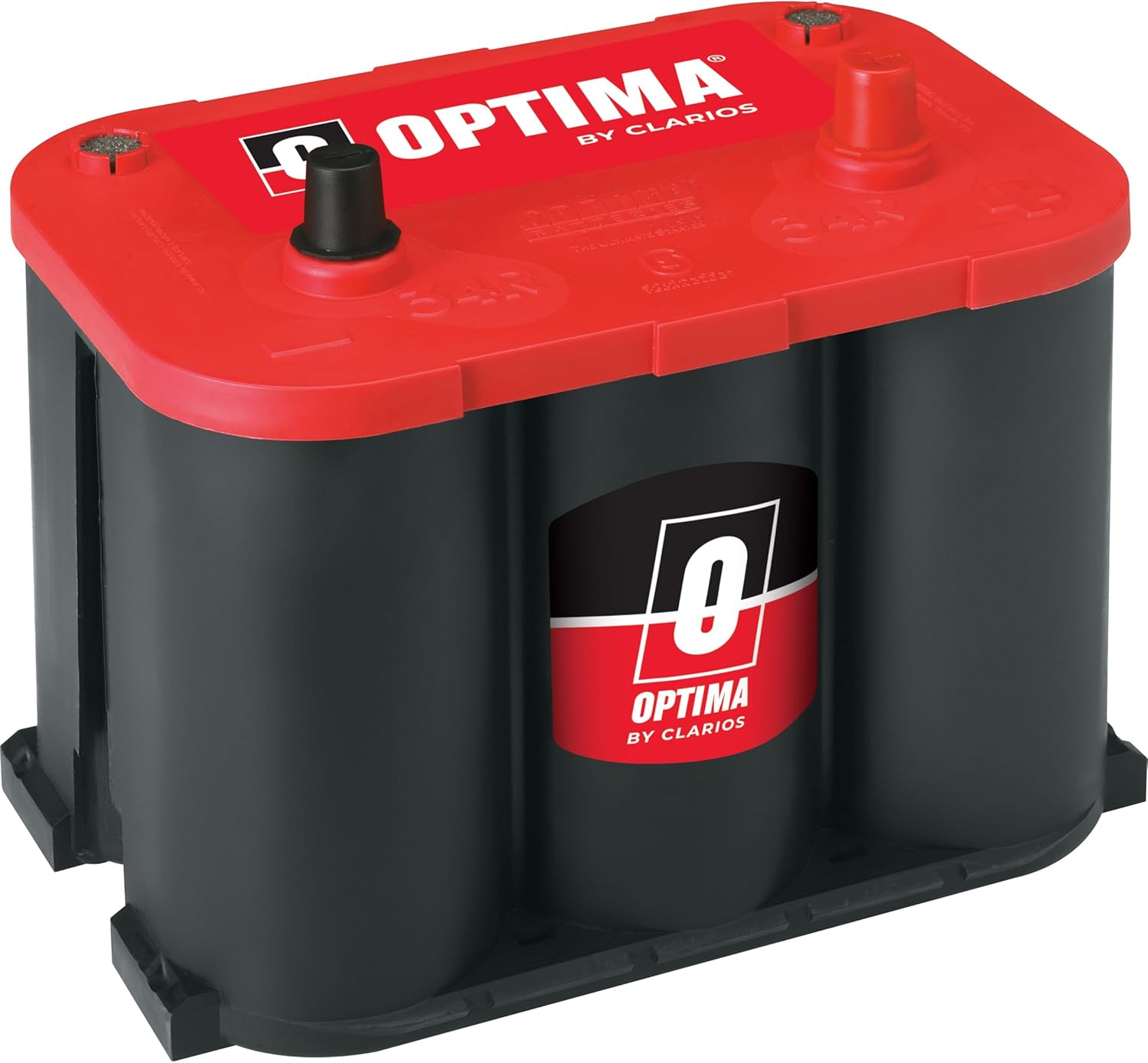
OPTIMA RedTop 34R Sealed AGM Starting Battery (800 CCA)
| Voltage | 12 Volts |
|---|---|
| Cold Cranking Amps | 800 CCA |
| Terminal | SAE Terminal |
| Battery Type | Lead Acid |
| Automotive Fit Type | Vehicle Specific Fit |
The OPTIMA RedTop 34R is a sealed AGM starting battery built to provide strong, reliable starting power in demanding conditions. It is typically used as a direct replacement for vehicle starting batteries where quick, high-current cranking is important. Key features include SpiralCell construction for improved vibration resistance, 800 cold cranking amps for robust starts, and a sealed, maintenance-free design that can be mounted in multiple positions. For a Camry with a 4-cylinder engine this battery delivers ample starting torque and fast recharge from the alternator, which helps on cold mornings and after long idle periods. The battery’s higher reserve capacity and claimed longer service life make it attractive for drivers who prioritize dependable starting performance and durability. Trade-offs are that it is heavier and larger than some compact batteries and uses lead-acid AGM chemistry rather than lithium, so it does not offer the weight savings or extreme lightness of newer lithium options. Also some users report occasional longevity or warranty-handling issues, so keeping records and following proper charging practices is advisable.
Best for: Drivers who want a performance-minded, dependable starting battery that prioritizes strong cranking and durability for daily driving and spirited use.
Less Ideal for: If you prioritize the lightest possible replacement or need the smallest, lowest-weight option for a modified vehicle, a lithium or smaller-form battery may be a better choice.
- High cranking power with 800 CCA suitable for reliable cold starts.
- Sealed AGM construction provides strong vibration resistance and allows flexible mounting.
- Maintenance-free, nonspillable design reduces upkeep and supports faster recharge from the alternator.
- SpiralCell chemistry aimed at longer service life compared with standard flooded batteries.
- Larger and heavier than many compact replacement batteries, which may complicate fit in tight trays.
- Uses lead-acid AGM chemistry so it does not provide the weight savings of lithium alternatives.
- Some buyers report inconsistent longevity and potential warranty support issues with certain sellers.
Verdict: Choose the OPTIMA RedTop 34R if you want a rugged, high-cranking sealed AGM battery that delivers reliable starts and vibration resistance for spirited Camry driving.
Daakmax Platinum AGM Group 48 (H6) 12V 70Ah Car Battery

| Group size | 48 (H6) |
|---|---|
| Voltage | 12V |
| Capacity | 70Ah |
| Cold Cranking Amps | 760 CCA |
| Reserve Capacity | 120 RC |
The Daakmax Platinum AGM Group 48 (H6) is a sealed, maintenance-free starting battery intended for vehicles that need higher cold cranking amps and improved cyclic performance. It provides 760 CCA and 120 RC, so it starts reliably in cold weather and supports cars with heavier electrical loads or start-stop systems. Because it uses AGM construction the battery is spill-resistant, more vibration-tolerant than standard flooded batteries, and claims faster recharge and longer cycle life. Installation is the same as a factory replacement but check terminal orientation since this unit has left negative and right positive posts and a protective cover that can affect fit in some engine bays. This is strictly a starting battery and not suited for deep-cycle uses like solar or marine power. Some buyers noted the carrying handle and terminal cover can complicate tight installs and that fit must be confirmed against your Camry's battery tray and terminal reach before buying.
Best for: A practical buyer who wants a durable, low-maintenance replacement that improves starting reliability and supports extra electrical accessories in a daily-driver Camry.
Less Ideal for: Drivers needing a deep-cycle battery for off-vehicle power or heavy cycling applications should choose a purpose-built deep-cycle unit instead.
- High starting power with 760 CCA for dependable cold-weather starts
- AGM design is maintenance-free and leak-resistant for safer installation
- Improved vibration resistance for longer service life in daily driving
- Higher reserve capacity (120 RC) helps stabilize electronics during accessory use
- Protective terminal cover and carrying handle may interfere with tight battery trays or cable fittings
Verdict: Choose this sealed AGM Group 48 battery if you want a durable, maintenance-free upgrade that delivers strong cold-start performance and better support for accessories in a Toyota Camry.
Renogy 12V 70Ah AGM Group 48 Start-Stop Car Battery

| Capacity | 70Ah |
|---|---|
| Cold Cranking Amps | 720 CCA |
| Reserve Capacity | 120 RC |
| Voltage | 12 Volts |
This Renogy 12V 70Ah AGM Group 48 battery is a sealed lead-acid replacement sized for Group 48 applications and built to support vehicles with start-stop systems. For a Toyota Camry with a 4-cylinder engine it delivers strong cold-cranking power at 720 CCA for reliable starts and a 120-minute reserve capacity that helps stabilize electrical loads during accessory use. The AGM design is maintenance free and sealed to reduce corrosion and acid leak risk, which simplifies installation in the Camry battery tray and reduces upkeep. Renogy advertises a wide operating temperature range so the battery tolerates both cold winters and hot summers common in everyday driving. Expect a heavier unit compared with typical small automotive batteries and the top posts use M8 studs rather than standard automotive posts, so you may need adaptors or to confirm terminal compatibility with Camry battery clamps. For budget-focused buyers this battery balances higher reserve capacity and start-stop optimization against added weight and the need to check terminal fit during installation.
Best for: A Camry driver prioritizing a low-cost replacement that improves starting reliability and handles frequent engine restarts while keeping maintenance minimal.
Less Ideal for: Drivers who prefer the lightest possible battery or need a direct drop-in with standard post terminals without any adapter work should consider other options.
- High starting power with 720 CCA suitable for cold starts
- Sealed AGM construction eliminates watering and reduces corrosion risk
- Designed for start-stop systems to handle frequent restarts
- 120 minutes reserve capacity to support accessory loads and short electronics runs
- Uses M8 screw terminals which may require adapters for factory battery clamps
Verdict: A cost-conscious choice for Toyota Camry 4-cylinder owners who want a maintenance-free AGM battery with strong starting power and start-stop compatibility.
UPLUS AGM Group 48 (H6/L3) 12V 70Ah Car Battery

| Voltage | 12 Volts |
|---|---|
| Nominal Capacity (20HR) | 70 Ah |
| Cold Cranking Amperage | 760 CCA |
| Reserve Capacity (RC) | 120 min |
| Battery Technology | AGM |
The UPLUS Group 48 AGM battery is a sealed, maintenance-free replacement designed for vehicles that accept BCI Group 48 (H6/L3) batteries. It combines AGM construction with a calcium-lead positive grid to deliver strong cold-start performance and deeper cycling than conventional flooded batteries. Typical use is as a direct swap for cars that require Group 48 sizing, supplying reliable cranking power in cold weather and supporting larger electrical loads or start-stop systems without frequent watering. Notable features include a high cold cranking amperage, a 120-minute reserve capacity and vibration-resistant construction that helps durability in daily driving. Practical benefits include long cycle life compared with standard lead-acid batteries and reduced risk of acid leakage or maintenance. Limitations are physical: this is a heavy unit and requires confirming terminal layout and dimensions against the Camry battery tray and hold-down before purchase, and its Group 48 footprint may not fit every Camry year and trim without checking fitment or minor adjustments.
Best for: A Camry owner who prioritizes long-term reliability and wants a maintenance-free battery that handles frequent short trips, large electrical loads, or start-stop duty with dependable starting performance.
Less Ideal for: If you prefer the lightest possible battery for weight-sensitive modifications or your Camry requires a different group size, choose a battery specified exactly for that application instead.
- AGM design for maintenance-free operation and better cycling than wet batteries
- High cold cranking amperage for reliable starts in cold conditions
- 120-minute reserve capacity to support electrical accessories during accessory loads
- Vibration-resistant construction to improve durability in stop-and-go driving
- Heavier than standard batteries which can complicate handling and some trays
- BCI Group 48 footprint and terminal positions require verification for Camry fitment
Verdict: Choose this AGM Group 48 battery for a maintenance-free, reliable replacement that delivers strong cold-start power and improved cycle life for Camrys that accept the Group 48 size.
WEIZE Platinum AGM Automotive Battery Group 47 (12V, 60Ah)

| Nominal Voltage | 12V |
|---|---|
| Capacity | 60 Ah |
| Cold Cranking Amps | 680 CCA |
| Reserve Capacity | 100 RC |
The WEIZE Platinum AGM Group 47 is a maintenance-free 12V starter battery built for modern cars with higher electrical loads and start-stop systems. It installs like a standard replacement and is used as a direct-fit battery for vehicles that accept BCI Group 47 sizing and tapered terminal orientation. Notable features include AGM construction for reduced vibration and non-spillable operation, a 680 cold cranking amp rating for reliable starting in cooler conditions, and a 100 reserve capacity rating intended to improve cycle life versus conventional flooded batteries. In real-world use it delivers strong cranking power for everyday driving and supports accessories without excessive voltage drop. Practical benefits include easier installation, lower self-discharge during seasonal storage, and claimed durability backed by a multi-year warranty. Limitations are that this is a starter AGM rather than a deep-cycle unit so it is not suitable for heavy auxiliary loads or marine/solar use, and buyers must confirm terminal positions and Group 47 fitment for the Camry’s battery tray before purchase.
Best for: Buyers who prioritize proven social proof and measured risk avoidance and want a reliable factory-style replacement with positive user feedback and warranty support for daily driving.
Less Ideal for: Drivers seeking a battery for heavy-duty deep-cycle use, off-grid power, or installations that need a different group size or terminal layout should look elsewhere.
- AGM design provides better vibration resistance and a sealed, non-spillable construction
- 680 CCA offers confident cold starts for climates with occasional low temperatures
- Lower self-discharge helps if the car sits unused for weeks
- Designed for vehicles with start-stop systems and higher accessory loads
- Not suitable for deep-cycle applications or prolonged accessory-only use
- Requires verification of Group 47 dimensions and terminal orientation to ensure fit
Verdict: A practical, well-reviewed AGM starter battery that gives Camry drivers reliable starting power and reduced maintenance compared with conventional lead-acid units.
ACDelco Gold 48AGM Group 48 AGM Battery

| Number Of Cells | 6 |
|---|---|
| Resistance | 0.02 Ohms |
| Amperage | 70 Amps |
| Item model number | 48AGM |
The ACDelco Gold 48AGM is an AGM automotive battery intended as a direct replacement for vehicles that require a Group 48/H6 battery. It supplies strong cold-cranking and reserve capacity for cars with extra electronics and is maintenance-free thanks to the absorbed glass mat design that is spill-proof and vibration resistant. Typical use is as a drop-in replacement in the battery tray, supporting daily starts, accessory loads, and vehicles with mild stop-start or higher electrical draw. Notable features include AGM construction for longer life and better charge acceptance, a 36-month free-replacement period, and a reputable manufacturer backing. In practice this means more reliable starts in cold weather, less terminal corrosion, and a longer service life than conventional flooded batteries. Limitations are that it is heavier than flooded batteries and may require slight adjustments to hold-downs or wiring path in tight installations; it must also be matched to the Camry's charging system and terminal orientation to avoid fitment or charging issues.
Best for: Buyers who prioritize reliable, low-maintenance operation and want a factory-quality replacement that reduces the risk of unexpected failures.
Less Ideal for: Drivers looking for the lightest or least expensive replacement who are willing to accept shorter service life should consider conventional flooded batteries instead.
- AGM design is maintenance-free, spill-proof, and resistant to vibration
- Higher charge acceptance and cold-cranking performance than comparable flooded batteries
- 36-month free replacement period for added peace of mind
- Constructed to meet most factory replacement specifications for modern vehicles
- Heavier and larger than some conventional batteries which can make tight installations more difficult
Verdict: Choose this ACDelco Gold AGM when you want a dependable, maintenance-free Group 48 battery that delivers stronger starting power and longer life than standard flooded replacements.
Choosing the Right Toyota Camry 4-Cylinder Car Battery: Key Factors to Consider
Group Size and Physical Fit
Correct group size ensures the battery fits the Camry 4-cylinder battery tray and secures properly under the hold-down. A wrong size can lead to poor clamping, movement under vibration, and electrical connection issues.
Check the tray dimensions, terminal orientation, and hold-down type before buying. Physical fit also affects access to battery terminals for jumpstarting or maintenance. Choosing the recommended group size avoids trimming, adapters, or relocation that could complicate installation and maintenance.
Cold-Cranking Amps (CCA)
Cold-cranking amps indicate the battery's ability to deliver enough current to start the Camry in low temperatures. Higher CCA ratings generally translate to more reliable cold starts, which matters if you live in cooler climates or frequently park outdoors.
Balance CCA with the Camry's alternator and starter requirements; an excessively oversized CCA rating is unnecessary, while insufficient CCA risks failed starts. Aim for a CCA value that meets or slightly exceeds the OEM recommendation for the 4-cylinder Camry for consistent performance.
Reserve Capacity and Reserve Power
Reserve capacity measures how long the battery can run essential systems if the alternator fails or during extended accessory use. For Camry owners who run electronics while idling or during short charging cycles, higher reserve capacity offers a safety margin.
Reserve capacity affects daily usability more than peak cranking ability. If you use your Camry for frequent short trips, idling, or have many aftermarket electronics, prioritize a battery with a healthy reserve rating to reduce the risk of a drained battery between drives.
Longevity and Warranty
Battery lifespan depends on use patterns, climate, and construction. Look for batteries with longer expected service life ratings and clear warranty coverage to reduce replacement frequency and ownership hassle.
A longer warranty often signals manufacturer confidence, but check pro-rata terms and claim procedures. Consider typical Camry driving habits—if you do many short trips or live in hot climates, prioritize batteries rated for better cycle life and heat resistance.
Maintenance and Durability
Some batteries are maintenance-free sealed units, while others may require periodic electrolyte checks. For most Camry owners, sealed maintenance-free batteries are more convenient and reduce corrosion risk.
Durability features such as vibration-resistant plates, reinforced cases, and corrosion-resistant terminals matter for longevity. These features minimize premature failure caused by road vibration and terminal degradation, which can be especially relevant for daily-driven Camrys.
Terminal Type and Installation Ease
Terminal post type, orientation, and accessory connections influence installation simplicity. Ensure the battery's terminal layout matches the Camry's cable connections to avoid reversing polarity or needing adapters.
Ease of installation also includes weight, hold-down compatibility, and clear top labeling for terminals. A battery that installs cleanly reduces installation time and the chance of connection errors during replacement.
What Battery Specs Matter for the Camry 4-Cylinder
For the Toyota Camry 4-cylinder, prioritize group size, CCA, and reserve capacity when comparing specifications. The correct group size guarantees a safe physical fit; CCA ensures reliable starting in various temperatures; and reserve capacity tells you how long the battery will support electrical loads without the alternator.
Also check the terminal configuration and polarity. Matching these specs to the Camry prevents installation issues and makes jumpstarting or accessory wiring straightforward. Pay attention to vibration resistance and case quality, since those factors influence how the battery performs over its service life.
- Verify group size and terminal orientation
- Match or exceed OEM-recommended CCA
- Consider reserve capacity for frequent accessory use
- Check for vibration-resistant construction
When to Replace Your Camry's Battery
Replace the battery if you experience slow cranking, dimming lights at idle, or frequent need to jumpstart. Batteries older than three to five years are more likely to fail, though actual lifespan depends on climate and driving patterns.
Also replace if the battery case shows swelling, severe corrosion at terminals, or if voltage tests indicate poor health. Regular checks before extreme seasons can prevent inconvenient failures and give you time to choose a suitable replacement.
- Slow engine crank on startup
- Dashboard battery or charging warnings
- Voltage below recommended resting levels on test
- Visible case damage or terminal corrosion
Testing and Diagnosing Battery Health
Basic testing starts with a resting voltage check using a multimeter. A fully charged battery will typically read near its nominal voltage. Voltage under load gives a clearer picture; use a load tester or have the alternator and starter tested together to isolate issues.
Many service shops offer free battery and charging system checks. You can also perform simple checks at home: inspect terminals for corrosion, verify secure connections, and measure resting voltage after the vehicle has been off for a few hours. Regular testing helps catch gradual degradation before failure.
- Check resting voltage with a multimeter
- Load test for realistic under-start conditions
- Inspect terminals and cable integrity
- Test alternator output to rule out charging issues
Installation Tips for the Camry 4-Cylinder
When installing a replacement battery, park on level ground and switch off all electrical loads. Disconnect the negative terminal first, then the positive, and remove the hold-down hardware. Position the new battery with terminals oriented correctly to avoid cable stretching.
Tighten the hold-down to prevent movement but avoid over-torquing that could crack the case. Reconnect positive first, then negative. After installation, start the engine to confirm proper charging, reset any electronic systems if necessary, and dispose of the old battery according to local regulations.
- Disconnect negative terminal before positive
- Confirm terminal orientation and cable reach
- Secure battery with correct hold-down torque
- Start engine and verify charging after install
Maintaining Your Camry's Battery for Longer Life
Keep battery terminals clean and tightly connected to minimize resistance and slow drain. Inspect connections periodically for corrosion and use protective spray or terminal grease if needed. For maintenance-free sealed batteries, visual inspection and voltage checks are usually sufficient.
Avoid long periods of vehicle inactivity; if the Camry sits for extended time, use a maintenance charger or periodically start and drive to keep the battery charged. Minimizing short trips and excessive accessory use without the engine running will also help extend service life.
- Clean terminals and apply protective coating
- Use a maintenance charger during long storage
- Limit long periods of inactivity
- Monitor voltage annually after year three
Still looking for the perfect fit?
Select your Toyota Camry configuration to see the most relevant Car Batteries recommendations
How We Chose the Best Toyota Camry 4-Cylinder Car Battery
We selected batteries for the Toyota Camry 4-cylinder by applying practical fitment and performance filters that reflect real owner priorities. Primary criteria included correct group size and terminal layout to ensure a proper physical fit and safe connection in the Camry battery tray.Starting power was reviewed through cold-cranking amps (CCA), focusing on values that support reliable cold-weather starts for the Camry 4-cylinder. Reserve capacity and amp-hour estimates were used to gauge how long the battery can support accessories and electronics if charging is interrupted. Expected lifespan and warranty terms were considered to reflect long-term ownership costs and reliability.Durability factors such as vibration resistance, corrosion protection on terminals, and plate construction were used to assess real-world resilience in everyday driving conditions. We also considered ease of installation and maintenance needs for typical Camry owners.Exclusions: we excluded batteries that do not match the Camry 4-cylinder group size, models with nonstandard terminal layouts that require modification, and products lacking clear performance or durability specifications. The final list prioritizes fit, dependable starting power, and practical longevity.
Our full evaluation process is outlined in our review methodology.
FAQ
How often should I replace the battery in a Toyota Camry 4-cylinder?
Batteries typically last three to five years, but actual lifespan depends on climate and driving habits. Test voltage annually after the third year and replace sooner if you notice slow cranking or electrical issues.
What size battery fits a Camry 4-cylinder?
Use the group size specified for your Camry 4-cylinder to ensure proper fit and terminal orientation. The correct group size prevents hold-down and cable clearance problems and is the primary fitment factor to confirm before purchase.
Can I test my Camry's battery at home?
Yes. A basic test uses a digital multimeter to check resting voltage after the car has been off for several hours. For a more accurate assessment, perform a load test or have a shop check battery and charging system performance.
Will a higher CCA battery harm my Camry?
A higher CCA rating does not harm the vehicle if the battery fits correctly and the terminals are compatible. However, excessively oversized batteries are rarely necessary and can be heavier and more expensive without measurable benefit for normal Camry use.
Do sealed maintenance-free batteries need electrolyte checks?
Sealed maintenance-free batteries do not require electrolyte level checks. Periodic visual inspection of terminals and voltage testing are typically sufficient for maintenance-free types.
What should I do if my Camry's battery keeps dying despite a new battery?
If a new battery repeatedly discharges, check for parasitic drains from aftermarket electronics, a failing alternator, or poor charging system connections. Inspect cable integrity and charging voltage to diagnose the root cause.
Final Verdict
Prioritize fitment, adequate cold-cranking amps, and reserve capacity when selecting a battery for your Toyota Camry 4-cylinder. Consider your climate, driving patterns, and whether you need extra reserve for accessories to balance starting power against longevity.Choose a battery that matches the Camry's group size and terminal layout, offers dependable starting performance, and provides a warranty that reflects expected service life. Focusing on these tradeoffs will help you pick a reliable replacement that minimizes downtime and ownership hassle.
Explore More:
- Check out all Toyota Camry parts & accessories
- Explore Car Batteries Maintenance & Repair Guides
- Explore Electrical System
- Browse all Auto Parts
