

Note: This article contains affiliate links. If you click on these links and make a purchase, I may earn a small commission at no extra cost to you. This helps support my research and content. Read my full affiliate disclosure here.
If you drive a Honda Fit, the cabin air filter plays a big role in the comfort and healthiness of your daily commute. A clogged or low-quality filter can reduce airflow, let in more dust and pollen, and leave unpleasant odors circulating in the cabin. This guide presents seven shortlisted Honda Fit cabin air filters selected for their filtration performance and fit reliability. We explain the criteria we used, what to watch for when replacing the filter, and how each choice supports cleaner air and better HVAC performance. Read on for the top picks and practical buying considerations.
Looking for other parts? See all Honda Fit parts & accessories.
Top Picks at a Glance
| Best Reviewed A top-rated pick with lots of positive feedback | ECOGARD XC35519 Cabin Air Filter |  |
| Most Popular A crowd favorite that many people choose with confidence | EPAuto CP182 Cabin Air Filter 3-Pack |  |
| Best Quality Built to a higher standard if you want something more solid | K&N Lifetime Washable Cabin Air Filter VF2033 |  |
| Best Budget The cheapest option that still gets the job done reliably | kurimup Cabin Air Filter SCF11182S with Activated Carbon (1 pack) |  |
| Most Sold A high-volume bestseller chosen again and again | EPAuto CP182 Cabin Air Filter (replacement for Honda Fit and select models) |  |
| Best Value for Money The sweet spot between price and what you get | Bosch 6029C HEPA Cabin Air Filter |  |
| Best Overall The best all-around choice for most situations | FRAM Fresh Breeze Cabin Air Filter with Arm & Hammer Baking Soda, CF10134 |  |
1. ECOGARD XC35519 Cabin Air Filter

| Brand | ECOGARD |
|---|---|
| Model | XC35519 |
| Manufacturer Part Number | XC35519 |
| OEM Part Number | 80292-SDA-A01 |
The ECOGARD XC35519 is a drop-in cabin air filter intended to refresh cabin air by capturing dust, pollen and other airborne particles. It installs behind the glove box and is used as a routine maintenance item to keep HVAC airflow clean and reduce odors associated with a dirty filter. The design is compatible with many Honda models and, for vehicles it fits, customers report quick, tool-free installs and noticeably fresher air. Notable features include a pleated media for particulate capture and a form intended to match factory filter housings. Practical benefits are improved cabin air quality and a low-cost way to avoid dealer service for a simple annual change. Limitations: this version does not list activated carbon for odor removal, some users found it slightly flimsy or needed minor trimming on certain installations, and fit can vary between model years so verify exact Fit compatibility for your Honda Fit before buying.
Best for: Reliability-focused owners who prioritize predictable, maintainable HVAC performance and prefer DIY upkeep to keep cabin air fresh.
Less Ideal for: Buyers who want active odor or VOC removal or who require a rigid, exact-match OEM replacement without any risk of fit adjustments should consider alternatives.
- Pleated filter media captures dust, pollen and common cabin particulates.
- Form designed to match factory filter housings for simple replacement.
- Many buyers report fast, tool-free installation behind the glove box.
- Affordable replacement that lets owners perform maintenance themselves.
- No activated carbon layer for targeted odor or gas adsorption.
- Some units feel less rigid than factory filters and may require minor trimming for a perfect fit.
Verdict A practical, well-reviewed cabin filter for Honda Fit owners who want an affordable, easy-to-install replacement to maintain clean cabin air, but not a carbon odor-filtering option.
2. EPAuto CP182 Cabin Air Filter 3-Pack

| Compatible Models | Honda Fit 2009-2020 |
|---|---|
| Pack Quantity | 3 filters |
| Replacement Interval | Every 12 months or 12,000 miles |
| Includes | Activated carbon for odor control |
This EPAuto CP182 three-pack provides a straightforward cabin air filter replacement for Honda Fit owners who want a simple, no-fuss way to refresh interior air quality. Each filter is built to match common cabin filter shapes used in Honda vehicles and includes activated carbon to help reduce odors, dust, and urban particulates. Installation is the typical glove-box access swap so it is something most drivers can do in under 10 minutes without special tools. The pack of three is convenient for drivers who prefer regular maintenance or have multiple vehicles. Reported fit is generally good for the Fit, though a few users trimmed edges on certain model years to achieve a perfect seat. The filters are recommended for annual or 12,000-mile replacement, so budget-conscious owners will appreciate the value of a multi-pack. If you need higher-efficiency filtration for heavy allergies or specialized pollen filters, these are a mid-level choice rather than a medical-grade option.
Best for: Convenience-driven buyers who prefer easy, do-it-yourself maintenance and predictable replacement intervals to keep their Honda Fit cabin air fresh with minimal hassle.
Less Ideal for: Drivers seeking medical-grade allergy filtration or those unwilling to trim a borderline-fitting unit should consider higher-spec or vehicle-specific premium filters instead.
- Three-pack offers spare filters for regular maintenance or multiple vehicles
- Activated carbon layer helps reduce odors in addition to trapping dust and smog
- Designed for direct cabin swap through glove box for quick DIY installation
- Some reported units required minor trimming for an exact fit on certain model years
- Not marketed as a high-efficiency allergy or HEPA-level filter
Verdict A practical, easy-to-install three-pack for Honda Fit owners who want convenient, budget-friendly cabin air refreshes rather than premium allergy-grade filtration.
3. K&N Lifetime Washable Cabin Air Filter VF2033

| Material | Polyurethane |
|---|---|
| Included Components | Cabin air filter |
| Warranty Description | 10 Years – 100,000 Miles |
K&N's Lifetime Washable Cabin Air Filter replaces disposable cabin filters with a washable polyurethane element designed for long-term use. For the Honda Fit, it drops into the factory cabin air box and filters incoming air to reduce odors and particulates while aiming to maintain or improve HVAC airflow. The filter is pretreated and marketed to be easy to install and simple to clean with low-pressure water; customers report measurable airflow and fresher cabin air after installation. Because it is reusable, the filter reduces recurring replacement costs and landfill waste compared with paper filters. Important limitations are the higher upfront cost versus disposable filters and the need for periodic cleaning to keep filtration and airflow optimal. A few users noted minor fitment trimming in some vehicles, so careful fit check is advisable before final installation. If you want long-term airflow performance and fewer repeat purchases, this filter delivers, but it requires occasional maintenance to sustain those benefits.
Best for: Performance-oriented owners who prioritize consistent airflow and cabin comfort and are willing to perform occasional maintenance to preserve long-term performance.
Less Ideal for: Drivers who prefer a fully maintenance-free replacement or who want the lowest initial purchase cost should consider standard disposable cabin filters instead.
- Washable and reusable design eliminates frequent replacements
- Pretreated element helps control musty odors in the cabin
- Engineered to maintain or improve airflow through the HVAC system
- Simple install and cleaning process that can be done with low-pressure water
- Higher upfront cost compared with disposable paper cabin filters
- Requires periodic cleaning and maintenance to retain performance
- Some owners reported minor fitment adjustments were needed
Verdict A high-quality, reusable cabin filter that improves airflow and reduces recurring filter purchases for Fit owners who will commit to periodic cleaning.
4. kurimup Cabin Air Filter SCF11182S with Activated Carbon (1 pack)

| Brand | kurimup |
|---|---|
| Item model number | SCF11182S |
| OEM Part Number | XC36080, CA11182, 80291-TF0-405, 80291-TF0-E01, 80292-TBA-A11, 80292-TF0-G01 |
This kurimup cabin air filter is a low-cost replacement designed to trap dust, pollen and odors with a three-layer filtration media plus an activated carbon layer. It installs in the factory cabin filter location with no tools required and the package instructions claim the swap can be done in about five minutes, which matches many user reports of quick, tool-free changes. The filter's structure is said to increase dust-holding area and maintain airflow so HVAC performance is not noticeably restricted while helping reduce musty smells. For routine cabin maintenance it delivers the practical benefit of cleaner air at a much lower price than dealer parts. Limitations are that independent lab efficiency numbers are not provided and long-term durability versus higher-end brands is unclear, so for heavy-smog or allergy-prone drivers a premium multi-stage or HEPA-style option might perform better over time. Still, for routine replacement on a budget it covers the basics effectively.
Best for: Budget-conscious owners focused on simple, low-cost maintenance who want an easy DIY cabin filter swap to keep in-car air reasonably fresh.
Less Ideal for: Drivers with severe allergies, high local pollution, or those seeking verified HEPA-level filtration should consider higher-end certified filters instead.
- Three-layer filtration plus activated carbon to reduce dust and common odors.
- Compatible with Honda Fit and installs without tools for quick DIY replacement.
- Designed to maintain airflow so heating and cooling performance is preserved.
- Low price point makes regular replacement affordable for maintenance schedules.
- Manufacturer does not publish independent filtration efficiency figures or specific particle sizes captured.
- Long-term lifespan and performance compared with premium filters is not documented.
Verdict An inexpensive, easy-to-install cabin filter that makes routine air-quality maintenance for a Honda Fit affordable, though it lacks published lab-grade filtration metrics.
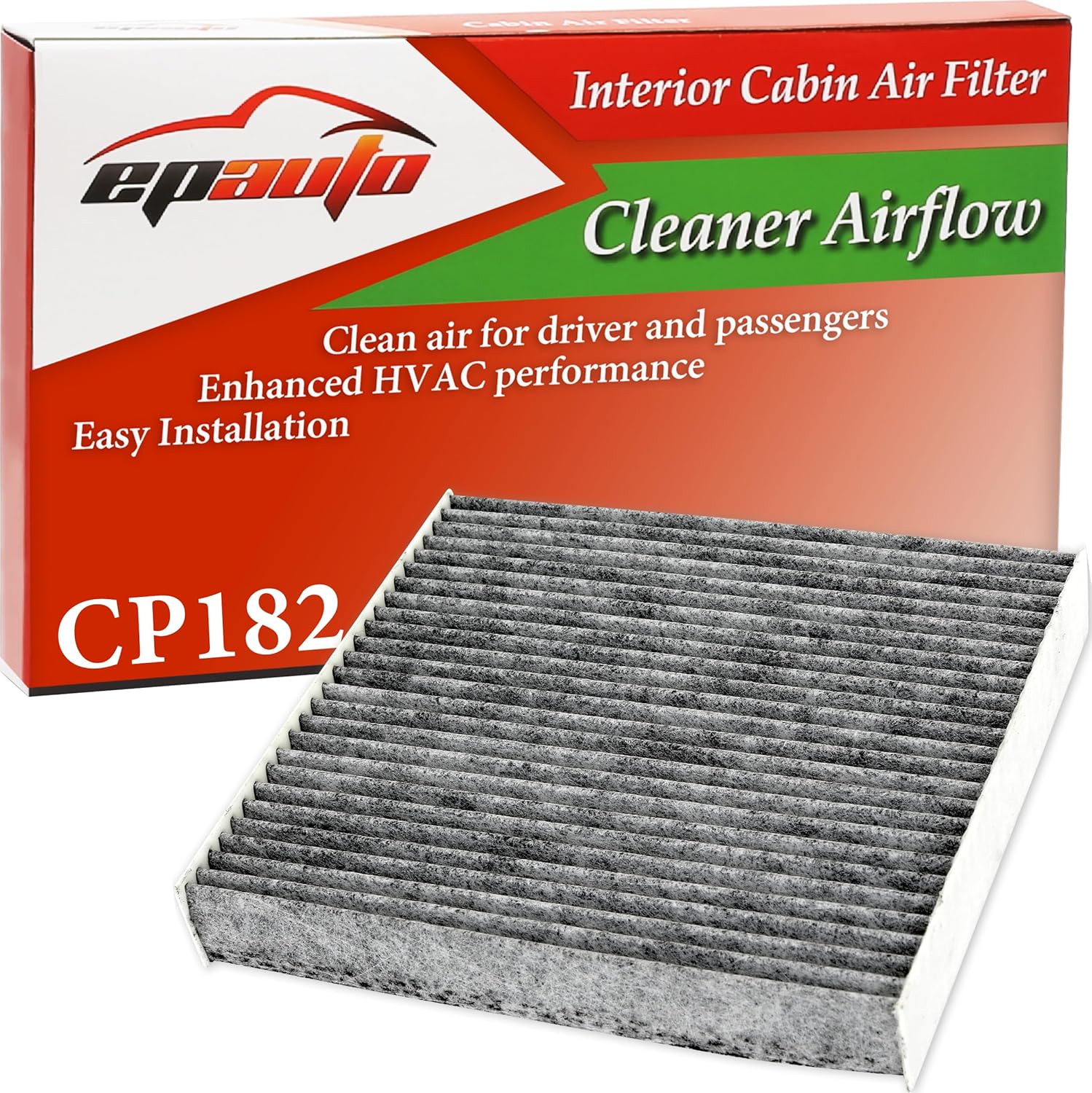
5. EPAuto CP182 Cabin Air Filter (replacement for Honda Fit and select models)
| Compatible models | Honda Fit 2009-2020 |
|---|---|
| Replacement for | FRAM CF11182 / Honda part 80292-TBA-A11 |
| Filter type | Cabin air filter with activated carbon |
| Recommended replacement | Every 12 months or 12,000 miles |
The EPAuto CP182 cabin air filter is a direct-fit replacement for the Honda Fit and similar Honda/Acura models, used to keep the vehicle cabin air cleaner and reduce odors. Installation is straightforward: drop the glove box, remove the cover behind it and slide the old filter out before inserting the new one, so owners can change it themselves in minutes. The filter includes activated carbon to help absorb odors and airborne contaminants and is marketed to improve HVAC performance and passenger comfort. Practical benefits include lower cost compared with factory replacements and wide model coverage across recent Fit years, making it easy to keep a fresh filter on a regular maintenance schedule. Some buyers report occasional fit tightness or minor trimming required on specific model years, so check fit before final installation. Recommended replacement interval is about once a year or every 12,000 miles, which aligns with routine service intervals for peace of mind.
Best for: A risk-averse mainstream buyer who values reliable, low-cost maintenance parts and wants a near-factory replacement that is simple to install and keeps cabin air fresh.
Less Ideal for: Drivers seeking higher-performance or specialty filtration such as HEPA-level or pollen-specific filters should consider purpose-built alternatives rather than this general replacement.
- Designed to match factory cabin filter shape for straightforward replacement in Honda Fit
- Contains activated carbon to reduce odors in the cabin
- Easy DIY installation with glove box access instructions provided
- Lower-cost alternative to factory-brand filters
- A small number of users report a slightly tight fit that required trimming or extra force to seat properly
Verdict A budget-friendly, carbon-equipped cabin filter that makes DIY replacements easy for Honda Fit owners who prioritize dependable, regular maintenance.
6. Bosch 6029C HEPA Cabin Air Filter

| Brand | Bosch |
|---|---|
| Model | 6029C |
| Filtration efficiency | 99.97% at 0.3 microns |
| Recommended replacement interval | Every 12 months or 12,000 miles |
The Bosch 6029C is a HEPA-style cabin air filter built to capture very small particles and improve in-car air quality. It is installed in the vehicle's HVAC intake (usually behind the glove box) and is intended for regular replacement—Bosch recommends around every 12 months or 12,000 miles. The filter uses a melt-blown electrostatic layer plus an extra static cotton layer to increase particle capture and capacity, and structural ribs hold the pleats in shape so the media stays effective over its service life. In everyday use you can expect noticeably reduced pollen, dust, and some exterior odors, which reviewers report as making the cabin air feel fresher. Because the media is dense, there can be a small reduction in maximum fan output on weaker HVAC systems, so you may need to run the fan a bit higher to achieve the same airflow. Overall this is a practical upgrade over basic paper filters for drivers who want cleaner cabin air without complicated installation or maintenance.
Best for: Practical optimizers who want a measurable improvement in cabin air quality for daily driving and seasonal allergy relief without fuss or aftermarket electronics.
Less Ideal for: Drivers who prioritize maximum HVAC airflow or who need a basic low-cost disposable filter for infrequent use should consider simpler, lower-resistance options.
- HEPA-level filtration rated to capture 99.97% of 0.3 micron particles according to Bosch testing
- Multi-layer media (melt-blown electrostatic plus cotton layer) increases capacity and particle trapping
- Structural ribs and dense pleats preserve shape and ensure consistent airflow through the life of the filter
- Easy, glove-box-accessible installation with a fit similar to factory replacement filters
- Denser HEPA media can slightly reduce maximum fan output on weaker HVAC systems
- Not all vehicle trims share identical fitment so verify Fit compatibility before purchase
Verdict A cost-effective HEPA-style replacement that meaningfully improves cabin air quality for Honda owners willing to accept a small drop in peak fan output.
7. FRAM Fresh Breeze Cabin Air Filter with Arm & Hammer Baking Soda, CF10134

| Vehicle applications | Select Honda and Acura models (confirm Fit year compatibility) |
|---|---|
| Filtration performance | Filters up to 98% of dust and pollen |
| Special feature | Arm & Hammer baking soda with carbon embedded |
This FRAM Fresh Breeze cabin air filter is designed to replace the factory cabin filter behind the glove box and improve in‑car air quality for compatible Hondas. It combines a carbon layer with Arm & Hammer baking soda to neutralize odors while capturing up to 98% of dust, pollen, and similar particulates. Installation is straightforward and typically takes about 15 minutes, making it a convenient do‑it‑yourself maintenance item during regular service intervals. The carbon and baking soda treatment is the notable feature here, translating into a perceptible reduction in odors from outside sources or from the HVAC system. One limitation is that this is a vehicle-specific fit; confirm compatibility with your Honda Fit year before buying. Also, while it addresses particulates and odors, it does not replace higher-efficiency cabin filtration options aimed at very fine particles or allergens in extreme sensitivity cases.
Best for: Balanced buyers seeking a straightforward, maintenance-friendly cabin filter that improves smell control and general air quality without specialty medical-grade filtration.
Less Ideal for: Drivers who require medical-grade filtration for severe allergies or those who prefer the absolute highest particulate capture should consider higher-efficiency alternatives.
- Carbon layer plus Arm & Hammer baking soda helps reduce cabin odors.
- Captures up to 98% of dust, pollen, and common contaminants.
- Easy DIY installation behind the glove box in about 15 minutes.
- Not the highest-efficiency option for ultrafine particles or severe allergy mitigation.
- Fitment is vehicle-specific so must be matched to the Fit model year.
Verdict A practical, easy-to-install cabin filter that balances odor control and general particulate filtration for everyday Honda use.
Choosing the Right Honda Fit Cabin Air Filter: Key Factors to Consider
Filtration Efficiency
Filtration efficiency determines how well the cabin air filter captures particles that affect comfort and health, such as pollen, dust, and fine particulates. Higher-efficiency media traps more small particles but can also increase airflow resistance, so consider the balance between capture rate and ventilation performance. Look for filters with clear performance metrics or test data so you can gauge likely real-world effectiveness. In busy urban areas or for allergy sufferers, prioritize higher particle capture. For drivers who frequently use the HVAC system on high fan speeds, choose a filter media designed to maintain airflow while still offering strong filtration.
Physical Fit and Seal
Exact fit and a proper seal are crucial for preventing unfiltered air bypass, which negates the benefits of a high-quality filter. A filter that is slightly too small, too large, or that warps easily can allow gaps at the housing edges and permit contaminants into the cabin. Confirm that the filter dimensions and pleat orientation match the Honda Fit housing. Consider build features such as a rigid frame or molded edges that help maintain shape and form a consistent seal over the life of the filter.
Media Type and Construction
The composition of the filter media—single-layer paper, electrostatic media, multilayer synthetic, or activated carbon—directly affects performance. Electrostatic and multilayer synthetics typically capture finer particles more effectively than basic paper, while activated carbon helps reduce odors and gaseous pollutants. Think about the kinds of contaminants you most want to control: pollen and fine dust lean toward high-capture media, while odors and exhaust-related gases favor a carbon layer. Also evaluate the media density and pleat count, which influence both filtration area and airflow resistance.
Dust Holding Capacity and Longevity
Dust holding capacity indicates how much particulate the filter can trap before airflow is noticeably reduced. Filters with greater capacity last longer between replacements and maintain airflow and HVAC efficiency over more miles. Consider your typical driving environment when estimating service intervals. Drivers in dusty or pollen-heavy areas should favor higher capacity media to avoid frequent replacements. Durability under humidity and temperature changes also matters, since collapse or sagging shortens effective life.
Ease Of Installation
A filter that installs cleanly reduces the chance of incorrect fitment and damage during replacement. Filters that include clear orientation markings, robust frames, and fitment guides help ensure a proper install in the Honda Fit cabin filter housing. Also consider whether the filter requires any trimming or adjustments. Ideally, choose a unit sized precisely for the vehicle so you can replace it quickly and confidently, which encourages timely maintenance.
Odor Control and Activated Carbon
If odors from traffic, smoke, or interior sources are a concern, filters with activated carbon layers can adsorb many volatile organic compounds and reduce smells. Not all carbon treatments are equal, so evaluate the presence and extent of carbon media rather than assuming all filters perform the same. Keep in mind that carbon layers can slightly reduce airflow compared with plain particulate filters, so weigh odor control against potential small changes in ventilation performance. For users sensitive to smells, the tradeoff often favors some activated carbon presence.
FAQ
How often should I replace the Honda Fit cabin air filter?
Replacement frequency often depends on driving conditions. A common guideline is every 12,000 to 15,000 miles or once a year under normal conditions, but you may need to replace it more often if you drive in dusty or high-pollen areas. Inspect the filter visually for heavy dirt, reduced airflow, or odor as signs it is time to replace it.
What are common symptoms of a failing cabin air filter?
Typical symptoms include reduced HVAC airflow, musty or stale odors inside the cabin, and increased dust on interior surfaces. Allergy sufferers may notice worse symptoms when the filter is clogged. These signs often indicate the filter is saturated and no longer effectively trapping contaminants.
Can I use an aftermarket filter instead of an OEM cabin filter?
Aftermarket filters can match or exceed OEM performance if they use high-quality media and precise manufacturing. The key is ensuring correct fit and material specifications. Look for filters that list exact Honda Fit fitment and provide clear media descriptions to judge performance.
Is activated carbon necessary for every driver?
Activated carbon is helpful when odors or gaseous pollutants are a concern, such as city driving or exposure to smoke. For drivers primarily worried about pollen and dust, high-efficiency particulate media may be the priority. Activated carbon adds odor control but can slightly affect airflow, so consider your specific needs.
Where is the cabin air filter located on the Honda Fit?
The cabin air filter is typically located behind the glove box or under the passenger-side dashboard in the Honda Fit. Access usually involves opening the glove box and removing a cover or panel to reach the filter housing. Consult the vehicle manual for the exact access steps and orientation.
How We Chose the Best Honda Fit Cabin Air Filter
We focused on criteria that matter specifically for Honda Fit cabin air filters. Primary considerations included filtration efficiency for common contaminants such as pollen, dust, and vehicle odors; exact fit and installation ease for the Honda Fit cabin filter housing; and material durability to resist moisture and maintain airflow over time. We also assessed dust-holding capacity and resistance to collapse or deformation when exposed to airflow and humidity. Another important factor was manufacturing quality control, which affects consistent dimensions and seal integrity. We excluded filters that lacked clear specification data or that were designed for multiple unrelated vehicles without documented Honda Fit fitment. We did not include products with ambiguous materials or unverified filtration ratings. The final shortlist balances proven filtration performance, reliable physical fitment for the Honda Fit, and durable construction.
Our full evaluation process is outlined in our review methodology.
Conclusion
Choosing the right Honda Fit cabin air filter means balancing filtration efficiency, proper fit, and durability. Prioritize filters that offer reliable particle capture and a consistent seal to avoid unfiltered air bypass, and consider activated carbon if odor control is important. Also weigh dust-holding capacity and ease of installation to match your driving environment and maintenance habits. Focusing on these tradeoffs will help you pick a filter that keeps the Fit cabin cleaner and the HVAC system working efficiently.
Explore More:
- Check out all Honda Fit parts & accessories
- Explore Cabin Air Filters Maintenance & Repair Guides
- Explore HVAC
- Browse all Auto Parts
