

Note: This article contains affiliate links. If you click on these links and make a purchase, I may earn a small commission at no extra cost to you. This helps support my research and content. Read my full affiliate disclosure here.
If your Honda Fit is blowing warm air or shows signs of a refrigerant leak, swapping the AC condenser can restore cooling performance and prevent compressor damage. Choosing the right condenser matters because fitment, cooling capacity, and durability directly affect how quickly your system cools and how long repairs last. This guide covers six shortlisted condensers that meet common repair needs for the Honda Fit. We evaluated options based on fit accuracy, cooling efficiency, materials and corrosion resistance, and ease of installation to help you pick the best match for your vehicle. Read on to understand the key factors that separate reliable replacements from short-lived fixes.
Looking for other parts? See all Honda Fit parts & accessories.
Top Picks at a Glance
| Best Overall The best all-around choice for most situations | A-Premium A/C Condenser with Receiver Drier for Honda Fit 2007–2008 1.5L |  |
| Best Quality Built to a higher standard if you want something more solid | Orceed A/C Condenser for Honda Fit 2007–2008 (80110SAA013) |  |
| Best Value The sweet spot between price and what you get | Garage-Pro A/C Condenser with Receiver Drier for 2007-2008 Honda Fit |  |
| Best Budget The cheapest option that still gets the job done reliably | Garage-Pro A/C Condenser for Honda Fit 2009–2014 |  |
| Highest Rated A top-rated pick with lots of positive feedback | TRQ A/C Condenser and Receiver Drier Assembly for 2009–2013 Honda Fit |  |
| Best Seller A high-volume bestseller chosen again and again | Automotive Cooling Inc A/C Condenser for Honda Fit |  |
1. A-Premium A/C Condenser with Receiver Drier for Honda Fit 2007–2008 1.5L

| Brand | A-Premium |
|---|---|
| Vehicle Fitment | Honda Fit 2007-2008 L4 1.5L |
| Includes | Receiver drier |
| Manufacturer Part Number | APCON129 |
| OEM Part Number | 3593, CN3593PFC, 80110SAA013 |
This A-Premium condenser is a direct bolt-in replacement for Honda Fit 2007–2008 1.5L applications and ships with a receiver drier already attached, which simplifies a system refresh. In practice it replaces the factory condenser to restore cooling performance after a failure or collision; installation requires transferring a mounting stud and reusing some hardware according to buyer reports but otherwise fits without major modification. The condenser is aluminum and designed to improve heat dissipation while resisting leaks when properly installed and pressure-tested. The included receiver drier removes moisture and contaminants during system servicing, saving an extra purchase and step. Limitations to note are typical for aftermarket condensers: some small installation work is needed to transfer hardware, and brackets or fasteners are not included so you may reuse factory pieces or source replacements separately. For a balanced buyer wanting a reliable, ready-to-install replacement for a Gen 1 Fit this condenser delivers strong value and straightforward performance.
Best for: Balanced buyers who want a reliable, factory-replacement style condenser for routine repair or post-accident replacement on a 2007–2008 Honda Fit 1.5L and value straightforward fitment and included receiver drier.
Less Ideal for: Buyers seeking a plug-and-play kit with all new mounting hardware or those who prefer an OEM-branded part should consider alternative options.
- Direct bolt-in replacement engineered for Honda Fit 2007–2008 1.5L fitment.
- Includes receiver drier, reducing parts needed during an AC service.
- Aluminum construction for efficient heat dissipation and corrosion resistance.
- Positive user reports of leak-free performance after installation.
- Does not include mounting bracket or new hardware so some original fasteners must be reused or sourced.
- Requires removal and transfer of a stud during installation which adds a small extra step.
Verdict: A practical, direct-fit condenser that restores A/C performance on 2007–2008 Honda Fit 1.5L models while including a receiver drier for easier system service.
2. Orceed A/C Condenser for Honda Fit 2007–2008 (80110SAA013)

| Compatible Vehicle | Honda Fit 2007-2008 L4 1.5L |
|---|---|
| Replacement Part Numbers | 3593, CN3593PFC, 80110SAA013 |
| Material | Aluminum |
| Includes | Receiver drier, without bracket |
This Orceed condenser is a factory-replacement style unit made for the 2007–2008 Honda Fit 1.5L that replaces the failed OEM condenser to restore cold air. It ships as a painted aluminum condenser and includes a receiver drier so you can complete a condenser swap without sourcing additional core components. The design uses high-density multilayer fins to improve heat dissipation and the manufacturer says gaskets and O-rings are treated for thermal shock resistance, which helps sealing through hot and cold cycles. Fitment follows the OEM layout for a drop-in install on the specified Fit models, so it is suitable for DIYers and shops that want a straightforward swap. Some buyers reported cosmetic repainting or missing drier on rare units, so confirm the kit contents on receipt and be prepared to shorten or replace longer factory bolts if needed; those are practical installation quirks rather than performance faults. For a performance-oriented replacement this condenser balances improved cooling efficiency with the simplicity of a direct-fit part.
Best for: Performance-oriented owners who prioritize restoring or improving A/C cooling on a 2007–2008 Honda Fit and want a near‑OEM fit that supports a DIY or shop replacement with minimal modification.
Less Ideal for: Buyers seeking an upgraded performance condenser beyond improved cooling or who need guaranteed factory-new cosmetic finish and packaged inspection support should consider higher‑end or dealer-sourced alternatives.
- Direct-fit, factory-style replacement for Honda Fit 2007–2008 for straightforward installation
- Aluminum construction with high-density multilayer fins for improved heat dissipation
- Includes receiver drier so the condenser swap can be completed as a kit
- Gaskets and O-rings treated for thermal shock to improve long-term sealing
- Some units arrived repainted or appearing used which may concern buyers
- Occasional reports of missing receiver drier requiring verification of kit contents upon delivery
- May require minor bolt modification on some vehicles during installation
Verdict: A direct-fit aluminum condenser kit that restores and improves cooling performance for 2007–2008 Honda Fit owners seeking a high-quality, straightforward replacement.
3. Garage-Pro A/C Condenser with Receiver Drier for 2007-2008 Honda Fit
| Compatible vehicles | 2007-2008 Honda Fit |
|---|---|
| Core type | Aluminum core |
| Fin pitch | 5mm fin |
| Includes | Receiver drier |
| Manufacturer part number | JCKVAC3593GP |
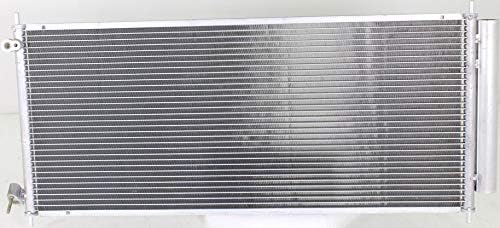
This Garage-Pro condenser is a direct-fit replacement designed specifically for 2007–2008 Honda Fit models and includes a receiver drier for a more complete system refresh. It uses an aluminum core with 5mm fins and a high-efficiency core intended to improve heat exchange compared with older or damaged condensers. Typical use is a straightforward swap during A/C system repair or refresh where the condenser is leaking, clogged, or damaged; the included receiver drier reduces the need for sourcing separate parts. The unit lists OEM cross-reference numbers to match factory fitment and the design emphasizes straightforward installation for someone comfortable with A/C work or a professional shop. Limitations are that buyers must have the system properly evacuated and recharged by a qualified technician and that the one-year warranty applies only through the seller channel noted by the manufacturer. For cost-conscious owners seeking a solid, vehicle-specific replacement, this offers a practical balance of price and functionality.
Best for: Practical optimizers who want a vehicle-specific, budget-conscious replacement that restores A/C performance without premium pricing and prefer parts that simplify the repair process.
Less Ideal for: Buyers seeking lifetime coverage, performance-upgraded condensers, or those who prefer to avoid professional A/C service for installation and refrigerant handling should consider other options.
- Direct-fit design matched to 2007–2008 Honda Fit for easier installation
- Aluminum core with 5mm fins for improved heat transfer and durability
- Includes receiver drier so the A/C repair needs fewer separate parts
- Lists OEM cross-reference numbers to help verify correct fitment
- Requires professional evacuation and recharge of the A/C system after installation
- Warranty coverage is limited to purchase channel conditions specified by the seller
Verdict: A practical, direct-fit aluminum condenser with receiver drier that restores A/C function on 2007–2008 Honda Fit models at a value-oriented price.
4. Garage-Pro A/C Condenser for Honda Fit 2009–2014
| Fitment | Honda Fit 2009-2014 |
|---|---|
| Core Material | Aluminum |
| Fin Pitch | 5mm fin |
| Includes | Receiver drier |
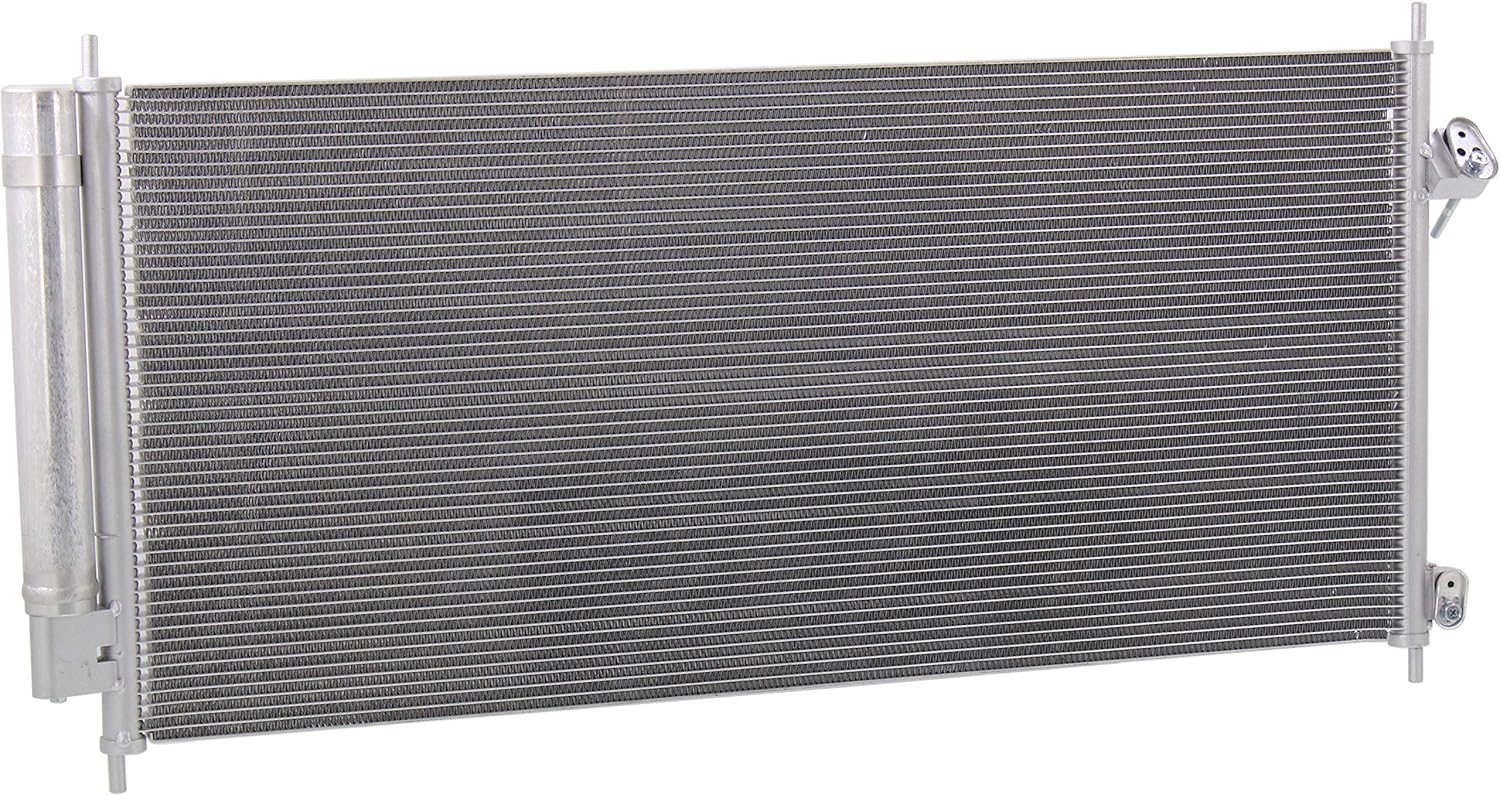
This Garage-Pro A/C condenser is a direct-fit aftermarket replacement for 2009–2014 Honda Fit cars intended to restore air conditioning performance after a failed or leaking condenser. It installs in place of the factory unit and ships with a receiver drier to simplify system service. The condenser uses an aluminum high-efficiency core with 5mm fins to improve cooling throughput and is sized to match the factory core dimensions, which helps keep installation straightforward and avoids extensive line modifications. For budget-focused repairs it provides a practical balance of cost and functionality, and the listing claims a one-year unlimited-mileage warranty. Important limitations are that this is an aftermarket part rather than a factory-branded component and long-term durability will depend on installation and local road conditions, so professional installation and proper system evacuation and recharge are recommended to ensure reliable operation.
Best for: Budget-conscious Honda Fit owners who need a cost-effective, direct-fit condenser to restore cooling without replacing other A/C components.
Less Ideal for: Owners seeking an OEM-branded unit or those who prioritize extended heavy-duty durability under extreme conditions should consider higher-end or factory replacement options.
- Direct-fit design matched to Honda Fit 2009–2014 for straightforward replacement
- Aluminum high-efficiency core with 5mm fins for effective heat transfer
- Includes receiver drier to streamline A/C system service
- Backed by a 1-year unlimited-mileage warranty
- Aftermarket part so long-term longevity may vary versus factory-branded condensers
Verdict: A wallet-friendly, direct-fit condenser that restores A/C cooling on 2009–2014 Honda Fit models without complicated modifications.
5. TRQ A/C Condenser and Receiver Drier Assembly for 2009–2013 Honda Fit

| Fitment | 2009-2012, 2013 Base and Sport Honda Fit |
|---|---|
| Core Material | Aluminum |
| Mounting Hardware Included | Yes |
| Core Thickness | 0.63 in |
| Core Width | 12.7 in |
This TRQ assembly replaces the Honda Fit condenser and includes a pre-attached receiver drier and mounting hardware for a straight swap. It is intended as a direct-fit, factory-quality replacement for base and Sport 2009–2013 Fits, so installation is typically bolt-in with no modifications required. The condenser core is aluminum and TRQ ships the unit pre-assembled to save time during repair; that plus included mounting hardware reduces bench time and the need to source separate parts. Reviewers report reliable cooling performance and good fitment when matched to the vehicle, though a few buyers warned to confirm port orientation and vehicle year before ordering. For reliability-minded owners this unit offers a practical route to restore cold A/C without replacing multiple components, but confirm exact fit using photos or fitment tools since some buyers experienced compatibility mismatches on other makes or years.
Best for: Reliability-focused owners who prioritize a durable, direct-replacement part that restores factory cooling performance with minimal hassle and downtime.
Less Ideal for: Buyers who prefer to upgrade A/C performance beyond factory specifications or who need a universal condenser for multiple vehicle models should look elsewhere.
- Direct-fit replacement designed for 2009–2013 Honda Fit models, minimizing modifications
- Includes receiver drier and mounting hardware for simpler installation
- Aluminum core for effective heat transfer and corrosion resistance
- Pre-assembled unit reduces installation time and parts sourcing
- Some buyers reported fitment/port orientation differences so verification against the vehicle is recommended
Verdict: A pre-assembled, direct-fit condenser and receiver drier that restores factory-style A/C cooling for 2009–2013 Honda Fit models.
6. Automotive Cooling Inc A/C Condenser for Honda Fit

| Manufacturer | Automotive Cooling Inc |
|---|---|
| Manufacturer Part Number | ACC3783 |
| OEM Part Number | 7-3783, 80110TK6A01, CND3783, DPI3783, KLI3783 |
| ABPA Partslink Number | HO3030153 |
This Automotive Cooling Inc condenser is a factory-style replacement intended to restore air conditioning performance on Honda Fit vehicles. It installs in place of the original condenser to re-establish proper refrigerant flow and cooling capacity and is typically used when the factory unit is damaged or leaking. Notable features include claimed lifetime guarantee, full quality inspection and testing, and advertised exact-fit design that matches factory mounting points and hose connections. In practice the unit simplifies installation for DIYers and independent shops because it follows the original layout and reduces the need for modification. The primary benefits are restoring A/C cooling quickly and avoiding lengthy diagnostic work when the condenser is the failed component. Limitations are typical for aftermarket condensers: finishing and accessory components may differ from factory parts and you should replace or inspect receiver/drier, O-rings, and refrigerant when installing to ensure long-term reliability.
Best for: Risk-averse mainstream buyers who prioritize a straightforward, factory-style replacement to restore A/C function without experimental upgrades or complex installation.
Less Ideal for: Shoppers seeking performance upgrades, custom cooling solutions, or parts certified specifically by the vehicle manufacturer should consider other options.
- Designed to match factory fit and mounting points for direct replacement
- Each unit is quality inspected and advertised as 100% tested before sale
- Lifetime guarantee offered by the manufacturer
- Simplifies installation for DIY and independent shops by avoiding modifications
- Aftermarket finish and small fittings may differ from original factory parts
Verdict: A factory-style, direct-fit condenser that gets a Honda Fit's air conditioning working again with minimal fuss.
Choosing the Right Honda Fit AC Condenser: Key Factors to Consider
Fitment and Mounting Alignment
Correct fitment is the foundation of a successful condenser replacement because misaligned units can stress mounting points and refrigerant lines, causing leaks or premature failure. Verify that mounting brackets, bolt patterns, and port locations match the Honda Fit's factory layout to avoid trimming or adapter hoses.
Proper alignment also reduces installation time and the risk of vibration-related damage. A condenser that fits precisely minimizes the chance of bending or kinking lines during installation and ensures the cooling package sits correctly in front of the radiator for optimal airflow.
Cooling Capacity and Fin Density
Cooling capacity determines how effectively the condenser removes heat from the refrigerant. Larger surface area and higher fin density generally improve heat transfer, which helps the system achieve lower cabin temperatures under load.
However, a very dense fin pack can clog more easily in dirty environments, so balance fin count with maintenance expectations. Look for designs engineered for efficient airflow that match the Fit's condenser area to ensure consistent cooling without increasing system stress.
Material Quality and Corrosion Resistance
Condenser longevity depends heavily on the metals and coatings used. Aluminum is common due to its weight and thermal conductivity, but protective coatings and corrosion-resistant fittings help prevent leaks over time, especially in coastal or winter-salt environments.
Assess whether the condenser has anti-corrosion treatments, robust brazed joints, and corrosion-resistant end tanks. Higher material quality typically reduces the chance of pinhole leaks, electrolysis damage, and other long-term failures.
Port and Line Compatibility
Refrigerant port type, orientation, and thread sizes must match the vehicle's hoses and service fittings to avoid adapters that can add leak points. Confirm inlet and outlet diameters and whether the condenser uses the same receiver-drier or accumulator attachment style as the Honda Fit.
Compatibility also affects serviceability. Standard port layouts simplify future maintenance and reduce the likelihood of needing additional parts or line replacements during installation.
Ease of Installation and Service
Installation friendliness affects labor time and the risk of installation errors. Features such as pre-installed fittings, clear mounting hardware, and straightforward line access reduce shop time and the chance of damaging the condenser during installation.
Consider whether the condenser requires additional components like new O-rings, drier replacement, or system flushing. Units designed for direct replacement typically cut downtime and lower the risk of needing follow-up repairs.
Warranty and Manufacturer Support
Warranty terms provide insight into expected reliability and manufacturer confidence. A clear warranty that covers material or workmanship issues offers protection if premature failures occur.
Manufacturer support and documentation, including fitment guides and installation notes, can also simplify the repair process. Prefer condensers backed by accessible customer service and transparent warranty procedures to reduce uncertainty after purchase.
How We Chose the Best Honda Fit AC Condenser
We looked for condensers that meet the specific physical and performance requirements of the Honda Fit rather than generic universal units. Primary evaluation criteria included precise part fitment and mounting alignment, verified inlet/outlet and line connection compatibility, and cooling capacity measured by condenser surface area and fin density. We also assessed material quality and corrosion resistance, including construction metal and protective coatings, because those factors influence service life in varied climates. Ease of installation and the likelihood of avoiding additional system work such as line or receiver-drier replacement were considered to reduce labor and downtime. Finally, we considered manufacturing quality controls and warranty coverage as signals of reliability.Units were excluded if they required significant vehicle modification, offered unclear fitment information, or lacked standard automotive refrigerant port types. We did not include performance-only aftermarket condensers that demand compressor or system upgrades, nor did we consider used or salvaged parts for this roundup.
Our full evaluation process is outlined in our review methodology.
FAQ
What are common AC condenser symptoms in a Honda Fit?
Common signs include reduced cooling performance, warm air from the vents, visible refrigerant or oil residue near the condenser, and unusual system pressure readings. Sometimes symptoms appear gradually as cooling diminishes, or abruptly if a leak develops. If you notice any of these issues, a condenser inspection and pressure test can help confirm the cause.
Can I replace the AC condenser myself on a Honda Fit?
DIY replacement is possible for mechanically skilled owners with the right tools and service information. The job typically involves evacuating refrigerant with proper equipment, removing mounting hardware, and ensuring correct line connections and O-ring replacement. Because refrigerant handling is regulated and requires recovery equipment, many owners choose professional service for safety and compliance.
Does a condenser leak always mean a full system flush is needed?
Not always. The need for a system flush depends on the leak severity and whether foreign debris or moisture entered the system. Small, clean leaks might be repaired with minimal system work, while a failing condenser or contaminants may warrant a flush to protect the compressor and other components. A technician can inspect and advise based on system contamination and component condition.
How important is matching port fitment when selecting a replacement condenser?
Matching port fitment is very important because incorrect ports can require adapters or line replacements that add leak paths and complexity. Proper port orientation and thread types reduce installation time and the risk of improper seals. Use fitment information specific to the Honda Fit to ensure a direct replacement whenever possible.
Will upgrading to a higher-capacity condenser improve cooling dramatically?
A higher-capacity condenser can improve heat rejection in some situations, such as towing or very hot climates, but benefits depend on the rest of the AC system. Without matching compressor capacity and proper airflow, gains may be modest. Consider overall system balance and potential tradeoffs like increased airflow resistance or fitment changes before upgrading.
Conclusion
Prioritize condensers that match the Honda Fit's mounting points, port layout, and cooling capacity to ensure reliable operation and straightforward installation. Balance material quality and corrosion protection with ease of service to minimize future leaks and labor.Accepting reasonable tradeoffs between fin density and maintainability will help you choose a condenser that restores cooling performance without causing additional system work. Focus on fitment accuracy, durable construction, and clear installation guidance when making your final selection.
Explore More:
- Check out all Honda Fit parts & accessories
- Explore AC Condensers Maintenance & Repair Guides
- Explore HVAC
- Browse all Auto Parts
