

Note: This article contains affiliate links. If you click on these links and make a purchase, I may earn a small commission at no extra cost to you. This helps support my research and content. Read my full affiliate disclosure here.
If you drive a Ford Explorer XLT, the cabin air filter plays a big role in passenger comfort and HVAC performance. A clogged or low-quality filter can let pollen, dust, and odors enter the cabin and can reduce airflow through the heater and air conditioner. This guide shortlists the top options for the Ford Explorer XLT across common homeowner needs, focusing on filtration efficiency, fitment reliability, and how the filter affects HVAC operation.Below you will find the top picks chosen for fit and function on the XLT, plus guidance on replacement intervals, common symptoms of a failing filter, and practical installation tips. The evaluation emphasizes real-world decision factors to help you pick the best cabin air filter for your Explorer XLT and driving conditions.
Looking for other parts? See all Ford Explorer parts & accessories.
Top Picks at a Glance
| Best Overall The best all-around choice for most situations | Puroma Cabin Air Filter with Activated Carbon (CAF772S) |  |
| Best Quality Built to a higher standard if you want something more solid | Premium Guard PureFlow HEPA Cabin Air Filter PC99542HX | 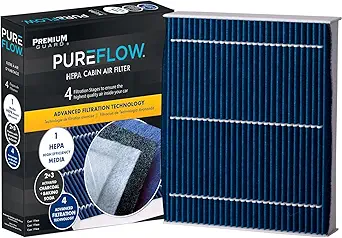 |
| Best Value The sweet spot between price and what you get | EPAuto CP772 (CF12772) Cabin Air Filter with Activated Carbon |  |
| Best Budget The cheapest option that still gets the job done reliably | Femota MERV 13 Cabin Air Filter with Activated Carbon (CF12772) |  |
| Highest Rated A top-rated pick with lots of positive feedback | Premium Guard PureFlow Cabin Air Filter PC99542X |  |
| Most Popular A crowd favorite that many people choose with confidence | CARORY Activated Carbon Cabin Air Filter CF772 |  |
| Best Seller A high-volume bestseller chosen again and again | Forccord 2-Pack HEPA Cabin Air Filter VF2078 |  |
1. Puroma Cabin Air Filter with Activated Carbon (CAF772S)

| Material Type | Soda Woven, Activated Carbon |
|---|---|
| Compatible Devices | Air Conditioner |
| Product Grade | new |
| Unit Count | 1.0 Count |
This Puroma cabin air filter combines a close-meshed non-woven layer with an activated carbon layer to trap dust, smog, and odor-causing gases before they enter the cabin. It is used as a direct replacement in compatible Ford and Lincoln vehicles and installs in about 10 minutes using the airflow arrow for orientation. In everyday use it should noticeably reduce cabin odors and help keep HVAC airflow clearer, which can improve heating and cooling responsiveness and reduce window fogging. The activated carbon also offers modest sound absorption for a slightly quieter cabin. The filter is intended for annual replacement or more often in polluted or dusty conditions, and its fit is aimed at the specific vehicle list provided. Limitations are that performance will depend on maintenance frequency and local air quality, and the product description does not include a detailed MERV or particle-capture rating to quantify filtration against very fine particulates.
Best for: Buyers who want a straightforward, odor-reducing cabin filter that keeps HVAC airflow healthy and is easy to change as part of regular maintenance.
Less Ideal for: Drivers seeking certified high-efficiency particulate filtration for allergy or medical needs should consider medically rated or HEPA-capable options instead.
- Activated carbon layer reduces odors and some gaseous contaminants.
- Close-meshed non-woven media captures dust, pollen, and larger particulates.
- Designed for quick, tool-light installation with airflow arrow for correct orientation.
- Helps maintain HVAC airflow and can reduce window fogging and cabin noise slightly.
- No explicit particle efficiency rating such as MERV or micron rating is provided.
- Performance depends on regular replacement in dirty or high-pollution environments.
Verdict: A practical, easy-to-install activated-carbon cabin filter that refreshes cabin air and supports HVAC performance for the targeted Ford/Lincoln models.
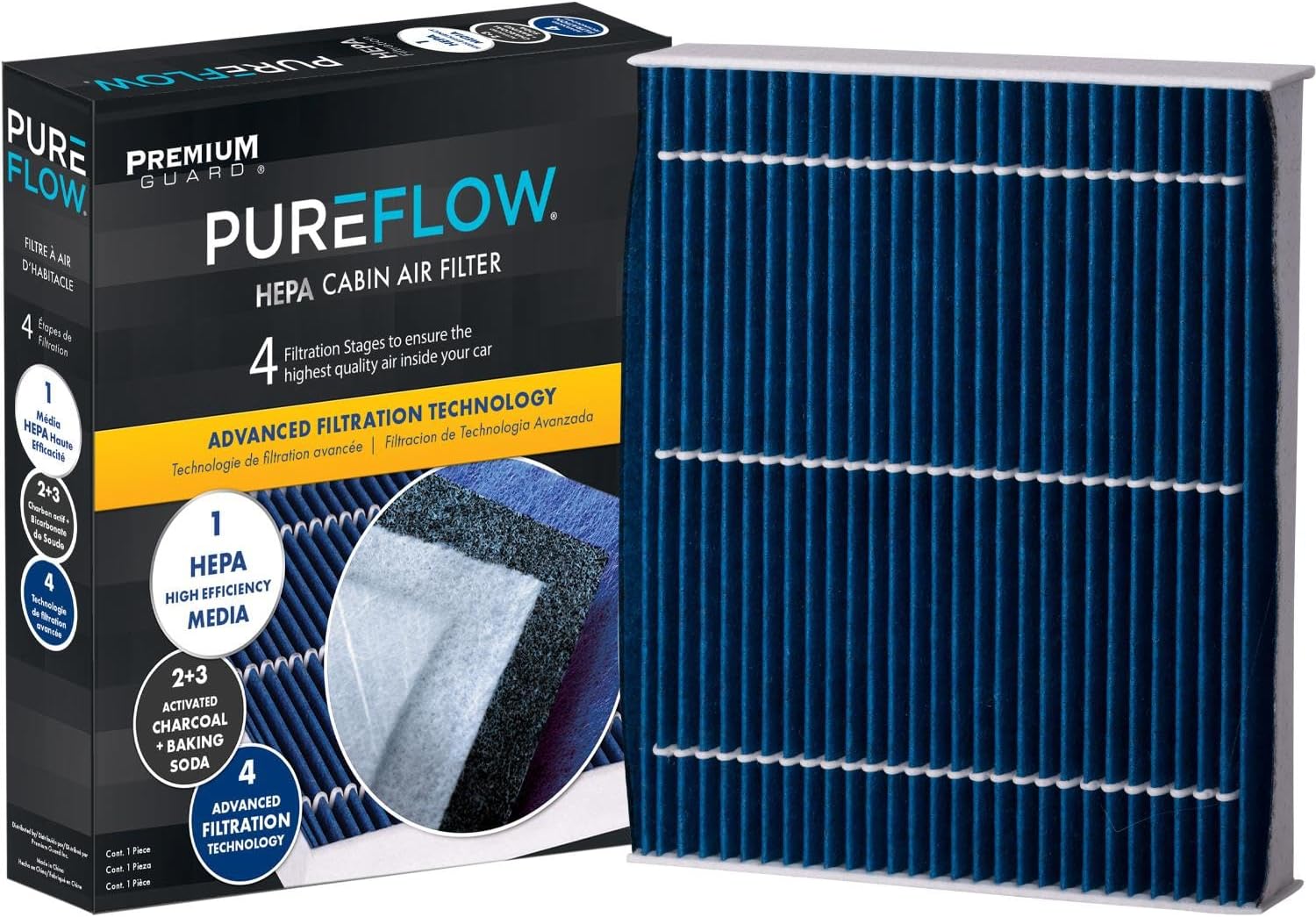
2. Premium Guard PureFlow HEPA Cabin Air Filter PC99542HX
| Efficiency | 99% |
|---|---|
| Material Type | Fiberglass, Paper |
| Compatible Device | Ford Explorer, Escape, Bronco Sport, Mustang Mach-E, Police Interceptor Utility, Lincoln Aviator, Corsair, Nautilus |
| Model Info | PC99542HX |
The Premium Guard PureFlow HEPA cabin filter combines a HEPA layer, activated charcoal, and baking soda to clean the air entering the cabin and reduce odors. It installs like a standard cabin filter and is intended for routine replacement to keep the Explorer's ventilation delivering cleaner air and steady airflow to the vents. The HEPA layer captures very small particles such as pollen and dust, while the charcoal layer helps trap exhaust gases and the baking soda layer reduces musty smells. Buyers should expect noticeably fresher cabin air and improved HVAC responsiveness after replacing a clogged stock filter, though the denser HEPA media can cause a small reduction in airflow compared with a basic paper filter. Fitment is for the specified Ford models that use this part number, and installation is a simple vehicle-maintenance task requiring no tools beyond basic clip or cover removal on most models.
Best for: Drivers who prioritize air quality and want strong particle and odor removal in daily driving and seasonal allergy periods, especially those who keep their Explorer's HVAC performing efficiently.
Less Ideal for: Buyers seeking maximum airflow for heavy-duty ventilation or those who replace filters infrequently and prefer the lowest initial airflow resistance.
- HEPA layer captures up to 99.97% of particles down to 0.3 microns for allergy relief
- Activated charcoal layer reduces harmful gases and urban pollution odors
- Baking soda layer helps absorb and neutralize bad smells
- Multi-layer design balances filtration performance with usable airflow
- Direct replacement for specified Ford cabin filter part numbers
- Denser HEPA media may slightly reduce HVAC airflow compared with basic filters
Verdict: Choose this HEPA cabin filter when the top priority is removing fine allergens, odors, and vehicle cabin pollutants to keep your Explorer's interior air noticeably cleaner.
3. EPAuto CP772 (CF12772) Cabin Air Filter with Activated Carbon

| Manufacturer | EPAuto |
|---|---|
| Item model number | FC-070-1 |
| Manufacturer Part Number | FC-070-1 |
| OEM Part Number | MB3Z-19N619-A, JX6Z-19N619-BA |
This EPAuto CP772 cabin air filter is a direct-replacement style filter for many recent Ford and Lincoln vehicles and installs behind the glove box in minutes. It uses a multi-layer media with activated carbon to capture dust, pollen, and common odors, which helps the HVAC system deliver cleaner, less smelly air to the cabin. Installation follows a simple four-step process of dropping the glove box, removing the cover, sliding the old filter out, and inserting the new one, so it is practical for DIY maintenance. The filter is sized and shaped to match the factory housing and is listed as compatible with Explorer model years included in the product fitment, making it a convenient swap when following the vehicle service interval. The main limitation is that fitment is specific to the listed Ford/Lincoln years and configurations, so confirm your exact model and year before buying. Replacement is recommended about once a year or every 12,000 miles to maintain airflow and filtration performance.
Best for: Buyers who prioritize reliable, factory-style filtration and want an easy DIY replacement to keep cabin air clean and HVAC airflow near factory performance.
Less Ideal for: Shoppers looking for universal filters for multiple vehicle makes or those who need a premium high-performance media beyond basic activated carbon filtration.
- Activated carbon layer helps reduce cabin odors in addition to trapping dust and pollen
- Fits factory filter housing for listed Ford and Lincoln models for straightforward swap
- Simple four-step installation that can be completed without tools in most cases
- Recommended replacement interval provided for regular maintenance planning
- Compatibility is limited to the specific vehicle years and configurations listed
Verdict: A practical, factory-fit cabin filter with activated carbon that makes an easy DIY swap to improve cabin air and reduce odors in compatible Ford Explorers.
4. Femota MERV 13 Cabin Air Filter with Activated Carbon (CF12772)

| Compatible vehicles | Ford Bronco/Bronco Sport 21-24, Escape 20-24, Explorer 20-24, Maverick 22-24, Mustang Mach-E 21-24; Lincoln Aviator/Corsair 20-24 |
|---|---|
| Filter rating | MERV 13 |
| Layers | Four layers with activated carbon |
| Test method | ASHRAE 52.2:2017 10.8 test method |
The Femota MERV 13 cabin air filter is a direct-fit replacement designed to trap fine particles and reduce odors in the cabin with a four-layer design that includes activated carbon. It installs like a factory filter and is intended for routine replacement every 12 months or 12,000 miles. In practical use the MERV 13 media balances filtration efficiency with airflow so the blower performance should remain normal while capturing pollen, dust, and some combustion particles. The activated carbon layer helps cut common road and exhaust smells, which is noticeable during city driving and after idling in traffic. The filter is tested to an ASHRAE 52.2 method and claims high arrestance, which supports its particle-capture performance. Limitations are that long-term durability and exact fit can vary by vehicle trim, so check airflow direction and fitment notes when installing, and consider replacing on the recommended schedule to avoid airflow restriction as the element loads with debris.
Best for: Drivers who want strong particulate filtration and odor reduction at an affordable price and prefer a straightforward, factory-style replacement for regular maintenance.
Less Ideal for: Drivers seeking washable or lifetime filters, extremely heavy-duty off-road dust protection, or performance-focused HVAC modifications should consider other options.
- MERV 13 media captures fine particles while retaining reasonable airflow.
- Activated carbon layer reduces cabin odors and VOCs from traffic exposure.
- Direct-fit design intended to match factory size for straightforward installation.
- Tested with ASHRAE 52.2 method and claims high average arrestance for particle capture.
- Not a long-lasting performance upgrade; requires regular yearly replacement to maintain airflow and filtration.
- Fit and trim precision may vary by vehicle variant so confirm airflow direction and fit before final assembly.
Verdict: A budget-friendly, factory-fit MERV 13 filter that improves cabin air quality and cuts odors while keeping installation simple for routine maintenance.
5. Premium Guard PureFlow Cabin Air Filter PC99542X

| Model Info | PC99542X |
|---|---|
| Material Type | Pureflow |
| Compatible Device | Automobile Cabin |
The Premium Guard PureFlow PC99542X is a replacement cabin air filter built to remove dust, pollen, and odors from the ventilation system in supported Ford and Lincoln models. It installs in the vehicle's cabin filter housing and is intended for regular maintenance to keep interior air cleaner and reduce strain on the HVAC blower. The filter uses a four-stage construction that includes particulate media plus an activated charcoal layer infused with baking soda for odor absorption, which practicaly reduces smells from traffic and road contaminants. Its design aims to maintain high airflow while trapping fine particles, so you should see less dust on vents and improvements in cabin air quality without noticeably restricting fan performance. Limitations are standard for disposable filters: it needs periodic replacement based on driving conditions and it does not provide medical-grade filtration for allergens or pathogens beyond typical HEPA-class claims noted for certain variants.
Best for: Buyers who prioritize a reliable, factory-style replacement filter that improves cabin air quality and reduces odors on a maintenance schedule for their Ford Explorer XLT.
Less Ideal for: People seeking medical-grade filtration or reusable/cleanable solutions should consider specialty HEPA systems or washable filters instead.
- Four-stage filtration combines particulate media and activated charcoal to capture particles and reduce odors
- Designed to maintain airflow while filtering fine dust and pollen, helping HVAC performance
- Easy installation as a direct replacement for the listed Ford and Lincoln models
- Infused baking soda in the charcoal layer for additional odor absorption
- Disposable design requires regular replacement based on driving conditions
Verdict: Choose this PureFlow cabin filter if you want a dependable, factory-style replacement that keeps cabin air cleaner and reduces odors for your Ford Explorer XLT.
6. CARORY Activated Carbon Cabin Air Filter CF772

| Filter Mounting Type | Slide In |
|---|---|
| Filter Shape | Rectangular |
| Air Filter Construction | Pleated |
| Compatible Devices | Air Conditioner |
| Product Grade | new |
This CARORY CF772 cabin air filter is a direct-fit replacement designed for Ford Explorer and several sibling models from 2020–2025. It installs as a slide-in rectangular filter and uses pleated paper media with an activated carbon layer to capture dust, pollen, and common vehicle odors and chemical smells. Typical use is seasonal replacement or whenever airflow or interior odor becomes noticeable; the slide-in mounting and one-count packaging make swaps straightforward for a DIYer. The activated carbon is the standout feature for drivers sensitive to smells or who frequently transport pets or gear that produces odors. Materials are basic paper pleats, so filtration performance is practical rather than high-end HEPA-level. Expect factory-like fit and airflow but plan regular changes in dusty climates because the paper construction can load quickly. The product lists compatibility with Explorer 2020–2025, so it matches the vehicle scope for this article goal and offers a simple, cost-effective upgrade over a worn cabin filter.
Best for: Buyers who want a straightforward, factory-quality replacement that improves interior air freshness and is easy to install without professional help.
Less Ideal for: Drivers seeking medical-grade filtration for severe allergies or those who want longer-lasting synthetic filters with slower loading should consider higher-performance options.
- Activated carbon layer reduces odors and common vehicle chemical smells.
- Pleated construction provides broad surface area for trapping dust and pollen.
- Slide-in mounting matches factory replacement procedure for easy DIY installation.
- Listed fitment explicitly includes Ford Explorer 2020–2025 for correct vehicle compatibility.
- Made from paper media so it will clog faster than higher-grade synthetic or HEPA-style filters.
Verdict: Choose this activated-carbon, pleated cabin filter if you want an easy direct-fit replacement for a Ford Explorer that noticeably reduces interior odors and restores clean airflow.
7. Forccord 2-Pack HEPA Cabin Air Filter VF2078

| MERV Rating | 13 |
|---|---|
| Compatible Devices | Ford Explorer 2020-2026, Ford Escape 2020-2026, Bronco 2021-2026, and related models |
| Material Type | Silk with Melt Blown Cloth |
| Air Filter Construction | Pleated |
| Unit Count | 2 |
These Forccord replacement cabin air filters are built to fit the specified Ford Explorer years and similar vehicles and are used to filter incoming cabin air through a pleated, five-layer construction that includes melt-blown media and activated carbon. Installation is straightforward for anyone who follows the vehicle access steps and the included video; the two-pack covers two service intervals or a longer single interval. The MERV 13-rated media and activated carbon aim to reduce dust, pollen, exhaust and interior odors, and the listing claims a longer service life than standard filters. Practical benefits include improved cabin air freshness, reduced particulates reaching the HVAC system, and a spare filter included in the package. Important limitations are that performance claims such as 99.9% pollutant removal and specific lifespan (up to 20,000 miles) are vendor statements and will vary with driving conditions and local air quality, and fitment should be confirmed against the vehicle year and OEM part reference before purchase.
Best for: Buyers who prioritize dependable, higher-efficiency filtration and want a direct replacement that reduces dust, pollen, and odors inside the cabin while avoiding risky experimental products.
Less Ideal for: Drivers who only perform minimal, occasional city driving with very low particulate exposure or those who prefer dealer-installed genuine factory parts for warranty alignment.
- Five-layer pleated HEPA-style media with melt-blown layer for higher particle capture potential
- Activated carbon layer to help reduce common cabin odors
- Comes as a two-pack so you have a replacement on hand or can service two intervals
- MERV 13 rating indicates stronger filtration than basic replacement filters
- Vendor-stated lifespan and percentage-removal claims depend on driving conditions and are not independently verified
Verdict: If you want a higher-efficiency, scent-reducing cabin filter for your Explorer that comes with a spare, this two-pack is a practical, low-risk upgrade.
Choosing the Right Ford Explorer XLT Cabin Air Filter: Key Factors to Consider
Filtration Efficiency and Rated Particle Size
Filtration efficiency determines how well a cabin air filter captures pollen, dust, soot, and fine particles. For Explorer XLT owners who commute in urban areas or have allergy sufferers aboard, filters with higher micron capture capability reduce visible dust and allergens inside the cabin. Look for filters that provide specifications for PM2.5 or particle capture percentages rather than vague marketing claims.
Higher-efficiency media often uses electrostatically charged layers or denser fiber mats. Those designs increase particle removal but can raise airflow resistance. For the Explorer XLT, choose a filter that balances strong particle capture without overly restricting the blower, so HVAC performance remains acceptable during defrost and air conditioning use.
Fitment Accuracy and Seal Integrity
A correct dimensional fit and good seal are critical for preventing unfiltered air bypass. Even a high-efficiency media is ineffective if air can flow around the filter edges. Filters should match the Ford Explorer XLT housing dimensions and include reliable gasket material or molded edges to maintain a tight seal during vibration and temperature changes.
Check for correct clip or tab placements and confirm the filter seats flush in the housing. Poor fitment can cause rattles or let debris bypass the filter. For vehicle owners who perform their own maintenance, filters that clearly show airflow direction and are easy to orient reduce the chance of improper installation.
Moisture Resistance and Mold Prevention
Cabin filters routinely face humid air and occasional condensation, especially in climates with heavy rain or during winter defrost cycles. Media that absorbs moisture can sag or degrade, reducing filtration and increasing the risk of mold growth and odors. Filters with water-resistant binding, synthetic media, or antimicrobial treatments resist degradation.
For Explorer XLT owners in wet or coastal areas, select filters with materials and adhesives designed to maintain structural integrity when exposed to humidity. That extends service life and helps prevent musty smells that can develop if a filter stays damp for long periods.
Odor Control and Activated Carbon Layers
If you frequently encounter vehicle exhaust, smoke, or strong odors, a filter with an activated carbon layer can adsorb volatile compounds and reduce unpleasant smells in the cabin. Carbon-enhanced filters vary in how much adsorption capacity they offer, and effectiveness depends on exposure level and filter surface area.
For the Ford Explorer XLT, carbon layers are useful for owners who park in urban environments or who transport pets. Keep in mind that carbon does not replace particulate filtration and adds some cost and potential airflow resistance. Assess whether occasional odor mitigation is worth the tradeoff in airflow and price.
Service Interval and Ease of Replacement
Replacement frequency affects total ownership cost and long-term HVAC performance. Filters exposed to heavy pollen, dusty roads, or construction zones may require more frequent changes. Consider filters that provide clear guidance on recommended mileage or months between replacements and those that retain performance over longer intervals.
Ease of replacement matters because many Explorer XLT owners will change the cabin filter themselves. Filters with a rigid frame, clear airflow arrows, and good access to the housing make DIY service faster and reduce the chance of incorrect installation. Factor in how often you are willing to inspect and replace the filter when choosing a product.
Airflow Restriction and HVAC Performance
A cabin air filter inevitably adds some resistance to the HVAC airflow. Excessive restriction can reduce heater and A/C effectiveness, strain the blower motor, and increase cabin fogging during cold weather. Filters designed specifically to minimize pressure drop while still capturing particles are preferable for maintaining the original HVAC balance of the Explorer XLT.
Look for manufacturer data or independent testing that reports pressure drop at typical vehicle airflow rates. If such data is unavailable, prioritize filters with a reputation for maintaining good airflow or those explicitly engineered for low resistance to preserve blower life and climate control responsiveness.
When To Replace the Cabin Air Filter on an Explorer XLT
Replacement intervals depend on driving conditions more than time alone. Under normal suburban driving, many experts recommend checking the cabin air filter every 12 months or about 12,000 to 15,000 miles. If you frequently drive on dusty roads, in heavy traffic, or in areas with high pollen counts, inspect the filter more often.
You should also replace the filter after visible contamination or if you notice HVAC performance issues. Keeping a consistent replacement schedule helps prevent reduced airflow and keeps the cabin environment healthier for passengers.
- Check filter visually during routine service or at oil changes.
- Replace sooner if you smell mildew, experience reduced airflow, or see visible debris on the media.
- Record replacement dates to establish a reliable maintenance routine.
Common Symptoms of a Failing Cabin Air Filter
Several practical signs point to a clogged or failing cabin filter. Reduced blower output, persistent odors, increased dust accumulation on the dash, or fogging windows that take longer to clear can all indicate restricted airflow caused by a saturated filter.
Sometimes unusual HVAC noises or a whistling sound near the glovebox area indicate poor fitment or an obstructed filter. Observing these symptoms early prevents further strain on the blower motor and keeps the climate control system operating efficiently.
- Reduced air volume from vents
- Musty or stale odors when HVAC is running
- Increased interior dusting after driving
- Longer defrost times in cold weather
DIY Replacement Tips for Ford Explorer XLT Owners
Changing the cabin air filter on the Explorer XLT is a straightforward job for most DIYers with basic tools. Locate the filter housing, typically behind the glovebox or under the cowl depending on the XLT model year, and follow vehicle-specific access steps. Always note the airflow direction printed on the filter and orient the new filter accordingly.
Wear gloves if the old filter is particularly dirty to avoid dispersing trapped debris. Inspect the housing for leaves or debris and clean the area before inserting the new filter. Proper seating and ensuring clips or latches engage fully prevents air bypass and rattles.
- Confirm airflow direction before installing the new filter.
- Clean the housing and remove any leaves or debris.
- Ensure all clips and seals are fully engaged after installation.
Sizing and Fitment Notes for Explorer XLT Filters
Cabin air filter size and tab placement must match the Explorer XLT housing. Even small differences in dimension or incorrect tab locations can cause gaps that allow unfiltered air to enter the cabin. When selecting a replacement, verify that the listed dimensions correspond to the Explorer XLT and that the filter includes the correct orientation markings.
If a filter includes extra foam gaskets or adhesive edges, ensure those are positioned as instructed. Avoid forcing a filter into the housing; it should seat smoothly and sit flush with the surrounding frame.
- Compare dimensions to the OEM filter before purchasing.
- Check for molded tabs that align with the housing clips.
- Avoid trimming filters unless you are certain of the correct modification.
Carbon Filters Versus Standard Particulate Media
Filters with an activated carbon layer provide an extra defense against odors and some volatile compounds. That can be beneficial if you park in areas with heavy traffic or occasionally transport strong-smelling items. Carbon does not significantly capture smaller particulates any better than high-quality particulate media, but it adds odor-control capability.
Consider carbon-enhanced filters if odor mitigation is a priority, but weigh this against slightly higher airflow resistance and the added cost. For many Explorer XLT owners concerned mainly with pollen and dust, a high-efficiency particulate filter without carbon provides excellent cleanliness with lower pressure drop.
- Carbon layers help reduce odors but add some airflow restriction.
- Choose carbon if you frequently encounter smoke, exhaust, or strong smells.
- For allergy control, prioritize particulate capture ratings.
Maintaining HVAC Performance After Filter Replacement
After installing a new filter, run the HVAC system through a few cycles to clear any residual dust and to verify airflow and noise levels. A properly installed filter should restore normal vent volume and eliminate many odor issues without introducing new blower noise.
If airflow remains reduced after replacement, inspect the housing for blockages and verify the new filter is the correct size. Persistent problems may indicate a separate HVAC issue such as a failing blower motor or clogged evaporator drain that requires professional inspection.
- Run heater and A/C at different fan speeds to confirm restored airflow.
- Listen for unusual noises that could indicate improper seating.
- Inspect further if problems persist after a correct replacement.
Still looking for the perfect fit?
Select your Ford Explorer configuration to see the most relevant Cabin Air Filters recommendations
How We Chose the Best Ford Explorer XLT Cabin Air Filter
We selected products based on measurable fitment and filtration attributes that matter for Ford Explorer XLT owners. Primary evaluation criteria included: certified filtration efficiency for pollen and particulate matter, precise dimensional fit and clip alignment to avoid air bypass, material durability to resist moisture and collapse, and impact on HVAC airflow and blower noise. We also considered resistance to odors using activated carbon layers where indicated, and whether the filter design simplifies installation for DIY owners.Our process excluded filters that lack clear specification data or do not list compatibility with the Explorer XLT. We avoided products with inconsistent size information or reports of fitment gaps. The shortlist emphasizes filters that balance particle capture with acceptable airflow restriction, and that maintain sealing integrity in the XLT cabin filter housing. Final selection prioritized documented performance metrics and installation reliability over brand recognition alone.
Our full evaluation process is outlined in our review methodology.
FAQ
How often should I replace the cabin air filter in my Explorer XLT?
Most owners should check the filter every 12 months or 12,000 to 15,000 miles. Replace more frequently under dusty conditions, heavy pollen, or if you notice reduced airflow or odors.
Can I install a higher-efficiency filter without harming HVAC performance?
Often yes, but higher-efficiency filters can increase airflow resistance. Choose a filter that balances particle capture with low pressure drop to avoid straining the blower and maintain effective heating and cooling.
What are signs the cabin air filter needs changing?
Look for reduced vent airflow, musty or stale odors when the HVAC runs, more dust inside the cabin, or longer defrost times. Any of these symptoms suggests inspection and likely replacement.
Is a carbon cabin filter worth it for the Explorer XLT?
Carbon filters help control odors and some volatile compounds, which is useful in urban or smoky environments. If odor mitigation is a priority, carbon is beneficial; for pure particulate removal, a high-quality particulate filter may suffice.
Where is the cabin air filter located on the Explorer XLT?
The cabin filter is located in the vehicle's designated housing behind the glovebox or under the cowl area depending on access design. Refer to the vehicle's service steps for the exact access procedure and orientation.
Can I clean and reuse a disposable cabin air filter?
Disposable paper or synthetic cabin filters are not designed for repeated cleaning and reuse. Attempting to clean them can damage the media and reduce filtration efficiency. Replace disposable filters according to recommended intervals.
Final Verdict
Prioritize a cabin air filter that provides strong particulate capture while fitting securely in the Explorer XLT housing. Balance filtration efficiency against airflow restriction and consider carbon-enhanced media if odor control matters. Regular inspection and timely replacement maintain HVAC performance, reduce allergens, and limit interior dust.Choose a filter that matches the XLT dimensions, seals correctly, and meets your priorities for particle removal or odor control. Following those tradeoffs will help you keep the Explorer XLT cabin comfortable and the climate system operating reliably.
Explore More:
- Check out all Ford Explorer parts & accessories
- Explore Cabin Air Filters Maintenance & Repair Guides
- Explore HVAC
- Browse all Auto Parts
