

Note: This article contains affiliate links. If you click on these links and make a purchase, I may earn a small commission at no extra cost to you. This helps support my research and content. Read my full affiliate disclosure here.
If you drive a 2026 Ford Explorer or any 2020 to present model, the right cabin air filter affects comfort, HVAC performance, and in-cabin air quality. A clogged or low-quality filter can let pollen, dust, and road debris circulate, reduce blower efficiency, and strain climate control systems.This guide shortlists the top cabin air filters suited to the 2026 Ford Explorer and nearby model years. We evaluated options that balance filtration efficiency, airflow, fitment reliability, and ease of replacement. Read on to see what to consider and how each factor matters for everyday driving and allergy seasons.
Looking for other parts? See all Ford Explorer parts & accessories.
Top Picks at a Glance
| Best Overall The best all-around choice for most situations | K&N Lifetime Washable Cabin Air Filter VF3021 |  |
| Best Quality Built to a higher standard if you want something more solid | PureFlow HEPA Cabin Air Filter PC99542HX (Premium Guard) | 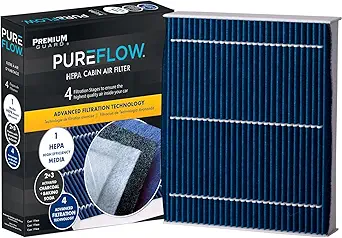 |
| Best Value The sweet spot between price and what you get | Dacall Activated Carbon Beads Cabin Air Filter |  |
| Best Budget The cheapest option that still gets the job done reliably | ZEZUT Cabin Air Filter CF12772 with Activated Carbon |  |
| Highest Rated A top-rated pick with lots of positive feedback | PureFlow Cabin Air Filter PC99542X |  |
| Most Popular A crowd favorite that many people choose with confidence | Carory Cabin Air Filter with Activated Carbon (CF772) |  |
| Best Seller A high-volume bestseller chosen again and again | EPAuto CP772 Cabin Air Filter (CF12772) — Replacement for Select Ford and Lincoln Models |  |
1. K&N Lifetime Washable Cabin Air Filter VF3021

| Brand | K&N |
|---|---|
| Model | Cabin Air Filter |
| Item model number | VF3021 |
This K&N washable cabin air filter replaces the factory disposable cabin filter and is built to last the life of the vehicle. It installs the same way as a factory filter and is pre-treated to help control odors while improving heating and cooling airflow. The main advantage is that it can be rinsed with low-pressure water and reused instead of being discarded, which reduces ongoing parts purchases and landfill waste. In normal use you would inspect and rinse the filter when it becomes visibly dirty and let it dry before reinstalling, which is simple and takes only a few minutes. Notable features include treated media for odor control, durable construction intended for repeated cleaning, and a design aimed at preserving HVAC performance. The trade-offs are that reusable filters need periodic cleaning to maintain airflow and filtration, and they require drying time after washing, so you should keep the vehicle's cabin air clean until the filter is ready to install again.
Best for: Drivers who want a practical, long-term cabin filter solution that lowers recurring costs and reduces waste while maintaining cabin airflow and comfort.
Less Ideal for: People who prefer a maintenance-free disposable filter or those who cannot allow drying time between washes should consider single-use replacements instead.
- Washable and reusable design reduces ongoing replacement costs and landfill waste
- Treated filter media helps control cabin odors
- Improves HVAC airflow which can aid heating and cooling efficiency
- Pre-treated, drop-in fit that installs in minutes with no tools
- Requires periodic washing and full drying before reuse to maintain performance
Verdict: Choose this K&N washable cabin filter if you want a durable, reusable replacement that maintains airflow and cuts ongoing filter costs for your Explorer.
2. PureFlow HEPA Cabin Air Filter PC99542HX (Premium Guard)
| Efficiency | 99% |
|---|---|
| Compatible Device | Ford Explorer, Escape, Bronco Sport, Mustang Mach-E, Police Interceptor Utility, Lincoln Aviator, Corsair, Nautilus |
| Material Type | Fiberglass, Paper |
| Model Info | PC99542HX |
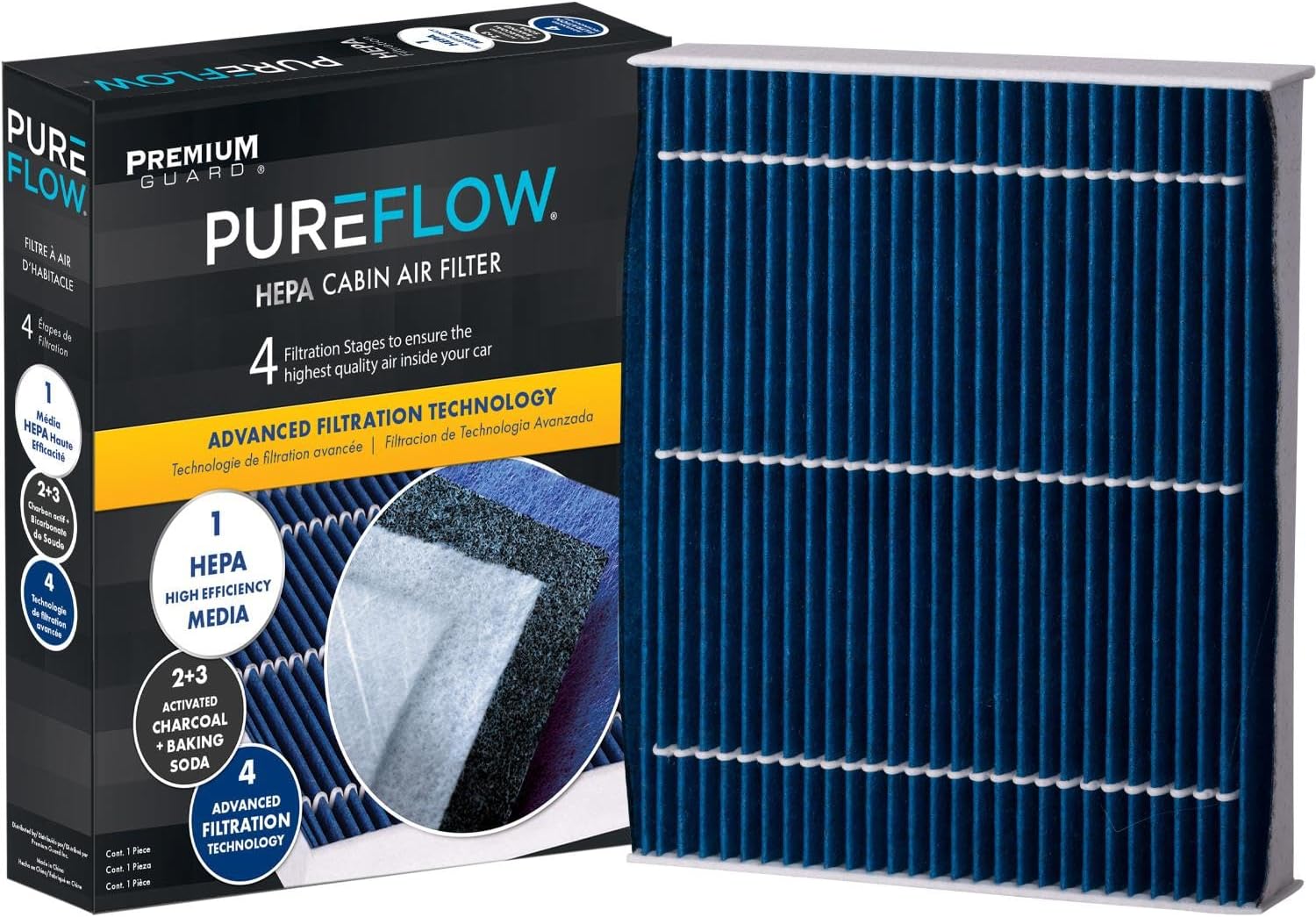
The PureFlow HEPA PC99542HX is a replacement cabin air filter built with four filtration layers: a HEPA-like media for fine particles, activated charcoal for gaseous pollutants, and a baking soda layer to absorb odors. It installs like a standard cabin filter and is intended to capture the vast majority of pollen, dust, and other airborne contaminants while helping maintain HVAC airflow and comfort. For drivers who prioritize breathing cleaner air, the charcoal and odor-absorbing layers are useful after city driving or time in dusty conditions. Because the HEPA layer is very fine, expect a small reduction in airflow compared with a basic pleated filter; that is the compromise for better particle removal. Practical benefits include improved cabin smell and reduced allergens for sensitive occupants, plus straightforward annual replacement. Fitment is targeted to current Ford models listed by the manufacturer, so verify your Explorer year and filter housing before purchase.
Best for: A buyer who wants the cleanest possible cabin air and is willing to accept a modest airflow change for superior particle and odor removal, especially useful for allergy-sensitive drivers in urban or polluted environments.
Less Ideal for: Drivers who prioritize maximum HVAC airflow or maximum fuel economy gains from reduced blower load should consider simpler, lower-restriction cabin filters instead.
- Multi-layer filtration including HEPA-like media captures very small particles and allergens
- Activated charcoal layer reduces gases and common urban pollutants
- Baking soda layer helps neutralize odors for a fresher cabin
- Straightforward drop-in replacement for listed compatible Ford models
- Finer HEPA layer may slightly reduce HVAC airflow compared with standard economy filters
Verdict: Choose this PureFlow HEPA filter if your priority is removing fine particles and odors from the Explorer cabin rather than preserving the absolute highest vent airflow.
3. Dacall Activated Carbon Beads Cabin Air Filter

| Brand | Dacall |
|---|---|
| Manufacturer Part Number | D49A032400U08-A |
| Date First Available | August 5, 2025 |
This Dacall cabin air filter replaces the factory cabin filter with a reinforced honeycomb design loaded with activated carbon beads to help trap odors, dust, and particulates. It installs in minutes as a direct, OEM-style replacement and is intended to be fitted with the blue side facing incoming air and the black carbon side toward the blower. The non-foldable frame keeps the filter from collapsing or creasing during installation and use, which helps maintain airflow and filtration efficiency. In real-world use it should freshen cabin air and can reduce strain on the HVAC system, producing quicker climate response and quieter airflow in many vehicles. The manufacturer recommends replacement every 12,000 miles or 12 months. Note that perceived airflow or odor reduction will vary by vehicle HVAC design and driving conditions, and the product is sized for the listed Ford and Lincoln applications rather than universal fitment.
Best for: Buyers who prioritize practical, maintenance-focused upgrades and want a straightforward, factory-style cabin filter that emphasizes odor control and reliable fitment for recent Ford Explorer model years.
Less Ideal for: Drivers seeking HEPA-level particulate filtration or certified medical-grade allergen removal should consider specialized filters with those specific ratings instead.
- Activated carbon beads help reduce odors and volatile compounds in the cabin
- Reinforced honeycomb, non-foldable frame resists creasing and maintains shape
- Direct factory-style replacement for specified Ford and Lincoln models for simple installation
- Helps reduce HVAC workload for potentially quicker cooling/heating and quieter airflow
- Performance and perceived airflow improvements depend on vehicle HVAC design and cannot be guaranteed across all models
Verdict: A no-fuss, factory-style replacement that adds activated carbon odor control and a reinforced frame for reliable fit and everyday cabin air improvement.
4. ZEZUT Cabin Air Filter CF12772 with Activated Carbon

| Compatible Devices | Ford Bronco Sport, Escape, Explorer, Maverick, Lincoln Aviator, Corsair |
|---|---|
| Material Type | Honeycomb, Activated Carbon |
| Air Filter Construction | Pleated |
| Product Grade | new |
This ZEZUT cabin air filter is a direct replacement designed to fit the 2020–2026 Ford Explorer and several other Ford and Lincoln vehicles. It uses pleated honeycomb media with activated carbon to capture fine particles and help neutralize odors like smoke and pet smells, and the listing claims HEPA-standard performance for up to 99.97% particle removal. Installation is straightforward and tool-free, so routine replacement can be done in minutes. The filter ships in sturdy cardboard packaging and has a plastic frame that should resist breakage during handling. For buyers focused on cost, it offers an economical way to refresh cabin air quality without paying for dealer parts. Keep in mind the HEPA claim is manufacturer stated and buyers who need certified medical-grade filtration may want third-party verification, and some high-end filters add antimicrobial coatings or extra layering that this model does not list.
Best for: Drivers who want an affordable, easy-to-install replacement that improves in-cabin air quality and reduces odors on a budget-driven maintenance schedule.
Less Ideal for: Users seeking certified medical-grade filtration or filters with specialized antimicrobial coatings should consider higher-end, independently tested alternatives.
- Activated carbon layer helps reduce common cabin odors
- Pleated honeycomb media claimed to meet HEPA-standard particle capture
- Plastic frame and thick corrugated packaging reduce risk of damage in transit
- Tool-free installation that matches factory filter fit for quick replacement
- HEPA-standard claim is manufacturer stated without included third-party certification
- Lacks mention of antimicrobial treatment found on some premium filters
Verdict: A budget-friendly, easy-to-install replacement that refreshes cabin air and reduces odors for Ford Explorer owners without paying dealer prices.
5. PureFlow Cabin Air Filter PC99542X

| Brand Name | Premium Guard |
|---|---|
| Model Info | PC99542X |
| Compatible Device | Automobile Cabin |
| Material Type | Pureflow |
The PureFlow PC99542X is a four-stage cabin air filter intended to improve in-cabin air quality by capturing dust, pollen, odors, and some gases before they enter the vehicle HVAC system. Installation is straightforward and follows the same basic replacement steps as other factory-replacement cabin filters, so it is typically changed during routine maintenance or at the first sign of reduced airflow or persistent odors. Notable features include particulate media for fine particles, an activated charcoal layer infused with baking soda for odor absorption, and a design that emphasizes high airflow while filtering. In practice this means cleaner-smelling air without a major hit to vent performance and reduced loading on the climate control system. The key limitation is fitment: this exact part is made for specific 2020 to 2025 Ford and 2021 to 2025 Lincoln models, so confirm vehicle compatibility before buying. It is a practical upgrade for drivers who prioritize consistent filtration and easy serviceability over specialty HEPA-only replacements.
Best for: Buyers who prioritize reliable, consistent cabin air filtration and want an easy direct-replacement filter to maintain air quality on routine service intervals.
Less Ideal for: People seeking a dedicated medical-grade HEPA solution or users who need universal fitment across many vehicle makes and years.
- Four-stage filtration captures dust and pollen while maintaining airflow
- Activated charcoal layer with baking soda reduces odors and some gaseous contaminants
- Easy, direct-replacement fit for the listed Ford and Lincoln models
- Helps preserve HVAC performance by preventing filter loading
- Fitment limited to specific Ford and Lincoln models from 2020–2025
Verdict: Choose this PureFlow filter if you want a reliable, factory-style multi-stage cabin filter that improves air quality and reduces odors on supported Ford Explorer model years.
6. Carory Cabin Air Filter with Activated Carbon (CF772)

| Compatible Devices | Air Conditioner |
|---|---|
| Filter Mounting Type | Slide In |
| Filter Shape | Rectangular |
| Material Type | Paper |
| Air Filter Construction | Pleated |
This Carory CF772 cabin air filter is a direct-fit replacement designed to trap pollen, dust and particulates while the activated carbon layer reduces odors and some chemical vapors. Installation is the usual slide-in swap at the glove box or filter housing and the pleated paper construction gives a large surface area for filtration without changing airflow noticeably. For everyday driving in urban or suburban settings it freshens cabin air and helps reduce visible debris on HVAC coils. The carbon layer is the notable feature for anyone bothered by exhaust or interior smells, but activated carbon has limits against all gases so it will not eliminate every odor or pollutant. Build quality is typical for aftermarket filters and the single-count package makes it easy to carry for a scheduled maintenance swap. If you prioritize a balance of particle capture and odor control for regular service intervals, this filter does that affordably; users wanting advanced particulate or allergen barriers should consider higher-grade multilayer options.
Best for: Buyers who want a reliable, easy-to-install cabin filter that cuts dust and reduces common odors for normal daily driving and regular maintenance.
Less Ideal for: Drivers seeking medical-grade allergen filtration or advanced gas scrubbing should choose a specialized multi-layer or HEPA-capable option instead.
- Activated carbon layer helps reduce odors and some chemical vapors inside the cabin.
- Pleated paper construction increases filtration surface area for effective particle capture.
- Direct slide-in replacement for the specified Ford and Lincoln models for straightforward installation.
- Compatible with common replacement part numbers for easier cross-referencing.
- Not a multilayer HEPA-grade filter so it will not remove the smallest ultrafine particles or all gases.
Verdict: A straightforward replacement that balances particle filtration with activated-carbon odor control for routine service on the covered Ford and Lincoln models.
7. EPAuto CP772 Cabin Air Filter (CF12772) — Replacement for Select Ford and Lincoln Models

| Compatible models | Select Ford and Lincoln vehicles including Explorer (2020-2026) |
|---|---|
| Replacement for | Ford part MB3Z-19N619-A; JX6Z-19N619-BA |
| Filter type | Cabin air filter with activated carbon |
| Recommended interval | 12 months or 12,000 miles |
The EPAuto CP772 (CF12772) is a cabin air filter made as a direct replacement for specific Ford and Lincoln models, including recent Ford Explorers. It installs behind the glove box and uses activated carbon to help reduce odors and airborne contaminants in the HVAC system. Typical use is an annual or 12,000-mile replacement to maintain airflow and cabin air quality. Notable features include compatibility with factory part numbers MB3Z-19N619-A and JX6Z-19N619-BA and a straightforward drop-in installation process that requires no special tools. In practice it restores HVAC performance and helps trap dust, pollen, and some vehicle exhaust odors, which is useful for drivers sensitive to allergens or who want fresher cabin air. The filter is a budget-friendly aftermarket option but may not match OEM filtration media or longevity exactly, so following the recommended replacement interval is important for continued effectiveness.
Best for: Buyers who prioritize a reliable, direct-fit cabin filter that restores factory airflow and reduces odors without fuss and who prefer a cautious, maintenance-focused approach to vehicle HVAC care.
Less Ideal for: Users seeking highest-performance or specialized allergy-grade filtration who should consider premium HEPA or manufacturer-branded cabin filters instead.
- Made to replace factory part numbers for direct fit in compatible Ford and Lincoln models
- Activated carbon layer reduces odors in addition to trapping dust and pollen
- Simple behind-glove-box drop-in installation with no special tools required
- Supports recommended annual or 12,000-mile maintenance interval to keep HVAC airflow and air quality consistent
- Aftermarket media may not match the exact filtration efficiency or service life of factory-brand filters
Verdict: A straightforward, factory-replacement-style cabin filter that restores cabin airflow and cuts odors for cautious owners who want a dependable, easy-to-install option for 2020–2026 Ford Explorers.
Choosing the Right 2026 Ford Explorer Cabin Air Filter: Key Factors to Consider
Filtration Efficiency
Filtration efficiency determines how well a cabin air filter traps pollen, dust, soot, and fine particles. Higher efficiency media capture a greater share of PM2.5 and common allergens, which is important if you or passengers suffer from allergies or if you frequently drive in urban areas with higher particulate levels.
For the 2026 Ford Explorer, choose filters that specify micron ratings or test results for pollen and PM2.5 capture. Keep in mind that very dense media can reduce airflow, so the best practical filters balance particle capture with acceptable resistance to maintain heater and A/C performance.
Airflow and Pressure Drop
Airflow through the filter affects HVAC responsiveness, cabin heating speed, and cooling effectiveness. Pressure drop measures how much the filter restricts airflow; lower pressure drop preserves blower performance and can reduce noise.
When selecting a filter for the Explorer, look for performance specs or manufacturer notes on airflow. A filter with excellent filtration but excessive resistance can slow defrosting, reduce cabin circulation, and increase blower wear over time. The ideal choice maintains adequate airflow while providing meaningful particle capture.
Fitment and Seal Quality
Fitment refers to how well the filter matches the Explorer's filter housing dimensions and sealing surfaces. A proper fit prevents unfiltered air bypassing the media and ensures the filter remains stable under variable airflow conditions.
For 2020-present Ford Explorer vehicles, confirm the filter dimensions and orientation match the housing and that the filter has a good gasket or frame to form a tight seal. Poorly fitting filters can lead to noise, reduced filtration, and increased cabin contamination despite nominal media performance.
Media Type and Odor Control
Filter media varies from simple pleated paper to multi-layer synthetic blends and activated carbon layers. Activated carbon or specialized adsorbents help remove odors, vehicle fumes, and some volatile organic compounds that standard particulate media do not capture.
If you want to reduce odors or smoke smell in an Explorer used for commuting or family trips, choose a filter with an activated carbon layer. Consider whether the added odor control is worth any slight increase in airflow resistance for your typical driving conditions.
Durability and Moisture Resistance
Cabin filters are exposed to humidity and temperature swings that can weaken media or lead to microbial growth. Durable filters resist sagging, media collapse, and deterioration over the recommended service interval.
For Owners of the 2026 Explorer, especially in humid climates, prioritize filters with water-resistant treatments or synthetic media designed to hold shape. This reduces the chance of filter degradation between scheduled replacements and helps maintain consistent filtration performance.
Ease of Replacement
How easy it is to access and replace the filter matters because owners who can swap filters quickly are more likely to maintain recommended intervals. The 2026 Ford Explorer has a specific cabin filter location and access method that most owners can manage with basic tools or no tools.
Look for filters with clear orientation markings and a sturdy frame that slides into the housing without bending. Filters that require trimming, adapters, or complex reseating increase the chance of improper installation and should be avoided unless necessary for fitment.
When To Replace the Cabin Air Filter
Replacement intervals vary with driving conditions, but for the 2026 Ford Explorer and 2020-present models, inspect the filter every 12,000 to 18,000 miles or at least once a year. If you frequently drive in dusty areas, urban streets with heavy traffic, or through pollen-heavy seasons, check it more often.
Common signs that indicate it is time to replace the filter include reduced airflow from vents, persistent windshield fogging during humid conditions, and new or worsening odors in the cabin. Addressing a clogged filter promptly restores ventilation performance and reduces strain on the Explorer's HVAC blower.
- Check visually for heavy dirt, leaves, or debris.
- Replace sooner after long drives on dirt roads or in heavy pollen seasons.
- If you notice increased HVAC noise or poor defrost performance, inspect the filter.
How to Change the Cabin Air Filter on a 2026 Explorer
The cabin air filter on the 2026 Ford Explorer is accessible via the passenger-side filter housing behind the glove box or a dedicated access panel, depending on trim and options. Replacing it is a straightforward maintenance task that many owners can do with no more than basic tools.
Before you start, have the replacement filter oriented correctly and a flashlight handy to inspect the housing. Remove any debris from the housing, note the airflow direction indicated on the filter, and seat the new filter evenly to ensure a proper seal. After installation, run the blower to confirm normal airflow and that vents are delivering conditioned air evenly.
- Park on level ground and switch off the ignition before accessing the filter.
- Follow the airflow arrow when installing the new filter.
- Check the housing gasket and clean any leaves or debris before closing the access panel.
Symptoms of a Failing or Clogged Cabin Filter
Several clear symptoms point to a clogged or degraded cabin filter in the Explorer. The most common are reduced airflow at all fan speeds, slower windshield defogging, and unusual odors when the HVAC is running. Some drivers also report increased dust settling on interior surfaces after extended periods with a dirty filter.
Less commonly, a severely restricted filter can increase blower noise or cause the HVAC system to work harder, which may be noticeable as reduced temperature control efficiency during extreme weather. Monitor fan performance and cabin air quality, especially during allergy season, to catch problems early.
- Weak airflow from vents even at higher blower settings.
- Longer defrost times and lingering fog on windshield.
- New musty or stale odors when A/C or heat is on.
Activated Carbon Vs. Standard Particulate Filters
Activated carbon filters add an adsorption layer that reduces odors and volatile compounds that standard particulate filters cannot remove. For Explorer owners who encounter cigarette smell, road-tire odors, or urban pollution smells, carbon layers provide noticeable odor control.
Standard particulate filters focus on trapping dust, pollen, and larger particles. They often have lower airflow restriction and are typically less expensive. Choose activated carbon media if odor control matters; otherwise a high-efficiency particulate filter may be sufficient for allergy control and particulate removal.
- Carbon layer: better for odors and some VOCs.
- Particulate media: optimized for pollen and dust capture.
- Consider hybrid multi-layer filters for balanced performance.
Sizing and Fitment Tips for the Explorer Filter Housing
The 2026 Ford Explorer uses a specific filter footprint and thickness, so confirm the replacement matches the OEM orientation and size. A mismatch in size can cause gaps where unfiltered air bypasses the media or make installation difficult.
When shopping, check the listed dimensions and compare them to the filter you remove. Also inspect the filter frame for sturdy edges that align with the housing rails. Filters that require trimming or forceful fitting are less reliable and increase the chance of improper sealing.
- Compare filter dimensions before purchase.
- Prefer filters with a rigid frame to help maintain seal.
- Avoid filters that rely on compression fit without a proper gasket.
Still looking for the perfect fit?
Select your Ford Explorer configuration to see the most relevant Cabin Air Filters recommendations
How We Chose the Best 2026 Ford Explorer Cabin Air Filter
We selected the seven cabin air filters on this list by focusing on criteria that matter for 2026 Ford Explorer owners. Primary evaluation points were filtration performance, measured by particle capture and pollen/PM2.5 ratings, and airflow resistance to avoid overtaxing the Explorer HVAC blower. Fitment reliability was checked against the 2020-present Explorer cabin filter housing and mounting method to minimize installation issues and gaps that cause bypass.Durability and moisture resistance were included because the Explorer can be exposed to humid or wet conditions that promote filter collapse or mold growth. Media type and construction were assessed to favor multi-layer filters that combine particulate capture with activated carbon where odor control is important. Ease of replacement and access were considered so owners can perform cabin air filter replacement without specialized tools.We excluded any filters with inconsistent size/spec listings or poor fitment reports for the Explorer range. Filters lacking clear media specifications, or those optimized only for heavy-duty commercial applications, were also omitted. The result is a shortlist that balances everyday performance, longevity, and straightforward installation for the Explorer.
Our full evaluation process is outlined in our review methodology.
FAQ
How often should I replace the cabin air filter in my 2026 Explorer?
Typically inspect the filter every 12,000 to 18,000 miles or at least once per year. If you drive in dusty conditions, heavy pollen seasons, or frequently use the A/C in urban areas, check and replace it more often.
Can I drive with a dirty cabin air filter in the Explorer for a while?
You can drive for a short period, but a clogged filter reduces airflow, impairs defogging, and may let more dust circulate. It is best to replace a heavily restricted filter promptly to maintain HVAC performance.
Will a higher-efficiency filter reduce HVAC airflow in my Explorer?
Higher-efficiency media can increase pressure drop, which may slightly reduce airflow. The best options balance filtration and airflow so the Explorer's blower is not unduly strained while still providing better particle capture.
Does a cabin air filter remove odors and smoke?
Standard particulate filters remove dust and pollen but do not capture most odors. Filters with an activated carbon layer can reduce many odors and some vehicle fumes, though they do not eliminate all volatile compounds.
Is it difficult to replace the cabin air filter on the 2026 Explorer myself?
No. The cabin air filter is generally accessible from the passenger-side housing and many owners can replace it with basic tools. Follow orientation markings and clear any debris from the housing during replacement.
How can I tell if my cabin filter is the wrong size for the Explorer?
A wrong-size filter will not seat properly, may leave visible gaps, or require force to install. If the filter moves in the housing or you see unfiltered airflow paths, compare dimensions and frame design to the OEM part before reinstalling.
Final Verdict
For the 2026 Ford Explorer and 2020-present models, prioritize a cabin air filter that balances effective particulate capture with low airflow resistance and reliable fitment. If you or passengers are sensitive to allergens, favor higher-efficiency media; if odors are a concern, choose a filter with activated carbon.Regular inspection and timely replacement preserve HVAC performance and cabin comfort. Focus on proper size, a good sealing frame, and media rated for the particles or odors you most want to control to make a confident selection.
Explore More:
- Check out all Ford Explorer parts & accessories
- Explore Cabin Air Filters Maintenance & Repair Guides
- Explore HVAC
- Browse all Auto Parts
