

Note: This article contains affiliate links. If you click on these links and make a purchase, I may earn a small commission at no extra cost to you. This helps support my research and content. Read my full affiliate disclosure here.
If you drive a 1998-2002 Honda Accord, the cabin air filter is a small, inexpensive part that has an outsized effect on interior comfort and HVAC performance. A fresh cabin filter reduces pollen and dust entering the cabin, lowers odors, and helps the blower work efficiently, which matters especially during long commutes or allergy season.This guide covers six shortlisted cabin air filters chosen for fit and filtration performance for the 1998-2002 Accord. We evaluate each option against filtration efficiency, fitment accuracy, material durability, and how they affect blower noise and airflow. Read on to find the right replacement and learn what to expect during installation and maintenance.
Looking for other parts? See all Honda Accord parts & accessories.
Top Picks at a Glance
| Best Overall The best all-around choice for most situations | ECOGARD XC15390 Premium Cabin Air Filter |  |
| Best Quality Built to a higher standard if you want something more solid | K&N VF3006 Washable Cabin Air Filter (Lifetime) |  |
| Best Value The sweet spot between price and what you get | PHILTOP CF8603A Cabin Air Filter with Activated Carbon (Pack of 1) |  |
| Best Budget The cheapest option that still gets the job done reliably | Femota MERV 13 Cabin Air Filter with Activated Carbon (CF8603A) |  |
| Highest Rated A top-rated pick with lots of positive feedback | Bosch P3600WS Workshop Cabin Air Filter |  |
| Most Popular A crowd favorite that many people choose with confidence | KAX CF8603A Premium HEPA Cabin Air Filter with Dual Active Carbon |  |
1. ECOGARD XC15390 Premium Cabin Air Filter

| Manufacturer | Ecogard |
|---|---|
| Brand | ECOGARD |
| Model | XC15390 |
| OEM Part Number | 80291-S84-A01 |
The ECOGARD XC15390 is a direct-fit cabin air filter intended to remove dust, pollen, pet dander and other airborne particles before they enter the passenger compartment. It installs quickly without special tools and is sized to replace the factory cabin filter in compatible 1998–2002 Honda Accord and 1999–2003 Acura TL/CL applications. The media is designed for high particle capture and the listing claims up to 99.5 percent efficiency for common contaminants, which helps maintain clearer cabin air and reduces strain on the HVAC blower by supporting steady airflow. Because it is a simple replacement element, use is straightforward: remove the old filter, drop in the ECOGARD unit and reseal the housing. The main limitations are the single-filter design and the need to follow vehicle service intervals for replacement; it does not add activated-carbon odor control or specialized allergen treatments. For a routine, balanced replacement that emphasizes filtration and easy fitment, this is a practical choice.
Best for: Buyers seeking a straightforward, factory-style cabin air filter that balances filtration efficiency and easy installation for routine maintenance on compatible late 1990s to early 2000s Honda and Acura models.
Less Ideal for: Drivers who need advanced odor removal, carbon filtration, or specialized allergen filters should consider alternatives with activated-carbon or HEPA-style media.
- High claimed particle capture that filters common contaminants like dust and pollen
- Direct-fit design for quick installation without special tools
- Supports HVAC airflow to help reduce strain on blower components
- Compatible with specified 1998–2002 Honda Accord and 1999–2003 Acura TL/CL applications
- No activated-carbon layer for odor or gas adsorption
- Single-filter construction means limited specialized allergen or odor control options
Verdict: A practical, easy-to-install replacement that restores cabin air filtration and HVAC airflow for 1998–2002 Honda Accord owners looking for balanced, reliable performance.
2. K&N VF3006 Washable Cabin Air Filter (Lifetime)

| Compatible Devices | 1998-2003 Honda Accord, 1999-2003 Honda TL, 1999-2001 Honda CL, 1999-2003 Honda CL Type-S |
|---|---|
| Material Type | Polyurethane |
| Unit Count | 2.0 Count |
| Model Number | VF3006 |
The K&N VF3006 is a reusable cabin air filter intended as a direct factory-style replacement for compatible 1998–2003 Honda and Acura models. It filters incoming cabin air while prioritizing airflow and is pretreated to help control odors that cause a musty interior smell. Typical use is simple: drop it into the vehicle’s cabin filter housing and periodically remove it for a low-pressure water rinse and light drying rather than swapping disposable filters. Notable features include durable polyurethane media, a washable design that reduces landfill waste, and a construction that K&N says preserves HVAC heating and cooling efficiency by improving airflow. For performance-minded drivers the higher airflow helps ventilation response and can reduce blower load; however the washable media requires occasional cleaning and careful drying to avoid temporary odor or microbial buildup, and it may not match the particle-capture efficiency of some high-MERV disposable filters. Installation is quick with no tools in most applications, making this a practical long-term replacement if you prefer lower recurring cost and ease of maintenance.
Best for: Buyers who prioritize long-term value and higher airflow over disposable filters and who want a low-maintenance reusable option for daily driving and spirited use.
Less Ideal for: People who prefer the highest single-pass particulate filtration or who do not want the periodic cleaning task required by a reusable filter.
- Washable and reusable design eliminates the need for frequent replacement and reduces waste
- Pretreated media helps control odors that cause musty smells in the cabin
- Higher airflow design can improve HVAC efficiency and ventilation responsiveness
- Simple drop-in installation with no tools in most vehicles
- Reusable media needs periodic rinsing and proper drying to maintain performance and avoid odors
Verdict: Choose the K&N VF3006 if you want a lifetime, washable cabin filter that boosts airflow and cuts recurring filter costs for late 1990s to early 2000s Honda/Acura cabins.
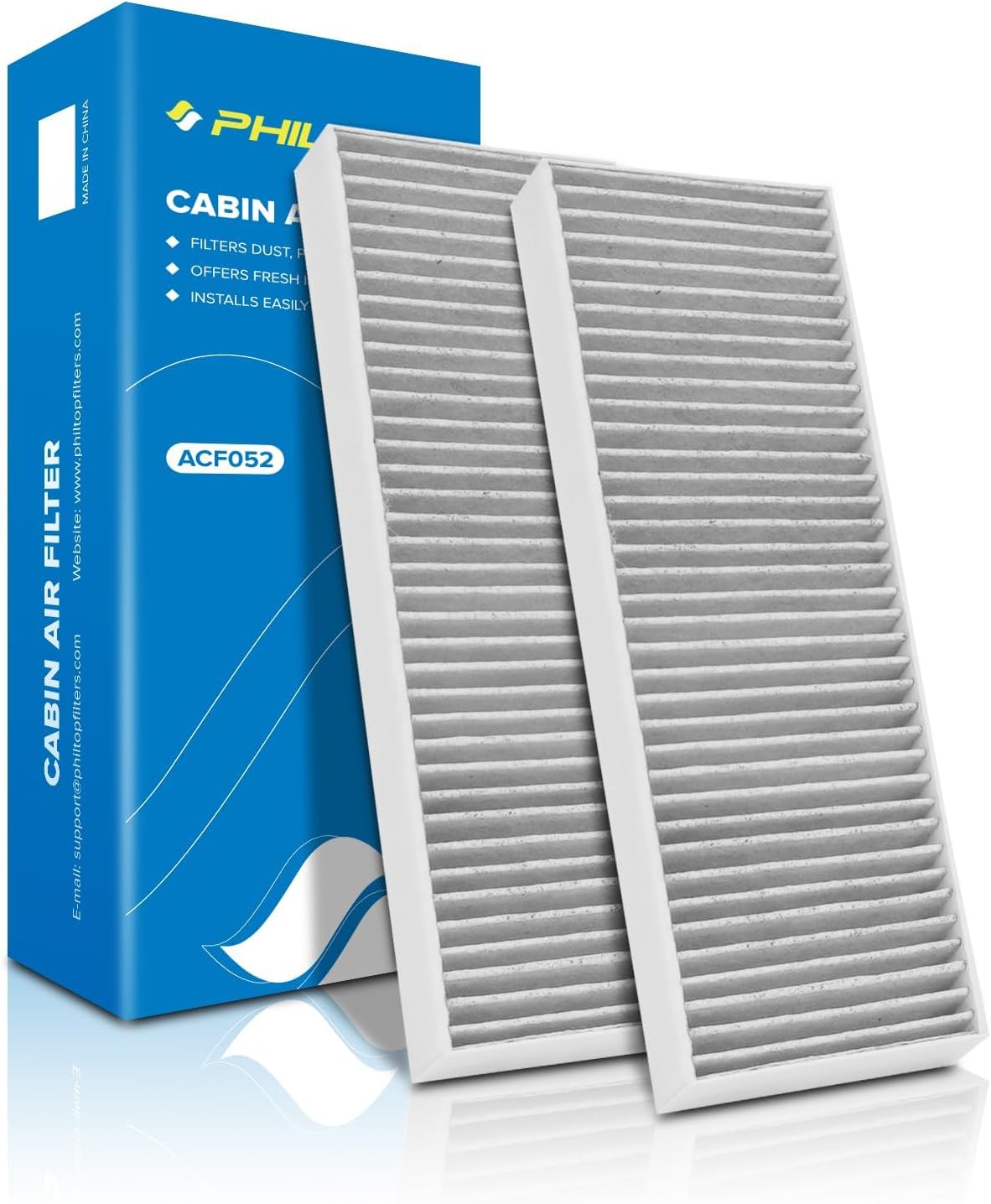
3. PHILTOP CF8603A Cabin Air Filter with Activated Carbon (Pack of 1)
| Compatible Devices | Replacement for Honda Accord, Acura TL, Acura CL |
|---|---|
| Material Type | Long-fiber Electrostatic Cotton with Activated Carbon |
| Product Grade | New |
| Unit Count | 1 |
The PHILTOP CF8603A cabin air filter is a direct-fit replacement designed for Accord model years covered by the CF8603A cross reference. It uses a multi-layer construction with long-fiber electrostatic cotton, an activated carbon layer and an acrylic-coated filter paper to trap fine particles, absorb odors and resist moisture. In everyday use it installs in the factory cabin filter housing and helps keep HVAC airflow clear while reducing dust and pollen in the passenger compartment. Notable features include a claimed particle filtration efficiency near 98.8 to 99.9 percent and a 38-fold pleat count for increased surface area. Practical benefits are improved interior air quality, reduced dust buildup on vents and potentially better heating and cooling flow compared with flat media. Limitations are typical of disposable filters: it is not washable or reusable and requires regular replacement (manufacturer suggests about 12 months or 12,000 miles, more often in polluted areas). Fitment is specific to the CF8603A application, so confirm compatibility before purchase.
Best for: Buyers who prioritize effective, no-frills cabin air filtration and want a direct-fit replacement that restores interior air quality with a simple install and predictable maintenance schedule.
Less Ideal for: Those looking for a reusable or washable filter solution or a universal size that fits multiple non-matching housings should consider other options.
- Multi-layer media plus activated carbon for particle capture and odor reduction
- High pleat count (38 layers) increases filtration area and service life
- Long-fiber electrostatic layer designed to improve dust-holding without significantly restricting airflow
- Single-use disposable design cannot be washed or reused
Verdict: A straightforward, factory-style replacement that restores cleaner air inside the car with high pleat count filtration and an odor-absorbing carbon layer.
4. Femota MERV 13 Cabin Air Filter with Activated Carbon (CF8603A)

| MERV Rating | 13 |
|---|---|
| Product Grade | Replacement Part |
| Common Applications | Odor Reduction |
| Material Type | MERV 13 Filter Media |
| Air Filter Construction | Pleated |
The Femota MERV 13 cabin air filter replaces the factory cabin filter in 1998–2002 Honda Accord and similar compatible models to reduce dust, pollen and odors. It uses four layers of pleated MERV 13 media plus an activated carbon layer, which the listing notes delivers over 99% average arrestance in laboratory testing and targets common cabin odors. Installation is straightforward because the filter is made to the same size as the factory part and includes airflow direction markings. For routine use it functions as a direct replacement you should change roughly every 12 months or 12,000 miles. The practical benefits are noticeably cleaner air and better odor control compared with basic particulate-only filters, and the pleated construction maintains airflow while capturing fine particles. Limitations are typical for aftermarket cabin filters: long-term durability and exact match to factory tolerances can vary, and heavy contamination or very high-pollen environments will still require more frequent replacement.
Best for: A buyer focused on getting strong filtration and odor control for an older Accord without paying premium brand prices; good for drivers who replace filters on a regular maintenance schedule.
Less Ideal for: Not the best choice for someone seeking a lifetime solution or for owners who want dealer-only factory parts documentation and sourcing guidance.
- MERV 13 media captures fine particles such as pollen and dust.
- Activated carbon layer reduces common cabin odors and VOCs.
- Pleated construction balances filtration efficiency with airflow.
- Direct-fit dimensions and airflow markings simplify installation.
- Aftermarket fit and long-term durability may vary compared with factory parts.
Verdict: For 1998–2002 Accord owners on a budget who want noticeably better particle filtration and odor reduction, this MERV 13 activated-carbon cabin filter delivers strong value.
5. Bosch P3600WS Workshop Cabin Air Filter

| MERV Rating | 8 |
|---|---|
| Compatible Devices | Air Conditioner |
| Material Type | multi-layer |
| Product Grade | new |
The Bosch P3600WS Workshop Cabin Air Filter is a factory-style replacement that filters incoming HVAC air with a three-layer media construction. It is typically installed behind the glove box or in the HVAC intake to remove dust, pollen, and other environmental particles before they enter the passenger cabin. The filter combines a non-woven pre-filter, an electrostatically charged microfiber layer, and a protective cover layer; Bosch says this yields high pleat count and improved surface area for longer service life. With a MERV 8 rating it captures the majority of particles 3 microns and larger and reduces smaller particle load through electrostatic attraction. Practical benefits include noticeably cleaner cabin air and maintained HVAC airflow when replaced on schedule, plus foam perimeter gasket or rigid frame where specified to limit bypass. Limitations are that this is a workshop-grade filter rather than a HEPA-level unit, so it will not remove the smallest submicron particles or provide hospital-grade filtration.
Best for: Buyers prioritizing dependable, factory-quality cabin filtration for routine maintenance on 1998–2002 Honda Accord models who want a proven, durable replacement that restores HVAC air quality.
Less Ideal for: People seeking medical-grade or HEPA-level filtration for severe allergy or immunocompromised needs should consider higher-grade specialty filters.
- Multi-layer media with electrostatically charged microfiber for improved capture of fine particles
- High pleat count increases surface area for longer service intervals
- Foam perimeter gasket or rigid frame (where specified) helps prevent unfiltered air bypass
- Not a HEPA-grade filter so it will not trap the smallest submicron particles
Verdict: Choose this Bosch Workshop filter if you want a reliable, factory-quality replacement that noticeably improves cabin air quality on a 1998–2002 Honda Accord.
6. KAX CF8603A Premium HEPA Cabin Air Filter with Dual Active Carbon

| Compatible Devices | Replacement for Honda Accord 1998-2002; Acura TL 1999-2003, CL 2001-2003 |
|---|---|
| Filter Mounting Type | Slide In |
| Material Type | Advanced Dual-Layer Carbon Shield Technology |
| Unit Count | 1 |
The KAX CF8603A is a direct-fit cabin air filter intended for Honda Accord 1998–2002 and compatible Acura models; it replaces the factory cabin filter behind the glove box and installs by sliding into the stock housing. Its core combines HEPA-compliant media with a dual-layer active carbon matrix, which the brand says captures submicron particles and reduces odors more aggressively than basic replacements. In practice this means better removal of dust, pollen, and many airborne irritants along with reduced cabin smells. The pleated construction and reinforced frame make it easy to handle during the usually cramped installation, and customers report tool-free installs in minutes. Pay attention to orientation when inserting the filter since the frame has a small lip that must face outward. This is a single-use, nonwashable filter, so expect scheduled replacements rather than cleaning. If you want a noticeable step up from a basic paper element for improved air quality and odor control in an older Accord, this unit provides a practical, OEM-dimensioned upgrade.
Best for: Buyers who prioritize measurable cabin air quality improvements and want a drop-in replacement with social-proof of good fitment and installation experiences.
Less Ideal for: Drivers looking for a reusable or washable solution or anyone needing a universal or multi-vehicle filter option.
- HEPA-compliant media captures submicron particles for better dust and pollen filtration
- Dual active carbon layer reduces odors and VOCs compared with plain filters
- Engineered to OEM dimensions for a direct, tool-free slide-in installation
- Sturdy frame and pleats hold shape during handling and insertion
- Not washable or reusable so it must be replaced on a maintenance schedule
Verdict: If you want a direct-fit upgrade for a 1998–2002 Accord that improves particle capture and reduces cabin odors, this KAX HEPA filter is a reliable, easy-to-install choice.
Choosing the Right 1998-2002 Honda Accord Cabin Air Filter: Key Factors to Consider
Fitment and Size Accuracy
Correct fitment is the top priority because the 1998-2002 Honda Accord uses a specific cabin filter pocket and access arrangement. A filter that is even slightly off in width or thickness can leave gaps that allow unfiltered air past the media, or it can be difficult to seat properly without bending. Accurate dimensions also reduce the chance of the filter shifting under blower intake pressure, which can cause rattles or uneven airflow.
When choosing a replacement, confirm the stated dimensions and mounting tab locations match the Accord's factory specification. Filters with reinforced frames or solid end caps are less likely to deform during installation, improving service life. If a filter lists generic vehicle coverage without clear sizing, treat it cautiously for this vehicle.
Filtration Efficiency and Media Type
Filtration efficiency determines how well the filter captures pollen, dust, soot, and other particulates that enter the cabin. For many Accord owners, especially those with allergies, a multi-layer synthetic media or a HEPA-style element will noticeably reduce airborne particles. Activated carbon layers help absorb odors and light fumes, which is beneficial in urban or high-traffic environments.
Higher-efficiency media can increase airflow restriction, so balance particle capture with the blower motor capacity. For typical commuting, a medium-to-high efficiency filter offers the best compromise between cleaner air and adequate cabin airflow. Check manufacturer-stated micron ratings or particle capture percentages where available.
Airflow Resistance and HVAC Performance
A cabin filter that restricts airflow too much will make the HVAC system work harder, potentially reducing heater and A/C effectiveness and increasing blower noise. For the 1998-2002 Accord, maintaining reasonable airflow is important because the blower motor and ducting were designed for the factory filter's resistance profile.
Choose a filter that lists pressure drop or is described as low-restriction if you frequently run high fan speeds or use the A/C heavily. Filters optimized for airflow are useful for owners who prioritize rapid defogging and strong cabin ventilation, while those prioritizing maximum filtration should expect some tradeoff in blower response.
Material Durability and Frame Construction
Durable media and a robust frame prevent premature collapse or edge delamination, which can reduce effectiveness or damage the blower. In humid climates or vehicles used daily, moisture exposure can weaken cheap adhesives and paper media. Look for filters with synthetic media, reinforced frames, or metal-free but sturdy support structures that withstand repeated handling during replacement.
A well-constructed filter also helps maintain a reliable seal in the filter pocket, minimizing the risk of unfiltered air bypassing the media. Longer-lasting construction means fewer replacements over time, which is a practical consideration for owners balancing cost and maintenance frequency.
Odor Control and Activated Carbon
Activated carbon layers reduce common cabin odors from traffic, diesel, and road debris. For owners who frequently park in areas with exhaust fumes or who are sensitive to smells, a carbon-treated cabin pollen filter can noticeably improve in-cabin air quality. Carbon does not significantly change particle capture but it adsorbs gaseous compounds that standard paper or synthetic media cannot.
Carbon layers can add slight resistance, so if odor control is a priority pick a design that balances adsorption with reasonable airflow. Consider how often you plan to replace the filter since carbon performance can diminish over time as adsorption sites fill.
Serviceability and Replacement Frequency
Accessibility and replacement interval affect the real-world value of the filter. The 1998-2002 Accord's cabin filter is relatively straightforward to replace, but owners vary in how often they perform this maintenance. Filters designed for longer service intervals or those that handle heavy dust without rapid loading reduce maintenance time.
Additionally, look for clear replacement guidance and installation features like direction arrows or molded tabs that make swapping filters easier. If you drive on dusty roads or have heavy pollen exposure, plan for more frequent changes regardless of nominal lifespan.
Where the Cabin Air Filter Fits in the 1998-2002 Accord HVAC System
The cabin air filter sits between the outside air inlet and the blower assembly, filtering incoming air before it reaches the passenger compartment. Understanding this location helps explain common symptoms when the filter is clogged, such as reduced fan output, increased dust in the cabin, and slower defogging performance.
Access typically requires removing a glove box or opening an access panel depending on the Accord trim. Because it is the first defense against outdoor particulates, the filter's condition directly affects air quality and HVAC efficiency.
- Filters particulates before air enters blower and ducts
- A clogged filter reduces cabin airflow and HVAC responsiveness
- Proper seating prevents unfiltered air bypass
Common Cabin Air Filter Symptoms and What They Mean
Several symptoms indicate the cabin pollen filter needs attention. Diminished airflow at the vents, longer defog times, unusual blower noise, and persistent odors on recirculate mode are common signals. These symptoms often worsen gradually as the filter loads with debris.
Visible dust on vents and increased interior dust accumulation are also signs. Pay attention to seasonal changes; heavy pollen season or dusty road conditions accelerate loading and may require earlier replacement than the scheduled interval.
- Reduced vent airflow and weaker A/C or heat delivery
- Longer time to defog windows
- Musty or exhaust-like odors when HVAC is running
Step-By-Step: How To Change the Cabin Air Filter in a 1998-2002 Accord
Changing the cabin filter on this Accord generation is a straightforward maintenance task that many owners can do in 15 to 30 minutes. Typical steps include opening the glove box, removing the glove box stops or dampers if present, locating the filter cover or access panel, and sliding out the old filter. Note the airflow arrow on the old filter and install the new filter in the same orientation.
Inspect the filter cavity for leaves or large debris before installing the new element. Reassemble the glove box and run the blower at various speeds to confirm improved airflow and check for any unusual noises that might indicate the filter is seated incorrectly.
- Open glove box and lower to access filter housing
- Remove cover and slide out old filter noting airflow direction
- Clean housing, insert new filter matching airflow arrow, and reassemble
Choosing Between High Filtration and Low-Restriction Filters
Decide whether cleaner air or stronger airflow matters more for your driving habits. High-filtration elements trap smaller particles and reduce allergens but can increase resistance slightly. Low-restriction filters prioritize airflow, which helps rapid defogging and maximizes blower efficiency at high fan speeds.
For allergy sufferers and urban drivers exposed to more particulates, a higher-efficiency or carbon-treated option is usually preferable. For drivers who prioritize HVAC performance and minimal fan strain, choose a filter designed for lower pressure drop.
- High filtration: better particle capture, possible slight airflow tradeoff
- Low restriction: better airflow and blower efficiency, less fine-particle capture
Maintenance Tips to Extend Filter Life and HVAC Health
Inspect the cabin air filter at least once a year or more frequently during heavy pollen season or after extended dust exposure. Regular checks let you replace the filter before airflow reduction impacts HVAC function. If you park under trees, check sooner for leaf and debris loading.
Keep the filter housing and intake area clear of leaves and debris. When replacing the filter, also inspect the blower inlet for obstructions. A small amount of compressed air or a vacuum can remove loose debris from the housing prior to installing a new element.
- Inspect more often during pollen season or dusty driving
- Clear intake area of leaves and debris at each service
- Follow manufacturer guidance on replacement intervals based on use
Still looking for the perfect fit?
Select your Honda Accord configuration to see the most relevant Cabin Air Filters recommendations
How We Chose the Best 1998-2002 Honda Accord Cabin Air Filter
We focused on selection criteria that matter for owners of 1998-2002 Honda Accord models. Primary filters had to match the Accord's factory dimensions and mounting style for the 1998-2002 chassis so fitment is reliable. Filtration performance was judged by stated particle efficiency and material type, prioritizing multi-layer media or activated carbon when available to address pollen, dust, and typical urban odors.Durability and airflow impact were important. We favored filters that balance fine-particle capture with acceptable air resistance so the blower motor is not overworked. Ease of installation and replacement frequency were considered because many owners perform cabin air filter replacement during routine service. Corrosion-resistant frames or reinforced edges were noted for longevity in humid climates.We excluded filters that lacked clear size or fitment data for the 1998-2002 Accord, had unverified filtration metrics, or used fragile construction likely to deform during installation. Final selections reflect a mix of high-filtration and low-restriction options so owners can prioritize allergen control or airflow depending on needs.
Our full evaluation process is outlined in our review methodology.
FAQ
How often should I replace the cabin air filter in a 1998-2002 Honda Accord?
Replacement frequency depends on driving conditions but a common guideline is every 12,000 to 15,000 miles or annually. If you drive in heavy pollen, dusty roads, or urban environments, check the filter more frequently and replace it sooner if it appears loaded.
Where is the cabin air filter located on a 1998-2002 Accord?
The cabin air filter is located behind the glove box in the passenger compartment. Access usually requires lowering the glove box to reach the filter cover or housing and sliding the old filter out for inspection or replacement.
What are typical signs a cabin pollen filter needs replacing?
Common signs include reduced airflow from vents, longer defogging times, musty or exhaust-like odors when the HVAC runs, and increased interior dust. These symptoms often develop gradually as the filter becomes clogged.
Can I install a higher-efficiency filter without harming the HVAC system?
Often you can, but higher-efficiency filters can slightly increase airflow resistance. For normal driving and routine HVAC use in the Accord, a good-quality high-efficiency filter is fine, though owners with marginal blower performance should favor lower-resistance designs.
Does activated carbon in the filter make a big difference?
Activated carbon helps reduce odors and light fumes that particle filters do not capture. It can noticeably improve cabin smell in traffic-heavy areas but may add a small amount of airflow resistance.
Are OEM cabin filters necessary or can I use aftermarket options?
Both can be suitable as long as the aftermarket filter matches the Accord's size and has comparable filtration specs. Verify dimensions, media type, and frame quality rather than assuming OEM is the only acceptable choice.
Final Verdict
For 1998-2002 Honda Accord owners, the right cabin air filter balances fitment accuracy, filtration efficiency, and acceptable airflow resistance. Prioritize exact size and a sturdy frame to ensure a proper seal and long service life. If allergies or odors are a concern, choose a higher-efficiency or activated carbon design and expect a modest tradeoff in fan response.Ultimately, match the filter to your driving conditions and maintenance habits. Regular inspection and timely replacement deliver the most noticeable improvement in cabin comfort and HVAC performance, letting you choose confidently between cleaner air or stronger airflow based on your priorities.
Explore More:
- Check out all Honda Accord parts & accessories
- Explore Cabin Air Filters Maintenance & Repair Guides
- Explore HVAC
- Browse all Auto Parts
