

Note: This article contains affiliate links. If you click on these links and make a purchase, I may earn a small commission at no extra cost to you. This helps support my research and content. Read my full affiliate disclosure here.
If you drive a Hyundai Santa Cruz, the condition and type of your brake rotors have a direct effect on stopping distance, pedal feel, and long-term maintenance costs. Replacing worn or warped rotors can restore braking consistency and reduce vibration during highway braking or towing. This guide presents six vetted brake rotors chosen for fit and dependable performance specifically for the Santa Cruz.We shortlisted rotors that balance durability, heat management, and ease of installation, and evaluated each on braking performance and long-term wear. Read on for practical buying guidance and the criteria we used to select these top options.
Looking for other parts? See all Hyundai Santa Cruz parts & accessories.
Top Picks at a Glance
| Best Overall The best all-around choice for most situations | Detroit Axle Front Brake Kit with Drilled & Slotted Rotors and Ceramic Pads |  |
| Best Quality Built to a higher standard if you want something more solid | Metrix Premium Chassis Parts Front Coated Vented Brake Rotor Kit (325 mm) |  |
| Best Value The sweet spot between price and what you get | METRIX Premium Cast Iron Front Brake Rotor — Coated, Ventilated, Mill-Balanced |  |
| Best Budget The cheapest option that still gets the job done reliably | Detroit Axle Front Drilled & Slotted Brake Rotors (12.80 inch) — Kit of 2 |  |
| Highest Rated A top-rated pick with lots of positive feedback | PowerStop Evolution Drilled & Slotted Front Brake Rotors (JBR1902XPR) |  |
| Most Popular A crowd favorite that many people choose with confidence | Max Advanced Brakes ValueMAX Front Brake Kit (Rotors and Carbon Ceramic Pads) |  |
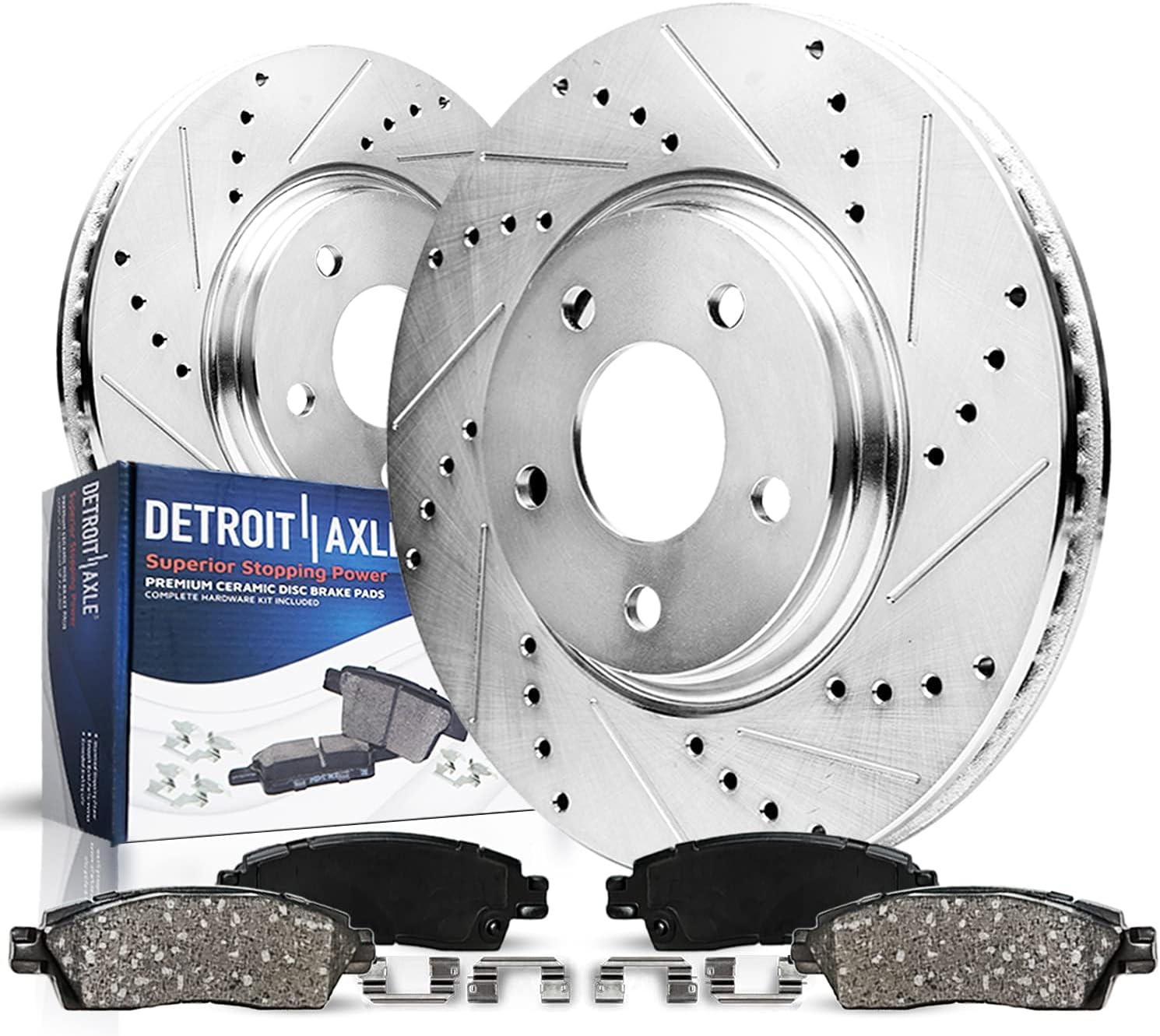
1. Detroit Axle Front Brake Kit with Drilled & Slotted Rotors and Ceramic Pads
| Rotor size | 12.80 inch (325mm) |
|---|---|
| Includes | 2 rotors, 2 ceramic pads, hardware |
| Fitment note | For 2022-2023 Hyundai Santa Cruz; 2021-2023 Santa Fe; 2021-2023 Kia Sorento |
| Finish | Silver zinc plated |
| Manufacturer part number | 4PR471025 |
This Detroit Axle front brake kit supplies both front drilled-and-slotted rotors and ceramic pads with the mounting hardware needed for a straightforward replacement on vehicles that use 12.80" rotors. The rotors are zinc plated to resist corrosion and the drilled/slotted design helps dissipate heat and shed brake dust and moisture during spirited driving or repeated stops. Ceramic pads tend to run quieter and produce less dust than semi-metallic alternatives, making the set a good fit for daily drivers who want cleaner wheels and reduced noise. Fitment is machined to match factory locating holes for bolt-on installation without modification, and the included hardware simplifies a one-time service job. Buyers should note this is an aftermarket kit rather than a factory-branded assembly, and ceramic pads trade a bit of initial bite for lower noise compared with performance-oriented compounds. For drivers seeking a durable, quieter front brake refresh with improved heat management, this kit balances value and practical upgrades for compatible Hyundai and Kia models.
Best for: Buyers who want a complete, ready-to-install front brake refresh that improves heat control and reduces dust and noise while keeping installation simple.
Less Ideal for: Drivers seeking track-focused stopping power or maximum initial bite should consider performance rotor and pad combinations instead.
- Includes matched rotors, ceramic pads, and installation hardware for a complete front service
- Drilled and slotted rotors promote faster heat dissipation and help clear water and debris
- Zinc plating reduces visible corrosion and wheel staining over time
- Aftermarket ceramic pads provide quieter operation but slightly less initial bite than performance pad compounds
Verdict: A complete front brake kit that delivers quieter ceramic pads and drilled/slotted rotors for better heat control and cleaner wheels on compatible Hyundai and Kia models.
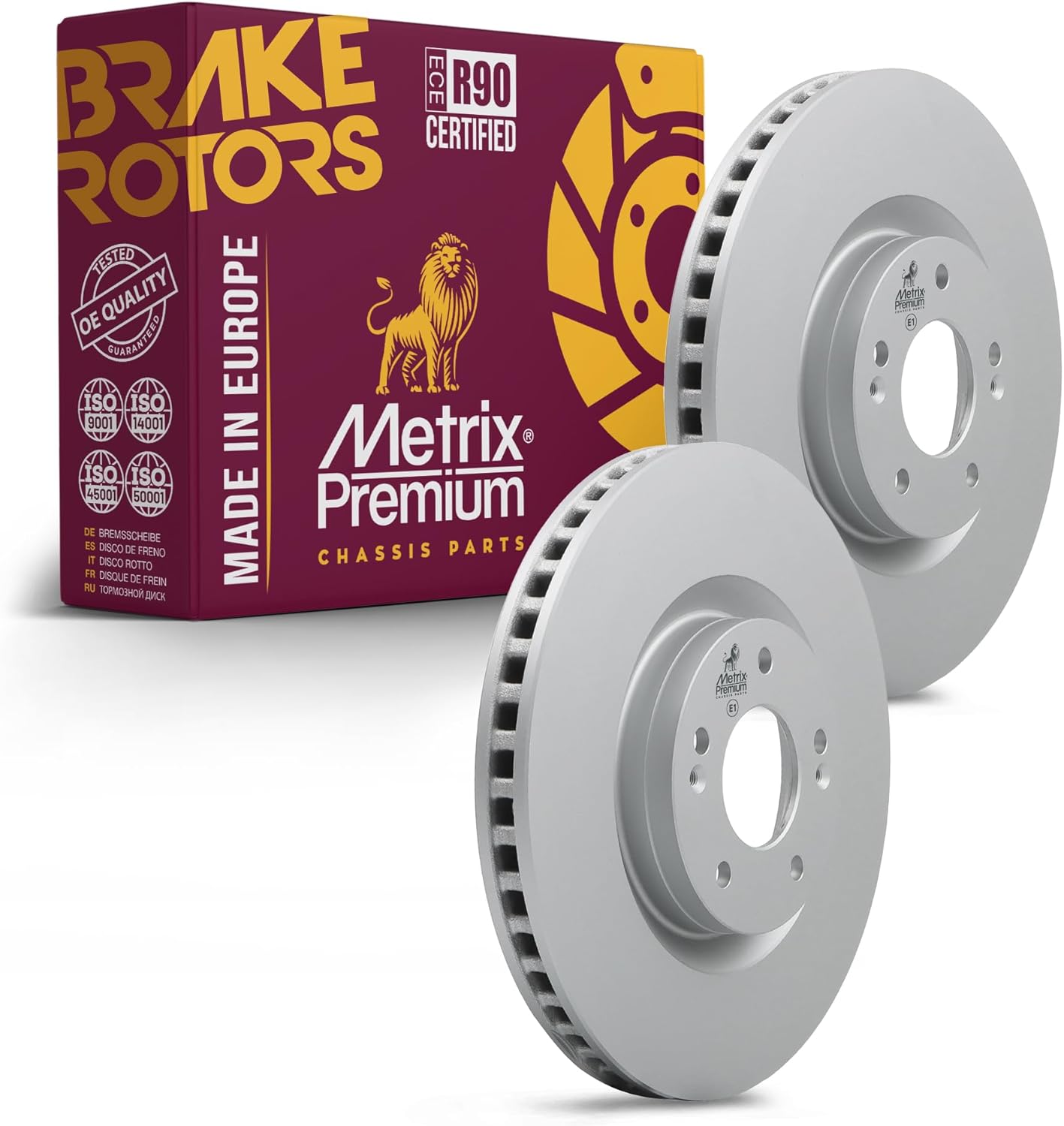
2. Metrix Premium Chassis Parts Front Coated Vented Brake Rotor Kit (325 mm)
| Compatible models | 2022-2023 Hyundai Santa Cruz; 2021-2023 Hyundai Santa Fe; 2021-2023 Kia Sorento |
|---|---|
| Item type | Disc Brake Rotor |
| Material Type | Cast Iron |
| Exterior Finish | Machined |
| Included Components | Comes with housing |
These Metrix front brake rotors replace the factory front discs and are sold as a two-piece kit intended for passenger cars including the Hyundai Santa Cruz. They are cast iron, machined, and factory mill-balanced to reduce vibration and deliver smooth, pulsation-free stops during spirited driving. The vented design with vane and pillar-style cooling helps dissipate heat to minimize brake fade under repeated heavy braking. Metrix states the rotors meet ECE R90 and several ISO certifications, which indicates they are manufactured to strict quality controls and should provide consistent fit and braking behavior. Practical benefits are reliable thermal resistance, predictable pedal feel, and a machined finish that cleans up easily during installation. Limitations are typical of replacement cast-iron rotors: they will wear over time and are not a high-friction or lightweight performance rotor for track-focused use, and buyers wanting upgraded stopping power should pair these with performance pads or consider slotted/drilled alternatives.
Best for: Drivers who want reliable, street-capable braking with improved heat management and smooth pedal feel during aggressive everyday driving and occasional towing or heavy use.
Less Ideal for: Enthusiasts seeking lightweight, track-optimized rotors or integrated slotted/drilled designs for maximum initial bite should consider aftermarket performance rotors instead.
- Factory mill-balanced for reduced vibration and smoother stops
- Vented design with vane and pillar cooling to resist brake fade under heavy use
- Machined finish for consistent pad contact and easier bedding-in
- ECE R90 and ISO certifications indicating production quality and regulatory compliance
- Cast iron construction adds mass compared with lightweight performance rotors and is not optimized for track-only applications
Verdict: A well-made, factory-balanced replacement rotor set that gives Hyundai Santa Cruz owners improved heat control and smooth, dependable braking for aggressive street driving.
3. METRIX Premium Cast Iron Front Brake Rotor — Coated, Ventilated, Mill-Balanced

| Compatible models | 2022–2023 Hyundai Santa Cruz; 2021–2023 Hyundai Santa Fe; 2021–2023 Kia Sorento |
|---|---|
| Material Type | Cast Iron |
| Exterior Finish | Machined |
| Certification | ECE R90 |
| Included Components | Comes with housing |
This Metrix premium brake rotor is a direct-fit, vented disc engineered for front axle braking on the specified Hyundai Santa Cruz and related vehicles. Machined and factory mill-balanced, the rotor aims to deliver smooth, pulsation-free stops and consistent pad contact straight out of the box. Vane/pillar ventilation helps dissipate heat under repeated stops, reducing the chance of fade during towing or spirited driving, while cast-iron construction provides the durability expected from a replacement rotor. The coated exterior and machined face improve initial bed-in and resist light surface corrosion during storage or seasonal use. Important limitations are that it is a single rotor piece intended as a direct replacement rather than an upgraded performance rotor, and installers should follow fitment guidance and replace rotors in pairs while checking hub surfaces and wheel alignment. For drivers prioritizing reliable, factory-quality braking behavior and straightforward installation, this rotor covers the basics well.
Best for: Buyers who want a practical, factory-quality replacement rotor for regular driving, occasional towing, or moderate spirited use and who prioritize predictable braking and easy installation.
Less Ideal for: Drivers seeking lightweight, performance-oriented rotors, specialty coatings, or cross-drilled/slotted patterns for aggressive track use should look at dedicated performance options instead.
- Factory mill-balanced for reduced vibration and smoother stops
- Vented vane/pillar design improves heat dissipation under repeated braking
- Machined face and coating help with initial pad contact and corrosion resistance
- Built from cast iron for conventional durability and predictable wear
- Designed as a direct replacement rather than a high-performance or lightweight rotor
Verdict: A reliable, factory-quality vented cast-iron rotor that gives Hyundai Santa Cruz drivers smooth, predictable braking and straightforward direct-fit replacement.
4. Detroit Axle Front Drilled & Slotted Brake Rotors (12.80 inch) — Kit of 2

| Fitment rotor size | 12.80 inch (325mm) |
|---|---|
| Kit includes | 2x front rotors |
| Finish | Zinc plated |
| Manufacturer | Detroit Axle |
These Detroit Axle front rotors are a budget-friendly drilled-and-slotted replacement kit sold as a pair for 12.80-inch rotor applications. They are zinc plated to resist corrosion and feature ventilation and slots to help dissipate heat and clear moisture during repeated stops. The locating holes are machined to align with factory hubs so installation should be straightforward without modifications. In daily use they provide acceptable stopping performance for street and light towing duties, and the zinc finish helps keep wheel dust and surface rust down compared with bare rotors. Keep in mind these are aftermarket remanufactured-style parts aimed at value buyers, so you should expect slightly less refinement and possibly shorter service life than premium performance rotors under aggressive driving. Overall they are a practical, lower-cost option for restoring front braking on compatible Santa Cruz and similar vehicles when you want decent heat control and straightforward fitment.
Best for: Buyers prioritizing a low-cost, practical replacement that restores braking performance and helps control heat on everyday driving and occasional towing.
Less Ideal for: Drivers who demand long-term high-performance or track-capable rotors should consider premium new performance or branded replacements instead.
- Drilled and slotted design helps dissipate heat and remove moisture for more consistent braking.
- Zinc plating reduces visible rust and wheel dust compared with uncoated rotors.
- Machined locating holes for direct fitment to factory hubs without modification.
- Aftermarket remanufactured-style construction may wear faster than higher-end new performance rotors.
Verdict: A cost-conscious pair of drilled-and-slotted front rotors that deliver straightforward fitment and improved heat control for everyday Hyundai Santa Cruz braking needs.
5. PowerStop Evolution Drilled & Slotted Front Brake Rotors (JBR1902XPR)

| Included components | (2) Drilled & slotted front rotors |
|---|---|
| Finish | Silver zinc dichromate |
| Material Type | G3000 grade cast iron |
| Automotive Fit Type | Vehicle Specific Fit |
These PowerStop Evolution rotors are a direct-fit front rotor upgrade for the Hyundai Santa Cruz that combines drilled holes and rounded slots to improve cooling and keep the pad contact area clear of gas and debris. They are cast from G3000 grade iron and finished with a silver zinc dichromate plating, which helps resist surface rust and keeps the rotors looking clean behind wheels. In everyday use they reduce brake fade under heavier braking compared with plain rotors and offer a sportier appearance. Installation is straightforward for a DIYer since they use factory mounting locations, but note mounting hardware is not included. For drivers focused on durability and consistent stopping performance the vents and slot/drill pattern help maintain cooler temperatures during repeated stops, though drilled rotors can show slightly more surface wear over many seasons than smooth rotors in some conditions. These are best when you want a balance of improved thermal performance, routine corrosion protection, and a performance look without major brake system changes.
Best for: Drivers who prioritize dependable, cooler braking and long-term corrosion resistance on a daily-driven Hyundai Santa Cruz and want a straightforward, vehicle-specific rotor upgrade.
Less Ideal for: Drivers seeking an ultra-high endurance rotor for frequent competitive track use or those who prefer a plain vented rotor for maximum longevity under extreme thermal cycling.
- Drilled holes and rounded slots improve cooling and help clear gas and brake dust for more consistent pad contact
- Silver zinc dichromate plating resists rust and corrosion to extend visible life behind wheels
- G3000 grade cast iron construction with precision machining for a direct, factory-style fit
- Direct bolt-on design intended for DIY installation with no rotor modifications required
- Drilled rotor design can be more prone to visible surface wear or cracking under extreme track abuse compared with plain vented rotors
Verdict: A ready-to-install, corrosion-resistant drilled and slotted front rotor set that lowers brake temperatures and maintains consistent stopping for Hyundai Santa Cruz drivers seeking reliable performance upgrades.
6. Max Advanced Brakes ValueMAX Front Brake Kit (Rotors and Carbon Ceramic Pads)

| Automotive Fit Type | Vehicle Specific Fit |
|---|---|
| Orientation | Front |
| Included Components | Brake Rotors, Brake Pads, Hardware |
| OEM Equivalent Part Number | 2380 ONZ1298 |
This Max Advanced Brakes ValueMAX front kit supplies both rotors and carbon ceramic-style pads along with the hardware for a bolt-on replacement on supported vehicles. The rotors are precision-machined cast iron with a non-directional finish to speed bedding and reduce vibration, while the carbon ceramic pads aim to cut noise and dust compared with semi-metallic options. Installation is straightforward for an experienced DIYer or a shop since the kit is vehicle-specific and includes necessary hardware. For daily commuting and city driving the kit delivers consistent, quiet stopping and cleaner wheels over time. Limitations to note are that this is a value-oriented replacement rather than a high-performance rotor set, so drivers seeking track-ready fade resistance or aggressive performance characteristics should look elsewhere. Warranty periods differ by component, so keep paperwork if you want coverage on combined kits versus individual parts.
Best for: Buyers who prioritize dependable, low-noise everyday braking and want a full front kit with hardware that fits their vehicle and is backed by broad positive customer feedback.
Less Ideal for: Drivers needing upgraded track-capable brakes, heavy towing duty, or specialty performance rotors should consider performance-oriented options instead.
- Complete front kit includes both rotors, pads, and installation hardware for a single purchase
- Precision-machined cast iron rotors with non-directional finish for smoother bedding and reduced vibration
- Carbon ceramic-style pads formulated for lower dust and quieter braking
- Vehicle-specific fit simplifies installation and reduces fitment guesswork
- Positioned as a value replacement so it is not optimized for track use or heavy-duty towing
Verdict: A practical, full front brake replacement kit that delivers quiet, low-dust daily braking and a direct fit for supported Hyundai and Kia models.
Choosing the Right Hyundai Santa Cruz Brake Rotors: Key Factors to Consider
Material Quality And Casting
Rotor metallurgy determines resistance to cracking, warping, and rapid wear. Higher-quality iron or alloy formulations handle heat cycles better, reducing the risk of heat-related distortion during repeated hard stops. Better casting processes also produce more uniform material density, which lowers the chance of vibration caused by uneven cooling.
For the Santa Cruz, material quality affects how the rotor copes with common loads like highway braking, city stop-and-go, and occasional towing. Choosing rotors with known casting standards helps ensure consistent thickness and flatness, which in turn preserves pad life and pedal feel.
Rotor Thickness And Diameter Specifications
Correct rotor thickness and diameter are essential for safe clearance and proper caliper alignment. Minimum thickness ratings and nominal diameter determine service life and whether a rotor can be resurfaced or must be replaced. Rotors that are near the minimum thickness will heat up faster and are more prone to warping.
When selecting for a Hyundai Santa Cruz, check that the rotor dimensions match factory specs so brake pads sit correctly and the ABS tone ring, if present, functions reliably. Paying attention to published thickness tolerances prevents fitment issues and ensures consistent braking performance.
Heat Dissipation And Venting Design
How a rotor manages heat affects fade resistance and longevity. Vented rotors have internal vanes that move air through the rotor assembly to cool the braking surface, while solid rotors rely on surface area and vehicle airflow. Better cooling reduces the chance of thermal cracking and maintains braking power during repeated stops.
For Santa Cruz drivers who tow or do frequent highway driving, choosing rotors with effective venting or enhanced surface designs helps maintain consistent stopping power under load. Consider the typical driving use and pick rotor designs that match those thermal demands.
Surface Treatment And Corrosion Resistance
Surface finishes like zinc coatings, ceramic treatments, or black e-coats extend rotor life by reducing rust on non-friction surfaces. Corrosion on the mounting hat or non-contact faces can lead to fitment problems and uneven cooling, which affects brake balance over time.
On a Santa Cruz, exposure to road salt or humid coastal conditions makes corrosion resistance more important. A rotor with a durable protective finish reduces the likelihood of stuck caliper hardware and simplifies future servicing.
Rotor Design Features: Slotted, Drilled, Or Plain
Different rotor surface geometries change how gases and debris clear the pad-rotor interface. Slotted or drilled surfaces can help maintain pad bite and channel water away, improving performance in certain scenarios. However, these features can also increase stress concentrations and, in some cases, reduce lifespan compared with plain rotors.
For Santa Cruz owners, choose based on driving style: plain rotors are often best for everyday driving and long life, slotted or specially machined surfaces help aggressive drivers or those towing frequently, and drilled rotors are typically reserved for specific performance or wet-weather needs.
Compatibility And Ease Of Installation
Fitment compatibility with the Santa Cruz hub, calipers, and hardware is non-negotiable. Precise hub centering, matching the ABS tone ring location if applicable, and using the correct lug patterns ensure safe installation. Rotors that require special adapters or hub modifications increase installation complexity.
Consider whether rotors are direct bolt-on replacements and whether your existing hardware should be replaced at the same time. Rotors that come with clear fitment documentation and straightforward installation requirements reduce shop time and potential errors.
When To Resurface Versus Replace Rotors
Resurfacing can extend rotor life if the rotor thickness is above the manufacturer minimum and the surface has only minor scoring or glazing. Measure rotor thickness and check for runout and warpage before deciding to machine the surface. Excessive heat damage, deep grooves, or thickness below the minimum means replacement is safer.
- Measure thickness at multiple points across the rotor face.
- Check runout with a dial indicator to detect lateral wobble.
- Factor in material removed during machining versus the minimum thickness spec.
How To Measure Rotor Thickness And Runout
Use a micrometer or caliper to measure rotor thickness at several points around the braking surface. Record the smallest measurement and compare it to the vehicle's minimum thickness spec. For runout, mount a dial indicator against the rotor while slowly rotating the hub to detect lateral variation. Excessive runout leads to pedal pulsation and uneven pad wear.
- Clean the rotor surface and hub before measuring.
- Measure thickness near the inner and outer edges of the disc.
- If runout exceeds factory tolerance, check hub mounting surfaces for corrosion or damage.
Understanding Brake Rotor Wear Symptoms
Common symptoms of rotor wear include vibration or pulsation under braking, increased stopping distances, uneven pad wear, and visible scoring or heat spots. Vibration often indicates runout or thickness variation, while grooving and hot spotting point to pad or heat-management issues. Recognizing these signs early helps prevent more expensive brake component damage.
- Pulsation at the brake pedal usually means lateral runout or thickness variation.
- Squeal can be caused by glazing or contaminated pads, not only the rotor.
- Blue or discolored patches indicate localized overheating and possible structural damage.
Single-Piece Versus Two-Piece Rotors: Pros And Cons
Single-piece rotors are cast as one unit and are simple, cost-effective, and robust for standard driving use. Two-piece rotors separate the friction ring from the hat, allowing different materials or coatings for the hat that reduce rust and improve heat isolation. Two-piece designs can reduce unsprung weight and offer easier replacement of the friction surface in some applications.For the Santa Cruz, single-piece rotors are usually perfect for routine driving and general towing. Two-piece designs make sense if you prioritize reduced weight, better thermal expansion management, or plan to upgrade frequently for performance reasons.
- Single-piece: simpler installation and usually lower cost.
- Two-piece: potential weight savings and better hat corrosion resistance.
- Consider intended use before choosing a more complex two-piece setup.
Maintenance Tips To Maximize Rotor Life
Routine inspection of rotor surfaces and pad condition preserves braking performance and prevents premature rotor damage. Keep mounting surfaces clean and torque lug nuts to the manufacturer specification to avoid introducing runout. Replace brake pads before they wear the rotor surface aggressively, and use high-quality hardware when servicing the braking system.If you frequently tow or drive in hilly terrain, inspect rotors more often for heat-related wear and consider using rotors with better thermal management.
- Torque lug nuts in a star pattern to the correct spec.
- Inspect for grooves, corrosion, and heat spots during routine service.
- Replace pads in pairs and check caliper operation to ensure even wear.
How We Chose the Best Hyundai Santa Cruz Brake Rotors
We focused on attributes that matter most to Hyundai Santa Cruz owners and established clear editorial filters to narrow the field. First, fitment and vehicle compatibility were mandatory; only rotors that match Santa Cruz factory specifications were considered. We prioritized rotors made from quality castings or multi-piece constructions with consistent machining tolerances.Key evaluation criteria included material and metallurgical quality for longevity, rotor thickness and diameter tolerances for correct fit and heat capacity, and surface finishes that affect brake pad bedding and corrosion resistance. We also considered thermal management features such as venting, slotting, or drilling when relevant to heavy-duty use like towing. Ease of installation and maintenance factors, including whether standard tools suffice and whether rotors require resurfacing before install, were part of the assessment.Excluded items included generic or ill-fitting rotors, units lacking published specifications, and rotors intended for other vehicle platforms. The final selections balance durability, braking performance, and practical ownership concerns specific to the Hyundai Santa Cruz.
Our full evaluation process is outlined in our review methodology.
FAQ
How often should I inspect the rotors on my Santa Cruz?
Inspect rotors during every pad change, typically every 20,000 to 40,000 miles depending on driving. If you tow frequently or notice vibration, check them sooner.
Can I resurface rotors instead of replacing them?
Often you can if the thickness remains above the minimum and there is no structural heat damage. Measure thickness and runout to verify whether resurfacing is safe.
Are slotted or drilled rotors necessary for a Santa Cruz used for light towing?
Not usually. Slotted rotors can help with pad bite and debris clearance during heavy use, but plain vented rotors often provide the best balance of durability and heat management for light towing.
What causes brake rotor pulsation when I apply the brakes?
Pulsation is commonly caused by lateral runout or thickness variation. Corroded mounting surfaces or warped rotors from heat cycling are frequent contributors.
Will upgrading rotor surface type change my brake pedal feel?
Yes. Surface design and material affect initial pad bite and modulation. Aggressive slotting or unusual machining patterns can make pedal feel firmer but may increase pad wear.
Do I need special tools to replace Santa Cruz rotors?
Most rotor replacements use standard hand tools and common shop equipment. A dial indicator and micrometer are recommended for measuring runout and thickness, but are not strictly required for a basic install.
Final Verdict
Prioritize fitment, material quality, and heat management when choosing brake rotors for your Hyundai Santa Cruz. Consider how you use the vehicle—daily commuting, frequent towing, or performance driving—because that determines whether plain vented, slotted, or multi-piece designs make sense. Stay attentive to thickness and runout measurements during service, and replace rotors when they show heat damage or drop below minimum thickness.Choosing rotors that match factory dimensions and offer good corrosion protection will deliver the most consistent stopping feel and lowest long-term maintenance. Focus on the tradeoffs between lifespan, thermal performance, and installation complexity to select the best option for your Santa Cruz.
Explore More:
- Check out all Hyundai Santa Cruz parts & accessories
- Explore Brake Rotors Maintenance & Repair Guides
- Explore Brake System
- Browse all Auto Parts
