

Note: This article contains affiliate links. If you click on these links and make a purchase, I may earn a small commission at no extra cost to you. This helps support my research and content. Read my full affiliate disclosure here.
If you own a Hyundai Santa Cruz, choosing the right brake pads affects safety, pedal feel, and how often you need maintenance. The wrong pads can increase rotor wear, create excessive dust, or reduce braking performance in wet conditions. This guide covers seven shortlisted brake pad options that suit typical Santa Cruz use, from daily commuting to light towing.Each pick was evaluated for stopping power, longevity, noise control, and compatibility with the Santa Cruz braking system. Below you will find practical guidance on fitment, performance tradeoffs, and the factors that matter most when replacing pads on this vehicle.
Looking for other parts? See all Hyundai Santa Cruz parts & accessories.
Top Picks at a Glance
| Best Overall The best all-around choice for most situations | Detroit Axle Front Brake Kit with Drilled & Slotted Rotors and Ceramic Pads |  |
| Best Quality Built to a higher standard if you want something more solid | BOSCH QuietCast Premium Ceramic Front Brake Pad Set |  |
| Best Value The sweet spot between price and what you get | SCITOO Ceramic Front & Rear Brake Pad Kit for Hyundai Santa Cruz / Santa Fe / Kia Sorento |  |
| Best Budget The cheapest option that still gets the job done reliably | HUSCH Rear Ceramic Brake Pads Kit for Hyundai Santa Cruz |  |
| Highest Rated A top-rated pick with lots of positive feedback | Bendix Premium SBC2380 Ceramic Front Brake Pads |  |
| Most Popular A crowd favorite that many people choose with confidence | Bendix Priority1 CFC2380 Ceramic Front Brake Pads |  |
| Best Seller A high-volume bestseller chosen again and again | Bendix Priority1 CFC2381 Ceramic Rear Brake Pads |  |
1. Detroit Axle Front Brake Kit with Drilled & Slotted Rotors and Ceramic Pads
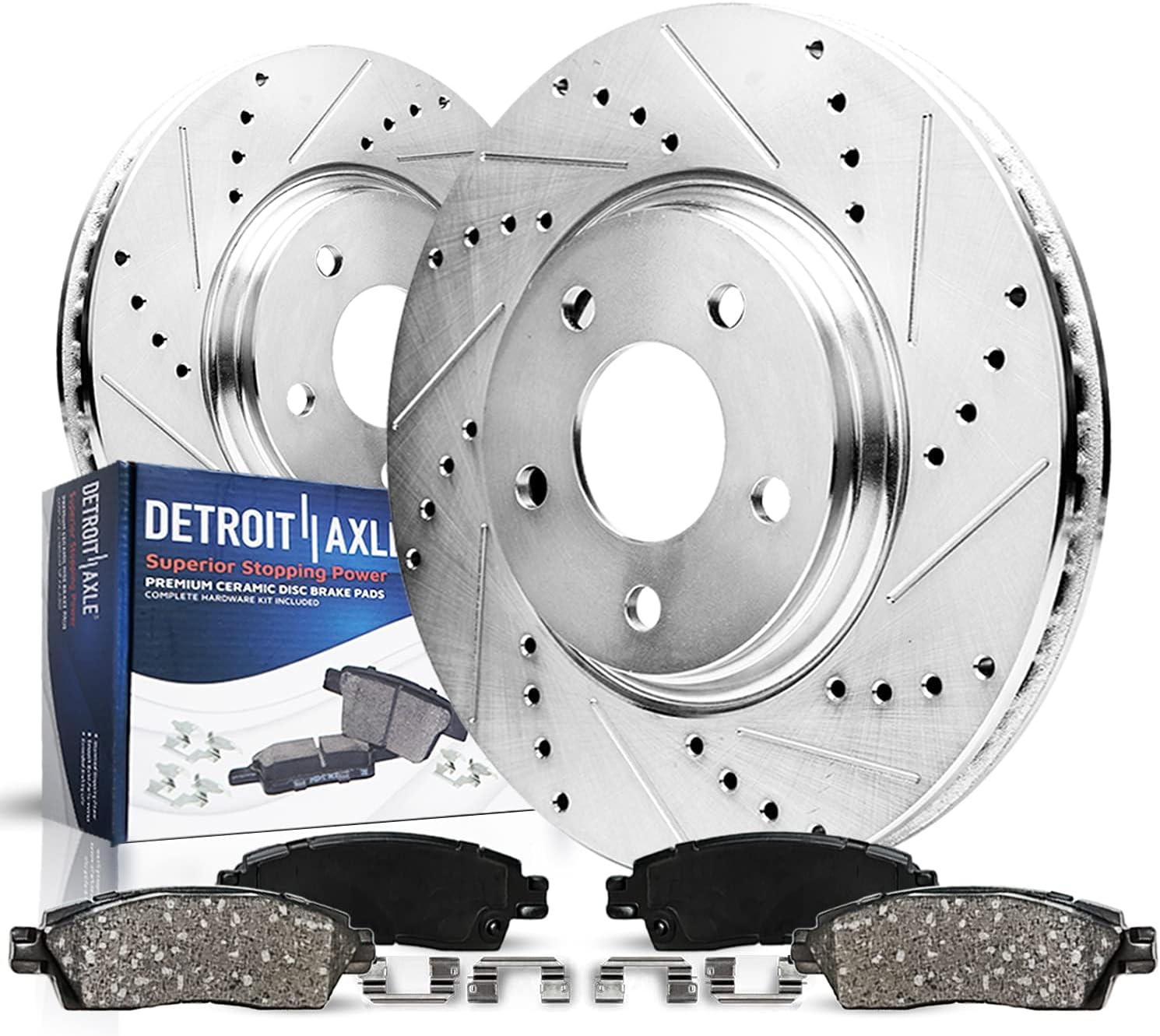
| Rotor diameter | 12.80 inch (325mm) |
|---|---|
| Kit contents | 2 front drilled & slotted rotors, 2 front ceramic pads with hardware |
| Fitment notes | For models with 12.80 inch rotor size |
| Manufacturer | Detroit Axle |
This Detroit Axle front brake kit combines drilled and slotted 12.80 inch rotors with ceramic brake pads and included hardware to replace the front brakes on compatible Santa Cruz, Santa Fe, and Sorento models. The drilled and slotted rotor design helps dissipate heat and shed moisture under repeated braking, while zinc plating resists corrosion and wheel dust for a cleaner appearance over time. Ceramic pads typically produce low noise and generate less dust than semi-metallic options, making them a good match for everyday street driving. The kit is machined with accurate locating holes for direct fitment and comes with hardware to simplify installation for a competent DIYer or a shop. Buyers should note this is a performance-oriented replacement designed for normal to spirited road use rather than track extremes, and ceramic pads may not offer the same initial bite as some performance compounds in cold conditions.
Best for: Drivers seeking a balanced, factory-quality front brake replacement that improves cooling and reduces dust and noise for daily driving and occasional spirited use.
Less Ideal for: Drivers who frequently race or do heavy track work should choose a high-friction or track-focused brake rotor and pad package instead.
- Drilled and slotted rotor surfaces improve heat dissipation and reduce brake fade during repeated stops
- Zinc plating on rotors helps prevent corrosion and keeps wheel area cleaner
- Includes ceramic pads and installation hardware for a full front-brake replacement
- Machined locating holes for direct fitment that should install without modifications
- Ceramic pads can have milder initial bite compared with some performance pad compounds
Verdict: A complete front-brake replacement that delivers improved cooling, lower dust, and quiet ceramic braking for balanced everyday performance on the Santa Cruz and similar models.
2. BOSCH QuietCast Premium Ceramic Front Brake Pad Set

| Material Type | Ceramic |
|---|---|
| Automotive Fit Type | Vehicle Specific Fit |
| Included Components | Brake Pads, hardware kit, lubricant |
| Auto Part Position | Front |
These Bosch QuietCast ceramic front brake pads are built as a vehicle-specific replacement for select Hyundai Santa Cruz and related SUVs. They use Bosch molded shim technology with pre-attached multilayer rubber-core shims to reduce noise and vibration, and ceramic friction material engineered for strong stopping power with minimal dust. Powder-coated backing plates and OE-style slots and chamfers help resist corrosion and ensure consistent fit and function, and the kit includes hardware and lubricant to simplify installation. In real-world use that means quieter, cleaner braking on daily driving and towing compared with many semi-metallic options, with predictable pedal feel and good wear characteristics. Expect slightly softer initial bite than some performance-focused metallic pads, so they favor NVH reduction and longevity over aggressive track-style stopping. These are a sound choice if you want factory-quality braking with low dust and quiet operation on a Santa Cruz without sacrificing dependable stopping performance.
Best for: Buyers who prioritize quiet, low-dust, factory-quality braking for everyday and light-duty towing on a Hyundai Santa Cruz and want a straightforward bolt-in replacement.
Less Ideal for: Drivers seeking aggressive, track-capable pads for frequent high-speed or repeated heavy braking should consider high-performance metallic pads instead.
- Ceramic formulation offers quiet braking with low dust for cleaner wheels
- Pre-attached multilayer rubber-core shims reduce noise and vibration
- Powder-coated backing plates resist corrosion and extend service life
- Includes hardware and synthetic lubricant for easier installation
- Less aggressive initial bite compared with track-oriented metallic pads, so not optimized for high-temperature repeated hard stops
Verdict: Choose these Bosch QuietCast front ceramic pads for quiet, low-dust, factory-quality braking on a Hyundai Santa Cruz.
3. SCITOO Ceramic Front & Rear Brake Pad Kit for Hyundai Santa Cruz / Santa Fe / Kia Sorento

| Material Type | Ceramic |
|---|---|
| Automotive Fit Type | Vehicle Specific Fit |
| Auto Part Position | Front |
| Included Components | Brake Pad |
| Specification Met | OEM |
This SCITOO kit supplies a full set of ceramic front and rear pads sized for specific Hyundai Santa Cruz, Santa Fe and Kia Sorento model years. It is intended as a direct vehicle-specific replacement that installs like a factory-style pad and includes chamfered edges, slots and pre-fitted shims to reduce squeal and vibration. Ceramic material keeps wheel dust low and tends to run quieter than semi-metallic pads, making it a good choice for daily driving and commuting. The listing notes a recommended gentle break-in for about 200 miles and suggests checking pad thickness periodically; life will vary by city versus highway use. Practical buyers will appreciate the OEM-equivalent part numbers and certifications called out for fit and performance. Limitations are typical of ceramic compounds: while quieter and cleaner they may offer slightly different initial bite and heat fade characteristics under extreme towing or heavy-duty use compared with heavy-duty metallic pads. Verify the exact brake option on your vehicle before purchase to ensure correct fitment.
Best for: A practical buyer who wants a clean, quiet, factory-style replacement for routine driving and commutes and values low dust and straightforward fitment.
Less Ideal for: Drivers who regularly tow heavily, carry large loads, or do frequent aggressive driving and need maximum fade resistance should consider heavy-duty metallic options instead.
- Vehicle-specific kit covering both front and rear so you replace all pads at once
- Ceramic compound produces less wheel dust and quieter operation for daily driving
- Chamfers, slots and pre-fitted shims help reduce squeal and vibration
- Includes OEM-equivalent part numbers and is made to meet certification standards cited in the listing
- Ceramic pads can show different initial bite and may not match braking under heavy towing or repeated high-heat use compared with heavy-duty metallic pads
Verdict: Pick this ceramic SCITOO kit if you want a full front-and-rear, low-dust, quiet replacement that fits Hyundai Santa Cruz and the specified Santa Fe and Sorento models.
4. HUSCH Rear Ceramic Brake Pads Kit for Hyundai Santa Cruz

| Auto Part Position | Rear |
|---|---|
| Material Type | Ceramic |
| Number of Items | 4 |
| Manufacturer Warranty Description | 2 Year Manufacturer |
| Automotive Fit Type | Vehicle Specific Fit |
These HUSCH rear ceramic brake pads are a vehicle-specific replacement designed to give responsive, quiet braking for the Hyundai Santa Cruz. Installed on the rear axle, the ceramic compound produces less brake dust than semi-metallic pads, making wheels easier to keep clean and reducing residue build-up. The listing cites a high friction coefficient for quicker stopping, and the pads are manufactured to fit closely to the rotor for reduced noise. Use is straightforward: swap the rear pads during routine service or when pads reach wear limits; the kit includes four pads for a full axle. Practical benefits include quieter braking, cleaner wheels, and a pad material that is non-magnetic which indicates low metal content. Limitations are typical of ceramic rear pads: they prioritize low dust and comfort over extreme fade resistance under heavy track use, and drivers wanting maximum stopping power for towing or aggressive driving may prefer other compounds. The product comes with a two year manufacturer warranty and meets factory-specification fitment for vehicle-specific replacement.
Best for: Buyers looking for an affordable, quiet rear replacement that keeps wheels clean and restores everyday braking performance on a Santa Cruz.
Less Ideal for: Drivers who regularly tow heavy loads, carry heavy payloads, or do frequent high-speed track driving should consider heavy-duty or performance-oriented brake compounds instead.
- Ceramic compound produces minimal brake dust for cleaner wheels.
- Manufactured for vehicle-specific rear fitment to reduce noise and ensure consistent contact with rotors.
- High reported friction coefficient for responsive braking and shorter stopping distance.
- Includes four pads to replace the entire rear axle and meets factory-specification fitment.
- Ceramic formulation is less suited to heavy-duty towing or track use where extreme fade resistance is required.
Verdict: A budget-friendly rear ceramic replacement that restores quiet, low-dust everyday braking for the Hyundai Santa Cruz.
5. Bendix Premium SBC2380 Ceramic Front Brake Pads

| Auto Part Position | Front |
|---|---|
| Automotive Fit Type | Vehicle Specific Fit |
| Material Type | Ceramic |
| Included Components | (1) Bendix Premium Ceramic Brake Pad Set |
| Specification Met | OEM |
Bendix Premium SBC2380 ceramic front brake pads are a vehicle-specific replacement designed to match factory fit, form, and function for the front brakes of the listed Hyundai and Kia models. These pads are intended for everyday driving and commuting, offering smooth initial bite and quiet operation typical of ceramic formulations. Notable features include a ceramic friction material that resists wear and corrosion plus industry testing to meet OEM-level specifications. In practice that means predictable pedal feel, reduced brake dust compared with semi-metallic pads, and longer service life for drivers who prioritize reliability over aggressive stopping power. Because they are focused on daily-use performance, these pads are not tuned for heavy track use or towing where higher friction, more heat-tolerant compounds perform better. Installation follows standard front-pad replacement procedures and they come as a single pad set for the front axle, so expect a straightforward swap for anyone comfortable with basic brake work or a shop install.
Best for: Drivers who want a dependable, low-noise front brake replacement that matches factory fit and prioritizes long-term reliability for daily commuting and family driving.
Less Ideal for: Drivers who routinely tow heavy loads, engage in spirited driving, or need pads rated for track and high-temperature braking should choose a performance-oriented compound instead.
- Vehicle-specific fit that matches factory mounting for straightforward installation
- Ceramic material reduces brake dust and runs quietly during normal driving
- Manufactured to OEM-style specifications and industry-tested for consistent performance
- Resistant to wear and corrosion for longer service life in daily driving
- Ceramic compound is less suited to high-heat, heavy-duty braking compared with performance or semi-metallic pads
Verdict: Choose these Bendix premium ceramic front pads when you want a quiet, factory-matching replacement that prioritizes dependable, low-dust performance for daily driving.
6. Bendix Priority1 CFC2380 Ceramic Front Brake Pads

| Auto Part Position | Front |
|---|---|
| Compatible with Vehicle Type | Car, SUV, Truck |
| Included Components | (1) Bendix Priority1 Ceramic Brake Pad Set |
| Material Type | Ceramic |
| Specification Met | OEM |
Bendix Priority1 CFC2380 is a vehicle-specific ceramic front brake pad set built to factory-quality fit, form, and function for recent Hyundai Santa Cruz and Santa Fe and select Kia Sorento models. These pads use advanced ceramic friction material with chamfers, slots, and shims to reduce noise and deliver consistent stopping power in everyday driving and heavier loads. They are marketed to resist brake fade under higher temperatures, so you can expect stable pedal feel during longer trips or spirited driving. Installation is straightforward since the set includes the required hardware and is shaped for a direct replacement. The main compromises are inherent to ceramic pads: they usually produce less initial bite than performance-oriented semi-metallic compounds and can wear rotors differently over time. For drivers prioritizing quiet operation, predictable daily braking, and a factory-like replacement, these Bendix pads are a solid, confidence-inspiring choice backed by wide real-world use.
Best for: Buyers who want a quiet, reliable factory-style replacement that delivers consistent everyday braking and reduces uncertainty by choosing a widely used, vehicle-specific pad.
Less Ideal for: Drivers seeking maximum track or heavy-duty towing performance should consider performance or semi-metallic options instead.
- Factory-quality fit and form designed for direct replacement on specified vehicles
- Ceramic friction compound provides quiet operation with shims and chamfers to reduce noise
- Engineered to resist brake fade for consistent stopping under heavier loads or heat
- Includes installation hardware for straightforward brake service
- Ceramic formulation can have less initial bite than semi-metallic performance pads
Verdict: A quiet, factory-quality ceramic front pad set that delivers consistent, low-noise daily braking for Hyundai Santa Cruz and similar vehicles.
7. Bendix Priority1 CFC2381 Ceramic Rear Brake Pads

| Auto Part Position | Rear |
|---|---|
| Compatible with Vehicle Type | Car, SUV, Truck |
| Included Components | (1) Bendix Priority1 Ceramic Brake Pad Set |
| Material Type | Copper |
These Bendix Priority1 CFC2381 ceramic rear brake pads are a vehicle-specific replacement designed to match factory fit and braking feel. They are intended for rear axle use on compatible Hyundai and Kia models and include installation hardware for a straightforward swap. The pads use advanced friction materials and features such as shims, slots, and chamfers to reduce noise and control heat, which helps maintain stopping power during everyday driving and under heavier loads. In practice they deliver predictable, quiet braking for commuting and family driving, and the vehicle-specific fit simplifies installation compared with generic pads. Expect good resistance to brake fade and a more refined pedal feel than many economy options, but buyers seeking aggressive performance or track use should look at performance-oriented compounds instead. A small number of users have reported mixed experiences, so results may vary with driving style and rotor condition.
Best for: A cautious buyer looking for a quiet, factory-like rear brake replacement for daily driving and family use who prioritizes predictable stopping and an easier installation.
Less Ideal for: Drivers who frequently do track days, heavy towing, or need maximum high-temperature stopping power should consider performance brake compounds instead.
- Vehicle-specific design for a direct fit to listed Hyundai and Kia rear brakes
- Ceramic friction material that offers quiet operation and reduced dust compared with some semi-metallic pads
- Included installation hardware simplifies replacement for DIYers or techs
- Shims, slots, and chamfers help manage noise and heat for consistent braking performance
- Not formulated for aggressive track or heavy towing use where performance compounds are preferable
Verdict: Choose these Bendix Priority1 ceramic rear pads for a quiet, factory-quality replacement that delivers dependable, predictable braking for everyday Hyundai Santa Cruz use.
Choosing the Right Hyundai Santa Cruz Brake Pads: Key Factors to Consider
Stopping Power and Brake Feel
How quickly a pad brings the Santa Cruz to a stop and how the pedal responds are central safety considerations. Different pad compounds provide different friction coefficients at varying temperatures, which changes initial bite and fade resistance. For a pickup-like chassis such as the Santa Cruz, you want pads that build consistent friction without a harsh grab that could unsettle the vehicle under panic braking.
Brake feel also affects driver confidence. Some compounds deliver a soft, progressive bite that is comfortable for everyday driving but can fade under repeated heavy stops. Others are more aggressive, offering short stopping distances at the expense of more noise or dust. Consider typical driving conditions—highway commuting, city traffic, or occasional towing—when prioritizing stopping characteristics.
Wear Life and Rotor Friendliness
Pad longevity determines how often you will replace parts and how much rotor wear you will experience. Longer-lasting compounds reduce replacement frequency but may be harder on rotors. Rotor friendliness refers to a pad's tendency to score or thin rotors over time. For Santa Cruz owners who want to avoid rotor machining or replacement, selecting pads that balance life with gentle material transfer is important.
Service intervals, driving style, and whether you often haul cargo will all influence expected wear. Pads with predictable wear curves allow you to plan maintenance and prevent sudden failures. Look for pads with published wear rates or that are commonly reported by other owners to have consistent life on similar vehicles.
Noise, Vibration, and Harshness (NVH)
Brake squeal and vibration are common concerns on modern vehicles and can be especially noticeable on a lightweight pickup. NVH affects perceived quality and can mask other issues. Some pad formulations include chamfers, shims, or noise-damping layers to reduce squeal. The backing plate stiffness and pad bonding quality also influence vibration transfer to the pedal and cabin.
If you often drive in stop-and-go traffic or in conditions that lead to light braking, choose pads designed for low noise. However, very quiet pads sometimes sacrifice bite or heat tolerance, so weigh NVH outcomes against braking performance for your driving patterns.
Dust and Corrosion Considerations
Brake dust affects wheel appearance and can contribute to hub corrosion if not addressed. Certain pad materials produce less visible dust or dust that is easier to clean. For owners who use aftermarket wheels or value a clean look, reduced dust compounds are preferable. Additionally, some pads include coatings on hardware to resist corrosion in humid or salted-road environments.
Dust quantity, color, and corrosiveness vary by compound. Consider local climate and road treatment frequency; in areas with heavy road salt, corrosion-resistant backplates and hardware can extend component life and reduce maintenance.
Front Versus Rear Pad Roles
Front brake pads typically do more of the braking work and therefore wear faster than rear pads. The Santa Cruz's weight distribution and braking system design mean front pads will often see higher temperatures and heavier loads. When replacing pads, many owners choose to replace both axles if front pads are significantly worn, but staggered replacement is also an option depending on condition.
Understanding the different roles helps set expectations for service intervals and spares. Rear pads play a supporting role, aiding stability during braking and parking. Choose pads for each axle based on their specific load profiles rather than assuming a one-size-fits-all solution.
Fitment and Installation Practicalities
Correct pad dimensions, backing plate design, and compatible hardware are essential for straightforward installation on the Santa Cruz. Mismatched pads can cause uneven wear, fitment interference, or caliper binding. Pay attention to original equipment style clips, shims, and any anti-rattle hardware that the caliper requires.
Ease of installation also influences the total cost of ownership. Pads that use standard hardware and match factory mounting points reduce labor time and the need for additional parts. If you plan to install the pads yourself, look for options that include necessary clips or come with clear fitment information for the Santa Cruz.
Understanding Brake Pad Materials
Brake pad compounds fall into a few broad categories, each with tradeoffs for the Santa Cruz. Organic and low-metallic pads are often quieter and produce less harsh dust but may wear faster and struggle with heat under heavy use. Ceramic-style compounds usually offer stable pedal feel, lower dust, and good noise control, making them suitable for daily driving on this vehicle. Semi-metallic pads provide strong bite and heat resistance but can be noisier and more abrasive to rotors.
When selecting a material, consider how you use the Santa Cruz. Light commuting favors low-dust, low-noise options. Regular highway travel with moderate loads benefits from compounds that resist fade. If you tow often or drive in hilly terrain, prioritize heat tolerance and consistent friction.
- Ceramic-style: Low dust, quiet, stable pedal feel
- Semi-metallic: Strong initial bite, good heat management
- Organic/Low-metallic: Softer feel, typically quieter but shorter life
Signs Your Santa Cruz Needs New Pads
Common indicators that pads require replacement include reduced braking performance, a longer pedal travel, or a softer feel under braking. Many pads include wear indicators that produce an audible squeal when the material reaches a low thickness, but not all wear is audible. Visual inspection through the wheel spokes can reveal remaining pad material; if less than a few millimeters remain, plan for service.
Other symptoms include grinding noises, which usually indicate the pad material is gone and metal is contacting the rotor, and increased stopping distance. Addressing these signs early avoids rotor damage and more expensive repairs.
- Squeal at light braking can indicate wear indicator contact
- Grinding usually means pads are worn through to the backing plate
- Visible pad thickness below specification requires replacement
Maintenance Tips to Extend Pad and Rotor Life
Simple maintenance practices extend the life of pads and rotors on the Santa Cruz. Keep caliper slides and pins clean and lubricated with brake-specific grease to ensure even pad wear. When installing new pads, follow proper bedding procedures recommended by the pad compound to establish a consistent friction transfer layer on the rotor.
Regular inspections and cleaning to remove corrosive dust or road grime will help prevent accelerated wear. If rotors show heavy scoring or are below thickness spec, replace or machine them per manufacturer guidance to maintain safe braking performance.
- Lubricate caliper hardware to prevent sticking and uneven wear
- Follow bedding-in procedure after installation for consistent performance
- Inspect rotors for scoring and measure thickness against spec
When to Replace Front and Rear Pads
Front pads typically need replacement sooner than rear pads due to higher braking loads. Inspect both axles during service and compare remaining thickness. If the front pads are near replacement and the rear pads still have substantial life, you can replace just the front; however, replacing both axles at once simplifies maintenance records and ensures balanced braking feel.
If you notice uneven wear between left and right pads on the same axle, address caliper function and hardware before installing new pads to prevent premature failure. For vehicles used for light towing or frequent hill driving, monitor pad wear more closely and consider shorter service intervals.
- Replace front pads sooner if wear is uneven or heavy
- Consider full-axle replacement for consistent brake feel
- Check caliper function when wear is asymmetric
Comparing OEM-Style and Aftermarket Options
OEM-style pads aim to replicate factory performance and fit, offering predictable behavior and straightforward fitment on the Santa Cruz. Aftermarket pads can specialize in quieter operation, lower dust, or enhanced performance. Decide whether you prioritize factory-like modulation or specific improvements such as reduced dust or higher fade resistance.
When choosing aftermarket options, verify the listed fitment for the Santa Cruz and confirm included hardware matches the factory setup. Some aftermarket suppliers offer multi-axle kits or additional shims that improve NVH; others require you to reuse existing clips and hardware.
- OEM-style: Predictable fit and brake feel
- Aftermarket: Potential for improved dust, noise, or heat management
- Always confirm fitment and included hardware
How We Chose the Best Hyundai Santa Cruz Brake Pads
We narrowed candidates using criteria that reflect how Hyundai Santa Cruz owners actually use their vehicles. Stopping power under repeated braking was a primary filter, looking for compounds that deliver consistent deceleration without excessive fade during highway driving or light towing. Wear longevity and predictable material transfer were next; we favored pads with measured bedding behavior and reasonable rotor friendliness to avoid premature rotor replacement.Noise and vibration control were evaluated through manufacturer-specified noise mitigation features and common user reports, since squeal and grinding are frequent complaints. Dust and rotor corrosion tendencies were considered to reduce cleaning and maintenance. Compatibility and fitment were confirmed against Santa Cruz pad dimensions and caliper types to avoid fitment problems. We excluded any pads lacking clear technical specifications or fitment data for the Santa Cruz, as well as items that require caliper modifications or special adapters. The result is a balanced list that prioritizes safety, durability, and real-world drivability for this vehicle.
Our full evaluation process is outlined in our review methodology.
FAQ
How often should I replace brake pads on a Hyundai Santa Cruz?
It depends on driving habits and conditions. Many owners replace pads between 30,000 and 60,000 miles, but heavy stop-and-go driving, towing, or aggressive braking can shorten that interval. Regular inspections will give a clearer timeline.
Can I replace only the front or rear pads on the Santa Cruz?
Yes. Replacing only the axle with worn pads is common if the opposite axle still has adequate thickness. However, matching pad characteristics front-to-rear helps maintain balanced pedal feel, so some owners opt for full-axle replacement.
Are ceramic-style pads a good choice for everyday Santa Cruz driving?
Ceramic-style pads are often well suited to daily commuting because they tend to produce less dust and lower noise while offering stable pedal feel. They may not perform as well as semi-metallic pads under extreme heat from heavy towing or aggressive driving.
What does a grinding noise from the brakes usually mean?
Grinding typically indicates the friction material is severely worn and the backing plate or hardware is contacting the rotor. This requires immediate inspection to avoid rotor damage and to restore safe braking performance.
How can I check pad thickness without removing the wheels?
You can often see the remaining pad material through the wheel spokes with the vehicle parked. If visibility is limited, use a flashlight to inspect the gap between the caliper and rotor. If the pad material looks thin or below specification, schedule service.
Will aftermarket pads cause more rotor wear on my Santa Cruz?
Some high-friction compounds can be more abrasive and accelerate rotor wear, while others are designed to be rotor-friendly. Look for pads that specify rotor compatibility or have a track record of moderate rotor wear for the Santa Cruz.
Final Verdict
Prioritize stopping power, predictable wear, and fitment when selecting brake pads for a Hyundai Santa Cruz. Your driving style and typical loads determine whether you should favor low-dust, quiet compounds or pads with greater heat resistance for towing and repeated heavy stops. Regular inspections and proper bedding will maximize pad life and protect rotors.Choose pads that match the Santa Cruz's braking demands and installation needs. Balancing noise control, longevity, and performance will deliver the safest and most cost-effective braking solution for your vehicle.
Explore More:
- Check out all Hyundai Santa Cruz parts & accessories
- Explore Brake Pads Maintenance & Repair Guides
- Explore Brake System
- Browse all Auto Parts
