

Note: This article contains affiliate links. If you click on these links and make a purchase, I may earn a small commission at no extra cost to you. This helps support my research and content. Read my full affiliate disclosure here.
If you drive a 2005-2010 Jeep Grand Cherokee, choosing the right brake rotors matters for safety, pedal feel, and long-term durability. Worn or warped rotors can cause vibration, noise, and reduced stopping performance, so replacing them with properly matched units restores predictable braking behavior and helps preserve pads and calipers.This guide covers the top shortlisted brake rotors for the 2005-2010 (WK) Grand Cherokee, explains the criteria we used to evaluate fitment and material, and outlines practical maintenance and measurement tips. Read on to see the rotor features and decision points that matter most for this vehicle before you pick a replacement.
Looking for other parts? See all Jeep Grand Cherokee parts & accessories.
Top Picks at a Glance


Detroit Axle Brake Kit with Front and Rear Rotors and Ceramic Pads for 2005–2010 Jeep Grand Cherokee & 2006–2010 Commander

| Fitment | 2005–2010 Jeep Grand Cherokee (excl. SRT8); 2006–2010 Jeep Commander |
|---|---|
| Kit contents | 2 front rotors, 2 rear rotors, front and rear ceramic pads, hardware |
| Rotor feature | Vented and slotted with zinc plating |
| Pad type | Ceramic |
| Warranty | 10 Year Warranty |
This Detroit Axle brake kit supplies everything needed to refresh the braking system on 2005–2010 Jeep Grand Cherokee (excluding SRT8) and 2006–2010 Jeep Commander models. The kit includes two front and two rear vented rotors plus front and rear ceramic pads with installation hardware. The rotors are zinc plated to resist corrosion and use ventilation slots to help dissipate heat for more consistent braking under repeated stops. Ceramic pads are quieter than many semi-metallic pads and are matched to the rotors to minimize noise and vibration. Fitment is machined to factory-style locating holes so installation should be straightforward for a DIYer with basic tools or a competent shop. Buyers should note that like many replacement pads there can be a short bedding-in period and occasional squeaks reported by some users. Overall this kit balances improved stopping feel and corrosion resistance with an eye toward value when you want a full front-and-rear refresh without upgrading calipers or other hardware.
Best for: A practical buyer who wants a full, balanced factory-quality brake refresh for a 2005–2010 Grand Cherokee or 2006–2010 Commander, valuing quiet operation and corrosion resistance at a reasonable cost.
Less Ideal for: Drivers seeking high-performance or track-focused braking upgrades that require upgraded calipers, heavy-duty pads, or specialty rotors should choose a performance-oriented kit instead.
- Complete kit includes front and rear rotors plus matching ceramic pads and necessary hardware for a full brake refresh
- Vented, slotted rotors with zinc plating improve heat dissipation and resist corrosion
- Ceramic pads are engineered for lower noise and smooth initial bite
- Machined locating holes for factory-style fit reduce the chance of modification during installation
- Some users report initial squeaks or a short bedding-in period before optimal performance
Verdict: If you want a reliable, factory-style full front-and-rear brake replacement for the 2005–2010 Grand Cherokee or 2006–2010 Commander that balances quiet performance and corrosion resistance, this Detroit Axle kit is an economical, ready-to-install choice.
PowerStop Z23 Front and Rear Brake Kit with Drilled & Slotted Rotors and Carbon-Fiber Ceramic Pads

| Fits | 2005-2010 Jeep Grand Cherokee (front and rear) |
|---|---|
| Pad type | Z23 Carbon-Fiber Ceramic |
| Rotor style | Drilled & Slotted, Zinc Plated |
| Warranty | 60-day/36,000-mile |
This PowerStop Z23 kit replaces both front and rear rotors and pads with matched components aimed at daily-driven performance for 2005-2010 Jeep Grand Cherokee models. The drilled and slotted, zinc-plated rotors help dissipate heat and resist corrosion while the carbon-fiber ceramic Z23 pads deliver stronger stopping power than many factory replacements with lower dust and minimal noise. The kit includes stainless hardware and rubberized shims for a straightforward bolt-on installation with no modifications required. In real-world use you should notice crisper pedal feel under heavier loads and better temperature control on hill descents or spirited driving, though a proper break-in is needed for best performance. Some buyers reported occasional cold-day squeaks and a few fitment/packing errors from past orders, so double-check fitment and inspect components on arrival. For someone wanting a reliable, low-dust performance upgrade that stays quiet for street use, this kit is a practical all-in-one option.
Best for: Drivers seeking a street-friendly performance upgrade for their Jeep Grand Cherokee who prioritize stronger, cleaner braking and a simple bolt-on installation.
Less Ideal for: Those who need track-only, race-spec braking or maximum lifespan under heavy commercial towing should consider purpose-built heavy-duty or racing brake systems instead.
- Matched rotor and pad set engineered for better stopping power versus factory replacements
- Drilled and slotted rotors with zinc plating improve cooling and resist rust
- Carbon-fiber ceramic Z23 pads produce low dust and are designed for quiet operation
- Includes stainless-steel hardware and shims for a straightforward bolt-on installation
- Some users report occasional light squeak when cold until pads warm up
- Past shipping or part-mixup incidents reported by customers require verifying received components
Verdict: A convenient, matched front-and-rear upgrade that delivers stronger, lower-dust braking and improved heat control for daily-driven Jeep Grand Cherokees.
Torchbeam 12.91 inch Front Brake Rotors (2-pack) — Vehicle-Specific Replacement
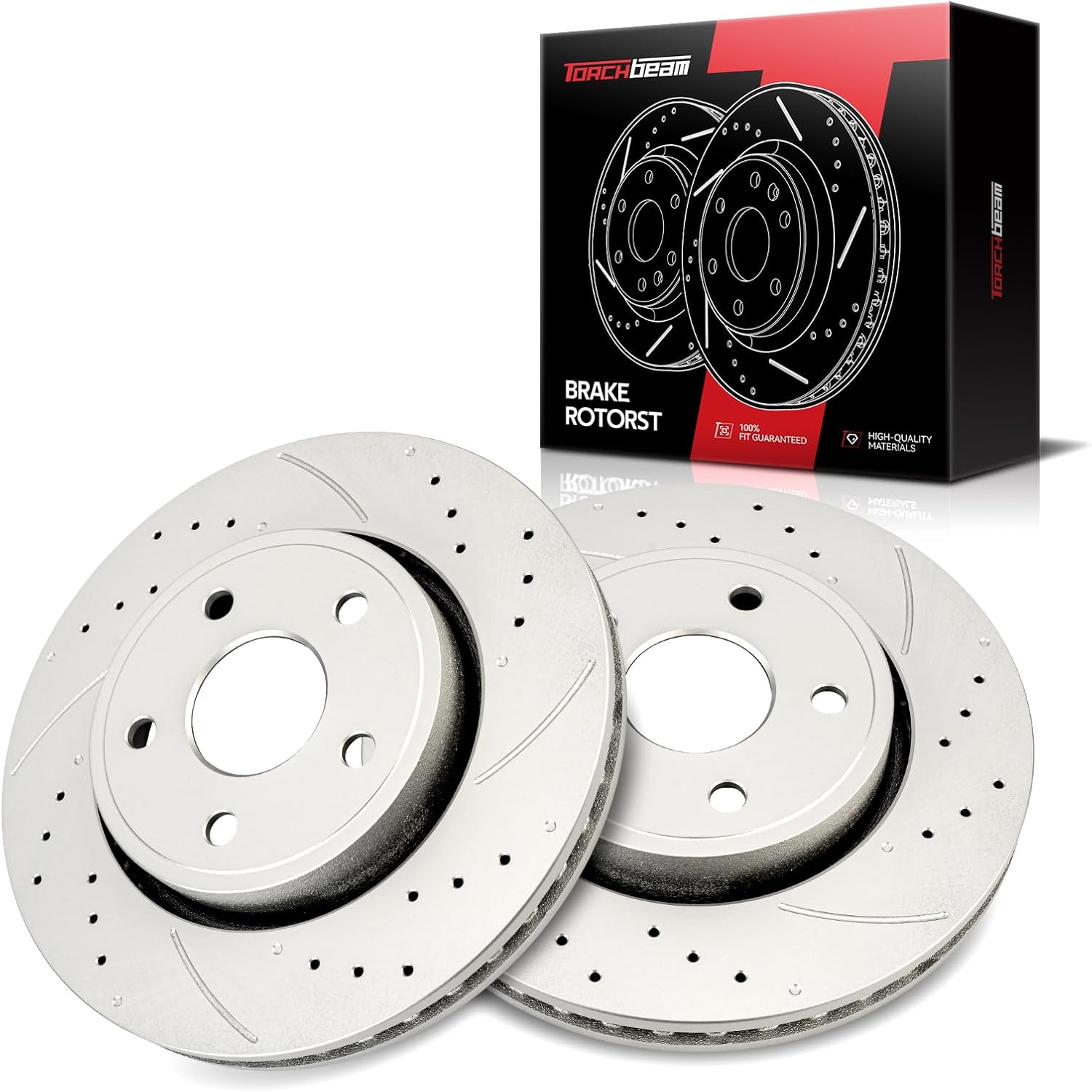
| Included Components | 2x Front Disc Brake Rotor – 53026 |
|---|---|
| Exterior Finish | Painted |
| Compatible with Vehicle Type | Car |
| Automotive Fit Type | Vehicle Specific Fit |
These Torchbeam front rotors are a drilled-and-slotted, vehicle-specific replacement sold as a two-piece set intended for 2005-2010 Jeep Grand Cherokee and similar fitments. They are designed to improve heat dissipation and reduce thermal decay during repeated stops, which helps limit warping and uneven wear compared with plain rotors. The painted finish helps resist corrosion before installation and the manufacturer states the parts meet OEM-style thickness for a straightforward fit and bolt-on installation. In daily use they should deliver quieter operation and reduced steering vibration when matched with appropriate brake pads. Buyers should note these are aftermarket rotors, so careful fit verification and proper bedding with compatible pads is important. Several customer reports praise quiet operation and removal of wobble, while isolated complaints mention damaged packaging on arrival. Torchbeam offers a multi-year guarantee which may be helpful if issues arise.
Best for: Buyers who prioritize a practical, cost-conscious replacement that restores braking feel and reduces rotor heat-related issues on a 2005–2010 Jeep Grand Cherokee.
Less Ideal for: Drivers seeking premium performance rotors for track use or those who want guaranteed factory-brand parts should consider higher-end or OEM replacements instead.
- Drilled and slotted design improves heat dissipation and reduces risk of warping under heavy braking
- Painted finish helps resist surface corrosion prior to installation
- Vehicle-specific fitment for 2005-2010 Jeep Grand Cherokee and compatible models enables straightforward replacement
- Sold as a matched two-piece front set for balanced braking performance
- Aftermarket quality can vary so fit and finish may not match factory parts in every case
- Some customers reported damaged packaging on delivery which could affect rotor condition on arrival
Verdict: A cost-conscious, vehicle-specific drilled-and-slotted front rotor set that improves heat control and helps restore steady braking on 2005–2010 Jeep Grand Cherokee models.
Auto Shack Rear Brake Rotors with Ceramic Pads for Jeep Grand Cherokee / Commander (Rear, 5-Lug)

| Included Components | Brake Rotor, Ceramic Brake Pad Set |
|---|---|
| Rotor Construction | Solid |
| Outer Diameter | 12.6" (320 mm) |
| Wheel Bolt Holes | 5 |
| Orientation | Rear |
This rear brake kit combines two solid 12.6-inch rotors with a ceramic brake pad set to restore stopping power on compatible 2005–2010 Jeep Grand Cherokee and 2006–2010 Commander models. Installation is straightforward for anyone with basic brake experience because the rotors are a direct vehicle-specific fit and the pads are pre-shaped for rear calipers. The solid rotor construction and ceramic compound emphasize quiet operation and reduced dust compared with semi-metallic pads, which makes this kit a good choice for daily-driven SUVs where low noise and cleaner wheels matter. Included components cover the full rear stopping assembly so you can address rotor wear and pad wear at once. Limitations include solid (non-drilled or slotted) rotors that will not offer the extra heat dissipation of performance rotors, and the kit is vehicle-specific so you must verify rotor size and stud count before buying. The set is best used as a cost-conscious repair or refresh that brings back reliable, factory-quality braking without moving into performance-oriented hardware.
Best for: Buyers replacing worn rear rotors and pads on a 2005–2010 Grand Cherokee or 2006–2010 Commander who prioritize a straightforward, lower-cost restoration of factory-style braking and quiet, low-dust operation.
Less Ideal for: Drivers seeking track use, heavy towing, or aggressive braking performance should choose a slotted or drilled performance rotor and a more aggressive pad compound instead.
- Vehicle-specific fit for Jeep Grand Cherokee and Commander rear brakes simplifies installation
- Ceramic pads provide quieter stops and lower brake dust than many semi-metallic pads
- Includes both rotors and a complete pad set so rear braking components are replaced together
- Rotors are solid (not slotted or drilled), so they lack the enhanced cooling and fade resistance of performance rotors
Verdict: A budget-friendly, vehicle-specific rear rotor and ceramic pad kit that restores quiet, low-dust, factory-style braking for 2005–2010 Grand Cherokee and 2006–2010 Commander owners.
Detroit Axle Brake Kit – Drilled & Slotted Rotors with Ceramic Pads for 2005–2010 Jeep Grand Cherokee / 2006–2010 Commander
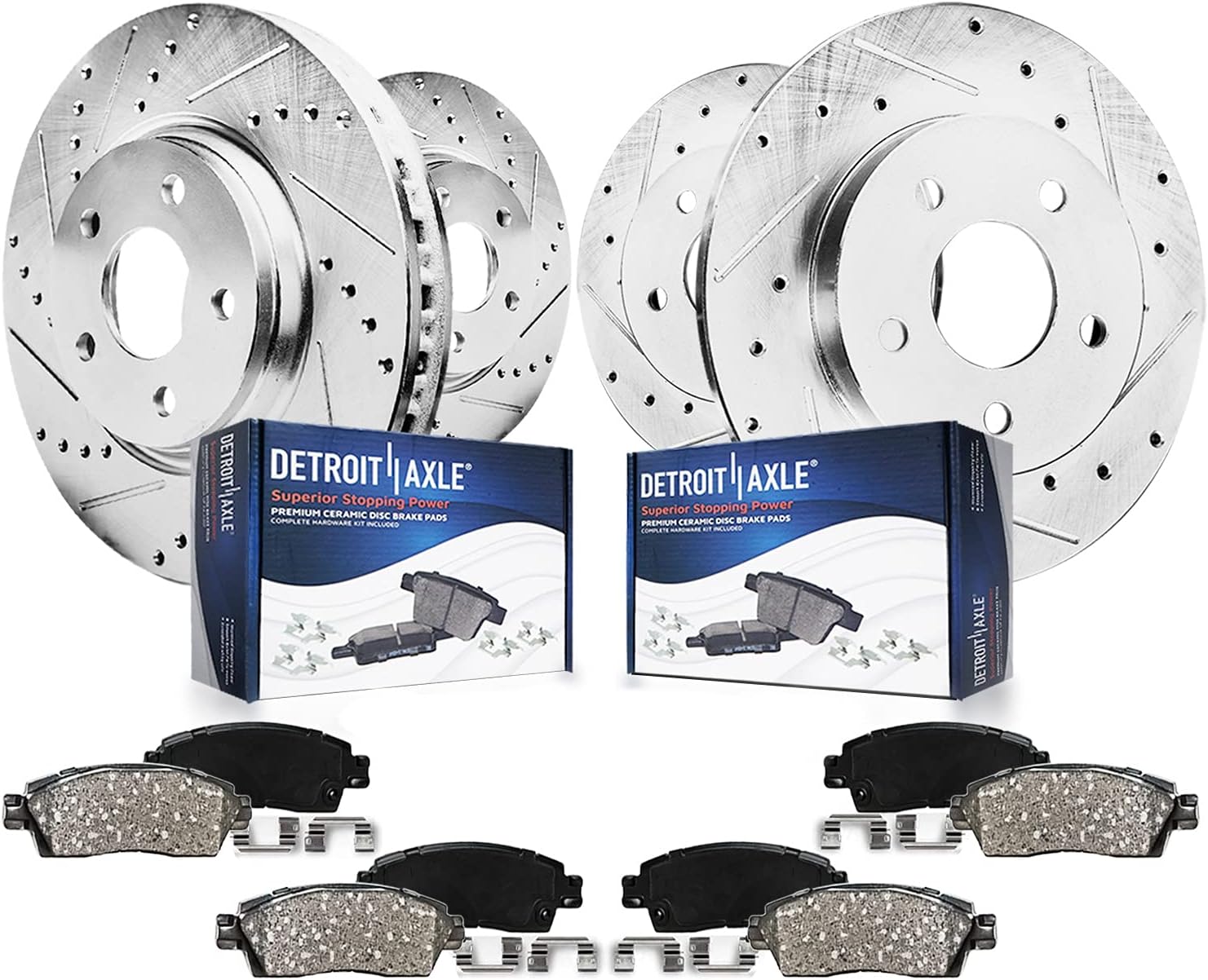
| Fitment | 2005–2010 Jeep Grand Cherokee (excluding SRT8); 2006–2010 Commander |
|---|---|
| Kit contents | Front and rear drilled & slotted rotors; front and rear ceramic pads; basic hardware |
| Rotor finish | Zinc plated |
| Pad type | Ceramic |
| Warranty | 10-Year |
This Detroit Axle kit supplies everything needed to replace both front and rear braking surfaces on the specified Jeep Grand Cherokee and Commander models. The kit includes drilled and slotted rotors for faster heat dissipation, zinc plating to resist corrosion, and ceramic brake pads with basic hardware. In real-world use the rotors help reduce fade under repeated stops and the ceramic pads offer quiet, smooth engagement for daily driving and light towing. Fitment is machined to match factory locating holes so installation is straightforward for a professional or competent DIYer. Buyers should expect an initial bedding-in period where a light grab or vibration can occur for the first few stops, then quieter operation afterward. The kit is targeted at longevity and consistent performance rather than track-level performance; while reviews report solid stopping power and multi-season durability, hardcore towing or aggressive driving will wear pads faster and may favor heavier duty options. Overall this is a practical, reliability-minded replacement that balances corrosion protection, cooling, and quiet braking for the listed Jeeps.
Best for: Buyers who prioritize dependable, factory-quality replacement braking for day-to-day driving and occasional towing and want a full front-and-rear kit that minimizes corrosion and maintenance hassles.
Less Ideal for: Drivers who frequently perform aggressive driving, track events, or heavy commercial towing should choose purpose-built performance or heavy-duty brake components instead.
- Complete kit includes both front and rear drilled and slotted rotors plus ceramic pads and basic hardware for a full-service replacement
- Drilled and slotted rotor design improves heat dissipation and helps reduce brake fade during repeated stops
- Zinc plating on rotors adds corrosion resistance to keep parts looking and functioning better over time
- Machined locating holes match factory fitment for straightforward installation
- Not intended for sustained high-performance or heavy commercial towing where heavy-duty rotors and high-friction pads are preferable
- Some users report a brief initial grab or slight vibration during bedding-in that normally settles after break-in
Verdict: A complete, factory-fit brake kit focused on long-term reliability and corrosion resistance for 2005–2010 Grand Cherokee and 2006–2010 Commander owners.
Detroit Axle Front Brake Kit — Rotors and Ceramic Pads for 2005–2010 Grand Cherokee / 2006–2010 Commander
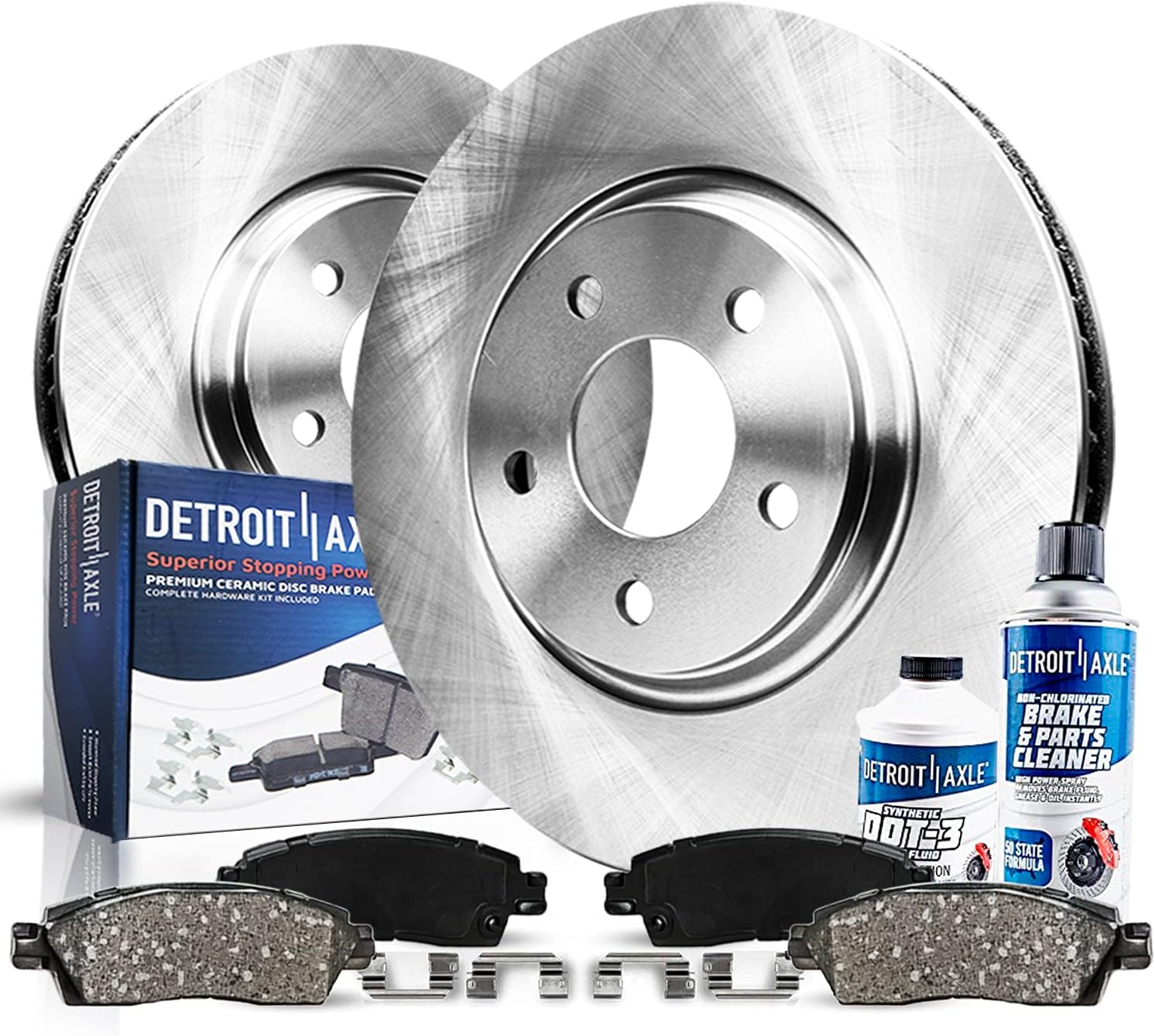
| Compatible vehicles | 2006–2010 Jeep Commander; 2005–2010 Jeep Grand Cherokee (excludes SRT-8) |
|---|---|
| Includes | 2 front rotors, 2 front ceramic pads, brake cleaner, brake fluid, hardware |
| Orientation | Front |
| Warranty | 10 Year |
This Detroit Axle front brake kit supplies everything needed for a front brake refresh on compatible Grand Cherokee and Commander models: two vented, zinc-plated rotors and a set of ceramic pads plus basic consumables like brake cleaner and a bottle of brake fluid. The rotors are machined with ventilation slots for faster cooling and a machined locating hole to match factory fitment, while the pads are ceramic to cut dust and noise. In real-world use the kit is convenient for a DIY job or a shop install because it bundles hardware, shims and lubricant so you do not need multiple trips to parts stores. Buyers in user reports note solid fit, quiet operation and good initial stopping feel. Limitations are that the kit excludes SRT-8 models and it does not include rear components or extended bleeding supplies, so plan accordingly if you need a full-axle service or heavy-duty braking upgrades. A few customers reported minor bent clips in the package but found them salvageable.
Best for: Buyers who want a well-reviewed, all-in-one front brake replacement that fits factory mounting and reduces the risk of fitment surprises, with convenience prioritized over performance braking upgrades.
Less Ideal for: Drivers seeking high-performance or heavy-duty brake upgrades, or those who need a complete front-and-rear overhaul in a single purchase.
- Complete front kit that includes rotors, ceramic pads, brake cleaner and brake fluid for one convenient install
- Vented, machined rotors with zinc plating help cooling and resist surface corrosion
- Included hardware, shims and brake grease simplify DIY installation and reduce need for extra parts
- Ceramic pads reduce dust and are engineered to run quietly
- Not compatible with SRT-8 models and only covers the front axle
- Does not include extra brake fluid for full-system bleeding or rear brake components
Verdict: A convenient, well-reviewed front brake kit that delivers factory-style fit and quiet ceramic braking for Grand Cherokee and Commander owners who want a risk-minimizing DIY replacement.
Detroit Axle Rear Brake Kit with Rotors and Ceramic Pads for 2005–2010 Jeep Grand Cherokee / 2006–2010 Commander

| Fitment | 2005–2010 Jeep Grand Cherokee; 2006–2010 Jeep Commander (excl. SRT8) |
|---|---|
| Kit contents | 2 rear disc rotors and 2 rear ceramic brake pads with hardware |
| Rotor type | Vented rotors |
| Pad material | Ceramic |
This Detroit Axle rear brake kit supplies the two rear disc rotors and matching ceramic pads plus hardware needed for a direct replacement on compatible 2005–2010 Jeep Grand Cherokee and 2006–2010 Commander models. The rotors are vented to help dissipate heat and the zinc-plated finish reduces early surface corrosion, while the ceramic pads are designed to be quieter and produce less brake dust than semi-metallic options. Installation is straightforward for a mechanically competent DIYer or shop because locating holes and machining match factory placement, though you may need a caliper-compression tool during pad installation. In real-world use the kit delivers solid everyday stopping power, low noise, and acceptable longevity at a value price point; some buyers report occasional shipping damage or surface rust on arrival, so inspect parts before installation. This is a practical, budget-friendly replacement that leans toward reliability and quieter operation rather than high-performance or track use.
Best for: Buyers who prioritize a reliable, factory-fit replacement and quieter, low-dust braking for daily driving on a Jeep Grand Cherokee or Commander and want a value-focused option rather than a performance upgrade.
Less Ideal for: Drivers who need heavy-duty, track-capable braking or extended high-temperature performance should choose a performance-oriented rotor and pad combination instead.
- Complete kit includes two rear rotors, two rear ceramic pads and installation hardware for a one-stop replacement.
- Vented rotors improve cooling under repeated stops which helps reduce fade during everyday driving.
- Zinc plating helps resist surface corrosion and reduces visible wheel dust.
- Ceramic pads run quieter and produce less dust than many semi-metallic pads.
- Not intended for high-performance or track driving where heavy-duty rotors and pads are required.
- Some customers report arrival with surface rust or shipping damage, so parts may need cleaning or exchange before fitting.
Verdict: A practical, factory-fit rear brake kit that gives quieter, low-dust stopping and straightforward replacement for risk-conscious Jeep Grand Cherokee and Commander owners.
Choosing the Right 2005-2010 Jeep Grand Cherokee Brake Rotors: Key Factors to Consider
Fitment and Vehicle-Specific Specs
Exact fitment is the first priority for a 2005-2010 Jeep Grand Cherokee rotor because wrong dimensions cause installation issues and can compromise braking geometry. Confirm rotor diameter, hat height, bolt pattern, hub bore, and minimum thickness to match the WK chassis specifications.
Even small mismatches in hat height or bolt pattern can change caliper alignment or wheel clearance. When evaluating options, check that the rotor is listed for 2005-2010 Grand Cherokee applications and note whether the rotor is directional or requires specific wheel offsets. Proper fitment minimizes the chance of vibration and ensures even pad contact across the rotor face.
Material and Coating
Rotor material and surface treatment affect corrosion resistance, heat capacity, and longevity. Standard cast iron delivers reliable thermal mass and is easy to machine, while higher-grade castings or coated finishes reduce surface rust on the hat and friction area.
A protective coating or zinc finish on the non-friction surfaces helps prevent premature rust that can cause noise and make later disassembly difficult. Consider how often the vehicle sees moisture, road salt, or long idling periods because heavier corrosion environments benefit more from coated rotors.
Thermal Management and Venting
Effective heat dissipation is critical for repeatable braking performance, particularly if you tow, carry heavy loads, or frequently descend hills in the Grand Cherokee. Rotor venting style and thickness determine how efficiently heat is drawn away from the friction surface.
Thicker, well-vented rotors resist warping under repeat heavy stops. For drivers who regularly use the vehicle for towing or mountain driving, prioritize rotors with better venting or increased thermal capacity to reduce fade and extend pad life.
Surface Design: Solid, Slotted, or Drilled
The friction face design affects performance, pad wear, and noise. Solid rotors offer quiet operation and uniform pad contact for daily driving. Slotted faces help clear gas and debris from the pad contact area and can improve initial bite. Drilled rotors aid in gas escape and cooling but may be more prone to crack initiation in extreme use.
For most Grand Cherokee owners, slotted or plain vented rotors provide a sensible balance of performance and longevity. If the vehicle sees repeated high-stress braking, consider designs that prioritize heat evacuation and pad debris removal while understanding the tradeoffs in wear.
Serviceability and Resurfacing Considerations
Determine whether a rotor is intended to be resurfaced or replaced as a one-time part. Resurfacing can restore a rotor when wear is within safe limits, but rotors have a minimum thickness specification; exceeding that limit means replacement.
Check the rotor's original thickness and the minimum thickness stamped on the rotor hat. If the rotor is unusually thin or has directional features, it may not be safe to resurface. Serviceability also affects maintenance cost because replace-only designs require full rotor swaps at the first major wear event.
Noise, Vibration, and Harshness (NVH)
Braking-related vibration and noise are frequent concerns for ownership comfort. Rotor runout, microscopic warping from heat cycles, and uneven pad transfer can all produce pedal pulsation or audible noise.
Pick rotors with tight manufacturing tolerances and balanced venting to reduce runout risk. Consider rotors with chamfered edges or specific surface finishes that minimize pad chatter. Proper bedding-in and pairing with compatible pads further reduce NVH.
When to Resurface Rotors Vs Replace Them
Resurfacing can be a cost-effective option when rotors have even wear, no deep grooves, and remaining thickness above the minimum spec. Use a micrometer to measure thickness at several points and confirm the rotor meets the stamped minimum thickness before machining.
Replace rotors that show cracks, severe scoring, or have already reached the minimum thickness. Repeat heavy braking or thermal cycling can create hard spots and microfractures that resurfacing will not reliably correct.
- Measure thickness at multiple radii to detect taper.
- Check for visible hairline cracks around drilled holes or slot edges.
- Confirm the rotor's minimum thickness and compare after machining allowance.
How to Measure Rotor Thickness and Runout
Measuring rotor thickness requires a reliable micrometer and consistent measurement points. Remove the wheel and measure the friction surface thickness at several locations near the hat and towards the outer diameter. Record the smallest reading and compare it to the minimum specification.
Lateral runout is measured with a dial indicator mounted to the upright while rotating the rotor. Excessive runout causes pedal pulsation and usually indicates the rotor or hub mating surface needs attention. If runout exceeds tolerances, check hub surface cleanliness and wheel bearing condition before condemning the rotor.
- Use a high-quality micrometer for thickness readings.
- Measure runout at the rotor edge with a dial indicator.
- Clean hub mating surfaces and retest before replacement.
Single-Piece Vs Two-Piece Rotor Construction
Single-piece cast rotors are the common OEM-style choice and offer simplicity, lower cost, and reliable thermal mass. They are straightforward to replace and are usually compatible with standard resurfacing procedures.
Two-piece rotors separate the friction ring from the hat and can reduce unsprung weight while improving heat management. They are often found on performance-focused applications and may use different fasteners or mounting arrangements. For the Grand Cherokee, most owners will prefer single-piece rotors unless pursuing a specific performance upgrade.
- Single-piece: durable, easier to service, typically less expensive.
- Two-piece: lighter, potentially better heat control, may complicate bolt patterns and hardware.
Understanding Wear Symptoms and What They Mean
Common wear symptoms include pedal pulsation, squeal, scraping noises, and reduced stopping distance. Pulsation often indicates lateral runout or uneven thickness. Squeal can result from glazing or contamination on the pad and rotor interface.
Scraping or grinding usually points to severe pad wear exposing backing plate contact with the rotor, which requires immediate attention. Regular visual inspections and listening for early noise can prevent more extensive damage to the braking system on your Grand Cherokee.
- Pulsation: check runout and thickness variation.
- Squeal: inspect pad surface and rotor glazing.
- Grinding: inspect pads immediately and check rotor damage.
Installation Tips and Torque Specs to Remember
Correct installation practices help prevent premature issues. Clean the hub mating surface to ensure the rotor seats flat and use the manufacturer-recommended torque sequence and values for wheel studs to avoid introducing runout. Use new hardware if the old fasteners show corrosion or thread damage.
When installing rotors, avoid contaminating the friction surface with oils or grease. After installation, perform a proper bedding-in procedure for new rotors and pads to establish an even transfer layer and reduce initial noise or uneven wear.
- Clean hub mating surfaces before installing rotors.
- Use correct wheel torque specs and a calibrated torque wrench.
- Follow a bedding-in procedure after installation.
How Driving Habits and Load Affect Rotor Life
The way you use your Grand Cherokee has a large impact on rotor longevity. Frequent towing, heavy cargo, or aggressive driving increases thermal stress and accelerates rotor wear. Conversely, primarily highway commuting at moderate speeds typically produces longer rotor life.
Anticipatory driving habits, such as easing into stops and avoiding sustained heavy braking, reduce thermal cycling. If you regularly tow or carry heavy loads, select rotors with higher thermal capacity and better venting to handle repeated heat buildup.
- Towing and heavy loads increase rotor temperature cycles.
- Aggressive stop-and-go driving accelerates wear.
- Moderate, smooth braking extends rotor life.
Still looking for the perfect fit?
Select your Jeep Grand Cherokee configuration to see the most relevant Brake Rotors recommendations
How We Chose the Best 2005-2010 Jeep Grand Cherokee Brake Rotors
Our selection focused on components that deliver correct fitment, consistent performance, and long-term value for the 2005-2010 Jeep Grand Cherokee. We prioritized rotors that meet or exceed factory specifications for diameter, thickness, bolt pattern, and hub bore to ensure proper installation and braking geometry. Material and finishing were evaluated for corrosion resistance and heat management, giving preference to rotors with protective coatings or proven castings that reduce rust and thermal distortion.We also considered construction type and serviceability, including whether rotors are compatible with standard resurfacing practices or intended for one-time replacement. Heat dissipation characteristics, such as venting design and any directional features, were weighed because the Grand Cherokee often carries loads and can stress braking components. NVH behavior, including tendency to develop pulsation or noise, was included to reflect everyday driving comfort.Excluded items included specialty competition-only rotors and any units that require modifications to hubs, calipers, or factory hardware. We filtered out rotors that did not clearly document fitment for the 2005-2010 (WK) Grand Cherokee. The final list balances factory-equivalent replacements and upgraded rotor options that suit typical ownership patterns for this vehicle.
Our full evaluation process is outlined in our review methodology.
FAQ
How do I know when my Grand Cherokee rotors need replacement?
Look for pedal pulsation, visible grooves, deep scoring, or cracks. Measure rotor thickness and compare to the stamped minimum thickness; if below the limit or if cracks are present, replacement is necessary.
Can I resurface rotors on a 2005-2010 Grand Cherokee?
Often yes, provided the rotor remains above the minimum thickness and has no structural cracks. Measure thickness at multiple points and inspect for heat checking or groove depth before deciding to resurface.
Are slotted or drilled rotors better for everyday driving?
For typical day-to-day use, slotted or plain vented rotors usually offer the best balance of performance and longevity. Drilled rotors can help heat dissipation but may be more prone to cracking under heavy repeated stress.
How should I measure rotor runout at home?
Measuring runout accurately requires a dial indicator and a secure mounting point on the upright. Clean the hub, mount the rotor, and rotate slowly while recording lateral movement at the rotor edge. If runout is excessive, check hub surface and bearing play.
Does rotor thickness affect braking performance?
Yes. Thicker rotors have more thermal mass and resist warping better, which helps maintain consistent braking. Once thickness approaches the minimum spec, performance and safety can be compromised and replacement is recommended.
Should I replace rotors when I change brake pads?
It depends on rotor condition. If rotors are within thickness limits, free of deep grooves, and show even wear, they can often be reused. If there is noticeable warping, heavy scoring, or the rotor is near minimum thickness, replace them when installing new pads.
Final Verdict
When replacing brake rotors on a 2005-2010 Jeep Grand Cherokee, prioritize correct fitment, adequate thickness, and construction that suits your driving demands. Consider corrosion protection and venting if you frequently tow or encounter moisture and road salt. Balance the benefits of resurfacing against the safety floor set by minimum thickness.Choose rotors that align with how you use the vehicle: OEM-style solid vented rotors for everyday driving, or better-vented designs if you need extra heat capacity. Focusing on those tradeoffs will help you restore consistent stopping performance and long-term reliability.
Explore More:
- Check out all Jeep Grand Cherokee parts & accessories
- Explore Brake Rotors Maintenance & Repair Guides
- Explore Brake System
- Browse all Auto Parts
