

Note: This article contains affiliate links. If you click on these links and make a purchase, I may earn a small commission at no extra cost to you. This helps support my research and content. Read my full affiliate disclosure here.
If you drive a 2019-2023 Ford Ranger, brake pads are one of the most important maintenance items for safety and drivability. The right brake pads affect stopping distance, pedal feel, braking noise, and how often you need to service the braking system. Whether you use the Ranger for daily commuting, towing, or light off-road work, selecting pads that match your driving habits and vehicle configuration matters.This guide narrows the field to seven shortlisted brake pad options that suit the 2019-2023 Ranger. Each pick was evaluated on real-world stopping performance, wear life, and rotor compatibility so you can pick pads that balance noise, durability, and braking consistency. Read on to understand the tradeoffs and which pad characteristics matter most for your Ranger before you look at specific product choices.
Looking for other parts? See all Ford Ranger parts & accessories.
Top Picks at a Glance
| Best Overall The best all-around choice for most situations | Bendix Fleet Metlok MKD2208FM Semi-Metallic Rear Brake Pads |  |
| Best Quality Built to a higher standard if you want something more solid | PowerStop Z36 Truck & Tow Front Brake Pad and Rotor Kit (K8413-36) |  |
| Best Value The sweet spot between price and what you get | Detroit Axle Rear Ceramic Brake Pads with Hardware (fits 2019–2023 Ford Ranger) |  |
| Best Budget The cheapest option that still gets the job done reliably | HUSCH Rear Ceramic Brake Pads Kit for Ford Ranger (2019–2022) |  |
| Highest Rated A top-rated pick with lots of positive feedback | Bendix Priority1 CFC2216 Ceramic Front Brake Pads (front) |  |
| Most Popular A crowd favorite that many people choose with confidence | MAX Advanced Brakes ValueMAX Carbon Ceramic Brake Kit (Front and Rear) |  |
| Best Seller A high-volume bestseller chosen again and again | Bendix Premium SBC2216 Ceramic Front Brake Pads |  |
1. Bendix Fleet Metlok MKD2208FM Semi-Metallic Rear Brake Pads

| Auto Part Position | Rear |
|---|---|
| Model Number | MKD2208FM |
| Automotive Fit Type | Vehicle Specific Fit |
| Material Type | Metal |
These Bendix Fleet Metlok rear brake pads are a semi-metallic, vehicle-specific replacement designed for heavier duty and fleet-style driving on the 2019–2023 Ford Ranger. They are built to factory-spec machining tolerances for consistent pad-to-rotor contact, which helps maintain pedal feel and dependable stopping under repeated or demanding use. The semi-metallic material offers strong thermal stability and wear resistance, so the pads perform well during towing, highway driving, and frequent stop-start conditions. Installation is the same as a typical rear pad change and the set ships as a single pad set that fits the Ranger rear application. The downsides are inherent to semi-metallic compounds: they can be a bit noisier and slightly more abrasive on rotors than ceramic options, and these pads are aimed at duty and fleet applications rather than prioritizing the quietest ride. For a balanced buyer who wants durable, predictable braking across mixed driving conditions, these Bendix pads are a practical, factory-quality replacement.
Best for: Buyers who want a durable, factory-quality replacement that balances performance and longevity for mixed daily driving and occasional heavy use on a Ranger.
Less Ideal for: Drivers who prioritize the quietest possible braking or who want the gentlest rotor wear should consider ceramic-focused alternatives.
- Engineered to factory machining specs for consistent pad-to-rotor contact and good pedal feel
- Semi-metallic compound provides strong thermal stability for repeated or heavy-duty braking
- Durable construction resists wear and corrosion for longer service life in demanding use
- Vehicle-specific fit for direct replacement on 2019–2023 Ford Ranger rear brakes
- Semi-metallic material may produce more noise and increased rotor wear compared with ceramic pads
Verdict: A tough, factory-quality semi-metallic rear pad set that delivers reliable, heat-resistant braking for 2019–2023 Ford Ranger drivers seeking balanced all-round performance.
2. PowerStop Z36 Truck & Tow Front Brake Pad and Rotor Kit (K8413-36)

| Included components | Carbon-fiber ceramic pads, drilled & slotted rotors, installation hardware |
|---|---|
| Fitment | Front; vehicle specific fit for 2019-2024 Ford Ranger and 2021-2024 Ford Bronco variants listed |
| Pad type | Z36 Carbon-Fiber Ceramic |
| Rotor finish | Silver Zinc Dichromate plated |
| Warranty | 36 Month / 36,000 Mile Limited Warranty |
This PowerStop Z36 Truck & Tow kit replaces the front pads and rotors with a bolt-on, vehicle-specific upgrade aimed at heavier use like towing, hauling, or larger wheel/tire setups. The Z36 carbon-fiber ceramic pads are formulated for stronger, low-dust stopping and come with stainless-steel shims and chamfered edges to reduce noise and vibration during everyday driving. The matched drilled and slotted rotors are cast to tight tolerances, zinc plated to resist corrosion, and designed to shed heat and debris to reduce fade on long descents or during repeated heavy stops. The kit includes stainless installation hardware for a straightforward DIY swap using factory mounting points. Expect noticeably improved braking confidence under load and cleaner wheels from reduced pad dust, but keep in mind drilled rotors can be more susceptible to cracking under extreme, repeated thermal shock compared with some plain or fully slotted designs. This kit is a practical choice for drivers who want stronger, quieter braking for towing without complex modifications.
Best for: Drivers who prioritize stronger, quieter braking for towing, hauling, or larger tire upgrades and want a bolt-on kit that improves braking under load while keeping everyday drivability.
Less Ideal for: Drivers focused solely on track use or repeated high-temperature braking where fully race-oriented rotors and pad compounds are required should consider purpose-built track hardware instead.
- Carbon-fiber reinforced ceramic pads deliver stronger stopping power with low dust.
- Drilled and slotted rotors improve cooling and help prevent brake fade during towing or mountainous driving.
- Zinc plating on rotors reduces surface rust and maintains appearance behind wheels.
- Includes stainless-steel installation hardware for a complete, bolt-on replacement.
- Drilled rotor design can be more prone to cracking under extreme repeated thermal stress than plain rotors.
Verdict: Choose this kit if you want a straightforward, bolt-on front brake upgrade that delivers stronger, low-dust braking and improved heat control for towing and heavy-duty Ford Ranger use.
3. Detroit Axle Rear Ceramic Brake Pads with Hardware (fits 2019–2023 Ford Ranger)

| Position | Rear |
|---|---|
| Manufacturer | Detroit Axle |
| Manufacturer Part Number | P-2208 |
These Detroit Axle rear ceramic brake pads are a direct replacement kit for 2019–2023 Ford Ranger rear brakes and include the necessary hardware for installation. The ceramic compound is formulated for low noise, reduced dust, and improved heat resistance compared with basic metallic pads, which helps maintain consistent pedal feel during repeated stops and can reduce rotor wear. In everyday driving the pads deliver quiet, confident braking and keep wheels cleaner thanks to the low-dust formulation. The kit is aimed at straightforward replacement jobs and should be an easy swap for DIYers or technicians when paired with standard brake service. Limitations to note are that ceramic pads can feel slightly less aggressive than some performance metallic compounds under heavy towing or aggressive sport driving, and appearance requires occasional dust removal to stay clean. Fitment is specific to the Ranger rear application so verify vehicle year and brake configuration before buying.
Best for: A practical buyer who wants a quiet, low-dust factory-quality rear pad replacement for routine driving and easy installation on a 2019–2023 Ranger.
Less Ideal for: Drivers who regularly tow heavy loads, carry heavy cargo, or demand track-level stopping performance should consider a heavy-duty or performance-oriented friction compound instead.
- Ceramic formula provides low noise and reduced brake dust
- Includes mounting hardware for a complete rear pad replacement
- Improved high-temperature resistance to limit brake fade
- Designed to limit rotor wear compared with some metallic pads
- Not optimized for heavy towing or aggressive performance driving where metallic pads may offer stronger initial bite
Verdict: Choose these Detroit Axle rear ceramic pads if you want a quiet, low-dust, factory-style replacement for routine driving on a 2019–2023 Ford Ranger.
4. HUSCH Rear Ceramic Brake Pads Kit for Ford Ranger (2019–2022)

| Auto Part Position | Rear |
|---|---|
| Compatible with Vehicle Type | Car, SUV, Truck, Van |
| Material Type | Ceramic |
| Number of Items | 4 |
| Specification Met | OEM |
These HUSCH rear ceramic pads are a vehicle-specific replacement for the 2019–2022 Ford Ranger and are meant to be a budget-friendly upgrade from worn factory pads. Made from ceramic material, the set aims to deliver quieter braking with less rotor dust, which keeps wheels cleaner compared with many semi-metallic pads. The listing highlights a relatively high friction coefficient for responsive stopping and claims a snug fit designed to reduce squeal. Installation is typical of rear pad replacement and the four-count kit covers one axle. Practical benefits include reduced wheel cleaning, predictable pedal feel, and compatibility with common passenger truck brake systems. Limitations to note are the usual ceramic tradeoffs: they can run warmer than some performance-focused metallic compounds and are optimized for street driving rather than heavy towing or frequent high-load braking. This kit is best treated as a cost-conscious, everyday driving replacement rather than a heavy-duty or track-oriented choice.
Best for: Buyers who want an affordable, low-dust, and quiet rear pad replacement for daily-driven Ford Rangers and prefer a straightforward vehicle-specific swap.
Less Ideal for: Drivers who regularly tow heavy loads, carry heavy payloads, or do high-speed track driving should choose a heavy-duty or performance-oriented brake compound instead.
- Vehicle-specific fit for Ford Ranger 2019–2022 for straightforward replacement
- Ceramic compound produces less brake dust, keeping wheels cleaner
- Designed for quieter braking with reduced squeal
- Higher friction coefficient for responsive stopping in normal driving
- Not intended for heavy towing or frequent high-heat braking scenarios
Verdict: A budget-minded, low-dust ceramic rear pad kit that gives Ford Ranger owners quieter, responsive everyday braking without expensive upgrades.
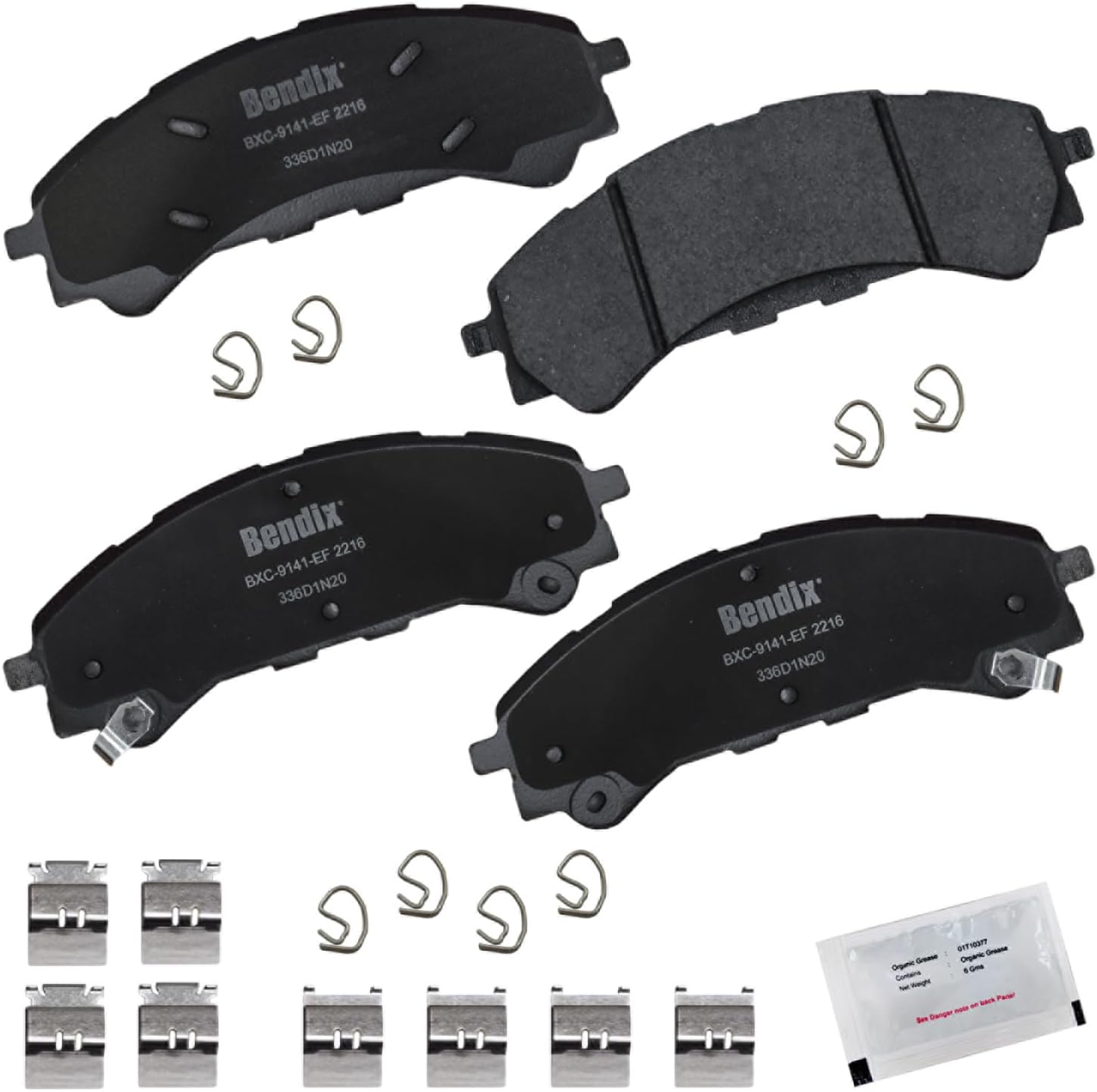
5. Bendix Priority1 CFC2216 Ceramic Front Brake Pads (front)
| Auto Part Position | Front |
|---|---|
| Compatible with Vehicle Type | Car, SUV, Truck |
| Included Components | (1) Bendix Priority1 Ceramic Brake Pad Set |
| Specification Met | OEM |
| Material Type | Copper |
The Bendix Priority1 CFC2216 front brake pads are a vehicle-specific ceramic replacement designed for Ford Ranger (2019–2023) and Bronco (2021–2023) front disc brakes. They are built to factory-quality fitment with shims, slots, and chamfers that reduce noise and ensure a precise install. The ceramic friction compound and advanced materials aim to deliver steady stopping power and reduced brake fade during routine driving and towing or heavier loads. Installation is typical of direct-fit pads and the set includes the necessary hardware for one axle. Practical benefits include quieter braking, controlled dust levels compared with semi-metallic options, and consistent pedal feel for daily commuting and light-duty towing. Limitations are that ceramic pads can be less aggressive than semi-metallic compounds for repeated hard stops and track use, and longevity will depend on driving style and operating conditions. For a reliability-focused Ranger owner wanting a quiet, factory-like replacement, these pads balance comfort and dependable braking performance.
Best for: Buyers who prioritize a quiet, dependable factory-quality replacement for everyday driving and occasional light towing on a 2019–2023 Ranger.
Less Ideal for: Drivers who frequently do heavy towing, off-road high-speed descents, or track-style driving should consider more aggressive semi-metallic or performance brake pads.
- Vehicle-specific fit with shims, slots, and chamfers for reduced noise and precise installation
- Ceramic friction material provides consistent stopping performance and lower dust than many semi-metallic pads
- Engineered to meet factory-quality specifications for fit, form, and function
- Ceramic compound is less suited to heavy repeated aggressive braking or track use compared with semi-metallic options
Verdict: If you want a quiet, factory-quality front pad that delivers consistent, fade-resistant braking for daily driving on a 2019–2023 Ranger, these Bendix Priority1 ceramic pads are a reliable choice.
6. MAX Advanced Brakes ValueMAX Carbon Ceramic Brake Kit (Front and Rear)

| Set Name | ValueMAX Series Automotive Replacement Brake Kit |
|---|---|
| Automotive Fit Type | Vehicle Specific Fit |
| Assembly Required | No |
| Exterior | Machined |
| Year | 2020 |
This Max Advanced Brakes ValueMAX kit supplies a full front-and-rear replacement braking package designed for everyday use on compatible trucks. It pairs carbon ceramic-style brake pads with machined rotors in a vehicle-specific fit, so installation is the typical bolt-on swap for routine maintenance. The carbon ceramic pad material is intended to reduce dust and maintain stable stopping performance under normal commuting and light towing, while the machined rotors help with heat dissipation and a consistent pad contact surface. Because the kit is made as a value series replacement it focuses on dependable, factory-quality braking rather than performance track use. Buyers should expect good stopping feel for daily driving and improved cleanliness compared with basic organic pads, but not the extreme fade resistance of expensive performance compounds. The set comes ready to install with no assembly required, making it a practical choice for owners replacing all four corners at once.
Best for: Buyers who prioritize reliable, low-maintenance replacement brakes with proven user feedback and want an easy, vehicle-specific swap for regular driving duties.
Less Ideal for: Drivers seeking high-performance track pads or heavy commercial braking solutions should look for specialized performance or heavy-duty kits instead.
- Full front-and-rear kit simplifies replacing all brakes at once
- Carbon ceramic-style pads reduce brake dust and maintain consistent braking for daily use
- Machined rotors provide even pad contact and help with heat dispersion
- Vehicle-specific fit reduces guesswork during installation
- No assembly required for quicker installation
- Designed for daily driving rather than heavy-duty or track-performance braking
Verdict: Choose this kit if you want a complete, vehicle-specific front-and-rear replacement that delivers cleaner, dependable everyday braking with minimal fuss.
7. Bendix Premium SBC2216 Ceramic Front Brake Pads

| Material Type | Ceramic |
|---|---|
| Auto Part Position | Front |
| Automotive Fit Type | Vehicle Specific Fit |
| Included Components | (1) Bendix Premium Ceramic Brake Pad Set |
These Bendix Premium SBC2216 ceramic front brake pads are a direct-fit replacement engineered to match the factory fit, form, and function for select Ford Ranger and Bronco front brakes. Intended for daily-driven trucks, the ceramic friction material delivers quieter operation and lower dust compared with semi-metallic pads, which helps keep wheels cleaner. The pads are built from durable materials and are tested to resist wear and reduce brake fade during routine commuting and light towing. Installation follows a standard brake pad swap and will suit technicians and DIYers familiar with front brake jobs. The main limitations are that this is a vehicle-specific front pad set and only includes one set of pads, so buyers must confirm exact fitment for their year and axle position before ordering. Also, ceramic pads typically prioritize smoothness and low dust over maximum high-heat stopping force, so they are not the best choice for heavy-duty or track-focused braking demands.
Best for: Drivers who prioritize a quiet, low-dust factory-style replacement for everyday driving and want a reliable, low-maintenance pad that matches factory performance.
Less Ideal for: Drivers who frequently tow heavy loads, carry heavy payloads, or do aggressive/high‑heat driving should consider heavy-duty or performance-oriented brake options instead.
- Vehicle-specific fit for Ford Ranger and Bronco front brakes for straightforward replacement
- Ceramic compound yields quieter braking and reduced wheel dust compared with semi-metallic pads
- Durable, wear-resistant construction and industry testing aimed at consistent everyday braking performance
- Included components list shows a single pad set so buyers must verify axle position and whether additional sets are needed
Verdict: Choose these Bendix premium ceramic front pads if you want a quiet, low-dust, factory-style replacement for daily-driven 2019–2023 Ford Ranger front brakes.
Choosing the Right 2019-2023 Ford Ranger Brake Pads: Key Factors to Consider
Stopping Performance
Stopping performance is the core reason you replace brake pads. For the 2019-2023 Ford Ranger you need pads that provide consistent initial bite and stable deceleration across a range of speeds and loads. This affects real-world safety during emergency braking and everyday modulation when merging or descending hills.
Different pad materials produce different friction coefficients and temperature responses. Consider how your typical use—commuting, city driving, highway cruising, towing—affects required stopping performance. Pads with higher initial bite may shorten stopping distance but can increase noise or wear. Conversely, very smooth-feeling pads may require firmer pedal input. Evaluate stopping performance alongside other factors so you get a balanced outcome.
Durability and Wear Life
Durability determines how often you'll replace pads and whether rotors will require machining or replacement more frequently. For Rangers used for towing or frequent heavy braking, choose pads with higher wear resistance and stable friction at elevated temperatures.
Pad wear rate depends on driving style, rotor hardness, and pad formulation. Harder formulations often last longer but can accelerate rotor wear. Softer formulations can be gentler on rotors but may need earlier replacement. Verify expected mileage or cycles under similar uses and consider the long-term maintenance tradeoffs when prioritizing durability.
Noise and Comfort
Brake noise affects driver confidence and perceived quality. Many Ranger owners prefer pads that minimize squeal, chatter, and harshness while maintaining braking effectiveness. Noise can result from pad material, backing plate resonance, or lack of proper shims and hardware.
Look for pads that include anti-squeal shims, chamfers, or friction formulations designed to lower NVH. Keep in mind that some quiet compounds sacrifice a small amount of initial bite. Consider your tolerance for low-level noise versus the need for immediate stopping power when selecting pads.
Rotor Compatibility and Dust
Rotor compatibility matters because an aggressive pad can score or glaze rotors, increasing maintenance costs. The right pad should balance braking efficiency with rotor friendliness to avoid premature rotor replacement or resurfacing.
Dust generation is a related concern for owners who want to keep wheels cleaner. Some pad compounds produce more visible dust. If preserving rotor surface or minimizing cleanup is a priority, choose formulations noted for lower dust while still meeting braking performance needs.
Heat and Fade Resistance
Heat builds up rapidly during repeated or prolonged braking, such as towing a trailer or driving downhill. Pads that maintain friction at elevated temperatures reduce brake fade and preserve stopping power under stress. For the Ranger, occasional towing and heavier loads make heat resistance an important consideration.
Assess published temperature ranges or fade-resistance characteristics and favor pads with stable friction over the expected operating envelope. Poor heat resistance can lead to spongy pedal feel and longer stopping distances during extended heavy braking.
Fitment Accuracy and Installation
Accurate fitment ensures straightforward installation and reliable contact with the rotor and caliper. For the 2019-2023 Ranger, confirm pad sets match the correct axle position and come with necessary hardware or clear instructions. Misfit pads can cause uneven wear, noise, or poor braking response.
Installation factors include whether shims are pre-attached, the availability of replacement clips or pins, and whether the pads require any caliper adjustments or special tools. Ease of installation reduces shop time and the chance of installation-related issues, especially for owners performing DIY brake pad replacement.
Understanding Pad Material Options
Brake pads are typically offered in organic, semi-metallic, and ceramic formulations. Each class has tradeoffs in bite, heat tolerance, dust generation, and rotor wear. For a 2019-2023 Ranger used in mixed driving, semi-metallic and ceramic options are the most common choices because they balance performance and durability.
Ceramic-style compounds generally produce less dust and run quieter, making them a good choice for daily driving and light towing. Semi-metallic pads often offer stronger initial bite and better heat resistance, which helps when towing or hauling heavier loads. Consider your typical driving pattern when choosing between these materials.
- Ceramic: lower dust, quieter, gentle on rotors but can be pricier
- Semi-metallic: robust bite, better heat resistance, may create more dust
- Organic: quieter but less durable and less common for truck use
Front Vs Rear Brake Pad Considerations
Front pads on the Ranger handle a larger portion of braking force and usually wear faster than rear pads. When servicing one axle, inspect the other for uneven wear and consider replacing pads in matched pairs to preserve balanced braking feel.
Rear pads contribute to parking brake performance on some Ranger configurations and help stabilize the truck during lower-speed stops. Select rear pads that maintain predictable modulation and check for any difference in required pad thickness or hardware between axles.
- Front pads: prioritize stopping power and heat resistance
- Rear pads: prioritize even wear and parking brake compatibility
- Replace in axle-matched pairs to maintain balanced braking
How Brake Pad Fitment Works for the Ranger
Proper fitment means the pad backing plate, friction area, and mounting points align with the Ranger's caliper and rotor geometry. Confirming fitment requires checking the specific year range and any trim-specific differences because braking hardware can vary by configuration.
Always verify pad set descriptions reference the 2019-2023 Ranger fitment or include compatible part numbers for the Ranger. Sets that include installation hardware or clear orientation markings reduce installation errors and ensure proper performance after fitment.
- Check for axle-specific sets (front vs rear)
- Look for included clips, shims, or anti-rattle hardware
- Confirm pad thickness spec matches Ranger requirements
Signs Your Ranger Needs New Brake Pads
Recognizing wear early helps avoid rotor damage and maintains safe stopping distances. Common indicators include louder squeal under light braking, a change in pedal feel such as a longer travel, and decreased braking bite. Visual inspection can also reveal pad material thickness and uneven wear.
If you tow frequently or notice consistent pedal fade during heavy braking, those are additional signs pads may be nearing the end of useful life. Addressing worn pads promptly protects rotors and helps maintain predictable braking performance.
- Squeal or grinding noises during braking
- Reduced braking responsiveness or longer pedal travel
- Visible thinning of friction material or uneven wear
Maintaining Brake Performance After Installation
After installing new pads, ensure the braking system is bedded properly according to general bedding procedures: gradual warm-up stops from moderate speeds to transfer an even layer of friction material to the rotor surface. Proper bedding reduces glazing and helps achieve intended performance.
Regular inspections, timely rotor surface checks, and cleaning of hardware will extend pad life. If you detect persistent noise or vibration after bedding, recheck installation, hardware fit, and rotor condition as these can cause unwanted NVH even with quality pads.
- Perform controlled bedding stops after installation
- Inspect rotors for scoring and machine or replace if necessary
- Lubricate contact points with recommended high-temperature brake grease
Still looking for the perfect fit?
Select your Ford Ranger configuration to see the most relevant Brake Pads recommendations
How We Chose the Best 2019-2023 Ford Ranger Brake Pads
We focused on evaluation criteria that matter specifically to 2019-2023 Ford Ranger owners and the common uses of these midsize trucks. Selection began with pads designed to meet or exceed OEM friction requirements and fit the Ranger's specified caliper and rotor sizes. From that pool we prioritized pads that showed consistent stopping performance in both light- and heavy-load situations, including highway braking and occasional towing.Durability and wear characteristics were weighed heavily because owners want predictable service intervals and minimal rotor wear. Noise and comfort were assessed through reported NVH characteristics and material composition, favoring formulations that reduced squeal without compromising bite. Heat resistance and fade resistance were used as a proxy for towing and repeated heavy-braking performance. Ease of installation, availability of replacement hardware or shims, and documented fitment accuracy were additional filters.We excluded pads with unclear fitment information, formulations not compatible with Ranger rotor materials, or reports of abnormal dusting, severe rotor scoring, or premature failure. The resulting shortlist balances stopping power, longevity, and quiet operation for the 2019-2023 Ford Ranger.
Our full evaluation process is outlined in our review methodology.
FAQ
How often should I replace brake pads on a 2019-2023 Ford Ranger?
Replacement intervals depend on driving style and use. Typical ranges are tens of thousands of miles; heavy towing or aggressive driving shortens life. Inspect pads visually and monitor pedal feel to judge timing.
What are common brake pad wear symptoms to watch for on the Ranger?
Common symptoms include persistent squeal, reduced stopping performance, longer pedal travel, and visible thinning of friction material. Grinding usually indicates the pad backing is contacting the rotor and requires immediate attention.
Can I replace front and rear pads with different compound types?
You can mix compounds front to rear but it may change brake feel. Many owners prefer matching formulations to maintain consistent modulation. If you mix, choose materials with similar friction characteristics to avoid imbalance.
Will ceramic pads reduce brake dust on my Ranger?
Ceramic-style pads generally produce less visible dust than semi-metallic pads. They are a good option if minimizing wheel soiling is a priority, while still providing adequate braking for normal driving and light towing.
What does brake pad thickness spec mean for installation?
Pad thickness spec indicates the usable friction material remaining. Ensure replacement pads match the Ranger's required thickness for correct caliper clearance. Thinner-than-spec pads can lead to poor performance or require additional caliper piston retraction.
Why are my new pads making noise after installation?
Noise can result from improper bedding, missing shims, loose hardware, or glazed pads. Recheck installation, ensure anti-squeal components are in place, and perform a proper bedding procedure to mitigate noise.
Final Verdict
When choosing brake pads for a 2019-2023 Ford Ranger, prioritize stopping performance and durability based on how you use the truck. If you do a lot of towing or heavy braking, favor formulations with higher heat resistance and stable friction. For daily driving with an emphasis on comfort and low dust, ceramic-style pads often offer a quieter, cleaner experience.Balance noise, rotor friendliness, and expected wear life against your maintenance preferences. Use the evaluation factors above to weigh tradeoffs and select pads that deliver predictable braking and sensible service intervals for your Ranger.
Explore More:
- Check out all Ford Ranger parts & accessories
- Explore Brake Pads Maintenance & Repair Guides
- Explore Brake System
- Browse all Auto Parts
