

Note: This article contains affiliate links. If you click on these links and make a purchase, I may earn a small commission at no extra cost to you. This helps support my research and content. Read my full affiliate disclosure here.
Choosing the right brake pads for your Volkswagen Golf affects braking performance, pedal feel, and rotor life in everyday driving. The correct pads can reduce noise, limit dust, and provide predictable stopping distances under a range of conditions.This guide presents seven shortlisted options for Volkswagen Golf brake pads that meet common real-world needs. We evaluated each choice on braking performance, durability, and rotor compatibility, along with noise and dust characteristics. Read on to find the pad type and features that best match how you drive.
Looking for other parts? See all Volkswagen Golf parts & accessories.
Top Picks at a Glance
| Best overall The best all-around choice for most situations | Detroit Axle Ceramic Front and Rear Brake Pad Kit with Hardware |  |
| Best quality Built to a higher standard if you want something more solid | PowerStop Rear Brake Kit — Z23 Carbon-Fiber Ceramic Pads with Drilled & Slotted Rotors |  |
| Best Value The sweet spot between price and what you get | Bendix Priority1 CFM1017 Rear Brake Pads (Priority1 Semi‑Metallic) |  |
| Best budget The cheapest option that still gets the job done reliably | Bosch Blue BE768AH Semi‑Metallic Front Brake Pad Set with Hardware |  |
| Highest Rated A top-rated pick with lots of positive feedback | Bendix Priority1 CFC1760 Ceramic Disc Brake Pad Set |  |
| Most popular A crowd favorite that many people choose with confidence | Raybestos Element3 EHT Front Brake Pad Set (EHT1760) |  |
| Best Seller A high-volume bestseller chosen again and again | Bosch QuietCast BC1107 Premium Ceramic Front Brake Pad Set |  |
1. Detroit Axle Ceramic Front and Rear Brake Pad Kit with Hardware

| Material Type | Ceramic |
|---|---|
| Auto Part Position | Front, Rear |
| Manufacturer Part Number | 6P2700212 |
| OEM Equivalent Part Number | 5Q0698151B, 8V0698151 |
This Detroit Axle kit provides both front and rear ceramic brake pads with the accompanying hardware, a 12 oz brake fluid bottle, and a 10 oz brake cleaner — a complete set for a DIY brake job on compatible Volkswagen Golf rotors. The ceramic formulation is designed for quieter stops and reduced wheel dust compared with many metallic pads, and the listing notes impact, wear, and fatigue testing aimed at consistent service life. Included clips and hardware simplify installation and help achieve a factory-quality fit when the correct pad/rotor size is matched. Buyers should verify rotor diameter and part interchange numbers before purchase since fitment depends on specific Golf model years and rotor sizes. The kit bundles consumables that save a separate trip for fluid and cleaner, but ceramic pads can be slightly less aggressive than some performance metallic compounds and typically cost more than bare-basic options. If you want a tidy, low-dust replacement that covers both axles and comes with installation hardware, this kit is a practical choice for Golf owners who prefer an all-in-one solution.
Best for: Balanced all-round buyers who want a convenient, low-dust replacement kit that includes hardware and basic consumables for a straightforward Golf brake service.
Less Ideal for: Drivers seeking track-focused or heavy-duty towing braking performance should look at higher-friction metallic or performance-specific pads instead.
- Complete kit includes front and rear pads plus hardware and consumables for one service.
- Ceramic material offers quieter operation and lower brake dust to keep wheels cleaner.
- Manufacturer lists OEM-equivalent part numbers and reports testing for wear and fatigue.
- Hardware and clips included streamline installation and help ensure proper fitment.
- Fitment is specific to certain rotor diameters and Golf model years so verification is required before buying.
- Ceramic pads may not provide the higher initial bite some drivers expect from metallic or performance compounds.
Verdict: A convenient, full front-and-rear ceramic pad kit that prioritizes quiet, low-dust braking for Volkswagen Golf owners who want an all-in-one replacement.
2. PowerStop Rear Brake Kit — Z23 Carbon-Fiber Ceramic Pads with Drilled & Slotted Rotors

| Orientation | Rear |
|---|---|
| Included Components | Rotors, brake pads, installation hardware, brake lube |
| Compatible with Vehicle Type | Car, Truck |
This PowerStop rear kit replaces the factory rear braking components with Z23 carbon-fiber ceramic pads and drilled and slotted rotors intended to boost stopping power and heat management on compatible Golfs. It is used as a direct bolt-on upgrade for the rear axle and includes stainless hardware, rubberized shims, and brake lube for a full installation without modifications. The Z23 pad compound is low-dust and engineered to stay quiet while delivering firmer bite than typical replacements, and the rotors are drilled and slotted to help disperse heat and gases during repeated heavy stops. Rotors are zinc plated to resist surface corrosion which helps appearance and longevity in wet conditions. Buyers should note these are rear-only components, so pairing with appropriate front pads/rotors is necessary for a balanced system, and drilled rotors can be louder under some conditions than plain rotors. Fitment is specific so confirm compatibility with your Golf model year before ordering.
Best for: Performance-oriented owners looking to upgrade braking feel and heat management on their Volkswagen Golf while keeping a mostly maintenance-free, low-dust setup.
Less Ideal for: Drivers who need a full front-and-rear brake refresh in one purchase or who prioritize the absolute quietest possible rotor option should consider other kits or matching front components.
- Complete rear kit with pads, rotors, stainless installation hardware and shims for a straightforward bolt-on install.
- Z23 carbon-fiber ceramic pads provide stronger initial bite, low dust, and quiet operation compared with many economy replacements.
- Drilled and slotted rotors improve cooling and help clear gas/debris during repeated heavy braking.
- Zinc plating on rotors reduces surface rust and maintains appearance over time.
- Kit covers rear brakes only so the front system must be matched separately for full performance balance.
- Drilled rotors can generate more noise or ring compared with plain blank rotors in some driving conditions.
Verdict: A solid rear performance upgrade for Volkswagen Golf drivers who want stronger braking bite, improved cooling, and low dust, but remember you still need matching front components for a complete system.
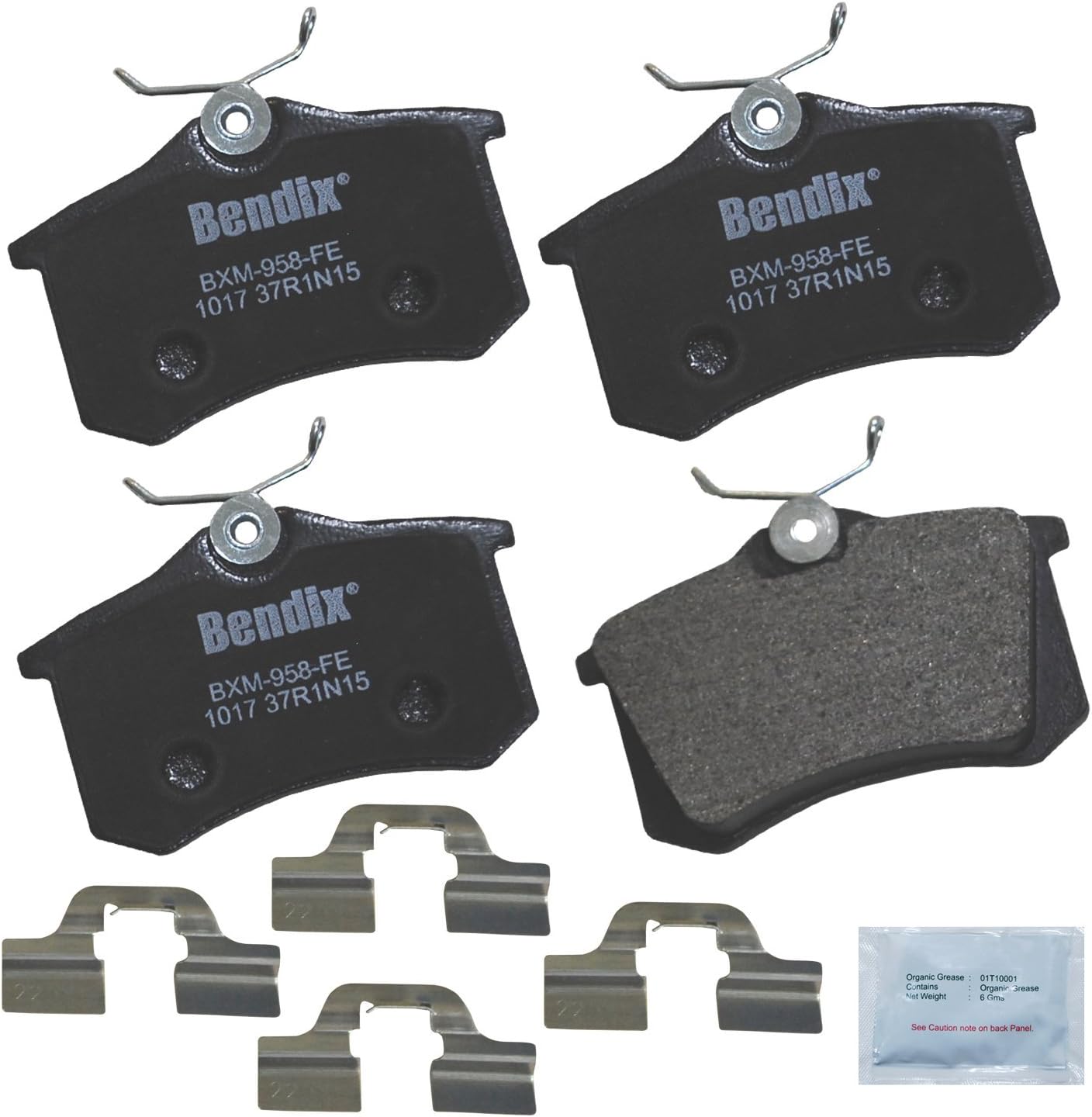
3. Bendix Priority1 CFM1017 Rear Brake Pads (Priority1 Semi‑Metallic)
| Brand Name | Bendix |
|---|---|
| Auto Part Position | Rear |
| Material Type | Copper |
| Included Components | (1) Bendix Priority 1 Semi-Metallic Brake Pad Pad Set with Installation Hardware |
The Bendix Priority1 CFM1017 rear brake pad set is a vehicle‑specific replacement built to match factory fit and comes with the installation hardware needed for a straightforward swap. Intended as a direct-fit replacement, the semi‑metallic compound delivers strong initial bite and high‑temperature resistance for consistent stopping under everyday driving and light spirited use. The pads include shims, slots, and chamfers to reduce noise and vibration and the kit even ships with mounting hardware and a packet of lubricant, which speeds installation and helps prevent squeal. Users report quiet operation and improved pedal feel after break‑in, though a small number of buyers needed minor trimming on uncommon caliper brackets. Expect typical bedding‑in before peak performance and occasional brake dust characteristic of semi‑metallic formulations. For a practical DIY brake job on a Golf, these pads offer factory‑matching fitment, reliable stopping power, and full hardware so you can replace rears without sourcing extra parts.
Best for: Practical optimizers who want a cost‑effective, factory‑matching rear pad replacement for a Golf and prefer a DIY install that includes all necessary hardware.
Less Ideal for: Drivers seeking the lowest possible dust and the quietest ceramic feel should consider ceramic pad options instead.
- Designed to match factory fit, form, and function for a seamless replacement
- Includes installation hardware and lubricant packet to simplify DIY installs
- Semi‑metallic compound provides strong stopping power and heat resistance
- Shims, slots, and chamfers reduce noise and vibration for quieter braking
- Semi‑metallic pads can produce more brake dust than ceramic alternatives
- A minority of users reported minor fitment adjustments required on atypical brackets
Verdict: A practical, hardware‑included rear pad kit that matches factory fit and delivers reliable stopping power at a strong value for Volkswagen Golf owners.
4. Bosch Blue BE768AH Semi‑Metallic Front Brake Pad Set with Hardware

| Auto Part Position | Front |
|---|---|
| Material Type | Semi-Metallic |
| Automotive Fit Type | Vehicle Specific Fit |
| Number of Items | 1 |
These Bosch Blue BE768AH front brake pads provide a ready‑to‑install replacement for compatible Volkswagen Golf and similar models. They use platform‑specific semi‑metallic friction material that aims to balance stopping power, resistance to fade, and longevity for everyday driving. Bosch includes OE‑style slots, chamfers, multi‑layer shims for noise reduction, a rust‑inhibitive coating on backing plates, and a hardware kit plus synthetic lubricant to simplify installation and reduce slider resistance. For DIYers the pads arrive protected in a shop towel and fit like a factory replacement when matched to the correct application. Expect firm, predictable stops without excessive noise and reasonable lifespan under normal street use. These are not a performance racing compound, so drivers seeking maximum track performance or ultra‑low dust ceramic options should look elsewhere. Also, fitment is vehicle specific so confirm the Golf year and trim before ordering.
Best for: Budget‑conscious Volkswagen Golf owners who want a reliable, factory‑style replacement that delivers quiet, predictable braking for regular street use.
Less Ideal for: Drivers who prioritize track performance, extremely low dust, or premium ceramic braking compounds should consider performance or ceramic alternatives instead.
- Platform‑specific semi‑metallic formulation for balanced stopping power and reduced fade in everyday driving
- Multi‑layer shims and OE‑style slots and chamfers for quieter braking and reduced vibration
- Rust‑inhibitive coating on backing plates helps prevent corrosion and noisy pad degradation
- Includes hardware kit and synthetic lubricant for easier, cleaner installation
- Not targeted at high‑performance or track use where dedicated race compounds are preferable
- Semi‑metallic pads typically produce more brake dust than ceramic alternatives
Verdict: Bosch Blue BE768AH gives Golf owners a budget‑friendly, factory‑style front pad set that delivers quiet, reliable everyday braking with easy installation.
5. Bendix Priority1 CFC1760 Ceramic Disc Brake Pad Set

| Brand | Bendix |
|---|---|
| Material Type | Ceramic |
| Auto Part Position | Front, Rear |
| Included Components | Brake pad set with installation hardware |
The Bendix Priority1 CFC1760 is a ceramic brake pad set engineered to meet factory-spec fit, form, and function for compatible Volkswagen Golf models. It installs like a direct replacement and includes hardware and shims intended to reduce noise and ensure a snug fit in the caliper. The ceramic friction material is formulated for consistent braking under everyday driving and elevated temperatures, which helps reduce fade and keeps dust levels lower than many semi-metallic alternatives. In practice these pads are aimed at daily-driven Golfs where quiet, predictable stops matter more than track-level bite. Users report easy DIY installation and stable performance over typical mileages. Limitations to note are that ceramic pads can feel slightly less aggressive under high-demand track or towing situations, and bedding in and rotor condition affect noise and longevity, so rotors should be serviced if necessary before installation. For a reliability-focused upgrade that preserves factory behavior, these pads are a practical choice for Volkswagen Golf owners seeking low-noise, consistent braking.
Best for: Reliability-focused buyers who prioritize consistent, quiet braking for daily-driven Volkswagen Golf use and want a near-factory replacement without chasing performance parts.
Less Ideal for: Drivers who regularly push their Golf on track days or need maximum aggressive stopping power should choose a performance-oriented pad instead.
- Factory-spec fit and included installation hardware for a straightforward replacement
- Ceramic friction formulation for quiet operation and lower visible brake dust
- Shims, slots, and chamfers designed to minimize noise and vibration
- Engineered to resist fade and deliver consistent stopping in everyday driving
- Ceramic pads may offer less initial bite than performance-oriented semi-metallic pads under extreme conditions
- Performance and noise depend on rotor condition and proper bed-in, so extra rotor service may be required
Verdict: A quiet, factory-fit ceramic pad set for Volkswagen Golf owners who value dependable, low-noise daily braking rather than track performance.
6. Raybestos Element3 EHT Front Brake Pad Set (EHT1760)

| Auto Part Position | Front |
|---|---|
| Compatible with Vehicle Type | Passenger Car |
| Material Type | Ceramic |
| Automotive Fit Type | Vehicle Specific Fit |
These Raybestos Element3 EHT front brake pads are a vehicle-specific replacement engineered for Volkswagen Golf front applications. They combine ceramic and semi-metallic attributes in an Enhanced Hybrid Technology formulation intended to deliver stronger bite during aggressive stops and improved pad life compared with some standard ceramic pads. The kit includes multi-layer noise-damping shims and common installation hardware such as abutment clips and anti-rattle components to simplify fitting at the caliper. In real-world use on a Golf, expect more confident, linear braking feel and reduced dust compared with purely organic pads, plus quieter operation thanks to the layered shims. The included hardware helps speed up a DIY install, although some users note occasional fit or squealer issues that require inspection before installation. These pads are best for drivers who want a step up in stopping power and durability without moving to a full performance compound; they are not a performance racing pad and long-term wear will depend on driving style and bedding procedure.
Best for: Convenience-driven buyers who want a quiet, ready-to-install front brake pad that improves everyday stopping feel and reduces dust on a Volkswagen Golf.
Less Ideal for: Drivers seeking race-level braking or heavy towing duty should choose a dedicated performance or heavy-duty pad instead.
- Enhanced Hybrid Technology blends ceramic and semi-metallic friction for stronger stopping power during aggressive braking.
- Multi-layer noise-damping shims reduce low-speed squeal across a range of temperatures.
- Includes common installation hardware (abutment clips, piston clips, anti-rattle clips) for easier DIY replacement.
- Vehicle-specific fitment for compatible Volkswagen Golf front applications simplifies selection.
- Some reported quality-control issues such as loose squealers or missing/ill-fitting hardware on a minority of units.
- Not intended for track or extreme-duty use compared with dedicated performance pads.
Verdict: A convenient, vehicle-specific upgrade for Volkswagen Golf owners who want stronger, quieter everyday braking without moving to a performance-only pad.
7. Bosch QuietCast BC1107 Premium Ceramic Front Brake Pad Set

| Auto Part Position | Front |
|---|---|
| Material Type | Ceramic |
| Brand Name | Bosch |
| Number of Items | 1 |
These Bosch QuietCast BC1107 front brake pads are a factory-quality ceramic replacement engineered for quiet, low-dust braking on compatible vehicles. They are typically used as a direct front pad swap when rotors are in good condition and include pre-attached multilayer rubber-core shims, chamfers, slots, and a small lubricant packet to ease installation and reduce noise. In real-world use the ceramic friction compound gives smooth initial bite, reduced brake dust compared with semi-metallic pads, and a quieter stop thanks to the molded shim technology and powder-coated backing plates that resist corrosion. The kit ships with pads for one axle and—where applicable—hardware to replace contact clips, which simplifies a home or shop install. Limitations to expect are that ceramic pads can feel slightly less aggressive under heavy repeated track-style braking and lifespan depends on driving style and rotor condition; verify exact fitment for your Golf trim and model year before purchase because trim level can affect compatibility.
Best for: A risk-averse mainstream buyer who prioritizes quiet, OEM-like replacement parts and low dust for everyday driving on a Volkswagen Golf.
Less Ideal for: Drivers who regularly do aggressive driving, track sessions, or need maximal fade resistance should consider performance-oriented semi-metallic pads instead.
- Factory-style multilayer rubber-core shims pre-attached for reduced noise and better shim-to-plate bonding.
- Ceramic friction material designed for quiet braking with lower visible dust.
- Powder-coated backing plates resist corrosion to extend service life.
- Includes pads for one axle plus hardware and lubricant where applicable to simplify installation.
- Ceramic compound may provide less fade resistance than performance semi-metallic pads under repeated high-temperature use.
- Fitment varies by trim and year so you must confirm exact Golf compatibility before buying.
Verdict: A reliable, quiet ceramic front pad choice for Golf owners seeking a factory-quality, low-dust replacement provided you confirm fitment for your specific model.
Choosing the Right Volkswagen Golf Brake Pads: Key Factors to Consider
Friction Material Type
The friction material determines initial bite, fade resistance, and how the pad behaves as it heats. Organic and semi-metallic compounds often deliver good initial bite and can be gentler on rotors, while higher-metal-content mixtures usually resist fade better under repeated heavy braking.
For everyday driving you should balance stopping power and longevity. Aggressive materials may shorten rotor life and increase dust, while very soft materials can feel mushy at the pedal. Consider the typical driving conditions you face and choose a composition that matches your priority between quiet operation and high thermal stability.
Rotor Compatibility and Wear
A pad that is hard on rotors can increase scoring and shorten rotor life, which raises long-term ownership costs. Compatibility means matching pad hardness and bedding behavior to common rotor materials used on the Volkswagen Golf so wear occurs evenly and predictably.
Look for pads with backing plate and shim designs that reduce localized heat spots and promote even contact. Proper compatibility reduces the chance of warping and uneven thickness, helping maintain consistent braking feel and minimizing the need for frequent rotor resurfacing or replacement.
Noise and Vibration Control
Brake squeal and vibration reduce confidence and can be a sign of poor bedding or incompatible hardware. Pads with multi-layer shims, chamfered edges, and high-quality adhesive bonds tend to dampen vibration and lower audible squeal during light braking.
Consider pads engineered with noise-control features if you prioritize quiet daily driving. Keep in mind that even quiet pads can produce noise if installation hardware or caliper condition is neglected, so factor in the whole brake system when assessing potential NVH outcomes.
Dust Generation and Finish
Brake dust affects wheel appearance and can indicate aggressive friction chemistry. Some materials produce light, easy-to-clean dust while others leave heavier dark deposits. If wheel cleanliness matters, choose pads formulated to limit dust without sacrificing essential stopping performance.
Dust also has implications for wheel bearings and brake hardware over time. Lower-dust pads reduce the frequency of wheel cleaning and help keep surrounding components cleaner, which can be advantageous for owners who maintain cosmetic appearance or have light-weight alloy wheels.
Heat Tolerance and Fade Resistance
Pads that tolerate higher temperatures resist brake fade during repeated or heavy stops. Heat tolerance is especially important if you drive in hilly areas or do frequent stop-and-go braking where thermal buildup can occur.
Look for materials and constructions that maintain consistent friction across a range of temperatures. Good fade resistance preserves pedal feel and stopping distance under stress, while poor heat tolerance can lead to spongy pedal response and longer stopping distances.
Fitment and Installation Considerations
Correct fitment ensures full pad contact and reliable wear patterns. For Volkswagen Golf brake pads, confirm the pad shape, backing plate orientation, and included hardware match the vehicle's caliper design. Improper fit can cause uneven wear, noise, and reduced braking efficiency.
Also consider whether the pads come with necessary shims or wear indicators and how easy they are to install. While installation complexity does not change pad performance, it affects the overall replacement experience and the likelihood that pads are fitted correctly.
How We Chose the Best Volkswagen Golf Brake Pads
We focused on brake pads that offer consistent stopping performance for the Volkswagen Golf in typical driving scenarios, including commuting, highway travel, and light spirited driving. Key evaluation criteria included measured stopping power under repeated stops, material compatibility with common rotor types to limit uneven wear, and expected service life based on friction material and backing plate design. We also weighed noise suppression, dust generation, and heat tolerance for predictable performance during heavier use.To narrow the field we excluded pads designed exclusively for heavy track use or specialized motorsport compounds that sacrifice longevity or daily drivability. We did not consider pads that require extensive brake-system modification or unique hardware changes. The final shortlist reflects balance across stopping effectiveness, rotor friendliness, NVH characteristics, and practical durability for Volkswagen Golf owners.
Our full evaluation process is outlined in our review methodology.
FAQ
How often should I replace Volkswagen Golf brake pads?
Replacement interval depends on driving habits, environment, and pad material. Light urban driving with frequent stops accelerates wear, while mostly highway driving extends life. Inspect pads visually and monitor pad thickness and any warning indicators; many drivers expect to check pads every 12,000 to 25,000 miles, but actual needs vary.
What are common brake pad wear symptoms to watch for?
Look for reduced pedal feel, longer stopping distances, squealing or grinding noises, and visible thinning of the pad material. Some vehicles also have wear indicators that produce a squeal when pads are low. Any sudden change in braking performance warrants inspection to rule out rapid wear or other issues.
Should I use ceramic or semi-metallic pads on my Golf?
Ceramic pads typically offer quieter operation and lower dust production, while semi-metallic pads can provide stronger initial bite and higher heat tolerance. The best choice depends on whether you prioritize quiet daily driving and low dust or slightly higher performance under repeated heavy braking.
Can I mix different pad materials front and rear?
Mixing materials can change balance and pedal feel because front and rear pads contribute differently to overall braking. It is common practice to match pad types axle to axle to preserve predictable modulation. If considering mixed materials, ensure the combination maintains safe balance and consult fitment guidance for your vehicle.
Why do my brake pads make grinding noises?
Grinding often signals severe wear where the friction material is nearly gone and the backing plate contacts the rotor. It can also indicate trapped debris between pad and rotor. Grinding should prompt a prompt inspection since it can damage rotors and impair braking effectiveness.
How important is pad thickness spec when checking pads?
Pad thickness is a practical measure of remaining life. Most pads start with a few millimeters of friction material and have a minimum safe thickness recommended by manufacturers. Regularly measuring thickness helps plan replacements before performance or safety is compromised.
Conclusion
When choosing Volkswagen Golf brake pads, prioritize the factors that match how you drive: choose materials that balance stopping power and rotor friendliness, and pay attention to noise, dust, and heat tolerance. Ensure correct fitment and consider noise-control features if quiet operation matters.Tradeoffs are inevitable: higher-performance compounds may increase dust and rotor wear, while softer formulations may reduce heat resistance. Select pads that align with your driving patterns and maintenance preferences to achieve reliable, predictable braking.
Explore More:
- Check out all Volkswagen Golf parts & accessories
- Explore Brake Pads Maintenance & Repair Guides
- Explore Brake System
- Browse all Auto Parts
