

Note: This article contains affiliate links. If you click on these links and make a purchase, I may earn a small commission at no extra cost to you. This helps support my research and content. Read my full affiliate disclosure here.
If you drive a 2011-2016 Ford F-250, choosing the right brake pads affects towing safety, load handling, and everyday stopping feel. The F-250's weight and typical towing or hauling duties make pad selection more important than on a passenger car. You need pads that deliver predictable initial bite, resist fade under repeated heavy braking, and have durable backing that stands up to frequent use.This guide shortlists the top options for 2011-2016 Ford F-250 brake pads across common material types and duty cycles. We evaluated candidates on stopping performance, durability, rotor friendliness, and fitment reliability so you can match a pad to your driving and load needs. Read on for what matters and how to pick the right pads for your F-250.
Looking for other parts? See all Ford F-250 parts & accessories.
Top Picks at a Glance
| Best Overall The best all-around choice for most situations | BOSCH QuietCast BP1680 Semi‑Metallic Front Brake Pad Set |  |
| Best Quality Built to a higher standard if you want something more solid | Bendix Fleet Metlok MKD1680FM Semi‑Metallic Front Brake Pads |  |
| Best Value The sweet spot between price and what you get | Detroit Axle Front Ceramic Brake Pads with Hardware for Ford Super Duty Trucks |  |
| Best Budget The cheapest option that still gets the job done reliably | cciyu D1069 Ceramic Front Brake Pad Set (front) |  |
| Highest Rated A top-rated pick with lots of positive feedback | PowerStop Z36 Truck & Tow Front Carbon-Fiber Ceramic Brake Pads with Hardware |  |
| Most Popular A crowd favorite that many people choose with confidence | TRQ Ceramic Front and Rear Brake Pads for 2013–2016 Ford Super Duty (Rear) |  |
| Best Seller A high-volume bestseller chosen again and again | PowerStop Z36 Rear Carbon-Fiber Ceramic Brake Pads with Hardware (Z36-1691) |  |
1. BOSCH QuietCast BP1680 Semi‑Metallic Front Brake Pad Set

| Auto Part Position | Front |
|---|---|
| Material Type | Semi‑Metallic |
| Included Components | Brake Pads and hardware (where available) |
| Automotive Fit Type | Vehicle Specific Fit |
These Bosch QuietCast BP1680 front brake pads are designed as a direct vehicle‑specific replacement for select Super Duty trucks and aim to restore confident, quiet stopping without mowing brake dust. In everyday use they provide strong initial bite and steady braking feel typical of semi‑metallic formulations, while molded OE‑style rubber core shims and powder‑coated backing plates reduce noise and corrosion. Each kit includes pads for one axle plus hardware and lubricant to ease installation and ensure proper caliper sliding. The friction material is copper‑free and engineered to form a protective transfer layer that helps extend pad and rotor life. Expect good durability under towing and heavy loads for typical owners, though drivers seeking ultra‑quiet ceramic refinement or track performance may prefer a different compound. Fitment is vehicle specific so verify compatibility for 2011–2016 Ford F‑250 before purchase.
Best for: Buyers who want a durable, vehicle‑specific replacement that balances strong stopping power, reasonable noise control, and long service life for daily driving and typical hauling tasks.
Less Ideal for: Drivers prioritizing the quietest possible operation or dedicated track use should consider ceramic or performance brake pads instead.
- OE‑style multilayer rubber core shims reduce noise and improve shim durability
- Semi‑metallic friction formula delivers strong stopping power and low dust
- Powder‑coated backing plates resist corrosion for longer service life
- Includes necessary hardware and synthetic lubricant for installation
- Semi‑metallic pads are not as quiet or low‑vibration as premium ceramic options
Verdict: A solid, vehicle‑specific front pad set that balances strong stopping power, noise reduction, and durability for everyday Super Duty use.
2. Bendix Fleet Metlok MKD1680FM Semi‑Metallic Front Brake Pads

| Material | Semi‑Metallic |
|---|---|
| Auto Part Position | Front |
| Specification Met | OEM |
| OEM Part Number | DC3Z2001A, DC3Z2001C, DC3Z2001E |
These Bendix Fleet Metlok front brake pads are built for severe duty on Ford Super Duty trucks and are a solid choice when you need consistent performance under heavy loads. Designed to factory specifications, the semi‑metallic compound and titanium coating prioritize thermal stability and pad strength, which helps resist fade during towing, repeated stops, or pursuit‑style driving. The kit includes abutment clips and multi‑layer shims to reduce noise and improve pad‑to‑rotor contact for better pedal feel. Expect a firm initial bite and controlled stopping power rather than a plush, quiet street‑car characteristic. They do not include electronic wear sensors or piston clips, so plan for simple mechanical installation and check compatibility with factory hardware. These pads favor durability and heat management over ultra‑soft modulation, so they are best when braking performance under load is the priority rather than lowest possible noise or bedding‑in refinement.
Best for: A buyer who prioritizes repeatable, high‑temperature stopping performance for towing or heavy‑use driving and wants a durable, factory‑grade replacement for Super Duty front brakes.
Less Ideal for: Drivers seeking the quietest possible pads, softer initial bite for light daily commuting, or who require integrated wear sensors should consider alternate compounds or kits with additional hardware.
- Semi‑metallic compound and titanium coating for improved thermal stability and fade resistance
- Built to factory driveability specifications for predictable pedal response
- Includes abutment clips and multi‑layer shims to help reduce noise and improve pad‑to‑rotor contact
- Designed for heavy‑duty use suitable for towing and repeated high‑load stops
- No integrated electronic wear sensor or additional hardware like piston clips included
Verdict: Choose these Bendix Fleet Metlok pads when you need durable, heat‑resistant front brakes that preserve pedal feel under heavy loads.
3. Detroit Axle Front Ceramic Brake Pads with Hardware for Ford Super Duty Trucks

| Fitment | 2012-2022 Ford F-250 (built after 10/22/2012), 2013-2022 F-350, 2013-2016 F-450 (Crew Cab, 8-lug) |
|---|---|
| Position | Front |
| Material | Ceramic |
| Kit contents | 2 front brake pads with hardware |
These Detroit Axle front brake pads are a direct replacement kit that supplies two ceramic pads plus hardware for compatible Ford Super Duty models. Intended for routine front brake service, the ceramic formula is built to run quieter, shed less dust, and resist heat-related fade compared with basic metallic pads. The pads include chamfers and a multi-layer construction to reduce vibration and promote a smooth pedal feel during daily driving and towing duties. Because they are ceramic, they tend to be gentler on rotors and can extend rotor life when paired with healthy rotors. Installation is straightforward for a typical brake job and the included hardware reduces the chance of missing small parts. Limitations are typical for aftermarket ceramic pads: they may take a short bedding period to reach peak performance and drivers who regularly haul very heavy loads or do frequent downhill towing might prefer a heavy-duty or performance-specific compound.
Best for: Buyers seeking a reliable, low-dust front brake replacement that balances quiet operation and rotor-friendly performance for everyday driving and light to moderate towing.
Less Ideal for: Drivers who prioritize track use, aggressive braking performance, or frequent heavy-load towing should consider a performance or heavy-duty brake pad instead.
- Ceramic compound offers lower dust levels and quieter operation than generic metallic pads
- Includes hardware so pads are ready to install during a standard front brake service
- Chamfers and multilayer construction reduce vibration and improve pedal feel
- Formulation claims improved high-temperature stability to resist brake fade
- Not marketed as an extreme-duty or race compound so heavy continuous towing may require a different pad choice
Verdict: A practical, rotor-friendly ceramic front pad kit that delivers quieter, lower-dust braking for everyday Super Duty use.
4. cciyu D1069 Ceramic Front Brake Pad Set (front)
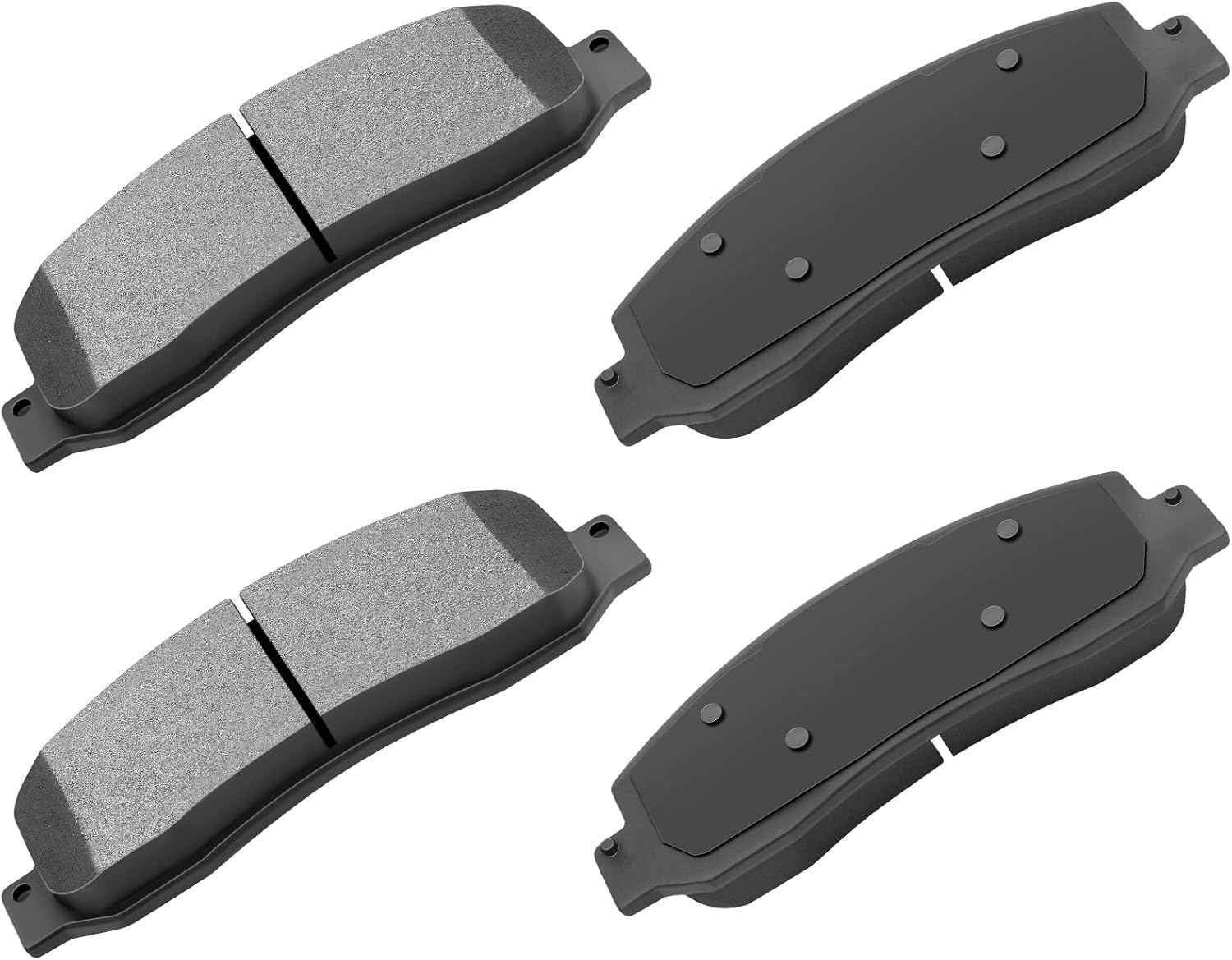
| Auto Part Position | Front |
|---|---|
| Compatible with Vehicle Type | 2005-2011 F-250 / 2005-2012 F-350 / 2010-2012 F-450 Super Duty |
| Material Type | Ceramic |
| Number of Items | 1 |
| Unit Count | 4.0 Count |
These cciyu D1069 ceramic front brake pads are a vehicle-specific replacement designed for Super Duty F-series trucks in the listed years. They use a ceramic-organic friction compound, chamfered edges and slots to reduce noise, help control dust, and promote smoother contact with the rotor. The pads are thermal scorched at the factory to shorten bedding-in time and the supplied backing/gasket reduces high-frequency vibration that can cause squeal. In everyday use they offer the quieter, lower-dust performance typical of ceramic pads and claim grooved channels for improved heat dissipation during repeated stops or downhill runs. Limitations: ceramic pads can feel slightly less aggressive than semi-metallics under heavy towing or constant hard braking, and buyers should confirm fitment against the truck s make/model/trim before ordering. Installation is the same as other front pad replacements and they are aimed at drivers who want a quiet, low-dust factory-style replacement rather than a heavy-duty tow-focused compound.
Best for: Buyers focused on a low-cost, quiet factory-style replacement for daily-driven F-250 trucks who prioritize reduced dust and noise over maximum tow-oriented stopping power.
Less Ideal for: Drivers who regularly tow heavy loads, haul trailers, or demand maximum fade resistance under repeated hard braking should consider a heavy-duty semi-metallic or tow-rated pad instead.
- Vehicle-specific fit for Super Duty F-series front brakes
- Ceramic compound produces less visible wheel dust and quieter stops
- Chamfered and slotted face design aids smooth contact and heat dissipation
- Thermal scorching shortens bedding-in time for more consistent initial performance
- Ceramic formulation may deliver less initial bite than semi-metallic pads under heavy towing or track-style braking
Verdict: A budget-friendly ceramic front pad set that delivers quieter, lower-dust everyday braking for F-250 trucks needing a straightforward factory-style replacement.
5. PowerStop Z36 Truck & Tow Front Carbon-Fiber Ceramic Brake Pads with Hardware

| Brand | PowerStop |
|---|---|
| Material | Carbon Fiber ceramic |
| Auto Part Position | Front |
| Specification Met | OEM |
| Automotive Fit Type | Vehicle Specific Fit |
These PowerStop Z36 Truck & Tow pads are a vehicle-specific front replacement designed for 2012–16 Ford Super Duty models and aim to give a stronger, cleaner stopping feel when towing or hauling. The carbon-fiber infused ceramic compound reduces brake dust and is formulated for higher-duty use, while included stainless-steel hardware and ceramic lubricant simplify installation. In practice they provide firmer braking under load and quieter operation than many stock pads, with stainless shims helping heat dissipation and noise control. Because they are targeted at trucks that tow, they are useful after adding trailers, heavy loads, or larger wheels to avoid overstressing factory pads. Limitations are that they are an upgrade-oriented pad rather than a motorsport compound, so extreme track use is outside their design, and proper bedding and break-in are needed to reach peak performance. Expect noticeably less dust and a more robust pedal feel for daily driving with occasional heavy loads.
Best for: Buyers who prioritize dependable, quieter braking when towing or hauling and want a drop-in upgrade that reduces dust and improves pedal feel without a complex installation.
Less Ideal for: Drivers seeking race-oriented friction materials or those who only need an inexpensive, light-duty factory-style replacement should consider other options.
- Carbon-fiber infused ceramic formula for stronger stopping under load
- Low-dust ceramic compound that keeps wheels cleaner
- Includes stainless-steel hardware and ceramic lubricant for easier installation
- Stainless shims improve heat dissipation and reduce noise
- Not intended for extreme track or competition braking applications
Verdict: Choose these Z36 pads if you want a reliable, low-dust upgrade that strengthens braking performance for towing and heavy-duty use on Super Duty trucks.
6. TRQ Ceramic Front and Rear Brake Pads for 2013–2016 Ford Super Duty (Rear)

| Material | Ceramic |
|---|---|
| Auto Part Position | Rear |
| Specification Met | OEM |
| Automotive Fit Type | Vehicle Specific Fit |
These TRQ ceramic brake pads are a vehicle-specific rear replacement designed for Ford Super Duty trucks from the listed years and provide a direct-fit, pre-machined option for DIY installation. The ceramic compound is engineered for quieter operation and lower dust output, which keeps wheels cleaner compared with many semi-metallic pads. Thermal scouring is applied to improve initial bite and stopping performance, and the application-specific design means no modifications are needed during installation. TRQ also publishes step-by-step installation videos that help reduce installation errors for home mechanics. Expect solid everyday braking for street and light towing use, but ceramic pads can feel a touch less aggressive than high-performance metallic pads under repeated heavy-duty towing or severe-duty cycles. If you prioritize quieter stops, reduced dust, and easy fitment backed by a brand with many reviews, these pads are a practical choice; if you need maximum fade resistance for heavy commercial towing, consider a heavier-duty friction material instead.
Best for: Buyers who want a quiet, low-dust, factory-style rear replacement that is easy to install and supported by community feedback and installation resources.
Less Ideal for: Drivers who regularly perform sustained heavy towing, frequent mountain descents, or commercial-duty braking where maximum fade resistance and aggressive friction are required.
- Vehicle-specific design for direct fit and no modifications
- Ceramic formulation yields lower brake dust and quieter operation
- Thermal scouring for improved initial stopping performance
- Pre-machined exterior simplifies installation and alignment
- Manufacturer provides step-by-step installation videos for DIY support
- Ceramic pads can heat up and lose bite sooner than heavy-duty metallic pads under sustained, high-load towing
Verdict: A quiet, low-dust, vehicle-specific rear brake pad set that makes DIY replacement simple and reliable for everyday Super Duty use.
7. PowerStop Z36 Rear Carbon-Fiber Ceramic Brake Pads with Hardware (Z36-1691)

| Auto Part Position | Rear |
|---|---|
| Automotive Fit Type | Vehicle Specific Fit |
| Material Type | Carbon-Fiber Ceramic, Metal, Stainless Steel |
| Included Components | Brake Pads and Installation Hardware |
| Manufacturer Warranty Description | 12 Month / 12,000 Mile Limited Warranty |
These PowerStop Z36 Truck & Tow rear brake pads are a direct-fit upgrade intended for heavier Ford Super Duty use, offering a carbon-fiber ceramic friction compound and stainless-steel hardware for a straightforward replacement. Fitment is vehicle-specific for the rear of F-250/F-350 (2013–22) and F-450 (2013–16) Super Duty models, and the package includes shims and pin bushings to simplify a DIY install. The Z36 compound is formulated for higher friction than factory pads to improve stopping when towing, hauling, or driving in hilly terrain while remaining low-dust and engineered for quiet operation. Chamfers, slots, and stainless shims help reduce noise and aid heat dissipation under sustained loads, which matters for trucks that see occasional heavy use. Expect better bite and reduced fade compared with standard replacement pads, but remember this is a rear pad set only and does not address rotor condition or front/rear balance if other components are worn. Installation hardware is included to ease fitting, but professional installation can ensure optimal bedding and brake balance for risk-averse owners.
Best for: Buyers who prioritize reliable, quieter braking for towing or occasional heavy loads and prefer a ready-to-install, vehicle-specific upgrade they can fit themselves or have professionally installed.
Less Ideal for: Drivers looking for a full front-and-rear rotor and pad solution or those who need pads matched to non-Super Duty vehicles should look elsewhere.
- Vehicle-specific direct-fit design with included stainless-steel hardware for easier installation
- Carbon-fiber ceramic compound offers higher friction and low dust for improved stopping and cleaner wheels
- Chamfered and slotted faces plus stainless shims reduce noise and help heat dissipation
- Designed for towing, hauling, and hilly driving so less prone to high-temperature brake fade
- Rear-pad kit only so matching front pads or rotor replacement may be needed for balanced braking
Verdict: Choose these Z36 rear pads if you want a vehicle-specific, low-dust ceramic upgrade that improves stopping for towing and hilly driving while keeping installation simple.
Choosing the Right 2011-2016 Ford F-250 Brake Pads: Key Factors to Consider
Material Composition
Material composition determines initial bite, wear rate, rotor friendliness, and noise. Organic and softer semi-metallic blends often produce quieter first wear but can fade faster under hard repeated braking. Harder semi-metallic and heavy-duty metallic compounds offer stronger bite and better heat tolerance for towing, but they can accelerate rotor wear and generate more noise. Ceramic compounds tend to balance quiet operation and low dust with moderate heat tolerance, though not all ceramic blends are engineered for heavy towing.
For a 2011-2016 Ford F-250, consider the typical workload. If you tow heavy trailers or carry frequent loads, prioritize compounds formulated for high friction stability and fade resistance. For mostly street driving with occasional light towing, a ceramic or mixed compound tuned for comfort and low dust may be a better daily choice. Always check manufacturer specifications for thermal limits and intended duty cycle to match the material to your driving patterns.
Stopping Performance and Initial Bite
Stopping performance is measured by how quickly and predictably the pads slow the truck from highway speeds, especially with a trailer or payload. Initial bite affects driver confidence at lower pedal effort while progressive friction response helps avoid abrupt lockups or grabbing. Some compounds provide strong initial bite but taper off as temperature rises; others build in bite as heat increases.
For the F-250, aim for pads that deliver consistent bite across a wide temperature range so braking is predictable whether empty or loaded. Look for data or manufacturer notes on friction coefficients and fade resistance. Remember that strong initial bite can trade off with noise and rotor wear, so find a balance that suits towing and everyday driving demands.
Heat and Fade Resistance
Heat builds quickly during repeated heavy braking, towing, or descending long grades. Fade occurs when pad materials and friction characteristics deteriorate at elevated temperatures, producing longer stopping distances and a spongy pedal feel. Fade resistance depends on compound formulation, backing plate construction, and how well the pad dissipates heat.
Because the F-250 frequently operates under heavier loads than smaller vehicles, select pads rated for high thermal capacity if you tow often or perform heavy-duty work. Look for mention of fade testing, temperature ratings, or applications that include towing or fleet use. Pads designed for high heat will maintain friction longer and reduce the risk of progressive fade on long descents.
Pad Thickness and Wear Life
Starting pad thickness and how evenly the material wears determine service intervals and long-term cost. Pads with greater thickness offer longer life before replacement, but thickness alone is not the only indicator; material wear rates vary by compound and driving conditions. Uneven wear can stem from caliper issues, rotor runout, or installation problems, so fitment and hardware quality also affect apparent life.
For the 2011-2016 F-250, consider pads with a generous friction layer and documented wear expectations under towing conditions. Check the pad thickness spec to ensure you have adequate material for extended service life. Remember that heavier loads and aggressive driving shorten pad life, so plan replacement intervals accordingly and inspect pads regularly for uneven wear.
Rotor Compatibility and Surface Preservation
Some pad compounds are abrasive and accelerate rotor wear or cause scoring, increasing long-term maintenance costs. Rotor-friendly pads reduce the risk of hot spots, glazing, or premature rotor replacement. Compatibility includes how the pad interacts with OE rotors and whether the friction formulation promotes glazing at lower temperatures.
When choosing pads for a 2011-2016 F-250, prefer compounds that balance braking power and rotor preservation, especially if you use original equipment rotors. If you plan to upgrade rotors to performance or slotted designs, consider how the pad compound complements those surfaces. Proper bedding and break-in procedures also help protect rotor life and maintain consistent friction characteristics.
Fitment, Hardware, and Installation Quality
Correct fitment is critical for safe braking performance. Pads must match the F-250 caliper shape, mounting tabs, and parking brake arrangements for the rear. Missing or low-quality hardware, missing shims, or poorly formed backing plates can cause rattles, uneven wear, or reduced braking efficiency. Installation quality influences whether pads seat properly and how long anti-rattle components last.
Confirm that replacement pads include the necessary shims, clips, and instructions for the 2011-2016 F-250. High-quality backing plates and bonded shims reduce noise and ensure consistent contact. If you plan to install the pads yourself, factor in the need for proper tools and potential caliper service. For fleet or heavy-duty users, choose pads with robust hardware intended for repeated service intervals.
Front Versus Rear Pad Roles on the F-250
The front pads on the F-250 handle the largest share of stopping force because weight shifts forward during braking. That means front pads generally demand thicker friction material and compounds that resist heat and fade. Rear pads still contribute to overall balance and parking brake function, so they should match the rear braking duty and engage smoothly without causing premature lockup.
When selecting front versus rear pads, consider their different operating temperatures and load responsibilities. Front pads may be rated for higher thermal capacity, while rear pads emphasize consistent release and parking-brake compatibility. Keeping both axle pads within the same material family helps maintain predictable brake bias and pedal feel.
- Front pads do most of the work under heavy braking.
- Rear pads assist with balance and parking-brake engagement.
- Matching material families across axles improves pedal feel.
- Different pad thicknesses and heat ratings are common front to rear.
How Towing and Payload Change Your Pad Choice
Towing or carrying heavy loads increases braking energy dramatically. That means pads need higher fade resistance and often a different friction formulation than pads chosen for city commuting. If you tow frequently, prioritize compounds and pad constructions rated for sustained high-temperature operation and repeated stopping events.
Also consider the expected duty cycle. Occasional towing may be served by a durable all-purpose pad, while daily heavy towing benefits from pads specifically formulated for fleet or heavy-duty use. Regular inspection intervals should shorten when towing to catch accelerated wear early.
- Towing increases heat buildup and wear rates.
- Choose pads with higher temperature tolerance for frequent towing.
- Shorten inspection intervals when using the truck for heavy loads.
Noise, Dust, and Ride Comfort Tradeoffs
Brake pad compounds vary in how much noise and dust they produce. Some heavy-duty semi-metallic pads offer excellent stopping power but create more audible noise and more brake dust that can affect wheel finish. Ceramic-style pads reduce dust and are often quieter, but they may not match the high-temperature performance of heavy-duty metallics.
Assess how important low dust and quiet operation are for your daily driving. If the F-250 is a work truck where noise and dust matter less, prioritize stopping power. For trucks used as daily drivers or with premium wheels, consider pads that balance low-dust operation with acceptable fade resistance.
- Heavier-duty compounds usually make more noise and dust.
- Ceramic blends are typically quieter and cleaner but vary in heat tolerance.
- Weigh comfort and aesthetics against braking requirements.
Bedding In New Pads for Best Performance
Proper bedding or break-in helps transfer an even friction layer to the rotor and stabilizes stopping performance. Bedding procedures vary by pad type but generally involve a series of moderate stops from city speeds to highway speeds with cooling intervals. Skipping bedding can lead to uneven rotor deposits, glazing, or reduced initial stopping performance.
For the F-250, follow the pad manufacturer's recommended break-in steps and avoid heavy towing or towing while bedding. Check the pad thickness after the initial bedding period and inspect rotors for even transfer films to ensure a stable braking surface going forward.
- Follow the recommended bedding sequence for consistent friction.
- Avoid heavy loads during the bedding period.
- Inspect rotors and pad surfaces after bedding for even transfer.
Signs It's Time for a Brake Pad Replacement
Common symptoms include increased stopping distance, a soft or spongy pedal, audible grinding, and visible thinning of the friction material. On the F-250, heavier use can accelerate these symptoms, so monitor pads more frequently if you tow or haul. Grinding noises often indicate the friction material is gone and the backing plate is contacting the rotor.
Also look for uneven wear across the pad face or significant rotor glazing. If you notice vibration under braking or pulsation in the pedal, measure rotor thickness and pad thickness to determine whether pads or rotors need service. Addressing worn pads early prevents further rotor damage and maintains safe stopping performance.
- Extended stopping distances and softer pedal feel signal wear.
- Grinding usually means pads are worn to the backing plate.
- Vibration can indicate rotor or uneven pad wear.
Still looking for the perfect fit?
Select your Ford F-250 configuration to see the most relevant Brake Pads recommendations
How We Chose the Best 2011-2016 Ford F-250 Brake Pads
We focused on criteria that matter specifically to 2011-2016 Ford F-250 owners who tow, haul, or run heavier payloads. Primary evaluation metrics included stopping performance under load, thermal fade resistance during repeated heavy braking, and long-term wear characteristics. We also weighed rotor compatibility to avoid premature rotor scoring, backing plate and hardware quality for installation reliability, and fitment accuracy for the F-250 front and rear calipers across the 2011-2016 model years.Selection filters excluded any products with known fitment ambiguity for the specified year range or with materials unsuitable for heavy-duty use. We prioritized pads with clear material specifications and documented testing or manufacturer technical data on fade and wear. Additional considerations included the availability of proper replacement shims or hardware and the pad thickness spec to ensure adequate service life. We excluded economy-grade pads lacking quality control details and any pads whose claimed applications did not explicitly include the 2011-2016 F-250 fitment.
Our full evaluation process is outlined in our review methodology.
FAQ
How often should I inspect brake pads on a 2011-2016 F-250?
Inspect pads at least every 6 months or more often if you tow frequently. Heavier towing, repeated descents, or frequent stop-and-go work can accelerate wear and merit monthly checks.
Can I use ceramic pads on an F-250 that tows occasionally?
Yes. Ceramic pads can be a good choice for F-250s with light or occasional towing because they offer quiet operation and low dust. For regular heavy towing, choose a compound rated for higher heat and fade resistance.
What does grinding noise from the brakes usually mean?
Grinding often indicates the friction material is worn to the backing plate and metal-to-metal contact is occurring. Stop driving and inspect the pads and rotors to prevent further damage.
Are front and rear pad replacements different for the F-250?
Yes. Front and rear pads have different sizes, duty cycles, and sometimes backing plate features. Replace pads on each axle with the correct fitment and consider matching material families to preserve brake balance.
How do I know if my rotors need turning or replacement when changing pads?
Measure rotor thickness against the factory minimum specification and inspect for deep scoring, hot spots, or warpage. If rotors are below spec or show severe surface damage, replacement is safer than machining for longevity.
Will aftermarket brake pads fit the 2011-2016 F-250?
Many aftermarket pads fit the 2011-2016 F-250, but fitment varies by pad design. Verify that the pad explicitly lists the 2011-2016 F-250 application and includes necessary hardware or shims to ensure correct installation.
Final Verdict
Prioritize stopping performance and heat tolerance when choosing brake pads for a 2011-2016 Ford F-250, especially if you tow or carry heavy loads regularly. Balance material choice with rotor preservation, noise, and expected wear life to match your typical driving and hauling needs.Decide first on the duty profile you expect—frequent towing, mixed use, or daily driving—and then select pads that offer the right mix of fade resistance, pad thickness, and hardware quality. That approach ensures predictable braking and reduces long-term maintenance surprises.
Explore More:
- Check out all Ford F-250 parts & accessories
- Explore Brake Pads Maintenance & Repair Guides
- Explore Brake System
- Browse all Auto Parts
