

Note: This article contains affiliate links. If you click on these links and make a purchase, I may earn a small commission at no extra cost to you. This helps support my research and content. Read my full affiliate disclosure here.
If you own a 1999-2004 Jeep Grand Cherokee, choosing the right brake pads matters for safety, comfort, and long-term maintenance. The WJ-generation Grand Cherokee has specific braking characteristics—rotor size, caliper type, and typical driving loads—that affect which pad compounds and backing designs work best. This guide shortlists the top brake pads for the 1999-2004 (WJ) Grand Cherokee based on durability, noise control, and consistent stopping performance.Below you will find the best options organized by common use cases and installation notes, plus the evaluation criteria we used to narrow the choices. Use this guide to match pads to your driving habits and the condition of your braking system.
Looking for other parts? See all Jeep Grand Cherokee parts & accessories.
Top Picks at a Glance
| Best Overall The best all-around choice for most situations | Raybestos Element3 Front Brake Pad Set (EHT945H) |  |
| Best Quality Built to a higher standard if you want something more solid | Detroit Axle Brake Kit — Front and Rear Rotors with Ceramic Pads for 1999–2004 Jeep Grand Cherokee |  |
| Best Value The sweet spot between price and what you get | HUSCH D945 Front Ceramic Brake Pads Kit |  |
| Best Budget The cheapest option that still gets the job done reliably | Auto Shack Front Ceramic Brake Pad Set for Jeep Grand Cherokee (1999–2004) |  |
| Highest Rated A top-rated pick with lots of positive feedback | Bendix Priority1 CFM791 Semi‑Metallic Rear Brake Pads |  |
| Most Popular A crowd favorite that many people choose with confidence | Detroit Axle Brake Kit for 1999–2004 Jeep Grand Cherokee — Drilled & Slotted Rotors with Ceramic Pads (Front & Rear) |  |
| Best Seller A high-volume bestseller chosen again and again | Detroit Axle Ceramic Brake Pad Kit with Hardware and Cleaner/Fluid for 1999–2004 Jeep Grand Cherokee |  |
Raybestos Element3 Front Brake Pad Set (EHT945H)

| Auto Part Position | Front |
|---|---|
| Compatible with Vehicle Type | Passenger Car |
| Material Type | Ceramic |
| Specification Met | OEM |
These Raybestos Element3 front brake pads are a direct-fit replacement designed for select 1999–2004 Jeep Grand Cherokee applications and use an Enhanced Hybrid Technology formulation that mixes ceramic and semi-metallic materials. In day-to-day use they provide strong initial bite for confident stops and tend to produce less dust than full semi-metallic pads while offering more stopping power than many pure ceramic options. The kit includes multi-layer noise-damping shims and basic hardware such as abutment clips and anti-rattle components to simplify installation. Buyers should expect generally quiet performance once bedded in, though a minority of users report occasional squeal or guide-clip resonance that can require cleaning or lubrication of caliper parts. Longevity appears improved versus organic pads, but ultimate wear life will depend on driving style and conditions. These pads work well as an affordable, performance-minded replacement that balances stopping power, noise control, and reduced dust, with the usual caveat that proper installation and bedding are important to get the best results.
Best for: Drivers looking for a balanced, affordable replacement that improves stopping feel and reduces dust compared with older organic pads while retaining solid braking bite for daily driving and occasional heavier use.
Less Ideal for: Enthusiasts seeking ultra-low-noise luxury-grade pads or those who demand race-oriented high-temperature compounds should consider higher-end specialty options instead.
- Enhanced Hybrid Technology combines ceramic and semi-metallic traits for stronger initial bite
- Includes multi-layer noise-damping shims and several installation clips to reduce vibration
- Lower brake dust than typical semi-metallic pads for cleaner wheels
- Vehicle-specific fit for 1999–2004 Jeep Grand Cherokee simplifies replacement
- Some users report occasional squeal or guide-clip resonance that may need attention
- Fitment hardware does not include caliper guide pins, which may require reuse or separate replacement
Verdict: A cost-effective, balanced replacement for 1999–2004 Jeep Grand Cherokee owners who want stronger bite, reduced dust, and generally quiet braking without stepping up to premium track-focused compounds.
Detroit Axle Brake Kit — Front and Rear Rotors with Ceramic Pads for 1999–2004 Jeep Grand Cherokee
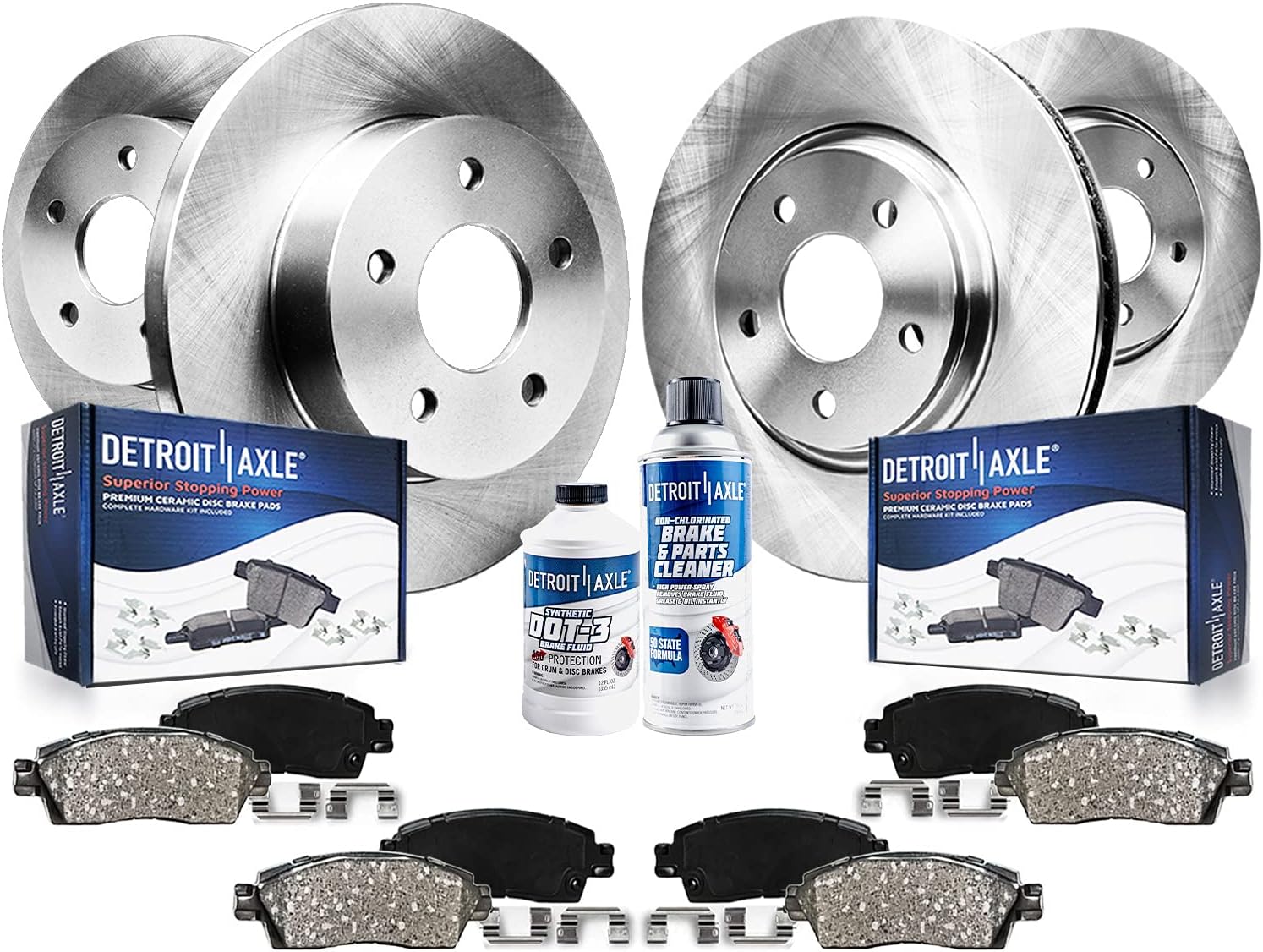
| Fitment | 1999–2002 (Akebono fronts built before 5/11/2002); 2003–2004 Grand Cherokee |
|---|---|
| Kit contents | 2 front rotors, 2 rear rotors, front & rear pads with hardware, brake cleaner, brake fluid |
| Pad type | Ceramic |
| Rotor feature | Ventilated and slotted, zinc plated |
This Detroit Axle kit supplies everything needed to service all four corners on the specified 1999–2004 Jeep Grand Cherokee models that use Akebono front calipers or the later 2003–2004 fitment. The set includes two front and two rear vented rotors, matching ceramic pads with hardware, a can of brake cleaner and a bottle of brake fluid so you can complete the job without sourcing extra consumables. The rotors are zinc plated to resist corrosion and are machined with accurate locating holes for a factory-quality fit, while slots help with heat dissipation during repeated braking. Ceramic pads provide quiet, low-dust operation and predictable bite for street and light performance driving. A few users reported minor hardware fitment issues or noisy break-in for low-speed stops, and the kit does not include replacement rotor screws if your hubs use them, so expect to supply small extras during installation. For an owner wanting straightforward brake performance upgrades that stay close to factory behavior, this kit is a practical, full-package option.
Best for: Drivers who want a single, ready-to-install kit to refresh all four brakes on a 1999–2004 Grand Cherokee and prioritize improved fade resistance and quieter street-friendly braking.
Less Ideal for: Enthusiasts seeking heavy track use, aggressive high-temperature stopping, or specialty drilled/slotted performance rotors should consider dedicated performance-focused rotors and pads instead.
- Complete four-wheel kit includes front and rear rotors, pads, hardware, brake cleaner, and brake fluid
- Ventilated, slotted rotors with zinc plating for improved heat dissipation and corrosion resistance
- Machined locating holes and factory-style fit that generally installs without modification
- Ceramic pads deliver low dust and quiet operation under normal driving
- Hardware clips have occasional fitment tolerance issues reported by some buyers
- Does not include rotor mounting screws for vehicles that require new screws during replacement
Verdict: A convenient all-in-one brake refresh that restores factory-style stopping with improved cooling and low-dust ceramic pads for 1999–2004 Jeep Grand Cherokee owners focused on reliable street performance.
HUSCH D945 Front Ceramic Brake Pads Kit

| Auto Part Position | Front |
|---|---|
| Compatible with Vehicle Type | Car, Truck, Van |
| Material Type | Ceramic |
| Number of Items | 4 |
| Automotive Fit Type | Vehicle Specific Fit |
These HUSCH D945 front pads are a ceramic replacement kit designed to restore front braking performance on applicable Jeep Grand Cherokees. Installation is straightforward for a DIYer or technician because the set is vehicle-specific and includes four pads plus installation hardware in many kits. The ceramic compound is marketed to deliver a relatively high friction coefficient for shorter stopping distances, low dust that keeps wheels cleaner, and quiet operation thanks to close tolerances and anti-rattle accessories. Real-world buyer feedback highlights good fit, solid initial stopping power, and minimal noise. Expect the pads to feel firm under hard stops and produce less visible residue than semi-metallic pads. Limitations: ceramic pads can generate slightly less initial bite in very cold conditions compared with some high-friction semi-metallic options, and long-term wear life will depend on driving style and rotor condition. If your rotors or caliper hardware are worn, plan to clean or service those parts for the best fit and durability.
Best for: Buyers who want a quiet, low-dust, factory-style replacement that restores dependable everyday stopping for a Grand Cherokee and prefer a straightforward DIY or budget-conscious repair.
Less Ideal for: Drivers seeking race-oriented or heavy-towing high-temperature performance should choose a performance-grade semi-metallic pad instead.
- Vehicle-specific front fit for 1999–2004 Jeep Grand Cherokee reduces installation fitment issues
- Ceramic compound produces less brake dust and cleaner wheels
- Higher friction coefficient for shorter stopping distances under normal driving
- Includes installation hardware in many kits to simplify DIY replacement
- Ceramic formulation can offer slightly less initial bite in very cold conditions compared with some semi-metallic performance pads
Verdict: A quiet, low-dust ceramic front pad kit that restores reliable everyday braking for 1999–2004 Jeep Grand Cherokee owners looking for a practical, OEM-style replacement.
Auto Shack Front Ceramic Brake Pad Set for Jeep Grand Cherokee (1999–2004)

| Material Type | Ceramic |
|---|---|
| Auto Part Position | Front |
| Compatible with Vehicle Type | SUV |
| Manufacturer Part Number | SCD945 |
These Auto Shack front ceramic pads are a straightforward, value-focused replacement for 1999–2004 Jeep Grand Cherokee front brakes. Designed for ceramic performance, the pads prioritize quiet operation and low dust, which keeps wheels cleaner between services. They aim to provide consistent friction stability and help extend rotor life compared with more abrasive compounds, so you can expect smoother, predictable pedal feel in everyday driving and light towing. The kit includes one complete front pad set and is a vehicle-specific fit, so installation is typical for a DIY or shop brake job without special adapters. Limitations are that the set does not include hardware clips or shims, so you may need to reuse existing hardware or buy small accessories separately, and ceramic pads usually produce slightly less initial bite than semi-metallic options under heavy load. For budget-focused owners wanting a quiet, low-maintenance replacement that protects rotors, these pads are a practical choice.
Best for: Drivers replacing worn front pads on a 1999–2004 Grand Cherokee who want a quiet, low-dust, and rotor-friendly option at a modest cost and prefer a straightforward direct replacement.
Less Ideal for: Owners who frequently tow heavy loads, drive aggressively, or need maximum fade resistance should consider more aggressive semi-metallic or performance brake compounds instead.
- Ceramic compound for quiet operation and reduced brake dust
- Engineered to promote extended rotor life and stable friction
- Vehicle-specific fit for 1999–2004 Jeep Grand Cherokee front application
- Simple direct-replacement design suitable for DIY installation or shop fitting
- Does not include hardware clips or shims, which may need separate purchase
- Ceramic pads can have less initial bite than semi-metallic pads under heavy load
Verdict: A budget-friendly, quiet ceramic front pad set made to be a straightforward, rotor-friendly replacement for 1999–2004 Jeep Grand Cherokee owners.
Bendix Priority1 CFM791 Semi‑Metallic Rear Brake Pads

| Auto Part Position | Rear |
|---|---|
| Compatible with Vehicle Type | Cars, SUV, Truck |
| Model Number | CFM791 |
| Material Type | Semi‑Metallic |
| Included Components | Pad set with installation hardware |
These Bendix Priority1 semi‑metallic rear brake pads are a vehicle-specific replacement designed to match factory fit, form, and function for 1999–2004 Jeep Grand Cherokee rear brakes. They come as a single pad set with installation hardware and feature shims, slots, and chamfers intended to reduce noise and promote even wear. In day‑to‑day use they provide strong, consistent stopping power and good high‑temperature resistance thanks to the semi‑metallic compound, which helps reduce brake fade on highway or towing runs. Included hardware and a packet of brake lubricant simplify installation and seat-in, and many users report quiet operation and lower dust than cheaper options. The main compromise is the firmer feeling of semi‑metallic material compared with ceramic pads, which can transmit a bit more pedal feedback and generate slightly more dust. Fitment is vehicle specific, so confirm the exact fit for your Grand Cherokee before installing.
Best for: Buyers who prioritize reliable, factory‑matched braking performance and want a durable pad that resists fade during daily driving and occasional heavy use.
Less Ideal for: Drivers looking for the lowest possible brake dust and the softest pedal feel should consider ceramic pad options instead.
- Factory‑matched vehicle specific fit for direct replacement
- Semi‑metallic compound offers strong stopping power and heat resistance
- Includes installation hardware and brake lubricant for easier installation
- Shims, slots, and chamfers help reduce noise and promote even wear
- Widely reviewed with consistent reports of quiet operation and good fit
- Semi‑metallic material can feel firmer at the pedal and produce more dust than ceramic pads
Verdict: Choose these Bendix Priority1 rear pads when you want a factory‑fit, fade‑resistant replacement that delivers dependable stopping performance for a 1999–2004 Jeep Grand Cherokee.
Detroit Axle Brake Kit for 1999–2004 Jeep Grand Cherokee — Drilled & Slotted Rotors with Ceramic Pads (Front & Rear)

| Fitment | 1999-2004 Jeep Grand Cherokee (specified models) |
|---|---|
| Rotors | Drilled & slotted, ventilated (front and rear) |
| Brake pads | Ceramic, front and rear, hardware included |
| Includes | Brake cleaner can and brake fluid bottle |
| Warranty | 10 Year Warranty |
This Detroit Axle kit supplies everything needed to replace both front and rear brakes on a 1999–2004 Jeep Grand Cherokee (models noted in the fitment). It includes drilled and slotted ventilated rotors for front and rear, ceramic brake pads with hardware, a can of brake cleaner and a small bottle of brake fluid so a DIYer can complete a full service in one package. The drilled and slotted rotors help heat dissipation and channel away debris and moisture while the ceramic pads are quiet and low on metallic dust, making them a practical daily-driver upgrade. Fitment is machined to factory-style locating holes so installation requires no modification, but buyers should be prepared for heavier front rotors and possible seized old rotors during removal. The kit is aimed at home mechanics who want a one-stop replacement; it does not include step-by-step printed instructions for every vehicle and some small hardware bags have reported fitment variance, so keep basic tools and patience on hand. Customer feedback shows strong stopping performance and consistent fit when matched to the specified Jeep models.
Best for: Buyers who prioritize verified real-world performance and prefer an all-in-one replacement kit they can install themselves will appreciate this product; ideal for confident DIYers who check reviews and want complete parts and basic consumables in one purchase.
Less Ideal for: If you prefer professional installation with step-by-step guidance included or need perfectly labeled axle-specific packaging and hardware without inspection, consider buying through a shop or choosing a kit with explicit install instructions and individually labeled components.
- Complete kit with front and rear drilled and slotted rotors plus ceramic pads and installation hardware
- Drilled and ventilated rotors improve cooling and reduce fade during repeated stops
- 100% ceramic pads produce low dust and reduced noise compared with metallic pads
- Includes brake cleaner and brake fluid so you can finish a full brake job without sourcing small extras
- No detailed printed installation instructions included for all fitments
- Some customers reported a small number of mismatched or damaged hardware pieces in kit bags
Verdict: Choose this kit if you want a single, review-backed package that replaces all rotors and pads on the specified Grand Cherokee years and delivers improved cooling and low-dust ceramic braking for DIY installation.
Detroit Axle Ceramic Brake Pad Kit with Hardware and Cleaner/Fluid for 1999–2004 Jeep Grand Cherokee

| Fitment | 1999–2004 Jeep Grand Cherokee (see notes for Akebono front calipers) |
|---|---|
| Material Type | Ceramic |
| Number of Items | 6 (pads plus accessories) |
| Specification Met | OEM |
| Manufacturer Warranty Description | 6-Month |
This Detroit Axle kit supplies both front and rear ceramic brake pads plus the mounting hardware, a 10 oz brake cleaner, and a 12 oz brake fluid bottle so you can complete a full brake job without sourcing extras. It is made as a vehicle-specific fit for 1999–2004 Jeep Grand Cherokee (note: front fitment applies to models with Akebono front calipers built before 5/11/2002). The ceramic compound and chamfered edges are intended to reduce vibration and noise while resisting high temperatures to keep braking consistent under load. Included hardware and cleaner make installation cleaner and faster for DIYers or shops. Buyers should expect quieter stops, less rotor wear compared with many metallic pads, and straightforward replacement if the fitment matches. Some users report more wheel dust than expected for ceramic pads, so wheel cleaning may be needed more often. Also long-term durability depends on driving style and conditions, so regular inspection is recommended.
Best for: Buyers who prioritize a reliable, factory-style replacement and want a complete kit that simplifies a do-it-yourself brake job on their 1999–2004 Jeep Grand Cherokee.
Less Ideal for: Drivers seeking ultra-low dust or track-focused, high-friction compounds should consider specialty performance pads instead.
- Complete kit includes front and rear pads, mounting hardware, brake cleaner, and brake fluid for one-stop replacement
- Ceramic formula with chamfers designed for low noise and reduced vibration
- High temperature resistance to maintain braking performance under heavier use
- Vehicle-specific fitment for 1999–2004 Jeep Grand Cherokee models to simplify installation
- Some users report noticeable wheel dust despite the ceramic formulation
Verdict: A complete, vehicle-specific ceramic pad kit that delivers quieter, factory-style braking and includes all the basic consumables needed for a full pad replacement on 1999–2004 Jeep Grand Cherokee.
Choosing the Right 1999-2004 Jeep Grand Cherokee Brake Pads: Key Factors to Consider
Compound Type and Driving Use
The pad compound determines initial bite, fade resistance, dust levels, and rotor wear. Organic and ceramic compounds often prioritize quieter operation and lower dust, while semi-metallic compounds usually provide stronger initial bite and higher heat tolerance. For the 1999-2004 Grand Cherokee, think about typical driving: highway cruising with occasional towing or city stop-and-go conditions. If you do frequent towing or heavy loads, choose compounds with better thermal stability to resist fade under repeated braking.
Match the compound to your use case rather than selecting a pad that trades comfort for extreme performance. That prevents premature rotor wear or noisy operation that can overshadow any incremental braking gains.
Pad Thickness and Wear Life
Starting pad thickness affects how long the set will last before replacement. Thicker friction material typically provides more service life but check the pad thickness spec to ensure fit in the caliper piston travel range. On the WJ Grand Cherokee, rotor diameter and caliper clearance limit how thick pads can be when installed.
Also consider wear characteristics: some compounds abrade rotors more quickly, requiring rotor resurfacing or replacement sooner. A longer-lasting pad can reduce maintenance frequency, especially for drivers who see a lot of miles, but extremely hard compounds can increase noise or decrease initial bite.
Noise, Vibration, and Harshness Control
Brake noise is a common ownership complaint. Look for pads with quality backing plates, chamfers, and shims to minimize vibration-induced squeal. Some compounds inherently generate less high-frequency noise, while others need additional damping features.
For the 1999-2004 Grand Cherokee, pay attention to pad hardware and whether anti-rattle clips and shims are included or recommended. Proper installation and hardware renewal often reduce noise issues more than choosing an inherently quieter compound alone.
Fitment and Installation Ease
Correct fitment to WJ calipers is essential for safety and proper performance. Verify pad dimensions, mounting tab placement, and whether the set includes necessary hardware for front or rear positions. Some pads are sold without clips or shims; replacing worn hardware during installation prevents uneven wear and noise.
Consider how much mechanic time you're willing to invest. Sets that match factory geometry and include all ancillary hardware simplify installation and reduce the risk of improper seating or caliper piston problems.
Rotor Interaction and Resurfacing Needs
Pad compounds interact with rotors differently. Some pads produce more heat and require rotor resurfacing when replacing pads, while others are more rotor-friendly. Check whether the pad manufacturer recommends a minimum rotor thickness or resurfacing procedure. For WJ Grand Cherokees with original rotors, measuring thickness and verifying surface condition before new pads are installed helps avoid uneven wear and pulsing.
When rotors are near minimum thickness or badly grooved, pairing new pads with resurfaced or replaced rotors delivers the best stopping performance and reduces the chance of premature pad glazing.
Dust, Corrosion, and Environmental Considerations
Brake dust affects wheel finish and can accumulate on suspension components. Ceramic-based compounds typically generate less visible dust, which is useful if you want cleaner wheels. Also consider corrosive properties of backing plates and hardware that may be exposed to road salt or moisture.
Look for pads with protective coatings on the backing plate and stainless hardware if you live in a wet or salty environment. These measures extend the life of caliper pins and clips and reduce the chance of sticking or uneven wear.
Front Vs Rear Brake Pad Roles on the WJ
On the 1999-2004 Grand Cherokee, front pads handle the majority of braking force because weight transfers forward during stops. That means front pad selection has a larger influence on initial bite, pedal feel, and most emergency stopping scenarios. Rear pads contribute to stability and parking brake performance but generally experience lower heat and wear.
When selecting front pads, prioritize compound heat resistance and consistent friction under repeated stops. For rear pads, you can emphasize longevity and low dust if your driving is mostly highway-based, but do not neglect mechanical fitment with the parking brake components.
- Front pads: prioritize stopping power, fade resistance, and correct thickness.
- Rear pads: prioritize even wear, parking brake compatibility, and low dust.
- Replace hardware or clips at the rear if they show corrosion that can affect parking brake function.
Ceramic Vs Semi-Metallic for Everyday Use
Ceramic compounds offer quieter operation and reduced dust, which many Grand Cherokee owners prefer for daily driving and light-duty towing. They tend to be gentler on rotors but can have slightly less bite under extreme conditions.
Semi-metallic pads provide stronger initial bite and better heat tolerance, useful for heavier loads or more aggressive driving. However, they usually produce more dust and can accelerate rotor wear if paired with softer rotors.
- Choose ceramic for quiet daily driving and cleaner wheels.
- Choose semi-metallic if you often tow, haul, or drive in hilly terrain.
Signs You Need Brake Pads Replacement
Common brake pad wear symptoms include reduced pedal responsiveness, increased stopping distance, and a persistent squeal under light braking. Visual inspection can reveal remaining pad material; if the friction layer is below the recommended thickness, replacement is due.
Grinding noises usually indicate that pads are worn to the backing plate and rotors may be damaged. Address grinding immediately to avoid costly rotor replacement and compromised braking performance.
- Squeal under light braking: often means wear indicators or glazing.
- Grinding: immediate inspection required to prevent rotor damage.
- Vibration or pulsing at the pedal: could indicate uneven pad wear or rotor thickness issues.
Basic Installation Tips for WJ Calipers
Before installing new pads, inspect caliper pistons, slides, and mounting hardware. Clean mating surfaces and apply appropriate high-temperature grease to caliper pins. Compress pistons evenly and verify that the parking brake mechanism at the rear moves freely.
Always torque guide pins and caliper bolts to the factory specification and test-drive to bed the pads properly. Proper bedding helps stabilize friction characteristics and reduces the risk of uneven deposits on rotors.
- Replace worn clips, shims, and anti-rattle hardware during pad service.
- Use a torque wrench for caliper mounting bolts to avoid caliper distortion.
- Perform a careful bedding routine with progressive stops to seat pads evenly.
Measuring Brake Pad Thickness and Rotor Condition
Measure pad thickness at the thickest point of the friction material. Compare to the vehicle-specific minimum recommended thickness. If pads are near or below that value, replace them. Also measure rotor thickness and check for runout and scoring.
If rotors are uneven or below minimum thickness, resurface or replace them before installing new pads. Installing new pads on compromised rotors can lead to vibration, reduced stopping power, and shortened pad life.
- Check the pad thickness spec and rotor minimum thickness for the WJ Grand Cherokee.
- Inspect rotor surfaces for grooves, heat spots, and runout.
- Resurface or replace rotors that fail thickness or smoothness checks.
Aftermarket Pad Fitment Guide
When selecting aftermarket pads, confirm the set matches WJ front or rear geometry and includes the correct backing plate orientation. Some aftermarket sets are sold as front or rear-specific kits and may omit hardware; verify contents before starting the job.
If a pad set requires different caliper hardware, factor that into the service plan. Proper fitment prevents noise and uneven wear and reduces the chance of installation-related call-backs.
- Verify part dimensions against factory specifications for WJ calipers.
- Confirm whether shims and clips are included or need to be purchased separately.
- Check manufacturer notes on bedding and break-in procedures for aftermarket compounds.
Still looking for the perfect fit?
Select your Jeep Grand Cherokee configuration to see the most relevant Brake Pads recommendations
How We Chose the Best 1999-2004 Jeep Grand Cherokee Brake Pads
We prioritized pads that deliver predictable stopping power, long life, and low noise on the 1999-2004 (WJ) Grand Cherokee. Evaluation focused on braking compound suitability for this vehicle, thermal stability during repeated stops, and abrasion rates that affect rotor wear. We also weighed noise and dust characteristics because owners often balance ride comfort with maintenance frequency. Fitment integrity and backing plate design were assessed to reduce vibration and installation issues specific to WJ calipers. Finally, we considered serviceability factors like available hardware kits and whether the pad set matched common axle configurations for the model years.Excluded items: pads that required substantial caliper modification, kits incompatible with common WJ rotor/caliper setups, and variants that sacrifice basic stopping ability for extreme track-focused performance. The editorial filters favored balanced everyday driving performance, durability, and straightforward installation. Key dimensions, compound types, and noise-control features were used as the primary decision dimensions.
Our full evaluation process is outlined in our review methodology.
FAQ
How often should I check brake pads on a 1999-2004 Grand Cherokee?
It depends on driving habits, but visually inspect pads every 6,000 to 10,000 miles and measure thickness at each oil change interval. Drivers who tow or do a lot of city driving should check more frequently.
What thickness indicates the pads need replacement?
Many pads should be replaced when friction material is 3 millimeters or less, though specific thickness specs can vary. If you find visible backing plate contact or significant glazing, replace them regardless of exact measurement.
Why are my new pads noisy after installation?
Noise often comes from missing or worn shims, improper hardware, or inadequate bedding. Ensure anti-rattle clips are installed, backing plates are clean and coated, and perform a proper break-in routine to reduce squeal.
Can I replace only the front pads and leave the rears?
You can replace only the front pads if they are worn, but mismatched wear levels can affect balance. Inspect the rear pads and hardware and consider replacing both axles if rear pads are near end of life for consistent braking feel.
Do ceramic pads work well with stock rotors on the WJ?
Ceramic pads generally work well with stock rotors and produce less dust, but their bite and heat characteristics differ from semi-metallics. If rotors are already worn or thin, address rotor condition first to avoid glazing or uneven wear.
What does grinding noise from the brakes usually mean?
Grinding typically indicates the friction material is depleted and the backing plate is contacting the rotor. Inspect and service immediately to prevent rotor scoring and more extensive repairs.
Final Verdict
Prioritize pad compounds and fitment that match how you use your 1999-2004 Grand Cherokee. Front pads deserve attention for stopping performance and fade resistance, while rear pads should preserve parking brake function and stability. Balance noise, dust, and rotor friendliness when selecting a set and address rotor condition before installing new pads. By focusing on compound, thickness, and proper hardware fitment, you can choose pads that deliver reliable stopping and predictable wear for the WJ Grand Cherokee.
Explore More:
- Check out all Jeep Grand Cherokee parts & accessories
- Explore Brake Pads Maintenance & Repair Guides
- Explore Brake System
- Browse all Auto Parts
