

Note: This article contains affiliate links. If you click on these links and make a purchase, I may earn a small commission at no extra cost to you. This helps support my research and content. Read my full affiliate disclosure here.
If you own a 2006-2010 Ford Explorer, worn pads and warped rotors can compromise stopping distance, pedal feel, and safety. Choosing the right brake pad & rotor kit helps restore reliable braking, cut vibration and noise, and keep the vehicle safe during everyday driving and occasional towing.This guide shortlists seven top brake pad and rotor kits chosen for fitment, material quality, and expected longevity specific to the 2006-2010 Explorer. We evaluate stopping performance, noise and dust characteristics, rotor durability, and installation considerations so you can pick the right kit for your driving needs. Read on for practical buying guidance before the product list.
Looking for other parts? See all Ford Explorer parts & accessories.
Top Picks at a Glance


1. Detroit Axle Front and Rear Drilled & Slotted Brake Rotor and Ceramic Pad Kit with Lug Nuts for 2006–2010 Ford Explorer / Sport Trac / Mercury Mountaineer

| Fitment | 2006-2010 Ford Explorer, 2007-2010 Explorer Sport Trac, 2006-2010 Mercury Mountaineer (independent rear suspension) |
|---|---|
| Includes | 4 rotors (drilled & slotted), 4 ceramic pads (front & rear) with hardware, 20 lug nuts, brake cleaner, brake fluid |
| Lug Nut Thread | 1/2"-20 |
| Lug Nut Seat | Conical 60 degree |
| Warranty | 10-Year |
This Detroit Axle kit supplies everything needed to refresh braking on a 2006–2010 Explorer, Sport Trac, or Mountaineer with independent rear suspension. It includes four drilled and slotted rotors for improved heat dissipation, matched ceramic front and rear pads with hardware, 20 chrome lug nuts, a brake cleaner spray, and a bottle of brake fluid. In everyday driving the drilled and slotted rotors help cooling under repeated stops and the ceramic pads deliver quieter, low-dust operation compared with semi-metallic pads. The kit is designed to fit without modification thanks to machined locating holes and zinc plating that resists visible corrosion. It is a convenient single-purchase option for a full brake service and avoids sourcing separate parts. Expect a DIY-friendly install for owners comfortable with brakes, but professional installation is recommended if you lack tools or experience. Also note the kit targets the specified Ford/Mercury years and does not address ABS sensors, calipers, or brake hose replacement.
Best for: Buyers who want a single, balanced package to refresh the entire braking system on a 2006–2010 Explorer, Sport Trac, or Mountaineer and value quiet operation, reduced dust, and easier installation.
Less Ideal for: Drivers looking for high-performance track pads or those who need to replace calipers or ABS components should choose a different solution.
- Complete kit includes front and rear rotors, front and rear ceramic pads, hardware, lug nuts, brake cleaner, and brake fluid
- Drilled and slotted rotors improve cooling and help remove moisture under repeated heavy braking
- Ceramic pads offer quieter operation and reduced brake dust compared with many semi-metallic pads
- Zinc-plated components and machined locating holes promote corrosion resistance and straightforward fitment
- Does not include calipers, ABS sensors, or brake hoses so additional parts may be needed for a full-service overhaul
Verdict: A convenient, all-in-one brake refresh kit that balances quiet ceramic pads and ventilated drilled-and-slotted rotors for everyday driving on 2006–2010 Explorer-family vehicles.
2. PowerStop Z36 Truck & Tow Front and Rear Brake Kit (K1443-36)

| Included components | Front and rear pads, four drilled & slotted rotors, installation hardware |
|---|---|
| Pad compound | Carbon-fiber reinforced ceramic (Z36) |
| Rotor finish | Silver zinc dichromate plated |
| Fitment | Vehicle specific fit for 2006–2010 Explorer / 2007–2010 Sport Trac / Mountaineer |
This PowerStop Z36 Truck & Tow kit replaces both front and rear pads and rotors with carbon-fiber reinforced ceramic pads and drilled-and-slotted rotors, delivering stronger, more consistent stopping when towing or driving in hilly terrain. It is intended as a bolt-on upgrade for 2006–2010 Ford Explorer family vehicles and includes stainless-steel hardware for a straightforward installation. The Z36 pads are low-dust and use stainless shims and chamfered edges to reduce noise while retaining everyday drivability. The drilled and slotted rotors are machined from G3000 metallurgy, plated in silver zinc to resist corrosion, and designed to disperse heat and debris to limit fade during repeated heavy stops. Expect better braking under load and cleaner wheels compared with many stock setups, with a modest increase in hardware complexity from replacing both pads and rotors. This kit is focused on towing, hauling, and severe-duty driving rather than track-focused performance or vehicles that only need a basic pad swap.
Best for: Buyers who prioritize stronger, more consistent braking for towing, hauling, or frequent hilly driving and want a full bolt-on front and rear upgrade for 2006–2010 Explorer-family vehicles.
Less Ideal for: Drivers who only need occasional light braking improvements or a low-cost pad-only replacement should consider simpler options instead.
- Complete front and rear kit includes pads, four drilled-and-slotted rotors, and installation hardware for a full system refresh
- Carbon-fiber reinforced ceramic pads offer stronger stopping and lower wheel dust than many stock pads
- Drilled and slotted rotors improve cooling and help resist brake fade during towing or repeated heavy braking
- Silver zinc plating on rotors reduces visible rust and corrosion over time
- Designed for heavy-duty use which may result in slightly firmer pedal feel compared with softer everyday-oriented pads
Verdict: Choose this kit if you need a bolt-on, heavy-duty front and rear brake upgrade that improves stopping and reduces fade while towing or driving in mountainous terrain.
3. TRQ Front Ceramic Brake Pad and Vented Rotor Kit

| Included Components | 1 Front Ceramic Brake Pad Set, 2 Front Brake Rotors |
|---|---|
| Friction Material Composition | Ceramic |
| Front Brake Rotor Venting Type | Vented |
| Orientation | Front |
| Automotive Fit Type | Vehicle Specific Fit |
This TRQ kit bundles a set of front ceramic brake pads with two vented rotors intended as a direct-fit replacement for 2006–2010 Ford Explorer, Explorer Sport Trac, and 2006–2010 Mercury Mountaineer front brakes. Installation is aimed at DIYers and shops alike since parts are built to match factory mounting points and TRQ provides installation videos. Ceramic pads mean quieter operation and lower dust compared with semi-metallic compounds, while vented rotors help dissipate heat for consistent stopping under normal driving. The kit includes pad bonding labeled as premium Posi and rotor diameter matching the factory 12.01 inch size so fitment is straightforward. Expect improved civility and tidy wheels after replacement, but drivers who regularly tow heavy loads or aggressively drive may prefer more aggressive friction materials. This is a practical, vehicle-specific option for owners wanting a quieter, cleaner, factory-style brake refresh without modifying hardware.
Best for: Practical owners looking to refresh front brakes on a 2006–2010 Explorer or similar without upgrades, prioritizing quieter operation, lower dust, and straightforward installation.
Less Ideal for: Drivers who frequently tow heavy loads, carry maximum payloads, or do spirited driving should consider performance-oriented pads and rotors instead.
- Ceramic brake pads reduce dust and run quieter than many semi-metallic options
- Vented rotors improve heat dissipation for steady braking in everyday use
- Designed as vehicle-specific direct replacements for straightforward installation
- Includes both pads and rotors for a coordinated front brake service
- Ceramic pads may not provide optimal fade resistance for heavy towing or high-performance driving
Verdict: A practical, direct-fit front brake kit that delivers quieter, lower-dust braking for 2006–2010 Explorer owners who want a straightforward factory-style refresh.
4. Detroit Axle Rear Brake Rotor and Ceramic Pad Kit for 2006–2010 Ford Explorer / 2006–2010 Mercury Mountaineer

| Fitment | 2006-2010 Ford Explorer; 2006-2010 Mercury Mountaineer |
|---|---|
| Kit contents | 2 rear rotors, 2 ceramic pads, hardware, 10oz cleaner, 12oz brake fluid |
| Rotor feature | Ventilated with slots |
| Pad material | 100% ceramic |
| Finish | Zinc plated |
This Detroit Axle kit supplies a complete rear brake service for 2006–2010 Ford Explorer and 2006–2010 Mercury Mountaineer models by pairing two ventilated disc rotors with ceramic brake pads and basic consumables. Installation is straightforward for a competent DIYer because the rotors are machined with locating holes to match factory mounting and the kit includes hardware plus a brake cleaner spray and a bottle of brake fluid. The rotors have ventilation slots and zinc plating to help cooling and resist visible corrosion, while the ceramic pads aim to run quietly and produce less brake dust than semi-metallic options. For budget-focused owners this bundle covers the common rear brake hardware in one purchase and reduces the need to source parts separately. Note that ceramic pads trade slightly reduced initial bite under extreme heavy towing compared with high-friction metallic pads, and this kit is focused on rear-brake replacement only so it does not address front brakes or calipers.
Best for: Buyers looking to replace rear brakes on a 2006–2010 Explorer or Mountaineer with an all-in-one, affordable kit and who prioritize low dust and quiet operation over maximum track-level friction.
Less Ideal for: People who need a high-performance or towing-focused brake setup, those wanting a full front-and-rear overhaul in one purchase, or buyers who prefer metallic pad compounds.
- Complete rear kit includes both rotors, ceramic pads, installation hardware, brake cleaner, and brake fluid
- Ventilated, slotted rotors improve cooling and moisture removal during repeated stops
- Zinc plating reduces visible corrosion and wheel-dust buildup compared with plain rotors
- Ceramic pads are quiet and generate lower brake dust than many semi-metallic pads
- Ceramic pads can have slightly less initial bite than high-friction metallic pads under heavy towing or track use
Verdict: A budget-friendly, all-in-one rear brake kit that delivers quiet, low-dust ceramic pads and ventilated rotors for 2006–2010 Explorer and Mountaineer rear brake replacements.
5. Detroit Axle 8pc Brake Kit with Drilled & Slotted Rotors and Ceramic Pads for 2006–2010 Ford Explorer / Mountaineer
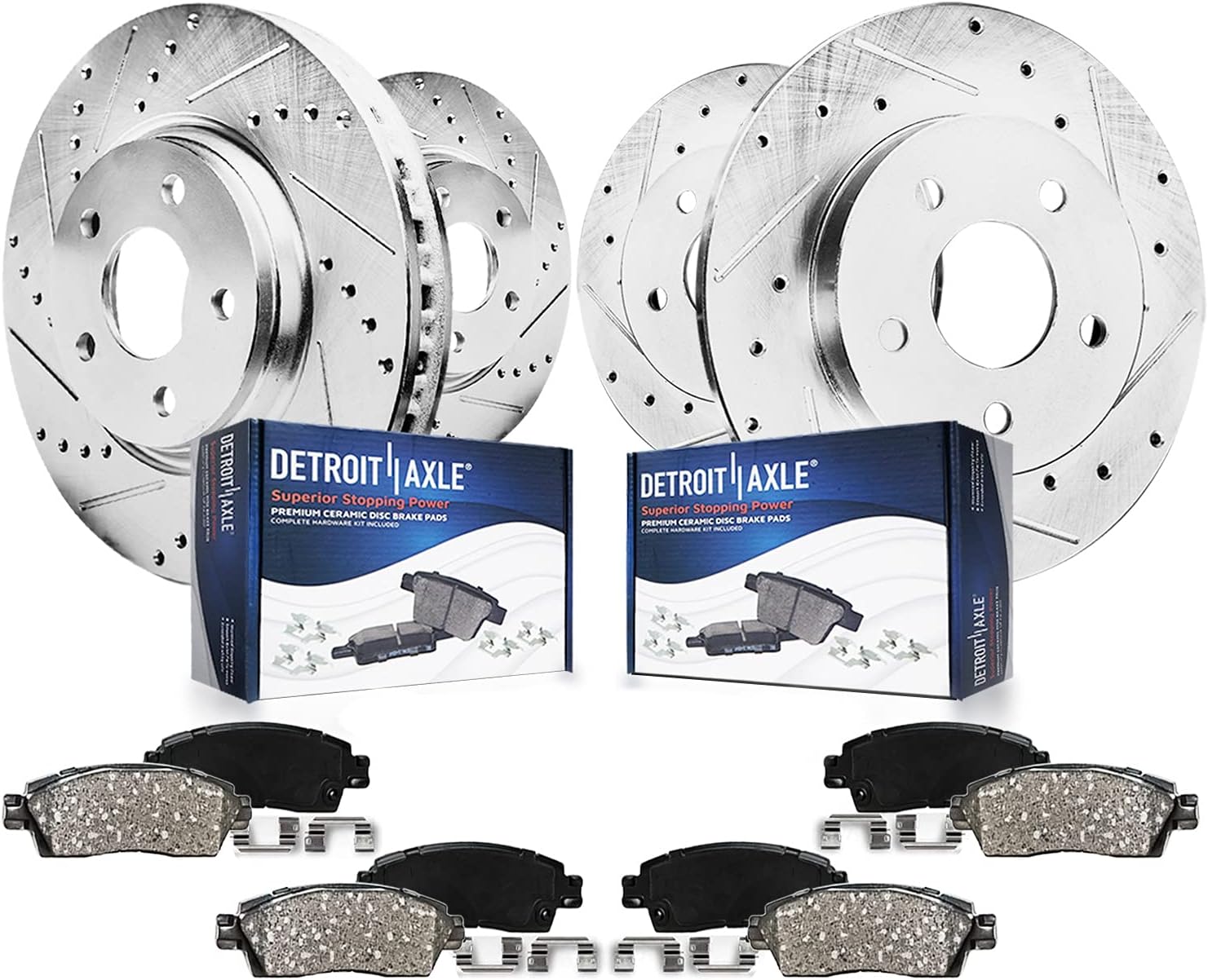
| Fitment | 2006-2010 Ford Explorer / Mercury Mountaineer |
|---|---|
| Kit contents | 2 front rotors, 2 rear rotors, front & rear ceramic pads, hardware |
| Rotor type | Drilled & slotted |
| Rotor finish | Zinc plated |
| Warranty | 10 Year |
This Detroit Axle kit supplies front and rear drilled-and-slotted rotors plus matching ceramic pads and the necessary hardware as a full replacement for 2006–2010 Ford Explorer and Mercury Mountaineer applications. The drilled and slotted rotor faces improve cooling and help remove moisture and gas under heavy use, while zinc plating reduces surface corrosion and visible wheel dust. The ceramic pads are formulated to run quieter and produce less dust than semi-metallic alternatives and are intended to resist heat fade for more consistent stops during repeated braking. Installation is straightforward because the rotors are machined with factory-style locating holes to drop in without modification. Expect a noticeable reduction in dust and noise compared with older semi-metallic pads, but buyers seeking maximum performance under extreme track conditions may prefer higher-friction compounds. The kit comes with a lengthy 10-year warranty from the brand, making it a practical choice for owners prioritizing dependable, long-lasting replacement brakes for daily driving and towing-capable SUVs of this era.
Best for: Buyers who want a dependable, vehicle-specific replacement brake kit that emphasizes quiet operation, low dust, and consistent everyday braking performance over long-term ownership.
Less Ideal for: Drivers who primarily need maximum track or high-performance braking or who want the highest possible pad friction for aggressive driving should consider performance-oriented pads and rotors instead.
- Complete front and rear kit includes rotors, ceramic pads and hardware for one convenient purchase
- Drilled and slotted rotors improve heat dissipation and help shed water and brake gas under repeated stops
- Zinc plating on rotors offers corrosion resistance and reduces visible wheel dust
- Ceramic pads run quieter and produce less brake dust than many semi-metallic pads
- Ceramic pads trade some ultimate stopping power for lower dust and noise, so not optimized for track use
Verdict: A convenient, vehicle-specific replacement kit that delivers quieter, lower-dust braking and improved rotor cooling for reliable everyday use on 2006–2010 Explorer and Mountaineer models.
6. Detroit Axle Front & Rear Drilled/Slotted Brake Kit with Ceramic Pads for 2006–2010 Ford Explorer

| Fitment | 2006-2010 Ford Explorer, 2007-2010 Sport Trac, 2006-2010 Mercury Mountaineer |
|---|---|
| Kit contents | 4 rotors (drilled & slotted) + 4 ceramic pads + hardware + brake cleaner & fluid |
| Rotor finish | Zinc plated |
| Pad type | Ceramic |
This Detroit Axle kit supplies everything needed to replace both front and rear brakes on a 2006–2010 Ford Explorer (including Sport Trac) and Mercury Mountaineer. It includes four drilled and slotted rotors, matching ceramic pads with hardware for front and rear, plus a brake cleaner and fluid bottle. The drilled and slotted rotor design helps dissipate heat and shed moisture for more consistent braking under heavier use, while zinc plating resists corrosion and reduces visible wheel dust. The pads are ceramic, so they tend to run quieter and produce less dust than semi-metallic options. Fitment is machined to match factory locating holes so installation should be straightforward for a DIYer or shop. Limitations are that ceramic pads can feel less bite than performance metallics under extreme conditions, and drilled rotors may be more prone to cracking than solid designs if repeatedly overheated. For typical street driving and towing within Explorer limits this kit balances durability, noise control, and an easy install.
Best for: Buyers who want a full, factory-fit replacement kit that simplifies a front-and-rear brake service and prioritize quiet operation and corrosion resistance backed by many customer purchases.
Less Ideal for: Drivers who regularly push their Explorer in track or heavy commercial towing conditions and need maximum high-temperature stopping power should consider performance-oriented rotors and metallic pads instead.
- Complete front-and-rear kit includes rotors, pads, hardware, brake cleaner and fluid for one-stop replacement.
- Drilled and slotted rotors improve heat dissipation and help reduce brake fade during heavier use.
- Zinc-plated rotors resist corrosion and minimize visible wheel dust for longer cosmetic life.
- Ceramic brake pads run quieter and produce less dust than many semi-metallic pads.
- Drilled rotors can be more susceptible to cracking if repeatedly exposed to extreme heat.
- Ceramic pads may deliver less initial bite than performance-oriented metallic pads in aggressive driving.
Verdict: A convenient, factory-fit full front-and-rear kit that prioritizes quiet braking, corrosion resistance, and straightforward installation for 2006–2010 Ford Explorer owners who value proven reliability.
7. Detroit Axle Front and Rear Brake Rotor and Ceramic Pad Kit for 2006–2010 Ford Explorer / 2006–2010 Mercury Mountaineer

| Fitment | 2006-2010 Ford Explorer, 2006-2010 Mercury Mountaineer |
|---|---|
| Kit contents | Front and rear rotors, front and rear ceramic pads, hardware |
| Rotor type | Vented, zinc plated |
| Pad type | Ceramic |
| Warranty | 10 Year Warranty |
This Detroit Axle kit supplies both front and rear rotors plus ceramic pads and the small hardware needed for a full brake service on 2006–2010 Ford Explorer and Mercury Mountaineer vehicles. Rotors are vented for improved heat dissipation and zinc plated to resist surface corrosion and wheel dust, while the ceramic pads emphasize quieter operation and reduced dust compared with semi-metallic pads. The rotors are machined with accurate locating holes so they install without modifications and the kit claims factory-quality fit. For a routine brake refresh this package saves the time of sourcing parts separately and delivers components that are engineered to handle normal street driving and light towing. Expect straightforward bolt-on installation for those comfortable with brake work; however professional installation is recommended if you do not have experience. Heavy-duty drivers who regularly haul large loads or tow extensively may prefer premium performance rotors or heavy-duty pad compounds optimized for sustained high-heat use.
Best for: Buyers seeking a reliable, factory-replacement style brake refresh for daily-driving Explorers or Mountaineers who value quiet operation, corrosion resistance, and the convenience of a single kit.
Less Ideal for: Drivers who frequently tow heavy loads, carry maximum payloads, or who demand track-ready stopping performance should choose heavy-duty or performance-specific brake components instead.
- Complete kit includes front and rear rotors plus front and rear ceramic pads and mounting hardware
- Vented rotor design helps with heat dissipation during repeated stops
- Zinc plating reduces visible corrosion and wheel dust for longer-looking parts
- Machined locating holes for direct fitment without modification
- Ceramic pads prioritize low noise and low dust over extreme fade resistance in heavy towing or track use
Verdict: A convenient, factory-style full rotor-and-pad kit that delivers quiet, corrosion-resistant stopping for 2006–2010 Explorers and Mountaineers.
Choosing the Right 2006-2010 Ford Explorer Brake Pad & Rotor Kit: Key Factors to Consider
Pad Material and Stopping Performance
Pad compound affects initial bite, fade resistance, dust generation, and noise. Ceramic pads generally produce less dust and run quieter at normal temperatures, which is helpful for daily-driven Explorers. Metallic or semi-metallic compounds offer stronger initial bite and higher heat tolerance, beneficial if you do frequent highway driving, towing, or heavier loads. Consider the typical driving style and whether you need higher fade resistance.
Also consider the pad's break-in behavior and how it mates with the rotor surface. Some compounds require a specific bedding procedure to achieve consistent bite. For the Explorer, choose a compound that balances quiet operation with predictable pedal feel under the vehicle's weight and common driving conditions.
Rotor Construction and Heat Management
Rotor design and material determine how well the brake system dissipates heat and resists warping. Solid rotors are simple and effective for everyday driving, while slotted or drilled patterns can improve gas and water evacuation under heavier use. Directional or cross-drilled designs may increase noise or accelerate pad wear in some pad combinations.
Thicker, higher-mass rotors resist warping better under repeated heavy stops, but they may change pedal feel slightly. For the 2006-2010 Explorer, prioritize rotors that match factory thickness specifications and offer good thermal capacity for the vehicle's weight, especially if you tow or carry cargo frequently.
Fitment and Rotor/Hub Compatibility
Correct fitment is critical to avoid installation headaches and unsafe braking. Ensure the kit explicitly lists compatibility with the 2006-2010 Ford Explorer and matches front or rear axle specifications, pad backing plate geometry, and rotor hat/hub bolt pattern.
Also check whether the kit requires any additional hardware, such as wheel bearing service or hub resurfacing, and whether the rotors are compatible with the parking brake and dust shield clearances on the Explorer. A proper-fit kit reduces the chance of vibration, uneven wear, and installation delays.
Included Hardware and Ease of Installation
Kits that include new caliper hardware, anti-rattle clips, shims, and lug-compatible rotors simplify installation and improve long-term noise control. Missing hardware forces you to source parts separately and may leave older, corroded clips in place, which can cause uneven pad wear and noise on the 2006-2010 Explorer.
Also evaluate whether the kit supplies instructions, whether the rotors are pre-coated to resist corrosion, and if machining is required. For many owners doing a DIY front brake kit replacement, having all necessary parts included reduces time and ensures a cleaner installation.
Corrosion Resistance and Finish
Road salt and moisture can quickly affect rotors and mounting hardware. Rotors with protective coatings can slow surface rust on non-friction areas and keep the hat and edges from corroding. Coated components maintain aesthetics and make future servicing easier.
However, coatings on the friction surface are inappropriate; ensure any finish does not interfere with the pad contact area. For Explorers used in regions with winter conditions, prioritize rotors and hardware with durable corrosion protection to extend service life.
Noise, Dust, and Comfort Tradeoffs
Different pad compounds and rotor finishes yield distinct noise and dust outcomes. Quiet, low-dust pads are desirable for daily drivers to keep wheels cleaner and reduce cabin noise. More aggressive compounds and some drilled/slotted rotors can increase dust and audible noise but may improve fade resistance.
Choose a combination that matches how you use the Explorer: prioritize quiet and low dust for commuter and family use, or accept higher dust and noise if you need extra stopping power for towing or spirited driving. Consider shims and anti-rattle hardware as part of the noise-control strategy.
Front Versus Rear Brake Kit Differences
Front brake kits and rear brake kits for the 2006-2010 Explorer serve different roles. The front axle handles the majority of braking load, so front kits typically use larger pads and rotors designed to dissipate more heat and provide stronger initial bite. Rear kits often focus on stability and parking brake compatibility rather than maximum stopping power.
- Confirm whether a kit covers front or rear service; some listings bundle both axles while others are axle-specific.
- Rear brake rotor and pads must match the integrated parking brake mechanism used on this Explorer generation.
- If you feel a pulsing brake pedal during stops, it is most often a front rotor issue, since the front does most of the work.
When To Resurface Rotors Versus Replace
Deciding whether to resurface or replace rotors depends on thickness, runout, and damage. Rotors have a minimum thickness stamped on the hat; if machining would reduce them below that limit, replacement is necessary. Surface scoring, deep grooves, or significant heat cracking also call for replacement rather than resurface.
If rotors are near the minimum thickness or show uneven wear, replacing them as part of a pad replacement is often the safest choice for consistent performance on the Explorer. Replacing rotors with a kit ensures matched surfaces and reduces the chance of noise and vibration after the job.
- Measure rotor thickness and compare to the vehicle-specified minimum.
- Light surface scoring can sometimes be machined away if thickness remains within spec.
- Replace rotors showing heat cracking, deep grooves, or significant runout.
Ceramic Versus Metallic Pad Compounds for the Explorer
Ceramic and metallic pads each have advantages for the 2006-2010 Explorer. Ceramic pads produce less dust and tend to be quieter, making them a good match for everyday driving and family use. They also maintain consistent pedal feel in normal operating temperatures.
Semi-metallic pads provide stronger initial bite and handle heat better under heavy loads, which benefits Explorers used for towing or frequent highway driving. They can be noisier and produce more dust, so weigh the tradeoffs against your typical driving patterns.
- Choose ceramic pads for low dust and quiet operation.
- Choose semi-metallic for improved fade resistance during heavy use.
- Consider mixed-use needs and local climate when selecting pad compound.
DIY Installation Tips for 2006-2010 Explorer Owners
If you plan to install a front brake kit replacement yourself, prepare with the right tools and a clear procedure. Use a quality jack and stands rated for the Explorer's weight, and work on a level surface. Have a torque wrench for wheel lug nuts and caliper bolts, and use a C-clamp or piston tool to retract caliper pistons cleanly.
Clean mounting surfaces, apply anti-seize where appropriate, and replace hardware if the kit includes new clips and shims. After installation, perform a careful bedding-in procedure per the pad manufacturer to transfer a uniform layer onto the new rotors and achieve consistent braking performance.
- Always torque lug nuts and caliper bolts to factory specs.
- Bleed brakes if you open the hydraulic system or notice a soft pedal.
- Bed new pads and rotors with progressive stops to avoid glazing and ensure even transfer.
Addressing Brake Noise After Replacement
Brake noise after installing new pads and rotors is usually due to incorrect hardware, lack of shims, glazing, or poor seating. Ensure anti-rattle clips and shims are correctly installed and that pads match the rotor type. Excessive noise can appear if the pads are not properly bedded to the rotors or if rotors were not cleaned before installation.
If you hear squeal or chatter, inspect for loose components, uneven rotor surface, or hardened deposits on the pad. Addressing noise often requires rechecking hardware, cleaning mating surfaces, and following a proper break-in routine to seat the pad material.
- Tighten and torque hardware to reduce vibration-induced noise.
- Use shims or anti-rattle clips provided in the kit to prevent squeal.
- Resurface or replace rotors showing uneven contact to eliminate vibration.
Still looking for the perfect fit?
Select your Ford Explorer configuration to see the most relevant Brake Pad & Rotor Kits recommendations
How We Chose the Best 2006-2010 Ford Explorer Brake Pad & Rotor Kit
Our selection focused on components that meet the common service needs of 2006-2010 Ford Explorer owners. We applied practical filters to narrow down options: verified fitment to the 2006-2010 Explorer brake mounting and hub dimensions, material construction of pads and rotors, and design features that affect durability and noise.Evaluation criteria emphasized pad compound and expected bite, rotor type and heat-handling features, kit completeness for front or rear axle service, and the quality of mounting hardware and shims. We also considered ease of installation, one-piece rotor construction versus directional or slotted patterns, and whether the kit includes replacement hardware required for a full job.Exclusions: we did not include single-component items sold separately, partial kits that omit necessary hardware, or components that lack clear fitment for the 2006-2010 Explorer. The final list favors solutions that balance stopping performance, longevity, and reduced noise for this vehicle.Overall, the shortlist reflects products that meet the mechanical fit and common driver priorities for Explorer owners while avoiding ill-fitting or incomplete options.
Our full evaluation process is outlined in our review methodology.
FAQ
How do I know if I need a front or rear kit for my Explorer?
If you feel reduced stopping power, a spongy pedal, or hear vibration during braking at lower speeds, the front brakes are often the culprit because they handle most stopping force. Inspect pad thickness and rotor condition on both axles; excessive wear or scoring indicates the need for a kit for that axle.
Can I reuse my existing rotor if I only replace pads?
You can reuse rotors if they are within the vehicle-specified minimum thickness, have low runout, and no deep grooves or heat cracks. However, matching new pads with worn rotors can cause uneven bedding, noise, and reduced performance, so many owners opt to replace rotors when installing new pads.
Will ceramic pads reduce dust on my Explorer wheels?
Ceramic pads generally create less visible brake dust than semi-metallic pads, so they help keep wheels cleaner. Dust levels also depend on driving style and conditions, but ceramic compounds are a common choice for owners who prioritize low dust and quiet operation.
How important is rotor coating on replacement kits?
Coatings protect the rotor hat and non-friction surfaces from corrosion, which simplifies future service and slows rust transfer to the wheel. Ensure the friction surface is not coated; coating should be limited to non-contact areas only.
Do I need to replace hardware when installing a brake kit?
Replacing hardware is recommended if the existing clips, shims, or mounting pins show corrosion or wear. New hardware helps ensure correct pad alignment, reduces noise, and prevents uneven wear on pads and rotors.
What causes a pulsing brake pedal after replacing pads and rotors?
A pulsing pedal is usually caused by rotor runout or uneven surface thickness. It can result from machining that did not fully correct rotor thickness variation or from rotors that were ground below tolerances. Proper measurement and replacement when necessary typically resolve pulsing issues.
Final Verdict
Prioritize proper fitment, pad compound, and rotor condition when choosing a brake pad & rotor kit for the 2006-2010 Ford Explorer. Match the material choice to your driving style: choose quieter, low-dust ceramic options for daily commuting and family use, or higher-capacity semi-metallic options if you tow or frequently perform heavy stops. Replace rotors that are below minimum thickness or show significant damage to avoid vibration and inconsistent braking.Ultimately, the best kit balances fitment, included hardware, and the tradeoffs between noise, dust, and fade resistance. Focus on components that meet the Explorer's mounting and thermal needs and follow correct installation and bedding practices to restore confident, consistent stopping performance.
Explore More:
- Check out all Ford Explorer parts & accessories
- Explore Brake Pad & Rotor Kits Maintenance & Repair Guides
- Explore Brake System
- Browse all Auto Parts
