

Note: This article contains affiliate links. If you click on these links and make a purchase, I may earn a small commission at no extra cost to you. This helps support my research and content. Read my full affiliate disclosure here.
If you drive a 1999-2004 Jeep Grand Cherokee, the condition of the brake pads and rotors directly affects braking confidence, pedal feel, and safety. Worn pads and warped rotors cause vibration, reduced stopping distance, and noise that can mask other issues. Choosing the right brake pad & rotor kit ensures correct fitment for the Grand Cherokee WJ, restores braking performance, and minimizes common problems like squeal and uneven wear. This guide covers seven shortlisted brake pad and rotor kit options chosen for fit and real-world durability. We evaluate kits based on material, heat management, noise control, and compatibility with the Grand Cherokee WJ brake system. Read on to understand the decision factors that matter when replacing front or rear rotors and pads on this vehicle, and to find the right direction for your needs.
Looking for other parts? See all Jeep Grand Cherokee parts & accessories.
Top Picks at a Glance


Detroit Axle Front Brake Kit — Rotors, Calipers, Ceramic Pads (6-piece)

| Fitment | 1999-2004 Jeep Grand Cherokee (Akebono front calipers; 2002 built before 5/11/2002) |
|---|---|
| Kit contents | 2 front rotors, 2 ceramic pads with hardware, 2 front calipers |
| Caliper piston size | 1.9 in / 47.7 mm |
| Piston material | Phenolic |
| Brake caliper bracket | Included |
This Detroit Axle 6-piece front brake kit bundles the parts you need to refresh the front braking system on a 1999–2004 Jeep Grand Cherokee (Akebono front caliper models). The kit supplies two rotors, two ceramic pads with hardware, and both left and right front disc calipers with phenolic pistons sized to match factory fitment. It is designed as a direct-fit replacement so installation is straightforward for a competent DIYer or a shop, and the zinc plating on calipers helps resist corrosion. Ceramic pads typically deliver quiet operation and moderate dust, while the paired new calipers and rotors restore pedal feel and stopping power without cross-matching parts. The kit is built and pressure-tested to reduce leaks and comes with basic consumables and mounting brackets where required. Note this is vehicle-specific fitment and intended as a factory-style replacement rather than a high-performance upgrade, so drivers seeking track-capable braking or premium rotor coatings may prefer aftermarket performance components.
Best for: Buyers who want a single, factory-style front brake replacement that restores stopping performance and pedal feel with minimal parts sourcing and a straightforward install.
Less Ideal for: Drivers who need high-performance braking for track days, heavy towing, or aggressive driving should look at upgraded rotors and performance-focused pad compounds instead.
- Complete kit includes rotors, ceramic pads, and both front calipers for a single purchase and install
- Direct-fit design simplifies installation and reduces the chance of fitment issues
- Phenolic caliper pistons and zinc plating improve corrosion resistance and help prevent leaks
- Ceramic pads offer quieter braking and lower habitually noticeable noise than semi-metallic pads
- Not aimed at performance or heavy-duty towing use where upgraded rotors or pad compounds may be needed
Verdict: If you want a convenient, factory-style front brake replacement for a 1999–2004 Grand Cherokee that restores reliable stopping without hunting down individual parts, this all-in-one kit is a strong choice.
Max Advanced Brakes PerformanceMAX Front & Rear Brake Kit (slotted/drilled rotors, ceramic pads)

| Compatible vehicle | 1999–2002 Jeep Grand Cherokee Teves Caliper |
|---|---|
| Included components | Front and rear rotors, ceramic pads, hardware |
| Rotor finish | Black e-coating |
| Pad material | Carbon-ceramic compound |
| Fit type | Vehicle Specific Fit |
This PerformanceMAX kit supplies everything needed to refresh the service brakes on a 1999–2002 Jeep Grand Cherokee with Teves calipers: two front and two rear slotted and cross-drilled rotors, eight ceramic pads, hardware, anti-seize and gloves. The rotors are precision cast from G3500-grade iron and come with a black e-coating that protects against corrosion until the pad contact area breaks in. Slotted/drilled faces and a carbon-ceramic pad compound aim to reduce brake fade under towing, mountain driving and repeated heavy stops while providing stronger initial bite than generic street pads. Installation is straightforward for a competent DIYer and the included hardware helps speed the job. Expect a break-in period while the coating and pads bed in and be attentive to rotor direction labeling during install. This kit targets improved high-load performance and cooler operation at the expense of features race-spec systems offer; it is intended as a heavy-duty street replacement rather than a motorsport solution.
Best for: Buyers who prioritize stronger, fade-resistant braking for towing, downhill or heavy-load driving and want a complete, vehicle-specific upgrade they can install themselves or have fitted by a shop.
Less Ideal for: Drivers seeking dedicated track or racing brake systems or those who want a purely OEM-style replacement with minimal break-in and no drilled/slotted surfaces.
- Complete four-wheel kit includes rotors, pads and installation hardware for a single purchase and install.
- Slotted and cross-drilled rotor design with carbon-ceramic pads reduces heat and helps resist fade during heavy loads.
- Black e-coating protects rotor surfaces from corrosion while parked or in salty environments.
- Vehicle-specific fit for 1999–2002 Jeep Grand Cherokee Teves caliper simplifies correct selection and installation.
- Break-in required and coating wears off at contact surfaces which can produce initial noise or light vibration until seated.
- Not tuned for track or racing use; offers street/performance improvements but not race-level durability or pad compounds.
Verdict: Choose this kit if you need a complete, vehicle-specific upgrade that boosts stopping power and resists fade for towing and heavy-duty street use.
Detroit Axle Brake Kit for 1999–2004 Jeep Grand Cherokee (Front & Rear Rotors with Ceramic Pads and Hardware)

| Fitment | 1999–2004 Jeep Grand Cherokee (Akebono front calipers on some 1999–2002 models) |
|---|---|
| Kit contents | Front and rear rotors, front and rear ceramic pads, hardware |
| Pad composition | 100% ceramic |
| Rotor finish | Zinc plated |
| Warranty | 10 Year Warranty |
This Detroit Axle kit supplies both front and rear rotors plus ceramic brake pads and the necessary hardware so you can refresh the whole braking system in one job. The rotors are zinc plated to resist corrosion and feature ventilation slots to help dissipate heat and moisture during repeated stops. The pads are 100% ceramic for quieter operation and reduced brake dust compared with semi-metallic compounds. Fitment is aimed specifically at 1999–2004 Jeep Grand Cherokee models (with Akebono front calipers for early 1999–2002 builds) and the rotors are machined with accurate locating holes to drop in without modification. Practical benefits include getting all matched components together, corrosion resistance for cleaner-looking wheels, and lower noise in everyday driving. Some buyers report variability in clip sizes included in the kit and a few isolated noise complaints, so expect to check hardware fit during installation and reuse factory pins if needed. This kit is best when you want a complete, budget-conscious replacement that leans toward quieter, cleaner operation rather than track-focused performance.
Best for: Buyers who want a practical, value-focused complete brake replacement for a 1999–2004 Grand Cherokee and prioritize easy fitment, lower dust, and quieter everyday braking.
Less Ideal for: Drivers seeking heavy-duty, track, or towing-oriented brake performance should choose performance-grade rotors and semi-metallic pads instead of this comfort-oriented kit.
- Complete front-and-rear package includes rotors, ceramic pads, and installation hardware for one-stop replacement
- Zinc plating on rotors reduces visible corrosion and wheel dust over time
- Ventilated, slotted rotors improve heat dissipation during repeated braking
- 100% ceramic pads tend to produce less brake dust and quieter operation than metallic pads
- Hardware clips in the kit may include sizes that do not match every vehicle and sometimes require reusing factory pins
- Ceramic pads are quieter but can offer less initial bite than some semi-metallic options for heavy-duty or performance driving
Verdict: A cost-effective, all-in-one replacement kit for 1999–2004 Grand Cherokees that delivers quieter, lower-dust braking and straightforward fitment.
Detroit Axle Front Drilled & Slotted Brake Kit with Ceramic Pads for 1999–2004 Jeep Grand Cherokee
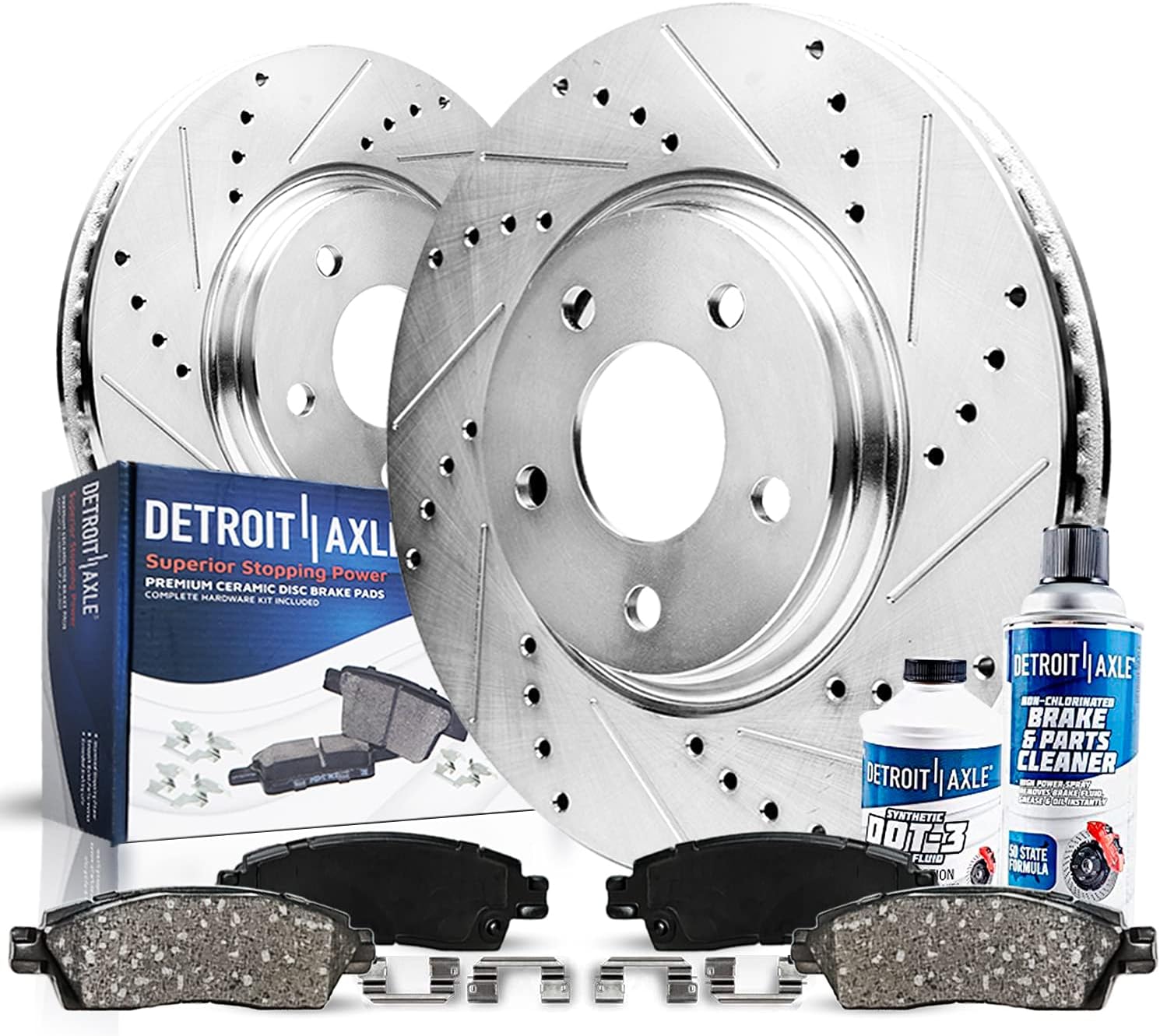
| Fitment years | 1999–2004 Jeep Grand Cherokee |
|---|---|
| Rotor type | Drilled & slotted |
| Pad material | Ceramic |
| Includes | 2 front rotors, 2 front pads, brake cleaner, brake fluid |
This Detroit Axle front brake kit replaces the rotors and front pads on 1999–2004 Jeep Grand Cherokee models and includes drilled and slotted rotors, ceramic pads, a can of brake cleaner, and a small bottle of brake fluid. The drilled and slotted rotor pattern helps dissipate heat and resist glazing during repeated stops, while the ceramic pads are designed to be quieter and produce less dust than semi-metallic compounds. The kit is intended for DIY installation and ships with the hardware needed for a direct factory-style swap. In real-world use owners report improved initial bite, reduced squeal after bedding, and good fitment to factory calipers identified in the listing. Expect solid stopping performance for daily driving and occasional heavy loads without the premium cost of high-end performance brakes. Limitations: the kit is a replacement aftermarket option rather than an upgraded performance system, and drilled rotors can be marginally louder and may require correct bedding to avoid noise or uneven wear over time.
Best for: Buyers replacing worn front brakes who want a full, budget-conscious kit that improves braking feel and reduces dust without upgrading to a specialty performance system.
Less Ideal for: Drivers seeking a track-focused or heavy-duty towing brake upgrade should consider performance rotors and pads engineered for high-temperature use instead.
- Complete package includes rotors, ceramic pads and basic consumables so you do not need extra parts for a front brake job
- Drilled and slotted rotors help reduce heat buildup and resist rotor glazing under repeated braking
- Ceramic pads typically run quieter and produce less brake dust than semi-metallic pads
- Designed for direct fitment to the specified 1999–2004 Grand Cherokee calipers for straightforward DIY installation
- Drilled rotors are not a high-performance upgrade and can be slightly noisier than plain rotors
- This is an aftermarket replacement kit rather than a performance-tuned brake system
Verdict: A cost-conscious, full front brake replacement kit that delivers improved cooling and quieter ceramic pads for 1999–2004 Jeep Grand Cherokee owners.
Detroit Axle Brake Kit for 1999–2004 Jeep Grand Cherokee — Drilled & Slotted Rotors with Ceramic Pads
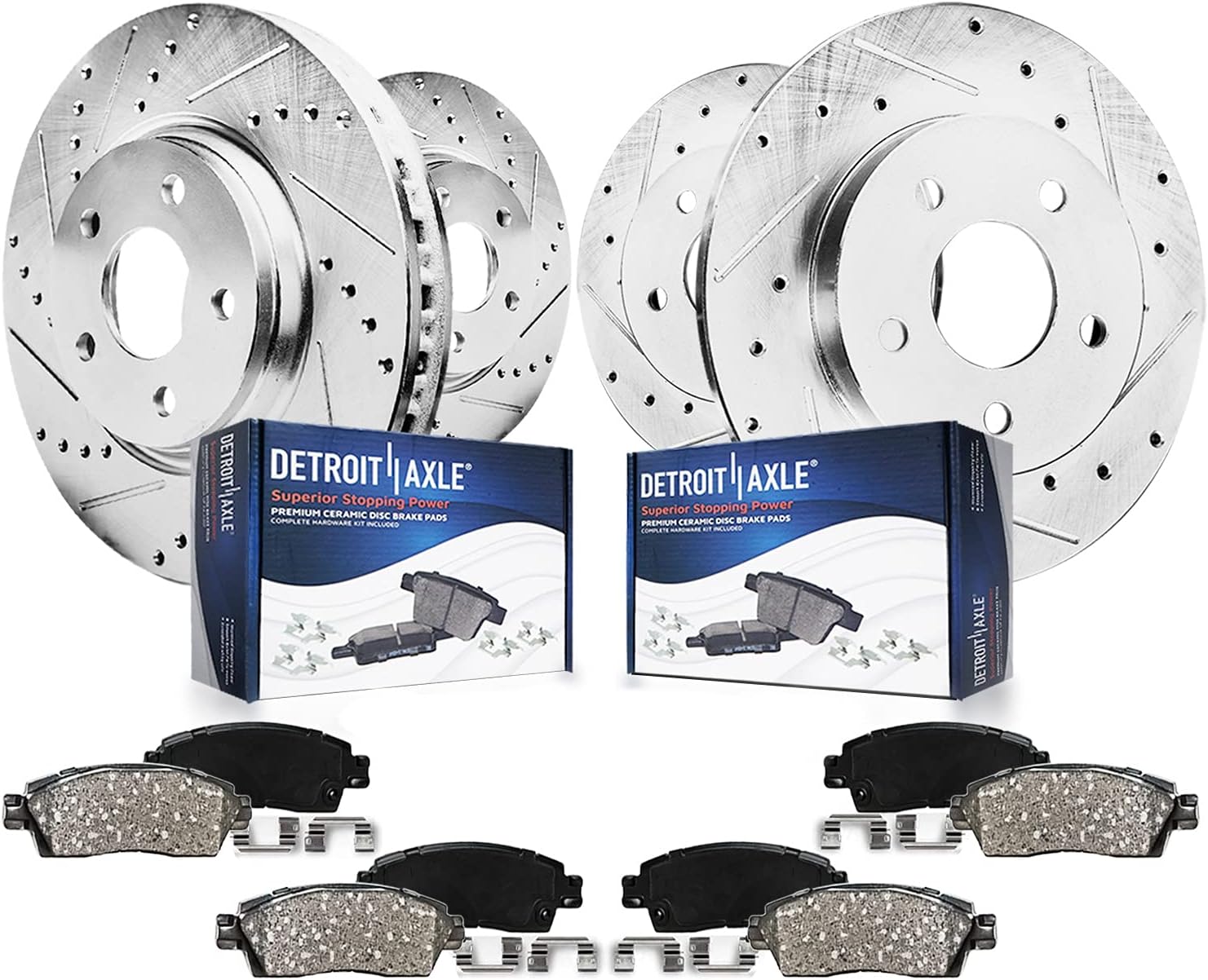
| Fitment | 1999-2004 Jeep Grand Cherokee (Akebono front calipers built before 5/11/2002) |
|---|---|
| Rotor Type | Drilled and slotted, vented |
| Pad Material | Ceramic |
| Finish | Silver zinc plated |
| Warranty | 10 Year Warranty |
This Detroit Axle kit supplies everything needed to refresh the braking system on a 1999–2004 Jeep Grand Cherokee: two drilled and slotted front rotors, two drilled and slotted rear rotors, front and rear ceramic pads, and basic hardware. The rotors are zinc plated to resist corrosion and are vented for quicker cooling, while the drilled and slotted pattern helps shed heat and surface gasses during repeated stops. Ceramic pads aim to be low-noise and produce moderate dust compared with semi-metallic alternatives. Installation is straightforward when performed by a mechanic or a confident DIYer because locating holes and machining match factory placement. Real-world buyers report firm stopping power and good longevity when installed correctly, though new pads and rotors can feel slightly grabby during the first bedding cycles and may emit occasional squeal under heavy downhill or towing use. For a full-system refresh at a lower cost than dealer parts, this kit balances corrosion protection, improved cooling, and user-friendly fitment for the Grand Cherokee platform.
Best for: Buyers who prioritize dependable, factory-style replacements that restore braking performance across the whole vehicle and want corrosion-resistant rotors with straightforward fitment for long-term use.
Less Ideal for: Drivers seeking aggressive track-oriented friction or heavy-duty tow-focused brake compounds should consider performance or heavy-duty kits tailored to those demands instead.
- Complete front and rear kit includes rotors, ceramic pads, and necessary basic hardware.
- Drilled and slotted, vented rotors improve heat dissipation during repeated heavy braking.
- Zinc plating reduces visible corrosion and wheel-dust on the rotor surface.
- Machined locating holes and factory-style fitment simplify installation and reduce need for modifications.
- Ceramic pads can feel slightly grabby during initial bedding and may squeal under sustained downhill loads.
- Kit does not include upgraded caliper hardware beyond basic clips for some installs.
Verdict: A full, factory-fit brake refresh for 1999–2004 Grand Cherokee owners who want corrosion-resistant drilled-and-slotted rotors and low-noise ceramic pads with reliable real-world performance.
Detroit Axle Brake Kit for 1999–2004 Jeep Grand Cherokee — Drilled & Slotted Rotors with Ceramic Pads (Front & Rear)

| Fitment | 1999-2004 Jeep Grand Cherokee (see fitment notes) |
|---|---|
| Rotors | Drilled and slotted, vented, zinc plated |
| Brake pads | Ceramic, front and rear |
| Includes | Hardware, 10oz brake cleaner, 12oz DOT3 brake fluid |
| Warranty | 10 Year Warranty |
This Detroit Axle kit supplies everything needed to replace both front and rear brakes on 1999–2004 Jeep Grand Cherokee models specified in the fitment notes. The kit bundles drilled and slotted vented rotors for improved cooling and moisture evacuation plus 100% ceramic pads front and rear with the installation hardware included. Detroit Axle also adds a can of brake cleaner and a bottle of DOT3 brake fluid so you have consumables on hand during installation. In practice the rotors and pads fit like factory replacements and provide strong, predictable stopping power after proper bedding; drilled and slotted faces can make a bit more noise than plain rotors but help resist fade under heat. Fitment is reported accurate for the listed Grand Cherokee subgroups, though some customers received damaged or mismatched small hardware in isolated cases and the kit does not include written step-by-step instructions. This is a solid, complete DIY-friendly option if you want a combined rotor and pad replacement with extras included, but expect to follow online guides if you need procedural help.
Best for: Buyers who want a single purchase that replaces both rotors and pads for the specified Grand Cherokee years and prefer a kit that includes consumables so they can complete the job themselves with minimal shopping around.
Less Ideal for: Professional shops that need individual OEM-part-level packaging or drivers seeking the quietest possible rotor option should consider plain rotors or factory-specific parts instead.
- Complete kit includes front and rear drilled & slotted rotors, ceramic pads, installation hardware, brake cleaner and DOT3 fluid
- Rotors are vented and zinc plated for faster cooling and corrosion resistance
- Ceramic pads are low-metal formulation intended for quieter operation and reduced brake dust
- Designed and machined for direct fit to the listed 1999–2004 Jeep Grand Cherokee applications
- No detailed printed installation instructions included with the kit
- Drilled and slotted rotors can produce slightly more noise than plain rotors
- Occasional reports of incorrect or damaged small hardware in some packages
Verdict: A convenient all-in-one rotor and pad replacement kit tailored to 1999–2004 Jeep Grand Cherokee owners who want a complete DIY solution with upgraded cooling and ceramic pads.
Detroit Axle Brake Kit for 1999-2004 Jeep Grand Cherokee (front & rear rotors and ceramic pads)
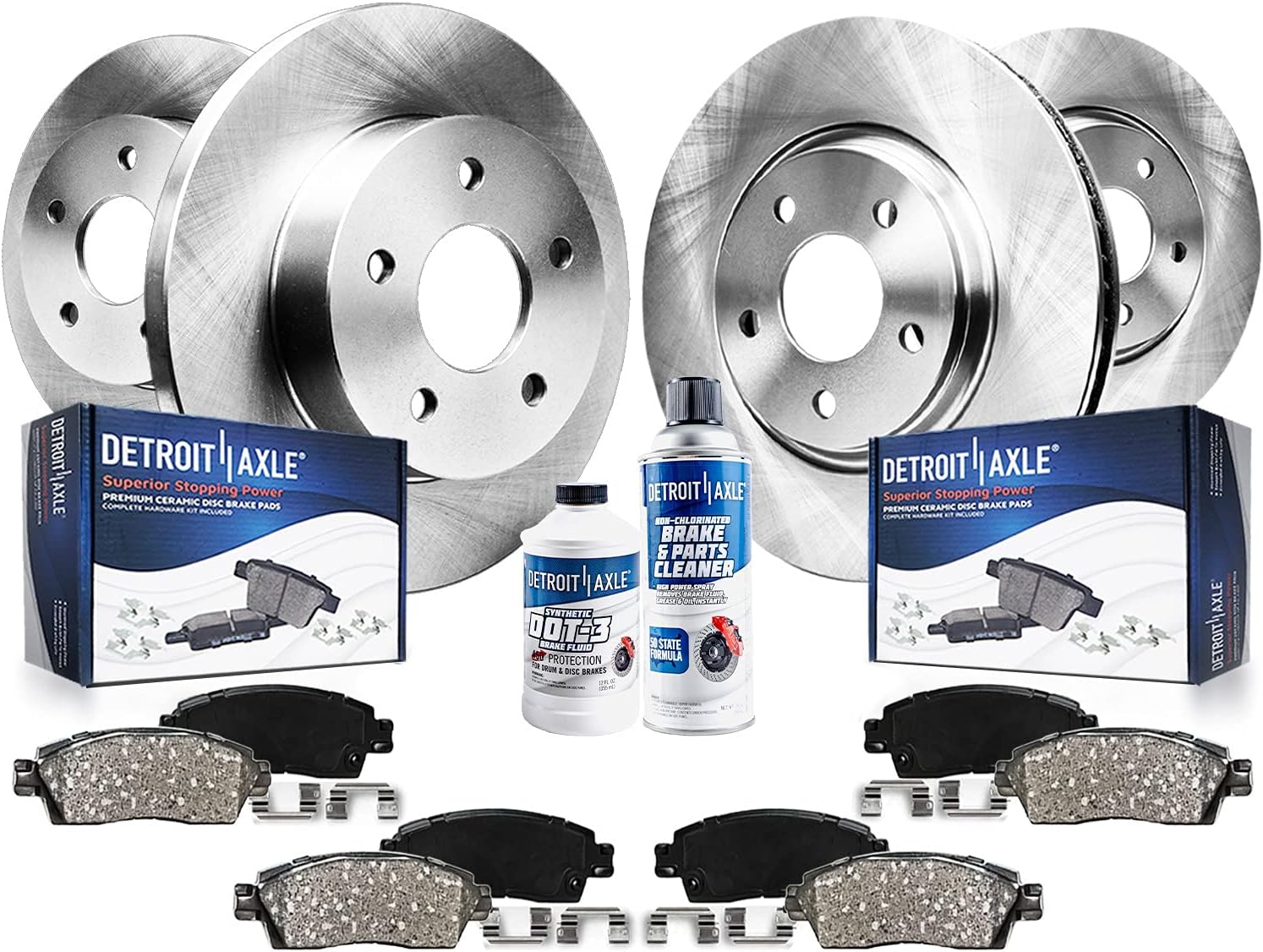
| Fitment | 1999-2004 Jeep Grand Cherokee (Akebono front calipers; built before 5/11/2002 for some models) |
|---|---|
| Kit contents | Front rotors, rear rotors, front pads, rear pads, hardware, brake cleaner, brake fluid |
| Pad type | Ceramic |
| Rotor features | Vented with zinc plating |
| Warranty | 10 Year Warranty |
This Detroit Axle kit supplies everything needed to replace both front and rear brakes on the covered 1999–2004 Jeep Grand Cherokee configurations that use Akebono front calipers. The package includes two front and two rear rotors, front and rear ceramic brake pads with hardware, a can of brake cleaner and a small bottle of brake fluid. The rotors are zinc plated and vented to improve corrosion resistance and cooling, while the pads are ceramic for quieter operation and modest dust reduction. Fit and finish are factory-style with machined locating holes for straightforward installation; most DIYers report an easy bolt-on swap. Practical benefits are a full-vehicle refresh in one purchase, fewer trips to source separate parts, and parts that brake confidently after bedding in. Limitations to note are occasional hardware or clip fitment problems reported by some buyers and the small accessory packets for grease rather than full-size supplies; heavy rusted rotor screws are not replaced by the kit so extraction tools may be required. For risk-averse buyers this kit offers a complete, factory-quality replacement that minimizes unknowns when doing a full brake service.
Best for: Buyers who want a single, factory-style replacement kit to refresh all four corners of a qualifying Grand Cherokee and prefer a low-risk, DIY or technician-installed solution that fits without major modification.
Less Ideal for: Drivers looking for high-performance drilled or slotted rotors for track use or those who need a performance-oriented pad compound; also not for vehicles outside the specified fitment range.
- Complete front-and-rear kit includes rotors, ceramic pads, hardware, brake cleaner and brake fluid
- Vented, zinc-plated rotors improve cooling and resist visible corrosion
- Machined locating holes and factory-style fitment simplify installation
- Ceramic pads designed for lower noise and reduced brake dust
- Hardware packets and anti-seize come in small single-use sachets rather than full-size tubes
- Kit does not include replacement rotor mounting screws, which may be seized on older vehicles
Verdict: A convenient, factory-style full front-and-rear brake replacement kit that minimizes fitment uncertainty for 1999–2004 Jeep Grand Cherokee owners seeking a reliable, low-risk refresh.
Choosing the Right 1999-2004 Jeep Grand Cherokee Brake Pad & Rotor Kit: Key Factors to Consider
Fitment and Rotor Dimensions
Correct fitment is the foundation for a successful brake job on the 1999-2004 Grand Cherokee WJ. Rotor diameter, thickness, hat height, and hub bore must match factory specifications to avoid clearance issues with calipers or wheel offsets. Improper fitment can lead to uneven pad wear, rubbing, or the need for machining.
When evaluating kits, check that the rotors and pads are listed for the WJ front or rear position as applicable. Some kits are sold as front-only or rear-only; ensure you choose the correct position for hub and caliper geometry. Accurate fitment reduces installation time and lowers the risk of post-install noise and vibration.
Pad Compound and Intended Use
Brake pad material affects bite, wear rate, and noise. Organic or ceramic-style compounds tend to produce less noise and dust and are well suited for daily driving on the Grand Cherokee, delivering predictable modulation under normal loads. Semi-metallic or metallic compounds offer higher friction and heat tolerance, which can be beneficial for towing or aggressive driving but sometimes increase rotor wear and noise.
Choose a compound that matches your driving patterns. For a WJ used primarily for commuting and occasional highway trips, a quieter, low-dust compound will lengthen rotor life and improve comfort. For heavier use, prioritize friction stability and fade resistance even if that increases dust or wear.
Rotor Design and Heat Management
Rotors come in plain, slotted, or drilled designs, each affecting heat dissipation and debris clearing. For the Grand Cherokee WJ, vented or slotted rotors help manage heat during repeated stops, reducing the likelihood of fade when hauling a trailer or traveling in hilly terrain. Proper venting also reduces thermal stress that leads to warping.
Consider rotor thickness and mass as well. Thicker rotors retain heat longer but resist warping, while lighter rotors cool faster but may not absorb as much thermal energy. Match rotor design to the vehicle's typical load and driving style to balance fade resistance and longevity.
Noise, Vibration, and Harshness (NVH) Control
Brake squeal and pedal pulsation are common complaints after replacements if NVH is not addressed. For the WJ, noisy brakes often come from mismatched pad compounds, poor backing-plate isolation, or uneven rotor surfaces. Kits that include chamfered edges, shims, and quality anti-squeal coatings will reduce audible noise.
Also consider rotor machining and balancing. Rotors finished to a consistent tolerance minimize vibration, and pads with bedding-friendly compounds reduce initial squeal. Proper installation practices such as torqueing wheel lugs to specification and ensuring caliper hardware is in good condition will further control NVH.
Corrosion Protection and Surface Treatments
The Grand Cherokee is often exposed to road salt and wet climates, which accelerates corrosion on rotors and hardware. Rotors with protective coatings on the hat and edge slow rusting and keep replacement intervals longer. Similarly, caliper hardware in good condition and anti-corrosion treatments on hat areas prevent seizure and uneven pad wear.
Assess the level of rust protection offered with a kit, especially if you live in a region with winter conditions. Coated surfaces reduce the need for frequent parts replacement and help maintain consistent braking performance over time.
Complete Kit Contents and Installation Ease
A true kit should include all consumables needed for a proper service. For the WJ these items often include front or rear rotors, pads, and basic hardware such as shims, clips, and possibly new hardware pins or bolts. Having the right components in the kit prevents delays and ensures components are matched in fit and finish.
Installation ease also depends on clear fitment instructions and the quality of included hardware. High-quality kits reduce the need to reuse worn parts that could compromise performance. When a kit omits necessary hardware, plan for additional purchases or longer labor time.
Front Versus Rear Service Considerations for the WJ
Front and rear brake systems on the 1999-2004 Grand Cherokee have distinct roles. The front brakes handle the majority of stopping force and typically wear faster, so front brake kit replacement is often the higher priority when pads and rotors show wear. Rear rotors and pads contribute to balance and stability but usually last longer.
When planning a brake job, inspect both axles for rotor thickness and runout. Replacing only one axle can leave mismatched friction and pedal feel. For owners who prioritize straightforward stopping performance, start with the front brake kit replacement and evaluate rear condition during service.
- Front brakes carry more stopping load and heat.
- Replace rotors if below minimum thickness or if runout causes pulsation.
- Consider axle-pair replacement to maintain balanced braking feel.
Signs You Need New Rotors or Pads
Several clear symptoms indicate it is time for a brake pad rotor set fitment check. Squealing under light braking, longer stopping distances, visible grooving on rotors, or a pulsing brake pedal are common indicators. Changes in pedal feel or a metallic grinding sound require immediate attention to avoid further damage.
Measure rotor thickness against factory minimums and check for lateral runout with a dial indicator when possible. Pads with uneven wear or glazed surfaces should be replaced to restore proper friction and reduce the risk of rotor damage.
- Persistent squeal or chirp during braking.
- Brake pedal pulsation under moderate to hard stops.
- Visible rotor scoring, rust build-up, or grooves.
Ceramic Versus Metallic Pad Choices
Choosing between ceramic and metallic pad kits involves tradeoffs for Grand Cherokee owners. Ceramic-style pads generally produce less dust, run quieter, and offer smooth initial bite, which suits daily driving and light towing. Metallic or semi-metallic pads provide stronger friction at higher temperatures and can be more fade-resistant during heavy use.
Consider the driving load and tolerance for dust and noise. For most WJ drivers who want a quiet, low-dust solution, ceramic-based kits strike a practical balance. If you tow frequently or drive aggressively, a higher-metal-content kit may perform better under sustained heat.
- Ceramic: low dust, quieter, gentler on rotors.
- Metallic: higher friction at temperature, more dust, potential for increased rotor wear.
When to Resurface Rotors Versus Replace
Deciding whether to resurface or replace rotors depends on thickness, runout, and overall condition. If rotors are within safe service thickness and exhibit only minor surface scoring, resurfacing can restore a smooth braking surface and save cost. However, the WJ rotors are subject to thermal stress; if runout or warping is significant, replacement is the safer long-term choice.
Resurfacing removes material and reduces rotor life remaining. When rotors are close to minimum thickness or show deep grooves, replacement avoids quick recurrence of issues. For owners planning long-term use or expecting heavier loads, installing new rotors often provides better reliability and consistent performance.
- Resurface only if above minimum thickness and runout is manageable.
- Replace if deep grooves, severe warping, or near-minimum thickness are present.
Installation Tips and Bed-In Procedures
Proper installation and bedding-in are essential to realize the performance of a brake kit. Clean mounting surfaces, torque wheel lug nuts to factory specs, and ensure caliper slides move freely. Replace or lubricate hardware as needed to prevent uneven wear and noise.
Follow a progressive bedding procedure after installation: a series of moderate decelerations from varying speeds with cool-down periods reproduces controlled heat cycles and helps deposit a uniform transfer layer on the rotor. Avoid hard stops immediately after installation to protect new components and reduce the chance of glazing.
- Clean hub and mating surfaces before installation.
- Torque wheels in a star pattern to spec to prevent rotor distortion.
- Perform staged bedding with cool-down intervals for even transfer layer formation.
Common Post-Installation Issues and Fixes
Brake noise after replacement can stem from poor bedding, missing shims, or uneven rotor surfaces. If you experience squeal, first confirm hardware is installed correctly and shims are present. Minor noise often dissipates after proper bedding, but persistent squeal may indicate an incompatible pad compound or the need to address rotor runout.
Another frequent problem is pedal pulsation caused by rotor runout or uneven resurfacing. Re-check rotor runout and wheel lug torque. If pulsation persists, consider replacing rotors rather than repeated machining, particularly if they are near the minimum thickness.
- Verify shims and hardware are correctly installed to reduce squeal.
- Check rotor runout and wheel torque to troubleshoot pedal pulsation.
- Allow proper bedding time before concluding a kit is noisy or problematic.
Still looking for the perfect fit?
Select your Jeep Grand Cherokee configuration to see the most relevant Brake Pad & Rotor Kits recommendations
How We Chose the Best 1999-2004 Jeep Grand Cherokee Brake Pad & Rotor Kit
Our selection process prioritized factors that matter specifically for the 1999-2004 Jeep Grand Cherokee WJ. We filtered candidates by strict fitment to the WJ front and rear brake assemblies and verified rotor dimensions, hub bore, and caliper clearance specifications that match factory tolerances. Durability criteria included rotor metallurgy and pad compound formulations that resist glazing and premature wear under typical SUV loads. We emphasized noise and vibration control because owners commonly report squeal and pulsation after service; therefore we favored kits with proven damping features, anti-squeal shims, or chamfered and slot patterns that reduce noise without compromising bite. Heat management and fade resistance were assessed by rotor mass, venting design, and pad friction stability for occasional towing or spirited driving. Corrosion protection and balance were considered to minimize warping and extend service intervals. Excluded items included adapters or universal kits that require machining or modification, and any components not meeting WJ dimensional specs. In short, we selected kits that balance fitment accuracy, braking performance, durability, and NVH control specific to the Grand Cherokee WJ.
Our full evaluation process is outlined in our review methodology.
FAQ
How often should I replace brake pads and rotors on a 1999-2004 Grand Cherokee?
Replacement intervals vary with driving style and conditions, but pads commonly last 30,000 to 60,000 miles while rotors often last longer. Inspect pads and rotors at regular service intervals and replace when thickness or runout is outside factory limits.
Can I resurface my Grand Cherokee WJ rotors instead of replacing them?
You can resurface rotors if they are above the minimum thickness and runout is within tolerance. Resurfacing reduces rotor life remaining, so replacement is preferable when rotors are near their minimum thickness or show deep damage.
Will ceramic pads reduce brake dust on my Grand Cherokee?
Ceramic-style pads typically produce less visible dust compared with metallic compounds. They also tend to run quieter and be gentler on rotors, making them a good choice for everyday driving on the WJ.
What causes brake pedal pulsation after installing new rotors and pads?
Pulsation usually results from rotor runout, uneven resurfacing, or wheel lug distortion. Verify rotor trueness and torque wheel lug nuts to specification. If runout remains, replacing the rotor rather than repeated machining is often the long-term fix.
Should I replace both front rotors or just the one that is worn?
For balanced pedal feel and consistent braking, it is best to replace rotors in axle pairs. Replacing only one front rotor can lead to uneven braking behavior and uneven pad wear.
Does pad compound choice affect noise and stopping power a lot?
Yes. Pad compounds trade off noise, dust, and wear against friction and fade resistance. Ceramic compounds favor low noise and dust, while metallic compounds provide stronger high-temperature friction at the cost of more dust and potential noise.
Final Verdict
When replacing brake pads and rotors on a 1999-2004 Jeep Grand Cherokee WJ, prioritize correct fitment, pad compound matched to your driving use, and rotor condition relative to thickness and runout. Address NVH with quality shims and proper bedding to minimize squeal and vibration. For owners who tow or drive aggressively, favor solutions with stronger heat management; for daily driving, quieter, low-dust compounds often offer the best balance. Focus on axle-pair consistency and proper installation to ensure reliable stopping performance and long-term value.
Explore More:
- Check out all Jeep Grand Cherokee parts & accessories
- Explore Brake Pad & Rotor Kits Maintenance & Repair Guides
- Explore Brake System
- Browse all Auto Parts
