

Note: This article contains affiliate links. If you click on these links and make a purchase, I may earn a small commission at no extra cost to you. This helps support my research and content. Read my full affiliate disclosure here.
If your 1999-2007 Ford F-350 is showing a soft brake pedal, slow pedal return, or visible brake fluid around the firewall, the master cylinder is a common culprit. Choosing the right brake master cylinder matters because it directly affects pedal feel, braking balance, and leak prevention for a heavy-duty truck that often tows or hauls.This guide shortlists the top six brake master cylinders for the 1999-2007 F-350 and explains the key factors we used to evaluate them, including fitment, seal materials, reservoir compatibility, and ease of installation. Read on to understand which qualities matter most for long-term reliability and safety before you replace or rebuild the unit.
Top Picks at a Glance
| Best Overall The best all-around choice for most situations | TRQ Brake Master Cylinder BCA11000 for Ford Super Duty Trucks |  |
| Best Value The sweet spot between price and what you get | KAX M390530 Brake Master Cylinder Replacement for 1999–2004 Ford Super Duty and 2000–2005 Excursion |  |
| Best Budget The cheapest option that still gets the job done reliably | AngyMeck Brake Master Cylinder (with Reservoir and Sensor) |  |
| Highest Rated A top-rated pick with lots of positive feedback | PHILTOP Brake Master Cylinder with Reservoir for Ford Super Duty and Excursion |  |
| Most Popular A crowd favorite that many people choose with confidence | Dorman M390530 Brake Master Cylinder |  |
| Best Seller A high-volume bestseller chosen again and again | A-Premium Brake Master Cylinder with Reservoir and Sensor (compatible with Ford F-250/F-350/F-450/F-550, Excursion, F53) |  |
1. TRQ Brake Master Cylinder BCA11000 for Ford Super Duty Trucks

| Master Cylinder Bore Diameter | 34.93 mm |
|---|---|
| Material | Aluminum |
| Reservoir Included | Yes |
| Sensor Included | Yes |
This TRQ master cylinder is a factory-style replacement built with an aluminum body and a 1.375-inch (34.93 mm) bore to match the original braking system on compatible Ford Super Duty vehicles. It ships with the reservoir and brake fluid cap preinstalled and includes the brake light sensor so you can swap the unit into the vehicle without sourcing additional parts. Typical use is a like-for-like repair when the original master cylinder develops internal leaks, poor pedal feel, or a sinking brake pedal. The machined exterior and pre-assembled components simplify installation for a DIYer or a shop, and TRQ provides video resources to guide the process. Because this is a standard replacement rather than an upgraded performance part, it restores factory braking characteristics rather than improving stopping power or pedal firmness. Fitment is specific to certain Ford Excursion, F250, F350, F450, F550, and F53 configurations with the 1.375-inch bore and cruise control where listed, so verify compatibility before ordering.
Best for: Buyers who want a straightforward, factory-quality replacement to restore original brake feel on compatible late 1990s to mid-2000s Ford Super Duty vehicles and prefer an easier DIY or shop installation.
Less Ideal for: People seeking upgraded performance or firmer pedal response beyond factory levels or those who need a universal or multi-vehicle master cylinder solution.
- Direct-fit replacement with preinstalled reservoir and sensor for easier swap-in
- Aluminum machined body offers corrosion resistance and factory-style appearance
- Matches original bore size (34.93 mm) to restore correct pedal feel
- Includes cap and reservoir so no additional parts are required for most installs
- Standard replacement only and does not improve braking performance over factory unit
Verdict: A practical, preassembled factory-style master cylinder that restores original braking feel on listed 1999–2005 Ford Super Duty applications with minimal fuss.
2. KAX M390530 Brake Master Cylinder Replacement for 1999–2004 Ford Super Duty and 2000–2005 Excursion

| Reservoir Included | Yes |
|---|---|
| Material | Aluminium |
| Master Cylinder Bore Diameter | 1.375 in |
| Number of Outlets | 3 |
| Rearward Outlet Size | 7/16-24 |
This KAX M390530 master cylinder is a full replacement unit built from new components to match factory casting and restore brake system function on compatible Ford Super Duty trucks and Excursions. It installs in place of the original master cylinder and includes the reservoir and a brake fluid sensor, so you can replace the entire assembly in one job. The aluminum housing and specified bore diameter aim to reproduce factory hydraulic behavior, while the three outlet ports and rearward outlet thread size match the original plumbing on the listed vehicles. For routine repairs this eliminates the uncertainty of reman units and reduces the parts you must source separately. Expect the unit to be used during a brake overhaul or when the original master cylinder shows internal leaks, soft pedal, or warning light faults. Limitations include the need to confirm exact vehicle fitment and perform proper bench bleeding and system bleeding during installation; this is not a performance upgrade, it is a direct replacement built for restoration rather than improved braking feel.
Best for: Buyers who want a practical, factory-style replacement to restore brake function on covered 1999–2005 Ford Super Duty trucks and Excursions and prefer a ready-to-install assembly over sourcing parts separately.
Less Ideal for: Drivers seeking upgraded or performance brake components or anyone who needs a universal or multi-vehicle solution beyond the listed Ford models.
- Full replacement made from new materials rather than remanufactured parts
- Includes reservoir and brake fluid sensor so fewer separate parts are required
- Aluminum housing and listed bore size mirror factory hydraulic characteristics
- Three outlet ports and matching rearward outlet thread size for correct plumbing fit
- Requires vehicle-specific fitment check and proper bleeding during installation
- Not intended to improve braking performance beyond restoring factory function
Verdict: Choose this KAX M390530 if you want a complete, new-material master cylinder assembly that restores factory braking function on the specified 1999–2005 Ford Super Duty and Excursion models.
3. AngyMeck Brake Master Cylinder (with Reservoir and Sensor)
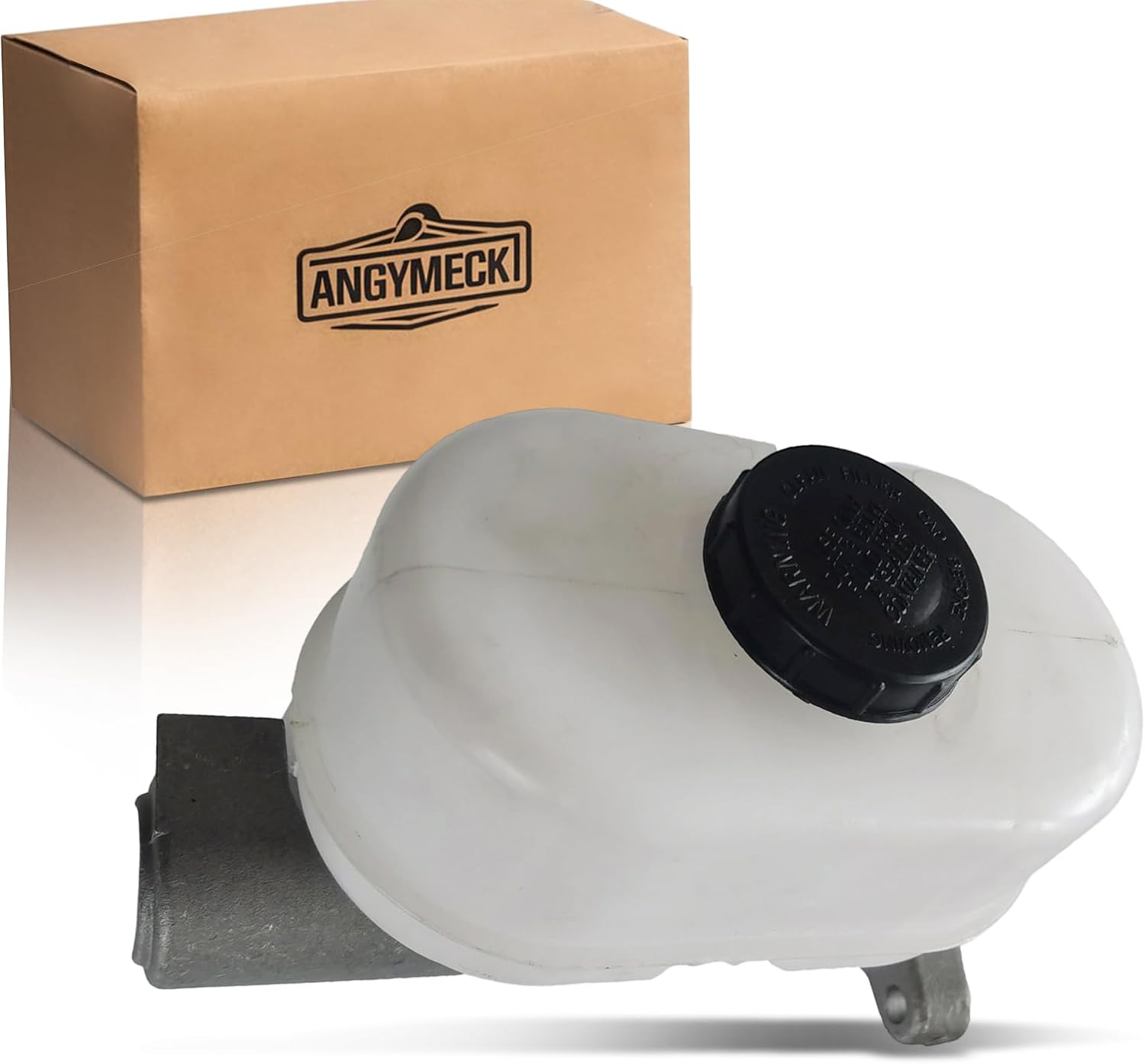
| Bore Diameter | 1.375 In. |
|---|---|
| Number of Outlets | 3 |
| Forward Outlet Size | 7/16-24 |
| Rearward Outlet Size | 9/16-18 & 3/8-24 |
| Reservoir Included | Yes |
This AngyMeck master cylinder replaces the factory unit on specified Ford Super Duty vehicles and related F53/F59 chassis, restoring hydraulic pressure and brake pedal feel. It includes a reservoir and brake fluid level sensor so you get the core components needed for a straightforward swap, though you must supply mounting hardware and brake lines or fittings during installation. The cylinder has a 1.375-inch bore, three outlets with common thread sizes, and is intended as a direct replacement for original part numbers listed by the manufacturer. For everyday drivers and technicians this part brings factory-style function at a lower cost than dealer parts, making it suitable for brake system repairs that return proper pedal firmness and safe stopping. Limitations are that installation requires basic brake-line work and bleeding, and no hardware is included so plan for fittings and a proper brake-bleed procedure or professional installation if you are not comfortable working on brakes.
Best for: Buyers wanting an affordable, factory-style replacement to restore safe braking on older Ford Super Duty trucks and similar chassis who are comfortable handling brake-line connections and bleeding.
Less Ideal for: If you prefer a plug-and-play part with all mounting hardware included or want a professional-installed dealer unit, this aftermarket master cylinder may not meet those needs.
- Includes reservoir and brake fluid level sensor for a more complete replacement
- Direct-fit compatibility with specified Ford Super Duty and related chassis models
- Bore and outlet sizes match original design for correct hydraulic performance
- New, factory-quality replacement intended to restore proper pedal feel
- Installation hardware not included so additional fittings or adapters may be needed
Verdict: A cost-conscious, direct-fit replacement that restores factory-style brake function on specified Ford Super Duty trucks when you can supply or source the missing installation hardware.
4. PHILTOP Brake Master Cylinder with Reservoir for Ford Super Duty and Excursion

| Material | Aluminium |
|---|---|
| Master Cylinder Bore Diameter | 1.375 in |
| Number of Outlets | 3 |
| Rearward Outlet Size | 7/16-24 |
| Reservoir Included | Yes |
This PHILTOP brake master cylinder is a direct replacement-style unit made from new aluminum with an integrated reservoir and pressure sensor, intended for 1999–2005 Ford Super Duty trucks and 1999–2000, 2014 F-53 chassis. It functions as the hydraulic pressure source for the vehicle braking system and installs in place of the original master cylinder using the factory mounting points and outlet threads noted in the listing. Notable features include a 1.375-inch bore, three outlet ports, a rearward outlet thread size of 7/16-24, and EPDM rubber components resistant to glycol brake fluid. In practice this means predictable pedal feel and compatibility with the vehicle brake plumbing when correct fitment is confirmed. Because it is built from new materials rather than being remanufactured, it reduces the risk of internal wear or contamination common with rebuilt cores. Limitations are that fitment is specific to listed Ford models and the buyer should verify vehicle fit before installation; professional bleeding and testing after install are recommended to ensure safe operation.
Best for: Buyers who prioritize a reliable, newly built replacement over remanufactured cores and need a direct-fit master cylinder for the specified Ford Super Duty or Excursion models.
Less Ideal for: Drivers looking for a universal or multi-vehicle master cylinder solution or those who need a remanufactured core for budget reasons should consider other options.
- Built from new aluminum materials for consistent strength and corrosion resistance
- Integrated reservoir and sensor included for plug-and-play replacement on supported models
- EPDM rubber components resist glycol brake fluid to improve longevity
- 1.375-inch bore and three outlets match common Super Duty hydraulic layouts
- Fitment is limited to the Ford model years and configurations explicitly listed and must be confirmed before purchase
- Installation requires proper brake bleeding and testing to ensure safety
Verdict: Choose this new-material PHILTOP master cylinder when you want a factory-style, ready-to-install replacement for the specified 1999–2005 Ford Super Duty and Excursion models to restore reliable braking performance.
5. Dorman M390530 Brake Master Cylinder

| Automotive Fit Type | Vehicle Specific Fit |
|---|---|
| Included Components | Master Cylinder |
| Manufacturer | Dorman Products |
| Manufacturer Part Number | M390530 |
The Dorman M390530 is a direct-fit replacement master cylinder intended to restore brake hydraulic function on select Ford Super Duty models from the late 1990s and early 2000s. It is built all-new rather than remanufactured, with a housing machined to match the original casting and EPDM rubber seals that resist glycol-based brake fluid. In practice the unit installs like a factory-style replacement and is used to replace a leaking, worn, or failing master cylinder to recover pedal feel and proper line pressure. Notable features include vehicle-specific fitment, a list of OEM equivalent part numbers for cross-reference, and construction to SAE standards. The practical benefits are simpler installation for a direct swap, resistance to brake fluid degradation, and reduced risk of early seal failure compared with lower-quality rebuilds. Limits to consider are that fitment is restricted to the specified Ford model years and trims, and installers should bench-bleed and properly torque connections during installation to avoid air in the system.
Best for: Buyers who prioritize a proven, vehicle-specific replacement to reliably restore factory brake performance on late 1990s to mid-2000s Ford Super Duty trucks and want parts with clear interchange references.
Less Ideal for: If you need a universal or multi-vehicle master cylinder or are repairing a custom brake system, this vehicle-specific unit is not a good match.
- Direct-fit replacement matched to original casting for straightforward swap
- All-new construction rather than remanufactured for predictable longevity
- EPDM rubber components formulated to resist glycol-based brake fluids
- Includes OEM equivalent part numbers for easy cross-referencing
- Manufactured to SAE standards for consistent performance
- Compatibility limited to the specific Ford years and trims listed rather than universal fit
Verdict: Choose this Dorman master cylinder when you want a new, factory-style, vehicle-specific replacement to reliably restore brake function on the specified Ford Super Duty years.
6. A-Premium Brake Master Cylinder with Reservoir and Sensor (compatible with Ford F-250/F-350/F-450/F-550, Excursion, F53)

| Material | Aluminum |
|---|---|
| Reservoir Included | Yes |
| Sensor Included | Yes |
| Master Cylinder Bore Diameter | 1.375 inch |
| Reference Number | M390530, 3C3Z2140AB, 5C3Z2140KB, F81Z2140EA, F81Z2L454AA |
This A-Premium master cylinder is a direct replacement-style unit that includes the reservoir and sensor, intended for super duty Ford trucks and Excursion/F53 applications from the specified years. It is pressure tested at the factory and made from aluminum, which should resist corrosion compared with cast iron units, and the included sensor and reservoir make it a straightforward swap when the original unit fails. Typical use is a like-for-like brake system repair during a master cylinder failure or when restoring a leaky/failed component; the three outlets and factory-style thread sizes match the vehicle plumbing to simplify installation. Practical benefits are the all-in-one package that reduces parts hunting and the stated pressure testing for safer operation out of the box. Limitations are typical for aftermarket master cylinders: fitment must be verified against the vehicle reference numbers, and professional bleeding and proper bench checks are still required after installation to ensure pedal feel and safety.
Best for: Buyers who want a straightforward, factory-style replacement for a failing master cylinder on late 1990s to early 2000s Ford Super Duty trucks and want a unit that minimizes additional parts and preparation.
Less Ideal for: People looking for performance upgrades, custom bore sizes, or a universal master cylinder solution for multiple vehicle types should consider other options.
- Includes reservoir and sensor for a near-complete replacement assembly
- Pressure tested at the factory to confirm hydraulic integrity
- Aluminum construction offers better corrosion resistance than cast designs
- Reference numbers provided for easy compatibility checking with Ford super duty models
- Requires verification against vehicle fitment and correct plumbing threads before purchase
Verdict: Choose this A-Premium master cylinder when you need a ready-to-install, factory-style replacement with reservoir and sensor for late 1990s–early 2000s Ford Super Duty trucks.
Choosing the Right 1999-2007 Ford F-350 Brake Master Cylinder: Key Factors to Consider
Fitment And Port Orientation
Correct fitment is critical because the master cylinder must align precisely with the F-350 brake booster, pedal pushrod, and reservoir. A mismatch in port orientation or mounting flange location can complicate installation, force awkward hose routing, or stress the reservoir connection.
When a master cylinder lines up properly, installation is faster and the risk of kinking supply lines or applying side loads to seals is reduced. Fitment issues can also interfere with proper pushrod travel, which affects braking balance and pedal feel. Always verify that the replacement matches the factory port spacing, thread sizes, and reservoir attachment method for the 1999-2007 F-350.
Seal Material And Durability
The seals inside a master cylinder are exposed to brake fluid, heat, and occasional moisture. Over time seals can harden, crack, or swell depending on fluid compatibility and operating temperatures. Choosing a unit with high-quality elastomers that resist DOT fluid and temperature cycling helps reduce the chance of leaks and loss of pressure.
Seals also determine service life and rebuildability. Vehicles that tow or carry heavy loads stress the braking system more, so robust seal compounds and well-machined mating surfaces are especially important for the F-350 to maintain consistent pedal feel under repeated heavy braking.
Bore Size And Piston Design
Bore diameter and piston design influence hydraulic pressure and pedal travel. A bore that deviates from factory specifications can change pedal firmness and alter force delivered to the calipers or wheel cylinders. For a heavy truck like the F-350, preserving the intended bore size ensures braking balance and predictable modulation, especially under load.
Piston design also affects how seals are supported and how the unit tolerates minor wear. Units with well-supported pistons and tight machining tolerances maintain consistent pressure output as components age, reducing the risk of a spongy pedal or uneven braking.
Reservoir Compatibility And Volume
Reservoir shape, mounting method, and fluid capacity matter for both installation and ongoing maintenance. An incompatible reservoir can lead to overflow, poor venting, or difficulty monitoring fluid level. The reservoir must clear nearby firewall components and allow for easy top-off during service.
Capacity is important when the vehicle is frequently used for towing or when the brake system has larger calipers or drums. Ensuring the reservoir provides adequate volume for the 1999-2007 F-350 helps prevent situations where fluid level drops quickly and air enters the system, which causes a soft pedal.
Corrosion Resistance And External Finish
Master cylinders are exposed to road salt, moisture, and heat cycling. External corrosion can seize mounting hardware, compromise threads, or accelerate wear at exposed contact points. A corrosion-resistant finish and protective coatings on surfaces that see the elements help the unit last longer and reduce service headaches.
Durable plating or coatings also protect bores and machined surfaces during handling and installation. For owners who keep their F-350 on the road year-round, a rust-resistant external finish contributes to longer, more reliable service life.
Serviceability And Parts Availability
Consider whether replacement seals, rebuild kits, or compatible reservoirs are readily available. A master cylinder that can be rebuilt with common kits often costs less over the vehicle lifetime than one that must be fully replaced when seals fail. Availability of clear instructions and standard bleed fittings also simplifies home or shop installation.
Serviceability matters for a truck that sees heavy use because it reduces downtime and maintenance cost. Units that share common seal sizes or have documented rebuild procedures are preferable for owners who plan to maintain the braking system themselves.
Common Symptoms That Point To The Master Cylinder
Several signs suggest the master cylinder may be failing on a 1999-2007 F-350. A progressively soft or sinking brake pedal, delayed pedal return, or a brake pedal that requires more travel than normal often indicate internal seal leakage or bore wear. Visible brake fluid near the firewall, around the reservoir, or dripping below the brake booster is a strong indicator of an external seal or reservoir leak.
Other symptoms include uneven braking, a hard spot in the pedal stroke, or the need to pump the pedal to build pressure. Because the F-350 is commonly used for heavy towing and hauling, pay attention to symptoms that appear under load or after repeated stops, as heat and repeated cycling can accelerate master cylinder problems.
- Soft or sinking brake pedal during hold
- Brake fluid pooling near the reservoir or booster
- Delayed pedal return or uneven pressure
- Braking issues that worsen under heavy load
Replacement Versus Rebuild: Which Works Best
Deciding between a rebuild and a full replacement depends on the condition of the bore and external corrosion. If the bore surface is pitted or the mounting flange threads are damaged, replacement is usually the safer option. However, if the bore is smooth and the external body is solid, a rebuild using quality seals and pistons can restore performance at lower cost.
Availability of a master cylinder rebuild kit and your comfort with bench work influence the decision. Rebuilding can be practical for owners with experience and access to proper tools, while replacement reduces uncertainty and often comes with improved finishes or pre-assembled seals that simplify installation.
- Inspect bore for pitting before choosing rebuild
- Check for seized or damaged mounting studs that force replacement
- Factor in labor time if not doing the work yourself
Basic Steps For Replacing The Master Cylinder On An F-350
When replacing the master cylinder, prepare a clean work area and have the correct brake fluid on hand. Begin by removing the reservoir cap and either draining or siphoning fluid to reduce spills. Disconnect the brake lines carefully, using proper line wrenches to avoid rounding the fittings, and cap lines to prevent contamination. Unbolt the unit from the booster and remove the pushrod from the pedal assembly.
Bench-bleed the new or rebuilt master cylinder before final installation to remove air from the internal passages. Reinstall the unit, reconnect brake lines, and torque fittings to factory-equivalent specifications. After installation, bleed the brake system at each wheel until firm pedal feel is restored and check for leaks under load and with repeated stops.
- Siphon fluid, then disconnect lines with line wrenches
- Bench-bleed the unit before installation
- Torque mounting and line fittings to spec and perform system bleed
Bleeding And Verifying System Integrity
Proper bleeding is essential after any master cylinder service. Air trapped in the system causes a spongy pedal and inconsistent braking. Use a systematic bleed order, starting with the wheel farthest from the master cylinder and working toward the nearest, and employ either vacuum, pressure, or manual bleeding methods depending on equipment and preference.
After bleeding, verify system integrity by checking for external leaks, confirming pedal firmness under engine-off and engine-on conditions, and performing a low-speed braking test in a safe area. If the pedal sinks slowly under steady pressure, recheck for internal leaks or master cylinder seal failure.
- Bleed from farthest wheel to nearest
- Confirm no pedal sink under steady pressure
- Inspect lines and fittings for any sign of leakage
Common Installation Pitfalls To Avoid
Avoid overtightening the brake line fittings, which can damage threads and cause leaks. Do not reuse severely corroded or rounded fittings. Ensure the pushrod length and free play are set to the vehicle specification; incorrect pushrod adjustment can cause dragging brakes or insufficient pedal travel. Always bench-bleed the master cylinder to remove trapped air before final installation.
Also confirm that reservoir vents are unobstructed and the cap gasket seats properly. Using the wrong fluid type or mixing DOT specifications can degrade seals and reduce service life, so stick to the DOT rating specified for the F-350's braking system.
- Do not overtighten fittings; use proper torque
- Verify pushrod free play before buttoning up
- Use the correct DOT brake fluid and avoid mixing types
How We Chose the Best 1999-2007 Ford F-350 Brake Master Cylinder
We focused on components that restore safe, predictable braking for the 1999-2007 Ford F-350. Our evaluation prioritized fitment accuracy to the F-350 brake booster and firewall layout, correct reservoir mounting and port alignment, and piston bore sizing that preserves factory braking balance. We also assessed seal material and construction to resist brake fluid and heat-related deterioration, plus the presence of quality control cues such as machining tolerances and corrosion-resistant finishes.Practical serviceability was another filter. We favored designs that allow straightforward bench bleeding or straightforward connection to the vehicle reservoir, and considered whether replacement seals or rebuild kits are readily available. Long-term reliability factors included protective coatings on external surfaces and the availability of durable replacement seals. We excluded units that required substantial modification to mounting or plumbing, those lacking clear vehicle-specific fitment information, and any products that did not meet basic safety-related expectations for bore sizing and reservoir compatibility.
Our full evaluation process is outlined in our review methodology.
FAQ
How can I tell if the master cylinder is leaking on my F-350?
Look for brake fluid around the reservoir, under the brake booster, or pooling beneath the truck. A sinking pedal or a need to frequently top off brake fluid are additional indicators that either the external seals or the reservoir are leaking.
Is it safe to drive with a soft brake pedal caused by the master cylinder?
A soft or sinking pedal can indicate loss of hydraulic pressure and reduces braking effectiveness, so it is not safe to continue driving long-term. Drive only to a secure location or repair facility and avoid towing or heavy loads until the issue is addressed.
Can I rebuild the master cylinder myself on a 1999-2007 F-350?
Many owners can rebuild a master cylinder if the bore is in good condition and they have the proper rebuild kit and tools. Rebuilding requires careful cleaning, correct seal installation, and bench-bleeding. If the bore is pitted or the unit shows external damage, replacement is the safer option.
Will replacing the master cylinder fix a soft pedal immediately?
Replacing or rebuilding the master cylinder typically restores correct hydraulic function, but you must bench-bleed the unit and properly bleed the entire brake system. Without thorough bleeding, air will remain and the pedal can still feel soft.
How does towing affect master cylinder life on the F-350?
Towing increases braking demands and heat cycling, which can accelerate seal wear and stress the master cylinder. Owners who tow frequently should inspect seals and fluid more often and consider more robust seal materials or rebuild intervals.
What should I check after installing a new master cylinder?
After installation, check for leaks at line fittings and around the reservoir, confirm pedal travel and firmness, perform a full system bleed, and do a controlled low-speed braking test. Reinspect fittings and fluid level after a short test drive to ensure continued integrity.
Final Verdict
Prioritize correct fitment, seal quality, and bore condition when choosing a brake master cylinder for a 1999-2007 Ford F-350. Matching reservoir compatibility and port orientation to the truck prevents installation issues and reduces the likelihood of leaks. Consider rebuildability and parts availability if you plan to maintain the unit over time.Balance the tradeoff between a simple direct-fit replacement and a rebuild by assessing the bore condition and external corrosion. Focus on restoring firm pedal feel and leak-free operation first, and use the decision criteria above to pick the option that best supports heavy-duty use and long-term reliability.
