

Note: This article contains affiliate links. If you click on these links and make a purchase, I may earn a small commission at no extra cost to you. This helps support my research and content. Read my full affiliate disclosure here.
Picking the right Hyundai Elantra brake calipers matters for safety, consistent braking feel, and long-term durability. You want parts that fit correctly, resist corrosion, and restore proper braking performance without surprises. This guide highlights the top shortlisted options for the Elantra and explains the evaluation criteria used to narrow the field. Read on to see which calipers address common issues and what to consider when selecting the right replacement for your vehicle.
Looking for other parts? See all Hyundai Elantra parts & accessories.
Top Picks at a Glance
| Best Reviewed A top-rated pick with lots of positive feedback | cciyu Rear Left & Right Brake Caliper Assembly Set (19B6789 / 19B6788) |  |
| Most Popular A crowd favorite that many people choose with confidence | Detroit Axle Rear Left Brake Caliper with Bracket for Hyundai Elantra (2011–2016) |  |
| Best Quality Built to a higher standard if you want something more solid | TRQ Rear Driver and Passenger Side Brake Caliper Set (Direct Replacement) |  |
| Best Budget The cheapest option that still gets the job done reliably | SCITOO Rear Brake Calipers with Bracket for Hyundai Elantra (2007–2010) |  |
| Most Sold A high-volume bestseller chosen again and again | A-Premium Rear Disc Brake Rotors, Ceramic Pads and Calipers Kit for Hyundai Elantra (Rear) 8‑Piece |  |
| Best Value for Money The sweet spot between price and what you get | PHILTOP Front Brake Caliper for 2011–2016 Hyundai Elantra |  |
| Best Overall The best all-around choice for most situations | TRQ Front and Rear Brake Caliper Set (Zinc Coated) for Hyundai Elantra |  |
1. cciyu Rear Left & Right Brake Caliper Assembly Set (19B6789 / 19B6788)

| Position | Rear |
|---|---|
| Bleeder Port Size | M10 x 1.0 |
| Inlet Port Size | M10 x 1.0 |
| Piston Count | 1 |
| Piston Material | Iron |
This cciyu rear caliper set replaces both left and right rear units and is intended as a direct-fit factory-quality replacement for compatible Hyundai Elantra GT and Veloster rear applications. The kit includes both driver and passenger side calipers with mounting brackets, single iron pistons, and M10 x 1.0 bleeder and inlet ports, so installation follows the stock brake plumbing and hardware layout. In practice these calipers deliver consistent braking power and are marketed for quiet operation, which owners report after installation. They arrive painted and preassembled to simplify installation and avoid extra bench work. Limitations to note are that the parking brake lever on one caliper may not accept the cable lever without reusing the original lever on some vehicles, and long-term durability reports are mixed. For a reliability-focused buyer looking to restore rear braking on a Hyundai Elantra GT or Veloster without complicated modifications, this set is a pragmatic replacement option that balances ease of install and performance with some risk on long-term wear.
Best for: A reliability-focused buyer who prioritizes restoring factory braking performance on a Hyundai Elantra GT or Veloster with a straightforward, direct-replacement part and minimal installation complexity.
Less Ideal for: Drivers seeking a high-performance or track-oriented upgrade or those who prefer parts with extensive long-term endurance data should consider other options.
- Sold as a pair with driver and passenger rear calipers and brackets for a complete axle replacement
- Prepainted and preassembled to reduce bench time and simplify installation
- Meets or exceeds OEM specification according to the manufacturer for consistent braking output
- Standard bleeder and inlet port sizes (M10 x 1.0) match factory brake lines for direct plumbing
- Parking brake lever opening may require reusing the original lever or minor modification on some vehicles
- Mixed long-term durability reported by some users, so lifespan may vary
Verdict A practical, direct-replacement rear caliper pair for Hyundai Elantra GT and Veloster owners who want reliable, factory-style braking with easy installation.
2. Detroit Axle Rear Left Brake Caliper with Bracket for Hyundai Elantra (2011–2016)

| Position | Rear Left |
|---|---|
| Piston Size | 1.34 inch (33.91mm) |
| Piston Material | Steel |
| Brake Caliper Bracket Included | Yes |
This Detroit Axle rear left brake caliper kit replaces a worn or sticking caliper on Hyundai Elantra (2011–2016) and arrives ready to install with the bracket included. The caliper uses a single 1.34 inch steel piston and is zinc plated to resist corrosion, which makes it suitable for routine street driving and typical road conditions. It is built to factory-spec dimensions and undergoes pressure testing to help prevent leaks, so you can expect straightforward installation and reliable stopping power when paired with correct pads and rotors. Buyers should note the kit does not include brake pads or installation consumables, and bleeding the system after install is required. Fitment reports are generally positive but a few users have mentioned small variations like different bleeder screw sizes between sides, so verify hardware during installation. For a convenience-focused buyer this kit minimizes downtime by supplying a complete caliper-and-bracket assembly that reduces parts-sourcing and simplifies replacement.
Best for: Convenience-driven buyers who want a ready-to-install, factory-spec replacement that gets their Elantra back on the road quickly with minimal part sourcing and fuss.
Less Ideal for: Drivers seeking a complete brake overhaul or performance upgrade should consider a kit that includes pads, rotors, and all installation consumables instead.
- Direct-fit replacement designed for 2011–2016 Hyundai Elantra rear left position
- Includes mounting bracket to simplify installation and reduce parts hunting
- Zinc plating for corrosion resistance improves long-term durability
- Pressure-tested design aimed at leak-free performance
- Does not include brake pads or installation hardware like high-heat grease or new bleeder fittings
- Some reported variation in bleeder screw sizing between units which may require different tools
Verdict A practical, ready-to-install rear left caliper with bracket that simplifies repair for Hyundai Elantra owners who prioritize convenience.
3. TRQ Rear Driver and Passenger Side Brake Caliper Set (Direct Replacement)
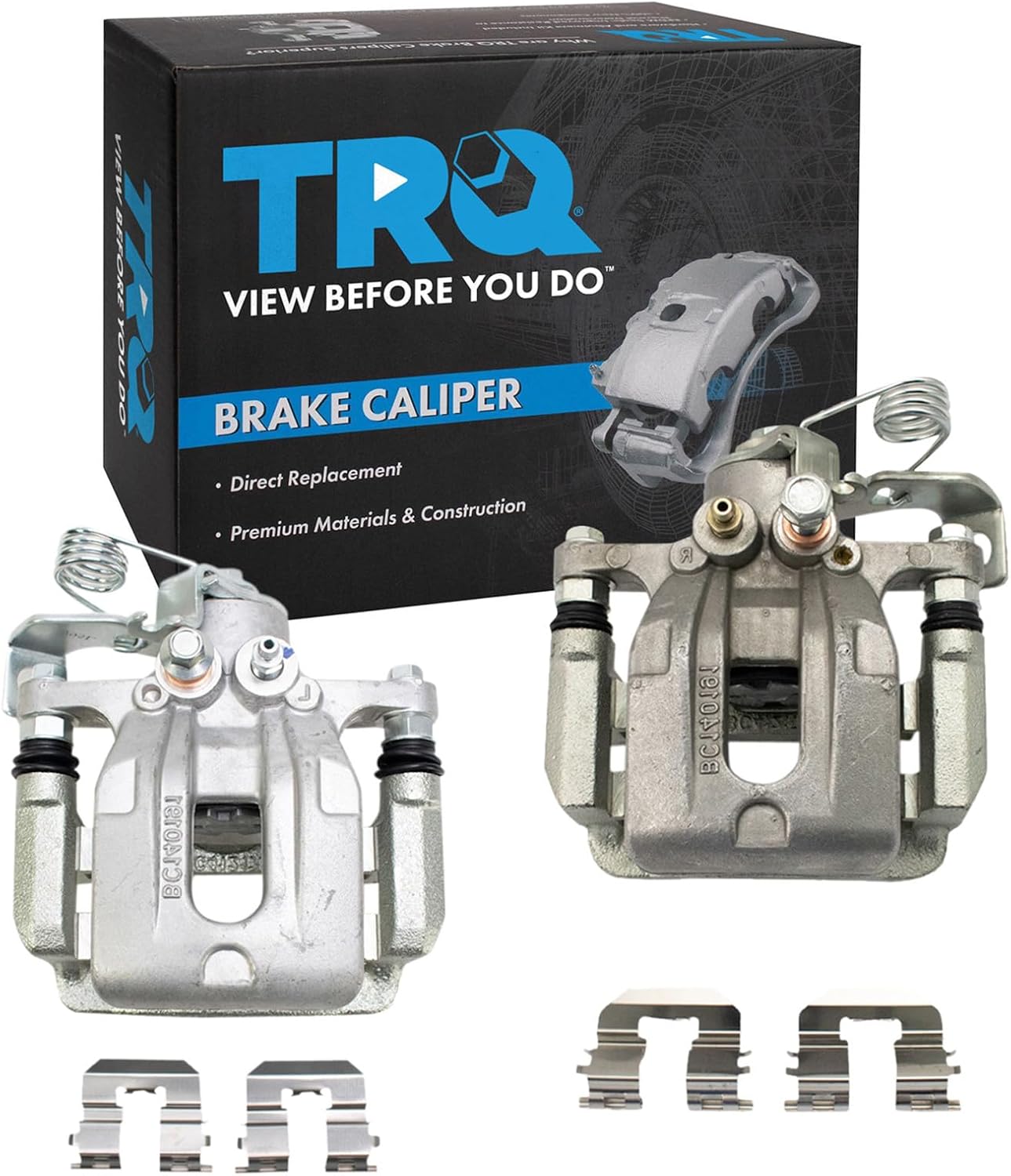
| Brand | TRQ |
|---|---|
| Model | TRQ CLA34814 2 Piece Brake Caliper Set |
| Exterior | Machined |
| Zinc Coated | Yes |
| EPDM Seals | Yes |
This TRQ rear caliper set replaces both driver and passenger side rear calipers and is intended as a direct replacement for compatible Hyundai Elantra models. The pair arrives pre-assembled with included hardware and abutment kit so you can swap the old calipers without modifying the mounting points. Zinc coating and machined exterior help resist corrosion while EPDM seals improve thermal durability under repeated braking. For a performance-oriented Elantra owner this kit simplifies a brake refresh and reduces downtime compared with sourcing individual components. Installation is typical for rear calipers: remove the wheel, detach the brake line, transfer or attach the e-brake cable arm as required, mount the caliper and bleed the system. A minority of users report occasional piston stiffness and the set does not include the large mounting bracket in some applications, so confirm the bracket condition before installing. If you want a near-factory replacement that prioritizes fit, rust protection, and ready-to-install hardware, this set delivers; expect to follow normal bleeding and bedding procedures after installation.
Best for: Performance-oriented buyers who want a near-factory replacement that reduces repair time and restores consistent rear braking performance on a Hyundai Elantra.
Less Ideal for: Drivers seeking a full hardware overhaul including the main mounting bracket or those who prefer remanufactured calipers with documented bench testing should consider other options.
- Direct-fit design for straightforward swap on compatible Hyundai Elantra rear brakes
- Includes hardware and abutment kit so most rear brake repairs can be completed in one purchase
- Zinc coating and machined exterior for improved corrosion resistance
- EPDM seals for better resistance to heat-related deterioration
- Some users report occasional stiff pistons out of the box which can complicate initial bleeding
- Does not include the main large caliper mounting bracket in certain applications so bracket reuse may be required
Verdict A ready-to-install, corrosion-resistant rear caliper pair that restores factory-style braking for performance-focused Hyundai Elantra owners.
4. SCITOO Rear Brake Calipers with Bracket for Hyundai Elantra (2007–2010)

| Fitment | Hyundai Elantra 2007-2010 Rear Left & Right |
|---|---|
| Piston count | 1 Piston |
| Piston material | Steel |
| Bleeder port size | M10X1 |
| Inlet port size | M10X1 |
These SCITOO rear brake calipers replace the left and right rear calipers on Hyundai Elantra model years 2007 through 2010 and arrive as a two-piece kit with brackets, pad clips, copper washers and dust boots. Each caliper is a single-piston steel design with M10X1 bleeder and inlet ports, so installation follows the same plumbing and bleeder process as the factory parts. For a budget-focused repair the kit covers the basic hardware needed to swap both rear calipers and should get an Elantra back on the road without modifying brake lines or lines of different thread size. Expect a straightforward bolt-on fit when the correct OEM part numbers are matched. Limitations include a basic single-piston, steel piston construction rather than upgraded multi-piston or coated finishes, so buyers seeking longer corrosion resistance or performance braking will want a higher-grade option. The kit is a practical value choice for routine replacement when affordability and complete rear caliper coverage are the priorities.
Best for: Budget-conscious Hyundai Elantra owners who need an economical, complete rear caliper replacement to restore braking function without extra parts hunting.
Less Ideal for: Drivers who prioritize corrosion-resistant finishes or performance braking upgrades should consider higher-end replacement calipers or performance kits.
- Sold as a pair with brackets and basic hardware needed for rear caliper replacement
- Matches factory-style single-piston plumbing with M10X1 bleeder and inlet ports for direct fit when correct OEM numbers are used
- Includes pad clips, copper washers and dust boots so fewer additional parts are required
- Budget-oriented price suitable for cost-conscious, routine brake repairs
- Single-piston steel pistons and uncoated finish offer less corrosion resistance than premium coated calipers
- Not a performance upgrade and lacks multi-piston design for improved braking feel under heavy use
Verdict A no-frills, budget-friendly pair of rear calipers that restore braking on Elantra 2007–2010 models but without performance or corrosion-resistant upgrades.
5. A-Premium Rear Disc Brake Rotors, Ceramic Pads and Calipers Kit for Hyundai Elantra (Rear) 8‑Piece

| Compatible with Vehicle Type | Car |
|---|---|
| Automotive Fit Type | Vehicle Specific Fit |
| Orientation | Rear |
| Caliper Brake Piston Count | 1 Metal Piston |
This A-Premium rear brake kit supplies both rear rotors, ceramic pads and two replacement calipers so you can refresh the entire rear braking assembly in one purchase. It is sold as a vehicle-specific fit for Hyundai Elantra 2011–2016 sedans and 2013–2014 coupe models and includes installation hardware and high-temperature grease to simplify installation. The rotors are solid type with five bolt holes and the calipers use a single metal piston with standard M10 bleed and inlet ports, which makes them straightforward to install and bleed on typical home-garage or shop jobs. Ceramic pads offer quieter operation and lower dust than semi-metallic pads, and receiving rotors, pads and calipers together avoids mixing old and new components. Limitations include the kit being rear-only so front brake work still requires a separate purchase, and buyers who expect upgraded performance braking features such as slotted or cross-drilled rotors will need a different product. The included one-year manufacturer quality guarantee covers the item but not installation or associated costs.
Best for: Risk-averse buyers who prioritize a complete, factory-replacement style rear brake refresh for a Hyundai Elantra and want the convenience of matching rotors, pads and calipers sold together.
Less Ideal for: Drivers seeking performance upgrades, track use, or a full front-and-rear overhaul should look for a shop-oriented or performance kit instead.
- Complete rear kit includes rotors, ceramic pads, calipers, lubricant and hardware for a single install
- Vehicle-specific fitment for Hyundai Elantra 2011–2016 sedans and 2013–2014 coupe reduces fitment guessing
- Ceramic pads typically run quieter and produce less brake dust than semi-metallic pads
- Calipers use common M10 bleed and inlet fittings to simplify bleeding and hose connection
- Kit covers only the rear brakes so front rotors and pads are not included
- Rotors are solid type rather than slotted or drilled, so they do not offer enhanced heat dissipation for aggressive driving
Verdict A convenient, vehicle-specific rear brake replacement kit for Hyundai Elantra owners who want a like-for-like refresh without performance upgrades.
6. PHILTOP Front Brake Caliper for 2011–2016 Hyundai Elantra

| Fitment | 2011–2016 Hyundai Elantra, 2013–2014 Elantra Coupe |
|---|---|
| Material | Ductile iron |
| Surface | Zinc-plated |
| Included hardware | Caliper, bracket, phenolic piston, mounting hardware, banjo bolts and copper washer |
| Certification | IATF16949 |
This PHILTOP front brake caliper is a replacement assembly intended to fit 2011–2016 Hyundai Elantra and Elantra Coupe model years listed in the fitment. It ships as a machined ductile iron caliper with phenolic piston, mounting hardware, and new banjo bolts and copper washer, so it covers the basic components needed for a brake caliper swap. Typical use is straightforward: remove the old caliper and install this unit using the supplied bracket and hardware; buyers report easy fit and quick installation. The caliper is zinc-plated for corrosion resistance and the manufacturer notes IATF16949 certification, which indicates production standards aimed at automotive parts. Practical benefits include complete mounting hardware and a design matched to factory mounting points for a budget-friendly replacement. Limitations are that pads are not included and long-term wear performance and corrosion resistance will depend on environment and maintenance; buyers replacing both sides or upgrading rotors may need additional parts. For routine Elantra brake repairs this is a cost-conscious, ready-to-install option with sensible packaging of necessary hardware.
Best for: Practical optimizer buyers who want a reliable, budget-conscious replacement that installs quickly and restores braking function without premium aftermarket add-ons.
Less Ideal for: Drivers seeking performance upgrades, heavy-duty use, or a full rebuild kit with pads and caliper-specific performance features should look for more comprehensive or upgraded options.
- Designed to match factory mounting points for direct replacement on 2011–2016 Elantra models.
- Includes mounting hardware plus new banjo bolts and copper washer for a near-complete install.
- Zinc-plated ductile iron construction and IATF16949 production indicate factory-style manufacturing controls.
- Machined exterior finish for consistent fit and appearance.
- Brake pads are not included so additional purchase is required for a complete brake job.
- Long-term corrosion and durability depend on local conditions and maintenance rather than proprietary corrosion protection details.
Verdict A practical, factory-matching front caliper for 2011–2016 Elantra owners who want a complete, affordable replacement ready for installation.
7. TRQ Front and Rear Brake Caliper Set (Zinc Coated) for Hyundai Elantra

| Fitment | 2009–2012 Hyundai Elantra |
|---|---|
| Finish | Zinc Coated |
| Seals | EPDM Seals |
| Includes | Front and rear calipers with hardware and abutment kit |
This TRQ caliper kit supplies two front and two rear replacement calipers engineered as direct-fit components for the Hyundai Elantra. It comes fully assembled with zinc-coated brackets to resist corrosion, EPDM seals for better heat and ozone resistance, and a hardware and abutment kit so you can complete the brake job without sourcing extra parts. Typical use is full-vehicle brake replacement during a DIY service or a shop repair; TRQ also provides installation videos to simplify the process. In practice the kit installs like a factory replacement, bleeds cleanly to a firm pedal and eliminates the need for modifications on confirmed-fit vehicles. Limitations to be aware of include compatibility variations across wheel and rotor sizes—some buyers reported minor casting interference with wheel weights or bolt alignment differences—so double-check fitment for your Elantra configuration before installing. The finish and included hardware make this a convenient, near-complete solution for owners replacing all four calipers at once.
Best for: Balanced buyers who want a practical, mostly complete factory-replacement kit for a full caliper refresh on a Hyundai Elantra and prefer a mix of DIY support and reliable fitment.
Less Ideal for: Drivers seeking a heavy-duty performance upgrade or those with nonstandard rotors and wheels should look at purpose-built performance calipers or verify alternate fitment options.
- Complete four-caliper kit includes front and rear calipers plus hardware for a full repair
- Zinc-coated brackets offer added corrosion resistance for longer life in wet climates
- EPDM seals improve resistance to heat and thermal deterioration compared with basic seals
- Pre-assembled, direct-replacement design reduces installation time and removes need for modifications
- Manufacturer provides step-by-step installation videos to support DIY fitting
- Some fitment variants may require minor trimming or different caliper sub-models for certain wheel or rotor sizes
Verdict A convenient, corrosion-resistant four-caliper direct-replacement kit that fits Hyundai Elantra models and is well suited for a balanced buyer wanting a near-complete DIY or shop-ready brake refresh.
Choosing the Right Hyundai Elantra Brake Calipers: Key Factors to Consider
Fitment and Mounting Compatibility
Exact fitment is critical because calipers must align with the vehicle's mounting points, brake hose routing, and rotor dimensions. A caliper that does not match factory mounting bolt spacing or bracket geometry can cause uneven pad wear, vibration, or difficulty during installation.
Check stamped dimensions, bolt pattern, bleeder screw position, and whether the caliper is intended for front or rear use. Choosing the correct side and axle-specific caliper prevents installation issues and ensures the braking system functions as designed.
Corrosion Resistance and Coating
Calipers face constant exposure to moisture, road salt, and debris, so coating and finish matter for longevity. Quality corrosion protection reduces the risk of seized guide pins, stuck pistons, and compromised braking performance over time.
Look for durable finishes such as zinc or ceramic coatings and attention to plated hardware. Corrosion protection also affects easy servicing later, since heavily corroded components complicate bleeding, pad changes, and future rebuilds.
Piston Design and Seal Quality
Piston size, material, and the design of seals and dust boots influence pedal feel, response, and leak resistance. Properly sized pistons maintain the right hydraulic leverage and ensure pad contact is consistent across the rotor.
High-quality seals resist swelling and deterioration from brake fluid and heat. Robust dust boots prevent contaminants from entering the piston bore, which helps avoid caliper sticking and uneven braking over time.
Remanufacturing Standards and Build Quality
Remanufactured or rebuilt calipers can be cost-effective, but performance depends on the rebuild process. Tight tolerances, new seals and hardware, cleaned bores, and properly inspected pistons are key factors that determine reliability.
Verify that remanufactured units follow published procedures, replace wear items, and test for leaks. Units reassembled without replacing critical components can lead to early failure or inconsistent braking behavior.
Installation and Serviceability
Consider how easy the caliper is to install and maintain. User-friendly features include clearly placed bleeder screws, accessible mounting bolts, and compatibility with standard brake pads and hardware. Some calipers come with necessary mounting bolts or guide pins included, which reduces installation steps.
Serviceable designs make future pad changes, bleeding, and rebuilds simpler. If you plan to do the work yourself, factor in whether specialty tools are required and whether the caliper allows straightforward piston retraction without risk of damaging seals.
Axle-Specific Considerations
Front brake calipers and rear brake calipers often have different piston sizes, parking brake mechanisms, or integrated components. The front axle typically handles more braking force and may require larger pistons or different bracket clearances, while the rear may incorporate parking brake levers or electronic parking brake features.
Select calipers matched to the correct axle to preserve balance and avoid braking imbalances. Confirm whether a caliper is intended for the left or right side as well, since bleed screw orientation and hose routing can differ.
FAQ
How do I know when a brake caliper needs replacing on my Elantra?
Common signs often include uneven pad wear, persistent pulling to one side during braking, visible brake fluid leaks around the caliper, or a soft brake pedal that does not firm up after bleeding. You may also notice reduced braking response or noise that indicates a stuck piston or seized guide pin. A visual inspection and basic functional checks usually indicate whether replacement or a rebuild is required.
Are remanufactured calipers safe to use on a Hyundai Elantra?
Remanufactured calipers can be safe when they follow strict rebuild standards, including replacement of seals, hardware, and adequate corrosion protection. Reliability depends on the quality of the remanufacturing process, so look for evidence of thorough testing and clear documentation of replaced components. Properly rebuilt units often offer acceptable performance comparable to new parts.
Can I replace a single caliper or should I replace both on the same axle?
Replacing a single faulty caliper is common, but consider the condition of the opposite caliper and the balance of braking force. If the paired caliper shows similar age, corrosion, or wear, replacing both on the same axle helps maintain even braking and consistent pedal feel. Assess the other caliper and the brake system components before deciding.
What maintenance helps prevent caliper sticking symptoms?
Regularly inspect and clean guide pins, replace worn boot seals, and ensure hardware is properly lubricated with the correct high-temperature grease. Use quality brake fluid and follow proper bleeding procedures to minimize contamination. Address corrosion early and replace compromised boots or seals to prevent dirt and moisture from causing pistons to stick.
Do caliper rebuild kits restore full functionality?
A rebuild kit that includes new seals, dust boots, and any necessary hardware can restore function when the caliper body and piston are in good condition. Kits are useful for addressing leaks and restoring smooth piston movement, but they will not fix a corroded or damaged piston bore. Inspect components carefully before committing to a rebuild.
Is replacing calipers something a competent DIYer can do?
Many competent DIYers can replace calipers with standard tools, but the task requires attention to proper torque, brake line handling, and correct bleeding technique. Ensure you understand brake fluid handling, wheel reinstallation torque, and test procedures. If you are unsure about any step or the vehicle has integrated parking brake systems, seek professional assistance.
How We Chose the Best Hyundai Elantra Brake Calipers
We focused on parts that match the Hyundai Elantra's factory mounting and hydraulic specifications to ensure reliable fitment and safe operation. Primary evaluation criteria included dimensional fit and compatibility with original brake lines and hardware, corrosion resistance and coating quality, piston type and seal design, and overall construction material and finish. We also considered ease of installation, availability of necessary mounting hardware or rebuild kits, and manufacturer quality control or remanufacturing standards. We excluded units that lacked clear fitment data, showed inconsistent build documentation, or did not provide acceptable corrosion protection for road salt regions. We gave additional weight to calipers with clear specifications for piston diameter and bore geometry, robust dust boots and seals, and options that make routine maintenance, such as bleeding and pad replacement, straightforward.
Our full evaluation process is outlined in our review methodology.
Conclusion
When choosing Hyundai Elantra brake calipers, prioritize correct fitment, corrosion protection, and high-quality seals. Those factors have the biggest impact on installation ease, long-term reliability, and consistent braking feel. Balance your decision between remanufacturing standards and build quality, and consider serviceability if you plan on doing maintenance yourself. Replacing worn or failing calipers with units that match axle-specific requirements helps preserve safety and predictable stopping performance.
Explore More:
- Check out all Hyundai Elantra parts & accessories
- Explore Brake System
- Browse all Auto Parts
