

Note: This article contains affiliate links. If you click on these links and make a purchase, I may earn a small commission at no extra cost to you. This helps support my research and content. Read my full affiliate disclosure here.
If your Ford F-350 is showing a hard brake pedal or longer stopping distances, choosing the right brake booster makes a major difference in safety and drivability. A correctly matched booster restores vacuum assist so you can apply consistent, predictable braking effort under load and while towing. This guide covers the top shortlisted brake boosters for the F-350 and explains the practical tradeoffs you should consider when replacing the unit.We evaluated candidates for fitment, vacuum performance, durability, and ease of installation. Read on to see which options suit heavy-duty use, towing, or general duty replacement, and learn the key signs that indicate a booster needs attention.
Top Picks at a Glance
| Best Overall The best all-around choice for most situations | Taupyx Vacuum Power Brake Booster 54-74400 (fits select 1987–1998 Ford F-250/F-350) |  |
| Best Quality Built to a higher standard if you want something more solid | Bosch Hydro-Boost Power Brake Booster (0204777605) |  |
| Best Value The sweet spot between price and what you get | maXpeedingrods Vacuum Power Brake Booster for Ford F-250 / F-350 Super Duty |  |
| Best Budget The cheapest option that still gets the job done reliably | PartsFlow Vacuum Power Brake Booster (fits select Ford and Mazda models) |  |
| Highest Rated A top-rated pick with lots of positive feedback | A-Premium Vacuum Power Brake Booster for Ford F-250/F-350 (without master cylinder) |  |
| Most Popular A crowd favorite that many people choose with confidence | DRIVESTAR Power Brake Booster PBV8020 (replacement for 54-73703) |  |
| Best Seller A high-volume bestseller chosen again and again | PartsFlow Hydraulic Power Brake Booster 52-7410 for Ford Super Duty 2011–2016 |  |
1. Taupyx Vacuum Power Brake Booster 54-74400 (fits select 1987–1998 Ford F-250/F-350)

| Manufacturer | Taupyx |
|---|---|
| Model | E8TZ2005A |
| Diaphragm style | Dual |
| Master cylinder included | No |
| Master cylinder stud thread size | 3/8×16 |
This Taupyx vacuum power brake booster is a replacement unit intended to restore power-assist braking on compatible 1987–1998 Ford F-250 and F-350 Super Duty trucks. It installs in place of the factory booster (master cylinder not included) and supplies vacuum-assisted pedal effort through a dual-diaphragm design sized to the original specification. Typical use is a direct swap when the original booster is leaking, has internal diaphragm failure, or has lost vacuum retention. The painted steel construction and stated OEM part-number compatibility make it practical for owners seeking a factory-style replacement. Benefits include maintained pedal feel and restored boost for towing or heavy-load braking, plus compatibility notes and a reminder to replace the master cylinder mounting O-ring to avoid vacuum leaks. Important limitations are that the master cylinder is not supplied and fitment is limited to the listed Ford years and GVW configurations, so verify part numbers and pedal-rod requirements before purchase.
Best for: Buyers who want a reliable, factory-compatible replacement to restore original power-assist braking on late-80s to late-90s Ford F-250/F-350 trucks and who value a balanced mix of cost and functionality.
Less Ideal for: Drivers looking for an upgraded performance booster, universal fit options, or a plug-and-play kit that includes the master cylinder should consider other products.
- Direct-replacement design that matches listed OEM part numbers for straightforward fitment
- Dual-diaphragm booster intended to deliver factory-style vacuum assist and pedal feel
- Painted steel construction for corrosion resistance and durability
- Clear fitment guidance for specific Ford F-250/F-350 year ranges and GVW configurations
- Does not include the master cylinder so additional parts may be required for a complete brake assembly
- Some installations may need a new master cylinder mounting O-ring to ensure vacuum retention
Verdict: Choose this Taupyx booster if you need a factory-style replacement to reliably restore power-assist braking on the specified 1987–1998 Ford Super Duty trucks.
2. Bosch Hydro-Boost Power Brake Booster (0204777605)

| Manufacturer | BOSCH |
|---|---|
| Model | 0204777605 |
| Manufacturer Part Number | 204777605 |
| Compatible Vehicles | 2017-22 Ford F-250 and F-350 Super Duty (select) |
This Bosch Hydro-Boost brake booster replaces the factory hydraulic booster on compatible Ford Super Duty models and restores the hard braking performance needed for heavy towing and hauling. It is a 100 percent new, hydraulically tested assembly with an accumulator charged to factory specifications and is designed and manufactured in the United States to match original equipment fit and function. In real-world use the unit provides firm pedal feel and consistent boost under load, which translates to shorter stopping distances when the truck is loaded. Bosch highlights long durability, with design life targeted beyond 500,000 pedal strokes, and each unit is verified on a hydraulic test stand before shipping. The product is a direct replacement style component, so installation follows factory procedures but requires proper hydraulic connections and bleeding. Buyers should expect to match the exact part number and vehicle trim for fitment and may need professional installation if they are not comfortable with hydraulic brake systems.
Best for: Buyers who prioritize restoring or maintaining strong, factory-quality braking on a Ford Super Duty used for towing or heavy hauling and want a proven, OE-style hydraulic booster.
Less Ideal for: Drivers who do light-duty commuting only and do not tow or haul regularly or those seeking a universal or simplified bolt-on vacuum booster solution.
- 100% new hydraulically tested assembly matched to factory specifications
- Accumulator precharged to factory spec for reliable boost under load
- Designed and manufactured in the USA with long-life design exceeding 500,000 pedal strokes
- Direct-fit replacement for compatible Ford Super Duty applications to restore original brake performance
- Requires correct part number and vehicle-specific fitment verification before purchase
- Installation involves hydraulic brake connections and bleeding which may require a professional
Verdict: Choose this Bosch Hydro-Boost if you need a factory-spec hydraulic booster to reliably restore strong, towing-ready braking on a Ford Super Duty.
3. maXpeedingrods Vacuum Power Brake Booster for Ford F-250 / F-350 Super Duty

| Fitment | Ford F Super Duty/F-250/F-350 (1987–1997, model-specific) |
|---|---|
| OE part numbers | F3TZ2005A, F5TZ2005CA, F8TZ2005A, E8TZ2005A, 54-74400, 5474400 |
| Condition | New |
| Fitment type | Direct Replacement |
This maXpeedingrods vacuum power brake booster is a direct-replacement unit intended for Ford F Super Duty trucks from the late 1980s through the 1990s. It replaces the factory booster to restore pedal assist when the original has failed, and it installs in place of the old unit without modifying the master cylinder. The listing calls out specific fitment ranges and part numbers to match original equipment. Built to IATF16949 production standards, the booster aims to deliver consistent vacuum assist for normal towing, hauling, and daily driving. Practical benefits include a straightforward swap, aftermarket availability for older trucks, and support from the seller. Limitations are that it ships without a master cylinder so buyers must reuse or separately purchase that component and must verify the exact year/GVW and pedal rod details listed to ensure correct fit; it also requires basic mechanical skill for safe installation and bleeding of the brake system after fitting.
Best for: Practical owners restoring braking performance on a late 1980s to 1990s Ford Super Duty who want a factory-style replacement that is straightforward to install and supported by the seller.
Less Ideal for: Drivers who lack mechanical experience or want a complete brake system refresh including a new master cylinder should consider a professional service or a bundled replacement option.
- Direct-replacement fit for specified 1987–1997 Ford F-250 and F-350 Super Duty models
- Manufactured to IATF16949 production standards for consistent build quality
- Restores vacuum brake assist to improve pedal effort and braking feel
- Includes seller support and a stated limited warranty for quality-related issues
- Does not include the master cylinder so additional parts may be required
- Fitment requires checking GVW and pedal rod variants for some model years
Verdict: A practical, factory-style replacement booster for restoring pedal assist on specified 1987–1997 Ford Super Duty trucks without modifying the original brake setup.
4. PartsFlow Vacuum Power Brake Booster (fits select Ford and Mazda models)

| Manufacturer | PartsFlow |
|---|---|
| Brake Booster Diaphragm Style | Dual |
| Master Cylinder Stud Thread Size | 3/8×16 |
| OEM Part Number | 54-73181, E8TZ2005D, F0TZ2005A, ZZL043800 |
This PartsFlow vacuum power brake booster replaces a failed booster to restore the assisted brake feel on compatible Ford and Mazda trucks from the late 1980s and early 1990s. It installs in place of the factory unit, reusing existing mounting hardware and the master cylinder studs, so installation is straightforward for a mechanically inclined DIYer or a shop during a routine brake job. The unit uses a dual diaphragm design to provide consistent pedal boost and the listing includes a 12-month guarantee for peace of mind. Practical benefits include restoring proper pedal travel and reducing stopping effort without modifying the vehicle, and the product images and fitment notes help verify compatibility for specific models. Limitations are that fitment is limited to the listed model years and configurations, and buyers should confirm the exact OEM part references before ordering to avoid misfit; professional installation may be needed if brake light switch or master cylinder issues arise when replacing the booster.
Best for: Buyers seeking a budget-friendly replacement booster to bring an older Ford or Mazda truck back to proper braking performance, and who prefer a straightforward swap using existing hardware.
Less Ideal for: Those restoring newer trucks, modifying brake systems for heavy-duty towing, or anyone needing a booster for a vehicle outside the specified year ranges should look elsewhere.
- Direct replacement design that reuses factory mounting hardware for easier installation
- Dual diaphragm vacuum design restores consistent pedal assist and reduced stopping effort
- Fits specific Ford and Mazda models commonly from late 1980s to mid 1990s
- Includes a 12-month guarantee for added buyer confidence
- Compatibility limited to the listed model years and specific vehicles
- May require brake light switch adjustment or master cylinder service after installation
Verdict: A cost-conscious, direct-replacement vacuum booster that restores factory-style pedal assist on the specified late 80s to mid-90s Ford and Mazda models.
5. A-Premium Vacuum Power Brake Booster for Ford F-250/F-350 (without master cylinder)

| Compatible models | Ford F-250/F-350 (listed years and configurations) |
|---|---|
| Diaphragm style | Dual |
| Diaphragm diameter | 10.775 in (273.685 mm) |
| Master cylinder stud thread | 3/8×16 |
| Material | Steel |
This A-Premium vacuum brake booster replaces the factory power booster on older Ford Super Duty trucks to restore pedal assist and reduce stopping effort. It installs in place of the original booster (master cylinder not included) and ships with the push rod and a dual-diaphragm design that aims to provide consistent vacuum assist for heavier GVW applications. Fitment information targets F-250 and F-350 model years from the late 1980s through the 1990s, and the unit is finished with an anti-rust coating for longer service life. In practice the booster should noticeably firm up pedal feel and make highway merging or towing maneuvers easier compared with a failed vacuum assist. Important limitations are that you must verify the listed reference numbers and vehicle fitment before buying and that a separate master cylinder is required; installation may need brake line bench-bleeding and attention to push-rod adjustment to get correct pedal height. The included one-year unlimited-mileage guarantee provides added confidence for long-term use.
Best for: Buyers who prioritize restoring reliable, factory-quality brake assist on older Ford Super Duty trucks and want a durable direct-replacement booster to regain consistent pedal feel.
Less Ideal for: Drivers who need a complete brake assembly with master cylinder included or those replacing boosters on vehicles outside the specified model years and configurations.
- Direct-fit replacement for specified Ford F-250 and F-350 model years listed by the manufacturer
- Dual diaphragm design intended to provide reliable vacuum assist under higher GVW loads
- Includes push rod and matching master cylinder stud thread for straightforward mechanical hookup
- Anti-rust coating to help durability in road-exposed conditions
- Does not include the master cylinder, so buyer must purchase or reuse a compatible master cylinder separately
- Fitment is limited to specific model years and configurations so verification is required before purchase
Verdict: Choose this booster if you need a durable, factory-style replacement to reliably restore power-assist braking on the specified Ford Super Duty years.
6. DRIVESTAR Power Brake Booster PBV8020 (replacement for 54-73703)

| Manufacturer Part Number | PBV8020 |
|---|---|
| OEM Part Number | 54-73703, 5473703, D7TZ2005A, D7TZ2005H |
| Brand | DRIVESTAR |
| Item Weight | 9.48 pounds |
This DRIVESTAR power brake booster is a bolt-in replacement intended to restore vacuum-assisted braking on compatible late-1970s Ford trucks and Broncos. It installs in place of the original booster and provides the same basic function: amplify pedal force using engine vacuum so braking requires less effort. Notable features include a hardened, galvanized 45# steel push rod for long-term wear resistance and an EPDM sealing ring rated for extreme temperatures to reduce leak and aging risk. The result is consistent pedal feel and reliable vacuum retention when the unit is installed correctly. Limitations to keep in mind are fitment and era: the listing targets 1977 to 1979 F-series and 1978 Bronco applications, so compatibility with other Ford models such as F-350 is not indicated and should be confirmed before purchase. Also the product description cites a 36-month warranty but buyers should verify installation and vacuum system condition to avoid diagnosing underlying master cylinder or vacuum source issues as booster problems.
Best for: Buyers who prioritize a proven replacement that matches original fit and part numbers and who want a durable, serviceable booster for older Ford truck restorations.
Less Ideal for: People looking for a booster for modern or heavier-duty Ford models such as F-350s or those who need universal or performance-modified brake boosters.
- Designed as a direct replacement for listed late-1970s Ford part numbers
- Hardened, galvanized 45# steel push rod for improved wear resistance
- EPDM sealing ring rated for wide temperature range to reduce leaks and aging
- 36-month warranty indicated in the product description
- Fitment is limited to specific 1977–1979 F-series and 1978 Bronco models and may not suit other vehicles
Verdict: Choose this DRIVESTAR booster when you need a durable, direct-fit replacement that restores factory-style power assist for late-1970s Ford truck restorations.
7. PartsFlow Hydraulic Power Brake Booster 52-7410 for Ford Super Duty 2011–2016
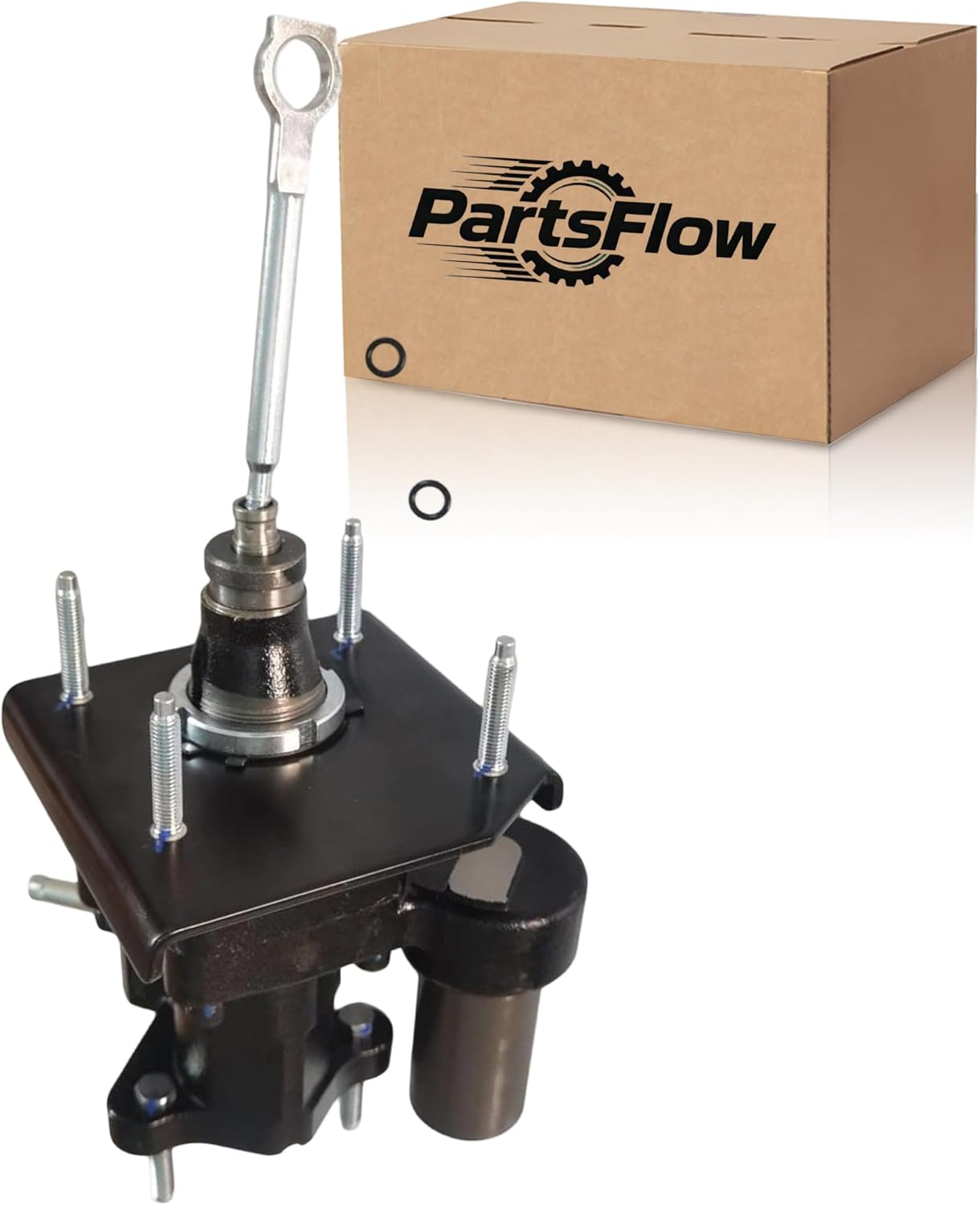
| Booster Type | Hydraulic |
|---|---|
| Master Cylinder Stud Thread Size | 3/8×16 |
| Reference Number | 52-7410, BC3Z2005A, DC3Z2005B, DC3Z2005C |
| Material | Cast Iron |
This PartsFlow hydraulic power brake booster is a direct-replacement style unit intended for Ford F-250, F-350, F-450, and F-550 Super Duty trucks from 2011 through 2016 with compatible engines. It converts hydraulic pressure from the power steering system into additional braking force, so installation requires disconnecting and later bleeding the power steering lines and reusing the original master cylinder pushrod, spring, and retainer. The cast iron construction and factory-style stud thread size make it durable and straightforward for shop or experienced DIY installation. Practical benefits include restoring firm, assisted braking on trucks originally equipped with a hydro-boost system and compatibility with OE bleeding procedures and power steering fluid. Limitations are that it is a hydraulic booster only, so owners will need to perform steering system bleeding after installation and confirm exact fitment against the reference numbers and vehicle options before buying.
Best for: A conservative buyer who wants a like-for-like hydraulic booster to restore original assisted braking on a 2011–2016 Ford Super Duty and prefers a durable, serviceable replacement that follows factory procedures.
Less Ideal for: Those looking for a vacuum booster conversion, a lightweight aftermarket performance unit, or a plug-and-play electrical brake assist solution.
- Designed to replace factory hydro-boost units on specified 2011–2016 Ford Super Duty trucks
- Cast iron construction for durability in heavy-duty use
- Uses factory master cylinder pushrod, spring, and retainer to simplify swap
- Compatible with standard OE power steering fluid and bleeding procedures
- Requires removal and bleeding of power steering lines during installation
Verdict: Choose this cast-iron hydraulic booster when you want a factory-style replacement to reliably restore assisted braking on a 2011–2016 Ford Super Duty.
Choosing the Right Ford F-350 Brake Booster: Key Factors to Consider
Fitment and Mounting Compatibility
Exact fitment is essential on the F-350 because the booster must line up precisely with the master cylinder, firewall studs, and pedal pushrod. A booster that is even slightly off can cause binding at the pushrod or require pedal travel adjustments that change brake feel.
When assessing fitment, confirm stud spacing, pushrod length and thread engagement, and whether any firewall or bracket modifications are needed. For trucks used in towing or vocational roles, minimal modification is preferred to preserve factory geometry and serviceability.
Vacuum Performance and Assist Level
The booster must provide the right level of vacuum assist to return pedal effort to acceptable levels, especially under load when towing or hauling. Some F-350 setups use engine vacuum while others rely on an auxiliary vacuum pump; match the booster to the vehicle's vacuum source and rated boost level.
Consider peak vacuum, response time from initial pedal application, and how the booster behaves during repeated stops. A unit that loses assist quickly or offers weak boost will restore little benefit and can mask underlying hydraulic issues.
Durability and Corrosion Resistance
The F-350 often sees harsh duty cycles and exposure to road salt, mud, and high under-hood temperatures. Choose a booster with robust housing materials, corrosion-resistant coatings, and a diaphragm design rated for heavy use.
Look for sealed housings and quality fasteners that resist galling. A durable booster reduces the chance of vacuum leaks and extends service intervals, which is important for work trucks that accumulate high mileage quickly.
Mechanical Interface and Pushrod Geometry
Pushrod length, travel, and clevis attachment determine how the booster transmits force to the master cylinder and ultimately the braking system. Incorrect geometry alters pedal ratio and can introduce sponginess or binding.
Verify that the booster allows proper pedal travel without bottoming out the master cylinder or leaving excessive free play at rest. Where adjustable pushrods are available, ensure there is sufficient adjustment range for the F-350 pedal assembly to achieve the correct preload and travel.
Serviceability and Rebuild Options
For heavy-use F-350s, being able to service or rebuild a booster extends its useful life and can lower long-term ownership costs. Assess whether diaphragms, check valves, and seals are replaceable and if repair kits are readily available.
Consider whether the booster can be removed and reinstalled without specialized tools and whether the internal components are accessible to experienced technicians. Rebuildable designs are typically preferable for high-mileage trucks.
Installation Effort and Required Modifications
Installation complexity affects downtime and the likelihood of a successful repair. Some boosters are near-direct replacements while others need brackets, longer studs, or modifications to vacuum plumbing.
Plan for the necessary hardware, torque specifications, and whether the job requires bench bleeding or master cylinder alignment after installation. Lower installation effort reduces time out of service and the chance of installation-related issues.
Common Brake Booster Symptoms to Watch For
Recognizing early symptoms helps you decide whether the booster is the cause of braking issues. Typical signs on the F-350 include a noticeably harder brake pedal, increased pedal travel, and the need for greater foot force to achieve the same stopping power.
Other indicators are hissing noises from the firewall area, intermittent loss of assist under load, and a pedal that feels firm after the vehicle has been parked for a period and improves once the engine has run. These signs often point to diaphragm leaks, check valve failures, or vacuum line deterioration.
- Hard or heavy brake pedal requiring more foot force
- Longer pedal travel before brakes engage
- Hissing or vacuum leak noises near the booster
- Reduced assist when towing or during repeated stops
Diagnosing Vacuum Leaks and How to Test
A systematic approach helps confirm whether a vacuum leak or booster failure is responsible. Start by listening for hissing near the booster with the engine idling and with the engine off while a helper presses the brake pedal to build a pressure differential.
Basic tests include pulling vacuum lines to inspect for cracks, checking the one-way check valve for proper operation, and using a hand vacuum pump to verify that the booster holds vacuum. If the booster loses vacuum quickly or the pedal changes feel substantially when the engine is restarted, the booster assembly itself is suspect.
- Inspect vacuum hoses and check valve for cracks or collapse
- Use a hand vacuum pump to pressurize and observe hold time
- Listen for hissing at the firewall and around hose connections
- Check pedal feel before and after shutting off the engine
Master Cylinder Interface and Why It Matters
The booster and master cylinder form a coupled system; improper mating can produce poor pedal feel or leaks. Ensure the booster provides the correct mounting face and pushrod alignment for the factory master cylinder to avoid introducing side loads or misalignment.
When replacing the booster on an F-350, always confirm that the master cylinder pushrod engagement is within the recommended range so the master cylinder does not bottom out or remain partially compressed. After replacement, the brake system should be bled per factory procedure to remove air introduced during service.
- Verify pushrod engagement and free play per service specs
- Confirm the booster mounting face matches master cylinder ports
- Bleed the braking system after installation to remove air
Installation Tips for F-350 Owners
Prepare for installation by gathering the correct replacement hardware, replacement vacuum hose if needed, and tools for brake bleeding and torqueing firewall studs. Working on an F-350 may require step access and protective covers to avoid damage to adjacent systems.
Take care to set pushrod preload accurately and torque studs to specification. After installation, perform a road test under controlled conditions to verify pedal feel and stopping performance, and recheck for leaks or signs of pedal change during repeated stops.
- Replace vacuum hose and check valve during booster swap as preventive maintenance
- Set pushrod length carefully and torque mounting hardware to spec
- Perform controlled road test and recheck for leaks after initial drive
When to Consider Rebuilding Versus Replacing
For medium- to high-mileage F-350s, a rebuild can be cost-effective if the housing is sound and internal components are accessible. Rebuild kits commonly replace the diaphragm, seals, and check valve, restoring vacuum hold and function without full replacement.
However, if the housing is corroded, the mounting surface is damaged, or pushrod components are excessively worn, a full replacement is the safer choice. Consider the truck's usage and expected future life before committing to rebuild labor.
- Rebuild when housing is intact and internal parts are available
- Replace when structural damage, corrosion, or severe wear exists
- Factor in downtime and access to skilled labor for rebuilds
How We Chose the Best Ford F-350 Brake Booster
We compiled our shortlist by focusing on attributes that matter for heavy-duty Ford F-350 use. Primary evaluation criteria included fitment accuracy to F-350 chassis and brake-mounting points, measured vacuum boost or compressor compatibility for vehicles with vacuum pumps, and materials and corrosion resistance appropriate for under-hood exposure. We also considered mechanical interface details such as pushrod length tolerance and clevis compatibility, since mismatches cause poor pedal feel and premature wear.Durability and serviceability were evaluated through inspection of diaphragm design, housing construction, and availability of rebuildable components. Installation practicality was assessed by how straightforward the unit is to mount, the accessibility of attachment points, and whether additional adapters or bracketry are typically required. Finally, we looked at common failure modes and repairability to ensure owners can maintain the assembly over time.Exclusions: we excluded units that do not match Ford F-350 mounting patterns or that require extensive modification to the pedal or master cylinder, and we did not include products with unverified vacuum specifications or unclear mechanical interface data.
Our full evaluation process is outlined in our review methodology.
FAQ
What are common bad brake booster signs on a Ford F-350?
Common signs include a very hard brake pedal, increased pedal travel, hissing noises near the firewall, and reduced assistance when towing or during repeated stops. These symptoms often indicate diaphragm leaks, a failed check valve, or vacuum hose problems.
How do I test the brake booster on my F-350 at home?
One simple test is to press the pedal several times with the engine off to reduce vacuum, then hold the pedal down and start the engine; the pedal should move downward slightly as vacuum builds. You can also use a hand vacuum pump to check that the booster holds vacuum and inspect vacuum lines for cracks.
Can a vacuum leak cause poor braking performance on the F-350?
Yes. A vacuum leak at the booster, check valve, or vacuum hose reduces assist and results in a firmer pedal and longer stopping distances. Identifying and repairing the leak is essential before replacing other braking components.
Should I replace the master cylinder when I replace the brake booster?
Not always. If the master cylinder is functioning normally and shows no evidence of internal leakage or seal failure, it can be re-used. However, if the master cylinder has worn seals, internal contamination, or incorrect pushrod engagement, replacement is advisable.
Is a rebuild a good option for high-mileage F-350 boosters?
A rebuild can be a practical choice if the booster housing is in good condition and rebuild kits are available. For heavily corroded or structurally damaged units, a full replacement is usually more reliable and may be safer for heavy-duty use.
How long should a properly functioning brake booster last on an F-350?
Booster life depends on use and environment. In moderate conditions, they often last many years, but heavy-duty usage, regular towing, and exposure to corrosive conditions can shorten service life. Regular inspections and addressing vacuum leaks promptly extend longevity.
Final Verdict
When replacing a brake booster on a Ford F-350, prioritize correct fitment, vacuum performance, and mechanical interface with the master cylinder. Durable construction and serviceable designs reduce downtime and long-term maintenance, which matters for trucks that work hard or tow frequently.Balance the benefits of a rebuild against the visible condition of the housing and expected future use. Ultimately, choose the option that restores consistent vacuum assist and correct pedal geometry so the truck stops predictably under load.
