

Note: This article contains affiliate links. If you click on these links and make a purchase, I may earn a small commission at no extra cost to you. This helps support my research and content. Read my full affiliate disclosure here.
If your 1997-2004 Dodge Dakota is showing heavier pedal effort, a spongy feel, or reduced stopping consistency, the brake booster is a common cause worth addressing. Choosing the right 1997-2004 Dodge Dakota brake booster affects pedal effort, stopping distance under load, and compatibility with the factory master cylinder and vacuum system.This guide covers the top five brake boosters shortlisted for fitment and performance on the 1997-2004 Dodge Dakota. We evaluate each option for correct fit, vacuum integrity, mounting, and expected pedal feel so you can pick a solution that matches daily driving, towing, or hauling needs. Read on for the decision factors and practical installation considerations.
Looking for other parts? See all Dodge Dakota parts & accessories.
Top Picks at a Glance
| Best Quality Built to a higher standard if you want something more solid | A-Premium Vacuum Brake Booster for Dodge Dakota 1997–1998 (Without Master Cylinder) |  |
| Best Value The sweet spot between price and what you get | Zecnaud Vacuum Power Brake Booster Compatible with 1999–2004 Dodge Dakota |  |
| Best Budget The cheapest option that still gets the job done reliably | RYNCO Vacuum Power Brake Booster (54-74236) for 1997-1998 Dodge Dakota |  |
| Highest Rated A top-rated pick with lots of positive feedback | CAROCK Vacuum Power Brake Booster for 1999-2004 Dodge Dakota and 1999-2003 Dodge Durango |  |
| Most Popular A crowd favorite that many people choose with confidence | A-Premium Vacuum Power Brake Booster for Dodge Dakota and Durango (Without Master Cylinder) |  |
1. A-Premium Vacuum Brake Booster for Dodge Dakota 1997–1998 (Without Master Cylinder)

| Compatible models | Dodge Dakota 1997-1998 Extended/Standard Cab Pickup |
|---|---|
| Diaphragm diameter | 11.46 in (291.08 mm) |
| Master cylinder stud thread | M8 x 1.25 |
| Material | Steel |
| Package quantity | 1 |
This A-Premium vacuum brake booster replaces the factory unit on 1997–1998 Dodge Dakota extended and standard cab pickups to restore power-assist braking. It installs in the original booster location and includes the push rod and factory-style single diaphragm to return pedal assist and firmness for everyday and spirited driving. The booster is steel-bodied with an anti-rust coating intended to increase service life, and the diaphragm size and stud thread match the referenced OEM numbers so it lines up with the vehicle's brake pedal and master cylinder studs. Because it ships without a master cylinder you must transfer the original or fit a correct replacement, which adds installation steps. Expect an improvement in pedal feel and braking confidence compared with a failed booster, but professional installation or solid mechanical experience is recommended to ensure proper push rod adjustment and vacuum hose connections.
Best for: Drivers restoring or upgrading the brake assist on a 1997–1998 Dodge Dakota who prioritize restoring firm, responsive pedal feel and want a direct replacement booster that matches factory mounting.
Less Ideal for: Anyone seeking a complete brake-system rebuild in one purchase or those who want an upgraded performance-oriented booster with multi-chamber or high-boost designs; this unit is a like-for-like replacement only.
- Direct-fit design for 1997–1998 Dodge Dakota pickups that matches listed OEM reference numbers.
- Single-diaphragm construction restores conventional power-assist pedal feel for street and performance driving.
- Includes push rod and correct master-cylinder stud thread pattern for easier alignment during installation.
- Steel body with anti-rust coating for improved corrosion resistance and longer service life.
- Does not include a master cylinder so additional parts or transfer of the original unit are required for a complete brake overhaul.
Verdict: If you need a straightforward, factory-style replacement booster to restore firm, responsive braking on a 1997–1998 Dodge Dakota, this A-Premium unit is a practical choice.
2. Zecnaud Vacuum Power Brake Booster Compatible with 1999–2004 Dodge Dakota

| Booster Type | Vacuum |
|---|---|
| Material | Steel |
| Master Cylinder Stud Thread Size | M8x1.25 |
| Vehicle Application | 1999-2004 Dodge Dakota; 1999-2003 Dodge Durango |
This Zecnaud vacuum brake booster is a direct-replacement style unit intended to restore factory brake assist on compatible Dodge Dakotas and Durangos. It mounts in place of the original booster, uses the vehicle vacuum to amplify pedal force, and accepts the factory master cylinder studs (M8x1.25). Constructed from steel with a machined exterior, it aims to provide a sturdy, OEM-like feel and straightforward installation for DIYers or independent shops. Notable practical points are that the booster does not include a master cylinder so you must transfer or buy that separately, and the specified housing diameter matches the common factory size for these models which helps fitment. The unit comes with a one-year warranty and a recommendation to verify part numbers before purchase. Expect the same pedal travel and assist level as the original when installed correctly, while saving time compared with sourcing a dealer part, but plan for the extra step if your master cylinder needs replacement.
Best for: Buyers who want a practical, factory-style replacement booster that restores original brake assist on compatible Dodge trucks and prefer a straightforward install without sourcing dealer parts.
Less Ideal for: People looking for an upgraded performance booster or a complete master cylinder and booster kit in a single purchase should consider other options.
- Direct-replacement design for 1999–2004 Dodge Dakota and 1999–2003 Dodge Durango for straightforward fitment
- Steel construction with machined exterior for durability and a factory-like appearance
- Uses standard M8x1.25 master cylinder stud thread size for compatibility with factory hardware
- Vacuum booster restores pedal assist to factory-style braking feel
- Does not include a master cylinder, so additional parts or transfer of the old unit are required
Verdict: A practical, factory-style vacuum booster that gives Dodge Dakota owners a durable, direct-replacement option to restore original brake assist without dealer sourcing.
3. RYNCO Vacuum Power Brake Booster (54-74236) for 1997-1998 Dodge Dakota

| Booster Type | Vacuum |
|---|---|
| Material | Steel |
| Master Cylinder Stud Thread Size | M8x1.25 |
| Replace Part Numbers | 5003160AA, 52009308 |
This RYNCO vacuum power brake booster is a straightforward replacement unit for 1997–1998 Dodge Dakota trucks. It is a steel construction booster with an 11.64-inch housing diameter and M8x1.25 master cylinder stud threads, sold without a master cylinder, so installation requires transferring the original master or buying a matching unit. In use it restores power-assisted braking feel and pedal effort for trucks that have lost boost, and the machined exterior and factory-style mounting pattern make alignment and attachment simple for a competent DIYer or independent shop. The part lists compatible OEM numbers and interchange references to help verify fit, and the unit comes with a one-year warranty. Limitations are that it does not include the master cylinder and buyers should confirm fitment against the listed part numbers before ordering to avoid returns or additional parts.
Best for: Drivers replacing a failed booster on a tight budget who want a no-frills, factory-style replacement for a 1997–1998 Dakota and are comfortable sourcing or reusing a master cylinder.
Less Ideal for: Buyers who want a complete master cylinder and booster assembly or who need a performance-enhanced or upgraded braking solution.
- Steel construction for durability under regular use
- Direct-fit mounting pattern and listed OEM interchange numbers for easier fit confirmation
- Restores power-assisted braking to original pedal feel when paired with a compatible master cylinder
- Includes a one-year warranty for basic post-installation protection
- Does not include the master cylinder, so additional purchase or component transfer may be required
- Fitment is limited to 1997–1998 Dodge Dakota and requires careful part-number verification
Verdict: A budget-friendly, steel vacuum booster that restores factory-style power braking for 1997–1998 Dodge Dakota owners who only need the booster unit.
4. CAROCK Vacuum Power Brake Booster for 1999-2004 Dodge Dakota and 1999-2003 Dodge Durango

| Fitment Type | Direct Replacement |
|---|---|
| Material | Steel |
| Master Cylinder Included | No |
| Brake Booster Diaphragm Style | Dual |
This CAROCK vacuum power brake booster replaces the factory booster on compatible 1999–2004 Dodge Dakotas and 1999–2003 Durangos to restore power-assisted braking. It installs in place of the original unit and is intended for use with the vehicle's existing master cylinder and vacuum source. Notable features include a dual diaphragm design for stronger vacuum assist and steel construction for durability. In practice the booster should return pedal feel and stopping power to near-factory levels when installed correctly, making it a practical option for owners repairing a failed or leaking booster. The unit ships without a master cylinder so expect to reuse your existing cylinder or purchase one separately if needed. Fitment is specific to listed model years and engines so confirming compatibility before installation avoids unnecessary returns. The product is a straightforward, budget-minded replacement focused on restoring reliable braking rather than offering performance upgrades.
Best for: Drivers prioritizing a dependable, factory-style replacement to restore original brake assist on compatible Dodge Dakota and Durango vehicles.
Less Ideal for: People looking for upgraded performance braking components or universal-fit boosters for multiple vehicle types should consider other options.
- Direct-replacement fit for listed Dodge Dakota and Durango years and engines
- Dual diaphragm design offers stronger vacuum assist and improved pedal feel
- Steel construction aimed at long-term durability
- Comes as a single complete booster unit ready for installation
- Master cylinder is not included so additional parts or reuse are required if the existing cylinder is worn
Verdict: A practical, factory-style replacement booster that restores reliable power-assisted braking for the specified Dodge Dakota and Durango model years.
5. A-Premium Vacuum Power Brake Booster for Dodge Dakota and Durango (Without Master Cylinder)
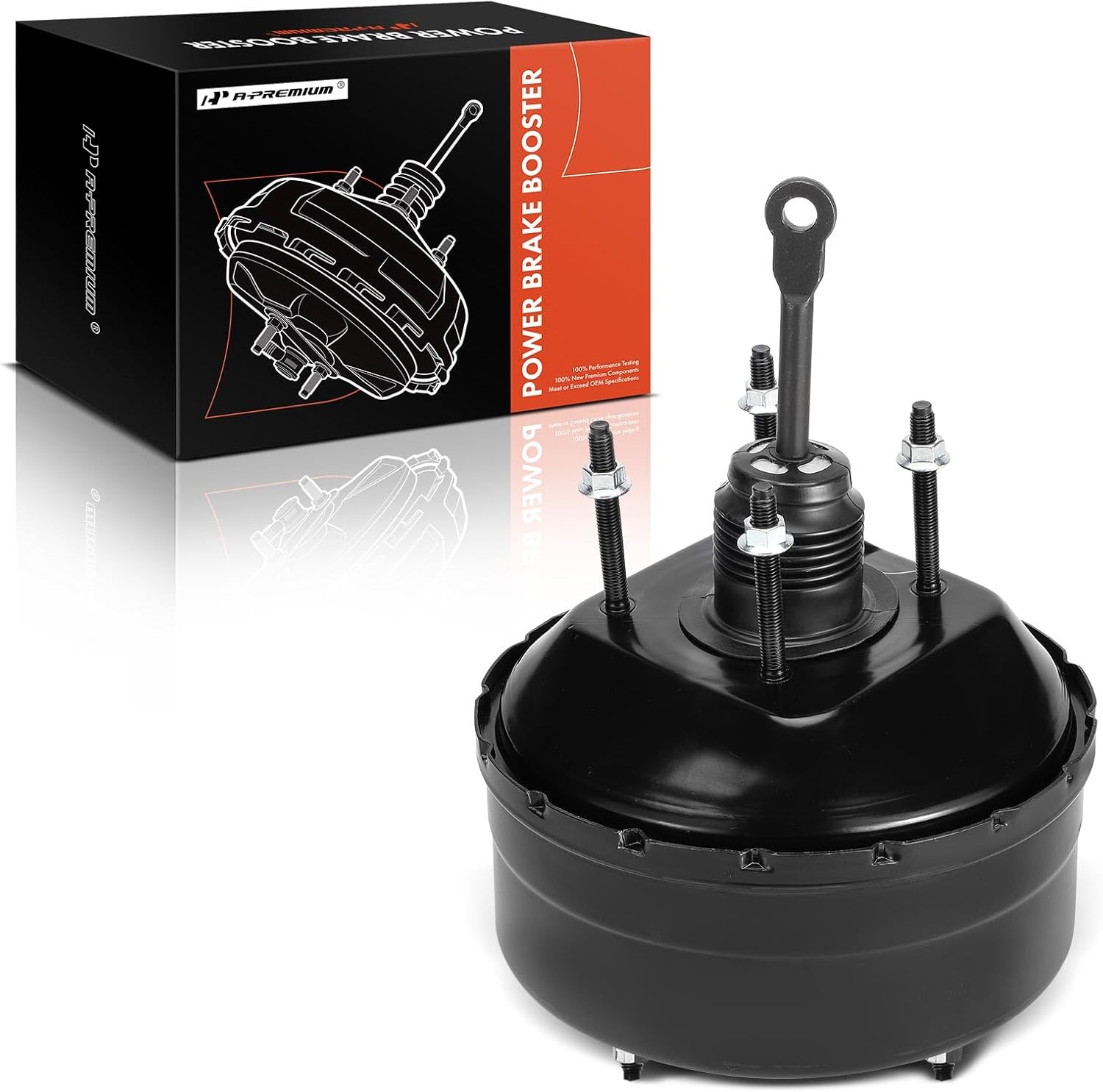
| Compatible vehicles | Dodge Dakota 1999-2004; Dodge Durango 1999-2003 |
|---|---|
| Diaphragm style | Dual |
| Diaphragm diameter | 9.67 in |
| Master cylinder stud thread | M8 x 1.25 |
| Material | Steel |
This A-Premium vacuum power brake booster restores power-assisted braking for compatible Dodge Dakota and Durango models and is intended as a direct replacement part when the original booster has failed. It installs in place of the factory booster and uses a dual diaphragm design to provide consistent vacuum assist; the steel body is treated with an anti-rust coating to help resist corrosion. Because it ships without a master cylinder you will need to reuse your factory master cylinder or purchase a correct-matching unit separately, and the listed M8 x 1.25 stud thread size should be verified against your vehicle before ordering. In real-world use it delivers predictable pedal feel and returns braking assistance similar to the factory unit, making it practical for street-driven trucks where you want factory-quality braking performance without complicated modification. The one-year unlimited-mileage guarantee gives extra reassurance for buyers who prefer documented coverage.
Best for: Buyers looking for a factory-style replacement booster for a 1999–2004 Dakota or 1999–2003 Durango who prioritize documented coverage and installed performance that closely matches the original unit.
Less Ideal for: People seeking a complete brake assembly or a plug-and-play swap that includes a new master cylinder should consider a different option that ships as a full kit.
- Direct-fit compatibility for Dodge Dakota 1999-2004 and Durango 1999-2003 when vehicle fitment matches
- Dual diaphragm design aimed at restoring strong vacuum assist and consistent pedal feel
- Steel construction with anti-rust coating improves longevity in typical road conditions
- Backed by a one-year unlimited-mileage guarantee for added buyer confidence
- Does not include a master cylinder, so additional parts or reuse of the original are required
- Requires confirmation of stud thread size and fitment before purchase to avoid incompatibility
Verdict: Choose this A-Premium booster if you need a factory-style replacement for a 1999–2004 Dakota or 1999–2003 Durango and want a durable, warranty-backed unit to restore original braking feel.
Choosing the Right 1997-2004 Dodge Dakota Brake Booster: Key Factors to Consider
Fitment And Mounting Compatibility
Exact fitment matters because the booster must align with the master cylinder, firewall studs, and brake pedal pushrod. Incorrect bolt patterns or an improper pushrod length can cause misalignment that impairs pedal travel or creates binding during operation.
For the 1997-2004 Dodge Dakota you need to confirm the booster matches the factory mounting flange and vacuum port orientation. A unit that requires adapter plates or pushrod trimming will add installation time and may affect pedal geometry, so prioritize boosters specified for this year range to avoid unexpected fitment issues.
Vacuum Integrity And Diaphragm Condition
The booster relies on a durable diaphragm and a tight housing seal to hold vacuum. Any leaks reduce assist and make the pedal hard to press, especially at idle or under heavy braking. Look for boosters with proven diaphragm materials and quality molded seals.
Check for vacuum port placement and whether additional gaskets or hose clamps are required. On vehicles like the Dakota, vacuum routing and hose length matter; a booster that preserves the original vacuum connection points minimizes the risk of vacuum leak problems after installation.
Pedal Feel And Assist Level
Different boosters produce different amounts of brake assist and pedal travel. Some are tuned for a firm, linear pedal preferred for towing, while others deliver a softer, easier pedal for city driving. Consider how you use the Dakota—towing or hauling calls for consistent high-assist performance under load.
Also consider how the booster interacts with the master cylinder. Boosters that change pushrod clearance or master cylinder stroke can alter pedal effort and bite point. For predictable braking, choose a booster that maintains the factory relationship between pushrod and master cylinder.
Durability And Corrosion Resistance
Trucks are exposed to moisture, road salt, and contaminants that accelerate corrosion. A booster with rust-resistant housing, quality primer or coating, and robust internal components will last longer and reduce the chance of failure.
Durability also covers diaphragm longevity and the condition of vacuum fittings. Components that resist cracking, swelling, or degradation over time reduce maintenance frequency and the risk of sudden assist loss while driving.
Installation Complexity And Required Parts
Some replacements are direct bolt-on swaps while others necessitate additional parts such as bench bleed kits, new grommets, or a different vacuum hose. Installation complexity affects labor time and whether you can reasonably perform the swap yourself.
If you plan a DIY install, look for boosters that preserve original pushrod length and require minimal bench bleeding. Consider whether the booster comes with necessary hardware or if you need to source retaining nuts, studs, or sealing gaskets. Planning for these items in advance avoids delays.
Serviceability And Warranty Considerations
Serviceability includes the ability to replace vacuum checks, grommets, or the booster without disturbing other brake components. A design that allows easier access to the master cylinder and clevis reduces shop time.
Warranty and aftermarket support matter as well. Longer coverage and clear warranty terms give you recourse if a unit fails prematurely. For a truck used in demanding conditions, factor warranty length and the availability of replacement parts into the purchasing decision.
Common Brake Booster Symptoms And Diagnostics
Owners of 1997-2004 Dodge Dakota often notice warning signs before a full booster failure. Typical symptoms include increased pedal effort, a hard or spongy pedal, engine idle changes when the pedal is pressed, or a hissing sound near the firewall. Not every symptom requires a full booster swap; some indicate vacuum hose leaks or check valve problems.
Start diagnostics by inspecting vacuum hoses and the booster vacuum check valve for cracks or brittle sections. Next, listen for hissing at the booster while a helper presses the pedal. Finally, a simple engine-off test can help differentiate booster issues from hydraulic problems; details on testing appear in the FAQ section.
- Hissing near firewall or booster
- Heavier than normal brake pedal effort
- Engine idle change when pressing brake pedal
- Soft or spongy pedal that does not firm up
Compatibility With Master Cylinder And ABS Components
The booster must transfer force correctly to the master cylinder without changing stroke or bite point. On the 1997-2004 Dakota, maintaining the original pushrod length and alignment avoids unintended changes in brake balance or ABS modulation behavior. When replacing the booster, verify the mounting and pushrod interface match the master cylinder flange and clevis geometry.
If your Dakota has ABS, ensure the replacement booster preserves the pedal travel characteristics the ABS pump and valves expect. Replacing the booster without confirming these parameters can lead to reduced ABS responsiveness or an unexpected change in pedal feel.
- Confirm pushrod length and clevis alignment
- Verify master cylinder flange match
- Check ABS interaction with pedal travel
Vacuum Supply And Engine Considerations
The booster depends on consistent vacuum from the intake manifold. On older Dakotas, vacuum lines can become brittle and leak, or the check valve can fail, reducing assist. When installing a new booster, inspect the intake vacuum source, replace brittle hoses, and ensure the one-way check valve functions properly.
Some engine conditions like intake leaks or poor vacuum at idle will worsen pedal effort even with a healthy booster. If you still have high pedal effort after installing a good booster, troubleshoot the engine vacuum supply as part of the repair process.
- Inspect vacuum hose condition and routing
- Replace failing check valve
- Test intake vacuum if pedal remains hard after replacement
DIY Replacement Basics And Safety Tips
Replacing the booster on a 1997-2004 Dakota is within reach for competent DIYers but requires care. Basic steps include disconnecting the negative battery terminal, supporting the master cylinder to avoid bending its outlets, and carefully removing firewall nuts to prevent stud damage. Bench-bleeding the master cylinder before final installation reduces trapped air in the hydraulic system.
Safety tips: never depress the brake pedal while the booster is removed because it can cause fluid to spill and introduce air. Use proper torque on mounting studs and confirm the pushrod-to-pedal clearance before driving. If you are towing or heavily load the truck after replacement, test brakes at low speed in a safe area to confirm pedal feel and stopping performance.
- Disconnect battery before starting
- Support master cylinder to avoid twisting lines
- Bench bleed master cylinder before installation
- Confirm pushrod clearance and torque specs
When To Replace Related Components
A booster issue often coexists with worn or leaking brake hoses, aged master cylinders, or weak vacuum hoses. When servicing the booster, inspect the master cylinder for piston seal leakage and the brake lines for cracks or soft spots. Replacing worn ancillary items at the same time reduces the chance of follow-up repairs and ensures consistent performance.
Also check the vacuum check valve and the vacuum hose between the intake manifold and booster. Replacing these inexpensive parts during a booster service is good preventive maintenance and can eliminate future vacuum leak sources.
- Inspect master cylinder for leakage
- Replace cracked or bulged brake hoses
- Replace vacuum hose and check valve during service
How We Chose the Best 1997-2004 Dodge Dakota Brake Booster
Our shortlist focuses on brake boosters that meet the specific fitment and functional needs of the 1997-2004 Dodge Dakota. We applied vehicle-specific filters to ensure bolt pattern, pushrod length, and vacuum port orientation match the Dakota's factory layout. Performance criteria emphasized consistent pedal feel under load, reliable vacuum sealing, and compatibility with the stock master cylinder stroke and pushrod geometry.We also weighted construction quality and corrosion resistance because these trucks often face heavy-duty use and road salt exposure. Durability factors included diaphragm material and housing finish. Ease of installation and the likelihood of requiring accessory changes were considered to help owners gauge labor and parts needs.Excluded items included universal or vehicle-agnostic booster assemblies that require major modifications, and any units that lack clear fitment guidance for the 1997-2004 Dakota. The final picks reflect fitment accuracy, expected braking performance, and long-term serviceability for this model range.
Our full evaluation process is outlined in our review methodology.
FAQ
What are common bad brake booster signs on a Dakota?
Common signs include a much harder brake pedal, a hissing noise near the firewall, or engine idle changes when the brake is pressed. These symptoms often indicate loss of vacuum assist or a leaking diaphragm.
How do I test the brake booster on a 1997-2004 Dakota?
With the engine off, press the pedal several times to remove stored vacuum, then hold the pedal down and start the engine. If the pedal drops slightly after the engine starts, the booster is likely functioning. If there is no change, check vacuum lines and the check valve first.
Can I replace the brake booster myself on this Dakota?
Many owners can perform the swap with common tools, but it requires careful support of the master cylinder, correct pushrod adjustment, and bench bleeding. If you are unsure about brake plumbing or torque specs, professional help is recommended.
Will a vacuum leak cause brake booster problems?
Yes. A vacuum leak at the hose, check valve, or intake will reduce available assist and make the pedal hard. Inspect hoses for cracks and confirm the one-way check valve seals properly before replacing the booster.
Should I replace the master cylinder when changing the booster?
Not always. Replace the master cylinder if it shows signs of leaking, a soft pedal, or if internal seals are worn. Inspect it during booster service and replace if there is evidence of contamination or abnormal piston travel.
How long does a brake booster typically last on a Dakota?
Lifespan varies with use and environment but many boosters last many years. Exposure to moisture, road salt, or heavy towing can shorten service life. Regular inspection of vacuum lines and the booster housing helps detect problems early.
Final Verdict
For the 1997-2004 Dodge Dakota, prioritize fitment accuracy, vacuum integrity, and pedal feel when choosing a brake booster. Ensuring the replacement matches the factory mounting, maintains pushrod geometry, and seals vacuum effectively will preserve stopping performance under load and improve confidence while towing or hauling.Balance durability and installation complexity against your repair plans. If you handle the work yourself, pick a direct-fit booster that minimizes bench work and preserves factory relationships between booster and master cylinder. If in doubt, focus on correct fitment and vacuum supply as the primary decision criteria.
Explore More:
- Check out all Dodge Dakota parts & accessories
- Explore Brake Boosters Maintenance & Repair Guides
- Explore Brake System
- Browse all Auto Parts
