

Note: This article contains affiliate links. If you click on these links and make a purchase, I may earn a small commission at no extra cost to you. This helps support my research and content. Read my full affiliate disclosure here.
If you own a 2005-2009 Subaru Outback, worn ball joints can seriously affect handling, tire wear, and overall safety. Choosing the right ball joint matters because fitment and load capacity determine how the suspension behaves under load and through turns. This guide shortlists the top options for your Outback and explains why each type is suitable for common driving conditions and repair strategies.We evaluated choices based on compatibility with the 2005-2009 Outback, durability under load, and ease of installation for common DIY and shop repairs. Read on to see the shortlisted picks and the decision factors that will help you pick the right replacement for your vehicle and driving needs.
Looking for other parts? See all Subaru Outback parts & accessories.
Top Picks at a Glance
| Best Overall The best all-around choice for most situations | Detroit Axle Front Lower Control Arms Kit with Ball Joints for 2005–2009 Subaru Legacy/Outback |  |
| Best Quality Built to a higher standard if you want something more solid | MOOG Front Lower Suspension Ball Joint K9513 |  |
| Best Value The sweet spot between price and what you get | KDSA Front Lower Ball Joints K9513 — 2-Pack |  |
| Best Budget The cheapest option that still gets the job done reliably | DRIVESTAR Front Lower Ball Joint K9513 (SBJ1003) |  |
| Highest Rated A top-rated pick with lots of positive feedback | TRQ Front Lower Driver and Passenger Side Ball Joint Set (2-Piece) |  |
| Most Popular A crowd favorite that many people choose with confidence | Detroit Axle Front Lower Ball Joint Kit, 2-Pack |  |
| Best Seller A high-volume bestseller chosen again and again | TRQ Front Steering & Suspension Kit with Ball Joints |  |
1. Detroit Axle Front Lower Control Arms Kit with Ball Joints for 2005–2009 Subaru Legacy/Outback

| Fit Type | Vehicle Specific Fit |
|---|---|
| Auto Part Position | Front Lower |
| Material Type | Alloy Steel |
| Kit Contents | 2 lower control arms, 2 lower ball joints |
| Manufacturer Warranty Description | 10-Year |
This Detroit Axle kit supplies two front lower control arms plus two lower ball joints designed as direct-fit replacements for 2005–2009 Subaru Legacy and Outback models. It is typically used to restore worn suspension geometry and steering feel after the factory parts age or fail; installers can replace both arms and joints together to save time and ensure matched wear. Notable features called out by the manufacturer include premium alloy construction, enhanced structural strength for repeated impact loads, and a vehicle-specific design intended for an easier, direct installation. In practice the alloy arms should resist corrosion and offer better rigidity than cheaper stamped parts, while the included ball joints remove the need to press in new joints separately. Limitations to keep in mind are that these are aftermarket replacement parts rather than manufacturer-original units and may require an alignment after installation; heavier-duty performance improvements beyond factory specifications are not part of the design. The kit is a practical, cost-conscious option for restoring front-end control and handling on the specified Subaru models.
Best for: Buyers who want a straightforward, balanced repair to restore steering and suspension performance on a 2005–2009 Subaru Legacy or Outback without overspending or upgrading to heavy-duty parts.
Less Ideal for: Drivers seeking performance-tuned suspension upgrades or competition use should look for purpose-built performance components instead.
- Complete kit includes both front lower control arms and both lower ball joints for matched replacement
- Premium alloy construction aimed at improved corrosion resistance and rigidity
- Vehicle-specific direct-fit design simplifies installation versus universal parts
- Aftermarket replacement rather than factory-original so fitment and long-term feel can vary by vehicle condition
Verdict: A complete, vehicle-specific lower control arm and ball joint kit that restores factory-style front-end control on 2005–2009 Subaru Legacy and Outback models.
2. MOOG Front Lower Suspension Ball Joint K9513

| Manufacturer | MOOG |
|---|---|
| Model | BALL JOINT |
| Position | Front |
| Exterior | Machined |
The MOOG K9513 front lower ball joint is a direct-replacement suspension component engineered to restore factory steering response and reduce play. It installs in the lower control arm to provide a new articulating connection between the wheel hub and suspension, so it is typically fitted during front suspension repairs or when steering looseness is present. Notable features include heat-processed ball studs for improved fatigue strength, a Belleville preload washer that helps maintain bearing tightness as parts wear, and a pressed-in cover plate that seals out dirt to minimize looseness over time. Those features translate into firmer, more precise steering feel after installation and longer service life compared with many budget replacements. Installation is straightforward for anyone familiar with front suspension work and alignment should be checked after fitting. This MOOG part is focused on durability and fitment rather than performance modifications, so drivers seeking aggressive handling upgrades or aftermarket performance geometry changes will need different components.
Best for: Drivers who want to restore crisp steering and factory-like suspension behavior on a 2005–2009 Subaru Outback and prioritize durability and a reliable fit.
Less Ideal for: Those seeking performance-tuned suspension parts or adjustable components for track use or altered alignment specifications.
- Heat-processed ball stud for improved fatigue strength and durability
- Belleville preload washer helps keep bearing tightness as components wear
- Pressed-in cover plate seals out debris to reduce looseness and extend life
- Precision tolerances for straightforward installation and proper fit
- Designed as a factory-style replacement rather than a performance-tuned or adjustable unit
Verdict: Choose the MOOG K9513 if you want a durable, factory-quality front lower ball joint that restores steering precision on a 2005–2009 Subaru Outback.
3. KDSA Front Lower Ball Joints K9513 — 2-Pack

| Manufacturer | KDSA |
|---|---|
| Manufacturer Part Number | K9513 |
| Fits Models | Multiple Subaru models listed in compatibility |
| Package Contents | 2x Front Lower Ball Joints |
These KDSA front lower ball joints come as a two-piece set intended to replace worn front lower ball joints on compatible Subaru models. They are designed for straightforward installation with precision tolerances to help maintain steering alignment after fitting. Typical use is a direct replacement during suspension maintenance or when you have play or noise in the front end; both left and right joints are supplied so you can service the axle on one visit. The package lists a one-year warranty and the parts are sized for factory-style fitment, which simplifies swapping them into OEM mounting points. Practical benefits include replacing both sides at once to restore handling and reduce uneven tire wear. Limitations to note are that fitment must be confirmed against the vehicle compatibility chart and these are aftermarket components, so installers wanting factory-sourced parts or lifetime coverage may prefer alternatives.
Best for: Buyers who want a practical, cost-effective way to replace both front lower ball joints at once and restore front-end feel and alignment without sourcing individual parts.
Less Ideal for: Drivers seeking factory-sourced replacement parts with extended OEM-style warranties or those who need vehicle-specific heavy-duty performance upgrades.
- Sold as a driver and passenger side two-pack for one-time front-end service
- Precision tolerances intended to ease installation and help retain steering alignment
- Fits a wide range of Subaru front applications listed in the compatibility chart
- Includes a one-year warranty and a 30-day return window for buyer protection
- Aftermarket part that may differ slightly from factory-quality components
Verdict: A practical two-piece aftermarket replacement for restoring front-end play and alignment on compatible Subaru models without extra fuss.
4. DRIVESTAR Front Lower Ball Joint K9513 (SBJ1003)

| Manufacturer | DRIVESTAR |
|---|---|
| Item model number | SBJ1003 |
| Manufacturer Part Number | SBJ1003 |
| Package contents | 1x Front Lower Ball Joint |
This DRIVESTAR front lower ball joint is a direct-replacement part designed to restore steering and suspension geometry on compatible Subaru models. It installs where the lower control arm connects to the steering knuckle and is used when a worn ball joint causes looseness, noise, or uneven tire wear. The unit is sold singly and is described as polished and rust protected, which helps long-term corrosion resistance in wet climates. As a budget option it provides basic fitment and function comparable to a factory replacement, making it suitable for routine repairs. Expect straightforward installation for anyone comfortable with suspension work or a local mechanic. The main limitations are that this is a single-piece aftermarket part with limited provenance compared with premium brands and the listing does not include extensive materials or performance testing data, so longevity may vary by driving conditions. For owners prioritizing an inexpensive, direct-fit replacement to get their Outback back on the road, this part covers the essentials without added features.
Best for: Practical owners seeking an inexpensive, functional replacement part to correct play or noise in the front suspension and return a vehicle to safe drivable condition.
Less Ideal for: Drivers who want high-performance or extended-life suspension components or those who prefer fully documented, brand-name parts with extensive test data.
- Direct replacement fit for listed Subaru models, simplifying installation
- Polished and rust-protected surface finish helps resist corrosion
- Sold as a single front lower ball joint so you can replace only the worn side
- Affordable option that restores steering and suspension function without premium markup
- Limited specification and testing details provided, leaving longevity uncertain
- Single-unit package may require purchasing a second unit for axle-pair replacement
Verdict: A cost-conscious, direct-fit front lower ball joint that restores basic steering and suspension function for the specified Subaru Outback model years.
5. TRQ Front Lower Driver and Passenger Side Ball Joint Set (2-Piece)
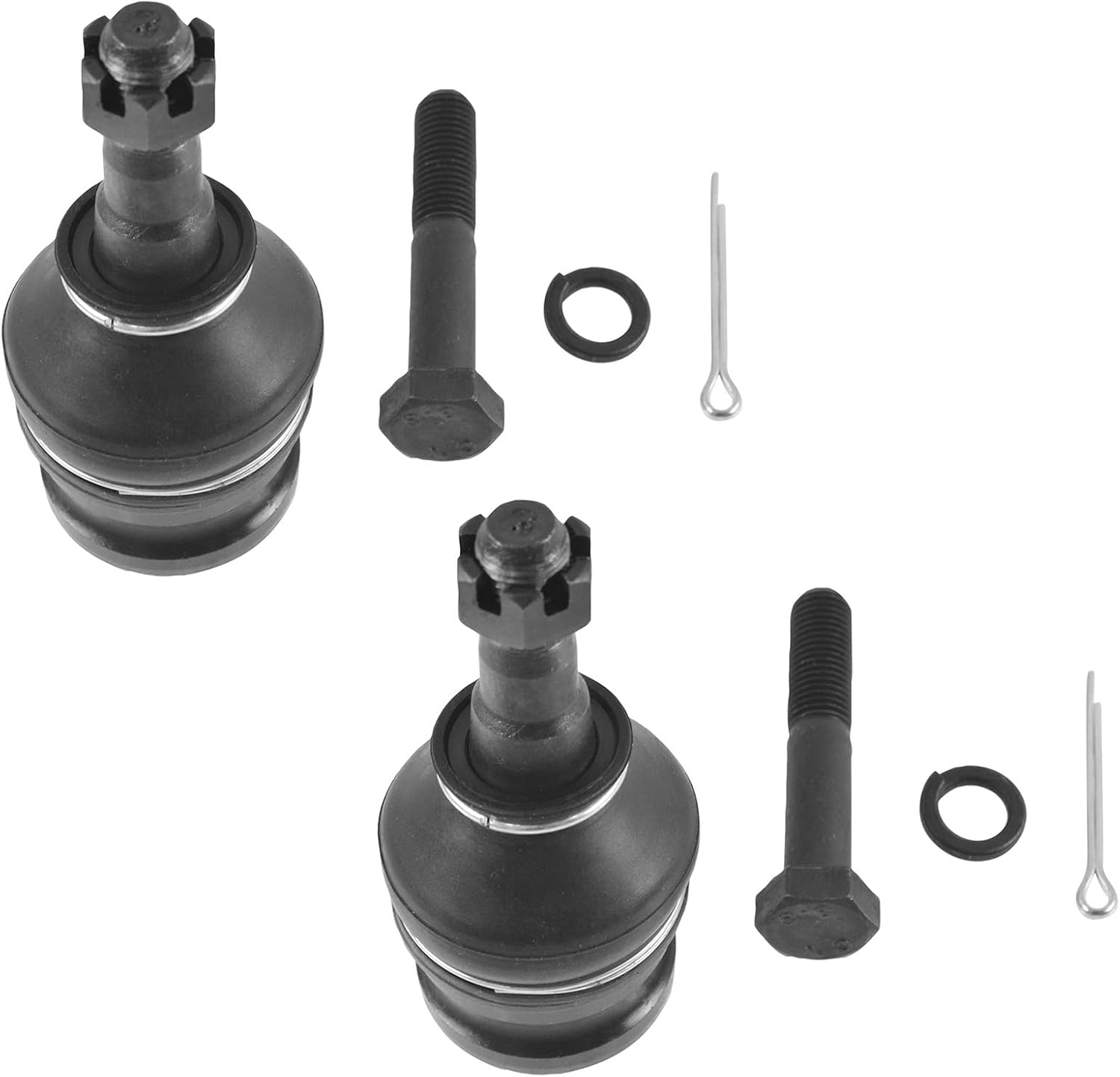
| Quantity | 2 Piece |
|---|---|
| Model | TRQ PSA63116 |
| Exterior | Machined |
This TRQ two-piece front lower ball joint kit supplies both driver and passenger side units as direct replacement parts for compatible Subaru models, including Outback years in the specified fitment range. The joints come pre-assembled with machined exteriors for a factory-quality fit and are intended for straightforward, do-it-yourself installation using the included guidance and online videos. In use they restore proper steering response and reduce play that causes uneven tire wear or looseness in the front end. The kit lists multiple factory reference numbers which helps verify fitment for specific Subaru models and model years. Practical benefits include saving time through direct-fit components and the availability of step-by-step installation media. Limitations are that this is a basic replacement part rather than an upgraded heavy-duty or performance unit, so drivers seeking enhanced durability for extreme off-road or racing use should consider reinforced aftermarket options instead.
Best for: Buyers who prioritize restoring factory steering feel and dependable, hassle-free front suspension repairs on compatible Subaru Outback models and want clear installation support for a DIY replacement.
Less Ideal for: Drivers who need strengthened or performance-grade joints for heavy towing, aggressive off-road driving, or motorsport applications should look at reinforced aftermarket options instead.
- Direct-fit, pre-assembled replacements simplify installation and reduce modification needs
- Machined exterior finish for consistent mating surfaces and OEM-style appearance
- Includes both left and right lower ball joints in one kit for front-end service
- Extensive fitment reference numbers and manufacturer support videos to help with correct installation
- Designed as a factory-style replacement rather than a heavy-duty upgrade for high-stress use
Verdict: A convenient, factory-style front lower ball joint kit that restores steering precision and is well suited for reliable DIY replacement on supported Subaru Outback models.
6. Detroit Axle Front Lower Ball Joint Kit, 2-Pack

| Manufacturer | Detroit Axle |
|---|---|
| Part number | K9513 x2 |
| Kit contents | 2x Front Lower Ball Joints |
| Compatibility note | Fits specified Subaru models listed by the maker |
These Detroit Axle front lower ball joints are a direct-replacement kit intended to restore steering stability and front suspension geometry on compatible Subaru Outback models. The kit includes two lower ball joints manufactured to factory-style fit and undergoes impact, wear, and fatigue testing, which helps explain why many buyers report consistent fitment and lifespan. Typical use is straightforward: remove the worn ball joints and press the new units into the control arms, then torque to factory specs. Notable features include a design aimed at OEM compatibility and a long manufacturer warranty that adds confidence for buyers worried about early failures. In practice the parts deliver predictable steering feel and reduce play when correctly installed, but proper installation requires a press or shop service; these are not an easy DIY swap with only hand tools. If you expect upgraded performance or heavy-duty off-road use, this is a factory-style replacement rather than a performance part. For standard road-driven Outbacks, the kit offers a reliable, budget-conscious way to restore worn front suspension components.
Best for: Buyers who prioritize proven fitment and long-term reassurance and want a factory-style replacement to restore steering precision on a road-driven Outback.
Less Ideal for: Drivers seeking performance-upgraded ball joints for aggressive off-road or track use should look at heavy-duty or performance-specific options instead.
- Direct-fit design aimed at factory-style replacement for straightforward installation into compatible control arms.
- Manufactured with impact, wear, and fatigue testing to help ensure durability under normal driving conditions.
- Includes two front lower ball joints so both sides can be replaced at once for consistent steering feel.
- Backed by a long 10-year warranty which provides added assurance for risk-averse buyers.
- Requires a ball-joint press or professional shop for reliable installation; not a simple bolt-on for basic tool DIYers.
Verdict: A reliable, warranty-backed factory-style replacement kit that restores front suspension precision on supported Outbacks without upgrading performance.
7. TRQ Front Steering & Suspension Kit with Ball Joints

| Included Components | 6 Piece Steering & Suspension Kit |
|---|---|
| Auto Part Position | Front |
| Fit Type | Vehicle Specific Fit |
| Pre-greased | Yes |
This TRQ front steering and suspension kit is a vehicle-specific, pre-kitted replacement intended to restore front-end steering feel and handling. The kit includes two lower control arms with ball joints, two outer tie rods, and two sway bar links so you can replace multiple wear items at once rather than sourcing parts individually. Components come pre-greased and treated with an anti-corrosion coating, which reduces initial prep work and helps resist surface rust in daily driving conditions. The parts are designed as direct-fit replacements so installation uses factory mounting points and typically requires no modifications, making it practical for DIYers or independent shops. The bundled approach saves time but means you receive a full kit whether you only need one failing component or all items. Also the kit is listed as a vehicle-specific fit so confirming compatibility for a 2005-2009 Subaru Outback is important before buying.
Best for: Buyers who want a low-risk, factory-style replacement that restores front-end handling without fabrication and prefer a packaged solution that covers common wear items at once.
Less Ideal for: Shoppers who only need a single replacement component or who prefer to source upgraded or performance-oriented parts individually.
- Complete six-piece kit replaces multiple front steering and suspension wear items in one purchase
- Pre-greased components reduce immediate maintenance and simplify installation
- Anti-corrosion coating improves surface durability against road conditions
- Designed as direct-fit, vehicle-specific parts to use existing mounting points
- Sold only as a full kit so you may replace parts you did not need
- Fitment must be double-checked for the exact Outback configuration before installation
Verdict: A convenient, ready-to-install front steering and suspension kit aimed at buyers who want a straightforward, factory-style replacement to restore handling with minimal fuss.
Choosing the Right 2005-2009 Subaru Outback Ball Joint: Key Factors to Consider
Fitment and OEM-Equivalent Dimensions
Correct fitment is the single most important factor when replacing ball joints on a 2005-2009 Subaru Outback. A replacement must match the factory mounting footprint, stud length, and taper angle so steering geometry and suspension alignment remain within spec. Incorrect dimensions can lead to accelerated tire wear, steering pull, or uneven camber changes.
When evaluating parts, check whether the manufacturer lists the 2005-2009 Outback explicitly and whether the part includes items such as mounting hardware or bushings required for your model configuration. For press-in lower joints verify the outer diameter and depth so the control arm accepts the new unit without modification. Staying within OEM-equivalent tolerances reduces the chance of needing further alignment or suspension adjustments after installation.
Load Rating and Articulation
Ball joints take vertical and lateral loads as the vehicle turns and rides over bumps. For the Outback, which often carries cargo and passengers and may see rough road surfaces, choose a ball joint with a load rating appropriate for the vehicle's curb weight and usage. Higher-capacity joints typically use stronger materials and heat treatment to resist deformation under load.
Articulation range matters because limited travel can bind during suspension compression or turning, causing premature wear or popping noises. Look for specifications or design notes on maximum angular movement and vertical travel to ensure the joint will function through the Outback's full range of motion without stressing adjacent suspension components.
Seal Design and Corrosion Resistance
Exposure to road salt, moisture, and debris makes corrosion protection essential for long-term performance in a 2005-2009 Subaru Outback. A high-quality seal prevents contamination from entering the joint while retaining grease, which reduces internal wear. Seals are often the failure point on otherwise well-made joints, so pay attention to flange-style sealed boots, double-lip seals, or replaceable grease fittings.
Corrosion-resistant coatings on the housing and stud, plus stainless or plated hardware, extend service life in wet climates. If you live where salt is used heavily, favor parts with proven protective finishes and inspect replacement boots during routine maintenance to catch seal failures early.
Serviceability and Installation Method
Installation method affects labor time and the tools required. Many 2005-2009 Outback lower ball joints are press-fit, requiring a ball joint press or shop press, while upper joints or bolt-in designs may be removable with hand tools. Consider whether you will perform the replacement yourself or have a shop do it.
If DIY installation is planned, choose units that come with clear instructions and, where possible, include replacement mounting hardware and dust boots. Also consider whether the joint is greaseable; zerk fittings allow periodic greasing that can extend life, but they also require access for a grease gun. Some sealed units are maintenance-free but must be replaced when the seal fails.
Performance and Ride Quality Impact
The right ball joint helps maintain proper steering feel and ride compliance. Stiffer, heavy-duty joints may reduce play and improve steering precision but can transfer more vibration into the cabin. Softer, OEM-equivalent designs retain some compliance for a smoother ride but may show earlier wear under heavy loading.
Think about your driving demands: if you carry roof cargo, tow, or frequently drive on rough roads, favor more robust construction. For daily commuting and comfort-focused drivers, choose units that match OEM compliance characteristics to preserve ride quality.
Compatibility with Alignment and Adjacent Components
Replacing ball joints can affect wheel alignment values, especially camber and toe. Ensure the replacement maintains the same stud length and mounting geometry so alignment remains serviceable within standard adjustment ranges. Some replacements will intentionally alter ride height or geometry and are not suitable without other suspension modifications.
Also verify the condition of adjacent components such as control arms, tie rods, and wheel bearings before installation. Worn neighboring parts can mask ball joint symptoms or accelerate wear on a new joint. Coordinating replacement of related suspension parts can save labor if alignment or additional repairs are required.
Upper Versus Lower Ball Joints on the Outback
The 2005-2009 Subaru Outback uses different designs for upper and lower suspension joints, and the service approach varies accordingly. Lower ball joints are often press-fit into the control arm and carry larger vertical loads, while upper joints can be stud-mounted or integrated into knuckles depending on the submodel and engine layout.
Understanding which joint is failing matters because replacement difficulty, required tools, and expected lifespan differ. Upper joint replacement tends to be quicker if accessible, whereas lower joint service may require a ball joint press and careful removal to avoid damaging the control arm.
- Lower joints handle greater vertical load and typically wear faster.
- Upper joints may be easier to access but still affect steering geometry.
- Identify the specific failed joint by inspecting play with the wheel off the ground and using a pry-bar check at the control arm.
Diagnosing Ball Joint Symptoms
Common signs of worn ball joints include clunking noises when going over bumps, uneven tire wear, excessive free play in the steering, and vibration at the wheel during acceleration or braking. On the 2005-2009 Outback, these symptoms can be subtle early on, so periodic inspection is recommended.
A visual check for torn dust boots, leaking grease, or rust around the joint can reveal impending failure. For a more definitive test, lift the vehicle and check for vertical or lateral play by rocking the wheel and using a dial indicator or feeler gauge where appropriate.
- Clunking or knocking over bumps or when turning.
- Excessive inner or outer tire wear on the front tires.
- Steering looseness or slight wandering under braking.
- Visible torn boot or grease leakage at the joint.
Tools and Workshop Tips for Replacement
Press-fit lower ball joints typically require a ball joint press and appropriate adapters sized for the Outback control arm. A quality press tool reduces the risk of damaging the control arm or the new joint during removal and installation. For bolt-in joints, a torque wrench and proper fasteners are essential to achieve correct clamp load.
When reusing suspension components, clean mating surfaces and inspect for corrosion. If the dust boot is replaceable, fit a new boot and use compatible grease. Always torque mounting bolts to factory specifications and follow a post-replacement alignment procedure to restore correct geometry.
- Use a ball joint press tool with adapters matched to the control arm.
- Replace torn dust boots and pack grease if the joint is serviceable.
- Torque bolts to factory values and get a front-end alignment after installation.
Maintenance Practices to Extend Ball Joint Life
Regular inspections and timely attention to torn boots or leaking grease can significantly extend the life of ball joints on your Outback. If your replacement has a grease fitting, periodic greasing during routine service intervals helps flush out contaminants and maintain lubrication.
Avoid driving through deep water or off-road conditions that can force contaminants past seals. In regions that apply road salt, wash the wheel wells and suspension regularly during winter months to limit corrosion and prolong joint life.
- Inspect front suspension during oil changes or tire rotations.
- Grease serviceable joints at recommended intervals.
- Wash undercarriage in corrosive climates to protect seals and housings.
When to Replace Adjacent Suspension Components
Ball joint replacement is often done alongside other front suspension repairs. If control arm bushings, tie rods, or wheel bearings show play or wear, replacing them at the same time can save repeat labor and help ensure alignment stays within spec. Consider the age and condition of surrounding parts when planning the job.
If a control arm has corrosion or damage from a seized press-fit ball joint removal, replacement of the arm may be necessary. Factor in the condition of hardware and the potential need for new cotter pins, nuts, or bolts when estimating labor or parts list.
- Inspect tie rods, control arm bushings, and bearings when replacing ball joints.
- Replace corroded hardware and damaged control arms to avoid repeat disassembly.
- Coordinate parts replacements to minimize shop time and alignment costs.
Still looking for the perfect fit?
Select your Subaru Outback configuration to see the most relevant Ball Joints recommendations
How We Chose the Best 2005-2009 Subaru Outback Ball Joint
We evaluated candidates using criteria that reflect real-world needs for the 2005-2009 Subaru Outback. Fitment and OEM-equivalent dimensions were required so the ball joints match factory steering geometry and suspension travel. Durability factors such as material grade, heat-treated ball stud, and robust housing construction were prioritized to ensure long service life under typical Outback loads.Corrosion protection and seal design were included to address the regionally corrosive environments many Outback owners encounter. Load rating and articulation range were used to ensure components handle cornering forces and vertical travel without premature wear. Installation considerations such as press-fit vs. bolt-in design, availability of replacement boots and grease fittings, and compatibility with common ball joint press tools were part of the selection.We excluded items that required major aftermarket suspension modifications or did not clearly specify compatibility with the 2005-2009 Outback. Budget options were considered only if they met minimum durability and fitment standards. The final list reflects a balance of long-term value, serviceability, and correct fit for this model range.
Our full evaluation process is outlined in our review methodology.
FAQ
How long do ball joints typically last on a 2005-2009 Subaru Outback?
Service life varies with driving conditions and maintenance. They often last well over 50,000 miles in mild climates, but exposure to salt, heavy loads, or rough roads can shorten life. Regular inspection of boots and grease condition helps catch wear early.
Can I replace a ball joint on the Outback myself?
It depends on whether the joint is press-fit or bolt-in. Bolt-in or accessible upper joints can be changed with common hand tools, but press-fit lower joints generally require a ball joint press and experience. If you lack tools or experience, professional installation is advisable.
What are the risks of driving with a worn ball joint?
Worn ball joints can lead to uneven tire wear, poor steering feel, and increased vibration. In severe cases, a failed joint can compromise wheel control. Addressing symptoms early reduces the chance of secondary suspension damage.
Should I get an alignment after replacing ball joints?
Yes. Replacing ball joints can alter camber or toe settings. A front-end alignment after installation ensures proper tire wear and steering behavior and confirms the replacement preserved factory geometry.
Is a greaseable ball joint better than a sealed one?
Each has pros and cons. Greaseable joints let you service and extend life with periodic maintenance, while sealed units are maintenance-free until the seal fails. Your choice depends on your preference for scheduled service versus simpler replacement when needed.
How can I tell if the upper or lower ball joint is failing?
A physical inspection helps: lift the front end and check for play by prying at the control arm and observing the joint. Upper joint play often shows as looseness when lifting the wheel from the top, while lower joint play is more evident with vertical movement at the wheel. A mechanic can also use a dial indicator for precise measurement.
Final Verdict
When replacing ball joints on a 2005-2009 Subaru Outback, prioritize correct fitment, robust load capacity, and seal quality to ensure safe steering and long service life. Consider whether a greaseable or sealed unit better matches your maintenance habits and factor in the tools and labor needed for press-fit installations.Balance ride quality preferences against durability needs: choose OEM-equivalent units for comfort-focused drivers and heavier-duty constructions for rough-road or cargo-heavy use. After installation, always confirm torque values and get a front-end alignment to finish the job right.
Explore More:
- Check out all Subaru Outback parts & accessories
- Explore Ball Joints Maintenance & Repair Guides
- Explore Suspension & Steering
- Browse all Auto Parts
