

Note: This article contains affiliate links. If you click on these links and make a purchase, I may earn a small commission at no extra cost to you. This helps support my research and content. Read my full affiliate disclosure here.
If your 1997-2004 Dodge Dakota is showing loose steering, uneven tire wear, or clunking from the front suspension, the ball joints may be the cause. Replacing worn ball joints restores proper wheel alignment, stabilizes steering response, and reduces vibration under braking or when hitting bumps. This guide collects the top shortlisted ball joints compatible with 1997-2004 Dodge Dakota models and explains the practical tradeoffs you should consider.We evaluated parts that address common failure modes on these Dakotas and focused on fitment, durability, and ease of installation. Read on for the factors that matter and clear guidance to help you pick the right ball joint for your Dakota and driving style.
Looking for other parts? See all Dodge Dakota parts & accessories.
Top Picks at a Glance
| Best Overall The best all-around choice for most situations | MOOG K7393 Front Lower Suspension Ball Joint |  |
| Best Quality Built to a higher standard if you want something more solid | Metrix Premium Chassis Parts Front Lower Ball Joint Kit (2 pcs) — Fits Dodge Dakota/Durango 4WD |  |
| Best Value The sweet spot between price and what you get | Detroit Axle Front Suspension Kit with Upper & Lower Ball Joints and Outer Tie Rods |  |
| Best Budget The cheapest option that still gets the job done reliably | DJGAA K7392 Front Upper Ball Joint Kit (2-Pack) |  |
| Highest Rated A top-rated pick with lots of positive feedback | TRQ Front Upper Ball Joint 2-Piece Set (Driver & Passenger) |  |
| Most Popular A crowd favorite that many people choose with confidence | Detroit Axle 4WD Front 4pc Ball Joint Kit (Upper & Lower) for 2000–2004 Dodge Dakota / 2000–2003 Durango |  |
| Best Seller A high-volume bestseller chosen again and again | BDFHYK 12‑Piece Front Suspension Kit for Dodge Dakota/Durango (2000–2004/2000–2003) |  |
1. MOOG K7393 Front Lower Suspension Ball Joint
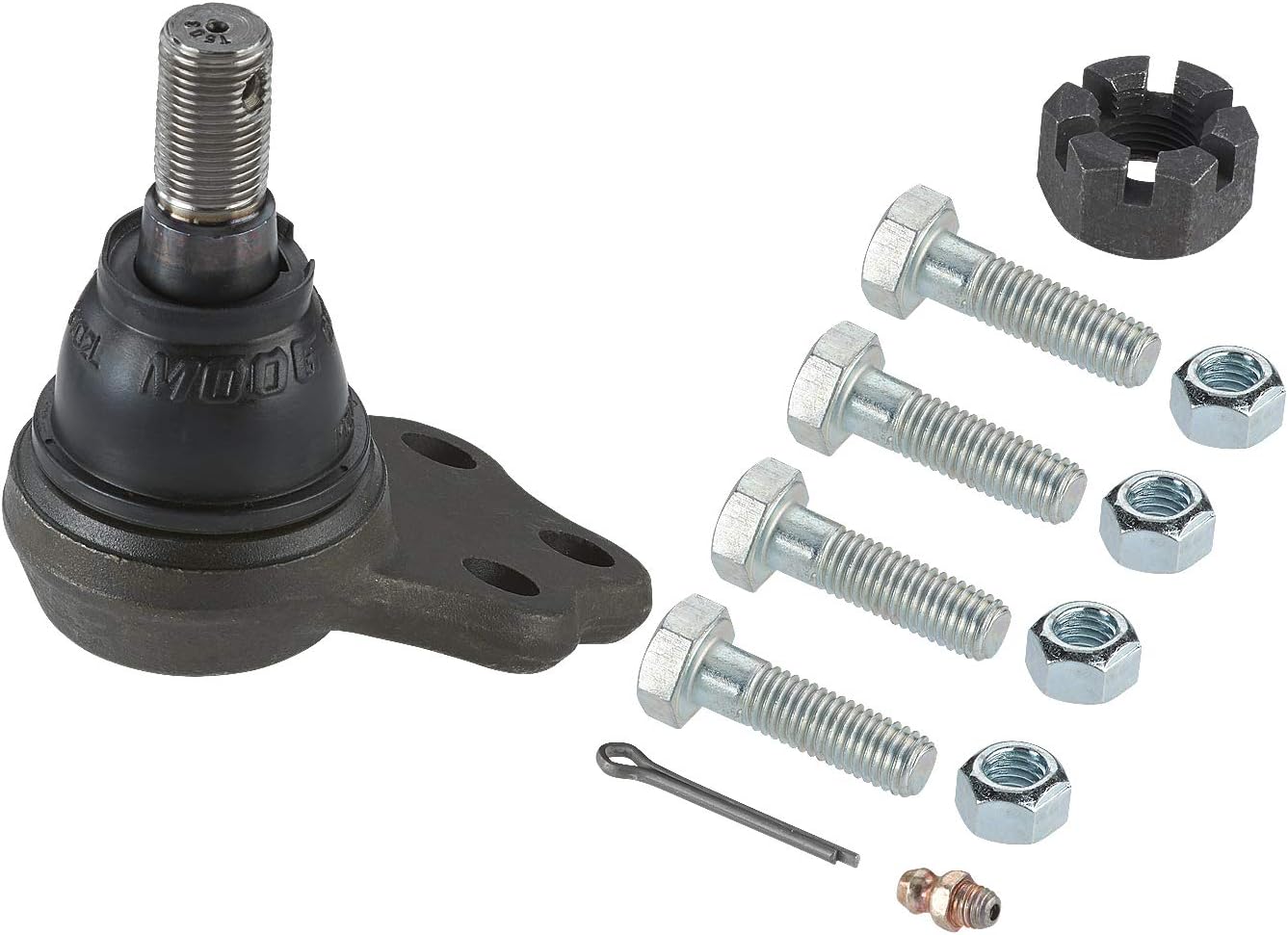
| Position | Front |
|---|---|
| Item model number | K7393 |
| Manufacturer | MOOG Chassis Products |
| Exterior | Painted |
The MOOG K7393 is a front lower suspension ball joint engineered to replace a worn factory unit and restore proper steering and suspension feel. It installs in place of the original lower ball joint to reestablish the ball-and-socket pivot between the control arm and steering knuckle, which helps correct steering looseness, reduce front-end shimmy, and prevent uneven tire wear. MOOG highlights heat-treated studs for improved fatigue strength, a pressed-in cover plate to seal out debris, and a greasable design and gusher bearing on applicable applications to keep lubrication flowing and reduce wear. In practice this means easier installation, longer life than many economy parts, and the option to refresh grease where the vehicle design allows. The main limitation is that this is a direct replacement part for the specified front lower position and does not address other suspension wear items, so expect to inspect related components when replacing it. Fitment is limited to compatible Dodge Dakota years, so confirm year and position before purchasing.
Best for: Buyers who want a reliable, factory-style replacement to restore handling and steering confidence on a 1997–2004 Dodge Dakota and prioritize durability and straightforward installation.
Less Ideal for: Drivers looking to upgrade suspension performance beyond stock behavior or those who need a complete suspension overhaul rather than a single ball joint replacement.
- Designed to match factory fit for front lower replacement
- Heat-treated stud for improved fatigue strength and durability
- Pressed-in cover plate and greasable option help keep contaminants out and extend service life
- Engineered to reduce looseness and restore steering stability
- Only replaces the front lower ball joint so other worn suspension parts may still need attention
Verdict: Choose the MOOG K7393 when you need a durable, OEM-style front lower ball joint to reliably restore steering and suspension feel on a Dodge Dakota.
2. Metrix Premium Chassis Parts Front Lower Ball Joint Kit (2 pcs) — Fits Dodge Dakota/Durango 4WD

| Position | Front Lower |
|---|---|
| Quantity | 2 pcs |
| Material | Steel |
| Compatible models | 2000-2004 Dodge Dakota 4WD; 2000-2003 Dodge Durango 4WD |
| Manufacturer part number | 99095MT |
This two-piece front lower ball joint kit replaces the factory units on Dodge Dakota and Durango 4WD models and is intended as a direct-fit suspension repair. Each joint uses heat-treated steel construction and a machined exterior, and the greasable design makes periodic maintenance straightforward which can extend service life compared with sealed, non-serviceable joints. The kit includes cotter pins and is packaged for a straightforward swap when pressing out the old joints and pressing in the new ones; installers should still plan for a press or appropriate ball-joint tools and a post-install wheel alignment. Metrix markets these as meeting higher quality controls and certifications and applies corrosion-resistant coatings to help with longevity. Practical benefits are improved steering stability and restored suspension geometry when worn joints are replaced. Limitations to note are that these are replacement parts rather than performance-upgrade units, so drivers seeking heavy-duty, high-angle, or race-focused ball joints should look at purpose-built performance options instead.
Best for: Buyers who want a durable, factory-fit front lower ball joint to restore steering feel and suspension geometry on late-model Dakota/Durango 4WDs and who prioritize maintainability and corrosion resistance.
Less Ideal for: Drivers chasing high-angle, competition, or heavy-load-oriented ball joints; also not for owners who want a sealed, maintenance-free option.
- Direct-fit replacement for specified 2000–2004 Dodge Dakota 4WD and 2000–2003 Durango 4WD applications
- Greasable design allows routine lubrication to extend part life
- Heat-treated steel and machined exterior aimed at durability and consistent fit
- Includes necessary cotter pins for secure installation
- Not advertised as a performance or heavy-duty upgrade for extreme off-road or racing use
Verdict: A practical, greasable factory-fit front lower ball joint kit that restores steering stability on 2000–2004 Dodge Dakota 4WD and 2000–2003 Durango 4WD models.
3. Detroit Axle Front Suspension Kit with Upper & Lower Ball Joints and Outer Tie Rods

| Fitment | 2000-2004 Dodge Dakota (RWD); 2000-2003 Dodge Durango (RWD) |
|---|---|
| Kit contents | 2 upper ball joints, 2 lower ball joints, 2 outer tie rod ends |
| Manufacturer | Detroit Axle |
| Manufacturer Part Number | 80014-6C |
This Detroit Axle front suspension kit bundles the parts needed to refresh the RWD front end on 2000–2004 Dodge Dakota and 2000–2003 Durango: two upper ball joints, two lower ball joints, and two outer tie rod ends. It is intended as a direct-fit replacement so professionals and competent DIYers can swap components without modification. The parts are described as premium alloy with enhanced structural strength and anti-rust treatment to resist wear and extend service life. In everyday use the kit restores suspension geometry and steering feedback after worn joints, reducing play and uneven tire wear. Installation is straightforward when basic suspension tools are available, but pressing lower ball joints and aligning the front end require a shop or well-equipped home garage. The package targets value-minded repairs by supplying all front corner wear items at once, though buyers should plan for alignment after fitting and expect professional press-fit removal/installation if bushings or control arms are corroded.
Best for: Buyers who want a practical, cost-effective way to renew worn front suspension components on RWD Dakota/Durango and prefer a matched set to avoid multiple orders or part-matching headaches.
Less Ideal for: People seeking parts for 4×4 or other vehicle platforms or those who need a quick backyard swap without access to a ball-joint press or alignment services.
- Complete front corner kit includes upper and lower ball joints plus outer tie rod ends for one side of the vehicle set, simplifying parts sourcing.
- Direct-fit design intended to match factory mounting points for easier installation.
- Premium alloy construction and corrosion resistance aimed at longer service life under road conditions.
- Lower ball joints likely require a press for removal and installation which may need shop equipment.
- Kit covers RWD Dakota/Durango only and is not suitable for 4×4 configurations or other vehicles.
Verdict: A convenient, value-focused matched kit for restoring steering and suspension on RWD 2000–2004 Dodge Dakota and 2000–2003 Durango that keeps parts sourcing simple.
4. DJGAA K7392 Front Upper Ball Joint Kit (2-Pack)

| Fitment | Dodge Dakota 2000-2004; Dodge Durango 2000-2003 |
|---|---|
| Package contents | 2x front upper ball joint |
| Construction | Metal-to-metal bearing with grease passage |
| Manufacturer | DJGAA |
| Item model number | K7392 |
These DJGAA K7392 ball joints are a straightforward replacement for worn front upper joints on compatible Dodge Dakotas and Durangos. Sold as a two-piece kit, each joint uses a metal-to-metal bearing design with grease passages so new lubricant can flush contaminants and reduce friction. The parts are promoted as precision engineered for direct-fit installation, which speeds DIY swaps or quick shop jobs without modification. The premium alloy construction and anti-rust treatment aim to extend service life in typical road conditions. Practical benefits include restoring steering stability and reducing play that causes uneven tire wear. Limitations are that this is an aftermarket unit from a lesser-known brand so long-term durability may vary compared with higher-end branded parts, and installation still requires basic suspension tools and alignment after replacement. If you want an affordable, ready-to-install pair that gets the truck back on the road, this kit covers the common front upper ball joint failure points for the specified model years.
Best for: Buyers looking to repair worn front upper ball joints on 2000–2004 Dodge Dakotas (and 2000–2003 Durangos) on a tight budget who prefer a ready-to-install replacement they can fit themselves or hand to a mechanic.
Less Ideal for: Those who prioritize longest-possible service life from a top-tier branded part or who want factory-brand components for resale-value reasons.
- Sold as a complete two-piece kit for both front upper positions
- Metal-to-metal bearing with grease passage for easier relubrication and reduced friction
- Direct-fit design intended for bolt-on installation without modifications
- Premium alloy construction with anti-rust treatment for improved wear resistance
- From a smaller aftermarket brand so long-term durability can vary versus premium name-brand replacements
Verdict: A cost-conscious, direct-fit two-piece replacement that restores steering feel and serviceability for the specified Dodge Dakota and Durango model years.
5. TRQ Front Upper Ball Joint 2-Piece Set (Driver & Passenger)

| Position | Front Upper |
|---|---|
| Quantity | 2 Piece Set |
| Exterior | Machined |
| Manufacturer Part Number | PSA63118 |
| OEM Part Number | 5104788AB |
This TRQ two-piece front upper ball joint kit supplies both driver and passenger side units as direct-fit replacements for the specified Dodge Dakota and Durango years. It is intended for routine suspension repair or preventive maintenance when worn joints cause looseness, uneven tire wear, or poor steering feel. The parts are machined exterior units that match factory mounting and reference numbers to simplify installation, and TRQ provides step-by-step DIY videos to help backyard mechanics complete the job without special tooling. In use the joints restore steering response and reduce front-end noise compared with worn originals, and the kit replaces both sides so alignment checks and road testing can be done immediately after installation. Limitations include that this listing covers front upper positions only and fitment is confined to the model years stated, so verify vehicle application before buying. Buyers planning an overhaul of lower suspension components or seeking greasable aftermarket performance joints should consider other options.
Best for: Buyers who prioritize dependable, factory-style replacements and want a straightforward DIY repair that restores steering feel and reduces front-end play.
Less Ideal for: Technicians or owners looking for adjustable, greasable, or performance-oriented ball joints or those replacing multiple suspension components in a single overhaul.
- Direct-fit design for listed Dodge Dakota and Durango years simplifies installation
- Includes both driver and passenger front upper ball joints so both sides are replaced at once
- Machined exterior finish and factory reference numbers for straightforward compatibility checks
- Manufacturer provides installation videos to guide DIY repairs
- Covers front upper positions only and does not include lower ball joints or related suspension components
Verdict: Choose this TRQ two-piece front upper set when you want a reliable, direct-fit replacement to restore steering response on the specified Dodge Dakota model years.
6. Detroit Axle 4WD Front 4pc Ball Joint Kit (Upper & Lower) for 2000–2004 Dodge Dakota / 2000–2003 Durango

| Fitment | 2000–2004 Dodge Dakota 4WD; 2000–2003 Dodge Durango 4WD |
|---|---|
| Kit contents | 2 front lower + 2 front upper ball joints |
| Manufacturer | Detroit Axle |
| Part number | 80013-4A-DA |
This Detroit Axle kit supplies two upper and two lower front ball joints sized for 4WD Dodge Dakota (2000–2004) and Durango (2000–2003) models and is intended as a direct-fit replacement for worn factory parts. Installation is straightforward for a competent DIYer or professional mechanic because the parts are made to match factory mounting points. The joints are built from premium alloy with reinforced structure to resist wear and corrosion and Detroit Axle positions them to meet fit, form, and function expectations. Practical benefits include restoring steering stability and front-end alignment, reducing play that causes uneven tire wear, and getting a truck back to predictable handling. Buyers should note these are targeted replacements for specific 4WD years and do not cover other model variants; as with many aftermarket suspension parts, long-term durability will depend on driving conditions and installation quality. The kit comes with common part references and brand support, making it an easy option when replacing all four front joints at once.
Best for: Buyers who want a complete, factory-style front ball joint replacement for 4WD Dodge Dakota/Durango and prioritize proven compatibility and straightforward installation.
Less Ideal for: Do not choose this kit if your truck is not a 4WD model from the specified years or if you need a single replacement joint rather than a full four-piece set.
- Direct-fit design for specified 4WD Dakota and Durango model years simplifies installation
- Includes both upper and lower joints so front-end play can be corrected in one service
- Premium alloy construction and reinforced structure aimed at improved wear resistance and corrosion protection
- Sold as a complete four-piece kit to ensure matched components and consistent steering response
- Fitment limited to 4WD versions of the listed years and not suitable for other drivetrains or models
Verdict: A convenient four-piece, direct-fit replacement kit that restores front-end tightness and steering predictability on 4WD 2000–2004 Dodge Dakota and 2000–2003 Durango models.
7. BDFHYK 12‑Piece Front Suspension Kit for Dodge Dakota/Durango (2000–2004/2000–2003)

| Fitment | Dodge Dakota 2000–2004 2WD; Dodge Durango 2000–2003 2WD |
|---|---|
| Kit contents | 2 inner tie rods, 2 outer tie rods, 2 upper ball joints, 2 lower ball joints, 2 sway bar links, 2 boots with C-clamps |
| Material | AISI 1045 medium‑carbon steel |
| Mandatory service | Four-wheel alignment after installation |
| Manufacturer | BDFHYK |
This BDFHYK 12-piece kit bundles the steering linkage and front suspension components most commonly worn on older Dodge Dakotas and Durangos so you can replace everything at once. It includes inner and outer tie rods, upper and lower ball joints, sway bar links, and dust boots with clamps, all sized for 2000–2004 Dakota 2WD and 2000–2003 Durango 2WD models. The parts are forged from medium-carbon 1045 steel with induction heat treatment, which should give good strength and resistance to road damage compared with stamped or thin cast aftermarket pieces. Typical use is a full front-end refresh during a suspension service or when addressing play, clunks, uneven tire wear, or loose steering; a four-wheel alignment is required after installation. Because it is a complete kit you avoid mixing new and old components and reduce repeat labor. Note this is vehicle- and drivetrain-specific 2WD fitment, and professional installation is recommended if you are not experienced with suspension work.
Best for: Buyers who want a low-risk, all-in-one front-end replacement that restores steering feel and avoids repeat garage visits by replacing all worn linkage parts at once.
Less Ideal for: Do-it-yourselfers who need parts for 4WD vehicles, owners of other model years, or anyone planning to replace single components rather than the entire front linkage.
- Complete 12-piece kit replaces all common front steering and suspension wear parts in one purchase
- Forged AISI 1045 medium-carbon steel construction with induction heat treatment for improved durability
- Includes boots and C-clamps to protect joints and simplify a full replacement job
- Specifically engineered to fit Dodge Dakota 2000–2004 2WD and Dodge Durango 2000–2003 2WD models to reduce fitment guesswork
- Fitment limited to 2WD Dakotas and Durangos of the listed years so it will not work for 4WD or other model years
Verdict: If you want a straightforward, factory-replacement-quality front-end refresh for 2000–2004 Dodge Dakota or 2000–2003 Durango 2WD models, this complete 12-piece kit eliminates guesswork and gets the steering back to spec.
Choosing the Right 1997-2004 Dodge Dakota Ball Joint: Key Factors to Consider
Correct Fitment and OEM Geometry
Correct fitment ensures the ball joint matches the factory spindle and control arm geometry for the 1997-2004 Dodge Dakota. Proper alignment of the stud, taper, and mounting interface prevents premature wear and maintains the vehicle's designed steering and suspension kinematics.
Using a part with exact fitment reduces the need for additional modifications, preserves factory alignment settings, and lowers the risk of accelerated tire wear. Confirming bolt pattern, stud taper angle, and whether the part is an upper or lower ball joint is essential before purchase.
Durability and Seal Design
Ball joints are exposed to road grime, water, and salt, so robust seals and corrosion-resistant finishes matter for longevity on a Dakota. A durable dust boot and tight-sealing lip help keep contaminants out and grease in, which slows wear of the bearing surfaces.
Look for housings with protective coatings and studs with hardened surfaces to resist galling. The quality of the seal and the presence of internal grease reservoirs influence expected service life, especially where the truck sees heavy use or salted roads.
Upper Versus Lower Ball Joint Considerations
Upper and lower ball joints experience different loads and failure modes on the Dakota. Lower ball joints typically take higher vertical loads and may wear faster under heavy payload or towing, while upper joints handle steering articulation and can show play that affects toe and camber under load.
Prioritize replacement of the joint that exhibits symptoms first, but when wear is present in one joint consider inspecting and often replacing the paired joint to restore proper suspension geometry and balanced handling.
Serviceability and Installation Requirements
Installation practicality is important for both DIYers and shop mechanics. Some ball joints are press-fit and require a ball joint press tool or a hydraulic press, while others are bolt-in designs that simplify replacement. Knowing which type fits your Dakota and what tools are needed affects labor time and cost.
Check whether removing the control arm is necessary, if the ball joint comes pre-greased, and whether additional suspension components must be detached. Ease of installation can make the difference between a straightforward weekend job and a multi-hour repair.
Load Capacity and Intended Use
Your typical use of the Dakota influences the ball joint you should choose. Trucks used for daily commuting can prioritize longevity and low-noise operation, while those that tow, haul, or see off-road use need robust designs with higher load tolerance.
Consider parts rated for heavier duty or with reinforced housings when the vehicle regularly carries payloads or tows. Matching the joint's capability to real-world loads reduces the risk of premature failure and maintains safe handling.
Warranty and Aftercare Support
A clear warranty indicates confidence in a ball joint's expected lifespan and manufacturing quality. Look for parts with reasonable coverage terms and understand whether the warranty covers normal wear or only defects.
Also consider availability of replacement dust boots, grease fittings, and whether the manufacturer provides technical guidance for installation. Easy access to support can simplify troubleshooting if an installer encounters fitment or performance questions.
Common Ball Joint Symptoms on 1997-2004 Dakota
Recognizing worn ball joint symptoms helps you decide whether replacement is necessary. Typical signs include clunking or popping noises when turning or hitting bumps, a loose or wandering steering feel, and uneven or accelerated tire wear on the front wheels.
Drivers may also notice vibration through the steering wheel at certain speeds, or a change in vehicle tracking under braking. These symptoms often appear gradually, so regular inspection of the front suspension is useful for catching issues early.
- Clunking or knocking noises over bumps
- Steering looseness or wander
- Uneven inner or outer tire wear
- Vibration through the steering wheel at speed
Inspection Tips Before You Replace
Start with a visual inspection of the dust boot for tears, cracking, or grease leakage. A damaged boot usually means contaminants have entered the joint and wear is likely under way.
With the vehicle safely lifted and wheels off the ground, check for play by prying the wheel at 12 and 6 o'clock to reveal vertical looseness or by observing movement at the control arm while an assistant moves the steering. Also look for rust at the joint surfaces that could indicate corrosion compromising the seating.
- Check dust boots for splits and grease loss
- Lift vehicle and check for vertical or lateral play
- Inspect for rust or corrosion on stud and housing
Tools and Prep Work for Replacing Ball Joints
Proper tools and preparation make replacement safer and faster. Common tools include a ball joint press tool or C-frame press, a set of sockets and wrenches, a torque wrench, pry bars, and penetrating oil for corroded fasteners. For press-fit joints you may also need a bench or hydraulic press in a shop setting.
Prepare by labeling suspension fasteners, marking alignment relationships if needed, and having new grease or greaseable fittings on hand. After replacement plan to check wheel alignment as the suspension geometry can shift during the job.
- Ball joint press or hydraulic press for press-fit joints
- Standard sockets, wrenches, and torque wrench
- Penetrating oil, pry bars, and safety stands
When to Replace Versus Inspect Regularly
If you observe any play, torn boot, or persistent noise, replacement is generally warranted because ball joint wear can quickly affect steering and safety. Small amounts of grease seepage without play may merit closer inspection and monitoring rather than immediate replacement.
For Dakotas used in harsh conditions, adopt a more aggressive replacement schedule and inspect the ball joints during routine services. If the vehicle is used for towing or heavy loads, replacing both upper and lower joints as a pair can be a prudent preventive step.
- Replace when there is measurable play or damaged boot
- Monitor minor grease seepage but inspect more often
- Consider paired replacement for heavy-duty use
Alignment and Post-Installation Checks
After replacing ball joints, have the front-end alignment checked and adjusted as necessary. Even with precise fitment, installation can alter toe and camber settings and cause tire wear or steering pull if not corrected.
Also road-test the vehicle at low speed to confirm noise is eliminated and steering feel is restored. Re-torque control arm and related fasteners after a short break-in drive according to the torque values specified for the Dakota's suspension.
- Get a professional front-end alignment after installation
- Perform a low-speed road test to confirm restored behavior
- Re-torque fasteners after initial break-in mileage
Still looking for the perfect fit?
Select your Dodge Dakota configuration to see the most relevant Ball Joints recommendations
How We Chose the Best 1997-2004 Dodge Dakota Ball Joint
We focused on criteria that matter specifically for 1997-2004 Dodge Dakota ball joint replacements. Fitment was the first filter: only parts that match the factory suspension geometry and mounting points for these model years were considered. Durability and material quality were next, with attention to stud hardness, housing construction, and dust-seal designs that resist road contamination common in trucks.Corrosion resistance and protective coatings were weighed because many Dakotas face salt and moisture exposure. We also looked at serviceability factors: whether the design allows press-in/ball-stud replacement with common shop tools or requires additional suspension disassembly. Warranty and manufacturer support were considered as proxies for expected lifespan.We excluded items that required significant suspension modification, non-factory steering geometry changes, or parts that lack clear fitment data for the 1997-2004 Dakota. The final shortlist emphasizes correct fit, robust sealing, and installation practicality.
Our full evaluation process is outlined in our review methodology.
FAQ
How can I tell if my Dakota needs a ball joint replacement?
Common indicators are clunking noises over bumps, steering that feels loose or wanders, uneven tire wear, and visible damage to the ball joint boot. Lifting the front end and checking for play in the joint will confirm the issue.
Are upper and lower ball joints replaced the same way on these Dakotas?
The basic steps are similar but upper and lower joints may differ in load and access. Lower joints often need more disassembly or a press tool. Some jobs are simpler if the control arm is removed first.
Do I need special tools to replace a press-fit ball joint?
Yes, press-fit joints usually require a ball joint press tool or hydraulic press to remove and install the joint without damaging the control arm. Bolt-in designs avoid this requirement.
Will replacing a worn ball joint fix steering vibration?
Replacing a worn ball joint often reduces steering vibration if the joint was the source, but vibration can also come from tires, wheel imbalance, or other suspension components. Confirm the ball joint is the cause before assuming it will fully eliminate vibration.
Is it acceptable to replace only the bad ball joint?
You can replace only the worn joint, but if the paired joint shows similar age or wear it may be wise to replace both to maintain even suspension geometry and reduce future labor.
Should I get an alignment after replacing ball joints on my Dakota?
Yes. Replacing ball joints can change toe and camber settings. A front-end alignment ensures proper tire wear and steering behavior after the repair.
Final Verdict
Prioritize correct fitment, durable seals, and the right construction for how you use your 1997-2004 Dodge Dakota. Inspect both upper and lower joints, and factor in whether you need a press-fit part or a bolt-in design because that affects labor and tool needs. Balance durability and serviceability against the vehicle's load demands and driving conditions.Focus on parts that preserve factory geometry and offer robust sealing. After installation, ensure proper alignment and quality torqueing to maximize service life and restore confident steering performance.
Explore More:
- Check out all Dodge Dakota parts & accessories
- Explore Ball Joints Maintenance & Repair Guides
- Explore Suspension & Steering
- Browse all Auto Parts
