

Note: This article contains affiliate links. If you click on these links and make a purchase, I may earn a small commission at no extra cost to you. This helps support my research and content. Read my full affiliate disclosure here.
If your Honda Accord is showing overheating, low coolant, or visible leaks, swapping in a quality aluminum radiator can restore reliable cooling and reduce repeat repairs. You want a unit that fits the Accord without modification, offers durable corrosion resistance, and provides sufficient cooling capacity for everyday driving and occasional heavy loads.This guide outlines the top aluminum radiators we shortlisted for the Honda Accord, explains the practical differences between options, and describes the evaluation criteria used. Read on to see which features matter most for fit, cooling performance, and long-term durability before you replace your radiator.
Looking for other parts? See all Honda Accord parts & accessories.
Top Picks at a Glance
| Best Overall The best all-around choice for most situations | Readair Engine Coolant Radiator Assembly for Honda Accord 2013–2017 and Acura TLX 2015–2020 |  |
| Best Quality Built to a higher standard if you want something more solid | TRQ Radiator, 1-Row Aluminum Core (direct-fit for 2003–2007 2.4L Accord) |  |
| Best Value The sweet spot between price and what you get | BDFHYK CU2599 Aluminum Radiator for Honda Accord 2003–2007 2.4L |  |
| Best Budget The cheapest option that still gets the job done reliably | PHILTOP Aluminum Radiator Compatible with 2008–2012 Accord 2.4L and 2012–2015 Crosstour 2.4L |  |
| Highest Rated A top-rated pick with lots of positive feedback | TYC 2148 Replacement Aluminum Radiator for Honda Accord (1998–2002) |  |
| Most Popular A crowd favorite that many people choose with confidence | DWVO Complete Radiator for 2013–2017 Honda Accord (fits 2.4L & 3.5L) |  |
| Best Seller A high-volume bestseller chosen again and again | Nilight Aluminum Radiator for Honda Accord 2003–2007 2.4L FWD (Replaces CU2797) |  |
1. Readair Engine Coolant Radiator Assembly for Honda Accord 2013–2017 and Acura TLX 2015–2020

| Compatible vehicles | Honda Accord 2013-2017 2.4L & 3.5L; Acura TLX 2015-2020 2.4L |
|---|---|
| Transmission oil cooler | No |
| Core thickness | 3/5 inch |
| Inlet diameter | 1-3/10 inch |
This Readair radiator is a direct replacement for select Honda Accord and Acura TLX engines and is built around an aluminum core with TIG-welded joints and PA66 GF30 plastic inlet and outlet tanks. It installs like a factory-style unit and is intended for routine coolant system repairs where the original radiator has failed. Notable features include a treated coating for corrosion resistance, leak testing during manufacturing, and a reported fit that matches factory mounting points so fans and brackets align without modification. The radiator does not include a transmission or engine oil cooler, so it is suitable only for applications that do not require an integrated cooler. Buyers will appreciate the clear focus on fitment and the solid construction for everyday driving and towing within normal limits, while DIY installers should expect a straightforward swap if they follow basic cooling-system procedures. The included two-year unlimited-mileage guarantee and active customer support round out a reassuring package, though professional install is recommended if you are not comfortable flushing and refilling the cooling system.
Best for: Buyers seeking a balanced, reliable factory-replacement radiator that emphasizes correct fitment and solid construction for everyday driving and occasional towing.
Less Ideal for: Drivers who need an integrated transmission or engine oil cooler or those building a high-performance cooling system should consider radiators with integrated coolers or upgraded cores.
- Direct-fit design matches factory mounting points for Honda Accord 2013–2017 and Acura TLX 2015–2020
- Aluminum core with TIG-welded joints for improved durability and heat transfer
- Leak-tested during production and treated coating for corrosion resistance
- Clear manufacturer support and a two-year unlimited-mileage guarantee
- Does not include a transmission oil cooler or engine oil cooler for applications that require one
Verdict: A dependable factory-style aluminum replacement radiator that prioritizes fit and durability for Accord and TLX owners who want a straightforward, long-lasting swap.
2. TRQ Radiator, 1-Row Aluminum Core (direct-fit for 2003–2007 2.4L Accord)

| Core Row Quantity | 1 |
|---|---|
| Core Thickness | 0.63 in |
| Core Material | Aluminum |
| Transmission Oil Cooler Included | Yes |
| Flow Type | Down Flow |
This TRQ radiator is a direct-fit replacement for 2003–2004 and 2005–2007 2.4L Honda Accords and combines a single-row aluminum core with plastic end tanks and an internal concentric transmission oil cooler. It is typically used as a factory-style swap when an original radiator fails or when upgrading to a new aluminum core. Notable features include a 0.63 inch core thickness, machined aluminum core construction, included radiator cap, and preassembled fittings to simplify installation. In real use the unit bolts into the factory mounting points, accepts the stock hoses and transmission lines, and performs as a standard down-flow radiator; users report straightforward DIY installation and stable cooling under load. Possible limitations are the single-core row design, which offers less cooling margin than multi-row performance radiators, and a plastic tank that can be less durable than all-metal options. Fitment for fan shrouds or variations in aftermarket fan panels may require minor adjustments on some vehicles. For buyers focused on reliable, near-factory cooling and easier self-installation, this is a practical choice; for high-boost or heavy-towing scenarios consider a thicker-core performance unit instead.
Best for: Buyers who want a reliable, factory-style replacement that installs easily and restores stock cooling performance on a 2003–2007 2.4L Accord, especially DIYers prioritizing a straightforward swap.
Less Ideal for: Drivers planning high-power engine upgrades, heavy towing, or sustained high-heat use should consider a multi-row or thicker performance radiator instead.
- Direct-fit design that aligns with factory mounting points for simpler DIY installation
- Aluminum core provides good thermal conductivity compared with all-plastic radiators
- Includes an internal concentric transmission oil cooler for automatics so no separate cooler is required
- Preassembled components and included radiator cap reduce installation steps
- Single-row core and 0.63 in thickness offer less cooling headroom than multi-row or high-capacity performance radiators
Verdict: Choose this TRQ radiator if you want a direct-fit aluminum replacement that restores factory cooling and simplifies DIY installation on 2003–2007 Accord 2.4L models.
3. BDFHYK CU2599 Aluminum Radiator for Honda Accord 2003–2007 2.4L

| Vehicle fitment | Honda Accord 2003–2007 2.4L |
|---|---|
| Core thickness | 16mm |
| Material | Aluminum tube-and-fin with brass petcock |
| Model | CU2599 |
| Manufacturer part number | BD-05-CS21-00041BK-000-W |
This BDFHYK CU2599 radiator is a direct-style aluminum replacement intended for the 2003–2007 Honda Accord 2.4L. It is used to replace leaking, clogged, or damaged factory radiators and restore stable coolant flow and temperature control. Notable features include a 16mm core thickness, brass OEM-style petcock, TIG welding, brazed core construction, and a tube-and-fin aluminum design that the manufacturer says improves heat dissipation. In practice those features mean the radiator should be relatively simple to install in a routine cooling-system repair and offer better cooling surface than older or corroded cores. The included neutral instruction sheet helps during installation, and the brass drain makes fluid changes easier than cheaper plastic drains. Limitations: core thickness is moderate rather than heavy-duty, so while it suits daily driving and common repairs it is not aimed at high-performance or heavy towing use, and long-term durability depends on installation quality and maintenance.
Best for: Buyers who prioritize a straightforward, cost-effective repair that restores reliable cooling to a daily-driven 2003–2007 Accord 2.4L and who value OEM-style fitment for an easier install.
Less Ideal for: Drivers seeking an upgraded high-capacity performance radiator for towing, racing, or severe-duty use should consider thicker-core or performance-specific options.
- Designed to match factory-style fitment for direct replacement on specified Accord models
- Aluminum tube-and-fin core with brazed construction for improved heat transfer
- OEM-style brass petcock for more durable and effective draining than plastic drains
- TIG welded joints and polished exterior for a cleaner, more finished assembly
- 16mm core is standard thickness and not optimized for heavy-duty cooling demands
Verdict: A practical, factory-style aluminum replacement radiator that restores cooling reliability for 2003–2007 Accord 2.4L owners focused on straightforward, cost-conscious repairs.
4. PHILTOP Aluminum Radiator Compatible with 2008–2012 Accord 2.4L and 2012–2015 Crosstour 2.4L
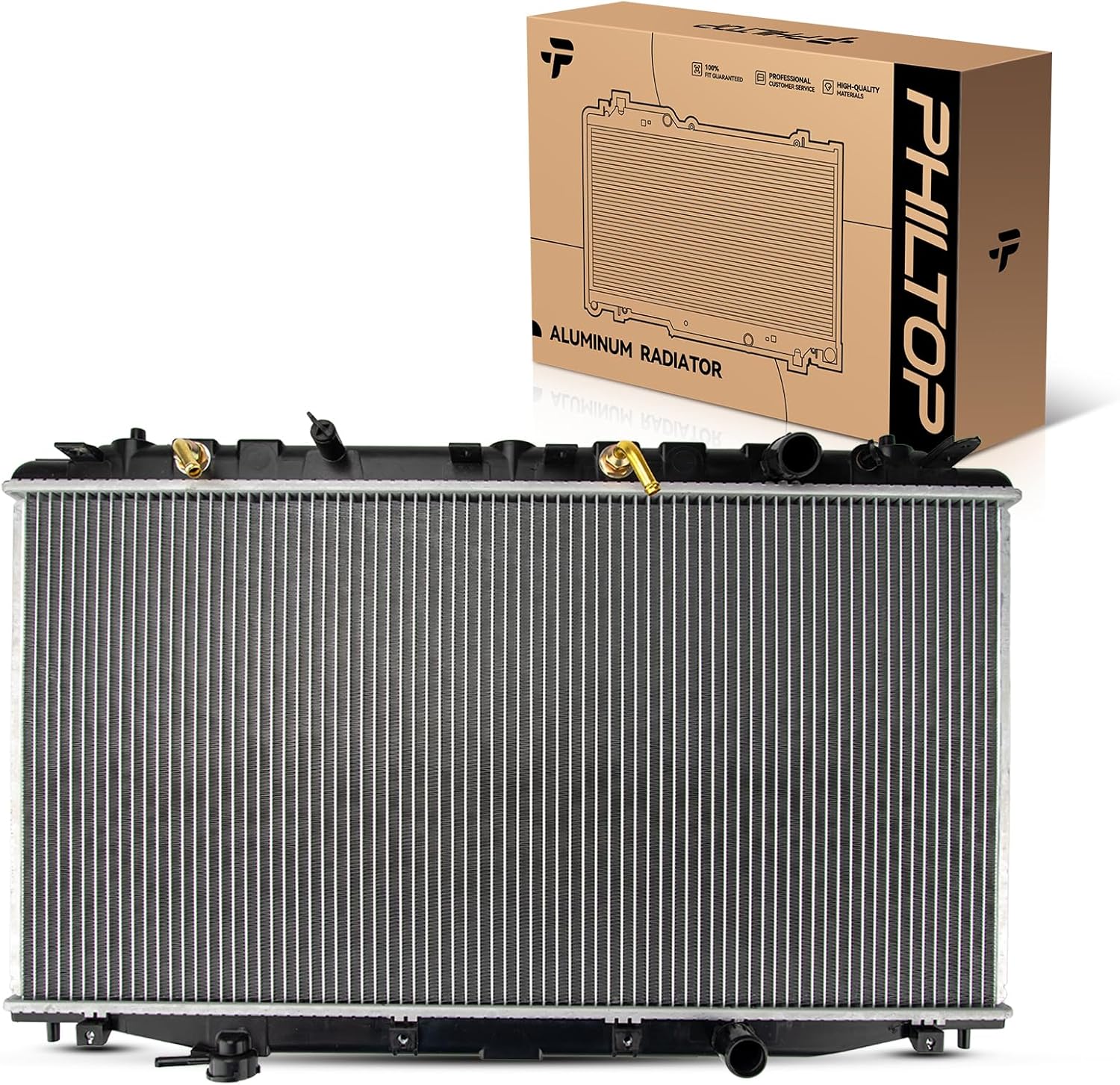
| Core Thickness | 3/4 in. |
|---|---|
| Core Width | 30-7/16 in. |
| Core Height | 15-3/4 in. |
| Inlet Diameter | 1-1/4 in. |
| Outlet Diameter | 1-1/4 in. |
This PHILTOP radiator is a straightforward aluminum replacement for the 2.4L Accord and Crosstour cooling systems. It uses an aluminum core with plastic end tanks and a flattened water pipe and corrugated fins to speed heat transfer, and the listing cites improved cooling efficiency compared with many aftermarket units. Typical use is a direct radiator swap when the original is leaking, clogged, or damaged; the unit includes matching inlet and outlet diameters and a core sized to the vehicle fitment. Practical benefits are corrosion resistance from the aluminum core, a design aimed at faster heat dissipation, and factory-style mounting that keeps installation familiar for DIYers or technicians. Limitations include plastic tank end pieces rather than full aluminum construction and no explicit warranty information in the listing, so long-term durability depends on installation and operating conditions. Buyers should verify hose and bracket alignment before purchase to avoid fitment surprises.
Best for: Buyers looking for an affordable, vehicle-specific aluminum replacement radiator to restore cooling performance on a 2.4L Accord or Crosstour without major modification.
Less Ideal for: Drivers who want a full all-aluminum performance or race-style radiator or who require documented manufacturer warranty coverage should consider higher-end options.
- Aluminum core for improved corrosion resistance and heat transfer
- Core and inlet/outlet sizes matched to the listed Accord/Crosstour 2.4L fitment for direct replacement
- Flattened water pipe and corrugated fins designed to increase cooling efficiency
- Pretested for leaks according to the manufacturer to reduce risk of out-of-box leakage
- End tanks use plastic rather than full aluminum which may limit long-term durability under extreme heat
- Listing does not include explicit warranty details or coverage terms
Verdict: A budget-friendly, vehicle-specific aluminum-core replacement that improves cooling over many aftermarket radiators while keeping installation simple.
5. TYC 2148 Replacement Aluminum Radiator for Honda Accord (1998–2002)

| Manufacturer Part Number | 2148 |
|---|---|
| OEM Part Number | 19010-PAA-A01 |
| Position | Center |
| Brand | TYC |
The TYC 2148 is a direct-fit replacement radiator that aims to match factory cooling performance for 1998–2002 Honda Accords. It uses aluminum tubes and folded, louvered aluminum fins to maintain coolant flow and heat dissipation similar to the original unit, and radiators with transmission coolers include heat-resistant polymer tanks. TYC says each unit is leak-tested at the factory and includes reinforced features such as aluminum inlet rings, internal tank ribs, expansion grooves, and double header plates to reduce the risk of leaks and increase durability. Installation is typical of a drop-in radiator and should be straightforward for anyone doing routine cooling-system repairs or upgrades. The practical benefit is restoring reliable engine temperature control without modifying mounting or hose connections. Buyers should note this is a direct replacement designed for the specified Accord years only and does not add performance beyond factory levels; long-term durability depends on proper coolant maintenance and correct installation.
Best for: Someone who prioritizes dependable, factory-equivalent cooling and wants a straightforward replacement to restore original temperature control on a 1998–2002 Honda Accord.
Less Ideal for: Drivers seeking a high-performance or increased-capacity aftermarket radiator for heavy-duty towing or racing should look at performance-specific options instead.
- Direct OE-equivalent construction for tube and fin placement to match factory cooling performance
- Aluminum tubes and precision folded fins for efficient heat dissipation
- Leak-tested at the factory for quality control
- Reinforced components like inlet rings and internal ribs to reduce leak risk
- Not an upgraded high-capacity performance radiator; intended to match factory cooling rather than exceed it
Verdict: Choose this radiator if you want a factory-equivalent, leak-tested aluminum replacement that restores reliable cooling for a 1998–2002 Honda Accord.
6. DWVO Complete Radiator for 2013–2017 Honda Accord (fits 2.4L & 3.5L)

| Core size | 15.75" x 30.14" |
|---|---|
| OEM part numbers | HO3010234, 190105A2A01, 190105A2A02 |
| Material | Aluminum core with PA66 GF30 tanks (TIG-welded) |
This DWVO complete radiator is a direct-fit aluminum replacement intended to restore cooling performance on 2013–2017 Honda Accord 2.4L and 3.5L engines. It installs in place of the factory unit and is built with a multi-louvered high-density core and TIG-welded connections to improve heat transfer and durability. The package includes the radiator and a user manual but does not include a radiator cap, so expect to reuse the original or buy a new cap separately. In practice this radiator is used when the original is leaking, clogged, or otherwise failing; buyers report straightforward fitment and solid cooling after installation. The alloy core and treated coating aim to resist corrosion while the integrated transmission oil cooler offers factory-style functionality for automatic models. Some customers have noted occasional quality issues like blockages on arrival and limited installation instructions, so inspect the unit before install and plan for professional fitting if you are not experienced. For buyers prioritizing a budget-conscious, vehicle-specific aluminum replacement, this provides a close match to factory performance.
Best for: Buyers who want a lower-cost, vehicle-matched aluminum replacement that restores cooling reliability and closely follows factory fitment, with priority on social proof from other Accord owners.
Less Ideal for: Shoppers who want fully plug-and-play prechecked components with extensive installation guidance or who prefer a radiator sold with all small accessories included.
- Direct-fit design matched to listed Accord engines for straightforward replacement
- High-density multi-louvered aluminum core for improved heat dissipation
- TIG-welded joints and treated coating for enhanced durability and corrosion resistance
- Includes integrated transmission oil cooler where applicable to retain factory function
- Radiator cap is not included so you must reuse or purchase one separately
- Some customers reported arriving units with blockages or limited instructions requiring careful inspection before install
Verdict: A budget-friendly, vehicle-specific aluminum replacement that restores factory-style cooling performance for 2013–2017 Honda Accord owners backed by strong owner feedback.
7. Nilight Aluminum Radiator for Honda Accord 2003–2007 2.4L FWD (Replaces CU2797)

| Vehicle fitment | Honda Accord 2003–2007 2.4L FWD |
|---|---|
| Reference number | CU2797, 2797, 2599, 3185 |
| Core thickness | 5/8 |
| Inlet/outlet diameter | 1-1/4 |
This Nilight radiator is an aluminum replacement built to fit 2003–2007 Honda Accord 2.4L FWD applications and replace reference CU2797. It is intended as a like-for-like cooling core to restore engine temperature control after a leak or failure. The unit uses folded and louvered aluminum fins and tubes with an ABS-aluminum core to improve heat transfer and corrosion resistance relative to older cores. Nilight says each radiator is leak tested and maintains system pressure and boiling point for efficient cooling. In practice this radiator works well as a factory-style repair for owners who need a reliable cooling component; buyers report good fit and function when vehicle compatibility is confirmed. Expect professional installation because some installers note slight differences in mounting alignment compared with factory pieces and the radiator does not include a cap. The product favors cost-effective durability but may require minor adjustment during install to seat perfectly in the mounting points.
Best for: Buyers who want a cost-conscious, factory-style aluminum replacement to restore cooling on a 2003–2007 Accord 2.4L FWD and prefer a tested, serviceable unit over expensive OEM parts.
Less Ideal for: People looking for a drop-in performance upgrade or a complete plug-and-play OEM exact match without any installation adjustments should consider other options.
- Designed for specific Honda Accord 2003–2007 2.4L FWD fitment to replace CU2797
- Aluminum tubes and folded louvered fins for improved heat dissipation
- 100% leak tested to help prevent coolant loss and maintain cooling system pressure
- Comprehensive after-sales support from the brand
- Radiator cap is not included
- Some installers report minor mounting or alignment differences versus the factory part requiring extra fitment effort
Verdict: A practical, leak-tested aluminum replacement that restores reliable cooling on 2003–2007 Accord 2.4L FWDs without the cost of an OEM radiator.
Choosing the Right Honda Accord Aluminum Radiator: Key Factors to Consider
Fitment and Mounting
Exact fitment to the Honda Accord is critical because mounting point alignment determines whether the radiator sits securely and connects correctly to hoses and transmission cooler lines when applicable. A radiator that requires bracket modification or spacers can add hours of installation time and raise the risk of vibration-related wear.
Check inlet and outlet hose locations, transmission cooler ports if the vehicle uses an automatic transmission, and the positions of mounting tabs. Properly matched dimensions reduce the chance of kinking hoses or stretching fittings. When a radiator lists vehicle-specific compatibility, confirm it matches your Accord model year and engine configuration to avoid fitment surprises.
Core Design and Cooling Capacity
The core design—number of rows, fin density, and tube layout—determines how effectively the radiator dissipates engine heat. A thicker or multi-row core generally moves more heat but may require a fan with sufficient clearance and flow. For the Accord, consider whether you do regular towing, frequent highway runs, or drive in hot climates, as these conditions increase cooling demand.
Core materials and brazing quality also affect heat transfer efficiency. A radiator with a well-engineered core will lower operating temperatures and reduce thermal cycling stress on the engine. Make sure the chosen core balances cooling performance with fit so you do not run into clearance problems under the hood.
Materials and Corrosion Resistance
Aluminum offers a good combination of light weight and thermal conductivity, but long-term reliability depends on construction quality. Look for radiators using high-grade aluminum, properly brazed joints, and corrosion-resistant finishes or coatings. Poor welds or thin material can lead to premature failures like cracks or pinhole leaks.
Consider the local climate and coolant type you use. Regions with heavy road salt or hard water require stronger corrosion resistance. Proper coatings and quality brazing reduce the need for frequent coolant changes and lower the likelihood of internal corrosion that can clog passages.
Transmission Cooler Integration
Many Honda Accord models with automatic transmissions rely on integrated transmission cooler ports in the radiator. Compatibility with those ports is essential to prevent leaks and ensure the transmission stays within safe operating temperatures. If your Accord has an automatic transmission, confirm the radiator provides the correct number and placement of cooler ports.
Using a radiator without the required cooler connections forces you to route transmission fluid through an external cooler or adapt fittings, which adds complexity and potential failure points. Matching factory-style cooler integration simplifies installation and maintains intended transmission cooling performance.
Durability and Leak Resistance
Durability is more than material choice; it is about manufacturing consistency, seam strength, and resistance to vibration and impact. Look for radiators with reinforced tanks, solid seam work, and validated pressure ratings. These features reduce the chance of leaks caused by thermal cycles, road vibration, or minor impacts from debris.
A radiator treated for corrosion resistance and finished with protective coatings will typically last longer in real-world conditions. Consider how long you expect the replacement to last and whether you need a unit that withstands heavy use or aggressive driving without early leakage.
Ease of Installation and Serviceability
A radiator that installs with OEM-style hoses, clips, and mounting hardware saves time and reduces installation errors. Serviceability features like accessible drain ports, clearly located fill necks, and compatible fan shroud interfaces matter to DIY mechanics and technicians alike.
Some radiators include replacement brackets or fittings to match factory hardware, while others require reuse of OEM parts. Confirm whether small components like mounting bushings or transmission cooler O-rings are included; missing parts can delay installation or necessitate additional trips to the parts store.
Signs Your Accord Needs a Radiator Replacement
Common indicators include steady or sudden coolant loss, visible puddles under the vehicle, persistent overheating, and steam from the engine bay. You may also notice a sweet smell from coolant or a drop in cabin heater performance if the coolant level is low.
Other symptoms can be fluctuating temperature gauge readings or a check engine light that corresponds to cooling system faults. Small leaks often start at seams or tank joints, while larger failures may appear as sudden coolant evacuation and rapid overheating.
- Visible coolant pooling under the front of the car
- Intermittent or constant overheating under load
- Low coolant level after short drives
- Discolored or contaminated coolant indicating internal corrosion
Preparing Your Accord for Radiator Replacement
Before beginning work, let the engine cool fully and relieve system pressure by carefully opening the coolant reservoir cap once cool. Gather necessary tools, replacement hoses or clamps if needed, and a drain pan for old coolant. Disconnect the battery as a safety precaution when working near electrical fans.
Label hoses and electrical connectors before removal to simplify reinstallation. Inspect surrounding components—fan shroud, thermostat housing, and hose ends—for wear that may warrant replacement during the same service visit.
- Allow engine to cool completely
- Drain coolant into an appropriate container
- Label hoses and connectors for easier reassembly
- Inspect and replace worn clamps or hoses
Choosing the Right Coolant and Maintenance After Replacement
After installing a new aluminum radiator, use the coolant type recommended in your Accord owner manual. Mixing incompatible coolant types can reduce corrosion protection and shorten radiator life. Perform a complete coolant flush if the old system shows heavy contamination before adding new coolant.
Bleeding air from the cooling system is essential to prevent hot spots and ensure consistent heater performance. Follow a proper fill and bleed procedure and then verify temperature stability on a test drive. Plan periodic coolant inspections and scheduled flushes to maintain the radiator and extend the life of the cooling system.
- Use manufacturer-recommended coolant type
- Perform a full coolant flush when contamination is present
- Bleed air pockets after refilling
- Recheck for leaks after a short test drive
Common Installation Pitfalls to Avoid
Tightening clamps unevenly, reusing damaged hoses, or neglecting to replace worn mounting bushings can cause premature leaks or vibration damage. Also avoid overtightening fittings that can warp plastic parts or crush hose ends, creating new leak points.
Double-check that transmission cooler lines are securely connected and that O-rings or seals are in good condition. Verify fan shroud alignment and electrical fan connector seating to ensure proper airflow and prevent fan damage during operation.
- Do not reuse visibly cracked or stiff hoses
- Replace seals on transmission cooler lines when disturbed
- Ensure fan and shroud have correct clearance
- Hand-start threaded fittings to avoid cross-threading
When to Consult a Technician
If the cooling system has signs of internal contamination, persistent overheating after installing a new radiator, or transmission fluid mixing with coolant, seek professional diagnosis. Complex issues like head gasket failure or internal block corrosion require pressure testing and specialized inspection tools.
A technician can also perform a system pressure test, flush the heater core, and confirm proper airflow from the fans. If you are unsure about bleeding procedures or diagnostic codes related to engine temperature, professional help prevents misdiagnosis and further damage.
- Persistent overheating after replacement
- Oil and coolant mixing
- Diffuse leaks that are hard to locate
- Unresolved error codes after repair
Still looking for the perfect fit?
Select your Honda Accord configuration to see the most relevant Radiators recommendations
How We Chose the Best Honda Accord Aluminum Radiator
We prioritized criteria that matter to Honda Accord owners when replacing the radiator. Primary factors included exact fitment to factory mounting points and inlet/outlet locations, since proper alignment prevents hose stress and cooling-system leaks. Cooling capacity and core design were weighted heavily because core thickness, fin density, and tube count directly affect heat rejection under normal and heavy-load driving.Material quality and corrosion resistance were assessed to favor aluminum cores and tanks with durable brazing or welded seams that reduce the chance of early leaks. Build consistency and factory-style hose and bracket interfaces were considered to lower installation time and avoid aftermarket fitment issues. Ease of installation and compatibility with OEM mounting hardware were emphasized to reduce labor and potential for installation errors.We excluded universal or heavily modified radiators that require custom brackets, extensive trimming, or plumbing changes. Also excluded were units with unclear manufacturing standards or no documented compatibility with the Accord. The final list reflects products that meet fitment, cooling performance, and durability thresholds relevant to Accord owners replacing a radiator.
Our full evaluation process is outlined in our review methodology.
FAQ
How long does an aluminum radiator typically last in a Honda Accord?
Lifespan varies by driving conditions and maintenance, but a well-made aluminum radiator often lasts many years. Corrosion, road salt exposure, and coolant neglect shorten life, while regular coolant maintenance extends it.
Can I replace my Accord radiator myself?
Many owners with basic mechanical skills can replace the radiator, especially when the replacement matches factory fitment. Expect to drain coolant, disconnect hoses and transmission cooler lines if present, and bleed the system carefully after installation.
Will a new aluminum radiator fix overheating immediately?
If overheating is caused by a failing radiator, replacing it usually resolves the issue. However, other causes like a stuck thermostat, failing water pump, or clogged passages can also cause overheating, so diagnose those if problems persist.
Do I need to flush the cooling system when installing a new radiator?
A flush is recommended if the old coolant is discolored or contaminated. Flushing removes debris and corrosion products that could clog the new radiator and reduces the risk of accelerated wear or blockage.
How can I tell if my radiator is leaking versus a hose or clamp?
Inspect for wetness around hose ends, clamps, and radiator seams. Run the engine to operating temperature and check for drips; a pressure test helps pinpoint leaks in the radiator core or tanks versus external hose connections.
Are aftermarket aluminum radiators compatible with transmission coolers in the Accord?
Many aftermarket radiators include integrated transmission cooler ports designed for specific Accord configurations. Confirm that the radiator lists compatibility with your transmission type to ensure correct port number and placement.
Final Verdict
Choose an aluminum radiator that matches your Honda Accord s factory fitment and provides the cooling capacity you need for your typical driving conditions. Prioritize proper inlet/outlet alignment, durable construction, and corrosion resistance to avoid repeat service.Balance cooling performance against installation ease and serviceability. If you maintain coolant quality and verify transmission cooler compatibility when applicable, a well-chosen aluminum radiator will restore reliable engine temperatures and reduce the chance of future leaks.
Explore More:
- Check out all Honda Accord parts & accessories
- Explore Radiators Maintenance & Repair Guides
- Explore Cooling System
- Browse all Auto Parts
